Adhyaya 118
Adhyāya 118: Saciva-parīkṣā (Testing and Appointment of Ministers/Servants)
Upa-parva: Rājadharmānuśāsana Upa-Parva (Instruction on Kingship and Public Administration)
Bhīṣma outlines a governance protocol for staffing: a ruler should not appoint servants without examination, because an administration crowded with unfit persons undermines royal welfare. The chapter enumerates evaluative criteria—clean conduct (śīla-śauca), integrity (ārjava), temperament (prakṛti), strength and energy (bala-vīrya), compassion and forbearance (anukrośa-kṣamā), learning and discipline (śruta-dama), and role-appropriate training. It contrasts the expected stability of a well-bred, well-formed official—portrayed as less inclined toward blameworthy acts even under criticism—with the risks of elevating an unqualified outsider who may become resentful or hostile. Bhīṣma then provides an extensive competency profile for an ideal minister: learned in śāstra, patient, locally informed, grateful, self-restrained, non-greedy, satisfied with lawful gain, skilled in diplomacy (saṃdhi-vigraha), aware of time and place (deśa-kāla), adept in organization and intelligence, and capable in logistical and military-adjacent knowledge (formations, signals, travel, and specialized training such as elephant management). The closing verses link good appointments and non-contemptuous treatment of ministers to the expansion of the kingdom, and assert that disciplined recruitment and retention of capable allies enables comprehensive consolidation of the realm.
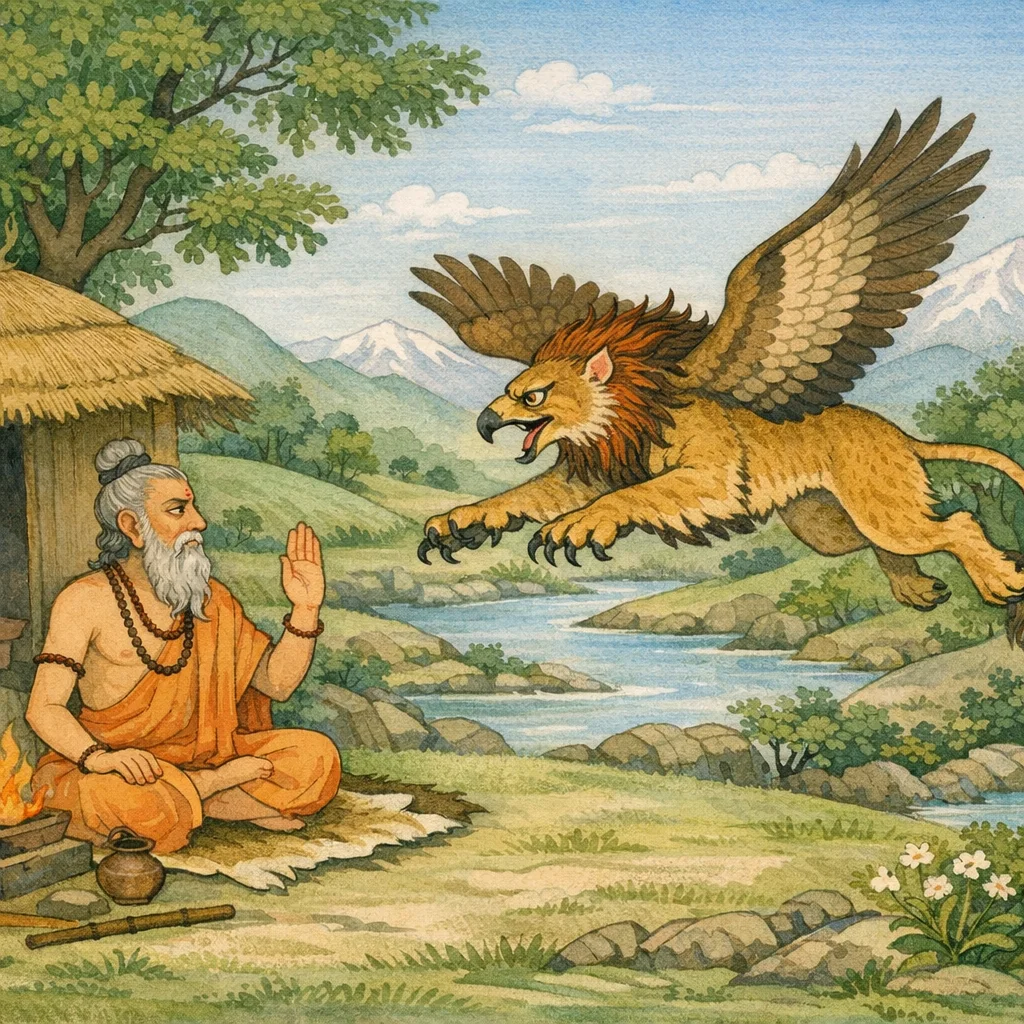
Chapter Arc: भीष्म युधिष्ठिर को एक दृष्टान्त-कथा सुनाते हैं—कुत्ते की योनि से जन्मा जीव तपोबल से शरभ बनता है, पर भीतर की वृत्ति बदलती नहीं; वही कथा का बीज है। → शरभ का रूप भयावह और बल-गर्वित है—मेघगम्भीर गर्जना, मद-धारा से बहता गण्डस्थल, विशाल कुम्भ; वह हिंसा में रत रहता है और फल-मूल का त्याग कर मांसाहार में ही आसक्त रहता है। पहले वह उन्मत्त गजराज को आते देख भय से ऋषि की शरण लेता है; फिर सिंह के आगमन पर वही हाथी काँपकर उसी ऋषि के पास भागता है—शरणागति का क्रम दिखाता है कि बल भी भय के आगे झुकता है। → रुधिर-तृष्णा और कृतघ्नता से अन्धा शरभ एक दिन उसी मुनि को मारने का निश्चय करता है—जिसकी शरण में वह स्वयं आया था। मुनि अपने ज्ञान-नेत्रों से उसके मनोभाव को जान लेते हैं और उसी क्षण कथा का नैतिक शिखर उठ खड़ा होता है: उपकार के बदले अपकार का उदय। → महाप्राज्ञ मुनि तपःशक्ति से शरभ की कृतघ्न वृत्ति को पहचानकर उसे उपदेश/निग्रह करते हैं और उसके पतन का कारण स्पष्ट करते हैं—योनि-परिवर्तन या बल-वृद्धि से नहीं, संस्कार-शुद्धि और कृतज्ञता से धर्म टिकता है। शरभ का उग्र आवेग टूटता है और कथा युधिष्ठिर के लिए नीति-निष्कर्ष बन जाती है। → भीष्म संकेत करते हैं कि कृतघ्नता का दण्ड और कृतज्ञता का फल—दोनों अटल हैं; आगे वे इसी से जुड़ी राजधर्म/आचरण-नीति को विस्तार देंगे।
Shlokas
Verse 1
(दाक्षिणात्य अधिक पाठका १ श्लोक मिलाकर कुल २४ श्लोक हैं) सप्तदशाधिकशततमो< ध्याय: कुत्तेका शरभकी योनिमें जाकर महर्षिके शापसे पुनः कुत्ता हो जाना भीष्म उवाच व्याप्रश्नेटजमूलस्थस्तृप्त: सुप्तो हतैर्मगै: । नागश्नागात् तमुद्देशं मत्तो मेघ इवोद्धत:,भीष्मजी कहते हैं--राजन्! वह बाघ अपने मारे हुए मृगोंके मांस खाकर तृप्त हो महर्षिकी कुटीके पास ही सो रहा था। इतनेमें ही वहाँ ऊँचे उठे हुए मेघके समान काला एक मदोन्मत्त हाथी आ पहुँचा
Bhishma said: O King, the tiger, having eaten the flesh of the deer he had slain and being fully sated, lay asleep near the hermitage, at the root of a white jambu tree. Just then a dark, rut-maddened elephant—towering like a swollen cloud—came into that very place. The scene sets the moral frame: unchecked pride and the intoxication of power can disturb even a settled peace, and sudden encounters become tests of restraint and dharma.
Verse 2
प्रभिन्नकरट: प्रांशु: पद्मी विततकुम्भक: । सुविषाणो महाकायो मेघगम्भीरनि:स्वन:,उसके गण्डस्थलसे मदकी धारा चू रही थी। उसका कुम्भस्थल बहुत विस्तृत था। उसके ऊपर कमलका चिह्न बना हुआ था, उसके दाँत बड़े सुन्दर थे। वह विशालकाय ऊँचा हाथी मेघके समान गम्भीर गर्जना करता था
From his temples flowed the musth-fluid (mad); he was tall and vast of body, with a broad, spreading forehead (kumbha). Upon it was the mark of a lotus, and his tusks were fair to behold. That mighty elephant uttered a deep, cloud-like roar.
Verse 3
त॑ दृष्टवा कुण्जरं मत्तमायान्तं बलगर्वितम् । व्याप्रो हस्तिभयात् त्रस्तस्तमृषिं शरणं ययौ,उस बलाभिमानी मदोनन््मत्त गजराजको आते देख वह बाघ भयभीत हो पुनः ऋषिकी शरणमें गया
Bhishma said: Seeing a rut-maddened elephant approaching, swollen with the pride of strength, the tiger—terrified by fear of the elephant—went again to that sage for refuge.
Verse 4
ततो5नयत् कुण्जरत्वं व्याप्रं तमृषिसत्तम: । महामेघनिभं दृष्टवा स भीतो हाभवद् गज:,तब उन मुनिश्रेष्ने उस बाघको हाथी बना दिया। उस महामेघके समान हाथीको देखकर वह जंगली हाथी भयभीत होकर भाग गया
Then that foremost of sages transformed the tiger into the state of an elephant. Seeing the elephant, vast and dark like a great rain-cloud, the wild elephant became frightened and fled.
Verse 5
ततः: कमलषण्डानि शललकीगहनानि च । व्यचरत् स मुदायुक्तः पद्मरेणुविभूषित:,तदनन्तर वह हाथी कमलोंके परागसे विभूषित और आनन्दित हो कमलसमूहों तथा शल्लकी लताकी झाड़ियोंमें विचरने लगा
Then that elephant, adorned with the pollen of lotuses and filled with delight, wandered about among clusters of lotus-plants and through thickets dense with śalalakī creepers.
Verse 6
कदाचिद् भ्रममाणस्य हस्तिन: सम्मुखं तदा | ऋषेस्तस्योटजस्थस्य कालोडगच्छन्निशानिशम्,कभी-कभी वह हाथी आश्रमवासी ऋषिके सामने भी घूमा करता था। इस तरह उसका कितनी ही रातोंका समय व्यतीत हो गया
Bhishma said: At times, as the elephant wandered about, it would come right before the hermit who lived in his hut. In this manner, night after night, time passed by.
Verse 7
अथाजगाम तं देशं केसरी केसरारुण: । गिरिकन्दरजो भीम: सिंहो नागकुलान्तक:,तदनन्तर उस प्रदेशमें एक केसरी सिंह आया, जो अपनी केसरके कारण कुछ लाल-सा जान पड़ता था। पर्वतकी कन्दरामें पैदा हुआ वह भयानक सिंह गजवंशका विनाश करनेवाला काल था
Bhīṣma said: Then there came to that region a lion—tawny-red with its mane. Born in a mountain cave, that dreadful lion was like a doom appointed for the elephant clans, a destroyer of their line.
Verse 8
त॑ दृष्टवा सिंहमायान्तं नाग: सिंहभयार्दित: । ऋषिं शरणमापेदे वेपमानो भयातुर:,उस सिंहको आते देख वह हाथी उसके भयसे पीड़ित एवं आतुर हो थर-थर काँपने लगा और ऋषिकी शरणमें गया
Bhishma said: Seeing the lion approaching, the elephant—struck with fear of the lion—grew distressed and, trembling in terror, sought refuge with a sage.
Verse 9
स ततः: सिंहतां नीतो नागेन््द्रो मुनिना तदा । वन्यं नागणयत् सिंहं तुल्यजातिसमन्वयात्,तब मुनिने उस गजराजको सिंह बना दिया। अब वह समान जातिके सम्बन्धसे जंगली सिंहको कुछ भी नहीं गिनता था
Bhishma said: “Then, at that time, the lord of elephants was transformed into a lion by the sage. Having gained kinship with an equal species, he no longer regarded the wild lion as anything of consequence.”
Verse 10
दृष्टवा च सो5भवत् सिंहो वन्यो भयसमन्वित: । स चाश्रमे5वसत् सिंहस्तस्मिन्नेव महावने,उसे देखकर जंगली सिंह स्वयं ही डर गया। वह सिंह बना हुआ कुत्ता महावनमें उसी आश्रममें रहने लगा
Seeing him, the wild lion itself became filled with fear. That lion then stayed in the hermitage, in that very great forest.
Verse 11
तद्धयात् पशवो नान्ये तपोवनसमीपत: । व्यदृश्यन्त तदा त्रस्ता जीविताकांक्षिणस्तथा,उसके भयसे जंगलके दूसरे पशु डर गये और अपनी जान बचानेकी इच्छासे तपोवनके समीप कभी नहीं दिखायी दिये
Because of that fear, no other animals were seen near the ascetics’ forest-grove; terrified and longing to preserve their lives, they kept away from the vicinity of the tapovana.
Verse 12
कदाचित् कालयोगेन सर्वप्राणिविहिंसक: । बलवान् क्षतजाहारो नानासच्त्वभयंकर:,तदनन्तर कालयोगसे वहाँ एक बलवान् वनवासी समस्त प्राणियोंका हिंसक शरभ आ पहुँचा, जिसके आठ पैर और ऊपरकी ओर नेत्र थे। वह रक्त पीनेवाला जानवर नाना प्रकारके वन-जन्तुओंके मनमें भय उत्पन्न कर रहा था। वह उस सिंहको मारनेके लिये मुनिके आश्रमपर आया
Bhishma said: “Once, by the turn of time, there appeared a powerful creature—one that harmed all living beings. Living on blood, it became a terror to the many kinds of animals.”
Verse 13
अष्टपादूर्ध्नयन: शरभो वनगोचर: । तं सिंहं हन्तुमागच्छन्मुनेस्तस्य निवेशनम्,तदनन्तर कालयोगसे वहाँ एक बलवान् वनवासी समस्त प्राणियोंका हिंसक शरभ आ पहुँचा, जिसके आठ पैर और ऊपरकी ओर नेत्र थे। वह रक्त पीनेवाला जानवर नाना प्रकारके वन-जन्तुओंके मनमें भय उत्पन्न कर रहा था। वह उस सिंहको मारनेके लिये मुनिके आश्रमपर आया
Bhishma said: An extraordinary śarabha, a forest-ranging beast with eight feet and eyes set upward, came to the sage’s dwelling intending to kill that lion. A violent predator, it spread fear among the creatures of the woods as it approached the hermitage, bringing the threat of bloodshed into a place meant for peace and restraint.
Verse 14
(तं दृष्टवा शरभं यान्तं सिंह: परभयातुर: । ऋषिं शरणमापेदे वेपमान: कृताञउ्जलि: ।।) शरभको आते देख सिंह अत्यन्त भयसे व्याकुल हो काँपता हुआ हाथ जोड़कर मुनिकी शरणमें आया ।। त॑ मुनि: शरभं चक्रे बलोत्कटमरिंदम । ततः स शरभो वन्यो मुने: शरभमग्रतः
Bhīṣma said: Seeing the Śarabha approaching, the lion—overwhelmed by fear of a stronger foe—trembling, came to the sage for refuge with folded hands. Then the sage, O subduer of foes, by his power assumed the form of a mighty Śarabha. Thereupon that wild Śarabha stood before the sage’s Śarabha. The episode frames a moral contrast: when confronted by superior force, the proud may seek protection, and the righteous protector responds not with cruelty but with the strength needed to restrain harm and uphold dharma.
Verse 15
दृष्टवा बलिनमत्युग्रं द्रुतं सम्प्राद्रवद् वनात् । शत्रुदमन युधिष्ठिर! तब मुनिने उसे बलोन्मत्त शरभ बना दिया। जंगली शरभ उस मुनिनिर्मित अत्यन्त भयंकर एवं बलवान् शरभको सामने देखकर भयभीत हो तुरंत ही उस वनसे भाग गया ।। १४ $ || स एवं शरभस्थाने संन्यस्तो मुनिना तदा
O Yudhiṣṭhira, subduer of foes! Seeing the sage’s manifested Śarabha—exceedingly fierce and mighty—the wild Śarabha was seized by fear and at once fled from that forest.
Verse 16
ततः शरभसंत्रस्ता: सर्वे मृगगणास्तदा
Then, terrified by the sudden rush and commotion, all the herds of wild animals became frightened at that moment.
Verse 17
शरभो5प्यतिसंदृष्टो नित्य॑ प्राणिवधे रत:
Bhīṣma said: “Even the śarabha is observed to be exceedingly fierce, ever delighting in the killing of living beings.” In the ethical frame of the Śānti teachings, this line points to the reality that some natures incline toward violence; therefore dharma must be consciously cultivated rather than assumed to arise automatically from mere birth or strength.
Verse 18
ततो रुधिरतर्षेण बलिना शरभो<न्वित:
Then, driven by a thirst for blood, the powerful one—endowed with the nature of a śarabha—advanced, his strength sharpened by violent craving.
Verse 19
(चिन्तयामास च तदा शरभ: श्वानपूर्वकः । अस्य प्रभावात् सम्प्राप्तो वाड्मात्रेण तु केवलम् ।। शरभत्वं सुदुष्प्रापं सर्वभूतभयड्करम् । उस पहलेके कुत्ते और वर्तमानकालके शरभने सोचा कि इन महर्षिके प्रभावसे--इनके वाणीद्वारा केवल कह देनेमात्रसे मैंने परम दुर्लभ शरभका शरीर पा लिया, जो समस्त प्राणियोंके लिये भयंकर है ।। अन्ये>्प्यत्र भयत्रस्ता: सन्ति हस्तिभयार्दिता: ।। मुनिमाश्रित्य जीवन्तो मृगा: पक्षिगणास्तथा । तेषामपि कदाचिच्च शरभत्वं प्रयच्छति ।। सर्वसत्त्वोत्तमं लोके बल॑ यत्र प्रतिष्ठितम् । इन मुनीश्वरकी शरण लेकर जीवन धारण करनेवाले दूसरे भी बहुत-से मृग और पक्षी हैं, जो हाथी तथा दूसरे भयानक जन्तुओंसे भयभीत रहते हैं। सम्भव है, ये उन्हें भी कदाचित् शरभका शरीर प्रदान कर दें, जहाँ संसारके सभी प्राणियोंसे श्रेष्ठ बल प्रतिष्ठित है।। पक्षिणामप्ययं दद्यात् कदाचिद् गारुडं बलम् ।। यावदन्यस्य सम्प्रीत: कारुण्यं च समाश्रित: । न ददाति बल तुष्ट: सत्त्वस्यान्यस्य कस्यचित् ।। तावदेनमहं विप्रं वधिष्यामि च शीघ्रत: । स्थातुं मया शक््यमिह मुनिघातान्न संशय: ।।) ये चाहें तो कभी पक्षियोंको भी गरुड़का बल दे सकते हैं। अतः दयाके वशीभूत हो जबतक किसी दूसरे जीवपर संतुष्ट या प्रसन्न हो ये उसे ऐसा ही बल नहीं दे देते, तबतक ही इन ब्रह्मर्षिका मैं शीघ्र वध कर डालूँगा। मुनिका वध हो जानेके पश्चात् मैं यहाँ बेखटके रह सकूँगा, इसमें संशय नहीं है ।। ततस्तेन तपःशकक््त्या विदितो ज्ञानचक्षुषा
Bhishma said: Then the Śarabha—formerly a dog—reflected: “By the power of this sage, merely through his spoken word, I have obtained the exceedingly rare state of being a Śarabha, terrifying to all creatures. Here there are also many other deer and flocks of birds, living under the sage’s protection, distressed by fear of elephants and other dangers. It is possible that he may someday grant them too the form of a Śarabha, wherein strength superior to all beings is established. He might even, at some time, bestow upon birds the Garuḍa-like power. Therefore, before he—moved by compassion and pleased with some other creature—grants such strength to anyone else, I will quickly kill this brahmin-sage. After the sage is slain, I will be able to remain here without fear; there is no doubt.” Thereupon, by his ascetic power and with the eye of knowledge, the sage came to know his intent.
Verse 20
थ्वा त्वं द्वीपित्वमापन्नो द्वीपीव्याप्रत्वमागत:,“अरे! तू पहले कुत्ता था, फिर चीता बना, चीतेसे बाघकी योनिमें आया, बाघसे मदोन्मत्त हाथी हुआ, हाथीसे सिंहकी योनिमें आ गया, बलवान् सिंह रहकर फिर शरभका शरीर पा गया
Bhīṣma said: “You have passed into the state of a leopard, and from the leopard you have advanced onward—thus moving through successive animal births. In this way you were first a dog, then a leopard, then entered the womb of a tiger; from a tiger you became an intoxicated elephant; from an elephant you came into the womb of a lion; and, having been a powerful lion, you again obtained the body of a śarabha.”
Verse 21
व्याप्रान्नागो मदपटुर्नाग: सिंहत्वमागतः । सिंहस्त्वं बलमापन्नो भूय: शरभतां गत:,“अरे! तू पहले कुत्ता था, फिर चीता बना, चीतेसे बाघकी योनिमें आया, बाघसे मदोन्मत्त हाथी हुआ, हाथीसे सिंहकी योनिमें आ गया, बलवान् सिंह रहकर फिर शरभका शरीर पा गया
Bhishma said: “From being an elephant—restless and skilled in rut—you became a lion. And you, having become a lion and gained great strength, then again passed onward into the state of a śarabha.”
Verse 22
मया स्नेहपरीतेन विसृष्टो न कुलान्वय: । यस्मादेवमपापं मां पाप हिंसितुमिच्छसि । तस्मात् स्वयोनिमापत्न: श्वैव त्वं हि भविष्यसि,“यद्यपि तू नीच कुलमें पैदा हुआ था, तो भी मैंने स्नेहवश तेरा परित्याग नहीं किया। पापी! तेरे प्रति मेरे मनमें कभी पापभाव नहीं हुआ था, तो भी इस प्रकार तू मेरी हत्या करना चाहता है; अतः तू फिर अपनी पूर्वयोनिमें ही आकर कुत्ता हो जा!
Bhishma said: “Though you were born in a low lineage, I did not cast you off, for I was moved by affection. Yet you—sinful as you are—seek to harm me who bears no malice toward you. Therefore, fallen back into your former womb, you shall indeed become a dog again.”
Verse 23
ततो मुनिजनद्वेष्टा दुष्टात्मा प्राकृतो&बुध: । ऋषिणा शरभ: शप्तस्तद्रूपं पुनराप्तवान्,महर्षिके इस प्रकार शाप देते ही वह मुनिजनद्रोही दुष्टात्मा नीच और मूर्ख शरभ फिर कुत्तेके रूपमें परिणत हो गया
Bhishma said: Then that wicked-souled Śarabha—base by nature, foolish, and hostile to sages—having been cursed by a rishi, regained that very form as the fruit of the curse. The episode shows that contempt for the wise and injury done to ascetics rebounds upon the offender, and that a sage’s curse works as moral retribution, restoring one to the fitting result of one’s conduct.
Verse 116
इस प्रकार श्रीमह्ाभारत शान्तिपर्वके अन्तर्गत राजधर्मानुशासनपर्वमें कुत्ता और ऋषिका संवादविषयक एक सौ योलहवाँ अध्याय पूरा हुआ
Thus ends the one-hundred-and-sixteenth chapter (116) of the Śānti Parva of the Śrī Mahābhārata, within the section on the instruction of royal duties (Rājadharmānuśāsana), dealing with the dialogue between a dog and a female ascetic. This closing formula marks the completion of that ethical narrative unit, framed as guidance on righteous governance and conduct.
Verse 117
इति श्रीमहा भारते शान्तिपर्वणि राजधर्मानुशासनपर्वणि श्रवर्षिसंवादे सप्तदशाधिकशततमोड<ध्याय:
Thus ends the one-hundred-and-seventeenth chapter (117) in the Śānti Parva of the Śrī Mahābhārata, within the section on the instruction of royal duties (Rājadharma), in the dialogue involving the sage Śrava. This is a concluding colophon marking the close of the chapter rather than a spoken doctrinal verse.
Verse 153
मुने: पार्श्वगतो नित्यं शरभ: सुखमाप्तवान् । इस प्रकार मुनिने उस कुत्तेको उस समय शरभके स्थानमें प्रतिष्ठित कर दिया। वह शरभ प्रतिदिन मुनिके पास सुखसे रहने लगा
Bhishma said: Remaining constantly by the sage’s side, the śarabha lived in comfort. Thus, at that time the sage established the dog in the state and station of a śarabha; and as a śarabha it dwelt happily near the sage each day—illustrating the protective power of ascetic merit and the ethical duty to grant refuge and safety to one who seeks it.
Verse 166
दिश: सम्प्राद्रवन् राजन् भयाज्जीवितकांक्षिण: । राजन! उस शरभसे भयभीत हो जंगलके सभी पशु अपनी जान बचानेके लिये डरके मारे सम्पूर्ण दिशाओंमें भाग गये
Bhīṣma said: “O King, driven by fear and longing to preserve their lives, the creatures fled in all directions.” The line underscores how fear can scatter beings from their natural order, and how the instinct for self-preservation overwhelms steadiness and discernment.
Verse 176
फलमूलाशनं कर्तु नैच्छतू स पिशिताशन: । शरभ भी अत्यन्त प्रसन्न हो सदा प्राणियोंके वधमें तत्पर रहता था। वह मांसभोजी जीव फल-मूल खानेकी कभी इच्छा नहीं करता था
Bhishma said: That flesh-eater had no wish to take up a diet of fruits and roots. Indeed, the Śarabha was exceedingly pleased in its own nature and was always intent on the killing of living beings. Being a meat-eating creature, it never desired to eat fruits and roots.
Verse 186
इयेष त॑ मुनि हन्तुमकृतज्ञ: श्वयोनिज: । तदनन्तर एक दिन रक्तकी प्रबल प्याससे पीड़ित वह शरभ, जो कुत्तेकी जातिसे पैदा होनेके कारण कृतघ्न बन गया था, मुनिको ही मार डालनेकी इच्छा करने लगा
Bhishma said: That ungrateful creature, born of a dog’s kind, conceived the desire to kill the sage. Then one day, tormented by a fierce thirst for blood, that Śarabha—made ungrateful by its canine birth—began to wish to slay the muni himself.
Verse 196
विज्ञाय स महाप्राज्ञो मुनि: श्वानं तमुक्तवान् | ज्ञाननेत्रोंसे युक्त उन मुनीश्वरने अपनी तपःशक्तिसे शरभके उस मनोभावको जान लिया। जानकर उन महाज्ञानी मुनिने उस कुत्तेसे कहा--
Bhishma said: Having understood the matter, that exceedingly wise sage addressed the dog. Endowed with the eye of knowledge, the ascetic perceived—by the power of his austerities—the creature’s inner intention, and, knowing it clearly, spoke to the dog.
Frequently Asked Questions
How to balance trust and authority with rigorous screening: the ruler must empower officials while preventing harm caused by untested, unsuitable, or resentful appointees.
Appoint only after examination, place each person where they are competent, and prioritize virtues—restraint, integrity, gratitude, and situational intelligence—alongside technical skill.
Yes in functional form: it states that selecting capable ministers and not slighting them leads to the expansion and consolidation of the kingdom, framed as a predictable outcome of sound administrative ethics.