Adhyaya 10
भীমेन युधिष्ठिरस्य त्यागवृत्तेः प्रतिषेधः (Bhīma’s Rebuttal of Yudhiṣṭhira’s Renunciatory Inclination)
Upa-parva: Rājadharmānuśāsana Upa-Parva (Instruction on Kingship and Governance)
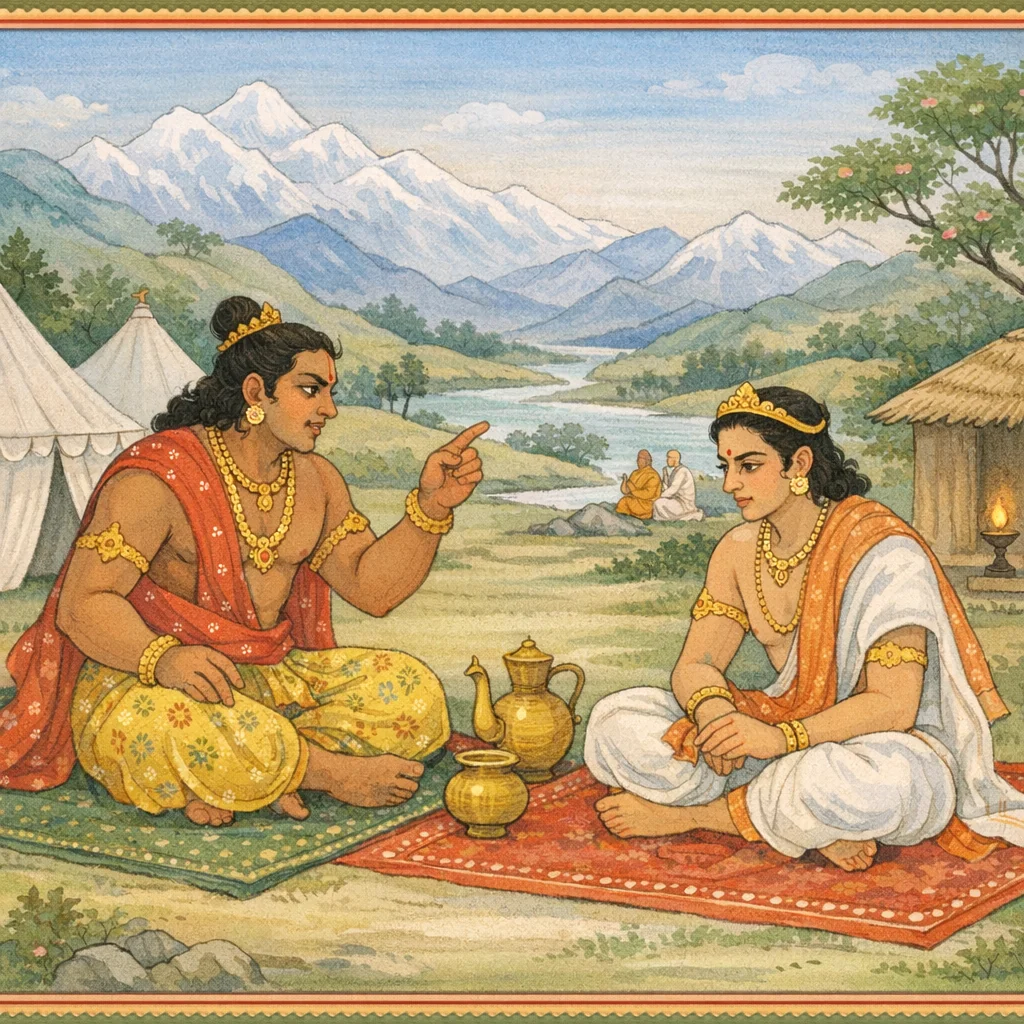
In this adhyāya, Bhīma confronts Yudhiṣṭhira’s softened resolve and critiques what he characterizes as an unsteady, text-bound (anuvāka-hatā) understanding that fails to perceive tattvārtha (the practical truth of duty). He argues that excessive forbearance and compassion, when misapplied to kṣatriya obligations, can undermine rightful governance. Bhīma frames the war’s outcome as the removal of political obstructers (paripanthin) and urges Yudhiṣṭhira to enjoy and administer the earth “by dharma,” i.e., through lawful kingship. He employs a chain of analogies—digging a well without water, climbing for honey but dying before tasting, traveling far with hope yet returning disappointed—to portray the futility of abandoning the attained kingdom after immense cost. The discourse then turns to a critique of renunciation-as-escape: Bhīma contends that mere external ascetic markers or withdrawal do not yield siddhi, and that the world is sustained by action (karma). The chapter culminates in a clear karmic thesis: accomplishment is not achieved through akarma (non-action); therefore, disciplined action aligned with role-duty is required.
Chapter Arc: युद्धोत्तर शोक में डूबे युधिष्ठिर के मन में राजधर्म से विरक्ति और संन्यास का आकर्षण उठता है; उसी क्षण भीमसेन तीखे वचनों से उसे ‘कर्तव्य’ की ओर खींच लाते हैं। → भीम युधिष्ठिर की राजधर्म-निन्दा और आलस्य-प्रवृत्ति पर प्रहार करते हैं—धृतराष्ट्र-पुत्रों के विनाश के बाद यदि राजा ही हाथ खींच ले तो प्रजा, व्यवस्था और धर्म का क्या होगा? वे क्षत्रिय-मार्ग की कठोरता बताते हैं जहाँ करुणा-क्षमा भी सीमा में बँधी है, अन्यथा राज्य-धर्म ढह जाता है। → भीम का निर्णायक तर्क: ‘अकर्म से सिद्धि नहीं’—यदि संन्यास मात्र से राजाओं को सिद्धि मिलती, तो पर्वत और वृक्ष (जो नित्य-निरुपद्रव, अपरिग्रह, ब्रह्मचर्यवत् स्थिर हैं) सबसे पहले सिद्ध हो जाते। जगत् अपने-अपने कर्मों से चलता है; इसलिए त्याग नहीं, कर्म ही अनिवार्य है। → भीम ‘सूक्ष्मदर्शी’ दृष्टि से कहते हैं कि बिना आपत्काल के त्याग का आग्रह धर्म-व्यतिक्रम बन सकता है; राजन् को अपने स्वधर्म—राज्य-पालन, प्रजा-रक्षा, व्यवस्था-स्थापन—में लौटना चाहिए। → युधिष्ठिर के भीतर वैराग्य और राजकर्तव्य का द्वंद्व अभी पूरी तरह शांत नहीं होता—अगले संवाद में यह प्रश्न उठता है कि ‘त्याग’ और ‘कर्म’ का समन्वय किस प्रकार हो।
Shlokas
Verse 1
दशमो< ध्याय: भीमसेनका राजाके लिये संन्यासका विरोध करते हुए अपने कर्तव्यके ही पालनपर जोर देना भीम उवाच श्रोत्रियस्थेव ते राजन् मन्दकस्याविपक्चित: । अनुवाकहता बुद्धिर्नैषा तत्त्वार्थदर्शिनी,भीमसेन बोले--राजन्! जैसे मन्द और अर्थज्ञानसे शून्य श्रोत्रियकी बुद्धि केवल मन्त्रपाठद्वारा मारी जाती है, उसी प्रकार आपकी बुद्धि भी तात््विक अर्थको देखने या समझनेवाली नहीं है
Bhīma said: “O King, just as the mind of a dull, unripe ‘śrotriya’ is struck down by mere recitation—empty of real understanding—so too your intellect has been overpowered by words and is not one that truly sees the reality of the matter.”
Verse 2
आलस्ये कृतचित्तस्य राजधर्मानसूयत: । विनाशे धार्तराष्ट्राणां कि फलं भरतर्षभ,भरतश्रेष्ठ! यदि राजधर्मकी निन््दा करते हुए आपने आलस्यपूर्ण जीवन बितानेका ही निश्चय किया था तो धृतराष्ट्रके पुत्रोंका विनाश करानेसे क्या फल मिला?
Bhima said: “O bull among the Bharatas, if you had already resolved to live in indolence—censuring and resenting the duties of kingship—then what benefit was gained by bringing about the destruction of Dhṛtarāṣṭra’s sons? What ethical purpose did that ruin serve, if you were not going to uphold royal dharma afterward?”
Verse 3
क्षमानुकम्पा कारुण्यमानृशंस्यं न विद्यते । क्षात्रमाचरतो मार्गमपि बन्धोस्त्वदन्तरे,क्षत्रियोचित मार्गपर चलनेवाले पुरुषके हृदयमें अपने भाईपर भी क्षमा, दया, करुणा और कोमलताका भाव नहीं रह जाता; फिर आपके हृदयमें यह सब क्यों है?
Bhīma said: “For one who follows the warrior’s path, forgiveness, compassion, pity, and gentle non-cruelty are not found—even toward one’s own kin. If this is so, then why do these feelings still arise in your heart?”
Verse 4
यदीमां भवतो बुद्धि विद्याम वयमीदृशीम् । शस्त्र नैव ग्रहीष्यामो न वधिष्याम कंचन,यदि हम पहले ही जान लेते कि आपका विचार इस तरहका है तो हम हथियार नहीं उठाते और न किसीका वध ही करते
Bhīma said: “Had we known earlier that your judgment and understanding were of this kind, we would never have taken up weapons, nor would we have slain anyone.”
Verse 5
भैक्ष्ममेवाचरिष्याम शरीरस्याविमोक्षणात् । न चेदं दारुणं युद्धमभविष्यन्महीक्षिताम्,हम भी आपकी ही तरह शरीर छूटनेतक भीख माँगकर ही जीवन-निर्वाह करते। फिर तो राजाओंमें यह भयंकर युद्ध होता ही नहीं
Bhīma said: “We would have lived by begging alone, just as you do, until the body itself was cast off. If that were so, then this dreadful war among kings would never have come to pass.”
Verse 6
प्राणस्यान्नमिदं सर्वमिति वै कवयो विदु: । स्थावरं जड़म॑ चैव सर्व प्राणस्य भोजनम्,विद्वान् पुरुष कहते हैं कि यह सब कुछ प्राणका अन्न है, स्थावर और जड़म सारा जगत् प्राणका भोजन है
Bhīma said: “The wise declare that all this is the food of prāṇa (life-breath). Everything in the world—whether immobile or inert—ultimately becomes nourishment for prāṇa.”
Verse 7
आददानस्यथ चेद् राज्यं ये केचित् परिपन्थिन: । हन्तव्यास्त इति प्राज्ञा: क्षत्रधर्मविदो विदु:,क्षत्रिय-धर्मके ज्ञाता विद्वान् पुरुष यह जानते और बताते हैं कि अपना राज्य ग्रहण करते समय जो कोई भी उसमें बाधक या विरोधी खड़े हों, उन्हें मार डालना चाहिये
Bhīma said: “When a king is in the act of taking up (or reclaiming) his sovereignty, whoever stands in the way as an obstructer or hostile opponent—such men, the wise who know the kṣatriya code declare, are to be slain.”
Verse 8
ते सदोषा हतास्माभी राज्यस्य परिपन्थिन: । तान् हत्वा भुड्क्ष्व धर्मेण युधिष्ठिर महीमिमाम्,युधिष्ठिर! जो लोग हमारे राज्यके बाधक या लुटेरे थे, वे सभी अपराधी ही थे; अतः हमने उन्हें मार डाला। उन्हें मारकर धर्मतः प्राप्त हुई इस पृथ्वीका आप उपभोग कीजिये
Bhīma said: “Those men were indeed culpable—obstructors and enemies of our kingdom—so we slew them. Having killed them, O Yudhiṣṭhira, now enjoy this earth as is rightfully and lawfully obtained, in accordance with dharma.”
Verse 9
यथा हि पुरुष: खात्वा कूपमप्राप्य चोदकम् | पड़कदिग्धो निवर्तेत कर्मेदे नस्तथोपमम्,जैसे कोई मनुष्य परिश्रम करके कुँआ खोदे और वहाँ जल न मिलनेपर देहमें कीचड़ लपेटे हुए वहाँसे निराश लौट आये, उसी प्रकार हमारा किया-कराया यह सारा पराक्रम व्यर्थ होना चाहता है
Bhima said: “As a man, after toiling to dig a well, finds no water and turns back in disappointment, his body smeared with mud, so too do our deeds and exertions seem to be turning futile.”
Verse 10
यथा<55रुह्मु महावृक्षमपह्त्य ततो मधु । अप्राश्य निधन गच्छेत् कर्मेदे नस्तथोपमम्,जैसे कोई विशाल वृक्षपर आरूढ़ हो वहाँसे मधु उतार लाये परंतु उसे खानेके पूर्व ही उसकी मृत्यु हो जाय; हमारा यह प्रयत्न भी वैसा ही हो रहा है इति श्रीमहाभारते शान्तिपर्वणि राजधर्मानुशासनपर्वणि भीमवाक्ये दशमो< ध्याय: ।। १० || इस प्रकार श्रीमह्याभारत शान्तिपर्वके अन्तर्गत राजध्मानुशासनपर्वमें भीमसेनका वचनविषयक दसवाँ अध्याय पूरा हुआ
Bhima said: “It is like a man who climbs a great tree, brings down honey from it, yet dies before he can taste it. In the same way, our present exertion is proving futile—its fruit is obtained, but we are cut off before we can enjoy it.”
Verse 11
यथा महान्तमध्वानमाशया पुरुष: पतन् | स निराशो निवर्तेत कर्मतन्नस्तथोपमम्,जैसे कोई मनुष्य मनमें कोई आशा लेकर बहुत बड़ा मार्ग तै करे और वहाँ पहुँचनेपर निराश लौटे, हमारा यह कार्य भी उसी तरह निष्फल हो रहा है
Bhima said: “Just as a man, driven onward by hope, undertakes a very long journey, yet on reaching the end returns disappointed, so too our undertaking has become comparable to that—ending in futility.”
Verse 12
यथा शत्रून् घातयित्वा पुरुष: कुरुनन्दन । आत्मानं घातयेत् पश्चात् कर्मेदं नस्तथोपमम्,कुरुनन्दन! जैसे कोई मनुष्य शत्रुओंका वध करनेके पश्चात् अपनी भी हत्या कर डाले, हमारा यह कर्म भी वैसा ही है
Bhīma said: “O delight of the Kurus, just as a man, after killing his enemies, would then go on to kill himself, so too does our deed resemble that—self-destructive after victory.”
Verse 13
यथान्न क्षुधितो लब्ध्वा न भुज्जीयाद् यदृच्छया । कामीव कामिनी लब्ध्वा कर्मेदं नस्तथोपमम्,जैसे भूखा मनुष्य भोजन और कामी पुरुष कामिनीको पाकर दैववश उसका उपभोग न करे, हमारा यह कर्म भी वैसा ही निष्फल हो रहा है
Bhima said: “Just as a hungry man, having obtained food, might—by sheer chance—still not eat it, or as a lustful man, having obtained a willing woman, might still not enjoy her, so too our undertaking has become comparable to that: fruitless, despite the means being in hand.”
Verse 14
वयमेवात्र गहरा हि यद् वयं मन्दचेतसम् | त्वां राजन्ननुगच्छामो ज्येष्ठोडयमिति भारत,भरतवंशी नरेश! हमलोग ही यहाँ निन्दाके पात्र हैं कि आप-जैसे अल्पबुद्धि पुरुषको बड़ा भाई समझकर आपके पीछे-पीछे चलते हैं
Bhima said: “Indeed, it is we who deserve blame here—that we, in our dullness of judgment, keep following you, O king, thinking, ‘He is our elder brother,’ O Bharata.”
Verse 15
वयं हि बाहुबलिन: कृतविद्या मनस्विन: । क्लीबस्य वाक्ये तिष्ठामो यथैवाशक्तयस्तथा,हम बाहुबलसे सम्पन्न, अस्र-शस्त्रोंके विद्वान् और मनस्वी हैं तो भी असमर्थ पुरुषोंके समान एक कायर भाईकी अज्ञामें रहते हैं
Bhima said: “We are men of mighty arms, trained in the arts of war and firm of mind; yet we stand obedient to the word of a weakling, as though we ourselves were powerless.”
Verse 16
अगतीकगतीनस्मान् नष्टार्थानर्थसिद्धये । कथं वै नानुपश्येयुर्जना: पश्यत यादृशम्,हमलोग पहले अशरण मनुष्योंको शरण देनेवाले थे; किंतु अब हमारा ही अर्थ नष्ट हो गया है। ऐसी दशामें अर्थसिद्धिके लिये हमारा आश्रय लेनेवाले लोग हमारी इस दुर्बलतापर कैसे दृष्टि नहीं डालेंगे? बन्धुओ! मेरा कथन कैसा है? इसपर विचार करो
Bhima said: “We were once the refuge for those who had no refuge, the very ‘path’ for the pathless. But now our own strength and purpose have been ruined. In such a condition, how could people—seeking success in their aims by taking shelter in us—not notice our weakness? Kinsmen, consider what I am saying: what do you think of my words?”
Verse 17
आपत्काले हि संन्यास: कर्तव्य इति शिष्यते । जरयाभिपरीतेन शत्रुभिव्यसितेन वा,शास्त्रका उपदेश यह है कि आपत्तिकालमें या बुढ़ापेसे जर्जर हो जानेपर अथवा शत्रुओंद्वारा धन-सम्पत्तिसे वज्चित कर दिये जानेपर मनुष्यको संन्यास ग्रहण करना चाहिये
Bhīma says that the teaching of the śāstras is this: in times of grave distress one may rightly adopt renunciation. Likewise, when a person is overwhelmed by old age, or when enemies have stripped him of wealth and means, he should take up saṃnyāsa.
Verse 18
तस्मादिह कृतप्रज्ञास्त्यागं न परिचक्षते । धर्मव्यतिक्रमं चैव मन्यन्ते सूक्ष्मदर्शिन:,अतः (जब कि हमारे ऊपर पूर्वोक्त संकट नहीं आया है) विद्वान् पुरुष ऐसे अवसरमें त्याग या संन्यासकी प्रशंसा नहीं करते हैं। सूक्ष्मदर्शी पुरुष तो ऐसे समयमें क्षत्रियके लिये संन्यास लेना उलटे धर्मका उल्लंघन मानते हैं
Therefore, in this very situation, men of settled understanding do not commend renunciation. Those who see with subtle discernment even regard such renunciation—especially for one bound to the warrior’s duty—as a transgression of dharma, for it abandons the rightful obligation at a critical time.
Verse 19
कथं तस्मात् समुत्पन्नास्तन्निष्ठास्तदुपाश्रया: । तदेव निन्दां भाषेयुर्धाता तत्र न गहति,इसलिये जिनकी क्षात्रधर्मके लिए उत्पत्ति हुई है, जो क्षात्रधर्ममें ही तत्पर रहते हैं, तथा क्षात्रधर्मका ही आश्रय लेकर जीवन-निर्वाह करते हैं, वे क्षत्रिय स्वयं ही उस क्षात्रधर्मकी निन््दा कैसे कर सकते हैं? इसके लिये उस विधाताकी ही निन्दा क्यों न की जाय, जिन्होंने क्षत्रियोंके लिये युद्धधर्मका विधान किया है
Bhīma said: “How could those who are born from that very kṣātra-duty, who remain devoted to it, and who sustain their lives by taking refuge in it, ever speak in condemnation of that same warrior-dharma? If blame is to be spoken at all, should it not rather fall upon the Ordainer who established the law of battle for the kṣatriyas?”
Verse 20
श्रिया विहीनैरधनैर्नास्तिकै: सम्प्रवर्तितम् । वेदवादस्य विज्ञानं सत्याभासमिवानृतम्,श्रीहीन, निर्धन एवं नास्तिकोंने वेदके अर्थवादवाकयों द्वारा प्रतिपादित विज्ञानका आश्रय ले सत्य-सा प्रतीत होनेवाले मिथ्या मतका प्रचार किया है (वैसे वचनोंद्वारा क्षत्रियका संन्यासमें अधिकार नहीं सिद्ध होता है)
Bhīma said: “Deprived of prosperity, lacking wealth, and driven by disbelief, certain people have set in motion a so‑called ‘knowledge’ based on Vedic eulogistic passages. Though it appears like truth, it is in fact false—an imitation of truth used to spread a misleading doctrine.”
Verse 21
शक््यं तु मौनमास्थाय बिशभ्रता55त्मानमात्मना । धर्मच्छञ्म समास्थाय च्यवितुं न तु जीवितुम्,धर्मका बहाना लेकर अपनेद्वारा केवल अपना पेट पालते हुए मौनी बाबा बनकर बैठ जानेसे कर्तव्यसे भ्रष्ट होना ही सम्भव है, जीवनको सार्थक बनाना नहीं
Bhima said: “One may indeed adopt silence and, by one’s own effort, sustain oneself; but taking refuge in a ‘dharma’ that is only a disguise, one can at best fall away from true duty—one does not thereby truly live or make life meaningful.”
Verse 22
शक््यं पुनररण्येषु सुखमेकेन जीवितुम् । अबिक्षता पुत्रपौत्रान् देवर्षीनतिथीन् पितृन्,जो पुत्रों और पौत्रोंके पालनमें असमर्थ हो, देवताओं, ऋषियों तथा पितरोंको तृप्त न कर सकता हो और अतिथियोंको भोजन देनेकी भी शक्ति न रखता हो, ऐसा मनुष्य ही अकेला जंगलोंमें रहकर सुखसे जीवन बिता सकता है (आप-जैसे शक्तिशाली पुरुषोंका यह काम नहीं है)
Bhīma said: “It is indeed possible to live alone in the forests with ease—but only for one who is incapable of supporting sons and grandsons, who cannot satisfy the gods, the seers, and the ancestors, and who lacks the means to feed guests. For a capable and powerful man like you, such solitary forest-life is not the proper course.”
Verse 23
नेमे मृगा: स्वर्गजितो न वराहा न पक्षिण: । अथान्येन प्रकारेण पुण्यमाहुर्न तं जना:,सदा ही वनमें रहनेपर भी न तो ये मृग स्वर्गलोकपर अधिकार पा सके हैं, न सूअर और पक्षी ही। पुण्यकी प्राप्ति तो अन्य प्रकारसे ही बतलायी गयी है। श्रेष्ठ पुरुष केवल वनवासको ही पुण्यकारक नहीं मानते
Bhīma said: “These deer have not conquered heaven—nor have boars or birds. People say that merit is gained in other ways. The noble do not regard mere dwelling in the forest alone as a source of virtue.”
Verse 24
यदि संन्यासतः सिद्धि राजा कश्चिदवाप्रुयात् पर्वताश्ष द्रुमाश्वैव क्षिप्रं सिद्धिमवाप्रुयु:,यदि कोई राजा संन्याससे सिद्धि प्राप्त कर ले, तब तो पर्वत और वृक्ष बहुत जल्दी सिद्धि पा सकते हैं
Bhima said: “If merely by taking to renunciation some king could attain spiritual perfection, then mountains and trees too would quickly attain perfection.”
Verse 25
एते हि नित्यसंन्यासा दृश्यन्ते निरुपद्रवा: । अपरिग्रहवन्तश्न सततं ब्रह्मचारिण:,क्योंकि ये नित्य संन्यासी, उपद्रवशून्य, परिग्रहरहित तथा निरन्तर ब्रह्मचर्यका पालन करनेवाले देखे जाते हैं
For these are seen to be perpetual renunciants—harmless and free from disturbance—living without possessions and continually observing brahmacarya.
Verse 26
अथ चेदात्मभाग्येषु नान्येषां सिद्धिमश्रुते । तस्मात् कर्मव कर्तव्यं नास्ति सिद्धिरकर्मण:,यदि अपने भाग्यमें दूसरोंके कर्मोसे प्राप्त हुई सिद्धि नहीं आती, तब तो सभीको कर्म ही करना चाहिये। अकर्मण्य पुरुषको कभी कोई सिद्धि नहीं मिलती
Bhīma said: “If, within one’s own allotted destiny, success is not heard of as coming from the deeds of others, then one must indeed act for oneself. For a man who does not act, there is never any attainment.”
Verse 27
औदका: सृष्टयश्चैव जन्तव: सिद्धिमाप्रुयु: । तेषामात्मैव भर्तव्यो नान्य: कश्नन विद्यते,(यदि अपने शरीरमात्रका भरण-पोषण करनेसे सिद्धि मिलती हो, तब तो) जलमें रहनेवाले जीवों तथा स्थावर प्राणियोंको भी सिद्धि प्राप्त कर लेनी चाहिये: क्योंकि उन्हें केवल अपना ही भरण-पोषण करना रहता है। उनके पास दूसरा कोई ऐसा नहीं है, जिसके भरण-पोषणका भार वे उठाते हों
Bhīma said: “If mere self-maintenance were enough to attain spiritual perfection, then aquatic creatures and even immobile beings would surely attain it as well. For they have only themselves to sustain—there is no other being whose burden of support they must carry.”
Verse 28
अवेक्षस्व यथा स्वै: स्वै: कर्मभिव्यापृतं जगत् । तस्मात् कर्मव कर्तव्यं नास्ति सिद्धिरकर्मण:,देखिये और विचार कीजिये कि सारा संसार किस तरह अपने कर्मोमें लगा हुआ है; अत: आपको भी क्षत्रियोचित कर्तव्यका ही पालन करना चाहिये। जो कर्मोंको छोड़ बैठता है, उसे कभी सिद्धि नहीं मिलती
Look carefully and reflect on how the whole world is engaged, each in their own actions. Therefore, action—your rightful duty—must indeed be performed; for one who abandons action never attains fulfillment or success.
Frequently Asked Questions
Whether a ruler, burdened by remorse after a destructive conflict, may ethically withdraw into renunciation—or must assume kingship as a duty to restore order and prevent political instability.
The chapter advances a karma-centered ethic: external renunciation without responsibility is inadequate; role-appropriate action, regulated by dharma, is necessary for both societal welfare and personal integrity.
Yes: by asserting “nāsti siddhirakarmaṇaḥ” (no accomplishment through non-action), the chapter positions mokṣa-discourse as compatible with disciplined duty, warning against dharma-chadma (ethical disguise) that imitates renunciation while evading obligation.