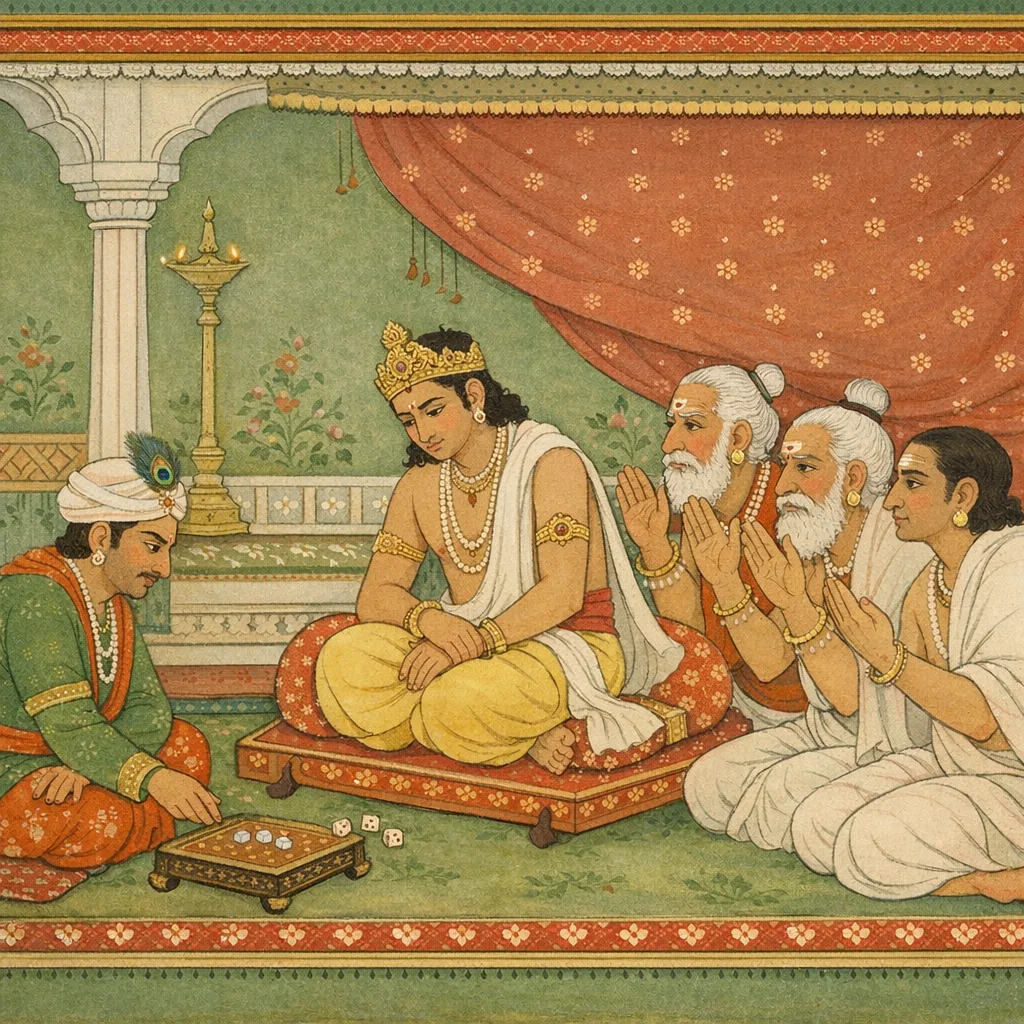
Adhyaya 76
Chapter Arc: द्यूत-सभा की धूल अभी बैठी भी नहीं कि धृतराष्ट्र का संदेश फिर आता है—“आओ, पाण्डव! फिर पासा खेलो,” और युधिष्ठिर के सामने वही द्वार पुनः खुलता है, जिसके भीतर विनाश पहले ही दिख चुका है। → युधिष्ठिर विधाता-नियोग का तर्क रखकर कहता है कि शुभ-अशुभ फल प्राणियों को प्राप्त होते हैं और उनसे निवृत्ति नहीं—अतः ‘देवितव्यं’ है; वह शकुनि की माया जानते हुए भी भाइयों सहित लौट पड़ता है। सभा में भीष्म, द्रोण, विदुर, कृप, संजय, युयुत्सु, गान्धारी और कुन्ती जैसे वरिष्ठ उसे रोकते हैं; पर लोक-प्रवाद, राज-आज्ञा और ‘धर्म-संयोग’ का दबाव उसे पुनः द्यूत की ओर धकेलता है। → वनवास की शर्त पर ‘एक ही उछाल’ का निर्णायक दाँव—युधिष्ठिर ग्लह स्वीकार करता है, शकुनि पासा फेंकता है और तत्काल घोषणा करता है: “जितम्”—पाण्डवों पर वनवास का निर्णय गिर पड़ता है। → युधिष्ठिर पराजय स्वीकार कर लेता है; सभा के भीतर रोकने वालों की वाणी निष्फल रह जाती है और द्यूत का परिणाम अब विधिवत् राजकीय आदेश का रूप ले लेता है—पाण्डवों के लिए निर्वासन का मार्ग निश्चित होता है। → वनवास की अवधि और उसके बाद की शर्तें (अज्ञातवास/पुनरागमन) पाण्डवों के भविष्य को किस प्रकार बाँधेंगी—यह प्रश्न अगले प्रसंग की ओर कथा को धकेल देता है।
Shlokas
Verse 1
इस प्रकार श्रीमह्याभारत सभापव॑के अन्तर्गत अनुद्यूतपर्वमें गान्धारीवाक्यविषयक पचहत्तरवाँ अध्याय पूरा हुआ ॥/ ७५ ॥। ऑपनआ प्रात बछ। आर: 2 षट्सप्ततितमो< ध्याय: सबके मना करनेपर भी धृतराष्ट्रकी आज्ञासे युधिष्ठिरका पुनः जूआ खेलना और हारना वैशम्पायन उवाच ततो व्यध्वगतं पार्थ प्रातिकामी युधिष्ठिरम् । उवाच वचनाद् राज्ञो धृतराष्ट्रस्य धीमत:,वैशम्पायनजी कहते हैं--राजन्! धर्मराज युधिष्ठछिर इन्द्रप्रस्थके मार्गमें बहुत दूरतक चले गये थे। उस समय बुद्धिमान् राजा धृतराष्ट्रकी आज्ञासे प्रातिकामी उनके पास गया और इस प्रकार बोला--
Vaiśampāyana said: Then, when Yudhiṣṭhira—the son of Pṛthā—had gone far along the road, Prātikāmin approached him and, at the command of the wise king Dhṛtarāṣṭra, delivered a message.
Verse 2
ऐ उपास्तीर्णा सभा राजन्नक्षानुप्त्वा युधिष्ठिर । एहि पाण्डव दीव्येति पिता त्वाहेति भारत,“भरतकुलभूषण पाण्डुनन्दन युधिष्ठिर! आपके पिता राजा धृतराष्ट्रने यह आदेश दिया है कि तुम लौट आओ। हमारी सभा फिर सदस्योंसे भर गयी है और तुम्हारी प्रतीक्षा कर रही है। तुम पासे फेंककर जूआ खेलो'
“O King, the assembly hall is now fully convened. O Yudhiṣṭhira, having obtained the dice, come—O Pāṇḍava—and play. Thus, O Bhārata, your father (Dhṛtarāṣṭra) has commanded.”
Verse 3
युधिष्ठिर उदाच धातुर्नियोगाद् भूतानि प्राप्रुवन्ति शुभाशुभम् । न निवृत्तिस्तयोरस्ति देवितव्यं पुनर्यदि,युधिष्ठिरने कहा--समस्त प्राणी विधाताकी प्रेरणासे शुभ और अशुभ फल प्राप्त करते हैं। उन्हें कोई टाल नहीं सकता। जान पड़ता है, मुझे फिर जूआ खेलना पड़ेगा
Yudhiṣṭhira said: “All beings, by the ordinance of the Disposer, attain what is auspicious and what is inauspicious; there is no turning away from either. It seems I must play dice again.”
Verse 4
अक्षयूते समाद्दानं नियोगात् स्थविरस्थ च । जानन्नपि क्षयकरं नातिक्रमितुमुत्सहे,वृद्ध राजा धृतराष्ट्रकी आज्ञासे जूएके लिये यह बुलावा हमारे कुलके विनाशका कारण है, यह जानते हुए भी मैं उनकी आज्ञाका उल्लंघन नहीं कर सकता
Vaiśaṃpāyana said: “At the command of the aged king Dhṛtarāṣṭra, I have accepted this invitation to the game of dice. Though I know it will bring ruin, I do not dare to overstep his order.”
Verse 5
वैशम्पायन उवाच असम्भवे हेममयस्य जन्तो- स्तथापि रामो लुलुभे मृगाय । प्रायः समासन्नपरा भवाणां धियो विपर्यस्ततरा भवन्ति,वैशम्पायनजी कहते हैं--जनमेजय! किसी जानवरका शरीर सुवर्णका हो, यह सम्भव नहीं; तथापि श्रीराम स्वर्णमय प्रतीत होनेवाले मृगके लिये लुभा गये। जिनका पतन या पराभव निकट होता है, उनकी बुद्धि प्राय: अत्यन्त विपरीत हो जाती है
Vaiśampāyana said: “Though it is impossible for any creature’s body to be made of gold, still Rāma was enticed by the deer that appeared golden. For those whose downfall is close at hand, the mind is usually driven into even greater perversity and error.”
Verse 6
इति ब्रुवन् निववृते भ्रातृभि: सह पाण्डव: । जानंश्व शकुनेर्मायां पार्थो द्यूतमियात् पुन:,ऐसा कहते हुए पाण्डुनन्दन युधिष्ठिर भाइयोंके साथ पुनः लौट पड़े। वे शकुनिकी मायाको जानते थे, तो भी जूआ खेलनेके लिये चले आये
So speaking, the Pāṇḍava (Yudhiṣṭhira) turned back together with his brothers. Though he knew well the deceitful stratagems of Śakuni, the son of Pāṇḍu again went to the gambling match.
Verse 7
विविशुस्ते सभां तां तु पुनरेव महारथा: । व्यथयन्ति सम चेतांसि सुहृदां भरतर्षभा:,महारथी भरतश्रेष्ठ पाण्डव पुनः उस सभामें प्रविष्ट हुए। उन्हें देखकर सुहृदोंके मनमें बड़ी पीड़ा होने लगी। प्रारब्धके वशीभूत हुए कुन्तीकुमार सम्पूर्ण लोकोंके विनाशके लिये पुनः द्यूतक्रीड़ा आरम्भ करनेके उद्देश्यसे चुपचाप वहाँ जाकर बैठ गये
Vaiśaṃpāyana said: Those great chariot-warriors entered that assembly hall once again. Seeing them return, the hearts of their well-wishers were deeply pained, O bull among the Bharatas—an ominous renewal of the chain of events that would drive them, under the pressure of fate and circumstance, back toward the ruinous gambling that corrodes dharma and destroys trust.
Verse 8
यथोपजोषमासीना: पुनर्द्यूतप्रवृत्तये सर्वलोकविनाशाय दैवेनोपनिपीडिता:,महारथी भरतश्रेष्ठ पाण्डव पुनः उस सभामें प्रविष्ट हुए। उन्हें देखकर सुहृदोंके मनमें बड़ी पीड़ा होने लगी। प्रारब्धके वशीभूत हुए कुन्तीकुमार सम्पूर्ण लोकोंके विनाशके लिये पुनः द्यूतक्रीड़ा आरम्भ करनेके उद्देश्यसे चुपचाप वहाँ जाकर बैठ गये
Vaiśaṃpāyana said: Overpowered by fate, the Pāṇḍavas sat down again—quietly and without resistance—intent on resuming the dice-game, a course that would bring ruin upon the worlds. O best of the Bharatas, those great chariot-warriors re-entered the assembly hall; and when their well-wishers saw them, deep anguish arose in their hearts. The sons of Kuntī, held fast by what had already begun (their destined course), went there in silence and took their seats, aiming once more to set the gambling in motion for the destruction of all.
Verse 9
शकुनिरुवाच अमुज्चत् स्थविरो यद् वो धनं पूजितमेव तत् । महाधन ग्लहं त्वेक॑ शूणु भो भरतर्षभ
Śakuni said: “The elder has released to you that very wealth which you had duly honored and accepted. Now, O bull among the Bharatas, listen to a single wager involving great riches.”
Verse 10
शकुनिने कहा--राजन्! भरतश्रेष्ठ! हमारे बूढ़े महाराजने आपको जो सारा धन लौटा दिया है, वह बहुत अच्छा किया है। अब जूएके लिये एक ही दाँव रखा जायगा उसे सुनिये -- ९ || वयं वा द्वादशाब्दानि युष्माभिर्यूतनिर्जिता: । प्रविशेम महारण्यं रौरवाजिनवासस:,“यदि आपने हमलोगोंको जूएमें हरा दिया तो हम मृगचर्म धारण करके महान् वनमें प्रवेश करेंगे
Vaiśampāyana said: Śakuni said, “O King, best of the Bharatas! It was well done that our aged great king returned to you all the wealth. Now, for the dice-game, a single final stake shall be set—hear it. If you defeat us in play, then we shall, for twelve years, enter the great forest, wearing rough animal-skins.”
Verse 11
त्रयोदशं च सजने अज्ञाता: परिवत्सरम् | ज्ञाताश्न पुनरन्यानि वने वर्षाणि द्वादश,“और बारह वर्ष वहाँ रहेंगे एवं तेरहवाँ वर्ष हम जनसमूहमें लोगोंसे अज्ञात रहकर पूरा करेंगे और यदि हम तेरहवें वर्षमें लोगोंकी जानकारीमें आ जायाँ तो फिर दुबारा बारह वर्ष वनमें रहेंगे
Vaiśampāyana said: “And the thirteenth year we shall complete while remaining unrecognized among people. But if, during that thirteenth year, we are discovered, then once again we must spend another twelve years in the forest.”
Verse 12
अस्माभिनििर्जिता यूय॑ं वने द्वादश वत्सरान् | वसध्वं कृष्णया सार्धमजिनै: प्रतिवासिता:,“यदि हम जीत गये तो आपलोग द्रौपदीके साथ बारह वर्षोतक मृगचर्म धारण करते हुए वनमें रहें
Vaiśampāyana said: “You have been defeated by us; therefore, for twelve years you must dwell in the forest, together with Kṛṣṇā (Draupadī), living in exile and clad in deerskins.”
Verse 13
त्रयोदशं च सजने अज्ञाता: परिवत्सरम् | ज्ञाताश्न पुनरन्यानि वने वर्षाणि द्वादश,“आपको भी तेरहवाँ वर्ष जनसमूहमें लोगोंसे अज्ञात रहकर व्यतीत करना पड़ेगा और यदि ज्ञात हो गये तो फिर दुबारा बारह वर्ष वनमें रहना होगा
Vaiśampāyana said: “And you must also spend the thirteenth year living among people without being recognized. If, however, you are discovered, then you must again undergo another twelve years in the forest.”
Verse 14
त्रयोदशे च निर्वत्ते पुनरेव यथोचितम् । स्वराज्यं प्रतिपत्तव्यमितरैरथवेतरै:,“तेरहवाँ वर्ष पूर्ण होनेपर हम या आप फिर वनसे आकर यथोचित रीतिसे अपना- अपना राज्य प्राप्त कर सकते हैं"
Vaiśampāyana said: “When the thirteenth year is completed, then, returning from the forest, we—or you—should, in the proper and lawful manner, regain our respective sovereign kingdoms.”
Verse 15
अनेन व्यवसायेन सहास्माभिरययुधिष्ठिर । अक्षानुप्त्वा पुनर्यूतमेहि दीव्यस्व भारत,भरतवंशी युधिष्ठटिर! इसी निश्चयके साथ आप आइये और पुनः पासा फेंककर हमलोगोंके साथ जूआ खेलिये
Vaiśampāyana said: “With this resolve, O Yudhiṣṭhira, come with us again. Having cast the dice, return to the gaming match and play once more, O Bhārata.”
Verse 16
अथ सभ्या: सभामध्ये समुच्छितकरास्तदा । ऊचुरुद्धिग्नमनस: संवेगात् सर्व एव हि
Then, in the midst of the royal assembly, the courtiers, raising their hands in agitation, spoke out—every one of them, their minds shaken and stirred by sudden alarm.
Verse 17
यह सुनकर सब सभासदोंने सभामें अपने हाथ ऊपर उठाकर अत्यन्त उद्विग्नचित्त हो बड़ी घबराहटके साथ कहा ।। सभ्या ऊचु: अहो धिग बान्धवा नैनं बोधयन्ति महद् भयम् । बुद्धया बुध्येन्न वा बुध्येदयं वै भरतर्षभ:,सभासद् बोले--अहो धिक््कार है! ये भाई-बन्धु भी युधिष्ठिरको उनके ऊपर आनेवाले महान् भयकी बात नहीं समझाते। पता नहीं, ये भरतश्रेष्ठ युधिष्ठिर अपनी बुद्धिके द्वारा इस भयको समझें या न समझें
The assembled courtiers exclaimed in agitation, raising their hands in alarm: “Alas, shame! Even his own kinsmen do not warn Yudhiṣṭhira of the great danger that is about to descend upon him. Whether this bull among the Bharatas will grasp that peril by his own discernment—or fail to grasp it—remains uncertain.”
Verse 18
वैशम्पायन उवाच जनप्रवादान् सुबहूज्छूण्वन्नपि नराधिप: । दिया च धर्मसंयोगात् पार्थों द्यूतमियात् पुन:,वैशम्पायनजी कहते हैं--जनमेजय! लोगोंकी तरह-तरहकी बातें सुनते हुए भी राजा युधिष्ठिर लज्जाके कारण तथा धृतराष्ट्रके आज्ञापालनरूप धर्मकी दृष्टिसे पुनः: जूआ खेलनेके लिये उद्यत हो गये
Vaiśampāyana said: Even while hearing many kinds of public talk and rumor, the king—Pārtha (Yudhiṣṭhira)—out of shame, and also from a sense of duty bound up with obedience to Dhṛtarāṣṭra’s command, again resolved to go to the dice-game.
Verse 19
जानन्नपि महाबुद्धि: पुनर्दयतमवर्तयत् । अप्यासन्नो विनाश: स्यात् कुरूणामिति चिन्तयन्,परम बुद्धिमान् युधिष्ठिर जूएका परिणाम जानते थे, तो भी यह सोचकर कि सम्भवतः कुरुकुलका विनाश बहुत निकट है, वे द्यूतक्रीड़ामें प्रवृत्त हो गये
Vaiśampāyana said: Though he was of great intelligence and knew the likely outcome, he again entered the game of dice, thinking, “Perhaps the destruction of the Kurus is already close at hand.”
Verse 20
युधिछिर उवाच कथं वै मद्विधो राजा स्वधर्ममनुपालयन् | आहूतो विनिवर्तेत दीव्यामि शकुने त्वया,युधिष्ठिर बोले--शकुने! स्वधर्मपालनमें संलग्न रहनेवाला मेरे-जैसा राजा जूएके लिये बुलाये जानेपर कैसे पीछे हट सकता था, अतः मैं तुम्हारे साथ खेलता हूँ
Yudhiṣṭhira said: “How could a king like me—intent on upholding his own dharma—turn back when formally summoned to a game? Therefore, Śakuni, I will play with you.”
Verse 21
शकुनिने कहा--राजन्! हमलोगोंके पास बैल, घोड़े और बहुत-सी दुधारू गौएँ हैं। भेड़ और बकरियोंकी तो गिनती ही नहीं है। हाथी, खजाना, दास-दासी तथा सुवर्ण सब कुछ हैं
Shakuni said: “O King, we possess abundant wealth—bulls and horses, and many milk-giving cows. As for sheep and goats, they are beyond counting. Elephants, treasury, male and female servants, and gold—everything is in our hands.”
Verse 22
एष नो ग्लह एवैको वनवासाय पाण्डवा: । यूयं वयं वा विजिता वसेम वनमाश्रिता:,फिर भी (इन्हें छोड़कर) एकमात्र वनवासका निश्चय ही हमारा दाँव है। पाण्डवो! आपलोग या हम, जो भी हारेंगे, उन्हें वनमें जाकर रहना होगा
Vaiśampāyana said: “This alone is our stake in the game—exile to the forest, O Pāṇḍavas. Whichever side is defeated, whether you or we, must go and live in the forest, taking refuge there.”
Verse 23
(वैशग्पायन उवाच एवं देवबलाविष्टो धर्मराजो युधिष्ठिर: । भीष्मद्रोणैर्वार्यमाणो विदुरेण च धीमता ।। युयुत्सुना कृपेणाथ सञठ्जयेन च भारत । गान्धार्या पृथया चैव भीमार्जुनयमैस्तथा ।। विकर्णेन च वीरेण द्रौपद्या द्रौणिना तथा । सोमदत्तेन च तथा बाह्लीकेन च धीमता ।। वार्यमाणोडपि सततं न च राजा नियच्छति ।) वैशम्पायनजी कहते हैं--जनमेजय! उस समय धर्मराज युधिष्ठिर प्रारब्धके वशीभूत हो गये थे। महाराज! उन्हें भीष्म, द्रोण और बुद्धिमान् विदुरजी दुबारा जूआ खेलनेसे रोक रहे थे। युयुत्सु, कृपाचार्य तथा संजय भी मना कर रहे थे। गान्धारी, कुन्ती, भीम, अर्जुन, नकुल, सहदेव, वीर विकर्ण, द्रौपदी, अश्वत्थामा, सोमदत्त तथा बुद्धिमान् बाह्नीक भी बारंबार रोक रहे थे तो भी राजा युधिष्ठिर भावीके वश होनेके कारण जूएसे नहीं हटे। शकुनिरुवाच गवाश्चव॑ं बहुधेनूकमपर्यन्तमजाविकम् । गजा: कोशो हिरण्यं च दासीदासाक्ष सर्वश:,त्रयोदशं च वै वर्षमज्ञाता: सजने तथा । अनेन व्यवसायेन दीव्याम पुरुषर्षभा: केवल तेरहवें वर्ष हमें किसी जनसमूहमें अज्ञात-भावसे रहना होगा। नरश्रेष्ठरण! हम इसी निश्चयके साथ जूआ खेलें
Vaiśampāyana said: “O Bhārata (Janamejaya), at that time King Yudhiṣṭhira, the lord of dharma, was overpowered by the force of destiny. Though he was repeatedly restrained by Bhīṣma and Droṇa, and by the wise Vidura; though Yuyutsu, Kṛpa, and Sañjaya also tried to dissuade him; though Gāndhārī and Pṛthā (Kuntī), and Bhīma, Arjuna, and the twins (Nakula and Sahadeva) likewise; though the heroic Vikarṇa, Draupadī, Droṇa’s son (Aśvatthāmā), Somadatta, and the wise Bāhlīka too kept warning him again and again—still the king did not hold back from the dice, being driven by what was to be.”
Verse 24
समुत्क्षेपण चैकेन वनवासाय भारत | प्रतिजग्राह त॑ पार्थो ग्लहं जग्राह सौबल: । जितमित्येव शकुनिर्युधिष्ठिरमभाषत,भारत! वनवासकी शर्त रखकर केवल एक ही बार पासा फेंकनेसे जूएका खेल पूरा हो जायगा। युधिष्ठिरने उसकी बात स्वीकार कर ली। तत्पश्चात् सुबलपुत्र शकुनिने पासा हाथमें उठाया और उसे फेंककर युधिष्ठिस्से कहा--मैरी जीत हो गयी
Vaiśaṃpāyana said: “O Bhārata, (Śakuni proposed) that with a single throw the entire game would be concluded, on the condition of exile to the forest. Pārtha (Yudhiṣṭhira) accepted that wager. Then Saubala (Śakuni), taking up the dice, cast them and said to Yudhiṣṭhira, ‘I have won.’”
Verse 76
इति श्रीमहा भारते सभापर्वणि अनुद्यूतपर्वणि पुनर्युधिष्ठटिरपरा भवे षट्सप्ततितमो<्ध्याय:
Thus ends the seventy-sixth chapter of the Anudyūta section within the Sabhā Parva of the revered Mahābhārata, describing Yudhiṣṭhira’s renewed defeat.