Adhyaya 6
Chapter 6: Dāruka’s Report; Arjuna Witnesses Dvārakā’s Desolation (दारुकवृत्तान्तः—अर्जुनस्य द्वारकादर्शनम्)
Upa-parva: Dāruka-saṃvāda and Arjuna’s Dvārakā-anuśocana (Report of the Vṛṣṇi end; Arjuna’s arrival in Dvārakā)
Vaiśaṃpāyana reports that Dāruka reaches the Kurus and informs the Pāṇḍavas that the Vārṣṇeya/Vṛṣṇi clans (including Bhojas, Kukuras, and Andhakas) have perished through mutual destruction. The Pāṇḍavas respond with grief and alarm. Arjuna, identified as Kṛṣṇa’s beloved companion, resolves to go and see the surviving relatives (mātula context) and travels with Dāruka to the Vṛṣṇi settlement. He beholds Dvārakā as if a woman bereft of her protector—an extended civic simile that frames the city as a wounded social organism. Kṛṣṇa’s women, formerly “protected by the lord of the world,” cry out on seeing Arjuna. The narrative dwells on Arjuna’s incapacitating sorrow and tears, his inability to look upon those deprived of Kṛṣṇa and sons, and a dense metaphorical description of Dvārakā as a dangerous river—its streets and squares rendered as currents, whirlpools, and still pools, with Rāma and Kṛṣṇa figured as great ‘crocodiles’ now absent. Overcome, Arjuna collapses; Satyā, Rukmiṇī, and Sātrājitī approach, lament, seat him, and speak. Arjuna praises Govinda, consoles the women, and proceeds to the next duty of meeting kin, marking a shift from shock to caretaking action.
Chapter Arc: मामाके महल में पहुँचे कुरुश्रेष्ठ अर्जुन को दृश्य मिलता है—वीर आनकदुन्दुभि वसुदेव पुत्र-शोक से संतप्त, पृथ्वी पर पड़े हैं; द्वारका-विनाश की छाया पहले ही वाणी बनकर कमरे में उतर आती है। → वसुदेव अर्जुन से बीते चमत्कारों और असह्य विपत्तियों का स्मरण कराते हैं—अश्वत्थामा के प्रहार से भी परीक्षित का कृष्ण-तेज से बच जाना, और अब उसी कृष्ण-कुल का घोर संहार; अर्जुन के भीतर ‘जो अजेय था, वह कैसे टूट गया’ का प्रश्न तीखा होता जाता है। → वसुदेव का भविष्य-वचन निर्णायक चोट करता है—अर्जुन के द्वारका छोड़ते ही प्राकार-अट्टालिकाओं सहित नगरी को समुद्र डुबो देगा; साथ ही वे बताते हैं कि कृष्ण बालकों सहित उन्हें छोड़कर अज्ञात दिशा को चले गए और वे स्वयं बलराम के साथ काल की प्रतीक्षा करेंगे। → अर्जुन के सामने शोक का निजी रूप (वसुदेव का विलाप) और धर्म का सार्वजनिक आदेश (द्वारका-त्याग, काल-स्वीकार) एक साथ स्पष्ट हो जाते हैं—यह अध्याय युद्ध-वीरता नहीं, अवसान-धर्म की तैयारी का विधान बन जाता है। → अर्जुन के प्रस्थान के बाद द्वारका पर समुद्र-प्रलय का निश्चित संकेत—क्या वह नगर, जो देव-शिल्प सा अडिग था, सचमुच क्षण में लुप्त हो जाएगा?
Shlokas
Verse 1
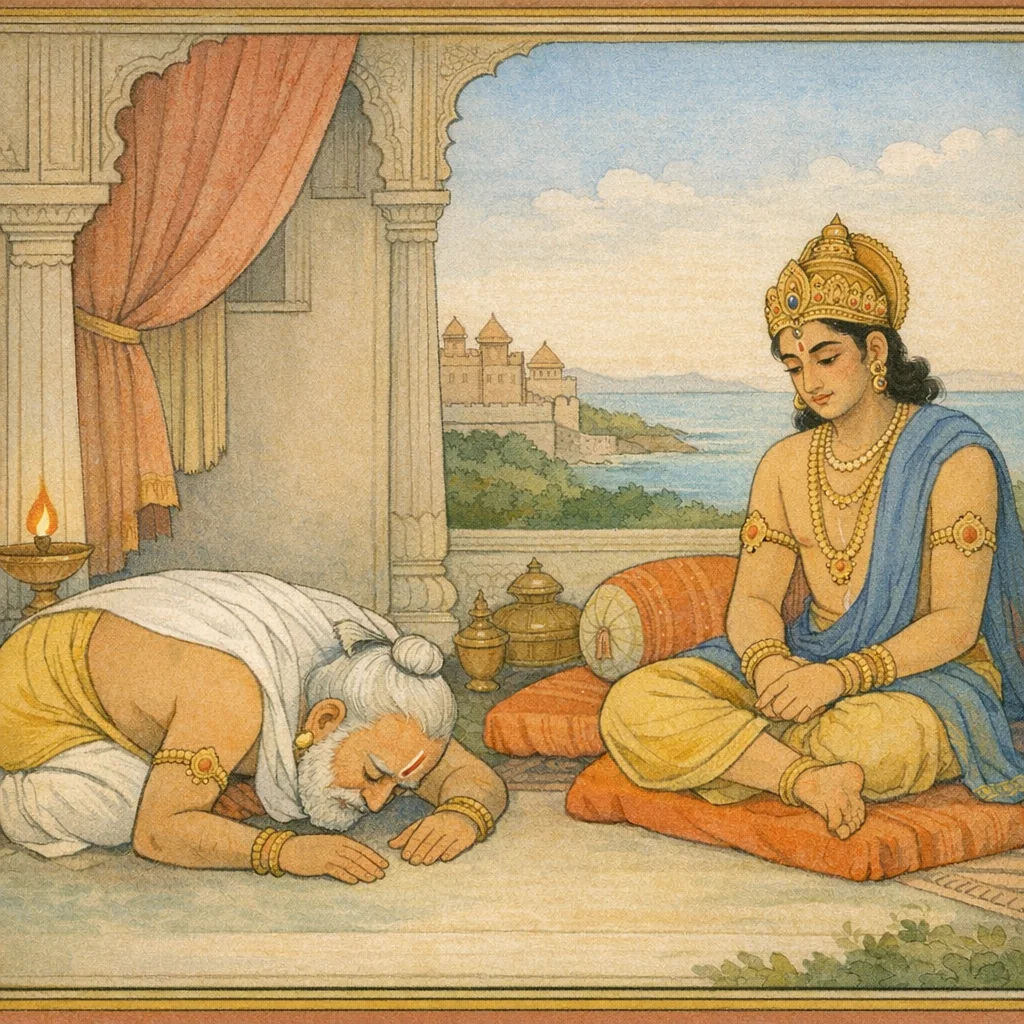
ऑपन--माज छा अकाल षष्ठो5 ध्याय: द्वारकामें अर्जुन और वसुदेवजीकी बातचीत वैशम्पायन उवाच तं॑ शयानं महात्मानं वीरमानकदुन्दुभिम् | पुत्रशोकेन संतप्तं ददर्श कुरुपुड्रव:
Vaiśampāyana said: The foremost of the Kurus beheld the great-souled hero Ānakadundubhi (Vasudeva) lying down, consumed and scorched by grief for his sons. The scene frames the moral aftermath of fratricidal ruin: even the mightiest are brought low when kinship is destroyed and the fruits of violence return as sorrow.
Verse 2
वैशम्पायनजी कहते हैं--जनमेजय! मामाके महलमें पहुँचकर कुरुश्रेष्ठ अर्जुनने देखा कि वीर महात्मा वसुदेवजी पुत्रशोकसे दुखी होकर पृथ्वीपर पड़े हुए हैं ।। तस्याश्रुपरिपूर्णाक्षो व्यूढोरस्को महाभुज: । आर्तस्यार्ततर: पार्थ: पादौ जग्राह भारत,भरतनन्दन! चौड़ी छाती और विशाल भुजावाले कुन्तीकुमार अर्जुन अपने शोकाकुल मामाकी वह दशा देखकर अत्यन्त संतप्त हो उठे। उनके नेत्रोंमें आँसू भर आये और उन्होंने मामाके दोनों पैर पकड़ लिये
Vaiśampāyana said: “O Janamejaya, when the foremost of the Kurus, Arjuna, reached the palace of his maternal kinsmen, he saw the heroic and great-souled Vasudeva lying on the ground, overwhelmed by grief for his sons. Seeing him, Arjuna—broad-chested and mighty-armed—became even more distressed than the distressed man himself; his eyes filled with tears, and he clasped Vasudeva’s feet, moved by reverence and compassion.”
Verse 3
तस्य मूर्धानमाच्रातुमियेषानकदुन्दुभि: । स्वस्रीयस्य महाबाहुर्न शशाक च शत्रुहन्,शत्रुधाती नरेश! महाबाहु आनकदुन्दुभि (वसुदेव)-ने चाहा कि मैं अपने भानजे अर्जुनका मस्तक सूँघ लूँ; परंतु असमर्थतावश वे ऐसा न कर सके
Vaiśampāyana said: Vāsudeva, called Ānakadundubhi, longed to smell (kiss) the head of his sister’s son Arjuna—a tender gesture of familial affection and blessing. Yet, though mighty-armed and a slayer of foes, he was unable to do so, restrained by helplessness in that moment.
Verse 4
समालिडूग्यार्जुनं वृद्ध: स भुजाभ्यां महाभुज: । रुदन् पुत्रान् स्मरन् सर्वान् विललाप सुविह्धलः
Vaiśampāyana said: The aged, mighty-armed one clasped Arjuna in his arms. Weeping and recalling all his sons, he lamented, utterly shaken and overwhelmed by grief.
Verse 5
इस प्रकार श्रीमह्याभारत मौसलपर्वमें अर्जुनका आगमनविषयक पॉचवाँ अध्याय पूरा हुआ,वसुदेव उवाच यैर्जिता भूमिपालाश्न दैत्याश्ष शतशोडर्जुन
Vaiśampāyana said: Thus ends the fifth chapter of the Mausala Parva of the Mahābhārata, concerning Arjuna’s arrival. Then Vasudeva said: “O Arjuna, by whom kings and even hundreds of Daityas were once conquered…”
Verse 6
यौ तावर्जुन शिष्यौ ते प्रियौ बहुमतौ सदा,इति श्रीमहा भारते मौसलपर्वणि अर्जुनवसुदेवसंवादे षष्ठो5ध्याय:
Vasudeva said: “Those two disciples of yours, Arjuna, have always been dear to you and held in high esteem.” Thus, in the Mahābhārata, in the Mausala Parva, in the dialogue between Arjuna and Vasudeva, ends the sixth chapter.
Verse 7
तयोरपनयात् पार्थ वृष्णयो निधनं गता: । अर्जुन! जो तुम्हारे प्रिय शिष्य थे और जिनका तुम बहुत सम्मान किया करते थे उन्हीं दोनों (सात्यकि और प्रद्युम्न)-के अन्यायसे समस्त वृष्णिवंशी मृत्युको प्राप्त हो गये हैं ।। ६ १ हल || ः ८4१65 न 5 प्ड्ड्ल्द न प (८ # 30.-7-5££-- 8 5 (6 +- _ट जे )५॥॥ 4: >-+:+>) यौ तौ वृष्णिप्रवीराणां द्वावेवातिरथौ मतौ
Vasudeva said: “O Partha, because of the misconduct and loss of restraint involving those two, the Vrishnis have met their destruction. Those very two—Sātyaki and Pradyumna—who were regarded as the foremost heroes of the Vrishni line, indeed counted as great chariot-warriors, became the occasion through which the entire clan fell.”
Verse 8
प्रद्युम्नो युयुधानश्व॒ कथयन् कत्थसे च यौ । तौ सदा कुरुशार्दूल कृष्णस्य प्रियभाजनौ
Vasudeva said: “Pradyumna and Yuyudhāna—those two about whom you speak and praise—were ever, O tiger among the Kurus, dear and cherished favorites of Kṛṣṇa.”
Verse 9
तावुभौ वृष्णिनाशस्य मुखमास्तां धनंजय । कुरुश्रेष्ठ धनंजय! वृष्णिवंशके प्रमुख वीरोंमें जिन दोको ही अतिरथी माना जाता था तथा तुम भी चर्चा चलाकर जिनकी प्रशंसाके गीत गाते थे वे श्रीकृष्णके प्रीतिभाजन प्रद्युम्न और सात्यकि ही इस समय वृष्णिवंशियोंके विनाशके प्रमुख कारण बने हैं ।। न तु गहामि शैनेयं हार्दिक्यं चाहमर्जुन
Vasudeva said: “O Dhanañjaya, let those two be regarded as the very ‘face’—the foremost, visible agents—of the destruction of the Vṛṣṇis. Yet, O Arjuna, I do not accept blame against Śaineya (Sātyaki) or Hārdikya (Pradyumna).”
Verse 10
अक्ूरं रौक्मिणेयं च शापो होवात्र कारणम् | अथवा अर्जुन! इस विषयमें मैं सात्यकि, कृतवर्मा, अक्रूर और प्रद्युम्नकी निन्दा नहीं करूँगा । वास्तवमें ऋषियोंका शाप ही यादवोंके इस सर्वनाशका प्रधान कारण है ।। केशिनं यस्तु कंसं च विक्रम्प जगत: प्रभु:,सो<भ्युपेक्षितवानेतमनयान्मधुसूदन: । कुन्तीनन्दन! जिन जगदीश्वरने पराक्रम प्रकट करके केशी और कंसको देह-बन्धनसे मुक्त कर दिया। बलका घमंड रखनेवाले चेदिराज शिशुपाल, निषादपुत्र एकलव्य, कलिंगराज, मगधनिवासी क्षत्रिय, गान्धार, काशिराज तथा मरुभूमिके राजाओंको भी यमलोक भेज दिया था, जिन्होंने पूर्व, दक्षिण तथा पर्वतीय प्रान्तके नरेशोंका भी संहार कर डाला था, उन्हीं मधुसूदनने बालकोंकी अनीतिके कारण प्राप्त हुए इस संकटकी उपेक्षा कर दी
Vasudeva said: “I will not censure Akrūra, Pradyumna (son of Rukmiṇī), Sātyaki, or Kṛtavarmā in this matter. In truth, the sages’ curse is the chief cause of the Yādavas’ total destruction. For that very Madhusūdana—the Lord of the world—who once displayed his might and freed Keśin and Kaṁsa from their bodily bondage (by slaying them), has now chosen to overlook this calamity that has arisen from the misconduct of mere boys.”
Verse 11
विदेहावकरोत् पार्थ चैद्यं च बलगर्वितम् | नैषादिमेकलव्यं च चक्रे कालिड्रमागधान्
Vasudeva said: “O Pārtha, he brought low the king of Videha; he also humbled the Caidya, swollen with the pride of strength. Likewise he subdued the Niṣāda Ekalavya, and made the Kāliṅga and Māgadha rulers submit.”
Verse 12
गान्धारान् काशिराजं च मरुभूमौ च पार्थिवान् | प्राच्यांश्व दाक्षिणात्यांश्व॒ पार्वतीयांस्तथा नृपान्
Vasudeva said: “(I have seen/they have gathered) the kings of Gandhāra and the king of Kāśī, and also the rulers of the desert lands—together with the eastern and southern monarchs, and likewise the mountain kings.”
Verse 13
त्वंहित॑ नारदश्चैव मुनयश्चन सनातनम्,तुम, देवर्षि नारद तथा अन्य महर्षि भी श्रीकृष्णको पापके सम्पर्कसे रहित, सनातन, अच्युत परमेश्वररूपसे जानते हैं। वे ही सर्वव्यापी अधोक्षज अपने कुटुम्बीजनोंके इस विनाशको चुपचाप देखते रहे
Vasudeva said: “You, Devarṣi Nārada, and the ancient sages know Śrī Kṛṣṇa as the eternal, sinless, unfailing Supreme Lord. Yet that very all-pervading Adhokṣaja, as though in silence, has looked on while the destruction of his own kinsmen unfolded.”
Verse 14
गोविन्दमनघं देवमभिजानीध्वमच्युतम् । प्रत्यपश्यच्च स विभुज्ञातिक्षयमधोक्षज:,तुम, देवर्षि नारद तथा अन्य महर्षि भी श्रीकृष्णको पापके सम्पर्कसे रहित, सनातन, अच्युत परमेश्वररूपसे जानते हैं। वे ही सर्वव्यापी अधोक्षज अपने कुटुम्बीजनोंके इस विनाशको चुपचाप देखते रहे
Vasudeva said: “Recognize Govinda—the sinless, divine, unfailing Lord, Acyuta. That all-pervading Adhokṣaja, though fully aware, silently witnessed the destruction of his own kinsmen.”
Verse 15
समुपेक्षितवान् नित्यं स्वयं स मम पुत्रक: । गान्धार्या वचन यत् तदृषीणां च परंतप
Vasudeva said: “That son of mine, of his own accord, constantly disregarded the counsel of Gāndhārī—and also the words of the sages, O scorcher of foes. By neglecting such righteous advice, he chose a path that led to ruin.”
Verse 17
अश्रत्थाम्ना हतश्षापि जीवितस्तस्य तेजसा । परंतप! तुम्हारा पौत्र परीक्षित् अश्वत्थामाद्वारा मार डाला गया था तो भी श्रीकृष्णके तेजसे वह जीवित हो गया। यह तो तुमलोगोंकी आँखों-देखी घटना है ।। इमांस्तु नैच्छत् स्वान् ज्ञातीन् रक्षितुंच सखा तव,इतने शक्तिशाली होते हुए भी तुम्हारे सखाने अपने इन भाई-बन्धुओंको प्राणसंकटसे बचानेकी इच्छा नहीं की। जब पुत्र, पौत्र, भाई और मित्र सभी एक-दूसरेके हाथसे मरकर धराशायी हो गये तब उन्हें उस अवस्थामें देखकर श्रीकृष्ण मेरे पास आये और इस प्रकार बोले--
Vasudeva said: “O scorcher of foes! Though your grandson Parikshit had been struck down by Ashvatthama, he was restored to life by the radiance of Sri Krishna—this is something you yourselves witnessed. Yet your friend, despite possessing such power, did not choose to protect his own kinsmen, nor did he wish to rescue these brothers and relatives from mortal peril. When sons, grandsons, brothers, and friends had fallen—slain by one another’s hands—Sri Krishna, seeing them in that condition, came to me and spoke as follows.”
Verse 18
ततः पुत्रांश् पौत्रांक्ष भ्रावनथ सखींस्तथा । शयानान् निहतान् दृष्टवा ततो मामब्रवीदिदम्,इतने शक्तिशाली होते हुए भी तुम्हारे सखाने अपने इन भाई-बन्धुओंको प्राणसंकटसे बचानेकी इच्छा नहीं की। जब पुत्र, पौत्र, भाई और मित्र सभी एक-दूसरेके हाथसे मरकर धराशायी हो गये तब उन्हें उस अवस्थामें देखकर श्रीकृष्ण मेरे पास आये और इस प्रकार बोले--
Vasudeva said: “Then, seeing sons and grandsons, brothers and friends alike lying fallen—slain and strewn upon the ground—he (Śrī Kṛṣṇa) came to me and spoke these words. Though possessed of great power, they did not even wish to save their own kinsmen from mortal peril; and when all had perished at one another’s hands, he addressed me after witnessing that ruin.”
Verse 19
सम्प्राप्तोडद्यायमस्यान्त: कुलस्य पुरुषर्षभ । आगमिष्यति बीभत्सुरिमां द्वारवतीं पुरीम्
Vasudeva said: “O bull among men, today the end of this lineage has arrived. Bībhatsu (Arjuna) will soon come to this city of Dvāravatī.”
Verse 20
आखेयेयं तस्य यद् वृत्तं वृष्णीनां वैशसं महत् । “पुरुषप्रवर पिताजी! आज इस कुलका संहार हो गया। अर्जुन द्वारकापुरीमें आनेवाले हैं। आनेपर उनसे वृष्णिवंशियोंके इस महान् विनाशका वृत्तान्त कहियेगा ।। स तु श्रुत्वा महातेजा यदूनां निधन प्रभो
Vasudeva said: “Tell him what has happened—this great calamity and slaughter that has befallen the Vṛṣṇis. O best of men, revered father! Today this clan has met its destruction. Arjuna is on his way to the city of Dvārakā; when he arrives, relate to him the full account of this vast ruin of the Vṛṣṇi line.” Having heard this, the mighty one—O lord—learned of the destruction of the Yādavas.
Verse 21
योऊहं तमर्जुनं विद्धि योडर्जुन: सो5हमेव तु
Vasudeva said: “Know that I am that Arjuna; and the one who is Arjuna is truly none other than I.”
Verse 22
स स्त्रीषु प्राप्तकालासु पाण्डवो बालकेषु च
Vasudeva said: “That Pāṇḍava, when the proper time had come in regard to the women, and also in regard to the children…”
Verse 23
इमां च नगरीं सद्यः प्रतियाते धनंजये
Vasudeva said: “And as soon as Dhanañjaya had departed, this city too…”
Verse 24
अहं देशे तु करस्मिंश्वचित् पुण्ये नियममास्थित:
Vasudeva said: “I was staying under a vow of disciplined observance in a certain sacred place within that region.”
Verse 25
एवमुक्त्वा हृषीकेशो मामचिन्त्यपराक्रम:
Vasudeva said: “Having spoken thus, Hṛṣīkeśa—whose prowess is beyond all imagining—then turned his attention to me.”
Verse 26
सो<हं तौ च महात्मानौ चिन्तयन् भ्रातरौ तव,तबसे मैं तुम्हारे दोनों भाई महात्मा बलराम और श्रीकृष्णका तथा कुटुम्बीजनोंके इस घोर संहारका चिन्तन करके शोकसे गलता जा रहा हूँ। मुझसे भोजन नहीं किया जाता। अब मैं न तो भोजन करूँगा और न इस जीवनको ही रखूँगा। पाण्डुनन्दन! सौभाग्यकी बात है कि तुम यहाँ आ गये
Vasudeva said: “As I keep thinking of those two great-souled ones—your brothers—and of the dreadful destruction of our kinsmen, I am wasting away in grief. I cannot bring myself to eat. Now I will neither take food nor even preserve this life. O son of Pāṇḍu, it is a piece of good fortune that you have come here.”
Verse 27
घोरं ज्ञातिवर्ध चैव न भुज्जे शोककर्शित: । न भोक्ष्ये न च जीविष्ये दिष्ट्या प्राप्तोडसि पाण्डव,तबसे मैं तुम्हारे दोनों भाई महात्मा बलराम और श्रीकृष्णका तथा कुटुम्बीजनोंके इस घोर संहारका चिन्तन करके शोकसे गलता जा रहा हूँ। मुझसे भोजन नहीं किया जाता। अब मैं न तो भोजन करूँगा और न इस जीवनको ही रखूँगा। पाण्डुनन्दन! सौभाग्यकी बात है कि तुम यहाँ आ गये
Vasudeva said: “I am wasting away with grief as I contemplate this dreadful slaughter of my own kinsmen. Stricken by sorrow, I cannot eat. I will neither take food nor even continue to live. Yet it is a blessing, O Pāṇḍava, that you have arrived here.”
Verse 28
वसुदेवजी अर्जुनको यादव-विनाशका वृत्तान्त और श्रीकृष्णका संदेश सुना रहे हैं यदुक्तं पार्थ कृष्णेन तत् सर्वमखिलं कुरु । एतत् ते पार्थ राज्यं च स्त्रियो रत्नानि चैव हि । इष्टान् प्राणानहं हीमांस्त्यक्ष्यामि रिपुसूदन,पार्थ! श्रीकृष्णने जो कुछ कहा है, वह सब करो। यह राज्य, ये स्त्रियाँ और ये रत्न-- सब तुम्हारे अधीन हैं। शत्रुसूदन! अब मैं निश्चिन्त होकर अपने इन प्यारे प्राणोंका परित्याग करूँगा
Vasudeva said: “O Pārtha, carry out in full everything that Kṛṣṇa has told you. This kingdom, these women, and these treasures are indeed under your charge. O slayer of foes, I shall now, with my heart at peace, relinquish these dear life-breaths.”
Verse 46
भ्रातन् पुत्रांश्व पौत्रांश्व दौहित्रान् ससखीनपि । महाबाहु बूढ़े वसुदेवजीने अपनी दोनों भुजाओंसे अर्जुनको खींचकर छातीसे लगा लिया और अपने समस्त पुत्रोंका स्मरण करके रोने लगे। फिर भाइयों, पुत्रों, पौत्रों, दौहित्रों और मित्रोंका भी याद करके अत्यन्त व्याकुल हो वे विलाप करने लगे
Vaiśampāyana said: The aged, mighty-armed Vasudeva drew Arjuna toward him with both arms and clasped him to his chest. Remembering all his sons, he broke down in tears. Then, recalling also his brothers, sons, grandsons, grandsons through daughters, and friends, he became utterly distraught and began to lament.
Verse 53
तान् दृष्टवा नेह पश्यामि जीवाम्यर्जुन दुर्मर: | वसुदेव बोले--अर्जुन! जिन वीरोंने सैकड़ों दैत्यों तथा राजाओंपर विजय पायी थी उन्हें आज यहाँ मैं नहीं देख पा रहा हूँ तो भी मेरे प्राण नहीं निकलते। जान पड़ता है, मेरे लिये मृत्यु दुर्लभ है
Vasudeva said: “Seeing this, I do not behold them here. Yet I still live, O Arjuna—hard to kill. Those heroes who had conquered hundreds of Daityas and kings are not to be seen today, and still my life does not depart. It seems death is difficult to attain for me.”
Verse 126
सो<भ्युपेक्षितवानेतमनयान्मधुसूदन: । कुन्तीनन्दन! जिन जगदीश्वरने पराक्रम प्रकट करके केशी और कंसको देह-बन्धनसे मुक्त कर दिया। बलका घमंड रखनेवाले चेदिराज शिशुपाल, निषादपुत्र एकलव्य, कलिंगराज, मगधनिवासी क्षत्रिय, गान्धार, काशिराज तथा मरुभूमिके राजाओंको भी यमलोक भेज दिया था, जिन्होंने पूर्व, दक्षिण तथा पर्वतीय प्रान्तके नरेशोंका भी संहार कर डाला था, उन्हीं मधुसूदनने बालकोंकी अनीतिके कारण प्राप्त हुए इस संकटकी उपेक्षा कर दी
Vasudeva said: “O son of Kuntī! That Madhusūdana—Lord of the world—who once displayed his might and freed Keśin and Kaṃsa from the bondage of the body, who sent to Yama’s realm the proud Cedi king Śiśupāla, the Niṣāda’s son Ekalavya, the king of Kaliṅga, the Kṣatriyas of Magadha, the Gandhāras, the king of Kāśī, and the desert kings—those very rulers who had even slaughtered the kings of the eastern, southern, and mountain regions—he has now disregarded this calamity that has arisen because of the youths’ misconduct.”
Verse 203
आगमगन्ता क्षिप्रमेवेह न मे5त्रास्ति विचारणा । 'प्रभो! अर्जुनके पास संदेश भी पहुँचा होगा। वे महातेजस्वी कुन्तीकुमार यदुवंशियोंके विनाशका यह समाचार सुनकर शीघ्र ही यहाँ आ पहुँचेंगे। इस विषयमें मेरा कोई अन्यथा विचार नहीं है
Vasudeva said: “He will surely come here very soon; I have no doubt about it. The message must already have reached Arjuna. When that mighty son of Kuntī hears this news of the destruction of the Yadu line, he will hasten here at once. On this matter, I can think of no other outcome.”
Verse 213
यद् ब्रूयात् तत् तथा कार्यमिति बुद्ध्यस्व माधव । 'जो मैं हूँ उसे अर्जुन समझिये, जो अर्जुन हैं वह मैं ही हूँ। माधव! अर्जुन जो कुछ भी कहें वैसा ही आपलोगोंको करना चाहिये। इस बातको अच्छी तरह समझ लें
Vasudeva said: “Whatever he may say, that must be carried out exactly so—understand this clearly, O Mādhava. Regard me as Arjuna, and Arjuna as me. Mādhava, whatever Arjuna says, you must do accordingly. Grasp this well.”
Verse 216
तन्नूनमन्यथा कर्तु नैच्छत् स जगत: प्रभु: । परंतप अर्जुन! मेरे पुत्ररूपमें अवतीर्ण हुए वे जगदीश्वर गान्धारी तथा महर्षियोंके शापको पलटना नहीं चाहते थे, इसीलिये उन्होंने सदा ही इस संकटकी उपेक्षा की || १५६ || प्रत्यक्ष भवतश्नचापि तव पौत्र: परंतप
Surely the Lord of the universe did not wish to make it otherwise. O Arjuna, scorcher of foes: the Supreme Lord who had descended as my son did not desire to overturn the curse pronounced by Gāndhārī and the great sages; therefore he consistently disregarded this looming calamity and allowed it to run its course.
Verse 226
प्रतिपत्स्यति बीभत्सुर्भवतश्नौर्ध्वदेहिकम् । “जिन स्त्रियोंका प्रसवकाल समीप हो, उनपर और छोटे बालकोंपर अर्जुन विशेषरूपसे ध्यान देंगे और वे ही आपका और्ध्वदेहिक संस्कार भी करेंगे
Vasudeva said: “Arjuna, the Terrible-in-battle, will undertake your post-funeral rites (और्ध्वदेहिक). He will give special care to women near childbirth and to small children, and he himself will perform the rites due after your passing.”
Verse 236
प्राकाराट्टालकोपेतां समुद्र: प्लावयिष्यति । 'अर्जुनके चले जानेपर चहारदीवारी और अट्टालिकाओं सहित इस नगरीको समुद्र तत्काल डुबो देगा
Vasudeva said: “The ocean will soon inundate this city, even with its encircling ramparts and lofty towers. Once Arjuna has departed, the sea will overwhelm Dvārakā.”
Verse 243
कालं काडक्षे सद्या एव रामेण सह धीमता । “मैं किसी पवित्र स्थानमें रहकर शौच-संतोषादि नियमोंका आश्रय ले बुद्धिमान् बलरामजीके साथ शीघ्र ही कालकी प्रतीक्षा करूँगा”
Vasudeva said: “I shall wait for the appointed time—at once—together with the wise Balarāma. Dwelling in a sacred place, I will take refuge in disciplines such as purity and contentment, and calmly await the end that is due.”
Verse 256
हित्वा मां बालकै: सार्थ दिशं कामप्यगात् प्रभु: । ऐसा कहकर अचित्य पराक्रमी प्रभावशाली श्रीकृष्ण बालकोंके साथ मुझे छोड़कर किसी अज्ञात दिशाको चले गये है
Vasudeva said: “Leaving me behind, the Lord went away with the boys, departing toward some direction unknown to me.”
Frequently Asked Questions
Arjuna must balance personal grief and shock with immediate protective responsibility toward survivors—translating friendship and kinship obligations into practical guardianship amid institutional collapse.
The chapter teaches anityatā: civic splendor and security are contingent, and when protective order is withdrawn, even a celebrated city can appear as a bereaved body—underscoring the limits of worldly stability.
No explicit phalaśruti appears in these verses; the meta-level significance is thematic, using grief, testimony, and impermanence to prepare the reader for the epic’s concluding renunciatory trajectory.