Adhyaya 38
अभिमन्यु-पराक्रमवर्णनम् (Abhimanyu’s Prowess and the Duḥśāsana Engagement)
Upa-parva: Abhimanyu–Duḥśāsana Ratha-yuddha Episode (Droṇa-parva context)
Chapter 38 opens with Dhṛtarāṣṭra reporting an ambivalent affect—shame and satisfaction—upon hearing that Abhimanyu (Saubhadra) checked the Kaurava forces, and he requests an expanded narration. Saṃjaya describes a severe clash in which a single chariot-warrior’s mobility and archery pressure many opponents; Abhimanyu is portrayed moving like a whirling firebrand-circle, striking across directions and repeatedly unsettling Kaurava ranks. Droṇa, pleased, addresses Kṛpa and publicly notes Abhimanyu’s forward position among the Pāṇḍavas, his capacity to hearten allies, and his apparent superiority among archers; this appraisal is then reframed by Duryodhana as evidence that Droṇa is reluctant to strike Arjuna’s son due to teacher-student ties. Duryodhana urges elite warriors to advance; Duḥśāsana declares he will neutralize Abhimanyu in view of the Pāṇḍavas and advances with a shower of arrows. Abhimanyu counters with precise shafts; the two enter a technical ratha-yuddha, circling in patterned maneuvers as the battlefield resounds with drums and horns.
Chapter Arc: धृतराष्ट्र पूछते हैं—रणभूमि में उस प्रमथित संग्राम के बीच, जब भारद्वाजपुत्र द्रोण की रथसेना सुरक्षित खड़ी है, तब कुमार अभिमन्यु ने क्या अद्भुत क्रीड़ा की? संजय उत्तर देते हैं—राजन्, सुनिए, उस बालवीर का महापराक्रम जिसने रथानीक को कंपा दिया। → अभिमन्यु मद्रराज शल्य को अपने शीघ्रगामी बाणों से आहत कर देता है; यह देखकर शल्य का अनुज क्रोध से जल उठता है और बाण-वर्षा करता हुआ सौभद्र पर टूट पड़ता है। चारों ओर रथ-नेमियों की घर्घराहट, धनुष-डोरियों की टंकार, हुंकार, सिंहनाद—और अनेक योद्धा गर्जते हैं: 'अब तू जीवित न छूटेगा।' → कृष्ण-वासुदेव और धनंजय-अर्जुन से प्राप्त अस्त्रों का प्रदर्शन करते हुए अभिमन्यु शल्य के भाई का अंग-अंग छिन्न-भिन्न कर देता है—मस्तक, ग्रीवा, भुजाएँ, चरण, धनुष, अश्व—सब बाणों से विदीर्ण; वह वीर वायु से टूटे महाशैल की भाँति धराशायी होता है। → शल्य के भाई के वध से कौरव-पक्ष में क्षोभ फैलता है; अनेक सैनिक अपने कुल-निवास के नाम पुकारते हुए क्रुद्ध होकर विविध आयुध लिए अभिमन्यु पर धावा बोलते हैं। द्रोण की रथसेना भी इस प्रचंड प्रहार से विचलित होकर पीछे हटती/पलायन-सी करती दिखती है। → क्रुद्ध भीड़ और घेराबंदी का संकेत स्पष्ट है—अभिमन्यु के चारों ओर शत्रु-समुद्र उमड़ रहा है; आगे कौन-सा छल/संघात उसे जकड़ेगा?
Shlokas
Verse 1
््-्अ ्ःः बछ। अप ऋाञ अष्टात्रिशो& ध्याय: अभिमन्युके द्वारा शल्यके भाईका वध तथा द्रोणाचार्यकी रथसेनाका पलायन धृतराष्ट उवाच तथा प्रमथमानं तं महेष्वासानजिदह्ागै: । आर्जुनिं मामका: संख्ये के त्वेने समवारयन्,धृतराष्ट्रने पूछा--संजय! अर्जुनकुमार अभिमन्यु जब इस प्रकार अपने बाणोंद्वारा बड़े-बड़े धनुर्धरोंको मथ रहा था, उस समय मेरे पक्षके किन योद्धाओंने उसे युद्धमें रोका था?
Dhṛtarāṣṭra said: “When that son of Arjuna was thus crushing the great bowmen with his arrows, which of my warriors, in the thick of battle, stood against him and checked him?”
Verse 2
संजय उवाच शृणु राजन् कुमारस्य रणे विक्रीडितं महत् । बिभित्सतो रथानीकं भारद्वाजेन रक्षितम्,संजयने कहा--राजन्! रणक्षेत्रमें कुमार अभिमन्यु-की विशाल रणक्रीड़ाका वर्णन सुनिये। वह द्रोणाचार्य-द्वारा सुरक्षित रथियोंकी सेनाको विदीर्ण करना चाहता था
Sañjaya said: O King, hear of the prince’s mighty sport of war upon the battlefield. Intent on breaking through the massed chariot-warriors guarded by Bhāradvāja (Droṇa), he sought to shatter that protected formation.
Verse 3
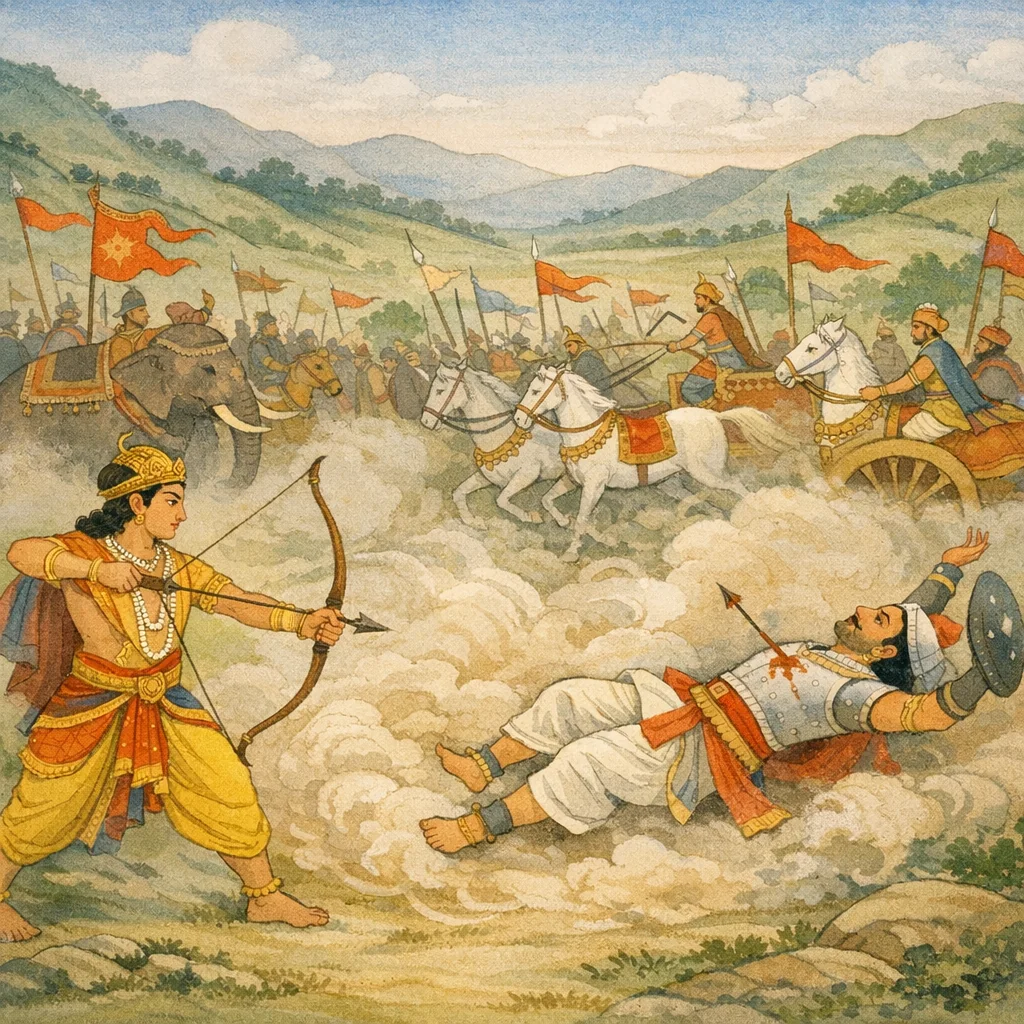
मद्रेशं सादितं दृष्टवा सौभद्रेणाशुगै रणे । शल्यादवरज: क्रुद्ध: किरन् बाणान् समभ्ययात्,सुभद्राकुमारने रणभूमिमें अपने शीघ्रगामी बाणोंद्वारा घायल करके मद्रराज शल्यको धराशायी कर दिया, यह देखकर उनका छोटा भाई कुपित हो बाणोंकी वर्षा करता हुआ अभिमन्युपर चढ़ आया
Seeing Śalya, lord of Madra, struck down in battle by Subhadrā’s son with swift-flying arrows, Śalya’s younger brother grew wrathful and, showering shafts, charged at Abhimanyu.
Verse 4
स विद्ध्वा दशभिर्बाणै: साश्वयन्तारमार्जुनिम् । उदक्रोशन्महाशब्दं तिष्ठ तिछ्ेति चाब्रवीत्,उसने दस बाणोंद्वारा घोड़े और सारथिसहित अभिमन्युको क्षत-विक्षत करके बड़े जोरसे गर्जना की और कहा--'अरे! खड़ा रह, खड़ा रह”
Having pierced Arjuni (Abhimanyu) with ten arrows—along with his horses and charioteer—he shouted with a great roar and cried, “Stand! Stand!”
Verse 5
तस्यार्जुनि: शिरोग्रीवं पाणिपादं धनुर्हयान् । छत्र॑ ध्वजं नियन्तारं त्रिवेणुं तल्पमेव च,वायुनेव महाशैल: सम्भग्नोडमिततेजसा । तब शीघ्रतापूर्वक हाथ चलानेवाले अर्जुनकुमारने अपने सायकोंद्वारा शल्यके भाईके मस्तक, ग्रीवा, हाथ, पैर, धनुष, अश्व, छत्र, ध्वज, सारथि, त्रिवेणु, तल्प (शय्या), पहिये, जूआ, तरकश, अनुकर्ष, पताका, चक्ररक्षक तथा अन्य समस्त उपकरणोंको काट डाला। उस समय कोई भी उसे देख न सका। जैसे वायुके वेगसे कोई महान् पर्वत टूटकर गिर पड़े, उसी प्रकार अमिततेजस्वी अभिमन्युका मारा हुआ वह शल्यराजका भाई छिन्न-भिन्न होकर पृथ्वीपर गिर पड़ा। उसके वस्त्र और आभूषणोंके टुकड़े-टुकड़े हो गये थे
With swift, unerring strokes, Abhimanyu—Arjuna’s son—cut down every part and support of his foe: head and neck, hands and feet, bow and horses, parasol and banner, the charioteer, the triple-plumed crest, and even the chariot’s couch. Struck by that immeasurable brilliance, the warrior was shattered and fell to the earth like a great mountain broken by the force of the wind; his garments and ornaments were torn into fragments.
Verse 6
चक्र युगं च तूणीरं हानुकर्ष च सायकै: । पताकां चक्रगोप्तारौ सर्वोपकरणानि च
There were the wheel-gear and the quiver, the bow-string and the arrows; the banner and the protectors of the chariot-wheel—indeed, all the necessary implements of war.
Verse 7
लघुहस्त: प्रचिच्छेद ददृशे तं न कश्नन । स पपात क्षितौ क्षीण: प्रविद्धाभरणाम्बर:
Sañjaya said: With swift hands he cut him down; no one could even see him clearly. Exhausted, he fell upon the earth, his ornaments and garments flung apart—an image of how, in the fury of battle, prowess and life can be ended in an instant.
Verse 8
अनुगास्तस्य वित्रस्ता: प्राद्रवन् सर्वतो दिश:,उसके सेवक भयभीत होकर सम्पूर्ण दिशाओंमें भाग गये। भारत! अर्जुनकुमारके उस अद्भुत पराक्रमको देखकर समस्त प्राणी साधुवाद देते हुए सब ओर हर्षध्वनि करने लगे
Sañjaya said: Terrified, his followers fled in every direction. O Bhārata, beholding that wondrous heroism of Arjuna’s son, all beings broke into cries of approval and joy on every side—praising valor that protects one’s cause and shames unrighteous aggression.
Verse 9
आर्जुने: कर्म तद् दृष्टवा सम्प्रणेदु: समनन््ततः । नादेन सर्वभूतानि साधु साध्विति भारत,उसके सेवक भयभीत होकर सम्पूर्ण दिशाओंमें भाग गये। भारत! अर्जुनकुमारके उस अद्भुत पराक्रमको देखकर समस्त प्राणी साधुवाद देते हुए सब ओर हर्षध्वनि करने लगे
Sañjaya said: Seeing that deed of Arjuna, they cried out at once on every side. O Bhārata, with their loud acclaim—“Well done! Well done!”—all beings broke into joyful shouts, celebrating the wondrous valor of Arjuna’s son.
Verse 10
शल्यश्रातर्यथारुग्णे बहुशस्तस्य सैनिका: । कुलाधिवासनामानि श्रावयन्तो<र्जुनात्मजम्
Sañjaya said: As attendants might call out the names of a patient pierced by many weapons, so the soldiers, crying out the names of their clans and ancestral lineages, kept calling to Arjuna’s son—an image that underscores how, amid the chaos of war, identity and kin-duty are invoked as a last refuge when life is slipping away.
Verse 11
कितने ही वीर रथ, घोड़े और हाथीपर सवार होकर आये। दूसरे बहुत-से प्रचण्ड बलशाली योद्धा पैदल ही दौड़ पड़े। बाणोंकी सनसनाहट, रथके पहियोंकी जोर-जोरसे होनेवाली घर्घराहट, हुंकार, कोलाहल, ललकार, सिंहनाद, गर्जना, धनुषकी टंकार तथा हस्तत्राणके चट-चट शब्दके साथ गर्जन-तर्जन करते हुए अन्यान्य बहुत-से योद्धा अर्जुनकुमार अभिमन्युपर यह कहते हुए टूट पड़े, “अब तू हमारे हाथसे जीवित नहीं छूट सकता। तुझे जीवनसे ही हाथ धोना पड़ेगा”
Sañjaya said: Many heroes came mounted on chariots, horses, and elephants; many other fierce and powerfully built warriors rushed forward on foot. Amid the hiss of arrows, the grinding roar of chariot-wheels, and a storm of battle-cries—shouts, tumult, challenges, lion-roars, thunderous yells, the twang of bows, and the sharp clatter of arm-guards—numerous warriors surged upon Abhimanyu, the son of Arjuna, threatening him from all sides: “Today you will not escape alive from our hands; you must forfeit your very life.”
Verse 12
बाणशब्देन महता रथनेमिस्वनेन च । हुंकारै: क्ष्वेडितोत्क्रुष्टे: सिंहनादैः सगर्जिते:,कितने ही वीर रथ, घोड़े और हाथीपर सवार होकर आये। दूसरे बहुत-से प्रचण्ड बलशाली योद्धा पैदल ही दौड़ पड़े। बाणोंकी सनसनाहट, रथके पहियोंकी जोर-जोरसे होनेवाली घर्घराहट, हुंकार, कोलाहल, ललकार, सिंहनाद, गर्जना, धनुषकी टंकार तथा हस्तत्राणके चट-चट शब्दके साथ गर्जन-तर्जन करते हुए अन्यान्य बहुत-से योद्धा अर्जुनकुमार अभिमन्युपर यह कहते हुए टूट पड़े, “अब तू हमारे हाथसे जीवित नहीं छूट सकता। तुझे जीवनसे ही हाथ धोना पड़ेगा”
Sañjaya said: “With the great hiss and roar of arrows, with the rumbling sound of chariot-wheels, and amid war-cries—shouts, loud challenges, lion-roars, and thunderous clamour—the warriors surged forward. In that din of weapons and intimidation, many assailants rushed upon Abhimanyu, Arjuna’s son, declaring that he would not escape alive.”
Verse 13
रथैरश्लैगगजैश्नान्ये पद्धिश्षान्ये बलोत्कटा:,ज्यातलत्रस्वनैरन्ये गर्जन्तो$र्जुननन्दनम् । ब्रुवन्तश्न न नो जीवन् मोक्ष्यसे जीवितादिति कितने ही वीर रथ, घोड़े और हाथीपर सवार होकर आये। दूसरे बहुत-से प्रचण्ड बलशाली योद्धा पैदल ही दौड़ पड़े। बाणोंकी सनसनाहट, रथके पहियोंकी जोर-जोरसे होनेवाली घर्घराहट, हुंकार, कोलाहल, ललकार, सिंहनाद, गर्जना, धनुषकी टंकार तथा हस्तत्राणके चट-चट शब्दके साथ गर्जन-तर्जन करते हुए अन्यान्य बहुत-से योद्धा अर्जुनकुमार अभिमन्युपर यह कहते हुए टूट पड़े, “अब तू हमारे हाथसे जीवित नहीं छूट सकता। तुझे जीवनसे ही हाथ धोना पड़ेगा”
Sañjaya said: Some warriors came mounted on chariots, horses, and elephants; others, fierce in strength, rushed forward on foot. With the twang of bowstrings and the clatter of their gear, roaring as they advanced upon Abhimanyu, Arjuna’s son, they shouted, “You will not escape us alive; you shall be deprived of life itself.”
Verse 14
तांस्तथा ब्रुवतो दृष्टवा सौभद्र: प्रहसन्निव । यो योअस्मै प्राहरत् पूर्व त॑ तं विव्याध पत्रिभि:,उनको ऐसा कहते देख सुभद्राकुमार अभिमन्यु मानो जोर-जोरसे हँसने लगा और जिस-जिस योद्धाने उसपर पहले प्रहार किया, उस-उसको उसने भी अपने पंखयुक्त बाणोंद्वारा घायल कर दिया
Seeing them speak so, Abhimanyu, Subhadrā’s son, seemed almost to laugh; and whoever struck at him first, that man he pierced in return with feathered arrows, wounding him.
Verse 15
संदर्शयिष्यन्नस्त्राणि विचित्राणि लघूनि च | आर्जुनि: समरे शूरो मृदुपूर्वमयुध्यत,शूरवीर अर्जुनकुमारने समरांगणमें अपने विचित्र एवं शीघ्रगामी अस्त्रोंका प्रदर्शन करते हुए पहले मृदुभावसे ही युद्ध किया
Sañjaya said: “Wishing to display his wondrous and swift-moving weapons, the heroic son of Arjuna fought in the battle at first with restraint and gentleness—testing and revealing his arms before unleashing their full force.”
Verse 16
वासुदेवादुपात्तं यदस्त्रं यच्च धनंजयात् | अदर्शयत तत् कार्ष्णि: कृष्णाभ्यामविशेषवत्,भगवान् श्रीकृष्ण तथा अर्जुनसे अभिमन्युने जो-जो अस्त्र प्राप्त किये थे, उनका उन्हीं दोनोंकी भाँति वह युद्धस्थलमें प्रदर्शन करने लगा
Sañjaya said: Whatever weapon Abhimanyu had received from Vāsudeva and whatever he had obtained from Dhanañjaya (Arjuna), all that the son of Kṛṣṇa displayed on the battlefield without distinction—wielding those divine and heroic arts as though he were equal to Kṛṣṇa and Arjuna themselves.
Verse 17
दूरमस्य गुरु भारं साध्वसं च पुन: पुनः । संदधद् विसजंश्रेषून् निर्विशेषमदृश्यत,भारी भार और भय उससे दूर हो गया था। वह बारंबार बाणोंका संधान करता और छोड़ता हुआ एक-सा दिखायी देता था
Sañjaya said: For him, the oppressive weight and the recurring fear had fallen far away. As he repeatedly set his arrows to the bow and released them, he appeared unwavering—showing no visible difference in his bearing, as though steady and undisturbed amid the fighting.
Verse 18
चापमण्डलमेवास्य विस्फुरद् दिक्ष्वदृश्यत । सुदीप्तस्य शरत्काले सवितुर्मण्डलं यथा,जैसे शरद्-ऋतुमें अत्यन्त प्रकाशित होनेवाले सूर्यदेवका मण्डल दृष्टिगोचर होता है, उसी प्रकार अभिमन्युका मण्डलाकार धनुष ही सम्पूर्ण दिशाओंमें उद्भधासित होता दिखायी देता था
Only the flashing circle of his bow was seen in every direction. Like the radiant disk of the sun blazing in the autumn season, so Abhimanyu’s ring-like bow seemed to shine forth across all quarters.
Verse 19
ज्याशब्द: शुश्रुवे तस्य तलशब्दश्न दारुण: । महाशनिमुच: काले पयोदस्येव नि:स्वनः,उसके धनुषकी प्रत्यंचा और हथेलीका शब्द वर्षाकालमें महान् वज्र गिरानेवाले मेघकी गर्जनाके समान भयंकर सुनायी पड़ता था
Sanjaya said: The twang of his bowstring was heard, and the harsh clap of his palm as well—terrifying, like the thunderous roar of a rain-cloud in the season when it hurls great lightning. In the moral atmosphere of the war, this sound functions as an omen of irresistible martial force, announcing the surge of violence that overwhelms restraint and tests the warriors’ adherence to kṣatriya-dharma.
Verse 20
ह्वीमानमर्षी सौभद्रो मानकृत् प्रियदर्शन: । सम्मिमानयिषुर्वीरानिष्वस्त्रै श्चाप्पयुध्यत,लज्जाशील, अमर्षी, दूसरोंको मान देनेवाला और देखनेमें प्रिय लगनेवाला सुभद्राकुमार अभिमन्यु विपक्षी वीरोंका सम्मान करनेकी इच्छासे धनुष-बाणोंद्वारा युद्ध करता रहा
Abhimanyu, Subhadra’s son—modest, intolerant of wrongdoing, one who honored others and was pleasing to behold—kept fighting with bow and arrows, wishing to render due respect even to the heroes of the opposing side.
Verse 21
मृदुर्भूत्वा महाराज दारुण: समपद्यत । वर्षाभ्यतीतो भगवाञ्छरदीव दिवाकर:,महाराज! जैसे वर्षाकाल बीतनेपर शरत्कालमें भगवान् सूर्य प्रचण्ड हो उठते हैं, उसी प्रकार अभिमन्यु पहले मृदु होकर अन्तमें शत्रुओंके लिये अति उग्र हो उठा
Sañjaya said: O King, having first become gentle, he then turned fierce. Just as the blessed sun, when the rainy season has passed, blazes with sharp intensity in the autumn, so too did Abhimanyu—soft in manner at first—rise at last into terrible force against his enemies.
Verse 22
शरान् विचित्रान् सुबहून् रुक्मपुड्खाज्छिलाशितान् | मुमोच शतश:ः क्रुद्धो गभस्तीनिव भास्कर:,जैसे सूर्य अपनी सहस्रों किरणोंको सब ओर बिखेर देते हैं, उसी प्रकार क्रोधमें भरा हुआ अभिमन्यु सानपर चढ़ाकर तेज किये हुए सुवर्णमय पंखसे युक्त सैकड़ों विचित्र एवं बहुसंख्यक बाणोंकी वर्षा करने लगा
Sañjaya said: Enraged, Abhimanyu loosed hundreds upon hundreds of arrows—variegated, countless, with golden fletching and honed upon the whetstone—scattering them in every direction like the Sun casting forth its rays. The verse reveals the dreadful momentum of wrath in battle: skill and brilliance, when driven by anger, become a flood that overwhelms the field and multiplies harm.
Verse 23
क्षुपप्रैर्वत्सदन्तैश्व विपाठैश्व महायशा: । नाराचैरर्थचन्द्रा भैर्भल्लैररजलिकैरपि,उस महायशणस्वी वीरने द्रोणाचार्यके देखते-देखते उनकी रथसेनापर क्षुरप्र, वत्सदन्त, विपाठ, नाराच, अर्धचन्द्राकार बाण, भल्ल एवं अंजलिक आदिकी वर्षा आरम्भ कर दी। इससे उन बाणोंद्वारा पीड़ित हुई वह सेना युद्धले विमुख होकर भाग चली
Sañjaya said: The illustrious hero, even as Droṇācārya looked on, began to shower the chariot-troops with volleys of many kinds of arrows—razor-headed shafts, calf-tooth arrows, cleaving missiles, long iron darts, crescent-shaped arrows, bhallas, and añjalikas. Struck and tormented by that rain of weapons, the afflicted force lost its will to fight, turned away from the battle, and fled from the battlefield—showing how, in war, fear and shock can dissolve discipline when leadership and morale fail.
Verse 24
अवाकिरद् रथानीकं भारद्वाजस्य पश्यत: । ततस्तत्सैन्यमभवद् विमुखं शरपीडितम्,उस महायशणस्वी वीरने द्रोणाचार्यके देखते-देखते उनकी रथसेनापर क्षुरप्र, वत्सदन्त, विपाठ, नाराच, अर्धचन्द्राकार बाण, भल्ल एवं अंजलिक आदिकी वर्षा आरम्भ कर दी। इससे उन बाणोंद्वारा पीड़ित हुई वह सेना युद्धले विमुख होकर भाग चली
Sañjaya said: Before Bhāradvāja’s (Droṇa’s) very eyes, he showered the chariot-division with arrows. Struck and tormented by those shafts, that host lost its will to fight, turned away from the battle, and began to flee—showing how, in war, morale collapses when disciplined force meets overwhelming missile-power.
Verse 37
इस प्रकार श्रीमहाभारत द्रोणपर्वके अन्तर्गत अभिगन्युवधपर्वमें आभिमन्युपराक्रमविषयक सैंतीसवाँ अध्याय पूरा हुआ
Sañjaya said: Thus, in the Śrī Mahābhārata, within the Droṇa Parva, in the section concerning the slaying of Abhimanyu, the thirty-seventh chapter—describing Abhimanyu’s heroic prowess—comes to its close. The colophon underscores the ethical weight of the episode: a young warrior’s valor is remembered even as the narrative moves through the harsh necessities and moral tensions of war.
Verse 38
इति श्रीमहा भारते द्रोणपर्वणि अभिमन्युवधपर्वणि अभिमन्युपराक्रमे आष्टात्रिंशो 5 ध्याय:,इस प्रकार श्रीमह्ाभारत द्रोणपर्वके अन्तर्गत अभिमन्युवधपर्वमें आभिमन्यु-पराक्रमविषयक अड़तीसवाँ अध्याय पूरा हुआ
Sañjaya said: Thus, in the holy Mahābhārata, within the Droṇa Parva—under the sub-section concerning the slaying of Abhimanyu—this thirty-eighth chapter, describing Abhimanyu’s valor, comes to an end. The colophon marks the close of the chapter and frames the narrative as a solemn record of heroic conduct and the grave moral cost of war.
Verse 76
वायुनेव महाशैल: सम्भग्नोडमिततेजसा । तब शीघ्रतापूर्वक हाथ चलानेवाले अर्जुनकुमारने अपने सायकोंद्वारा शल्यके भाईके मस्तक, ग्रीवा, हाथ, पैर, धनुष, अश्व, छत्र, ध्वज, सारथि, त्रिवेणु, तल्प (शय्या), पहिये, जूआ, तरकश, अनुकर्ष, पताका, चक्ररक्षक तथा अन्य समस्त उपकरणोंको काट डाला। उस समय कोई भी उसे देख न सका। जैसे वायुके वेगसे कोई महान् पर्वत टूटकर गिर पड़े, उसी प्रकार अमिततेजस्वी अभिमन्युका मारा हुआ वह शल्यराजका भाई छिन्न-भिन्न होकर पृथ्वीपर गिर पड़ा। उसके वस्त्र और आभूषणोंके टुकड़े-टुकड़े हो गये थे
Sanjaya said: Like a great mountain shattered by the wind, the brother of King Shalya—struck down by the wondrously radiant Abhimanyu—was broken apart. Then Abhimanyu, the son of Arjuna, moving his hands with lightning speed, severed with his arrows the man’s head, neck, hands, feet, bow, horses, parasol, banner, charioteer, the triple yoke and bridle-gear, the chariot-bed, wheels, yoke, quiver, the draw-strap and reins, pennants, wheel-guards, and every other piece of equipment. In that moment no one could even see him clearly. Thus, as a mountain collapses under the force of the wind, Shalya’s brother—cut to pieces—fell to the earth, his garments and ornaments torn into fragments.
Verse 103
अभ्यधावन्त संक़्रुद्धा विविधायुधपाणय: । शल्यके भाईके मारे जानेपर उसके बहुत-से सैनिक अपने कुल और निवासस्थानके नाम सुनाते हुए कुपित हो हाथोंमें नाना प्रकारके अस्त्र-शस्त्र लिये अर्जुनकुमार अभिमन्युकी ओर दौड़े
Sanjaya said: Enraged, many warriors rushed forward with weapons of every kind in their hands. When they learned that Śalyaka, their kinsman-brother, had been slain, numerous soldiers—proclaiming their clans and places of residence—charged in anger toward Abhimanyu, the son of Arjuna, bearing diverse missiles and arms.
Frequently Asked Questions
The text implies a tension between impartial military necessity and the expectations attached to pedagogical lineage: Duryodhana interprets Droṇa’s conduct through the lens of ācārya–śiṣya affiliation, raising the problem of perceived bias within a command role.
It illustrates how tactical agility, disciplined archery, and morale effects can allow a single agent to impose disproportionate pressure on a larger force—while also showing that such advantage triggers rapid counter-mobilization by centralized command.
No explicit phalaśruti appears in the provided passage; the chapter functions primarily as narrative reportage and character-positioning within the war chronicle rather than as a self-contained merit statement.