Adhyaya 2
Droṇa-parva Adhyāya 2: Karṇa’s lament, vow, and battle preparation after Bhīṣma’s fall
Upa-parva: Bhīṣma-vadha-anantara Karṇa-pravṛtti (Aftermath of Bhīṣma’s fall; Karṇa’s resolve and mobilization)
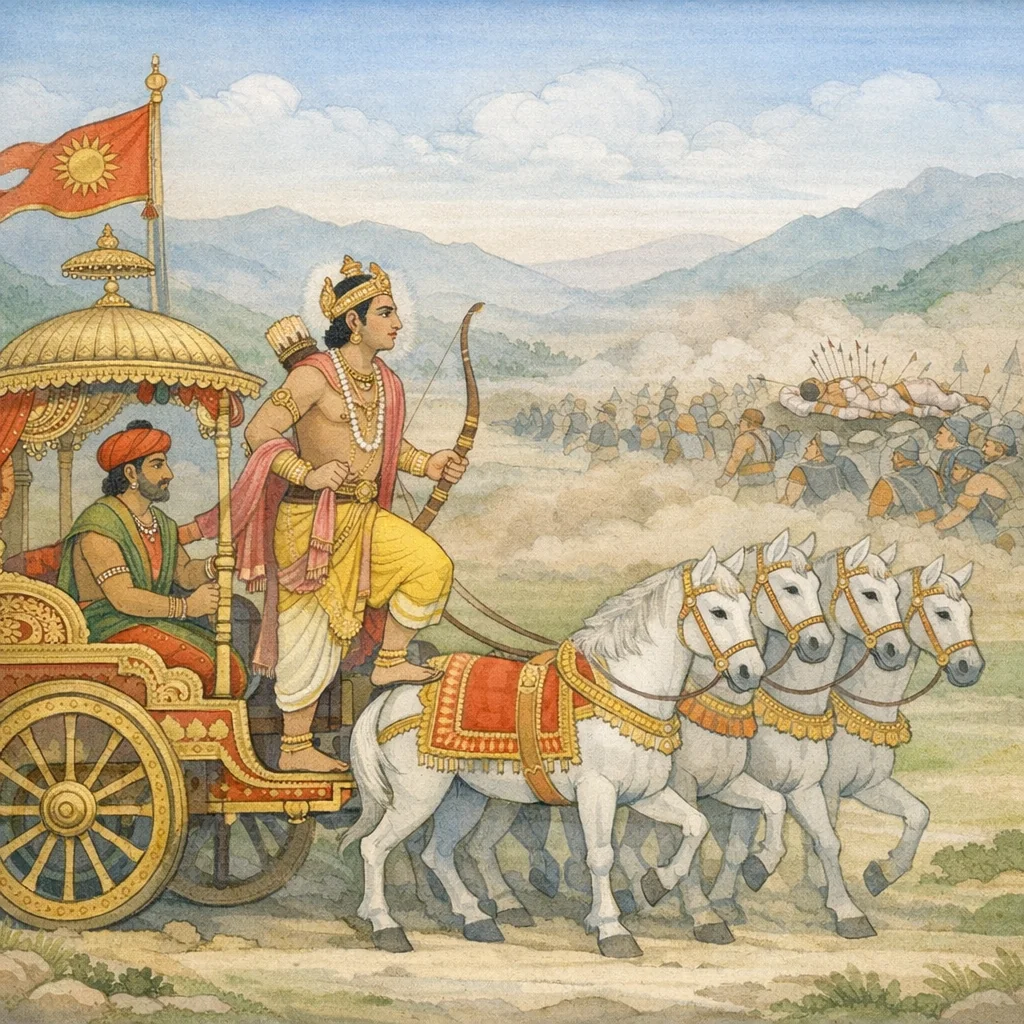
Saṃjaya reports that Karṇa (Ādhirathi/Rādheya) learns of Bhīṣma’s fall and approaches as if to ‘ferry’ a sinking Kuru cause. Karṇa speaks in praise of Bhīṣma’s virtues—fortitude, truthfulness, discipline, divine weapons, and exemplary speech—then pivots to a reflection on anitya: in a world where action is non-permanent, certainty is elusive. He interprets Bhīṣma’s collapse as a sign of the war’s altered moral and tactical landscape, yet accepts the burden of leadership, framing his response as a duty to protect the Kuru force. Karṇa articulates a program of resolve: he will confront the Pāṇḍava coalition (Yudhiṣṭhira, Bhīma, Arjuna, the twins, with Vāsudeva and allies), either achieving fame through success or meeting death in combat. He condemns unreliable allies as unworthy of the designation ‘friend’ and orders detailed mobilization—armor, helmet, bows, quivers, weapons, chariot, horses, standards, garlands, and victory signals—before mounting his chariot and proceeding toward the battlefield.
Chapter Arc: भीष्म के पतन का समाचार रणभूमि में बिजली-सा गिरता है; कुरु-सेना समुद्र में डूबती नाव-सी डगमगाती दिखती है, और उसी क्षण कर्ण का तेजस्वी उदय संकेत देता है कि कथा अब नए सेनापति-युग में प्रवेश कर रही है। → भीष्म के हत होने पर कौरव-पक्ष की हताशा को कर्ण ‘पिता’ की तरह थामता है—वह शीघ्रता से आगे बढ़कर सेना को ‘संतारने’ (उबारने) का संकल्प करता है। पर सामने वह रणक्षेत्र है जहाँ यमोपम यमौ (नकुल-सहदेव), सात्यकि और स्वयं देवकीसुत कृष्ण उपस्थित हैं—ऐसा स्थल जहाँ कापुरुष टिक नहीं सकता। कर्ण अपने रथ, ध्वज, कवच-आभूषण, अश्व और मालाओं की भव्य तैयारी का आदेश देकर युद्ध-निश्चय को और तीखा करता है। → संजय के वर्णन में कर्ण का ‘अग्नि-सदृश’ रथारोहण चरम बिंदु बनता है—स्वर्ण-रत्न-माला से सुसज्जित ध्वजित रथ पर, वातजव अश्वों से युक्त, वह देव-राज के विमानस्थ-सा दीप्तिमान दिखाई देता है; भीष्म-पतन के बाद कौरव-सेना के लिए यही दृश्य नया ध्रुव-तारा बन जाता है। → कर्ण युद्ध के लिए पूर्णतः सन्नद्ध होकर जय-लक्ष्य से प्रस्थान करता है; कौरव-पक्ष की डूबती मनःस्थिति को क्षणिक स्थैर्य मिलता है—भीष्म के शून्य को कर्ण की प्रतिज्ञा और तैयारी भरने लगती है। → कर्ण का यह प्रस्थान संकेत देता है कि अब उसका सामना उन्हीं अजेय-से प्रतीत योद्धाओं से होगा जिनके बीच टिकना ‘मृत्युमुख’ में प्रवेश जैसा है—अगला अध्याय उसी टकराव की ओर बढ़ता है।
Shlokas
Verse 1
इस प्रकार श्रीमहाभारत द्रोणपर्वके अन्तर्गत द्रोणाभिषेकपर्वरें धृतराष्ट्र-प्रश्नविषयक पहला अध्याय पूरा हुआ,ऑपनआक्रात बछ। अर: द्वितीयो&्ध्याय: कर्णकी रणयात्रा संजय उवाच हतं भीष्ममथाधिरथिरवविंदित्वा भिन्नां नावमिवात्यगाधथे कुरूणाम् | सोदर्यवद् व्यसनात् सूतपुत्र: संतारयिष्यंस्तव पुत्रस्य सेनाम् संजय कहते हैं--राजन्! अधिरथनन्दन सूतपुत्र कर्ण यह जानकर कि भीष्मजीके मारे जानेपर कौरवोंकी सेना अगाध महासागरमें टूटी हुई नौकाके समान संकटमें पड़ गयी है, सगे भाईके समान आपके पुत्रकी सेनाको संकटसे उबारनेके लिये चला इति श्रीमहाभारते द्रोणपर्वणि द्रोणाभिषेकपर्वणि कर्णनिर्याणे द्वितीयो$ध्याय: ।। २ || इस प्रकार श्रीमहाभारत द्रोणपर्वके अन्तर्गत द्रोणाभिषेकपर्वमें कर्णकी रणयात्राविषयक दूसरा अध्याय पूरा हुआ ॥/ २ ॥। (दाक्षिणात्य अधिक पाठका १ श्लोक मिलाकर कुल ३८ “लोक हैं।) ऑपनआक्रात छा अकाल तृतीयो<थध्याय: भीष्मजीके प्रति कर्णका कथन संजय उवाच शरतल्पे महात्मानं शयानममितौजसम् । महावातसमूहेन समुद्रमिव शोषितम्
Sañjaya said: “O King, Karṇa—the son of Adhiratha—having understood that Bhīṣma has been struck down and that the Kuru host has fallen into peril like a shattered boat in an unfathomable sea, set out to rescue your son’s army from calamity, acting with the concern of a true brother.”
Verse 2
श्र॒ुत्वा तु कर्ण: पुरुषेन्द्रमच्युतं निपातितं शान्तनवं महारथम् । अथोपयायात् सहसारिकर्षणो धनुर्धराणां प्रवरस्तदा नृप,राजन! तत्पश्चात् योद्धाओंके मुखसे अपनी मर्यादासे कभी च्युत न होनेवाले पुरुषप्रवर शान्तनुनन्दन महारथी भीष्मके मारे जानेका विस्तृत वृत्तान्त सुनकर थधनुर्धरोंमें श्रेष्ठ शत्रुसूदन कर्ण सहसा दुर्योधनके समीप चल दिया
Sañjaya said: Hearing that Acyuta—the foremost of men—had brought down Bhīṣma, the great chariot-warrior, son of Śāntanu, Karṇa, best among bowmen and a scourge of foes, at once hastened swiftly to King Duryodhana. The tidings of Bhīṣma’s fall marked a decisive turn in the war: the elder’s protecting authority collapsed, and the resolve of those who now sought victory without that restraint grew hard.
Verse 3
हते तु भीष्मे रथसत्तमे परै- निमज्जतीं नावमिवार्णवे कुरून् । पितेव पुत्रांस्त्वरितो5भ्ययात् ततः संतारयिष्यंस्तव पुत्रस्य सेनाम्,रथियोंमें श्रेष्ठ भीष्मके शत्रुओंद्वारा मारे जानेपर, जैसे पिता अपने पुत्रोंको संकटसे बचानेके लिये जाता हो, उसी प्रकार सूतपुत्र कर्ण डूबती हुई नौकाके समान आपके पुत्रकी सेनाको संकटसे उबारनेके लिये बड़ी उतावलीके साथ दुर्योधनके निकट आ पहुँचा
Sañjaya said: When Bhīṣma—the foremost of chariot-warriors—had been slain by the enemy, the Kuru host began to sink like a boat foundering in the ocean. Then Karṇa, the son of a charioteer, hurried to Duryodhana like a father rushing to rescue his sons, intending to bring your son’s army through that peril.
Verse 4
(सम्मृज्य दिव्यं धनुराततज्यं स रामदत्तं रिपुसंघहन्ता । बाणांश्व कालानलवायुकल्पा- नुल्लालयन् वाक्यमिदं बभाषे ।।) शत्रुसमूहका विनाश करनेवाले कर्णने परशुरामजीके दिये हुए दिव्य धनुषपर प्रत्यंचा चढ़ा ली और उसपर हाथ फेरकर कालाग्नि तथा वायुके समान शक्तिशाली बाणोंको ऊपर उठाते हुए इस प्रकार कहा। कर्ण उवाच यस्मिन् धृतिर्बुद्धिपराक्रमौज: सत्यं॑ स्मृतिर्वीरगुणाश्च सर्वे । अस्त्राणि दिव्यान्यथ संनतिर्हीं: प्रिया च वागनसूया च भीष्मे,कर्ण बोला--ब्राह्मणोंके शत्रुओंका विनाश करनेवाले तथा अपने ऊपर किये हुए उपकारोंका आभार माननेवाले जिन वीरशिरोमणि भीष्मजीमें चन्द्रमामें सदा सुशोभित होनेवाले शशचिह्नलके समान सदा धृति, बुद्धि, पराक्रम, ओज, सत्य, स्मृति, विनय, लज्जा, प्रिय वाणी तथा अनसूया (दोषदृष्टिका अभाव)--ये सभी वीरोचित गुण तथा दिव्यास्त्र शोभा पाते थे, वे शत्रुवीरोंके हन्ता देवव्रत यदि सदाके लिये शान्त हो गये तो मैं सम्पूर्ण वीरोंको मारा गया ही मानता हूँ
Karna said: “In Bhīṣma—in whom steadfastness, intelligence, valor, vigor, truth, memory, and every heroic excellence abide; in whom divine weapons shine, together with humility, modesty, gentle speech, and freedom from fault-finding—if that Devavrata, slayer of enemy champions, has been stilled forever, then I deem all warriors as already slain.”
Verse 5
सदा कृतज्ञे द्विजशत्रुधातके सनातन चन्द्रमसीव लक्ष्म । स चेत् प्रशान्तः परवीरहन्ता मनन््ये हतानेव च सर्ववीरान्,कर्ण बोला--ब्राह्मणोंके शत्रुओंका विनाश करनेवाले तथा अपने ऊपर किये हुए उपकारोंका आभार माननेवाले जिन वीरशिरोमणि भीष्मजीमें चन्द्रमामें सदा सुशोभित होनेवाले शशचिह्नलके समान सदा धृति, बुद्धि, पराक्रम, ओज, सत्य, स्मृति, विनय, लज्जा, प्रिय वाणी तथा अनसूया (दोषदृष्टिका अभाव)--ये सभी वीरोचित गुण तथा दिव्यास्त्र शोभा पाते थे, वे शत्रुवीरोंके हन्ता देवव्रत यदि सदाके लिये शान्त हो गये तो मैं सम्पूर्ण वीरोंको मारा गया ही मानता हूँ
Karna said: “In Bhīṣma—ever grateful for benefits received, a slayer of the foes of the Brahmins, and ever radiant with an ancient splendor like the moon—abide all heroic virtues and the glory of divine weapons. If that Devavrata, killer of enemy champions, has now become forever pacified (withdrawn from battle), then I deem all warriors as good as slain.”
Verse 6
नेह ध्रुवं किंचन जातु विद्यते लोके हास्मिन् कर्मणोडनित्ययोगात् । सूर्योदये को हि विमुक्तसंशयो भावं कुर्वीतार्यमहाव्रते हते,निश्चय ही इस संसारमें कर्मोके अनित्य सम्बन्धसे कभी कोई वस्तु स्थिर नहीं रहती है। श्रेष्ठ एवं महान् व्रतधारी भीष्मजीके मारे जानेपर कौन संशयरहित होकर कह सकता है कि कल सूर्योदय होगा ही (अर्थात् जीवन अनित्य होनेके कारण हममेंसे कौन कलका सूर्योदय देख सकेगा, यह कहना कठिन है। जब मृत्युंजयी भीष्मजी भी मारे गये, तब हमारे जीवनकी क्या आशा है?)
Karna said: “In this world nothing is ever truly fixed or guaranteed, for action is bound to impermanence. Who, free from doubt, could confidently assert that the sun will surely rise tomorrow—when even Bhīṣma, the noble one of great vows, has been struck down? If such a steadfast pillar can fall, what certainty can there be about our own continuance?”
Verse 7
वसुप्रभावे वसुवीर्यसम्भवे गते वसूनेव वसुन्धराधिपे । वसूनि पुत्रांश्व वसुन्धरां तथा कुरूंश्व॒ शोचध्वमिमां च वाहिनीम्,भीष्मजीमें वसु देवताओंके समान प्रभाव था। वसुओंके समान शक्तिशाली महाराज शान्तनुसे उनकी उत्पत्ति हुई थी। ये वसुधाके स्वामी भीष्म अब वसु देवताओंको ही प्राप्त हो गये हैं; अतः उनके अभावमें तुम सभी लोग अपने धन, पुत्र, वसुन्धरा, कुरुवंश, कुरुदेशकी प्रजा तथा इस कौरव-सेनाके लिये शोक करो
Karna said: “He whose splendor was like that of the Vasus, whose prowess matched the Vasus, and who was born from King Śāntanu—now that lord of the earth has gone to the Vasus themselves. Therefore, bereft of Bhīṣma, grieve—for your wealth, for your sons, for the land, for the Kurus and their realm, and for this very army.”
Verse 8
संजय उवाच महाप्रभावे वरदे निपातिते लोकेश्वरे शास्तरि चामितौजसि । पराजितेषु भरतेषु दुर्मना: कर्णो भृशं न्यश्वसदश्रु वर्तयन्,संजय कहते हैं--महान् प्रभावशाली वर देनेमें समर्थ लोकेश्वर शासक तथा अमित तेजस्वी भीष्मके मारे जानेपर भरतवंशियोंकी पराजय होनेसे कर्ण मन-ही-मन बहुत दुःखी हो नेत्रोंस आँसू बहाता हुआ लंबी साँस खींचने लगा
Sañjaya said: When Bhīṣma—of vast majesty, a bestower of boons, the lord and ruler among men, and of immeasurable prowess—had been struck down, and the Bharatas were being routed, Karṇa, his heart weighed down with grief, heaved deep sighs, letting tears flow.
Verse 9
इदं च राधेयवचो निशम्य सुताश्न राजंस्तव सैनिकाश्न ह | परस्परं चुक्रुशुरार्तिजं मुहु- स्तदाश्रु नेत्रैर्मुमुचुश्ष शब्दवत्,राजन! राधानन्दन कर्णकी यह बात सुनकर आपके पुत्र और सैनिक एक-दूसरेकी ओर देखकर शोकवश बारंबार फूट-फूटकर रोने तथा नेत्रोंसे आँसू बहाने लगे
Sañjaya said: Hearing these words spoken by Rādheya (Karna), O king, your sons and your soldiers, looking at one another, repeatedly cried out in grief; and with loud sobbing they let tears stream from their eyes.
Verse 10
प्रवर्तमाने तु पुनर्महाहवे विगाह्यमानासु चमूषु पार्थिव: । अथाब्रवीद्धर्षकरं तदा वचो रथर्षभान् सर्वमहारथर्षभ:
Sañjaya said: As the great battle began anew and the armies pressed into one another, the king then spoke words that stirred courage—addressing the foremost of chariot-warriors, he who was himself the best among all great champions.
Verse 11
पाण्डवसेनाके राजालोगोंद्वारा जब कौरव-सेनाका ध्वंस होने लगा और बड़ा भारी संग्राम आरम्भ हो गया, तब सम्पूर्ण महारथियोंमें श्रेष्ठ कर्ण समस्त श्रेष्ठ रथियोंका हर्ष और उत्साह बढ़ाता हुआ इस प्रकार बोला-- ।। जगत्यनित्ये सततं प्रधावति प्रचिन्तयन्नस्थिरमद्य लक्षये । भवत्सु तिष्ठत्स्विह पातितो मृथे गिरिप्रकाश: कुरुपुड्रव: कथम्,] # 77॥॥॥॥ 0 । 7 5 »> रे नल ्ज १780) 2 )9) सदा मृत्युकी ओर दौड़ लगानेवाले इस अनित्य संसारमें आज मुझे बहुत चिन्तन करनेपर भी कोई वस्तु स्थिर नहीं दिखायी देती; अन्यथा युद्धमें आप-जैसे शूरवीरोंके रहते हुए पर्वतके समान प्रकाशित होनेवाले कुरुश्रेष्ठ भीष्म कैसे मार गिराये गये?
Sañjaya said: As the kings of the Pāṇḍava host began to shatter the Kaurava army and a tremendous battle flared up, Karṇa—foremost among great chariot-warriors—raising the joy and resolve of the leading fighters, spoke thus: “In this impermanent world that is ever rushing onward, even after much reflection today I see nothing stable. Otherwise, while heroes like you still stand here, how could Bhīṣma—radiant like a mountain, the bull among the Kurus—have been struck down in battle?”
Verse 12
निपातिते शान्तनवे महारथे दिवाकरे भूतलमास्थिते यथा । न पार्थिवा: सोढुमलं धनंजयं गिरिप्रवोढारमिवानिल द्रुमा:,“महारथी शान्तनुनन्दन भीष्मका रणमें गिराया जाना सूर्यके आकाशसे गिरकर पृथ्वीपर आ पड़नेके समान है। यह हो जानेपर समस्त भूपाल अर्जुनका वेग सहन करनेमें असमर्थ हैं, जैसे पर्वतोंको भी ढोनेवाले वायुका वेग साधारण वृक्ष नहीं सह सकते हैं
Sañjaya said: “When the great chariot-warrior Bhīṣma, son of Śāntanu, is struck down, it is like the sun itself falling from the sky and coming to rest upon the earth. After that, the kings are no longer able to endure Dhanañjaya (Arjuna); just as ordinary trees cannot withstand the force of the wind that can even carry mountains.”
Verse 13
हतप्रधानं त्विदमार्तरूप॑ परैर्हतोत्साहमनाथमद्य वै । मया कुरूणां परिपाल्यमाहवे बल॑ यथा तेन महात्मना तथा,“आज यह कौरवदल अपने प्रधान सेनापतिके मारे जानेसे अनाथ एवं अत्यन्त पीड़ित हो रहा है। शत्रुओंने इसके उत्साहको नष्ट कर दिया है। इस समय संग्रामभूमिमें मुझे इस कौरवसेनाकी उसी प्रकार रक्षा करनी है, जैसे महात्मा भीष्म किया करते थे
Sañjaya said: “Today this Kuru host, bereft of its chief commander, has fallen into a pitiable state—its spirit broken by the enemy and left as though without a protector. Now, on this battlefield, it is for me to safeguard the Kuru army in the same manner as that great-souled Bhīṣma used to do.”
Verse 14
समाहितं चात्मनि भारमीदृशं जगत् तथानित्यमिदं च लक्षये । निपातितं चाहवशौण्डमाहवे कथं नु कुर्यामहमीदृशे भयम्,“मैंने यह भार अपने ऊपर ले लिया। जब मैं यह देखता हूँ कि सारा जगत् अनित्य है तथा युद्धकुशल भीष्म भी युद्धमें मारे गये हैं, तब ऐसे अवसरपर मैं भय किस लिये करूँ?
“I have taken upon myself a burden such as this. When I see that the whole world is impermanent, and that even Bhīṣma—skilled in war—has been struck down in battle, why should I feel fear at such a time?”
Verse 15
अहं तु तान् कुरुवृषभानजिद्ागै: प्रवेशयन् यमसदनं चरन् रणे । यश: परं जगति विभाव्य वर्तिता परैर्हतो भुवि शयिताथवा पुन:,“मैं उन कुरुप्रवर पाण्डवोंको अपने सीधे जानेवाले बाणोंद्वारा यमलोकमें पहुँचाकर रणभूमिमें विचरूगा और संसारमें उत्तम यशका विस्तार करके रहूँगा अथवा शत्रुओंके हाथसे मारा जाकर युद्धभूमिमें सदाके लिये सो जाऊँगा
“For my part, I shall drive those bull-like heroes of the Kurus into Yama’s abode with my unfailing, straight-flying arrows and then range about the battlefield, spreading the highest fame in the world; or else, struck down by the enemy, I shall lie upon the earth on the field of war.”
Verse 16
युधिष्ठिरो धृतिमतिसत्यसत्त्ववान् वृकोदरो गजशततुल्यविक्रम: । तथार्जुनस्त्रिदशवरात्मजो युवा न तद्धलं सुजयमिहामरैरपि,'युधिष्ठिर धैर्य, बुद्धि, सत्य और सत्त्वगुणसे सम्पन्न हैं। भीमसेनका पराक्रम सैकड़ों हाथियोंके समान है तथा अर्जुन भी देवराज इन्द्रके पुत्र एवं तरुण हैं। अतः पाण्डवोंकी सेनाको सम्पूर्ण देवता भी सुगमतापूर्वक नहीं जीत सकते
Sañjaya said: “Yudhiṣṭhira is endowed with steadfastness, truthfulness, and noble inner strength; Vṛkodara (Bhīma) possesses valor equal to that of a hundred elephants; and Arjuna too is young and the son of the best among the gods (Indra). Therefore, that army of the Pāṇḍavas is not easily conquerable here—even by the gods.”
Verse 17
यमौ रणे यत्र यमोपमौ बले ससात्यकिर्यत्र च देवकीसुत: । न तद्धलं कापुरुषो 5 भ्युपेयिवान् निवर्तते मृत्युमुखान्न चासुभृत्,“जहाँ रणभूमिमें यमराजके समान नकुल और सहदेव विद्यमान हैं, जहाँ सात्यकि तथा देवकीनन्दन भगवान् श्रीकृष्ण हैं, उस सेनामें कोई कायर मनुष्य प्रवेश कर जाय तो वह मौतके मुखसे जीवित नहीं निकल सकता
Sañjaya said: “On that battlefield stand the twin brothers Nakula and Sahadeva, mighty as Yama himself; there too are Sātyaki and Devakī’s son, Śrī Kṛṣṇa. No coward who dares to enter that force returns alive—he does not come back from the very mouth of death, still bearing life.”
Verse 18
तपो<भ्युदीर्ण तपसैव बाध्यते बल॑ बलेनैव तथा मनस्विभि: । मनश्न मे शरत्रुनिवारणे ध्रुवं स्वरक्षणे चाचलवद् व्यवस्थितम्,“मनस्वी पुरुष बढ़े हुए तपका तपसे और प्रचण्ड बलका बलसे ही निवारण करते हैं। यह सोचकर मेरा मन भी शत्रुओंको रोकनेके लिये दृढ़ निश्चय किये हुए है तथा अपनी रक्षाके लिये भी पर्वतकी भाँति अविचल-भावसे स्थित है
Austerity that has risen to great intensity is checked only by austerity itself; and overwhelming force is restrained only by force—so too by men of steadfast resolve. With this understanding, my own mind stands firm in the resolve to hold back the enemies, and it is set, mountain-like and unmoving, upon self-protection as well.
Verse 19
एवं चैषां बाधमान: प्रभावं॑ गत्वैवाहं ताञ्जयाम्यद्य सूत । मित्रद्रोहो मर्षणीयो न मे<यं भग्ने सैन्ये यः समेयात् स मित्रम्
Sañjaya said: “O charioteer, having thus come to understand the power with which they press us, I shall conquer them today. For me, betrayal of a friend is not something to be endured: in a routed army, whoever comes over to join—he is (no true) friend.”
Verse 20
फिर कर्ण अपने सारथिसे कहने लगा--'सूत! इस प्रकार मैं युद्धमें जाकर इन शत्रुओंके बढ़ते हुए प्रभावको नष्ट करते हुए आज इन्हें जीत लूँगा। मेरे मित्रोंक साथ कोई द्रोह करे, यह मुझे सहा नहीं। जो सेनाके भाग जानेपर भी साथ देता है, वही मित्र है ।। कतस््म्येतत् सत्पुरुषार्यकर्म त्यक्त्वा प्राणाननुयास्यामि भीष्मम् | सर्वान् संख्ये शत्रुसंघान् हनिष्ये हतस्तैर्वा वीरलोकं प्रपत्स्ये
Then Karna spoke to his charioteer: “Charioteer, going into battle in this way, I will destroy the enemies’ growing influence and win over them today. I cannot endure treachery against my friends. The one who stands by you even when the army breaks and flees—he alone is a true friend. How could I abandon the noble duty of the righteous and follow Bhishma in death? I will slay all the enemy hosts in the fight; or, if slain by them, I shall attain the world of heroes.”
Verse 21
'या तो मैं सत्पुरुषोंके करनेयोग्य इस श्रेष्ठ कार्यको सम्पन्न करूँगा अथवा अपने प्राणोंका परित्याग करके भीष्मजीके ही पथपर चला जाऊँगा। मैं संग्रामभूमिमें शत्रुओंके समस्त समुदायोंका संहार कर डालूँगा अथवा उन्हींके हाथसे मारा जाकर वीरलोक प्राप्त कर लूँगा ।। सम्प्राक्रुष्टे रुदितस्त्रीकुमारे पराहते पौरुषे धार्त॑राष्टरे । मया कृत्यमिति जानामि सूत तस्माद् राज्ञस्त्वद्य शत्रून् विजेष्ये,'सूत! दुर्योधनका पुरुषार्थ प्रतिहत हो गया है। उसके स्त्री-बच्चे रो-रोकर “त्राहि-त्राहि' पुकार रहे हैं। ऐसे अवसरपर मुझे क्या करना चाहिये, यह मैं जानता हूँ। अत: आज मैं राजा दुर्योधनके शत्रुओंको अवश्य जीतूँगा
Sañjaya said: “O Sūta, the manly resolve of Dhṛtarāṣṭra’s son has been checked; his women and children cry out in distress. In such a moment I know what must be done. Therefore, today I shall surely strive to conquer the king’s enemies.”
Verse 22
कुरून् रक्षन् पाण्डुपुत्राञ्जिघांसं- स्त्यक्त्वा प्राणान् घोररूपे रणे5स्मिन् । सर्वान् संख्ये शत्रुसंघान् निहत्य दास्याम्यहं धार्तराष्ट्राय राज्यम्,“कौरवोंकी रक्षा और पाण्डवोंके वधकी इच्छा करके मैं प्राणोंकी भी परवा न कर इस महाभयंकर युद्धमें समस्त शत्रुओंका संहार कर डालूँगा और दुर्योधनको सारा राज्य सौंप दूँगा
Sañjaya said: “Protecting the Kurus and intent on killing the sons of Pāṇḍu, I will cast aside even my life in this dreadfully fierce battle. Having slain all the enemy hosts in the fight, I shall hand over the kingdom to Dhṛtarāṣṭra’s son (Duryodhana).”
Verse 23
निबध्यतां मे कवचं विचित्र हैमं शुभ्रं मणिरत्नावभासि । शिरस्त्राणं चार्कसमानभासं धनु: शरांशक्षाग्नेविषाहिकल्पान्,“तुम मेरे शरीरमें मणियों तथा रत्नोंसे प्रकाशित सुन्दर एवं विचित्र सुवर्णमय कवच बाँध दो और मस्तकपर सूर्यके समान तेजस्वी शिरस्त्राण रख दो। अग्नि, विष तथा सर्पके समान भयंकर बाण एवं धनुष ले आओ
Sañjaya said: “Fasten upon me my wondrous golden cuirass, bright and gleaming with the radiance of gems and jewels. Set upon my head a helmet shining like the sun. Bring my bow as well, and arrows dreadful as fire, poison, and serpents.”
Verse 24
उपासज्रान् षोडश योजयन्तु धनूंषि दिव्यानि तथा55हरन्तु । असींश्व शक्तीश्व गदाश्न गुर्वी: शड्खं च जाम्बूनदचित्रनालम्,“मेरे सेवक बाणोंसे भरे हुए सोलह तरकश रख दें, दिव्य धनुष ले आ दें, बहुत-से खडगों, शक्तियों, भारी गदाओं तथा सुवर्णजटित विचित्र नालवाले शंखको भी ले आकर रख दें
Sañjaya said: “Let my attendants set out sixteen quivers filled with arrows; bring the celestial bows as well. Bring also many swords, spears, and heavy maces, and place here the conch whose shaft is wondrously fashioned and inlaid with Jāmbūnada gold.”
Verse 25
इमां रौक््मीं नागकक्ष्यां विचित्रां ध्वजं चित्र दिव्यमिन्दीवराड्कम् | श्लक्ष्णैवस्त्रैविप्रमृज्यानयन्तु चित्रां मालां चारुबद्धां सलाजाम्,हाथीको बाँधनेके लिये बनी हुई इस विचित्र सुनहरी रस्सीको तथा कमलके चिह्नसे युक्त दिव्य एवं अद्भुत ध्वजको स्वच्छ सुन्दर वस्त्रोंसे पोंछकर ले आवें। इसके सिवा सुन्दर ढंगसे गुँथी हुई विचित्र माला और खील आदि मांगलिक वस्तुएँ प्रस्तुत करें
Sañjaya said: “Bring here this wondrous golden elephant-girth and the splendid, divine banner marked with the blue-lotus emblem. Wipe them clean with smooth, spotless cloths and present them. Also bring a beautifully woven garland, along with parched grains and other auspicious offerings.”
Verse 26
अश्वानग्रयान् पाण्डुराभ्रप्रकाशान् पुष्टान् सनातान् मन्त्रपूताभिरद्धि: । तप्तैर्भाण्डै: काउचनैरभ्युपेतान् शीघ्रान् शीघ्र सूतपुत्रानयस्व,'सूतपुत्र! तुम शीघ्र ही मेरे लिये श्रेष्ठ एवं शीघ्रगामी घोड़े ले आओ, जो श्वेत बादलोंके समान उज्ज्वल तथा मन्त्रपूत जलसे नहाये हुए हों, शरीरसे हृष्टपुष्ट हों और जिन्हें सोनेके आभूषणोंसे सजाया गया हो
Sañjaya said: “O son of a charioteer, quickly bring me the finest horses—swift and enduring—bright as pale clouds, bathed in water sanctified by mantras, strong and well-nourished, and adorned with heated golden trappings.”
Verse 27
रथं चाग्रयं हेममालावनद्ध रल्नैश्षित्रं सूर्यचन्द्रप्रकाशै: । द्रव्यैर्युक्ते सम्प्रहारोपपन्नै- वहिर्युक्त तूर्णमावर्तयस्व,उन्हीं घोड़ोंसे जुता हुआ सुन्दर रथ शीघ्र ले आओ, जो सोनेकी मालाओंसे अलंकृत, सूर्य और चन्द्रमाके समान प्रकाशित होनेवाले विचित्र रत्नोंसे जटित तथा युद्धोपयोगी सामग्रियोंसे सम्पन्न हो
Sanjaya said: “Quickly bring back that excellent chariot, yoked with those very horses—adorned with garlands of gold, inlaid with wondrous gems shining like the sun and the moon, and fully equipped with the supplies and fittings suited for the clash of battle.”
Verse 28
चित्राणि चापानि च वेगवन्ति ज्याक्षोत्तमा: संनहनोपपन्ना: । तूणांश्न पूर्णानू महतः शराणा- मासाद्य गात्रावरणानि चैव,“विचित्र एवं वेगशाली धनुष, उत्तम प्रत्यंचा, कवच, बाणोंसे भरे हुए विशाल तरकश और शरीरके आवरण--इन सबको लेकर शीघ्र तैयार हो जाओ
Sañjaya said: “Take up the splendid, swift-moving bows, fit the finest bowstrings, and be fully equipped for battle. Secure the great quivers filled with arrows, and don your body-protecting armours as well—make yourselves ready without delay.”
Verse 29
प्रायात्रिकं चानयताशु सर्व दध्ना पूर्ण वीर कांस्यं च हैमम् आनीय मालामवबध्य चाडज़े प्रवादयन्त्वाशु जयाय भेरी:,“वीर! रणयात्राकी सारी आवश्यक सामग्री, दहीसे भरे हुए कांस्य और सुवर्णके पात्र आदि सब कुछ शीघ्र ले आओ। यह सब लानेके पश्चात् मेरे गलेमें माला पहनाकर विजय- यात्राके लिये तुमलोग तुरंत नगाड़े बजवा दो
Sañjaya said: “Bring quickly all the requisites for departure. Fetch at once the bronze and golden vessels filled with curd. After bringing them, place a garland upon my person, and immediately have the war-drums sounded for victory.”
Verse 30
प्रयाहि सूताशु यत: किरीटी वृकोदरो धर्मसुतो यमौ च । तान् वा हनिष्यामि समेत्य संख्ये भीष्माय गच्छामि हतो द्विषद्धिः,'सूत! यह सब कार्य करके तुम शीघ्र ही रथ लेकर उस स्थानपर चलो, जहाँ किरीटधारी अर्जुन, भीमसेन, धर्मपुत्र युधिष्ठिर तथा नकुल-सहदेव खड़े हैं। वहाँ युद्धस्थलमें उनसे भिड़कर या तो उन्हींको मार डालूँगा या स्वयं ही शत्रुओंके हाथसे मारा जाकर भीष्मके पास चला जाऊँगा
Sañjaya said: “O charioteer, go at once—drive the chariot to where Arjuna the diadem-wearer stands, along with Bhīma, Yudhiṣṭhira the son of Dharma, and the twin brothers. Meeting them in battle, I shall either strike them down, or else, slain by my foes, I will go to Bhīṣma.”
Verse 31
यस्मिन् राजा सत्यधृतिर्युधिष्ठिर: समास्थितो भीमसेनार्जुनौ च । वासुदेव: सात्यकि: सूंजयाश्च मनन््ये बल॑ तदजय्यं महीपै:
Sañjaya said: “That force in which King Yudhiṣṭhira—steadfast in truth—stands firm, along with Bhīmasena and Arjuna, and with Vāsudeva (Kṛṣṇa), Sātyaki, and the sons of Sañjaya, I deem to be unconquerable by earthly kings.”
Verse 32
“जिस सेनामें सत्यधृति राजा युधिष्ठिर खड़े हों, भीमसेन, अर्जुन, वासुदेव, सात्यकि तथा सूंजय मौजूद हों, उस सेनाको मैं राजाओंके लिये अजेय मानता हूँ ।। त॑ चेन्मृत्यु: सर्वहरो5भिरक्षेत् सदाप्रमत्त: समरे किरीटिनम् । तथापि हन्तास्मि समेत्य संख्ये यास्यामि वा भीष्मपथा यमाय,“तथापि मैं समरभूमिमें सावधान रहकर युद्ध करूँगा और यदि सबका संहार करनेवाली मृत्यु स्वयं आकर अर्जुनकी रक्षा करे तो भी मैं युद्धके मैदानमें उनका सामना करके उन्हें मार डालूँगा अथवा स्वयं ही भीष्मके मार्गसे यमराजका दर्शन करनेके लिये चला जाऊँगा
Sañjaya said: “That army in which King Yudhiṣṭhira—steadfast in truth—stands, and where Bhīmasena, Arjuna, Vāsudeva (Kṛṣṇa), Sātyaki, and Sañjaya are present, I regard as unconquerable for kings. Yet I shall fight on the battlefield with unceasing vigilance; even if Death itself—the all-destroyer—were to come and protect the diademed Arjuna, still I will meet him in open combat and either slay him or, following the path of Bhīṣma, go to Yama.”
Verse 33
>> # रद - कक कपल कक पक क्ान्च ग्प्ष्फ्म्ण्ट्ा *हष्यशे कर के) अर्जुनका जयद्रथके मस्तकको काटकर समन्त-पज्चक क्षेत्रसे बाहर फेंकना व्यासजी अर्जुनको शंकरजीकी महिमा कह रहे हैं भगवान्के द्वारा अर्जुनकी सर्पमुख बाणसे रक्षा हा गोरखपुर युधिष्ठिरकी ललकारपर दुर्योधनका पानीसे बाहर निकल आना आय क अ भीमसेन अश्॒त्थामासे प्राप्त हुई मणि द्रौपदीको दे रहे हैं | त्रिपुर-विनाशके लिये देवताओंद्वारा शंकरजीकी स्तुति श्रीकृष्णद्वारा अर्जुनके अश्वोंकी परिचर्या न त्वेवाहं न गमिष्यामि तेषां मध्ये शूराणां तत्र चाहं ब्रवीमि । मित्रद्रुहो दुर्बलभक्तयो ये पापात्मानो न ममैते सहाया:,“अब ऐसा तो नहीं हो सकता कि मैं उन शूरवीरोंके बीचमें न जाऊँ। इस विषयमें मैं इतना ही कहता हूँ कि जो मित्रद्रोही हों, जिनकी स्वामिभक्ति दुर्बल हो तथा जिनके मनमें पाप भरा हो; ऐसे लोग मेरे साथ न रहें”
Sañjaya said: “It is not possible that I should refrain from going into the midst of those warriors. Yet I declare this much: those who betray friends, whose loyalty to their lord is weak, and whose hearts are steeped in sin—such men are not my allies.”
Verse 34
संजय उवाच समृद्धिमन्तं रथमुत्तमं दृढं सकूबरं हेमपरिष्कृतं शुभम् । पताकिनं वातजवैहयोत्तमै- युक्त समास्थाय ययौ जयाय,संजय कहते हैं--राजन्! ऐसा कहकर कर्ण वायुके समान वेगशाली उत्तम घोड़ोंसे जुते हुए, कूबर और पताकासे युक्त, सुवर्णभूषित, सुन्दर, समृद्धिशाली, सुदृढ़ तथा श्रेष्ठ रथपर आखरूढ़ हो युद्धमें विजय पानेके लिये चल दिया
Sañjaya said: “O King, having spoken thus, Karṇa mounted a splendid, firm, and excellent chariot—complete with its pole and banner, auspicious and beautifully adorned with gold—yoked to the finest horses swift as the wind, and set out for victory in battle.”
Verse 35
सम्पूज्यमान: कुरुभिर्महात्मा रथर्षभो देवगण्णर्यथेन्द्र: । ययौ तदायोधनमुग्रधन्वा यत्रावसानं भरतर्षभस्य,उस समय देवगणोंसे इन्द्रकी भाँति समस्त कौरवोंसे पूजित हो रथियोंमें श्रेष्ठ, भयंकर धनुर्धर, महामनस्वी कर्ण युद्धके उस मैदानमें गया, जहाँ भरतशिरोमणि भीष्मका देहावसान हुआ था
Sañjaya said: “Honoured by all the Kurus, that great-souled hero—foremost among chariot-warriors—went then to the battlefield, like Indra among the hosts of gods. The fierce archer Karṇa proceeded to that very ground where Bhīṣma, the bull among the Bharatas, had met his end.”
Verse 36
ह | ७०७५. है 9 क्र 527 4 व /ध “3.7० ४ "१५५ 3 7 २५ कक £िए 2/ "पी ३६०४४ 086: हे हु; वरूथिना महता सध्वजेन सुवर्णमुक्तामणिरत्नमालिना । सदश्वयुक्तेन रथेन कर्णो मेघस्वनेनार्क इवामितौजा:,सुवर्ण, मुक्ता, मणि तथा रत्नोंकी मालासे अलंकृत सुन्दर ध्वजासे सुशोभित, उत्तम घोड़ोंसे जुते हुए तथा मेघके समान गम्भीर घोष करनेवाले रथके द्वारा अमित तेजस्वी कर्ण विशाल सेना साथ लिये युद्धभूमिकी ओर चल दिया
Sañjaya said: “Then Karṇa—of immeasurable prowess—set out toward the battlefield, accompanied by a vast host. His chariot, yoked to excellent horses, rolled with a deep, cloud-like roar; it was adorned with a splendid banner and garlanded with gold, pearls, gems, and precious stones.”
Verse 37
हुताशनाभ: स हुताशनप्रभे शुभ: शुभे वै स्वरथे धनुर्धर: । स्थितो रराजाधिरथिर्महारथ: स्वयं विमाने सुरराडिवास्थित:,अग्निके समान तेजस्वी अपने सुन्दर रथपर बैठा हुआ अग्निसदृश कान्तिमान्, सुन्दर एवं धनुर्धर महारथी अधिरथपुत्र कर्ण विमानमें विराजमान देवराज इन्द्रके समान सुशोभित हुआ
Sañjaya said: Karṇa, the great chariot-warrior, son of Adhiratha, stood upon his splendid chariot—auspicious and radiant like the blazing fire itself. A bowman of noble presence, he shone there as if the king of the gods were seated in his own celestial car.
Verse 445
सु # 9 प् | है ५ 44 ५
The Sanskrit text for this verse is corrupted or incomplete (“सु # 9 प् | है ५ 44 ५”), so a reliable translation cannot be provided.
Frequently Asked Questions
Karṇa confronts the tension between grief and duty: acknowledging the instability of worldly outcomes (anitya) while still choosing decisive action to protect his side, even when moral clarity and certainty of success are unavailable.
The chapter underscores that impermanence does not negate responsibility; rather, awareness of uncertainty can sharpen ethical resolve—acting according to one’s role-obligations while accepting that results are not fully controllable.
No explicit phalaśruti is presented here; the meta-level significance is conveyed indirectly through the narrator-speaker structure (Saṃjaya reporting to Dhṛtarāṣṭra) and through thematic framing of anitya and leadership burden as interpretive cues for the listener.