Adhyaya 11
Yuga-Lakṣaṇa and Varṣa-Pramāṇa Inquiry (युगलक्षण–वर्षप्रमाण–प्रश्न)
Upa-parva: Bhūmi–Varṣa–Yuga-Vicāra (Geography and Yuga-Character Discourse)
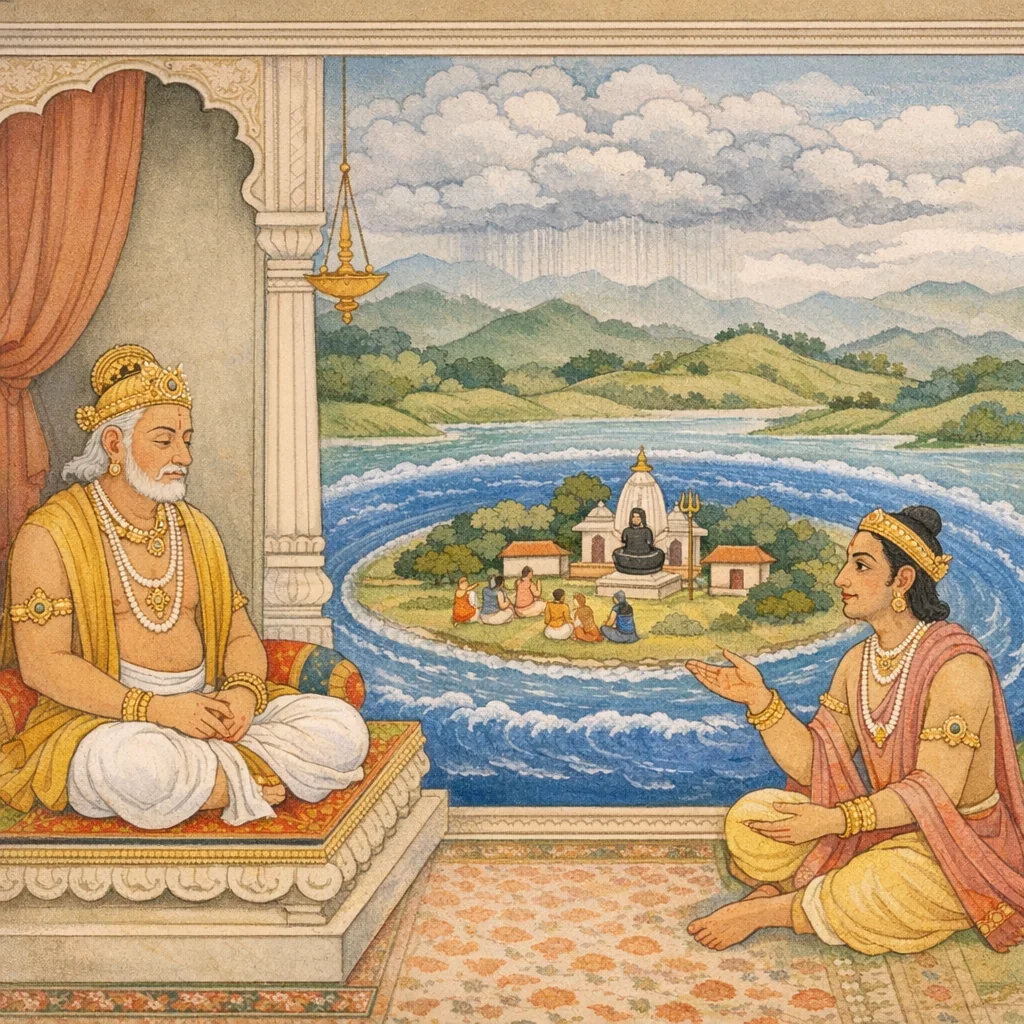
Dhṛtarāṣṭra questions Sañjaya regarding the measures (pramāṇa) and consequences (phala, auspicious/inauspicious) associated with Bhārata-varṣa and the Haimavata region, and requests an expanded account including Hari-varṣa across past, present, and future. Sañjaya responds by enumerating four yugas operative in Bhārata-varṣa—Kṛta, Tretā, Dvāpara, and Puṣya—presented in a sequence of decline. He provides lifespan measures for Kṛta (four thousand years), Tretā (three thousand), and Dvāpara (two thousand), then notes that in Puṣya there is no stable measure, with mortality affecting even the unborn and newly born. The chapter then characterizes each yuga by typical human qualities: in Kṛta, powerful and austere sages and prosperous, truthful, dharmic people; in Tretā, long-lived heroic kṣatriyas and imperial rulers; in Dvāpara, all varṇas with intensified energy and mutual aggression; and in Puṣya, diminished brilliance with anger, greed, falsehood, jealousy, pride, deception, and envy. The closing verse indicates a compressed account for Dvāpara and points onward to further discussion of Haimavata and Hari-varṣa as comparatively “guṇa-uttara” (of higher qualities).
Chapter Arc: कुरु-सभा के भीतर, युद्ध की दहलीज़ पर खड़े धृतराष्ट्र संजय से आग्रह करते हैं—जम्बूद्वीप का वर्णन सुन लिया; अब समुद्रों के प्रमाण और शाकद्वीप-कुशद्वीप आदि का यथार्थ विस्तार बताओ। → संजय भूगोल को केवल नामों की सूची नहीं रहने देते—द्वीपों के विस्तार, लवण-समुद्र की द्विगुण परिधि, मेघों की उत्पत्ति और वर्षा-चक्र, पर्वत-सीमाएँ, जनपदों की प्रकृति और वहाँ के धर्म-आचरण का क्रमशः उद्घाटन करते जाते हैं। → शाकद्वीप का केंद्र—‘शाक’ नामक महान् क्षेत्र—और उसके पुण्य जनपदों का वैभव, शंकर-पूजन, नदियों का पवित्र प्रवाह, तथा निवासियों के वर्ण-स्वभाव (श्यामत्व आदि) का कारण-निर्देश; साथ ही ‘सर्वकामसमायुक्त’ धर्मनिष्ठ क्षत्रियों और वैश्य-समुदायों का चित्रण अध्याय का शिखर बनता है। → धृतराष्ट्र स्वीकार करते हैं कि संजय ने शाकद्वीप का संक्षेप कहा; वे ‘विस्तरं ब्रूहि तत्त्वतः’ कहकर और अधिक सूक्ष्म विवरण की माँग करते हैं—इस प्रकार वर्णन का सूत्र अगले खंड के लिए कस जाता है। → संजय द्वारा शाकद्वीप के शेष विभागों/जनपदों और आगे के द्वीपों (कुश, शाल्मलि, क्रौंच आदि) के विस्तृत माप-मान और लोक-व्यवस्था का आगामी वर्णन।
Shlokas
Verse 1
अपन करा बछ। 2 (भूमिपर्व) एकादशो< ध्याय: शाकद्दवीपका वर्णन ध्तराष्ट्र रवाच जम्बूखण्डस्त्वया प्रोक्तो यथावदिह संजय । विष्कम्भमस्य प्रब्रूहि परिमाणं तु तत्त्वतः,धृतराष्ट्र बोले--संजय! तुमने यहाँ जम्बूखण्डका यथावत् वर्णन किया है। अब तुम इसके विस्तार और परिमाणको ठीक-ठीक बताओ
Dhṛtarāṣṭra said: “Sañjaya, you have described Jambū-khaṇḍa here accurately. Now tell me precisely—truthfully and in full measure—its breadth and its true dimensions.”
Verse 2
समुद्रस्य प्रमाणं च सम्यगच्छिद्रदर्शनम् । शादद्दीपं च मे ब्रूहि कुशद्वीपं च संजय,संजय! समुद्रके सम्पूर्ण परिमाणको भी अच्छी तरह समझाकर कहो। इसके बाद मुझसे शाकद्वीप और कुशद्वीपका वर्णन करो
Explain to me as well the full measure of the ocean, setting it forth clearly and without omission. Then, Sañjaya, describe to me Śāka-dvīpa and Kuśa-dvīpa too.
Verse 3
शाल्मलिं चैव तत्त्वेन क्रौज्चद्वीपं तथैव च । ब्रूहि गावल्गणे सर्व राहो: सोमार्कयोस्तथा,गवल्गणकुमार संजय! इसी प्रकार शाल्मलिद्वीप, क्रौंचद्वीप तथा सूर्य, चन्द्रमा एवं राहुसे सम्बन्ध रखनेवाली सब बातोंका यथार्थरूपसे प्रतिपादन करो
And explain to me accurately the Śālmalī continent and likewise the Krauñca continent. O Sañjaya, son of Gāvalgaṇa, tell in full the true account concerning Rāhu and his relation to the Moon and the Sun.
Verse 4
संजय उवाच राजन् सुबहवो द्वीपा यैरिदं संततं जगत् । सप्तद्वीपान् प्रवक्ष्यामि चन्द्रादित्यौ ग्रह तथा,संजय बोले--राजन्! बहुत-से द्वीप हैं, जिनसे सम्पूर्ण जगत् परिपूर्ण है। अब मैं आपकी आज्ञाके अनुसार सात द्वीपोंका तथा चन्द्रमा, सूर्य और राहुका भी वर्णन करूँगा
Sañjaya said: “O King, there are many dvīpas by which this whole world is spread out. Now I shall describe the seven dvīpas, and also the Moon, the Sun, and Rāhu.”
Verse 5
अष्टादश सहस्राणि योजनानि विशाम्पते । षट् शतानि च पूर्णानि विष्कम्भो जम्बुपर्वत:,राजन! जम्बूद्वीपका विस्तार पूरे १८,६०० योजन है। इसके चारों ओर जो खारे पानीका समुद्र है, उसका विस्तार जम्बूद्वीपकी अपेक्षा दूना माना गया है। उसके तटपर तथा टापूमें बहुत-से देश और जनपद हैं। उसके भीतर नाना प्रकारके मणि और मूँगे हैं, जो उसकी विचित्रता सूचित करते हैं। अनेक प्रकारके धातुओंसे हक 5 प्रतीत होनेवाले बहुसंख्यक पर्वत उस सागरकी शोभा बढ़ाते हैं। सिद्धों तथा से भरा हुआ वह लवणसमुद्र सब ओरसे मण्डलाकार है
Sañjaya said: “O lord of the people, the breadth of Mount Jambū is eighteen thousand yojanas, with a further full six hundred yojanas besides.”
Verse 6
लावणस्य समुद्रस्य विष्कम्भो द्विगुण: स्मृत: । नानाजनपदाकीर्णो मणिविद्रुमचित्रित:,राजन! जम्बूद्वीपका विस्तार पूरे १८,६०० योजन है। इसके चारों ओर जो खारे पानीका समुद्र है, उसका विस्तार जम्बूद्वीपकी अपेक्षा दूना माना गया है। उसके तटपर तथा टापूमें बहुत-से देश और जनपद हैं। उसके भीतर नाना प्रकारके मणि और मूँगे हैं, जो उसकी विचित्रता सूचित करते हैं। अनेक प्रकारके धातुओंसे हक 5 प्रतीत होनेवाले बहुसंख्यक पर्वत उस सागरकी शोभा बढ़ाते हैं। सिद्धों तथा से भरा हुआ वह लवणसमुद्र सब ओरसे मण्डलाकार है
Sañjaya said: “The breadth of the salt ocean is traditionally held to be twice that (of Jambūdvīpa). It is crowded with many realms and provinces, and it is adorned with variegated gems and coral.”
Verse 7
नैकधातुविचित्रैश्व पर्वतैिरुपशोभित: । सिद्धचारणसंकीर्ण: सागर: परिमण्डल:,राजन! जम्बूद्वीपका विस्तार पूरे १८,६०० योजन है। इसके चारों ओर जो खारे पानीका समुद्र है, उसका विस्तार जम्बूद्वीपकी अपेक्षा दूना माना गया है। उसके तटपर तथा टापूमें बहुत-से देश और जनपद हैं। उसके भीतर नाना प्रकारके मणि और मूँगे हैं, जो उसकी विचित्रता सूचित करते हैं। अनेक प्रकारके धातुओंसे हक 5 प्रतीत होनेवाले बहुसंख्यक पर्वत उस सागरकी शोभा बढ़ाते हैं। सिद्धों तथा से भरा हुआ वह लवणसमुद्र सब ओरसे मण्डलाकार है
Sañjaya said: “O King, that ocean—adorned by mountains variegated with many kinds of minerals and ores, and thronged with Siddhas and Cāraṇas—lies all around in a perfect circular expanse.”
Verse 8
शाकद्दीपं च वक्ष्यामि यथावदिह पार्थिव । शृणु मे त्वं यथान्यायं ब्रुवतः कुरुनन्दन,राजन! अब मैं शाकद्वीपका यथावत् वर्णन आरम्भ करता हूँ। कुरुनन्दन! मेरे इस न्यायोचित कथनको आप ध्यान देकर सुनें
Sañjaya said: “O king, I shall now describe Śākadvīpa here in due order and in full. O delight of the Kurus, listen attentively as I speak in a manner consistent with propriety and right method.”
Verse 9
जम्बूद्वीपप्रमाणेन द्विगुण: स नराधिप । विष्कम्भेण महाराज सागरो5डपि विभागश:,महाराज! नरेश्वर! वह द्वीप विस्तारकी दृष्टिसे जम्बूद्वीपके परिमाणसे दूना है। भरतश्रेष्ठ) उसका समुद्र भी विभागपूर्वक उससे दूना ही है
Sañjaya said: O king, in measured extent that region is twice the size of Jambūdvīpa; and, O great king, the ocean that encircles it too—according to its divisions—correspondingly measures twice as much. The account thus proclaims a cosmic order of proportion and structure, a world arranged by intelligible measure rather than by chaos.
Verse 10
क्षीरोदो भरतश्रेष्ठ येन सम्परिवारित: । तत्र पुण्या जनपदास्तत्र न म्रियते जन:,भरतश्रेष्ठ उस समुद्रका नाम क्षीरसागर है, जिसने उक्त द्वीपको सब ओरसे घेर रखा है। वहाँ पवित्र जनपद हैं। वहाँ निवास करनेवाले लोगोंकी मृत्यु नहीं होती
Sañjaya said: “O best of the Bharatas, that region is encircled on every side by the Ocean of Milk (Kṣīrasāgara). There lie holy provinces; and the people who dwell there do not meet with death.”
Verse 11
कुत एव हि दुर्भिक्षं क्षमातेजोयुता हि ते । शाकद्दीपस्य संक्षेपो यथावद् भरतर्षभ
Sañjaya said: “How could there be famine at all? For you are endowed with the splendor born of forbearance. O bull among the Bharatas, I shall now relate, in due order and in brief, the account of Śākadvīpa.”
Verse 12
धृतराष्ट उवाच शाकद्दीपस्य संक्षेपो यथावदिह संजय
Dhṛtarāṣṭra said: “O Sañjaya, tell me here, in due order and correctly, a concise account of Śākadvīpa.”
Verse 13
संजय उवाच तथैव पर्वता राजन् सप्तात्र मणिभूषिता:
Sañjaya said: “In the same manner, O King, there were also seven mountains here, adorned with jewels.”
Verse 14
रत्नाकरास्तथा नद्यस्तेषां नामानि मे शूणु । संजय बोले--राजन्! शाकद्वीपमें भी मणियोंसे विभूषित सात पर्वत हैं। वहाँ रत्नोंकी बहुत-सी खानें तथा नदियाँ भी हैं। उनके नाम मुझसे सुनिये || १३ इ ।। अतीव गुणवत् सर्व तत्र पुण्यं जनाधिप,जनेश्वर! वहाँका सब कुछ परम पवित्र और अत्यन्त गुणकारी है। वहाँका प्रधान पर्वत है मेरु, जो देवर्षियों तथा गन्धर्वोंसे सेवित है। महाराज! दूसरे पर्वतका नाम मलय है, जो पूर्वसे पश्चिमकी ओर फैला हुआ है
Sañjaya said: “O King, in Śākadvīpa too there are seven mountains adorned with gems. There are many mines of precious stones there, and rivers as well. Hear from me their names.”
Verse 15
देवर्षिगन्धर्वयुत: प्रथमो मेरुरुच्यते । प्रागायतो महाराज मलयो नाम पर्वत:,जनेश्वर! वहाँका सब कुछ परम पवित्र और अत्यन्त गुणकारी है। वहाँका प्रधान पर्वत है मेरु, जो देवर्षियों तथा गन्धर्वोंसे सेवित है। महाराज! दूसरे पर्वतका नाम मलय है, जो पूर्वसे पश्चिमकी ओर फैला हुआ है
Sañjaya said: “O great king, the foremost mountain is called Meru, attended by divine seers and Gandharvas. Another mountain is named Malaya, stretching from east toward the west.”
Verse 16
ततो मेघाः प्रवर्तन्ते प्रभवन्ति च सर्वश: । ततः: परेण कौरव्य जलधारो महागिरि:,मेघ वहींसे उत्पन्न होते हैं, फिर वे सब ओर फैलकर जलकी वर्षा करनेमें समर्थ होते हैं। कुरुनन्दन! उसके बाद जलधार नामक महान् पर्वत है
Sañjaya said: “Then the clouds begin to move forth and arise on every side. Beyond that, O descendant of Kuru, lies the great mountain called Jaladhāra.”
Verse 17
ततो नित्यमुपादत्ते वासव: परमं जलम् । ततो वर्ष प्रभवति वर्षकाले जनेश्वर,जनेश्वर! इन्द्र वहींसे सदा उत्तम जल ग्रहण करते हैं। इसीलिये वर्षाकालमें वे यथेष्ट जल बरसानेमें समर्थ होते हैं
Sañjaya said: “Therefore Vāsava (Indra) continually draws up the finest waters; and from that, O lord of men, rainfall arises in the season of rains. Thus, by sustaining this cosmic cycle, Indra becomes capable of sending down abundant showers at the proper time.”
Verse 18
उच्चैर्गिरी रैवतको यत्र नित्यं प्रतिष्ठिता । रेवती दिवि नक्षत्रं पितामहकृतो विधि:,उसी द्वीपमें उच्चतम रैवतक पर्वत है, जहाँ आकाशमें रेवती नामक नक्षत्र नित्य प्रतिष्ठित है। यह ब्रह्माजीका रचा हुआ विधान है
Sañjaya said: “In that region stands the lofty mountain Raivataka, and above it the star Revatī remains ever fixed in the heavens—such is the ordinance established by Pitāmaha (Brahmā).”
Verse 19
उत्तरेण तु राजेन्द्र श्यामो नाम महागिरि: । नवमेघप्रभ: प्रांशु: श्रीमानुज्ज्वलविग्रह:,राजेन्द्र! उसके उत्तर भागमें श्याम नामक महानू् पर्वत है, जो नूतन मेघके समान श्याम शोभासे युक्त है। उसकी ऊँचाई बहुत है। उसका कान्तिमान् कलेवर परम उज्ज्वल है इति श्रीमहाभारते भीष्मपर्वणि भूमिपर्वणि शाकद्वीपवर्णने एकादशो<ध्याय: ।। ११ इस प्रकार श्रीमह्ाभारत भीष्मपर्वके अन्तर्गत भूमिपर्वमें शाकद्वीपवर्णनविषयक ग्यारहवाँ अध्याय पूरा हुआ
Sañjaya said: “To the north, O king, stands a great mountain named Śyāma. Dark-hued like a newly formed rain-cloud, it rises lofty and imposing, endowed with splendor, its form strikingly bright.”
Verse 20
धृतराष्ट्र रवाच सुमहान् संशयो मेउद्य प्रोक्तोडयं संजय त्वया । प्रजा: कथं सूतपुत्र सम्प्राप्ता: श्यामतामिह,धृतराष्ट्र बोले--सूतपुत्र संजय! यह तो तुमने आज मुझसे महान् संशयकी बात कही है। भला, वहाँ रहनेमात्रसे प्रजा श्यामताको कैसे प्राप्त हो गयी?
Dhṛtarāṣṭra said: “Sañjaya, son of a sūta, today you have spoken to me of a very great doubt. How, merely by being there, have the people here come to a darkened state?”
Verse 21
संजय उवाच सर्वेष्वेव महाराज द्वीपेषु कुरुनन्दन | गौर: कृष्णश्न वर्णो द्वौ तयोर्वर्णान्तरं नृप,संजयने कहा--महाराज कुरुनन्दन! सम्पूर्ण द्वीपोंमें गौर, कृष्ण तथा इन दोनों वर्णोका सम्मिश्रण देखा जाता है। भारत! यह पर्वत जिस कारणसे श्याम होकर दूसरोंमें भी श्यामता उत्पन्न करनेवाला हुआ, वह आपको बताता हूँ। यहाँ भगवान् श्रीकृष्ण निवास करते हैं; अतः उन्हींकी कान्तिसे यह (स्वयं भी) श्यामताको प्राप्त हुआ है (और अपने समीप रहनेवाली प्रजामें भी श्यामता उत्पन्न कर देता है)
Sañjaya said: “O great king, O joy of the Kurus, throughout all the islands (regions) there are seen two principal complexions—fair and dark—and also the intermediate shades between them. Thus, diversity of appearance is natural across the world.”
Verse 22
श्यामो यस्मात् प्रवृत्तो वै तत् ते वक्ष्यामि भारत । आस्तेऊत्र भगवान् कृष्णस्तत्कान्त्या श्यामतां गत:,संजयने कहा--महाराज कुरुनन्दन! सम्पूर्ण द्वीपोंमें गौर, कृष्ण तथा इन दोनों वर्णोका सम्मिश्रण देखा जाता है। भारत! यह पर्वत जिस कारणसे श्याम होकर दूसरोंमें भी श्यामता उत्पन्न करनेवाला हुआ, वह आपको बताता हूँ। यहाँ भगवान् श्रीकृष्ण निवास करते हैं; अतः उन्हींकी कान्तिसे यह (स्वयं भी) श्यामताको प्राप्त हुआ है (और अपने समीप रहनेवाली प्रजामें भी श्यामता उत्पन्न कर देता है)
Sañjaya said: “O Bhārata, I shall tell you why this place became dark-hued and why it imparts that same hue to others. Here dwells the Blessed Lord Kṛṣṇa; by the radiance of His own complexion this region has taken on that dark tint (and, by proximity, it is said to influence those who live near it as well).”
Verse 23
ततः परं कौरवेन्द्र दुर्गशैलो महोदय: । केसर: केसरयुतो यतो वात: प्रवर्तते,कौरवराज! श्यामगिरिके बाद बहुत ऊँचा दुर्ग शैल है। उसके बाद केसर पर्वत है, जहाँसे चली हुई वायु केसरकी सुगन्ध लिये बहती है
Sañjaya said: “Beyond that, O lord of the Kurus, rises a lofty, formidable mountain-fort. After it is the Kesara mountain, rich with saffron, from where the wind blows forth carrying the fragrance of saffron.”
Verse 24
तेषां योजनविष्कम्भो द्विगुण: प्रविभागश: । वर्षाणि तेषु कौरव्य सप्तोक्तानि मनीषिभि:,इन सब पर्वतोंका विस्तार दूना होता गया है। कुरुनन्दन! मनीषी पुरुषोंने उन पर्वतोंके समीप सात वर्ष बताये हैं
Sañjaya said: “In each successive division, the breadth of those mountains is described as becoming twice as great. O descendant of Kuru, the sages have declared that there are seven varṣas (great territorial regions) associated with them.”
Verse 25
महामेरुर्महाकाशो जलद: कुमुदोत्तर: । जलधारो महाराज सुकुमार इति स्मृत:,महामेरु पर्ववके समीप महाकाशवर्ष है, जलद या मलयके निकट कुमुदोत्तरवर्ष है। महाराज! जलधार गिरिका पार्श्ववर्ती वर्ष सुकुमार बताया गया है
Sañjaya said: “O great king, the regions known as Mahāmeru, Mahākāśa, Jalada, Kumudottara, Jaladhāra, and Sukumāra are so designated.”
Verse 26
रेवतस्य तु कौमार: श्यामस्य मणिकाउचन: । केसरस्याथ मोदाकी परेण तु महापुमान्,रैवतक पर्वतका कुमारवर्ष तथा श्यामगिरिका मणिकांचनवर्ष है। इसी प्रकार केसरके समीपवर्ती वर्षको मोदाकी कहते हैं। उसके आगे महापुमान् नामक एक पर्वत है
Sañjaya said: “In the region associated with Revata there is the tract called Kaumāra; in the region of Śyāma there is the tract called Maṇikāñcana. Near Kesara lies the tract known as Modākī; beyond that stands a great mountain named Mahāpumān.”
Verse 27
परिवार्य तु कौरव्य दैर्घ्य हस्वत्वमेव च । जम्बूद्वीपेन संख्यातस्तस्य मध्ये महाद्रुम:,वह उस द्वीपकी लंबाई और चौड़ाई सबको घेरकर खड़ा है। महाराज! उसके बीचमें शाक नामक एक बड़ा भारी वृक्ष है, जो जम्बूद्वीपके समान ही विशाल है। महाराज! वहाँकी प्रजा सदा उस शाकवृक्षके ही आश्रित रहती है। वहाँ बड़े पवित्र जनपद हैं। उस द्वीपमें भगवान् शंकरकी आराधना की जाती है
Sañjaya said: “O descendant of Kuru, that region is described in terms of its length and breadth, as though measured by comparison with Jambūdvīpa. And in its very midst stands a mighty tree.”
Verse 28
शाको नाम महाराज प्रजा तस्य सदानुगा । तत्र पुण्या जनपदा: पूज्यते तत्र शंकर:,वह उस द्वीपकी लंबाई और चौड़ाई सबको घेरकर खड़ा है। महाराज! उसके बीचमें शाक नामक एक बड़ा भारी वृक्ष है, जो जम्बूद्वीपके समान ही विशाल है। महाराज! वहाँकी प्रजा सदा उस शाकवृक्षके ही आश्रित रहती है। वहाँ बड़े पवित्र जनपद हैं। उस द्वीपमें भगवान् शंकरकी आराधना की जाती है
Sañjaya said: “O King, there is a great tree named Śāka, and the people there are ever devoted to it and live in dependence upon it. In that region are holy settlements, and there Lord Śaṅkara is worshipped.”
Verse 29
तत्र गच्छन्ति सिद्धाक्ष चारणा दैवतानि च । धार्मिकाश्षु प्रजा राजंक्ष॒त्वारोइतीव भारत,राजन! भरतनन्दन! वहाँ सिद्ध, चारण और देवता जाते हैं। वहाँके चारों वर्णोकी प्रजा अत्यन्त धार्मिक होती है
Sañjaya said: “There, O King, go the perfected beings, the celestial bards, and the gods as well. And there, O Bhārata, the people—belonging to the four social orders—are indeed devoted to dharma.”
Verse 30
वर्णा: स्वकर्मनिरता न च स्तेनोअत्र दृश्यते । दीर्घायुषो महाराज जरामृत्युविवर्जिता:,सभी वर्णके लोग वहाँ अपने-अपने वर्णाश्रमोचित कर्मका पालन करते हैं। वहाँ कोई चोर नहीं दिखायी देता। महाराज! उस द्वीपके निवासी दीर्घायु तथा जरा और मृत्युसे रहित होते हैं
Sanjaya said: “In that land, the people of all social orders remain devoted to their own prescribed duties, and no thief is seen there. O great king, the inhabitants of that island are long-lived, free from the afflictions of old age and from death.”
Verse 31
प्रजास्तत्र विवर्धन्ते वर्षास्विव समुद्रगा: । नद्यः पुण्यजलास्तत्र गड़ा च बहुधा गता,जैसे वर्षा-ऋतुमें समुद्रगामिनी नदियाँ बढ़ जाती हैं, उसी प्रकार वहाँकी समस्त प्रजा सदा वृद्धिको प्राप्त होती रहती है। उस द्वीपमें अनेक पवित्र जलवाली नदियाँ बहती हैं। वहाँ गंगा भी अनेक धाराओंमें विभक्त देखी जाती हैं
Sañjaya said: “There the people continually prosper and increase, just as rivers that run to the ocean swell in the rainy season. In that island flow many rivers with sacred waters, and even the Gaṅgā is seen there divided into numerous streams.”
Verse 32
सुकुमारी कुमारी च शीताशी वेणिका तथा । महानदी च कौरव्य तथा मणिजला नदी,कुरुनन्दन! भरतश्रेष्ठ! उस द्वीपमें सुकुमारी, कुमारी, शीताशी, वेणिका, महानदी, मणिजला तथा चक्षुर्वर्धनिका आदि पवित्र जलवाली नदियाँ बहती हैं
Sanjaya said: O descendant of Kuru, O joy of the Kurus, O best of the Bharatas—on that island flow rivers of sacred waters: Sukumārī, Kumārī, Śītāśī, Veṇikā, Mahānadī, Maṇijalā, and others such as Cakṣurvardhanikā.
Verse 33
चक्षुर्वर्धनिका चैव नदी भरतसत्तम । तत्र प्रवृत्ता: पुण्योदा नद्यः कुरुकुलोद्वह,कुरुनन्दन! भरतश्रेष्ठ! उस द्वीपमें सुकुमारी, कुमारी, शीताशी, वेणिका, महानदी, मणिजला तथा चक्षुर्वर्धनिका आदि पवित्र जलवाली नदियाँ बहती हैं
Sañjaya said: “O best of the Bharatas, O upholder of the Kuru line—there too flows the river Cakṣurvardhanikā; and in that region run many rivers whose waters are holy.”
Verse 34
सहस्राणां शतान्येव यतो वर्षति वासव: । न तासां नामधेयानि परिमाणं तथैव च,वहाँ लाखों ऐसी नदियाँ हैं, जिनसे जल लेकर इन्द्र वर्षा करते हैं। उनके नाम और परिमाणकी संख्या बताना कठिन ही नहीं, असम्भव है। वे सभी श्रेष्ठ नदियाँ परम पुण्यमयी हैं। उस द्वीपमें लोकसम्मानित चार पवित्र जनपद हैं
Sañjaya said: From those sources Vāsava (Indra) sends down rain in thousands upon thousands and hundreds upon hundreds. Their individual names—and likewise their full measure and number—cannot be set forth. (The passage underscores the vastness of the cosmic order that sustains life, beyond ordinary enumeration.)
Verse 35
शकक््यन्ते परिसंख्यातुं पुण्यास्ता हि सरिद्वरा: । तव पुण्या जनपदाश्षत्वारो लोकसम्मता:,वहाँ लाखों ऐसी नदियाँ हैं, जिनसे जल लेकर इन्द्र वर्षा करते हैं। उनके नाम और परिमाणकी संख्या बताना कठिन ही नहीं, असम्भव है। वे सभी श्रेष्ठ नदियाँ परम पुण्यमयी हैं। उस द्वीपमें लोकसम्मानित चार पवित्र जनपद हैं
Sañjaya said: Those supremely sacred rivers cannot truly be counted; to enumerate them is beyond measure. In that island-region there are also four holy provinces, renowned and honored by the world—lands made meritorious by their waters and by the righteous life associated with them.
Verse 36
मड़ाश्न मशकाश्नैव मानसा मन्दगास्तथा । मज़ा ब्राह्मणभूयिष्ठा: स्वकर्मनिरता नूप,उनके नाम इस प्रकार हैं--मंग, मशक, मानस तथा मन्दग। नरेश्वर! उनमेंसे मंग जनपदमें अधिकतर ब्राह्मण निवास करते हैं। वे सब-के-सब अपने कर्तव्यके पालनमें तत्पर रहते हैं
Sañjaya said: “The peoples known as the Maṅgas and the Maśakas, as well as the Mānasas and the Mandagas, are also there. O king, among the Maṅgas the population is predominantly Brāhmaṇa, and all of them are devoted to the faithful performance of their own prescribed duties.”
Verse 37
मशकेषु तु राजन्या धार्मिका: सर्वकामदा: । मानसाभ्न महाराज वैश्यधर्मोपजीविन:
Sañjaya said: “Among the Maśakas, the Kṣatriyas (royal order) are righteous, able to grant all desires. And among the Mānasas, O great king, they live by the duties and livelihood of the Vaiśya.”
Verse 38
शूद्रास्तु मन्दगा नित्यं पुरुषा धर्मशीलिन:,मन्दग जनपदमें शूद्र रहते हैं। वे भी धर्मात्मा होते हैं
Sañjaya said: “Among the Mandagas dwell the Śūdras; yet those men too are dharma-minded, ever disposed to righteous conduct.”
Verse 39
न तत्र राजा राजेन्द्र न दण्डो न च दण्डिक: । स्वधर्मेणैव धर्मज्ञास्ते रक्षन्ति परस्परम्,राजेन्द्र! वहाँ न कोई राजा है, न दण्ड है और न दण्ड देनेवाला है। वहाँके लोग धर्मके ज्ञाता हैं और स्वधर्मपालनके ही प्रभावसे एक-दूसरेकी रक्षा करते हैं
Sañjaya said: “O lord of kings, in that realm there is no king, no punitive rod, and no wielder of punishment. Those people, being knowers of dharma, protect one another solely through the power of adhering to their own rightful duties.”
Verse 40
एतावदेव शक्यं तु तत्र द्वीपे प्रभाषितुम् । एतदेव च श्रोतव्यं शाकद्वीपे महौजसि,महाराज! उस महान् तेजोमय शाकद्वीपके सम्बन्धमें इतना ही कहा जा सकता है और इतना ही सुनना चाहिये
Sañjaya said: “O King, about that mighty and radiant Śākadvīpa, only this much can be spoken. And only this much should be heard regarding it.”
Verse 116
उक्त एष महाराज किमन्यत् कथयामि ते । फिर वहाँ दुर्भिक्ष तो हो ही कैसे सकता है? उस द्वीपके निवासी क्षमाशील और तेजस्वी होते हैं। भरतश्रेष्ठ महाराज! इस प्रकार शाकद्दीपका संक्षेपसे यथावत् वर्णन किया गया है। अब और आपसे कया कहूँ?
Sañjaya said: “O great king, this has been stated. What more shall I tell you?”
Verse 126
उक्तस्त्वया महाप्राज्ञ विस्तरं ब्रूहि तत्त्वतः | धृतराष्ट्र बोले--महाबुद्धिमान् संजय! तुमने यहाँ शाकद्दवीपका संक्षिप्तरूपसे यथावत् वर्णन किया है। अब उसका कुछ विस्तारके साथ यथार्थ परिचय दो
Dhṛtarāṣṭra said: “O Sañjaya, great in wisdom—since you have already described this matter in brief, now tell it again in fuller detail, truthfully and as it really is.”
Verse 196
यतः श्यामत्वमापन्ना: प्रजा जनपदेश्वर । जनपदेश्वर! वहाँ रहनेसे ही वहाँकी प्रजा श्यामताको प्राप्त हुई है
Sañjaya said: “O lord of the realm, it is from that very cause that the people have come to be dark-complexioned; by dwelling there itself, the inhabitants of that country have acquired that dark hue.”
Verse 376
सर्वकामसमायुक्ता: शूरा धर्मार्थनिश्चिता: । महाराज! मशक जनपदमें सम्पूर्ण कामनाओंके देनेवाले धर्मात्मा क्षत्रिय निवास करते हैं। मानस जनपदके निवासी वैश्यवृत्तिसे जीवन-निर्वाह करते हैं। वे सर्वभोगसम्पन्न, शूरवीर, धर्म और अर्थको समझनेवाले एवं दृढ़निश्चयी होते हैं
Sañjaya said: “In that region dwell righteous Kṣatriyas who can grant every desired good—valiant men, firmly resolved in dharma and artha. The people of the Mānas country sustain themselves by the vocation of Vaiśyas; they are endowed with enjoyments and resources, heroic in spirit, discerning in matters of righteousness and prosperity, and steadfast in their resolve.”
Frequently Asked Questions
The chapter frames an ethical problem of governance and conduct under decline: as virtues weaken and vices intensify in later ages, stable norms and predictable life conditions erode, complicating the application of ideal dharma in practical decision-making.
The instructional takeaway is diagnostic and cautionary: recognize age-conditioned human tendencies—especially anger, greed, and falsehood in Puṣya—and therefore prioritize restraint, truth-discipline, and realistic policy calibrated to prevailing dispositions.
No explicit phalaśruti is stated in these verses; the chapter operates as contextual meta-history, positioning subsequent discussion of regions (Haimavata, Hari-varṣa) and reinforcing the epic’s broader interpretive frame rather than promising a specific recitational merit.