Adhyaya 68
Uttarā-vilāpaḥ and Kṛṣṇasya satya-vacanenābhi-mañyu-jasyābhijīvanam (Uttarā’s Lament and the Revival of Abhimanyu’s Son by Krishna’s Truth-Act)
Upa-parva: Abhimanyu-putra-saṃjīvana (Revival of Abhimanyu’s son episode)
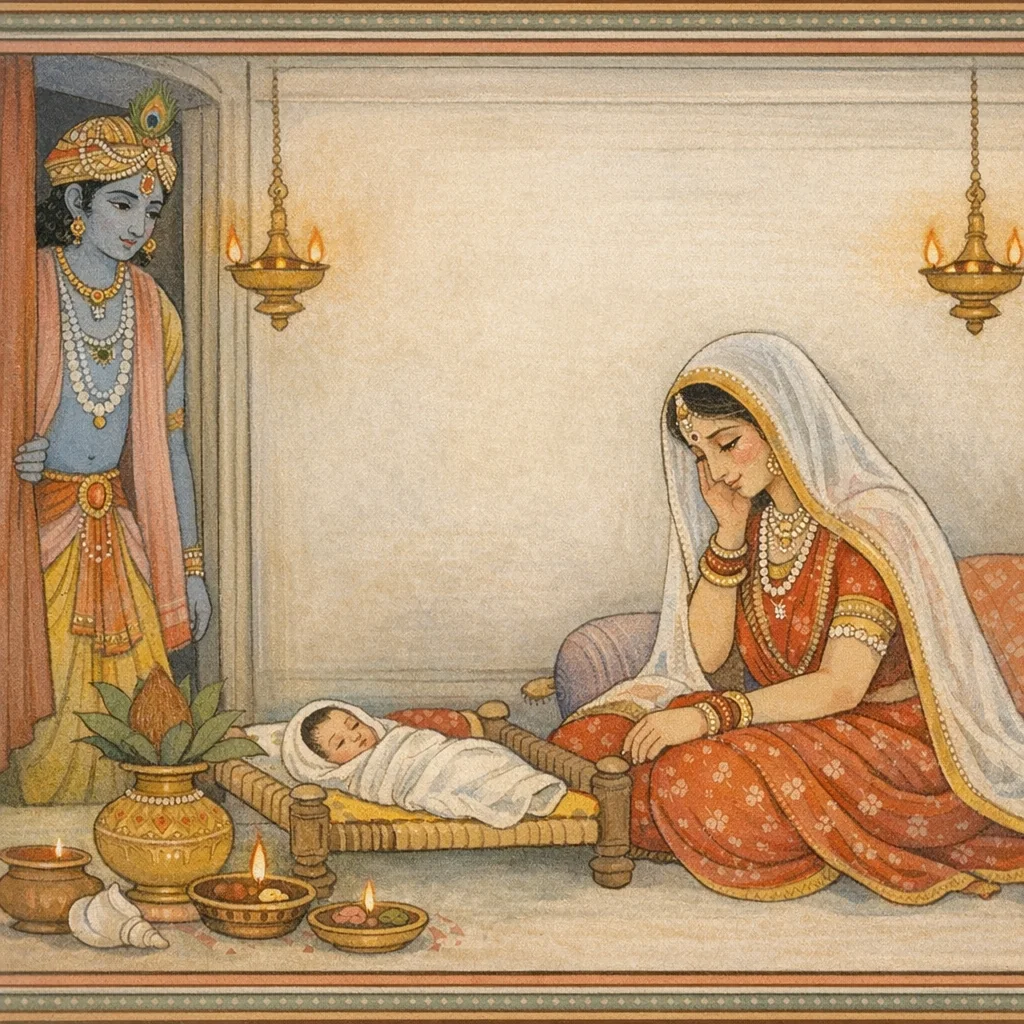
Vaiśaṃpāyana reports that Uttarā, overwhelmed by grief, collapses and laments in near-delirium; Kuntī and the other Bhārata women cry out, and the Pāṇḍava dwelling becomes filled with distress. Regaining awareness, Uttarā addresses her child as if capable of hearing, articulating a moral accusation: as the son of a dharma-knower he should not omit salutation to the Vṛṣṇi hero (Kṛṣṇa). She then instructs the child to convey her words to his father, and expresses despair at living without husband and son, even contemplating self-destruction by poison or fire; she marvels that her heart does not break despite repeated losses. The women lift her up; she steadies herself and salutes lotus-eyed Kṛṣṇa from the ground. Hearing her extensive lament, Kṛṣṇa ritually purifies himself (upaspṛśya), withdraws the brahmāstra, and publicly vows the child’s life. He performs a satya-vacana (truth-act), grounding it in his unwavering truthfulness, steadfastness in conflict, devotion to dharma and brāhmaṇas, and prior righteous deeds, declaring that by that truth the child shall live. The child then gradually shows signs of life and consciousness, indicating restoration and the re-securing of dynastic continuity.
Chapter Arc: युद्धोत्तर शोक के बीच श्रीकृष्ण प्रसूतिकागृह में प्रवेश करते हैं—जहाँ उत्तराका नवजात पुत्र निष्प्राण पड़ा है और राजवंश का भविष्य एक क्षण में डगमगा गया है। → उत्तराका विलाप तीव्र होता जाता है; वह अपने पुत्र को पिता-अभिमन्यु के समान ‘कृतघ्न’ कहकर भीषण शोक में डूबती है और पाण्डव-श्री के लोप का भय सब पर छा जाता है। प्रसूतिकक्ष का विधिवत् सुसज्जित, पवित्र वातावरण (कलश, घृत, सरसों, अग्नि, अस्त्र-पूजन) इस त्रासदी को और तीखा बनाता है। → गोविन्द को आते देखकर उत्तराका करुण क्रन्दन चरम पर पहुँचता है—वह अपने पुत्र को जीवित करने के लिए श्रीकृष्ण से प्रार्थना करती है; समस्त आशा अब एक ही ‘अपराजित’ आश्रय पर टिक जाती है। → श्रीकृष्ण का प्रसूतिकागृह में उपस्थित होना स्वयं आश्वासन बनता है—उनके वचन और निकटता से शोकाकुल जनों को शीतलता मिलती है (धूप से तपे को जल-शान्ति की उपमा)। अध्याय का अंत उत्तराके निवेदन और कृष्ण के आश्वस्तकारी सान्निध्य पर ठहरता है। → क्या श्रीकृष्ण अपने अचिन्त्य सामर्थ्य से परीक्षित को पुनर्जीवित करेंगे, और कुरुवंश की दीपशिखा फिर जलेगी?
Shlokas
Verse 1
अपना छा | अत-#-#क+ अष्टषष्टितमो< ध्याय: श्रीकृष्णका प्रसूतिकागृहमें प्रवेश, उत्तराका विलाप और अपने पुत्रको जीवित करनेके लिये प्रार्थना वैशम्पायन उवाच एवमुक्तस्तु राजेन्द्र केशिहा दुःखमूर्च्छित: । तथेति व्याजहारोच्चैद्नादियन्निव तं जनम्,वैशम्पायनजी कहते हैं--राजेन्द्र! सुभद्राके ऐसा कहनेपर केशिहन्ता केशव दुःखसे व्याकुल हो उसे प्रसन्न करते हुए-से उच्च स्वरमें बोले--“बहिन! ऐसा ही होगा”
Vaiśampāyana said: Thus addressed, O king, Keśi’s slayer (Kṛṣṇa), overcome by grief, spoke aloud, as though making the people resound: “So be it.” By this firm assurance he sought to console the afflicted, turning compassion into a vow of action amid the aftermath of war.
Verse 2
वाक्येनैतेन हि तदा तं जन पुरुषर्षभ: । ह्वादयामास स विभुर्घर्मार्तं सलिलैरिव,जैसे धूपसे तपे हुए मनुष्यको जलसे नहला देनेपर बड़ी शान्ति मिल जाती है, उसी प्रकार पुरुषोत्तम भगवान् श्रीकृष्णने इस अमृतमय वचनके द्वारा सुभद्रा तथा अन्तःपुरकी दूसरी स्त्रियोंको महान् आह्वाद प्रदान किया
Vaiśampāyana said: By these very words, the mighty Lord—best among men—then gladdened them, just as water refreshes and soothes a person distressed by heat. In the narrative setting, Kṛṣṇa’s consoling speech brings relief and emotional steadiness to Subhadrā and the women of the inner apartments, modeling compassionate reassurance as a form of dharma in grief.
Verse 3
ततः स प्राविशत् तूर्ण जन्मवेश्म पितुस्तव । अर्चितं पुरुषव्याप्र सितैर्माल्यैर्यथाविधि,पुरुषसिंह! तदनन्तर भगवान् श्रीकृष्ण तुरंत ही तुम्हारे पिताके जन्मस्थान-- सूतिकागारमें गये; जो सफेद फूलोंकी मालाओंसे विधिपूर्वक सजाया गया था
Then he swiftly entered your father’s birth-chamber (the lying-in room), O tiger among men. It had been duly honored and decorated according to rite with white garlands—marking the sanctity of the place and the careful observance of auspicious custom.
Verse 4
अपां कुम्भै: सुपूर्णश्न विन्यस्तै: सर्वतोदिशम् । घृतेन तिन्दुकालातै: सर्षपैश्न महाभुज,महाबाहो! उसके चारों ओर जलसे भरे हुए कलश रखे गये थे। घीसे तर किये हुए तेन्दुक नामक काष्ठके कई टुकड़े जल रहे थे तथा यत्र-तत्र सरसों बिखेरी गयी थी
Vaiśampāyana said: “All around, water-pots filled to the brim were set in place. Pieces of tinduka wood, soaked with ghee, were burning, and mustard seeds were scattered here and there.”
Verse 5
अस्त्रैश्व विमलैन्यस्तै: पावकैश्व समन््ततः । वृद्धाभिश्चापि रामाभि: परिचारार्थमावृतम्
Vaiśampāyana said: “It was surrounded on every side by spotless weapons set in place and by fires blazing around it; and it was also enclosed by venerable women, stationed there for the purpose of attendance and service.”
Verse 6
दक्षैक्ष परितो धीर भिषम्भि: कुशलैस्तथा । धैर्यशशाली राजन! उस घरके चारों ओर चमकते हुए तेज हथियार रखे गये थे और सब ओर आग प्रज्वलित की गयी थी। सेवाके लिये उपस्थित हुई बूढ़ी स्त्रियोंने उस स्थानको घेर रखा था तथा अपने-अपने कार्यमें कुशल चतुर चिकित्सक भी चारों ओर मौजूद थे ।। ५३ || ददर्श च स तेजस्वी रक्षोघ्नान्यपि सर्वश:
Vaiśampāyana said: “Around the steadfast one stood capable and skilled physicians. The radiant hero also saw, on every side, protective measures meant to ward off rākṣasas—arrangements made to secure the place and safeguard life through vigilant care.”
Verse 7
तथायुक्तं च तद् दृष्टवा जन्मवेश्म पितुस्तव
Seeing that it was arranged and fitting in that manner, and beholding your father’s birth-house, Vaiśampāyana continued.
Verse 8
हृष्टो>भवद् हृषीकेश: साधु साध्विति चाब्रवीत् | तुम्हारे पिताके जन्मस्थानको इस प्रकार आवश्यक वस्तुओंसे सुसज्जित देख भगवान् श्रीकृष्ण बहुत प्रसन्न हुए और “बहुत अच्छा” कहकर उस प्रबन्धकी प्रशंसा करने लगे || ७ ई | तथा ब्रुवति वार्ष्णेये प्रह्ृष्टटदने तदा
Vaiśampāyana said: “Hṛṣīkeśa was delighted, and he exclaimed, ‘Well done, well done!’”
Verse 9
द्रौपदी त्वरिता गत्वा वैराटीं वाक्यमब्रवीत् । जब भगवान् श्रीकृष्ण प्रसन्नमुख होकर उसकी सराहना कर रहे थे, उसी समय द्रौपदी बड़ी तेजीके साथ उत्तराके पास गयी और बोली-- || ८ $ ।। अयमायाति ते भद्रे श्वशुरो मधुसूदन:
Vaiśampāyana said: Draupadī hurried to Uttarā and spoke: “O auspicious lady, your father-in-law, Madhusūdana (Śrī Kṛṣṇa), is coming.”
Verse 10
सापि बाष्पकलां वाचं निगृह्याश्रूणि चैव ह,दृष्टवा गोविन्दमायान्तं कृपणं पर्यदेवयत् । यह सुनकर उत्तराने अपने आँसुओंको रोककर रोना बंद कर दिया और अपने सारे शरीरको वस्त्रोंसे ढक लिया। श्रीकृष्णके प्रति उसकी भगवदबुद्धि थी; इसलिये उन्हें आते देख वह तपस्विनी बाला व्यथित हृदयसे करुणविलाप करती हुई गद्गद-कण्ठसे इस प्रकार बोली--
Vaiśampāyana said: She too restrained her voice, breaking with tears, and held back her weeping; yet on seeing Govinda approach, she lamented piteously.
Verse 11
सुसंवीताभवद् देवी देववत् कृष्णमीयुषी । सा तथा दूयमानेन हृदयेन तपस्विनी
Vaiśampāyana said: The noble lady, well-clad and radiant like a goddess, went to Kṛṣṇa. Yet that ascetic-hearted woman, even as she approached him, was inwardly consumed by grief.
Verse 12
पुण्डरीकाक्ष पश्यावां बालेन हि विनाकृतौ । अभिमन्युं च मां चैव हतौ तुल्यं जनार्दन,“कमलनयन! जनार्दन! देखिये, आज मैं और मेरे पति दोनों ही संतानहीन हो गये। आरयपुत्र तो युद्धमें वीरगतिको प्राप्त हुए हैं; परंतु मैं पुत्रशोकसे मारी गयी। इस प्रकार हम दोनों समान रूपसे ही कालके ग्रास बन गये
Vaiśampāyana said: “O lotus-eyed Janārdana, behold: we two have been left without a child. Abhimanyu has fallen, and I too am as good as slain—struck down by grief. Thus, in the same measure, we both have become prey to Death.”
Verse 13
वार्ष्णेय मधुहन् वीर शिरसा त्वां प्रसादये । द्रोणपुत्रास्त्रनिर्दग्धं जीवयैनं॑ ममात्मजम्,*वृष्णिनन्दन! वीर मधुसूदन! मैं आपके चरणोंमें मस्तक रखकर आपका कृपाप्रसाद प्राप्त करना चाहती हूँ। द्रोणपुत्र अश्वत्थामाके अस्त्रसे दग्ध हुए मेरे इस पुत्रको जीवित कर दीजिये
Vaiśampāyana said: “O hero of the Vṛṣṇis, O slayer of Madhu, I bow my head to you and implore your gracious favor. My son has been burned by the weapon of Droṇa’s son—restore this child of mine to life.”
Verse 14
यदि सम धर्मराज्ञा वा भीमसेनेन वा पुनः । त्वया वा पुण्डरीकाक्ष वाक्यमुक्तमिदं भवेत्,'प्रभो! पुण्डरीकाक्ष! यदि धर्मराज अथवा आर्य भीमसेन या आपने ही ऐसा कह दिया होता कि यह सींक इस बालकको न मारकर इसकी अनजान माताको ही मार डाले, तब केवल मैं ही नष्ट हुई होती। उस दशामें यह अनर्थ नहीं होता
Vaiśampāyana said: “O lotus-eyed one, if this statement had been spoken by King Dharma (Yudhiṣṭhira), or again by Bhīmasena, or by you yourself—then the consequence would have fallen only upon me. In that condition, this grievous calamity would not have arisen.”
Verse 15
अजानतीमिषीकेयं जनित्रीं हन्त्विति प्रभो | अहमेव विनष्टा स्यां नैतदेवंगते भवेत्,'प्रभो! पुण्डरीकाक्ष! यदि धर्मराज अथवा आर्य भीमसेन या आपने ही ऐसा कह दिया होता कि यह सींक इस बालकको न मारकर इसकी अनजान माताको ही मार डाले, तब केवल मैं ही नष्ट हुई होती। उस दशामें यह अनर्थ नहीं होता
Vaiśampāyana said: “O lord! O Puṇḍarīkākṣa! If Dharmarāja, or noble Bhīmasena, or you yourself had said, ‘Let this iṣīkā strike down the boy’s unsuspecting mother instead of the child,’ then only I would have perished; in such a situation this calamity would not have come to pass.”
Verse 16
गर्भस्थस्यास्य बालस्य ब्रह्मास्त्रेण निपातनम् | कृत्वा नृशंसं दुर्बुद्धिद्रीणि: कि फलमश्लुते,“हाय! इस गर्भके बालकको ब्रह्मास्त्रसे मार डालनेका क्रूरतापूर्ण कर्म करके दुर्बुद्धि द्रोणपुत्र अश्वत्थामा कौन-सा फल पा रहा है
Vaiśampāyana said: “Having committed the cruel deed of striking down this child still in the womb with the Brahmāstra, what ‘fruit’ is the evil-minded son of Droṇa (Aśvatthāmā) now reaping?”
Verse 17
सा त्वां प्रसाद्य शिरसा याचे शत्रुनिबर्हणम् । प्राणांस्त्यक्ष्यामि गोविन्द नायं संजीवते यदि,“गोविन्द! आप शत्रुओंका संहार करनेवाले हैं। मैं आपके चरणोंमें मस्तक रखकर आपको प्रसन्न करके आपसे इस बालकके प्राणोंकी भीख माँगती हूँ। यदि यह जीवित नहीं हुआ तो मैं भी अपने प्राण त्याग दूँगी
Vaiśaṃpāyana said: “O Govinda, destroyer of foes—having bowed my head and sought to win your grace, I beg you for this child’s life. If he does not live, then I too will abandon my own life.”
Verse 18
अस्मिन् हि बहव: साधो ये ममासन् मनोरथा: । ते द्रोणपुत्रेण हता: कि नु जीवामि केशव,'साधुपुरुष केशव! इस बालकपर मैंने जो बड़ी-बड़ी आशाएँ बाँध रखी थीं, द्रोणपुत्र अश्व॒ृत्थामाने उन सबको नष्ट कर दिया। अब मैं किसलिये जीवित रहूँ?
Vaiśampāyana said: “O noble Keśava, in this child I had cherished many great hopes and heartfelt expectations. Drona’s son has slain them all. For what purpose should I go on living now?”
Verse 19
आसीन्मम मति: कृष्ण पुत्रोत्सड्रा जनार्दन | अभिवादयिष्ये हृष्टेति तदिदं वितथीकृतम्,“श्रीकृष्ण! जनार्दन! मेरी बड़ी आशा थी कि अपने इस बच्चेको गोदमें लेकर मैं प्रसन्नतापूर्वक आपके चरणोंमें अभिवादन करूँगी; किंतु अब वह व्यर्थ हो गयी
She laments to Krishna, Janardana: “I had cherished this hope—that, with my child upon my lap, I would joyfully bow at your feet in reverent greeting. But now that hope has been rendered futile.”
Verse 20
चपलाक्षस्य दायादे मृते5स्मिन् पुरुषर्षभ । विफला मे कृता: कृष्ण हृदि सर्वे मनोरथा:,“पुरुषोत्तम श्रीकृष्ण! चंचल नेत्रोंवाले पतिदेवके इस पुत्रकी मृत्यु हो जानेसे मेरे हृदयके सारे मनोरथ निष्फल हो गये
Vaiśampāyana said: “O bull among men, since this heir of the quick-eyed one has died, O Kṛṣṇa, all the hopes cherished in my heart have been rendered fruitless.”
Verse 21
चपलाक्ष: किलातीव प्रियस्ते मधुसूदन । सुतं पश्य त्वमस्यैनं ब्रह्मास्त्रेण निपातितम्,“मधुसूदन! सुनती हूँ कि चंचल नेत्रोंवाले अभिमन्यु आपको बहुत ही प्रिय थे। उन्हींका बेटा आज ब्रह्मास्त्रकी मारसे मरा पड़ा है। आप इसे आँख भरकर देख लीजिये
“Madhusūdana, I have heard that the quick-eyed Abhimanyu was exceedingly dear to you. Look now upon this—his son—struck down by the Brahmāstra.”
Verse 22
कृतघ्नो<5यं नृशंसो5यं यथास्य जनकस्तथा । यः पाण्डवीं श्रियं त्वक्त्वा गतो5द्य यमसादनम्,“यह बालक भी अपने पिताके ही समान कृतघ्न और नृशंस है, जो पाण्डवोंकी राजलक्ष्मीको छोड़कर आज अकेला ही यमलोक चला गया
Vaiśampāyana said: “This boy too is ungrateful and cruel, just like his father. For he has abandoned the royal fortune and sovereignty of the Pāṇḍavas and, today, has gone alone to the abode of Yama (death).”
Verse 23
मया चैतत् प्रतिज्ञातं रणमूर्थनि केशव । अभिमनयौ हते वीर त्वामेष्याम्यचिरादिति,“केशव! मैंने युद्धके मुहानेपर यह प्रतिज्ञा की थी कि “मेरे वीर पतिदेव! यदि आप मारे गये तो मैं शीघ्र ही परलोकमें आपसे आ मिलूगी
Vaiśampāyana said: “O Keśava, I made this vow on the very forefront of the battlefield: ‘If the heroic Abhimanyu is slain, then I shall come to you in the next world without delay.’”
Verse 24
तच्च नाकरवं कृष्ण नृशंसा जीवितप्रिया । इदानीं मां गतां तत्र कि नु वक्ष्यति फाल्गुनि:,परंतु श्रीकृष्ण! मैंने उस प्रतिज्ञाका पालन नहीं किया। मैं बड़ी कठोरहृदया हूँ। मुझे पतिदेव नहीं, ये प्राण ही प्यारे हैं। यदि इस समय मैं परलोकमें जाऊँ तो वहाँ अर्जुनकुमार मुझसे क्या कहेंगे?”
Vaishampayana said: “But, O Krishna, I did not carry out that vow. I am cruel-hearted, loving my own life. If I were to depart now to the other world, what would Arjuna, son of Phalguna, say to me there?”
Verse 66
द्रव्याणि स्थापितानि सम विधिवत् कुशलैर्जनै: । तेजस्वी श्रीकृष्णने देखा कि व्यवस्थाकुशल मनुष्योंद्वारा वहाँ सब ओर राक्षसोंका निवारण करनेवाली नाना प्रकारकी वस्तुएँ विधिपूर्वक रखी गयी थीं
Vaiśampāyana said: The materials had been set out evenly and in due ritual order by competent attendants. The radiant Śrī Kṛṣṇa observed that, all around, those skilled in arrangements had properly placed various protective items intended to ward off rākṣasas—signs of careful discipline and vigilance in safeguarding the rite.
Verse 67
इस प्रकार श्रीमह्याभारत आश्वमेधिकपर्वके अन्तर्गत अनुगीतापर्वमें सुभद्राका वचनविषयक सरसठवाँ अध्याय पूरा हुआ
Thus ends the sixty-seventh chapter of the Anugītā section within the Aśvamedhika Parva of the revered Mahābhārata, as narrated by Vaiśampāyana—this chapter being concerned with the words spoken by Subhadrā.
Verse 68
इति श्रीमहाभारते आश्वमेधिके पर्वणि अनुगीतापर्वणि उत्तरावाक्ये अष्टषष्टितमो<5 ध्याय:,इस प्रकार श्रीमह्माभारत आश्वमेधिकपर्वके अन्तर्गत अनुगीतापर्वमें उत्तराका वाक्यविषयक अड़सठवाँ अध्याय पूरा हुआ
Thus, in the Śrī Mahābhārata, within the Aśvamedhika Parva, in the Anugītā section, the sixty-eighth chapter—concerning the concluding discourse (uttaravākya)—comes to an end. (This is a colophon marking the close of the chapter rather than a narrative verse.)
Verse 93
पुराणर्षिरचिन्त्यात्मा समीपमपराजित: । “कल्याणि! यह देखो, तुम्हारे श्वशुरतुल्य, अचिन्त्य-स्वरूप, किसीसे पराजित न होनेवाले, पुरातन ऋषि भगवान् मधुसूदन तुम्हारे पास आ रहे हैं"
Vaiśampāyana said: “O auspicious lady, look—your revered elder, like a father-in-law to you: the ancient seer of unfathomable nature, unconquered by anyone, the venerable Madhusūdana, is coming near you.”
Verse 116
दृष्टवा गोविन्दमायान्तं कृपणं पर्यदेवयत् । यह सुनकर उत्तराने अपने आँसुओंको रोककर रोना बंद कर दिया और अपने सारे शरीरको वस्त्रोंसे ढक लिया। श्रीकृष्णके प्रति उसकी भगवदबुद्धि थी; इसलिये उन्हें आते देख वह तपस्विनी बाला व्यथित हृदयसे करुणविलाप करती हुई गद्गद-कण्ठसे इस प्रकार बोली--
Vaiśampāyana said: Seeing Govinda approaching, she—overwhelmed with helpless grief—lamented aloud. Hearing of his arrival, Uttarā checked her tears, ceased her weeping, and covered her whole body with her garments. Holding a reverential, God-centered understanding of Kṛṣṇa, she was distressed at heart; and, with a voice choked by emotion, the ascetic maiden began to speak in a piteous cry.
Frequently Asked Questions
The dilemma is how to respond to irreparable loss when dynastic continuity is threatened: Uttarā’s despair pushes toward self-harm, while the community and Kṛṣṇa model an ethical counter-response grounded in protection, restraint, and truth-based intervention.
The chapter presents satya as an ethical power: truthful speech aligned with dharma is depicted as socially stabilizing and life-restoring, contrasted with destructive force that must be withdrawn and subordinated to moral order.
No explicit phalāśruti is stated here; the chapter’s meta-function is demonstrative—showing the efficacy of satya and dharma through narrative verification (the child’s gradual return to consciousness) within the epic’s post-war restoration arc.