Adhyaya 29
Kārtavīrya–Samudra Saṃvāda and the Jāmadagnya Precedent (आश्वमेधिक पर्व, अध्याय २९)
Upa-parva: Exemplum on Kārtavīrya Arjuna, Samudra, and Jāmadagnya Rāma (Bhārgava) — Didactic Itihāsa Insert
A brāhmaṇa introduces an ancient itihāsa concerning Kārtavīrya Arjuna and Samudra. The king, famed for vast power, roams the seashore and discharges volleys into the ocean; Samudra approaches with folded hands, requesting cessation because ocean-dependent beings are harmed. Arjuna demands an equal opponent in battle; Samudra directs him toward the well-known sage Jamadagni and indicates that Jamadagni’s son can render the demanded reception. The king proceeds in anger to the āśrama and behaves antagonistically toward Rāma (Jāmadagnya). Rāma’s energy flares; he cuts down the many-armed king, and then routs surrounding forces. Some kṣatriyas, after killing Jamadagni, flee to mountain strongholds; the text frames ensuing disorder as a failure to perform prescribed duties, describing social decline and groups said to have fallen from kṣatra-dharma. The narrative continues with repeated cycles of kṣatra being reconstituted by dvijas and then cut down by Jāmadagnya, culminating after twenty-one ritual acts when a bodiless divine voice and ancestral figures urge Rāma to desist; Rāma replies that he cannot tolerate his father’s killing, and the ancestors argue that it is improper for a brāhmaṇa to repeatedly kill rulers. The chapter thus functions as a jurisprudential-ethical case on restraint, retaliation, and the limits of punitive action.
Chapter Arc: विद्वान् के भीतर भी राग-द्वेष और इन्द्रिय-प्रवृत्तियाँ बनी रहती हैं—फिर भी वह कैसे धर्म-मार्ग पर टिकता है, इसी प्रश्न के साथ अध्याय एक उपदेशात्मक कथा की ओर मुड़ता है। → पूर्वकाल के बाहुसहस्रवान् राजा कार्तवीर्यार्जुन का वैभव और बल-गर्व उभरता है—समुद्र-तट पर विचरते हुए वह शर-वर्षा से समुद्र तक को ‘वश’ में करने का दर्प दिखाता है। उसके प्रताप से क्षत्रिय-समाज भयभीत होकर अपने स्वधर्म से डिगने लगता है; ब्राह्मण-आचार का लोप और प्रजा का वृषलता की ओर झुकाव संकेतित होता है। → परशुराम धनुष उठाकर रथ पर चढ़ते हैं और शर-वर्षा से पार्थिव-बल को व्यधमित करते हैं; आगे चलकर ‘एक-एक करके’ इक्कीस बार क्षत्रियों के संहार का चरम बिंदु आता है—जहाँ प्रतिशोध, न्याय और अतिरेक एक ही ज्वाला में मिलते हैं। → इक्कीस यज्ञों/मेधों के अंत पर दिव्य वागशरीरिणी मधुर वाणी से परशुराम को संबोधित करती है—मानो हिंसा-चक्र के बाद आत्मसंयम और उच्चतर दृष्टि की ओर संकेत। ऋषि/पितृ-स्वर उन्हें रोकते हैं: ‘ब्राह्मण होकर नृपों का वध युक्त नहीं’; परशुराम पिता-वध का असह्य शोक/क्रोध प्रकट कर कहते हैं कि वे रोके नहीं जा सकते। अध्याय का निष्कर्ष इस तनाव को खुला छोड़ते हुए नैतिक विवेक की कसौटी पर कथा को टिकाता है। → पितृ/ऋषि-उपदेश और परशुराम के प्रतिज्ञा-क्रोध के बीच—क्या प्रतिशोध धर्म है या धर्म का अतिक्रमण—यह प्रश्न अगले प्रसंगों में गूंजता रहता है।
Shlokas
Verse 1
अपन बछ। है २ >> - यह अध्याय क्षेपक हो तो कोई आश्चर्य नहीं; क्योंकि इसमें यह बात कही गयी है कि बुद्धि और इन्द्रियोंमें राग-द्वेषके रहते हुए भी विद्वान् कर्मोंमें लिप्त नहीं होता और यज्ञमें पशु-हिंसाका दोष नहीं लगता। किंतु यह कथन युक्तिविरुद्ध है। एकोनत्रिशो<ड ध्याय: परशुरामजीके द्वारा क्षत्रिय-कुलका संहार ब्राह्मण उवाच अत्राप्युदाहरन्तीममितिहासं पुरातनम् । कार्तवीर्यस्य संवाद समुद्रस्य च भाविनि,ब्राह्मणने कहा--भामिनि! इस विषयमें भी कार्तवीर्य और समुद्रके संवादरूप एक प्राचीन इतिहासका उदाहरण दिया जाता है
The Brāhmaṇa said: “O fair lady, in this matter too they cite an ancient historical example—the dialogue between Kārtavīrya and the Ocean.”
Verse 2
कार्तवीर्यार्जुनो नाम राजा बाहुसहस्रवान् । येन सागरपर्यन्ता धनुषा निर्जिता मही,पूर्वकालमें कार्तवीर्य अर्जुनके नामसे प्रसिद्ध एक राजा था, जिसकी एक हजार भुजाएँ थीं। उसने केवल धनुष-बाणकी सहायतासे समुद्रपर्यन्त पृथ्वीको अपने अधिकारमें कर लिया था
In ancient times there was a king famed as Kārtavīrya Arjuna, possessed of a thousand arms. By the might of bow and arrow alone, he conquered the earth up to the very edge of the sea and brought it under his sway.
Verse 3
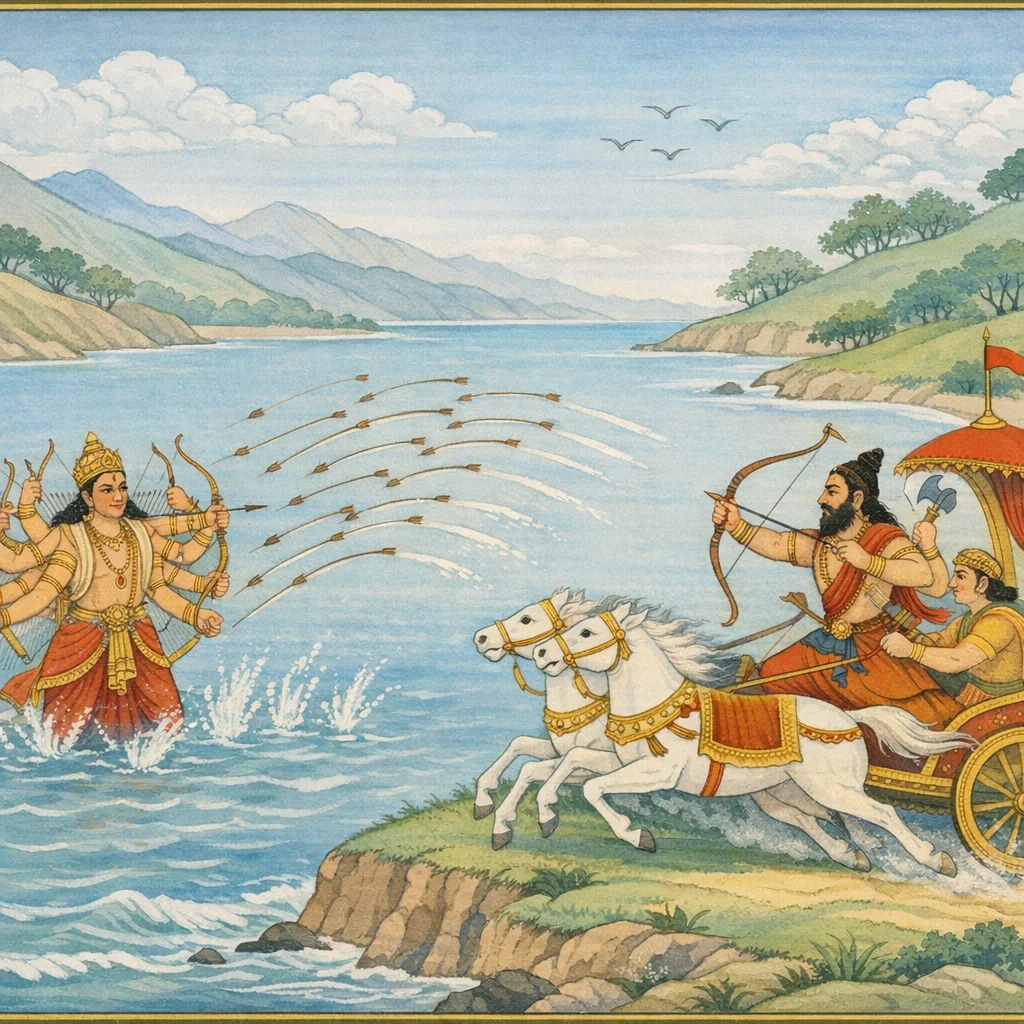
स कदाचित् समुद्रान्ते विचरन् बलदर्पित: । अवाकिरन् शरशतै: समुद्रमिति न: श्रुतम्,सुना जाता है, एक दिन राजा कार्तवीर्य समुद्रके किनारे विचर रहा था। वहाँ उसने अपने बलके घमण्डमें आकर सैकड़ों बाणोंकी वर्षसे समुद्रको आच्छादित कर दिया
We have heard that once, while roaming along the seashore, intoxicated with pride in his strength, he covered the ocean itself by showering it with hundreds of arrows.
Verse 4
त॑ समुद्रो नमस्कृत्य कृताञज्जलिरुवाच ह । मा मुज्च वीर नाराचान् ब्रूहि कि करवाणि ते,तब समुद्रने प्रकट होकर उसके आगे मस्तक झुकाया और हाथ जोड़कर कहा --वीरवर! राजसिंह! मुझपर बाणोंकी वर्षा न करो। बोलो, तुम्हारी किस आज्ञाका पालन करूँ? शक्तिशाली नरेश्वर! तुम्हारे छोड़े हुए इन महान् बाणोंसे मेरे अन्दर रहनेवाले प्राणियोंकी हत्या हो रही है। उन्हें अभय दान करो”
Then the Ocean appeared; bowing in reverence and with hands joined, it said: “Do not loose your steel-pointed arrows, O hero. Tell me—what shall I do for you? These mighty shafts you have released are slaying the creatures that dwell within me. Grant them safety and freedom from fear.”
Verse 5
मदाश्रयाणि भूतानि त्वद्विसष्टेर्महेषुभि: । वध्यन्ते राजशार्दूल तेभ्यो देहाभयं विभो,तब समुद्रने प्रकट होकर उसके आगे मस्तक झुकाया और हाथ जोड़कर कहा --वीरवर! राजसिंह! मुझपर बाणोंकी वर्षा न करो। बोलो, तुम्हारी किस आज्ञाका पालन करूँ? शक्तिशाली नरेश्वर! तुम्हारे छोड़े हुए इन महान् बाणोंसे मेरे अन्दर रहनेवाले प्राणियोंकी हत्या हो रही है। उन्हें अभय दान करो”
“O tiger among kings, mighty lord—by these great arrows you have released, the living beings that have taken refuge in my body are being slain. Grant them safety from bodily harm.”
Verse 6
अजुन उवाच मत्समो यदि संग्रामे शरासनधर: क्वचित् । विद्यते तं समाचक्ष्व य: समासीत मां मृथे,कार्तवीर्य अर्जुन बोला--समुद्र! यदि कहीं मेरे समान धनुर्धर वीर मौजूद हो, जो युद्धमें मेरा मुकाबला कर सके तो उसका पता बता दो। फिर मैं तुम्हें छोड़कर चला जाऊँगा
Arjuna said: “O Ocean, if anywhere there exists a bowman equal to me in battle—one who could truly stand against me in combat—then point him out. Otherwise, I shall leave you and depart.”
Verse 7
समुद्र उवाच महर्षिर्जमदग्निस्ते यदि राजन् परिश्रुत: । तस्य पुत्रस्तवातिथ्यं यथावत् कर्तुमहति,समुद्रने कहा--राजन्! यदि तुमने महर्षि जमदग्निका नाम सुना हो तो उन्हींके आश्रमपर चले जाओ। उनके पुत्र परशुरामजी तुम्हारा अच्छी तरह सत्कार कर सकते हैं
The Ocean said: “O King, if you have heard of the great seer Jamadagni, then go to his hermitage. His son Paraśurāma is worthy and able to extend to you proper hospitality.”
Verse 8
ततः स राजा प्रययौ क्रोधेन महता वृतः । स तमाश्रममागम्य राममेवान्वपद्यत
Then that king set out, enveloped in great anger. Reaching that hermitage, he approached Rāma alone, seeking him out directly.
Verse 9
स रामप्रतिकूलानि चकार सह बन्धुभि: । आयासं जनयामास रामस्य च महात्मन:
Along with his kinsmen, he committed acts hostile to Rāma, and he caused distress and hardship to the great-souled Rāma as well.
Verse 10
ततस्तेज: प्रजज्वाल रामस्यामिततेजस: । प्रदहन् रिपुसैन्यानि तदा कमललोचने
Then the blazing energy of Rāma—whose splendor was immeasurable—flared up, and it began to burn the armies of the enemy. At that moment, O lotus-eyed one, his radiance manifested as a force that overwhelms unrighteous opposition.
Verse 11
ततः परशुमादाय स तं बाहुसहस्रिणम् । चिच्छेद सहसा रामो बहुशाखमिव द्रुमम्
Then, taking up his axe, Rāma swiftly hewed down that thousand-armed foe, as one would fell a many-branched tree.
Verse 12
(ब्राह्मणने कहा--) कमलके समान नेत्रोंवाली देवि! तदनन्तर राजा कार्तवीर्य बड़े क्रोधमें भरकर महर्षि जमदग्निके आश्रमपर परशुरामजीके पास जा पहुँचा और अपने भाई-बन्धुओंके साथ उनके प्रतिकूल बर्ताव करने लगा। उसने अपने अपराधोंसे महात्मा परशुरामजीको उद्दिग्न कर दिया। फिर तो शत्रु-सेनाको भस्म करनेवाला अमित तेजस्वी परशुरामजीका तेज प्रज्वलित हो उठा। उन्होंने अपना फरसा उठाया और हजार भुजाओंवाले उस राजाको अनेक शाखाओंसे युक्त वृक्षकी भाँति सहसा काट डाला ।| ८-- ११ || तं॑ हतं पतितं दृष्टवा समेता: सर्वबान्धवा: । असीनादाय शक्तीश्च भार्गव पर्यधावयन्,उसे मरकर जमीनपर पड़ा देख उसके सभी बन्धु-बान्धव एकत्र हो गये तथा हाथोंमें तलवार और शक्तियाँ लेकर परशुरामजीपर चारों ओरसे टूट पड़े
The Brahmin said: “O goddess with lotus-like eyes! Thereafter King Kārtavīrya, inflamed with great wrath, came to the hermitage of the great seer Jamadagni, to Paraśurāma, and with his brothers and kinsmen behaved in a hostile and unseemly manner. By his offenses he disturbed the high-souled Paraśurāma. Then Paraśurāma’s immeasurable splendor—able to burn enemy hosts to ash—blazed forth. He raised his axe and in an instant hewed down that thousand-armed king, as one fells a tree with many branches. Seeing him slain and fallen to the earth, all his relatives gathered; taking up swords and spears, they rushed at Bhārgava (Paraśurāma) from every side.”
Verse 13
रामो5पि धनुरादाय रथमारुहा[ सत्वर: । विसृजन् शरवर्षाणि व्यधमत् पार्थिवं बलम्,इधर परशुरामजी भी धनुष लेकर तुरंत रथपर सवार हो गये और बाणोंकी वर्षा करते हुए राजाकी सेनाका संहार करने लगे
Rāma (Paraśurāma) too took up his bow and swiftly mounted his chariot. Releasing showers of arrows, he began to strike down and scatter the king’s army.
Verse 14
ततस्तु क्षत्रिया: केचिज्जामदग्न्य भयार्दिता: । विविशुर्गिरिदुर्गाणि मृगा: सिंहार्दिता इव,उस समय बहुत-से क्षत्रिय परशुरामजीके भयसे पीड़ित हो सिंहके सताये हुए मृगोंकी भाँति पर्वतोंकी गुफाओंमें घुस गये
Then some of the kṣatriyas, tormented by fear of Jāmadagnya (Paraśurāma), fled into mountain strongholds and caves—like deer driven in terror by a lion.
Verse 15
तेषां स्वविहितं कर्म तद्धयान्नानुतिष्ठताम् । प्रजा वृषलतां प्राप्ता ब्राह्मणानामदर्शनात्,उन्होंने उनके डरसे अपने क्षत्रियोचित कर्मोंका भी त्याग कर दिया। बहुत दिनोंतक ब्राह्मणोंका दर्शन न कर सकनेके कारण वे धीरे-धीरे अपने कर्म भूलकर शूद्र हो गये
Overawed by fear, they did not carry out the duties prescribed for them as their own. Deprived for a long time of the sight and guidance of Brāhmaṇas, the people gradually forgot proper conduct and fell into the condition of vṛṣalas (vṛṣala).
Verse 16
एवं ते द्रविडा55भीरा: पुण्ड्राश्न शबरै: सह । वृषलत्वं परिगता व्युत्थानात् क्षत्रधर्मिण:,इस प्रकार द्रविड, आभीर, पुण्ड्र और शबरोंके सहवासमें रहकर वे क्षत्रिय होते हुए भी धर्म-त्यागके कारण शूद्रकी अवस्थामें पहुँच गये
Thus those kṣatriyas—living in association with the Draviḍas, Ābhīras, Puṇḍras, and Śabaras—though kṣatriyas by birth, fell into the condition of vṛṣalas because they abandoned the exertion and discipline of kṣatriya-dharma.
Verse 17
ततश्न हतवीरासु क्षत्रियासु पुन: पुनः । द्विजैरुत्पादितं क्षत्रं जामदग्न्यो न्यकृन्तत,तत्पश्चात् क्षत्रियवीरोंके मारे जानेपर ब्राह्मणोंने उनकी स्त्रियोंसे नियोगकी विधिके अनुसार पुत्र उत्पन्न किये, किंतु उन्हें भी बड़े होनेपर परशुरामजीने फरसेसे काट डाला
Then, when the Kshatriya line had again and again been left without its warriors, the Brahmins generated new Kshatriya offspring; but Jamadagni’s son (Paraśurāma) cut them down as well.
Verse 18
एकविंशतिमेधान्ते रामं वागशरीरिणी । दिव्या प्रोवाच मधुरा सर्वलोकपरिश्रुता,इस प्रकार एक-एक करके जब इक्कीस बार क्षत्रियोंका संहार हो गया, तब परशुरामजीको दिव्य आकाशवाणीने मधुर स्वरमें सब लोगोंके सुनते हुए यह कहा --
When the twenty-first sacrificial rite had been completed and the repeated destruction of the kshatriyas had thus come to its end, an unembodied, divine voice addressed Rāma (Paraśurāma), sweet in tone and heard by all the worlds.
Verse 19
राम राम निवर्तस्व कं गुणं तात पश्यसि । क्षत्रबन्धूनिमान् प्राणैर्विप्रयोज्य पुन: पुन:,“बेटा! परशुराम! इस हत्याके कामसे निवृत्त हो जाओ। परशुराम! भला बारंबार इन बेचारे क्षत्रियोंके प्राण लेनेमें तुम्हें कौन-सा लाभ दिखायी देता है?”
The Ocean said: “Rāma, Rāma—desist. Dear child, what ‘good’ do you see in this? What benefit can there be in repeatedly tearing away the lives of these wretched kṣatriyas? Turn back from this work of slaughter.”
Verse 20
तथैव त॑ महात्मानमृचीकप्रमुखास्तदा । पितामहा महाभाग निवर्तस्वेत्यथाब्रुवन्,उस समय महात्मा परशुरामजीको उनके पितामह ऋचीक आदिने भी इसी प्रकार समझाते हुए कहा--“महाभाग! यह काम छोड़ दो, क्षत्रियोंको न मारो”
In the same way, at that time the venerable forefathers—led by Ṛcīka—counselled that great-souled one, saying: “O highly fortunate one, desist. Give up this course; do not slaughter the Kṣatriyas.”
Verse 21
पितुर्वधममृष्यंस्तु राम: प्रोवाच तानूषीन् । नाहनतीह भवन्तो मां निवारयितुमित्युत,पिताके वधको सहन न करते हुए परशुरामजीने उन ऋषियोंसे इस प्रकार कहा --'आपलोगोंको मुझे इस कामसे निवारण नहीं करना चाहिये”
Unable to endure the slaying of his father, Rāma (Paraśurāma) addressed those sages: “You should not try to restrain me here; I will not desist.”
Verse 22
पितर ऊचु. नाहसे क्षत्रबन्धूंस्त्वं निहन्तुं जयतां वर । नेह युक्त त्वया हन्तुं ब्राह्मणेन सता नृूपान्,पितर बोले--विजय पानेवालोंमें श्रेष्ठ परशुराम! बेचारे क्षत्रियोंको मारना तुम्हारे योग्य नहीं है; क्योंकि तुम ब्राह्मण हो, अतः तुम्हारे हाथसे राजाओंका वध होना उचित नहीं है
The Pitṛs said: “O best among the victorious, you ought not to slay these kṣatriyas. It is not proper here that you—being a virtuous brāhmaṇa—should kill kings. Such an act does not accord with your station and righteousness.”
Verse 28
इस प्रकार श्रीमह्याभारत आश्वमेधिकपर्वके अन्तर्गत अनुगीतापर्वमें ब्राह्मणगीताविषयक अद्वाईसवाँ अध्याय पूरा हुआ
Thus, in the revered Mahābhārata, within the Āśvamedhika Parva, in the Anugītā section, the twenty-second chapter dealing with the Brāhmaṇa’s Song is concluded. This closing colophon signals the completion of a teaching unit, marking a pause for reflection on the ethical and spiritual instruction just delivered.
Verse 29
इति श्रीमहाभारते आश्वमेधिके पर्वणि अनुगीतापर्वणि ब्राह्मणगीतासु एकोनत्रिंशो5ध्याय:
Thus ends the twenty-ninth chapter of the Brāhmaṇa-gītā section within the Anugītā sub-parvan of the Aśvamedhika Parvan of the Śrī Mahābhārata. This is a colophon marking the close of the chapter rather than a spoken doctrinal verse.
Frequently Asked Questions
How far punitive retaliation may extend after a grave injury: the narrative juxtaposes a claim of intolerable wrong (paternal killing) against injunctions that repeated killing of rulers by a brāhmaṇa is normatively improper and socially destabilizing.
That displays of power harming dependents invite moral and political consequences; legitimate authority is shown as requiring restraint, responsiveness to petitions for protection, and termination of escalating cycles of retribution.
Rather than a formal phalaśruti, the chapter embeds meta-normative commentary through the bodiless divine voice and the Pitṛs, functioning as an internal interpretive frame that explicitly urges cessation and evaluates the propriety of continued violence.