Adhyaya 98
छत्रोपानहदानफलप्रशंसा — Praise of the Merit of Donating Umbrella and Footwear
Upa-parva: Dāna-Dharma (Charity Instructions) — Chatra-Upānaha Dāna Episode
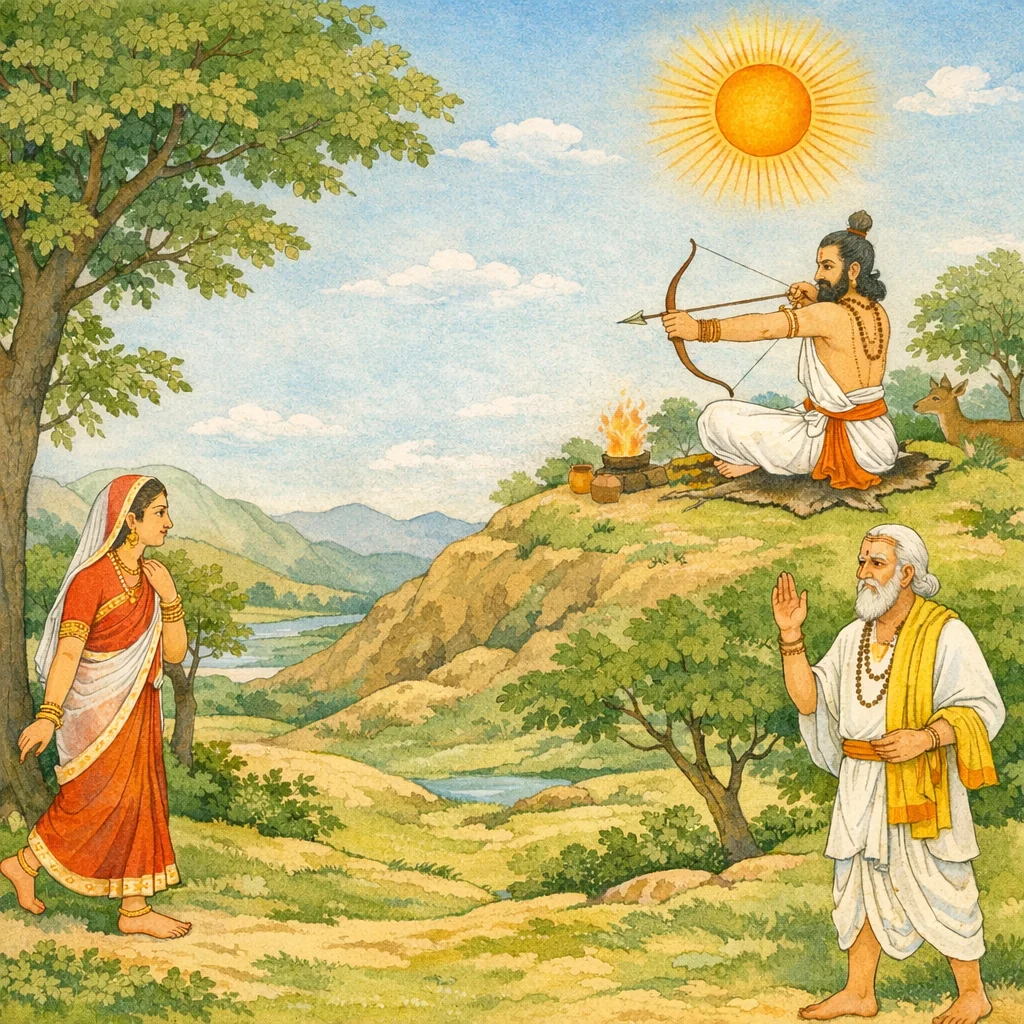
Yudhiṣṭhira inquires about Jamadagni’s response when Sūrya (Bhāskara), seeking something, approached him. Bhīṣma recounts that Jamadagni, radiant like fire, initially does not incline to calmness; Sūrya speaks gently in the guise of a brāhmaṇa and raises an epistemic challenge: how can a moving deity be reliably targeted by a ‘moving sign’? Jamadagni replies that through inner knowledge (jñānacakṣuṣ) he knows Sūrya whether stationary or moving, and specifies a precise temporal locus—Sūrya’s brief pause in the afternoon—asserting certainty of encounter. Sūrya concedes Jamadagni’s capacity but identifies himself as a wrongdoer who has come for refuge (śaraṇāgata). Jamadagni then reframes the ethical boundary: harming one who has sought refuge violates foundational virtues and is equated with grave transgressions; instead, Sūrya should devise a resolution that makes the sun-heated path easier for people. Sūrya institutes a remedy by gifting an umbrella (to shield from rays) and leather footwear (to protect the feet), declaring the practice will circulate in the world and yield imperishable merit. Bhīṣma concludes by recommending that such gifts be given to brāhmaṇas, detailing stated rewards (comfort after death, honored residence in celestial realms) and summarizing the phalaśruti of donating umbrella and footwear.
Chapter Arc: युधिष्ठिर भीष्म से पूछते हैं—छत्र और उपानह (पादुका/जूता) की उत्पत्ति कैसे हुई, और इनका दान केवल श्राद्ध में ही नहीं, अन्य पुण्य अवसरों पर भी क्यों दिया जाता है। → भीष्म एक प्राचीन आख्यान खोलते हैं: भार्गव-जमदग्नि दिव्य धनुष लेकर सूर्य की ओर बार-बार बाण संधान करते हैं; रेणुका उन तेजस्वी बाणों को उठाती-लाती रहती है। ज्येष्ठ मास की प्रचण्ड धूप बढ़ती जाती है और रेणुका का सिर व पाँव संतप्त होने लगते हैं—वह वृक्षों की छाया में रुक-रुक कर चलती है, पर पति के शाप/आज्ञाभय से फिर उठ खड़ी होती है। → सूर्यदेव ब्राह्मण-वेष में प्रकट होकर जमदग्नि से प्रश्न करते हैं—‘सूर्य ने आपका क्या अपराध किया?’—और इस टकराव में तप, तेज और मर्यादा का चरम संघर्ष उभर आता है: एक ओर ऋषि का क्रोध-पराक्रम, दूसरी ओर लोक-नियम का अधिष्ठाता सूर्य। → भीष्म इस प्रसंग को दान-धर्म से जोड़ते हैं: प्रचण्ड धूप से रक्षा और पथिक-जीवन की मर्यादा हेतु छत्र और उपानह का महत्व प्रतिष्ठित होता है—ये वस्तुएँ केवल श्राद्ध नहीं, अनेक पुण्य-निमित्तों में दान योग्य मानी जाती हैं क्योंकि वे कष्ट-निवारण और लोक-हित का प्रत्यक्ष साधन हैं। → सूर्य और भार्गव-तप के संवाद/समाधान की आगे की परिणति तथा दान-विधि के सूक्ष्म नियम अगले भाग में विस्तार पाते हैं।
Shlokas
Verse 1
ऑपन-- माल छा जज पञ्चनवतितमो< ध्याय: छत्र और उपानहकी उत्पत्ति एवं दानविषयक युधिष्ठिरका प्रश्न तथा सूर्यकी प्रचण्ड धूपसे रेणुकाका मस्तक और पैरोंके संतप्त होनेपर जमदग्निका सूर्यपर कुपित होना और विप्ररूपधारी सूर्यसे वार्तालाप युधिछिर उवाच यदिदं श्राद्धकृत्येषु दीयते भरतर्षभ । छत्र॑ चोपानहौ चैव केनैतत् सम्प्रवर्तितम्,युधिष्ठिरने पूछा--भरतश्रेष्ठ! श्राद्धकर्मोमें जिनका दान दिया जाता है, उन छत्र और उपानहोंके दानकी प्रथा किसने चलायी है?
Yudhiṣṭhira said: “O bull among the Bharatas, in the rites of śrāddha, gifts are given—especially an umbrella and footwear. By whom was this custom first set in motion?”
Verse 2
कथं चैतत् समुत्पन्नं किमर्थ चैव दीयते । न केवल श्राद्धकृत्ये पुण्यकेष्वपि दीयते,इनकी उत्पत्ति कैसे हुई और किसलिये इनका दान किया जाता है? केवल श्राद्धकर्ममें ही नहीं, अनेक पुण्यके अवसरोंपर भी इनका दान होता है
Yudhiṣṭhira said: “How did this practice originate, and for what purpose is it given? For it is not offered only in the rites of śrāddha for the departed; it is also given on many other occasions of merit.”
Verse 3
बहुष्वपि निमित्तेषु पुण्यमाश्रित्य दीयते । एतद्ू विस्तरशो राजन् श्रोतुमिच्छामि तत्त्वतः,बहुत-से निमित्त उपस्थित होनेपर पुण्यके उद्देश्यसे इन वस्तुओंके दानकी प्रथा देखी जाती है। अतः राजन! मैं इस विषयको विस्तारके साथ यथावत् रूपसे सुनना चाहता हूँ
Yudhiṣṭhira said: “In many different occasions and prompting circumstances, gifts are given with merit (puṇya) as their aim. O King, I wish to hear this matter in detail, truthfully and as it really is.”
Verse 4
भीष्म उवाच शृणु राजन्नवहितश्छत्रोपानहविस्तरम् । यथैतत् प्रथितं लोके यथा चैतत् प्रवर्तितम्,भीष्मजीने कहा--राजन्! छाते और जूतेकी उत्पत्तिकी वार्ता मैं विस्तारके साथ बता रहा हूँ, सावधान होकर सुनो। संसारमें किस प्रकार इनके दानका आरम्भ हुआ और कैसे उस दानका प्रचार हुआ, यह सब श्रवण करो
Bhishma said: “Listen attentively, O King, as I relate in detail the account concerning the umbrella and the footwear. Hear how this became well-known in the world, and how the practice of giving these gifts was first set in motion and then spread.”
Verse 5
यथा चाक्षय्यतां प्राप्तं पुण्यतां च यथा गतम् | सर्वमेतदशेषेण प्रवक्ष्यामि नराधिप,नरेश्वर! इन दोनों वस्तुओंका दान किस तरह अक्षय होता है, तथा ये किस प्रकार पुण्यकी प्राप्ति करानेवाली मानी गयी हैं। इन सब बातोंका मैं पूर्णरूपसे वर्णन करूँगा
Bhishma said: “O king, lord of men, I shall explain to you in full how a gift becomes imperishable and in what manner it leads to the attainment of merit. I will set forth all these points without omission.”
Verse 6
जमदम्नेश्व संवाद सूर्यस्य च महात्मन: । पुरा स भगवान् साक्षाद्धनुषाक्रीडयत् प्रभो,आनीय सा तदा तस्मै प्रादादसकृदच्युत । प्रभो! इस विषयमें महर्षि जमदग्नि और महात्मा भगवान् सूर्यके संवादका वर्णन किया जाता है। पूर्वकालकी बात है, एक दिन भृगुनन्दन भगवान् जमदग्निजी धनुष चलानेकी क्रीड़ा कर रहे थे। धर्मसे च्युत न होनेवाले युधिष्ठिर! वे बारंबार धनुषपर बाण रखकर उन्हें चलाते और उन चलाये हुए सम्पूर्ण तेजस्वी बाणोंको उनकी पत्नी रेणुका ला-लाकर दिया करती थीं
Bhishma said: “O lord, here is recounted an ancient dialogue between the sage Jamadagni and the great-souled Sun. Long ago, that venerable Jamadagni himself was sporting with the bow—practising archery as a disciplined exercise. At that time his wife would repeatedly bring back the arrows and hand them to him again.”
Verse 7
संधाय संधाय शरांक्षिक्षेप किल भार्गव: । तान् क्षिप्तान् रेणुका सर्वास्तस्येषून्दीप्ततेजस:
Bhishma said: “Again and again the Bhārgava fixed his arrows and loosed them. Reṇukā, seeing all those blazing, radiant missiles as they were discharged, …”
Verse 8
अथ तेन स शब्देन ज्यायाश्रैव शरस्य च
Bhishma said: “Then, by that sound—the sharp twang of the bowstring and the accompanying hiss of the arrow—the moment was marked and understood.”
Verse 9
ततो मध्याद्वमारूढे ज्येष्ठामूले दिवाकरे,यावदेतान् पुनः सुभ्रु क्षिपमीति जनाधिप । जनेश्वर! इस प्रकार बाण चलानेकी क्रीड़ा करते-करते ज्येष्ठ मासके सूर्य दिनके मध्यभागमें आ पहुँचे। विप्रवर जमदग्निने पुन: बाण छोड़कर रेणुकासे कहा--'सुभ्रु! विशाललोचने! जाओ, मेरे धनुषसे छूटे हुए इन बाणोंको ले आओ, जिससे मैं पुनः इन सबको धनुषपर रखकर छोड़ूँ'
Bhishma said: “Then, when the sun in the month of Jyeshtha had climbed to the middle of the day, Jamadagni—continuing his sport of shooting arrows—again addressed Renuka: ‘O fair-browed one, large-eyed lady, quickly go and bring back these arrows that have been released from my bow, so that I may once more set them upon the bow and shoot them again.’”
Verse 10
स सायकान् द्विजो मुक्त्वा रेणुकामिदमब्रवीत् । गच्छानय विशालाक्षि शरानेतान् धनुश्च्युतान्
Having released the arrows, the Brahmin said to Reṇukā: “Go, large-eyed one, and bring back these arrows that have fallen from the bow.”
Verse 11
सा गच्छन्त्यन्तरा छायां वृक्षमाश्रित्य भामिनी
Bhīṣma said: “That passionate woman, as she went along, took shelter of a tree and moved within its shade.”
Verse 12
स्थिता सा तु मुहूर्त वै भर्तु: शापभयाच्छुभा
Bhīṣma said: “She, auspicious in nature, remained there for a short while—held back by fear of her husband’s curse.”
Verse 13
प्रत्याजगाम च शरांस्तानादाय यशस्विनी,उन बाणोंको लेकर सुन्दर अंगोंवाली यशस्विनी रेणुका जब लौटी; उस समय वह बहुत खिन्न हो गयी थी। पैरोंके जलनेसे जो दुःख होता था, उसको किसी तरह सहती और पतिके भयसे थर-थर काँपती हुई उनके पास आयी
Bhīṣma said: “Renuka, famed and fair-limbed, returned carrying those arrows. At that moment she was deeply distressed—enduring as best she could the pain caused by her feet burning, and trembling with fear of her husband as she approached them.”
Verse 14
सा वै खिन्ना सुचार्वगी पदभ्यां दुःखं नियच्छती । उपाजगाम भर्तरें भयाद् भर्तु: प्रवेषती,उन बाणोंको लेकर सुन्दर अंगोंवाली यशस्विनी रेणुका जब लौटी; उस समय वह बहुत खिन्न हो गयी थी। पैरोंके जलनेसे जो दुःख होता था, उसको किसी तरह सहती और पतिके भयसे थर-थर काँपती हुई उनके पास आयी
Bhīṣma said: “Renuka, the illustrious woman of beautiful limbs, returned carrying those arrows. She was utterly exhausted; enduring as best she could the pain that burned in her feet, she approached her husband, trembling with fear of him.”
Verse 15
स तामृषिस्तदा क्रुद्धो वाक्यमाह शुभाननाम् | रेणुके कि चिरेण त्वमागतेति पुन: पुन:,उस समय महर्षि कुपित होकर सुन्दर मुखवाली अपनी पत्नीसे बारंबार पूछने लगे -- रेणुके! तुम्हारे आनेमें इतनी देर क्यों हुई?”
Bhishma said: Then the sage, angered, spoke to his fair-faced wife, repeatedly asking, “Reṇukā, why have you come so late?”
Verse 16
रेणुकोवाच शिरस्तावत् प्रदीप्तं मे पादौ चैव तपोधन । सूर्यतेजोनिरुद्धाहं वृक्षच्छायां समाश्रिता,रेणुका बोली--तपोधन! मेरा सिर तप गया, दोनों पैर जलने लगे और सूर्यके प्रचण्ड तेजने मुझे आगे बढ़नेसे रोक दिया। इसलिये थोड़ी देरतक वृक्षकी छायामें खड़ी होकर विश्राम लेने लगी थी
Reṇukā said: “O ascetic rich in austerity, my head was burning, and my feet too were scorched. Checked by the fierce radiance of the sun, I took refuge in the shade of a tree and stood there for a while to rest.”
Verse 17
एतस्मात् कारणाद् ब्रह्मंश्चवितयैतत् कृतं मया । एतच्छुत्वा मम विभो मा क्रुधस्त्वं तपोधन,ब्रह्म! इसी कारणसे मैंने आपका यह कार्य कुछ विलम्बसे पूरा किया है। तपोधन! प्रभो! मेरे इस बातपर ध्यान देकर आप क्रोध न करें
Reṇukā said: “For this reason, O Brahmin, I have carried out your request only after some delay. Having heard this from me, O lordly ascetic rich in austerity—O Brahmin—do not be angry.”
Verse 18
जगदग्निरुवाच अद्यैनं दीप्तकिरणं रेणुके तव दुःखदम् । शरैर्निपातयिष्यामि सूर्यमस्त्राग्नितेजसा,जमदग्निने कहा-रेणुके! जिसने तुझे कष्ट पहुँचाया है, उस उद्दधीप्त किरणोंवाले सूर्यको आज मैं अपने बाणोंसे, अपनी अस्त्राग्निके तेजसे गिरा दूँगा
Jamadagni said: “O Reṇukā, today I shall bring down that Sun of blazing rays who has caused you suffering—striking him with my arrows, empowered by the fiery potency of my weapons.”
Verse 19
भीष्म उवाच स विस्फार्य धर्नुर्दिव्यं गृहीत्वा च शरान् बहून् । अतिष्ठत् सूर्यममभितो या तो याति ततो मुख:
Bhishma said: He stretched his celestial bow, took up many arrows, and then took his stand facing the Sun—turning his countenance in the very direction in which the Sun moves.
Verse 20
भीष्मजी कहते हैं--युधिष्ठि!! ऐसा कहकर महर्षि जमदग्निने अपने दिव्य धनुषकी प्रत्यंचा खींची और बहुत-से बाण हाथमें लेकर सूर्यकी ओर मुँह करके वे खड़े हो गये। जिस दिशाकी ओर सूर्य जा रहे थे, उसी ओर उन्होंने भी अपना मुँह कर लिया था ।। अथ त॑ प्रेक्ष्य सन्नद्ध॑ सूर्यो5भ्येत्य तथाब्रवीत् । द्विजरूपेण कौन्तेय कि ते सूर्योडपराध्यते
Bhishma said: “O Yudhishthira! Having spoken thus, the great sage Jamadagni drew the string of his divine bow, took many arrows in his hand, and stood facing the Sun. He turned himself toward the very direction in which the Sun was moving. Seeing him armed and ready, the Sun approached and spoke in this manner: ‘O son of Kunti, in the guise of a brahmin—what wrong has the Sun done to you?’”
Verse 21
कुन्तीनन्दन! उन्हें युद्धके लिये तैयार देख सूर्यदेव ब्राह्मणका रूप धारण करके उनके पास आये और बोले--'ब्रह्मन! सूर्यने आपका क्या अपराध किया है? ।। आदत्ते रश्मिश्रि: सूर्यो दिवि तिष्ठंस्ततस्तत: । रसं द्वतं वै वर्षासु प्रवर्षति दिवाकर:,'सूर्यदेव तो आकाशमें स्थित होकर अपनी किरणों-द्वारा वसुधाका रस खींचते हैं और बरसातमें पुनः उसे बरसा देते हैं
O son of Kuntī! Seeing them prepared for battle, the Sun-god assumed the form of a brāhmaṇa and approached them, saying: “Brāhmaṇa, what wrong has the Sun committed against you? Stationed in the sky, the Sun draws up the earth’s moisture by his rays, and in the rainy season the Day-maker pours that very essence back down as rain.”
Verse 22
ततो>न्न॑ जायते विप्र मनुष्याणां सुखावहम् । अन्न प्राणा इति यथा वेदेषु परिपठ्यते,“विप्रवर! उसी वर्षासे अन्न उत्पन्न होता है, जो मनुष्योंके लिये सुखदायक है। अन्न ही प्राण है, यह बात वेदमें भी बतायी गयी है
Bhishma said: “From that (rainfall), O brahmin, food is produced—food that brings well-being and happiness to human beings. Indeed, ‘Food is life-breath (prāṇa),’ as the Vedas repeatedly declare.”
Verse 23
अथाम्रेषु निगूढश्न रश्मिभि: परिवारित: । सप्तद्वीपानिमान ब्रह्मन् वर्षेणाभिप्रवर्षति,“ब्रह्म! अपने किरणसमूहसे घिरे हुए भगवान् सूर्य बादलोंमें छिपकर सातों द्वीपोंकी पृथ्वीको वर्षकि जलसे आप्लावित करते हैं
Bhishma said: “O Brahmin, the Sun—veiled within the clouds and encircled by his rays—pours down rain upon these seven continents (dvīpas), flooding the earth with the waters of the monsoon.”
Verse 24
ततस्तदौषधीनां च वीरुधां पुष्पपत्रजम् । सर्व वर्षाभिनिर्वत्तमन्न॑ं सम्भवति प्रभो,“उसीसे नाना प्रकारकी ओषधियाँ, लताएँ, पत्र-पुष्प, घास-पात आदि उत्पन्न होते हैं। प्रभो! प्रायः सभी प्रकारके अन्न वर्षके जलसे उत्पन्न होते हैं
Bhīṣma said: “From that (rain-water) arise the many kinds of medicinal herbs and creeping plants, along with their flowers and leaves. O Lord, in general all varieties of food-grain come into being through the waters of the rains.”
Verse 25
जातकर्माणि सर्वाणि व्रतोपनयनानि च । गोदानानि विवाहाश्न तथा यज्ञसमृद्धयः,“जातकर्म, व्रत, उपनयन, विवाह, गोदान, यज्ञ सम्पत्ति, शास्त्रीय दान, संयोग और धनसंग्रह आदि सारे कार्य अन्नसे ही सम्पादित होते हैं। भूुगुनन्दन! इस बातको आप भी अच्छी तरह जानते हैं
Bhishma said: All rites, beginning with the birth-sacrament—vows and the initiation with the sacred thread, gifts of cows, marriages, and likewise the prospering of sacrifices—are accomplished through food and its provision. Thus this verse declares that the steadiness of dharma in household and ritual life rests upon the material support that sustains beings, above all anna, food.
Verse 26
शास्त्राणि दानानि तथा संयोगा वित्तसंचया: । अन्नतः सम्प्रवर्तन्ते तथा त्वं वेत्थ भार्गव,“जातकर्म, व्रत, उपनयन, विवाह, गोदान, यज्ञ सम्पत्ति, शास्त्रीय दान, संयोग और धनसंग्रह आदि सारे कार्य अन्नसे ही सम्पादित होते हैं। भूुगुनन्दन! इस बातको आप भी अच्छी तरह जानते हैं
The scriptures, gifts enjoined by śāstra, alliances and associations, and the gathering of wealth—all proceed from food (anna). And you know this well, O descendant of Bhrigu.
Verse 27
रमणीयानि यावन्ति यावदारम्भकाणि च । सर्वमन्नात् प्रभवति विदितं कीर्तयामि ते,“जितने सुन्दर पदार्थ हैं, अथवा जो भी उत्पादक पदार्थ हैं, वे सब अन्नसे ही प्रकट होते हैं। यह सब मैं ऐसी बात बता रहा हूँ जो आपको पहलेसे ही विदित हैं
Bhīṣma said: “All things that are delightful, and all things that serve as means of production and undertaking, arise from food (anna). I am only stating to you what you already know.”
Verse 28
सर्व हि वेत्थ विप्र त्वं यदेतत् कीर्तितं मया । प्रसादये त्वां विप्रषषे कि ते सूर्य निपात्य वै,“विप्रवर! ब्रह्मर्षे! मैंने जो कुछ भी कहा है, वह सब आप भी जानते हैं। भला, सूर्यको गिरानेसे आपको क्या लाभ होगा? अतः मैं प्रार्थनापूर्वक आपको प्रसन्न करना चाहता हूँ (कृपया सूर्यको नष्ट करनेका संकल्प छोड़ दीजिये)”
Bhīṣma said: “O brāhmaṇa, you already know all that I have just described. What benefit could there be for you in causing the Sun to fall? Therefore I seek to appease you with respectful entreaty—please abandon this resolve to bring down the Sun.”
Verse 76
आनीय सा तदा तस्मै प्रादादसकृदच्युत । प्रभो! इस विषयमें महर्षि जमदग्नि और महात्मा भगवान् सूर्यके संवादका वर्णन किया जाता है। पूर्वकालकी बात है, एक दिन भृगुनन्दन भगवान् जमदग्निजी धनुष चलानेकी क्रीड़ा कर रहे थे। धर्मसे च्युत न होनेवाले युधिष्ठिर! वे बारंबार धनुषपर बाण रखकर उन्हें चलाते और उन चलाये हुए सम्पूर्ण तेजस्वी बाणोंको उनकी पत्नी रेणुका ला-लाकर दिया करती थीं
Bhishma said: “She would bring them and, again and again, hand them back to him, O Acyuta. Lord, in this connection the dialogue between the sage Jamadagni and the great-souled Lord Surya is recounted. It happened long ago: one day Jamadagni, the blessed descendant of Bhrigu, was engaged in the sport of archery. O Yudhishthira, unwavering from dharma, he repeatedly set arrows upon his bow and released them; and his wife Renuka would fetch those radiant arrows and return them to him time after time.”
Verse 86
प्रहष्ट: सम्प्रचिक्षेप सा च प्रत्याजहार तान् । धनुषकी प्रत्यंचाकी टंकारध्वनि और बाणके छूटनेकी सनसनाहटसे जमदग्नि मुनि बहुत प्रसन्न होते थे। अतः वे बार-बार बाण चलाते और रेणुका उन्हें दूरसे उठा-उठाकर लाया करती थीं
Bhishma said: Delighted, he kept shooting, and she would bring the arrows back. The twang of the bowstring and the sharp hiss of the released arrows greatly pleased the sage Jamadagni. Therefore he discharged arrows again and again, while Renuka, lifting them up from a distance, repeatedly brought them back to him.
Verse 94
इस प्रकार श्रीमह्याभारत अनुशासनपर्वके अन्तर्गत दानधर्मपर्वमें शपथविधिनामक चौरानबेवाँ अध्याय पूरा हुआ
Thus ends the ninety-fourth chapter, called “The Procedure of Oaths,” within the section on the dharma of gifts in the Anuśāsana Parva of the sacred Mahābhārata.
Verse 95
इति श्रीमहाभारते अनुशासनपर्वणि दानधर्मपर्वणि छत्रोपानहोत्पत्तिर्नाम पञ्चनवतितमो<ध्याय:
Thus, in the Śrī Mahābhārata, within the Anuśāsana Parva—specifically in the section on the dharma of gifts—ends the ninety-fifth chapter, entitled “The Origin of the Umbrella and Footwear.”
Verse 103
यावदेतान् पुनः सुभ्रु क्षिपमीति जनाधिप । जनेश्वर! इस प्रकार बाण चलानेकी क्रीड़ा करते-करते ज्येष्ठ मासके सूर्य दिनके मध्यभागमें आ पहुँचे। विप्रवर जमदग्निने पुन: बाण छोड़कर रेणुकासे कहा--'सुभ्रु! विशाललोचने! जाओ, मेरे धनुषसे छूटे हुए इन बाणोंको ले आओ, जिससे मैं पुनः इन सबको धनुषपर रखकर छोड़ूँ'
Bhishma said: “O king, O lord of men! As Jamadagni continued his sport of shooting arrows again and again, the sun in the month of Jyeshtha reached the middle of the day. Then the foremost of Brahmins, Jamadagni, releasing another volley, said to Renuka: ‘O fair one, wide-eyed lady! Go and bring back these arrows that have flown from my bow, so that I may place them again upon the bow and shoot them once more.’”
Verse 113
तस्थौ तस्या हि सन्तप्तं शिर: पादौ तथैव च । मानिनी रेणुका वृक्षोंक बीचसे होकर उनकी छायाका आश्रय ले जाती हुई बीच-बीचमें ठहर जाती थी; क्योंकि उसके सिर और पैर तप गये थे
Bhishma said: “For her head and her feet had become scorched; therefore she would repeatedly pause, seeking the shade of trees to ease the burning heat.”
Verse 126
ययावानयितुं भूय: सायकानसितेक्षणा । कजरारे नेत्रोंवाली वह कल्याणमयी देवी एक जगह दो ही घड़ी ठहरकर पतिके शापके भयसे पुनः उन बाणोंको लानेके लिये चल दी
Bhishma said: The dark-eyed, auspicious lady set out once more to fetch the arrows. Pausing only briefly in one place, she resumed her journey to recover those shafts, driven by fear of her husband’s curse.
Frequently Asked Questions
Whether a powerful agent should punish or harm a wrongdoer who approaches in surrender; the chapter resolves this by prioritizing śaraṇāgata protection and redirecting response toward welfare-producing restitution.
Ethical strength is demonstrated through restraint and constructive remedy: compassion is operationalized via gifts that prevent harm (heat, injury), and righteousness is measured by how one treats the vulnerable and the surrendered.
Yes. The text explicitly states enduring merit for initiating and performing chatra–upānaha dāna, including posthumous comfort and honored residence in celestial realms, and frames the practice as socially reproducible from that day onward.