Adhyaya 73
Go-apahāra (Cattle Theft), Go-dāna (Cow-Gift), and Suvarṇa-dakṣiṇā (Gold Fee): Karmic Consequence and Purificatory Merit
Upa-parva: Dāna-dharma / Go-dāna and Suvarṇa-dakṣiṇā Discourse (Cattle, Theft, Merit, and Expiation)
Chapter 73 presents a precedent dialogue: Indra asks Brahmā the fate (gati) of one who knowingly steals a cow or sells it for profit. Brahmā classifies culpability across roles—those who kill, consume, sell, or authorize such acts—assigning heavy negative consequence symbolized by prolonged immersion in suffering proportional to the cow’s hairs. The teaching equates the दोष (fault) of cattle theft/commerce-violence with grave ritual harms (e.g., disruption of Brahmanical sacrificial order). A further nuance is introduced: if one steals a cow and then donates it to a Brahmin, the merit of the gift does not negate wrongdoing; rather, the agent incurs a period of adverse outcome commensurate with the donated value. The chapter then elevates gold as the paradigmatic dakṣiṇā accompanying go-dāna, describing go-dāna as salvific for ancestral lines and stating that giving gold as fee doubles the declared benefit. Bhīṣma closes by emphasizing authoritative transmission across renowned figures and a phalaśruti: regular recitation in Brahmin assemblies and at yajña/go-dāna occasions yields enduring heavenly attainments.
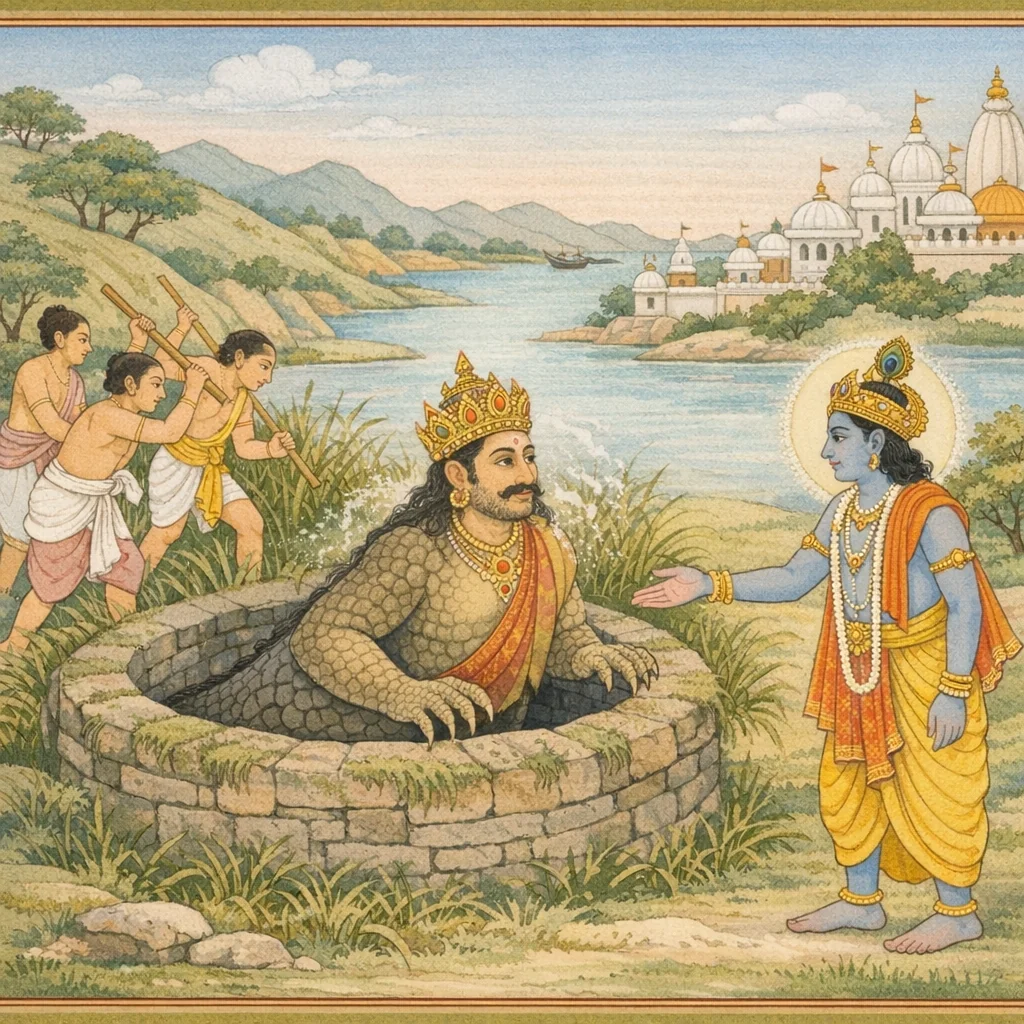
Chapter Arc: भीष्म युधिष्ठिर को दृष्टान्त सुनाते हैं—ब्राह्मण के धन का अपहरण (या अनजाने में भी हरण) कितना भयावह फल देता है, इसका प्रमाण राजा नृग की कथा है। → द्वारका बस रही होती है। यदुवंशी बालक एक घास-फूस से ढँके पुराने महाकूप को देखते हैं और जल के लिए उसे साफ़ करते हैं। भीतर एक विशाल कृकलास (गोह) फँसा मिलता है; उसे कोई निकाल नहीं पाता, तब वे श्रीकृष्ण को सूचना देते हैं। → श्रीकृष्ण के स्पर्श/अनुग्रह से वह महाकाय कृकलास अपने पूर्वरूप में राजा नृग बनकर प्रकट होता है और बताता है कि ब्राह्मण की गाय/धन के विषय में हुई त्रुटि के कारण उसे दीर्घ नरक-यातना और इस योनि का दंड मिला—यद्यपि उसने प्रतिकार में सोना, चाँदी, रथ, घोड़े देने चाहे, ब्राह्मण ने स्वीकार नहीं किया। → नृग श्रीकृष्ण को प्रणाम कर कहता है कि आज आपका उद्धार मिला; आपकी अनुमति से वह स्वर्गगमन करेगा। कृष्ण/भीष्म के माध्यम से शिक्षा स्थापित होती है—ब्राह्मणस्व का हरण नहीं करना चाहिए; ब्राह्मणस्व का हरण करने वाला स्वयं नष्ट होता है, जैसे ब्राह्मण की गाय ने नृग को (दृष्टान्ततः) मार डाला। → भीष्म संकेत देते हैं कि सत्संग/साधु-समागम नरक से भी विमुक्त कर देता है—युधिष्ठिर के लिए आगे दान-धर्म के और सूक्ष्म नियमों की भूमिका बनती है।
Shlokas
Verse 1
: डि् सप्ततितमो< ध्याय: ब्राह्मगके धनका अपहरण करनेसे होनेवाली हानिके विषयमें दृष्टान्तके रूपमें राजा नृगका उपाख्यान भीष्म उवाच अन्रैव कीर्त्यते सद्धरिब्राह्मणस्वाभिमर्शने । नृगेण सुमहत् कृच्छों यदवाप्तं कुरूद्गह,भीष्मजी कहते हैं--कुरुश्रेष्ठट इस विषयमें श्रेष्ठ पुरुष वह प्रसंग सुनाया करते हैं, जिसके अनुसार एक ब्राह्मणके धनको ले लेनेके कारण राजा नृगको महान् कष्ट उठाना पड़ा था
Bhishma said: “In this very connection, the virtuous recount an instructive episode about the grave consequences of encroaching upon a Brahmin’s rightful property. O foremost of the Kurus, it tells how King Nṛga fell into severe distress because he took (or caused to be taken) a Brahmin’s wealth.”
Verse 2
निविशन्त्यां पुरा पार्थ द्वारवत्यामिति श्रुति: । अदृश्यत महाकूपस्तृणवीरुत्समावृत:,पार्थ! हमारे सुननेमें आया है कि पूर्वकालमें जब द्वारकापुरी बस रही थी, उसी समय वहाँ घास और लताओंसे ढँका हुआ एक विशाल कूप दिखायी दिया
Bhishma said: “O Partha, we have heard this tradition: long ago, when the city of Dvāravatī was first being settled, there appeared there a great well, hidden over by grasses and creeping plants.”
Verse 3
प्रयत्नं तत्र कुर्वाणास्तस्मात् कूपाज्जलार्थिन: । श्रमेण महता युक्तास्तस्मिंस्तोये सुसंवृते
Bhīṣma said: “Therefore, those who sought water from that well exerted themselves there with determined effort. Though burdened by great fatigue, they persisted, for the water within was securely enclosed and not easily obtained.”
Verse 4
तस्य चोद्धरणे यत्नमकुर्वस्ते सहस्रश:,फिर तो वे सहस्रों बालक उस गिरगिटको निकालनेका यत्न करने लगे। गिरगिटका शरीर एक पर्वतके समान था। बालकोंने उसे रस्सियों और चमड़ेकी पट्टियोंसे बाँधकर खींचनेके लिये बहुत जोर लगाया परंतु वह टस-से-मस न हुआ। जब बालक उसे निकालनेमें सफल न हो सके, तब वे भगवान् श्रीकृष्णके पास गये
Bhīṣma said: “Then, in countless numbers, they exerted themselves to pull him out.”
Verse 5
प्रग्रहैश्नर्मपट्टेश्न तं बद्ध्वा पर्वतोपमम् । नाशवनुवन् समुद्धर्तु ततो जम्मुर्जनार्दनम्,फिर तो वे सहस्रों बालक उस गिरगिटको निकालनेका यत्न करने लगे। गिरगिटका शरीर एक पर्वतके समान था। बालकोंने उसे रस्सियों और चमड़ेकी पट्टियोंसे बाँधकर खींचनेके लिये बहुत जोर लगाया परंतु वह टस-से-मस न हुआ। जब बालक उसे निकालनेमें सफल न हो सके, तब वे भगवान् श्रीकृष्णके पास गये
Bhīṣma said: Having bound that mountain-like creature with ropes and leather straps, they still could not pull it out. Unable to extract it, they then went to Janārdana (Śrī Kṛṣṇa).
Verse 6
खमावृत्योदपानस्य कृकलास: स्थितो महान् । तस्य नास्ति समुद्धर्तेत्येतत् कृष्णे न््यवेदयन्,उन्होंने भगवान् श्रीकृष्णसे निवेदन किया--“भगवन्! एक बहुत बड़ा गिरगिट कुफएँमें पड़ा है, जो उस कुएँके सारे आकाशको घेरकर बैठा है; पर उसे निकालनेवाला कोई नहीं है!
Bhīṣma said: “A huge lizard is lodged in a well, spreading itself so as to cover the entire patch of sky visible from within it. Yet there is no one who can lift it out.” Thus they reported this matter to Kṛṣṇa.
Verse 7
स वासुदेवेन समुद्धृतश्न पृष्टश्न कार्य निजगाद राजा । नृगस्तदा55त्मानमथो न्यवेदयत् पुरातनं यज्ञसहस्रयाजिनम्
Raised up by Vāsudeva and then questioned about the matter at hand, the king replied. At that time Nṛga disclosed his own identity—an ancient ruler renowned for having performed thousands of sacrifices—thereby framing his plight within the moral weight of past deeds and their consequences.
Verse 8
यह सुनकर भगवान् श्रीकृष्ण उस कुएँके पास गये। उन्होंने उस गिरगिटको कुएँसे बाहर निकाला और अपने पावन हाथके स्पर्शसे राजा नृगका उद्धार कर दिया। इसके बाद उनसे परिचय पूछा। तब राजाने उन्हें अपना परिचय देते हुए कहा--'प्रभो! पूर्वजन्ममें मैं राजा नृग था, जिसने एक सहस्र यज्ञोंका अनुष्ठान किया था” ।। तथा ब्रुवाणं तु तमाह माधव: शुभं त्वया कर्म कृतं न पापकम् । कथं भवान् दुर्गतिमीदृशीं गतो नरेन्द्र तद् ब्रूहि किमेतदीदूशम्,उनकी ऐसी बात सुनकर भगवान् श्रीकृष्णने पूछा--“राजन्! आपने तो सदा पुण्यकर्म ही किया था, पापकर्म कभी नहीं किया, फिर आप ऐसी दुर्गतिमें कैसे पड़ गये? बताइये, क्यों आपको यह ऐसा वष्ट प्राप्त हुआ?
Hearing this, Śrī Kṛṣṇa went to that well. He drew the lizard out and, by the touch of his holy hand, delivered King Nṛga. Then he asked his identity, and the king said: “Lord, in a former birth I was King Nṛga, who performed a thousand sacrifices.” As the king spoke, Mādhava (Śrī Kṛṣṇa) said: “You have done auspicious deeds, not sinful ones. How then, O lord of men, have you fallen into such a wretched state? Tell me—what is the cause of this strange fate?”
Verse 9
शतं सहस्राणि गवां शतं पुनः पुन: शतान्यष्टशतायुतानि । त्वया पुरा दत्तमितीह शुश्रुम नृप द्विजेभ्य: क्व नु तद् गतं तव,“नरेश्वर! हमने सुना है कि पूर्वकालमें आपने ब्राह्मणोंको पहले एक लाख गौएँ दान कीं। दूसरी बार सौ गौओंका दान किया। तीसरी बार पुनः सौ गौएँ दानमें दीं। फिर चौथी बार आपने गोदानका ऐसा सिलसिला चलाया कि लगातार अस्सी लाख गौओंका दान कर दिया। (इस प्रकार आपके द्वारा इक््यासी लाख दो सौ गौएँ दानमें दी गयीं) आपके उन सब दानोंका पुण्यफल कहाँ चला गया?”
Bhishma said: “O king, we have heard that in former times you gave to the Brahmins a hundred thousand cows; then again a hundred, and again another hundred; and thereafter, in repeated great gifts, eight hundred ten-thousands more. Where, then, has the merit of all those gifts gone for you?”
Verse 10
नृगस्ततोअ<ब्रवीत् कृष्णं ब्राह्मणस्याग्निहोत्रिण: । प्रोषितस्य परिभ्रष्टा गौरेका मम गोधने,तब राजा नृगने भगवान् श्रीकृष्णसे कहा--प्रभो! एक अग्निहोत्री ब्राह्मण परदेश चला गया था। उसके पास एक गाय थी, जो एक दिन अपने स्थानसे भागकर मेरी गौओंके झुंडमें आ मिली
Then King Nṛga said to Krishna: “Lord, a Brahmin who maintained the Agnihotra fire had gone to a distant land. He had a single cow, and one day it strayed from its place and joined itself to my herd.”
Verse 11
गवां सहस्ने संख्याता तदा सा पशुपैर्मम । सा ब्राह्मणाय मे दत्ता प्रेत्यार्थमभिकाड्क्षता,“उस समय मेरे ग्वालोंने दानके लिये मँगायी गयी एक हजार गौओंमें उसकी भी गिनती करा दी और मैंने परलोकमें मनोवांछित फलकी इच्छासे वह गौ भी एक ब्राह्मणको दे दी
Bhishma said: “When my herdsmen were counting out a thousand cows for a charitable gift, that cow too was included in the tally. Desiring the wished-for reward in the next world, I then gave that very cow to a Brahmin as part of the offering for the sake of the departed.”
Verse 12
अपश्यत् परिमार्गश्ष तां गां परगृहे द्विज: । ममेयमिति चोवाच ब्राह्णो यस्य साभवत्,“कुछ दिनों बाद जब वह ब्राह्मण परदेशसे लौटा, तब अपनी गाय हढूँढ़ने लगा। ढूँढ़ते- ढूँढ़ते जब वह गाय उसे दूसरेके घर मिली, तब उस ब्राह्मणने, जिसकी वह गौ पहले थी, उस दूसरे ब्राह्मणसे कहा--'यह गाय तो मेरी है”
Bhīṣma said: After some days, when the Brahmin returned from a distant land, he began searching for his cow. While searching, he found that cow in another man’s house. Then the Brahmin to whom the cow had originally belonged said to that other Brahmin, “This cow is mine.”
Verse 13
तावुभौ समनुप्राप्ती विवदन्तौ भृशज्वरौ । भवान् दाता भवान् हर्तेत्यथ तो मामवोचताम्,'फिर तो वे दोनों आपसमें लड़ पड़े और अत्यन्त क्रोधमें भरे हुए मेरे पास आये। उनमेंसे एकने कहा--“महाराज! यह गौ आपने मुझे दानमें दी है (और यह ब्राह्मण इसे अपनी बता रहा है।)” दूसरेने कहा--“महाराज! वास्तवमें यह मेरी गाय है। आपने उसे चुरा लिया है”
Bhishma said: “Then those two came together to me, fiercely agitated and quarrelling. One said, ‘Your Majesty, you are the giver (for you granted me this cow as a gift).’ The other said, ‘Your Majesty, you are the taker (for in truth this cow is mine; it has been taken away).’”
Verse 14
पा 000५, १ छा ११) शतेन शतसंख्येन गवां विनिमयेन वै । याचे प्रतिग्रहीतारं स तु मामब्रवीदिदम्,“तब मैंने दान लेनेवाले ब्राह्मणसे प्रार्थनापूर्वक कहा--“मैं इस गायके बदले आपको दस हजार गौएँ देता हूँ (आप इन्हें इनकी गाय वापस दे दीजिये)। यह सुनकर वह यों बोला --“महाराज! यह गौ देश-कालके अनुरूप, पूरा दूध देनेवाली, सीधी-सादी और अत्यन्त दयालुस्वभावकी है। यह बहुत मीठा दूध देनेवाली है। धन्य भाग्य जो यह मेरे घर आयी। यह सदा मेरे ही यहाँ रहे
Bhishma said: I pleaded with the Brahmin who had accepted the gift, offering an exchange—hundreds upon hundreds of cows in return. But he replied to me: “O King, this cow is perfectly suited to the proper place and time—she yields full milk, is gentle and straightforward, and is exceedingly compassionate by nature. Her milk is very sweet. Fortunate indeed am I that she has come to my house. Let her remain with me always.”
Verse 15
देशकालोपसम्पन्ना दोग्ध्री शान्तातिवत्सला | स्वादुक्षीरप्रदा धन््या मम नित्यं निवेशने,“तब मैंने दान लेनेवाले ब्राह्मणसे प्रार्थनापूर्वक कहा--“मैं इस गायके बदले आपको दस हजार गौएँ देता हूँ (आप इन्हें इनकी गाय वापस दे दीजिये)। यह सुनकर वह यों बोला --“महाराज! यह गौ देश-कालके अनुरूप, पूरा दूध देनेवाली, सीधी-सादी और अत्यन्त दयालुस्वभावकी है। यह बहुत मीठा दूध देनेवाली है। धन्य भाग्य जो यह मेरे घर आयी। यह सदा मेरे ही यहाँ रहे
Bhishma said: “This cow is well-suited to the proper place and time; she is a milch-cow, gentle, and exceedingly affectionate toward her calf. She yields sweet milk. Fortunate indeed that she has come to my home—may she remain in my household always.”
Verse 16
कृतं च भरते सा गौर्मम पुत्रमपस्तनम् | न सा शक््या मया दातुमित्युक्त्वा स जगाम ह,“अपने दूधसे यह गौ मेरे मातृहीन शिशुका प्रतिदिन पालन करती है; अतः मैं इसे कदापि नहीं दे सकता।” यह कहकर वह उस गायको लेकर चला गया
Bhīṣma said: “O Bharata, this cow has been caring for my motherless child, sustaining him day after day with her own milk. Therefore I cannot give her away.” Having spoken thus, he departed, taking the cow with him.
Verse 17
ततस्तमपरं विप्रं याचे विनिमयेन वै | गवां शतसहसंरं हि तत्कृते गृहतामिति,“तब मैंने उन दूसरे ब्राह्मगसे याचना की--'भगवन्! उसके बदलेमें आप मुझसे एक लाख गौएँ ले लीजिये”
Bhishma said: “Then I entreated that other brāhmaṇa, proposing an exchange: ‘Revered sir, in return for it, please accept from me a hundred thousand cows.’”
Verse 18
ब्राह्मण उवाच नराज्ञां प्रतिगृह्लामि शक्तो5हं स्वस्य मार्गणे सैव गौर्दीयतां शीघ्रं ममेति मधुसूदन,“मधुसूदन! तब उस ब्राह्मणने कहा--“मैं राजाओंका दान नहीं लेता। मैं अपने लिये धनका उपार्जन करनेमें समर्थ हूँ। मुझे तो शीघ्र मेरी वही गौ ला दीजिये”
The Brahmin said: “I do not accept gifts from kings. I am capable of earning wealth for my own maintenance. Therefore, O Madhusūdana, let that very cow of mine be returned to me at once.”
Verse 19
रुक्ममश्चांश्व॒ ददतो रजतस्यन्दनांस्तथा । न जग्राह ययौ चापि तदा स ब्राह्मणर्षभ:,“मैंने उसे सोना, चाँदी, रथ और घोड़े--सब कुछ देना चाहा; परंतु वह उत्तम ब्राह्मण कुछ न लेकर तत्काल चुपचाप चला गया
I offered him gold, horses, and likewise silver and chariots; yet that foremost of brāhmaṇas accepted nothing, and at that very moment he quietly departed.
Verse 20
एतस्मिन्नेव काले तु चोदित: कालधर्मणा । पितृलोकमहं प्राप्य धर्मराजमुपागमम्,“इसी बीचमें कालकी प्रेरणासे मैं मृत्युको प्राप्त हुआ और पितृलोकमें पहुँचकर धर्मराजसे मिला
At that very time, impelled by the law of Time—the inevitable ordinance of death—I met my end. Having reached the world of the ancestors, I approached Dharmarāja (Yama), the sovereign who judges beings according to their deeds.
Verse 21
यमस्तु पूजयित्वा मां ततो वचनमत्रवीत् | नान््त: संख्यायते राजंस्तव पुण्यस्य कर्मण:,“यमराजने मेरा आदर-सत्कार करके मुझसे यह बात कही--“राजन्! तुम्हारे पुण्यकर्मोकी तो गिनती ही नहीं है। परन्तु अनजानमें तुमसे एक पाप भी बन गया है। उस पापको तुम पीछे भोगो या पहले ही भोग लो, जैसी तुम्हारी इच्छा हो, करो
After honoring me with due reverence, Yama spoke: “O King, the merit of your righteous deeds is beyond counting.”
Verse 22
अस्ति चैव कृतं पापमज्ञानात् तदपि त्वया । चरस्व पापं पश्चाद् वा पूर्व वा त्वं यथेच्छसि,“यमराजने मेरा आदर-सत्कार करके मुझसे यह बात कही--“राजन्! तुम्हारे पुण्यकर्मोकी तो गिनती ही नहीं है। परन्तु अनजानमें तुमसे एक पाप भी बन गया है। उस पापको तुम पीछे भोगो या पहले ही भोग लो, जैसी तुम्हारी इच्छा हो, करो
“Yet even by you a sin has been committed—unintentionally, out of ignorance. Therefore, undergo that sin’s consequence either later or first, as you yourself choose.”
Verse 23
रक्षितास्मीति चोक्तं ते प्रतिज्ञा चानृता तव । ब्राह्मणस्वस्य चादानं द्विविधस्ते व्यतिक्रम:,“आपने प्रजाके धन-जनकी रक्षाके लिये प्रतिज्ञा की थी; किंतु उस ब्राह्मणकी गाय खो जानेके कारण आपकी वह प्रतिज्ञा झूठी हो गयी। दूसरी बात यह है कि आपने ब्राह्मणके धनका भूलसे अपहरण कर लिया था। इस तरह आपके द्वारा दो तरहका अपराध हो गया है”
“You declared, ‘I am your protector’; yet your pledge has proved false, for the Brahmin’s cow was lost. Moreover, you have—though by mistake—taken what belongs to a Brahmin. Thus, two distinct violations have been committed by you: the failure of your promised protection and the wrongful appropriation of Brahmin property.”
Verse 24
पूर्व कृच्छूं चरिष्ये5हं पश्चाच्छुभमिति प्रभो । धर्मराजं ब्रुवन्नेवें पतितो5स्मि महीतले,“तब मैंने धर्मराजसे कहा--प्रभो! मैं पहले पाप ही भोग लूँगा। उसके बाद पुण्यका उपभोग करूँगा। इतना कहना था कि मैं पृथ्वीपर गिरा
“O Lord, I shall first undergo the painful hardship—the consequence of sin; afterwards I will enjoy what is auspicious—the fruit of merit.” Saying this to Dharmarāja, I had scarcely finished speaking when I fell down upon the earth.
Verse 25
अश्रौष॑ पतितश्नाहं यमस्योच्चै: प्रभाषत: । वासुदेव: समुद्धर्ता भविता ते जनार्दन:,“गिरते समय उच्चस्वरसे बोलते हुए यमराजकी यह बात मेरे कानोंमें पड़ी--“महाराज! एक हजार दिव्य वर्ष पूर्ण होनेपर तुम्हारे पापकर्मका भोग समाप्त होगा। उस समय जनार्दन भगवान् श्रीकृष्ण आकर तुम्हारा उद्धार करेंगे और तुम अपने पुण्यकर्मोके प्रभावसे प्राप्त हुए सनातन लोकोंमें जाओगे”
As I was falling, I heard Yama speak aloud: “Janārdana Vāsudeva will be your deliverer. When the term of your sinful deeds is exhausted, he will come to raise you up, and you will attain the eternal worlds gained by the power of your meritorious acts.”
Verse 26
पूर्णे वर्षमहस्रान्ते क्षीणे कर्मणि दुष्कृते । प्राप्स्यसे शाश्वताल्लॉकाज्जितान् स्वेनैव कर्मणा,“गिरते समय उच्चस्वरसे बोलते हुए यमराजकी यह बात मेरे कानोंमें पड़ी--“महाराज! एक हजार दिव्य वर्ष पूर्ण होनेपर तुम्हारे पापकर्मका भोग समाप्त होगा। उस समय जनार्दन भगवान् श्रीकृष्ण आकर तुम्हारा उद्धार करेंगे और तुम अपने पुण्यकर्मोके प्रभावसे प्राप्त हुए सनातन लोकोंमें जाओगे”
The Brāhmaṇa said: “When a full thousand years have passed, and the painful consequence of your evil deed has been exhausted, you will attain the eternal worlds—worlds won by your own actions.”
Verse 27
कूपे55त्मानमध:शीर्षमपश्यं पतितश्न ह | तिर्यग्योनिमनुप्राप्तं न च मामजहात् स्मृति:,“कुएँमें गिरनेपर मैंने देखा, मुझे तिर्यग्योनि (गिरगिटकी देह) मिली है और मेरा सिर नीचेकी ओर है। इस योनिमें भी मेरी पूर्वजन्मोंकी स्मरणशक्तिने मेरा साथ नहीं छोड़ा है
When I fell into a well, I saw myself with my head downward. I had come to a non-human birth—a lizard’s body—yet my memory did not abandon me even in that state.
Verse 28
त्वया तु तारितो<स्म्यद्य किमन्यत्र तपोबलात् । अनुजानीहि मां कृष्ण गच्छेयं दिवमद्य वै,'श्रीकृष्णण आज आपने मेरा उद्धार कर दिया। इसमें आपके तपोबलके सिवा और क्या कारण हो सकता है। अब मुझे आज्ञा दीजिये, मैं स्वर्गलोकको जाऊँगा”
“Today I have been delivered by you—what other cause could there be except the power of your austerity? Grant me leave, O Kṛṣṇa; with your permission I shall depart for heaven this very day.”
Verse 29
अनुज्ञात: स कृष्णेन नमस्कृत्य जनार्दनम् | दिव्यमास्थाय पन्थानं ययौ दिवमरिंदम:,भगवान् श्रीकृष्णने उन्हें आज्ञा दे दी और वे शत्रुदमन नरेश उन्हें प्रणाम करके दिव्य मार्गका आश्रय ले स्वर्गलोकको चले गये
Granted leave by Kṛṣṇa, he bowed in reverence to Janārdana. Then that foe-subduing king, taking to a divine path, departed for heaven—an exit that underscores the ethical ideal that a life aligned with dharma culminates in an honored, auspicious end.
Verse 30
ततस्तस्मिन् दिवं याते नृगे भरतसत्तम । वासुदेव इमं श्लोक॑ जगाद कुरुनन्दन,भरतश्रेष्ठ) कुरुनन्दन! राजा नृगके स्वर्गलोकको चले जानेपर वसुदेवनन्दन भगवान् श्रीकृष्णने इस श्लोकका गान किया--
Then, O best of the Bharatas, when King Nṛga had departed to heaven, Vāsudeva (Śrī Kṛṣṇa) spoke this verse, O delight of the Kurus. The narrative frames Kṛṣṇa’s forthcoming statement as a moral reflection prompted by Nṛga’s posthumous fate—highlighting how the consequences of one’s actions follow the soul beyond death and how dharma must be practiced with careful discernment.
Verse 31
ब्राह्मणस्वं न हर्तव्यं पुरुषेण विजानता । ब्राह्मणस्वं ह्वतं हन्ति नृगं ब्राह्मगगौरिव,“समझदार मनुष्यको ब्राह्मणके धनका अपहरण नहीं करना चाहिये। चुराया हुआ ब्राह्मणणका धन चोरका उसी प्रकार नाश कर देता है, जैसे ब्राह्मणकी गौने राजा नृगका सर्वनाश किया था”
A man of understanding should not seize a brāhmaṇa’s property. Stolen brāhmaṇa-wealth destroys the thief, just as a brāhmaṇa’s cow brought King Nṛga to utter ruin.
Verse 32
सता समागम: सद्िर्नाफल: पार्थ विद्यते | विमुक्तं नरकात् पश्य नृगं साधुसमागमात्
O Pārtha, association with the virtuous is never without fruit. Behold King Nṛga—freed from hell solely through contact with the righteous. The verse underscores that even a brief meeting with good people can become a decisive moral turning point, capable of lifting one from the gravest consequences of wrongdoing.
Verse 33
ददृशुस्ते महाकायं कृकलासमवस्थितम् । वहाँ रहनेवाले यदुवंशी बालक उस कुएँका जल पीनेकी इच्छासे बड़े परिश्रमके साथ उस घास-फ़ूसको हटानेके लिये महान् प्रयत्न करने लगे। इतनेहीमें उस कुएँके ढँके हुए जलनमें स्थित हुए एक विशालकाय गिरगिटपर उनकी दृष्टि पड़ी,कुन्तीनन्दन! यदि सज्जन पुरुष सत्पुरुषोंका संग करें तो उनका वह संग व्यर्थ नहीं जाता। देखो, श्रेष्ठ पुछुषके समागमके कारण राजा नृगका नरकसे उद्धार हो गया ।। प्रदानफलवत तत्र द्रोहस्तत्र तथाफल: । अपनचारं गवां तस्माद् वर्जयेत युधिछ्िर युधिष्ठि!! गौओंका दान करनेसे जैसा उत्तम फल मिलता है, वैसे ही गौओंसे द्रोह करनेपर बहुत बड़ा कुफल भोगना पड़ता है; इसलिये गौओंको कभी कष्ट नहीं पहुँचाना चाहिये
Bhishma said: They saw there a huge lizard lying within. In that episode, the result of harming others corresponds to the act itself, just as giving yields its own reward. Therefore, O Yudhishthira, one should avoid any wrongdoing toward cows: as the gift of cows brings excellent merit, so hostility or injury toward cows brings a very great evil consequence. The narrative underscores how association with the virtuous is never wasted—through contact with noble persons, even King Nṛga was delivered from hell.
Verse 70
इति श्रीमहा भारते अनुशासनपर्वणि दानधर्मपर्वणि नृगोपाख्याने सप्ततितमो<ध्याय:
Thus ends the seventieth chapter in the Anuśāsana Parva of the Śrī Mahābhārata, within the section on the dharma of gifts (dāna-dharma), in the episode concerning King Nṛga.
Frequently Asked Questions
Whether economic motive (profit, consumption, or redistribution) can justify knowingly stealing or trading a cow; the chapter answers by treating intent and participation (actor and approver) as ethically accountable with severe karmic results.
Merit is not a substitute for moral provenance: gifts are ethically evaluated by source and method; harm-based acquisition creates liability even if followed by donation, while properly constituted go-dāna with dakṣiṇā is framed as a high purifier.
Yes. The chapter states that reciting/teaching this instruction in Brahmin assemblies and in conjunction with yajña and go-dāna yields enduring (akṣayya) worlds in the company of deities, emphasizing textual knowledge as ritually efficacious.