Adhyaya 34
Brāhmaṇa-pūjā, Haviḥ-dāna, and the Vāsudeva–Pṛthivī Saṃvāda (Chapter 34)
Upa-parva: Dāna–Śrāddha–Brāhmaṇa-sevā Anuśāsana (Ethical discourse on honoring Brahmins and ritual giving)
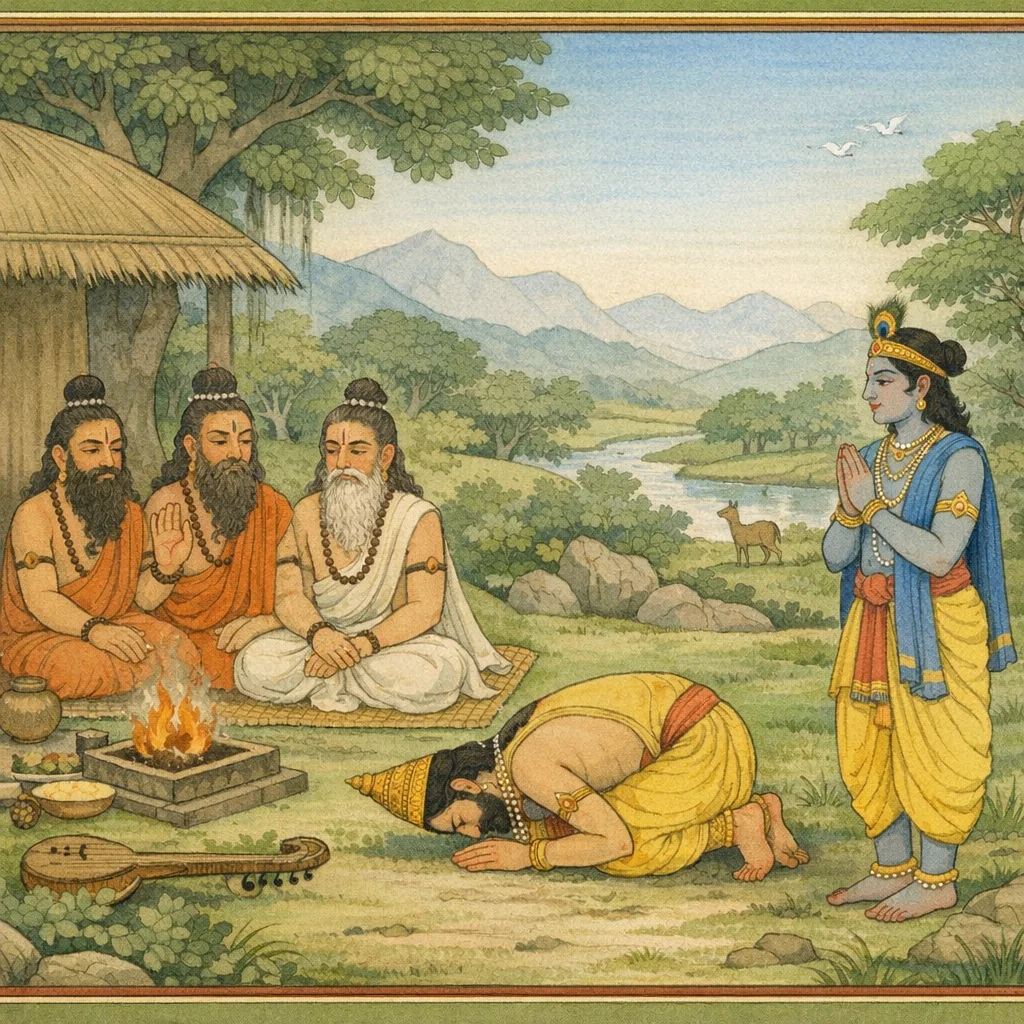
Bhīṣma instructs that rulers should continually honor Brahmins with respect, protection, and material support, presenting them as pivotal agents in the moral economy of happiness and suffering. He links rāṣṭra-śānti (state tranquility) to the consistent veneration of Brahmins, analogizing their role to stabilizing divine governance. The discourse asserts that offerings given to Brahmins are accepted through them by deities and ancestors, and that neglect or hostility toward Brahmins disrupts ritual reciprocity, harming the patron’s post-mortem prospects. The chapter then introduces an old exemplum: Vāsudeva questions Earth (Pṛthivī) on how a householder removes sin; she answers that service to Brahmins is the highest purifier, generating prosperity, fame, and discernment, while Brahmin-disapproval leads to rapid decline. The unit concludes with an exhortation to the listener (addressed as Pārtha) to persistently honor eminent Brahmins to attain well-being (śreyas).
Chapter Arc: युधिष्ठिर के प्रश्न के उत्तर में भीष्म एक प्राचीन इतिवृत्त का द्वार खोलते हैं—देवर्षि नारद और वासुदेव कृष्ण का संवाद, जिसमें ‘पूजनीय पुरुष’ की पहचान और पूजन का फल बताया जाता है। → कृष्ण नारद को हाथ जोड़कर श्रेष्ठ द्विजों को नमस्कार करते देख पूछते हैं—‘भगवन्, आप किन्हें नमस्कार करते हैं?’ प्रश्न के साथ ही मान-प्रतिष्ठा का मर्म उठता है: कौन वास्तव में लोक-पूज्य है—जन्म से, ज्ञान से, या आचरण से? → नारद का निर्णायक कथन—वे उन ऋषियों/ब्राह्मणों को नित्य नमस्कार करते हैं जो ‘लोककर’ हैं, ‘तमोघ्न’ हैं, और जिनका जीवन शम, अनसूया, नित्य स्वाध्याय, शिष्टाचार तथा माता-पिता-गुरु के प्रति सम्यक् वृत्ति से प्रकाशित है; ऐसे मान्य पुरुष इहलोक-परलोक दोनों में सुखप्रदा होते हैं। → नारद कृष्ण को उपदेश देते हैं कि वे भी देव, पितृ, द्विज और अतिथि का नित्य सम्यक् पूजन करें—यही इष्ट गति का साधन है; पूजन का फल केवल पुण्य नहीं, समाज-धर्म की स्थिरता और आत्मशुद्धि भी है।
Shlokas
Verse 1
ऑपन--माज बछ। जि एकत्रिशो< ध्याय: नारदजीके द्वारा पूजनीय पुरुषोंके लक्षण तथा उनके आदर-सत्कार और पूजनसे प्राप्त होनेवाले लाभका वर्णन युधिछिर उवाच के पूज्या वै त्रिलोकेडस्मिन् मानवा भरतर्षभ । विस्तरेण तदाचक्ष्व न हि तृप्पामि कथ्यत:,युधिष्ठिरने पूछा--भरतश्रेष्ठ! इन तीनों लोकोंमें कौन-कौन-से मनुष्य पूज्य होते हैं? यह विस्तार-पूर्वक बताइये। आपकी बातें सुनते-सुनते मुझे तृप्ति नहीं होती है
Yudhiṣṭhira said: “O bull among the Bharatas, which kinds of people in these three worlds are truly worthy of reverence? Please explain this in detail, for I am never satisfied merely by hearing about it.”
Verse 2
भीष्म उवाच अत्राप्युदाहरन्तीममितिहासं पुरातनम् | नारदस्य च संवाद वासुदेवस्य चोभयो:,भीष्मजीने कहा--युधिष्ठिर! इस विषयमें विज्ञ पुरुष देवर्षि नारद और भगवान् श्रीकृष्णके संवादरूप इस इतिहासका उदाहरण दिया करते हैं
Bhishma said: “Here too, the wise cite an ancient precedent—an old sacred narrative—namely, the dialogue between the divine sage Narada and Vasudeva (Sri Krishna), spoken by them both, as an illustrative example for this matter.”
Verse 3
नारदं प्राउ्जलिं दृष्टवा पूजयान द्विजर्षभान् । केशव: परिपप्रच्छ भगवन् कान् नमस्यसि,एक समयकी बात है, देवर्षि नारदजी हाथ जोड़कर उत्तम ब्राह्मणोंकी पूजा कर रहे थे। यह देखकर भगवान् श्रीकृष्णने पूछा--“भगवन्! आप किनको नमस्कार कर रहे हैं?
Bhishma said: Once, seeing the divine sage Narada with folded hands, engaged in honoring the foremost of Brahmins, Keshava (Krishna) asked him, “O venerable one, to whom are you offering your salutations?”
Verse 4
बहुमानपरस्तेषु भगवन् यान् नमस्यसि । शव्यं चेच्छोतुमस्माभिर््रह्वेतद् धर्मवित्तम,'प्रभो! धर्मात्माओंमें श्रेष्ठ नारदजी! आपके हृदयमें जिनके प्रति बहुत बड़ा आदर है तथा आप भी जिनके सामने मस्तक झुकाते हैं, वे कौन हैं? यदि हमें सुनाना उचित समझें तो आप उन पूज्य पुरुषोंका परिचय दीजिये”
Bhishma said: “O venerable one, toward whom you bear great reverence—those whom you yourself bow to—who are they? If you deem it proper for us to hear, then, O knower of dharma, please disclose this profound matter and introduce those worthy persons.”
Verse 5
नारद उवाच शृणु गोविन्द यानेतान् पूजयाम्यरिमर्दन । त्वत्तोडन्य: कः पुमॉल्लोके श्रोतुमेतदिहाहति,नारदजीने कहा--शत्रुमर्दन गोविन्द! मैं जिनका पूजन करता हूँ उनका परिचय सुननेके लिये इस संसारमें आपसे बढ़कर दूसरा कौन पुरुष अधिकारी है?
Nārada said: “Listen, O Govinda, O crusher of foes, as I describe those whom I worship. For who else in this world, other than you, is truly worthy to hear this account here?”
Verse 6
वरुणं वायुमादित्यं पर्जन्यं जातवेदसम् | स्थाणुं स्कन्दं तथा लक्ष्मी विष्णु ब्रह्माणमेव च
Nārada said: “One should revere and remember Varuṇa, Vāyu, Āditya (the Sun), Parjanya (the rain-god), Jātavedas (Agni), Sthāṇu (Śiva), Skanda, and likewise Lakṣmī—also Viṣṇu and Brahmā.”
Verse 7
वाचस्पतिं चन्द्रमसमप: पृथ्वीं सरस्वतीम् | सततं ये नमस्यन्ति तान् नमस्याम्यहं विभो
Nārada said: “O Lord, I bow to those who continually offer reverence—to Vācaspati (the lord of speech), to the Moon, to the Waters, to the Earth, and to Sarasvatī.”
Verse 8
जो लोग वरुण, वायु, आदित्य, पर्जन्य, अग्नि, रुद्र, स्वामी कार्तिकेय, लक्ष्मी, विष्णु, ब्रह्मा, बृहस्पति, चन्द्रमा, जल, पृथ्वी और सरस्वतीको सदा प्रणाम करते हैं, प्रभो! मैं उन्हीं पूज्य पुरुषोंको मस्तक झुकाता हूँ ।। तपोधनान् वेदविदो नित्यं वेदपरायणान् | महाहनि् वृष्णिशार्दूल सदा सम्पूजयाम्यहम्,वृष्णिसिंह! तपस्या ही जिनका धन है, जो वेदोंके ज्ञाता तथा वेदोक्त धर्मका ही आश्रय लेनेवाले हैं, उन परम पूजनीय पुरुषोंकी ही मैं सदा पूजा करता रहता हूँ
Nārada said: “O mighty slayer of foes, O tiger among the Vṛṣṇis! I continually honor those ascetics whose true wealth is austerity—those who know the Vedas and who steadfastly take refuge in the dharma taught by the Vedas. Such men are supremely worthy of reverence, and to them I bow and offer worship again and again.”
Verse 9
अभुकक्त्वा देवकार्याणि कुर्वते येडविकत्थना: । संतुष्ट श्च क्षमायुक्तास्तान् नमस्याम्यहं विभो,प्रभो! जो भोजनसे पहले देवताओंकी पूजा करते, अपनी झूठी बड़ाई नहीं करते, संतुष्ट रहते और क्षमाशील होते हैं, उनको मैं प्रणाम करता हूँ
Nārada said: “O mighty Lord, O Master! I bow to those who, before taking their meal, first perform the rites owed to the gods; who do not indulge in self-praise or boastful talk; who remain content with what they have; and who are endowed with forgiveness.”
Verse 10
सम्यग् यजन्ति ये चेष्टी: क्षान्ता दान्ता जितेन्द्रिया: । सत्यं धर्म क्षितिं गाश्न॒ तान् नमस्यामि यादव,यदुनन्दन! जो विधिपूर्वक यज्ञोंका अनुष्ठान करते हैं, जो क्षमाशील, जितेन्द्रिय और मनको वशमें करनेवाले हैं और सत्य, धर्म, पृथ्वी तथा गौओंकी पूजा करते हैं, उन्हींको मैं प्रणाम करता हूँ
Narada said: “I bow to those who perform sacrifices and sacred rites in the proper manner—who are patient and self-restrained, who have conquered their senses, and who revere truth, righteousness, the earth, and the cow. Such people uphold the moral order and deserve homage.”
Verse 11
ये वै तपसि वर्तन्ते वने मूलफलाशना: । असंचया: क्रियावन्तस्तान् नमस्यामि यादव
Nārada said: “I bow to those who abide in austerity—dwelling in the forest, living on roots and fruits, keeping no stores for the future, and remaining steadfast in their prescribed disciplines. O Yādava, such self-restrained ascetics embody a life of duty and inner strength.”
Verse 12
यादव! जो लोग वनमें फल-मूल खाकर तपस्यामें लगे रहते हैं, किसी प्रकारका संग्रह नहीं रखते और क्रियानिष्ठ होते हैं, उन्हींको मैं मस्तक झुकाता हूँ ।। ये भृत्यभरणे शक्ता: सततं चातिथिव्रता: । भुज्जते देवशेषाणि तान् नमस्यामि यादव,जो माता-पिता, कुटुम्बीजन एवं सेवक आदि भरण-पोषणके योग्य व्यक्तियोंका पालन करनेमें समर्थ हैं, जिन्होंने सदा अतिथिसेवाका व्रत ले रखा है तथा जो देवयज्ञसे बचे हुए अन्नको ही भोजन करते हैं, मैं उन्हींके सामने नतमस्तक होता हूँ
Narada said: “O Yadava, I bow my head to those who dwell in the forest, living on fruits and roots, steadfast in austerity, keeping no hoard, and devoted to sacred duties. And I bow to those who are able to support dependents—family and servants—who are continually vowed to honor guests, and who eat only what remains after offerings to the gods. Such people embody disciplined restraint and responsible generosity.”
Verse 13
ये वेदं प्राप्य दुर्धर्षा वाम्मिनो ब्रह्म॒चारिण: । याजनाध्यापने युक्ता नित्यं तान् पूजयाम्यहम्,जो वेदका अध्ययन करके दुर्धर्ष और बोलनेमें कुशल हो गये हैं, ब्रह्मचर्यका पालन करते हैं और यज्ञ कराने तथा वेद पढ़ानेमें लगे रहते हैं उनकी मैं सदा पूजा किया करता हूँ
Narada said: “I ever honor those who, having mastered the Veda, have become steadfast and hard to overcome, skilled in speech, observant of brahmacarya, and continually engaged in officiating sacrifices and teaching the Veda.”
Verse 14
प्रसन्नहृददया श्चैव सर्वसत्त्वेषु नित्यश: । आपूृष्ठतापात् स्वाध्याये युक्तास्तान् पूजयाम्पहम्,जो नित्य-निरन्तर समस्त प्राणियोंपर प्रसन्नचित्त रहते और सबेरेसे दोपहरतक वेदोंके स्वाध्यायमें संलग्न रहते हैं, उनका मैं पूजन करता हूँ
Narada said: “I honor those who, with hearts ever serene and kindly toward all living beings, devote themselves to the recitation and study of the Veda from morning until midday. Such steady goodwill and disciplined learning are worthy of reverence.”
Verse 15
गुरुप्रसादे स्वाध्याये यतन्तो ये स्थिरव्रता: । शुश्रूषवो5नसूयन्तस्तान् नमस्यामि यादव,यदुकुलतिलक! जो गुरुको प्रसन्न रखने और स्वाध्याय करनेके लिये सदा यत्नशील रहते हैं, जिनका व्रत कभी भंग नहीं होने पाता, जो गुरुजनोंकी सेवा करते और किसीके भी दोष नहीं देखते उनको मैं प्रणाम करता हूँ
Nārada said: “O Yādava, ornament of the Yadu line! I bow to those steadfast in their vows—who continually strive to win the teacher’s grace and to pursue self-study, who attend upon their elders and teachers with devoted service, and who are free from fault-finding and envy toward others.”
Verse 16
सुव्रता मुनयो ये च ब्राह्मणा: सत्यसंगरा: । वोढारो हव्यकव्यानां तान् नमस्यामि यादव,यदुनन्दन! जो उत्तम व्रतका पालन करनेवाले, मननशील, सत्यप्रतिज्ञ तथा हव्य- कव्यको नियमित-रूपसे चलानेवाले ब्राह्मण हैं उनको मैं मस्तक झुकाता हूँ
Nārada said: “O Yādava, O delight of the Yadus! I bow my head to those brāhmaṇas who are steadfast in excellent vows, contemplative sages, firm in truth and their pledged commitments, and who duly uphold the offerings of havya and kavya (rites for the gods and for the ancestors).”
Verse 17
भैक्ष्यचर्यासु निरता: कृशा गुरुकुलाश्रया: । निः:सुखा निर्धना ये तु तान् नमस्यामि यादव,यदुकुलभूषण! जो गुरुकुलमें रहकर भिक्षासे जीवन निर्वाह करते हैं, तपस्यासे जिनका शरीर दुर्बल हो गया है और जो कभी धन तथा सुखकी चिन्ता नहीं करते हैं उनको मैं प्रणाम करता हूँ
Nārada said: “O Yādava, ornament of the Yadu line! I bow to those who, dwelling in the teacher’s household, are devoted to the discipline of living on alms; whose bodies have grown lean through austerity; and who remain without concern for wealth or worldly comfort.”
Verse 18
निर्ममा निष्प्रतिद्वन्द्धा नि्ींका निष्प्रयोजना: । ये वेदं प्राप्य दुर्धर्षा वाग्मिनो ब्रह्मवादिन:
Nārada said: “They are free from possessiveness, without rivals, without fear, and without ulterior motive. Having attained the Veda, they become unassailable—eloquent in speech and steadfast proclaimers of Brahman (the highest truth).”
Verse 19
अहिंसानिरता ये च ये च सत्यव्रता नरा: । दान्ता: शमपराश्वैव तान् नमस्यामि केशव
Nārada said: “O Keśava, I bow to those men who are devoted to non-violence, who are vowed to truth, who are self-restrained, and who are wholly committed to inner calm.”
Verse 20
केशव! जिनके मनमें ममता नहीं है, जो प्रति-द्वन्ध्रियोंसे रहित, लज्जासे ऊपर उठे हुए तथा कहीं भी कोई प्रयोजन न रखनेवाले हैं, जो वेदोंके ज्ञानका बल पाकर दुर्धर्ष हो गये हैं, प्रवचन-कुशल और ब्रह्मवादी हैं, जिन्होंने अहिंसामें तत्पर रहकर सदा सत्य बोलनेका व्रत ले रखा है तथा जो इन्द्रियसंयम एवं मनोनिग्रहके साधनमें संलग्न रहते हैं उनको मैं नमस्कार करता हूँ ।। देवतातिथिपूजायां युक्ता ये गृहमेधिन: । कपोततवृत्तयो नित्यं तान् नमस्यामि यादव,यादव! जो गृहस्थ ब्राह्मण सदा कपोतवृत्तिसे रहते हुए देवता और अतिथियोंकी पूजामें संलग्न रहते हैं, उनको मैं मस्तक झुकाता हूँ
Nārada said: “O Keśava, I bow to those in whom possessiveness has died—who are free from the pairs of opposites, who have risen beyond shame, and who have no selfish purpose anywhere. Strengthened by the knowledge of the Vedas, they become unassailable; skilled in teaching, they speak of Brahman. Devoted to non-violence, they have taken a lifelong vow of truth, and they remain engaged in the disciplines of sense-restraint and mastery of the mind. And, O Yādava, I also bow to those householders who, living always by the ‘pigeon’s way’—content with little—are devoted to the worship of the gods and the honoring of guests.”
Verse 21
जिनके कार्योमें धर्म, अर्थ और काम तीनोंका निर्वाह होता है, किसी एककी भी हानि नहीं होने पाती तथा जो सदा शिष्टाचारमें ही संलग्न रहते हैं, उनको मैं नमस्कार करता हूँ
Nārada said: I bow to those whose undertakings uphold all three aims of life—dharma, artha, and rightful kāma—so that none is harmed or neglected, and who remain ever devoted to refined conduct and the standards of the virtuous.
Verse 22
ब्राह्मणा: श्रुतसम्पन्ना ये त्रिवर्गमनुछिता: । अलोलुपा: पुण्यशीलास्तान् नमस्यामि केशव,केशव! जो ब्राह्मण वेद-शास्त्रोंके ज्ञानसे सम्पन्न, धर्म, अर्थ और कामका सेवन करनेवाले, लोलुपतासे रहित और स्वभावत:ः पुण्यात्मा हैं उन्हें मैं नमस्कार करता हूँ
Nārada said: “O Keśava, I bow to those brāhmaṇas who are enriched by sacred learning, who duly pursue the three aims of life—dharma, artha, and kāma—without excess, who are free from greed, and whose conduct is naturally virtuous.”
Verse 23
अब्भक्षा वायुभक्षाश्न सुधाभक्षाश्न ये सदा । व्रतैश्न विविधैर्युक्तास्तान्ू नमस्यामि माधव,माधव! जो नाना प्रकारके व्रतोंका पालन करते हुए केवल पानी या हवा पीकर ही रह जाते हैं तथा जो सदा यज्ञशेष अन्नका ही भोजन करते हैं उनके चरणोंमें मैं प्रणाम करता हूँ
Nārada said: “O Mādhava, I bow at the feet of those ascetics who, steadfast in many kinds of vows, sustain themselves only on water or on air, and of those who always eat only what remains after sacrifice. Their disciplined restraint and reverence for sacred duty embody the highest form of self-control and purity.”
Verse 24
अयोनीन ग्नियोनींश्र ब्रह्मयोनींस्तथैव च । सर्वभूतात्मयोनींश्व॒ तान् नमस्याम्यहं सदा,जो स्त्री नहीं रखते अर्थात् ब्रह्मचर्यका पालन करते हैं, जो अग्निहोत्रसे युक्त हैं तथा जो वेदोंको धारण करनेवाले हैं और समस्त प्राणियोंके आत्मस्वरूप परमात्माको ही सबका कारण माननेवाले हैं उनकी मैं सदा वन्दना करता हूँ
Narada said: “I ever bow to those who are not born from a womb (the self-born), to those whose source is the sacred fire, to those sprung from Brahman, and to those whose origin is the very Self of all beings—recognizing the Supreme Self as the ultimate cause of all.”
Verse 25
नित्यमेतान् नमस्यामि कृष्ण लोककरानृषीन् । लोकज्येष्ठान् कुलज्येष्ठांस्तमोघ्नाललोकभास्करान्,श्रीकृष्ण! जो लोकोंकी सृष्टि करनेवाले, संसारमें सबसे श्रेष्ठ, उत्तम कुलमें उत्पन्न, अज्ञानान्धकारका नाश करनेवाले तथा सूर्यके समान जगत्को ज्ञानालोक प्रदान करनेवाले हैं उन ऋषियोंको मैं सदा मस्तक झुकाता हूँ
Nārada said: “O Śrī Kṛṣṇa, I ever bow my head in reverence to those sages who are makers and sustainers of the world—foremost among the world’s elders, foremost in noble lineage—who destroy the darkness of ignorance and, like the sun, pour the light of knowledge upon all beings.”
Verse 26
तस्मात् त्वमपि वार्ष्णेय द्विजान् पूजय नित्यदा । पूजिता: पूजनार्हा हि सुखं दास्यन्ति तेडनघ,वार्ष्णय! अतः आप भी सदा ब्राह्मणोंका पूजन करें। निष्पाप श्रीकृष्ण! वे पूजनीय ब्राह्मण पूजित होनेपर आपको अपने आशीर्वादसे सुख प्रदान करेंगे
Therefore, you too, O Vārṣṇeya, should honor the twice-born (brāhmaṇas) at all times. For those who are truly worthy of worship, when worshipped, will bestow happiness upon you through their blessings, O sinless one.
Verse 27
अस्मिल्लोंके सदा होते परत्र च सुखप्रदा: । चरन्ते मान्यमाना वै प्रदास्यन्ति सुखं तव,ये ब्राह्मण सदा इहलोक और परलोकमें भी सुख प्रदान करते हुए विचरते हैं। ये सम्मानित होनेपर आपको अवश्य ही सुख प्रदान करेंगे
Narada said: "In this very world and also in the world beyond, there are those who continually move about as givers of happiness. When such people are honored and treated with due respect, they will surely bestow happiness upon you as well."
Verse 28
ये सर्वातिथयो नित्यं गोषु च ब्राह्मणेषु च । नित्यं सत्ये चाभिरता दुर्गाण्यतितरन्ति ते,जो सबका अतिथि सत्कार करते तथा गौ-ब्राह्मण और सत्यपर प्रेम रखते हैं वे बड़े- बड़े संकटसे पार हो जाते हैं
Narada said: Those who are ever hospitable to all guests, who constantly show reverence and care toward cows and Brahmins, and who remain steadfastly devoted to truth—such people cross over even great dangers and crises.
Verse 29
नित्यं शमपरा ये च तथा ये चानसूयका: । नित्यस्वाध्यायिनो ये च दुर्गाण्यतितरन्ति ते,जो सदा मनको वशमें रखते, किसीके दोषपर दृष्टि नहीं डालते और प्रतिदिन स्वाध्यायमें संलग्न रहते हैं वे दुर्गण संकटसे पार हो जाते हैं
Narada said: Those who are ever devoted to inner calm, who are free from fault-finding and envy, and who daily engage in self-study of sacred teaching—such people cross over difficult straits and pass beyond times of peril.
Verse 30
इस प्रकार श्रीमह्याभारत अनुशासनपर्वके अन्तर्गत दानधर्मपर्वमें वीतहव्यका उपाख्याननागमक तीसवाँ अध्याय पूरा हुआ,सर्वान् देवान् नमस्यन्ति ये चैक वेदमाश्रिता: । श्रद्धधानाश्ष दान्ताश्न दुर्गाण्यतितरन्ति ते
Bhīṣma said: Those who bow to all the gods, and who take refuge in the one Veda—endowed with faith and self-restraint—cross over difficult passages and perilous obstacles. The teaching underscores that reverence, scriptural grounding, and disciplined conduct together become a means of safely passing through life’s hardships.
Verse 31
जो सब देवताओंको प्रणाम करते हैं, एकमात्र वेदका आश्रय लेते, श्रद्धा रखते और इन्द्रियोंको वशमें रखते हैं वे भी दुस्तर संकटसे छुटकारा पा जाते हैं ।। तथैव विप्रप्रवरान् नमस्कृत्य यतव्रता: । भवन्ति ये दानरता दुर्गाण्यतितरन्ति ते,इसी प्रकार जो नियमपूर्वक व्रतोंका पालन करते हैं और श्रेष्ठ ब्राह्मगोंको नमस्कार करके उन्हें दान देते हैं वे दुस्तर विपत्ति लाँघ जाते हैं इति श्रीमहाभारते अनुशासनपर्वणि दानधर्मपर्वणि कृष्णनारदसंवादे एकत्रिंशो5ध्याय:
Nārada said: Those who bow to all the gods, take refuge in the one Veda, keep faith, and hold their senses in check—such people too are freed from calamities that are hard to cross. Likewise, those who, disciplined in their vows, revere the foremost brāhmaṇas and delight in giving gifts to them, pass beyond even formidable dangers.
Verse 32
तपस्विनश्न ये नित्यं कौमारब्रह्मचारिण: । तपसा भावितात्मानो दुर्गाण्यतितरन्ति ते,जो तपस्वी, आबालब्रह्मचारी और तपस्यासे शुद्ध अन्तःकरणवाले हैं वे दुर्गमण संकटसे पार हो जाते हैं
Nārada said: Those ascetics who constantly live in lifelong celibate studentship, and whose inner selves have been refined and strengthened by austerity, are able to cross over even the most difficult passages—perils and crises that are hard to overcome.
Verse 33
देवतातिथि भृत्यानां पितृणां चार्चने रता: । शिष्टान्नभोजिनो ये च दुर्गाण्यतितरन्ति ते,जो देवता, अतिथि, पोष्यवर्ग तथा पितरोंके पूजनमें तत्पर रहते हैं और यज्ञशिष्ट अन्नका भोजन करते हैं वे भी दुर्गम संकटसे पार हो जाते हैं
Nārada said: Those who are devoted to honoring the gods, welcoming guests, caring for dependents and servants, and worshipping the ancestors—and who partake only of the consecrated remnants of sacrifice—such people cross over even difficult and perilous crises.
Verse 34
अग्निमाधाय विधिवत् प्रणता धारयन्ति ये । प्राप्ता: सोमाहुतिं चैव दुर्गाण्यतितरन्ति ते,जो विधिपूर्वक अग्निकी स्थापना करके सदा अग्निदेवकी उपासना और वन्दना करते हुए सर्वदा उस अग्निकी रक्षा करते हैं; तथा उसमें सोमरसकी आहुति देते हैं वे दुस्तर विपत्तिसे पार हो जाते हैं
Narada said: Those who, in due ritual order, establish the sacred fire, remain bowed in reverence, and continually maintain and protect it—and who also offer Soma as an oblation into it—such people pass beyond even hard-to-cross calamities.
Verse 35
मातापित्रोर्गुरुषु च सम्यग् वर्तन्ति ये सदा । यथा त्वं वृष्णिशार्दटूलेत्युक्त्वैवे विरराम सः,वृष्णिसिंह! जो आपकी ही भाँति माता-पिता और गुरुके प्रति पूर्णतः न्याययुक्त बर्ताव करते हैं वे भी संकटसे पार हो जाते हैं--ऐसा कहकर नारदजी चुप हो गये
Nārada said: “Those who always conduct themselves rightly toward their mother and father, and toward their teachers, also cross over times of peril—just as you do, O tiger among the Vṛṣṇis.” Having said this, Nārada fell silent.
Verse 36
तस्मात् त्वमपि कौन्तेय पितृदेवद्धिजातिथीन् । सम्यक् पूजयसे नित्यं गतिमिष्टामवाप्स्यसि,अतः कुन्तीनन्दन! यदि तुम भी सदा देवताओं, पितरों, ब्राह्मणों और अतिथियोंका भलीभाँति पूजन एवं सत्कार करते रहोगे तो अभीष्ट गति प्राप्त कर लोगे
Therefore, O son of Kuntī, if you too continually honor and duly worship the ancestors, the gods, the twice-born (Brahmins), and guests, you will attain the desired goal. This teaching declares that steadfast reverence and hospitality toward these pillars of dharma lead to auspicious spiritual and moral fulfillment.
Verse 231
येषां त्रिवर्ग: कृत्येषु वर्तते नोपहीयते । शिष्टाचारप्रवृत्ताश्न॒ तान् नमस्याम्यहं सदा
Narada said: “I always bow to those in whom the three aims of life—dharma, artha, and kāma—are actively upheld in their proper duties and never fall into decline, and who conduct themselves according to the established standards of the virtuous.”
Frequently Asked Questions
The chapter instructs sustained honoring, protection, and support of Brahmins as a stabilizing norm for rulers and householders, linking this practice to ritual efficacy (deva/pitṛ satisfaction), public peace, and favorable long-term outcomes.
It presents Brahmins as the ritual conduit: offerings given to them are described as being received by deities and ancestors, while neglecting to feed or honor Brahmins is framed as breaking the reciprocity that sustains pitṛ-prīti and divine favor.
Yes: the text explicitly associates Brāhmaṇa-sevā with purification of sin for householders, growth in prosperity and reputation, avoidance of decline, and attainment of śreyas and an elevated post-mortem destination (paramā gati).