Adhyaya 163
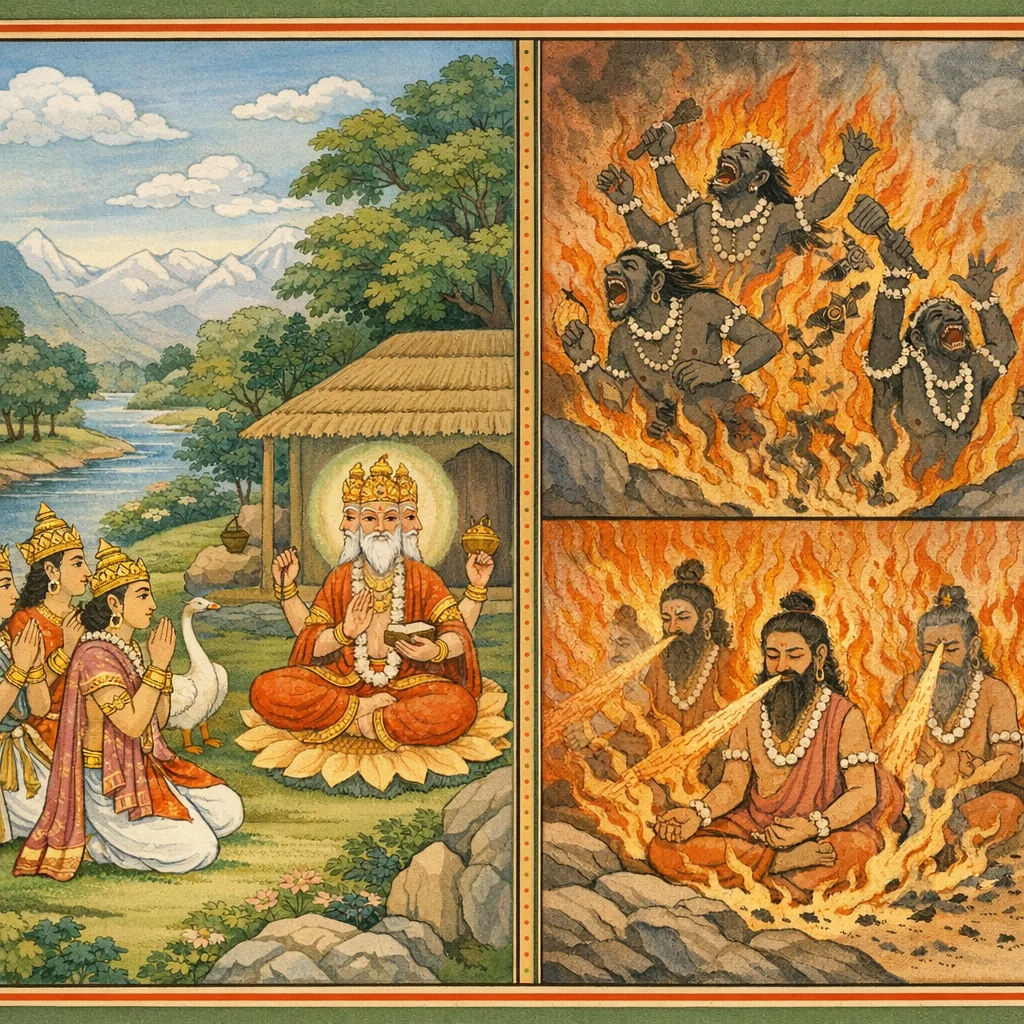
Chapter Arc: स्वर्ग पर ‘कप’ नामक दानवों का अधिकार जम जाना और देवताओं का मद/अहंकार के कारण संकट में पड़ जाना—एक ऐसा उलटफेर जहाँ अमर भी असहाय दिखते हैं। → देवता अपने दोनों लोक (स्वर्ग और पृथ्वी/अधिकार) हरण हुए जानकर शोकाकुल होकर ब्रह्मा की शरण लेते हैं; उधर ‘कप’ ब्राह्मणों के प्रति वैर/अवज्ञा की ओर बढ़ते हैं, जिससे धर्म-रक्षा का प्रश्न तीखा होता जाता है। → ब्राह्मण-तेज के अपमान का परिणाम—ब्राह्मणों द्वारा ‘कप’ दानवों का भस्म किया जाना; उसी निर्णायक क्षण में देवताओं का संकट कटता है और उनका तेज-वीर्य पुनः जाग्रत होता है। → नारद के वचन से देवता प्रसन्न होकर ब्राह्मणों की महिमा का स्तवन करते हैं; देवताओं का तेज बढ़ता है और वे त्रिलोकी में पुनः पूजित/स्थापित होते हैं। वायु, युधिष्ठिर को उपदेश-रूप में ब्राह्मण-रक्षा और इन्द्रिय-निग्रह का क्षात्रधर्म बताता है। → वायु का संकेत कि ‘भृगुओं से घोर भय’ कालान्तर में प्रकट होगा—भविष्य के दण्ड/परिणाम की छाया अध्याय के अंत में छोड़ दी जाती है।
Shlokas
Verse 1
अपना छा | अ:-फक्राछ सप्तपञ्चाशर्दाधिकशततमोब् ध्याय: कप नामक दानवोंके द्वारा स्वर्गलोकपर अधिकार जमा लेनेपर ब्राह्म॒णोंका कपोंको भस्म कर देना, वायुदेव और कार्तवीर्य अर्जुनके संवादका उपसंहार भीष्म उवाच तृष्णीमासीदर्जुनस्तु पवनस्त्वब्रवीत् पुनः । शृणु मे ब्राह्माणेष्वेव मुख्यं कर्म जनाधिप,भीष्मजी कहते हैं--युधिष्ठिर! इतनेपर भी कार्तवीर्य चुप ही रहा। तब वायु देवताने फिर कहा--नरेश्वर! ब्राह्मणोंके और भी जो श्रेष्ठ कर्म हैं, उनका वर्णन सुनो
Bhishma said: “Yudhishthira, even then Kartavīrya Arjuna remained silent. Then the Wind-god spoke again: ‘O lord of men, listen from me to the foremost duties and exemplary deeds that pertain especially to Brahmins.’”
Verse 2
मदस्यास्यमनुप्राप्ता यदा सेन्द्रा दिवौकस: । तदैव च्यवनेनेह हृता तेषां वसुन्धरा,जब इन्द्रसहित सम्पूर्ण देवता मदके मुखमें पड़ गये थे, उसी समय च्यवनने उनके अधिकारकी सारी भूमि हर ली थी (तथा कप नामक दानवोंने उनके स्वर्गलोकपर अधिकार जमा लिया था)
Bhishma said: “When the gods, with Indra at their head, had fallen into the mouth of Mada (Intoxication/Pride), at that very time the sage Cyavana here deprived them of their dominion over the earth.”
Verse 3
उभौ लोकौ हृतौ मत्वा ते देवा दु:खिता5भवन् । शोकार्ताश्चि महात्मानं ब्रह्माणं शरणं ययु:,अपने दोनों लोकोंका अपहरण हुआ जान वे देवता बहुत दुःखी हो गये और शोकसे आतुर हो महात्मा ब्रह्माजीकी शरणमें गये
Bhishma said: “Realizing that both worlds had been taken away from them, the gods became deeply distressed. Overwhelmed by grief, they sought refuge in the great-souled Brahmā.”
Verse 4
देवा ऊचु मदास्यव्यतिषक्तानामस्माकं लोकपूजित । च्यवनेन हता भूमि: कपैश्नैव दिवं प्रभो,देवता बोले--लोकपूजित प्रभो! जिस समय हम मदके मुखमें पड़ गये थे, उस समय च्यवनने हमारी भूमि हर ली थी और कप नामक दानवोंने स्वर्गलोेकपर अधिकार कर लिया
The gods said: “O Lord, revered by the worlds! When we had become entangled in the mouth of Mada (Intoxication/Pride), Cyavana struck us down and took away our domain; and the demons called the Kapas seized heaven itself.”
Verse 5
ब्रह्मोवाच गच्छध्वं शरणं विप्रानाशु सेन्द्रा दिवौकस: । प्रसाद्य तानुभी लोकाववाप्स्यथ यथा पुरा,ब्रह्माजीने कहा--इन्द्रसहित देवताओ! तुमलोग शीघ्र ही ब्राह्मणोंकी शरणमें जाओ। उन्हें प्रसन्न कर लेनेपर तुमलोग पहलेकी भाँति दोनों लोक प्राप्त कर लोगे
Brahmā said: “O gods, together with Indra, quickly go and seek refuge with the brāhmaṇas. If you win their favor, you will regain both worlds, just as you did before.”
Verse 6
ते ययु: शरणं विप्रानूचुस्ते कान् जयामहे । इत्युक्तास्ते द्विजान् प्राहुर्जयतेह कपानिति,तब देवतालोग ब्राह्मणोंकी शरणमें गये। ब्राह्मणोंने पूछा--“हम किनको जीतें?” उनके इस तरह पूछनेपर देवताओंने ब्राह्मणोंस कहा--“आपलोग कप नामक दानवोंको परास्त कीजिये”
Bhishma said: The gods sought refuge with the brahmins and asked, “Whom shall we conquer?” When the brahmins spoke thus, the gods replied, “Here, conquer the demons named Kapa.”
Verse 7
भूगतान् हि विजेतारो वयमित्यब्रुवन् द्विजा: । ततः कर्म समारब्धं ब्राह्मणै:ः कपनाशनम्,तब ब्राह्मणोंने कहा--“हम उन दानवोंको पृथ्वीपर लाकर परास्त करेंगे।” तदनन्तर ब्राह्मणोंने कपविनाशक कर्म आरम्भ किया
Bhishma said: Indeed, the brahmins declared, “We shall conquer those beings once they have been brought down to the earth.” Thereafter, the brahmins commenced the rite whose purpose was the destruction of Kapa.
Verse 8
तच्छुत्वा प्रेषितो दूतो ब्राह्मणेभ्यो धनी कपै: । सच तान् ब्राह्मणानाह धनी कपवचो यथा,इसका समाचार सुनकर कपोंने ब्राह्मणोंक पास अपना धनी नामक दूत भेजा, उसने उन ब्राह्मणोंसे कपोंका संदेश इस प्रकार कहा--
Bhishma said: Hearing that report, the Kapas dispatched their messenger named Dhanī to the brahmins. Approaching those brahmins, he conveyed the Kapas’ message exactly as it was intended.
Verse 9
भवद्धिः सदृशा: सर्वे कपा: किमिह वर्तते । सर्वे वेदविद: प्राज्ञा: सर्वे च क्रतुयाजिन:,“ब्राह्यणो! समस्त कप नामक दानव आपलोगोंके ही समान हैं। फिर उनके विरुद्ध यहाँ क्या हो रहा है? सभी कप वेदोंके ज्ञाता और विद्वान् हैं। सब-के-सब यज्ञोंका अनुष्ठान करते हैं। सभी सत्यप्रतिज्ञ हैं और सब-के-सब महर्षियोंके तुल्य हैं। श्री उनके यहाँ रमण करती है और वे श्रीको धारण करते हैं"
Bhishma said: “All these Kapas are comparable to you in worth. Then what is this conflict taking place here against them? They are all knowers of the Vedas, wise in judgment, and all of them are performers of sacrificial rites.”
Verse 10
सर्वे सत्यव्रताश्वैव सर्वे तुल्या महर्षिभि: | श्रीक्षेव रमते तेषु धारयन्ति श्रियं च ते,“ब्राह्यणो! समस्त कप नामक दानव आपलोगोंके ही समान हैं। फिर उनके विरुद्ध यहाँ क्या हो रहा है? सभी कप वेदोंके ज्ञाता और विद्वान् हैं। सब-के-सब यज्ञोंका अनुष्ठान करते हैं। सभी सत्यप्रतिज्ञ हैं और सब-के-सब महर्षियोंके तुल्य हैं। श्री उनके यहाँ रमण करती है और वे श्रीको धारण करते हैं"
Bhishma said: “All of them are indeed bound by vows of truth; all are comparable to great seers. Prosperity (Śrī) delights to dwell among them, and they in turn uphold and embody that very prosperity.”
Verse 11
वृथादारान् न गच्छन्ति वृथामांसं न भुञ्जते । दीप्तमन्निं जुह्बते च गुरूणां वचने स्थिता:,“वे परायी स्त्रियोंसे समागम नहीं करते। मांसको व्यर्थ समझकर उसे कभी नहीं खाते हैं। प्रजजलित अग्निमें आहुति देते और गुरुजनोंकी आज्ञामें स्थित रहते हैं
Bhīṣma said: “They do not consort with women outside rightful marriage; they do not eat meat, considering it purposeless; they offer oblations into the blazing sacred fire; and they remain steadfast in obedience to the commands of their elders and teachers.”
Verse 12
सर्वे च नियतात्मानो बालानां संविभागिन: । उपेत्य शनकैर्यान्ति न सेवन्ति रजस्वलाम् | स्वर्गतिं चैव गच्छन्ति तथैव शुभकर्मिण:,“वे सभी अपने मनको संयममें रखते हैं। बालकोंको उनका भाग बाँट देते हैं। निकट आकर धीरे-धीरे चलते हैं। रजस्वला स्त्रीका कभी सेवन नहीं करते। शुभकर्म करते हैं और स्वर्गलोकमें जाते हैं
Bhīṣma said: “All of them are self-controlled in mind; they distribute due shares to children. Approaching others, they move gently and with restraint. They do not consort with a woman in her menstrual period. Performing auspicious and righteous deeds in this manner, they attain the course that leads to heaven.”
Verse 13
अभुक्तवत्सु नाश्नन्ति गर्भिणीवृद्धकादिषु । पूर्वल्निषु न दीव्यन्ति दिवा चैव न शेरते,“गर्भवती स्त्री और वृद्ध आदिके भोजन करनेसे पहले भोजन नहीं करते हैं। पूर्वज्निमें जुआ नहीं खेलते और दिनमें नींद नहीं लेते हैं
Bhīṣma said: “They do not eat while those who have not yet eaten remain—such as pregnant women, the elderly, and others. They do not gamble in the forenoon, and they do not sleep during the day.”
Verse 14
एतैश्वान्यैश्व बहुभिग्ुणैर्युक्तान् कर्थं कपान् | विजेष्यथ निवर्तथ्व॑ निवृत्तानां सुखं हि व:,“इनसे तथा अन्य बहुत-से गुणोंद्वारा संयुक्त हुए कप नामक दानवोंको आपलोग क्यों पराजित करना चाहते हैं? इस अवांछनीय कार्यसे निवृत्त होइये, क्योंकि निवृत्त होनेसे ही आपलोगोंको सुख मिलेगा”
Bhīṣma said: “How can you hope to defeat the Kapas, who are endowed with these and many other virtues? Turn back from this undesirable undertaking; for it is in restraint and withdrawal that your true welfare and happiness lie.”
Verse 15
ब्राह्मणा ऊचु कपान्वयं विजेष्यामो ये देवास्ते वयं स्मृता: । तस्माद् वध्या: कपा<स्माकं धनिन् याहि यथा55गतम्,तब ब्राह्मणोंने कहा--जो देवता हैं, वे हमलोग हैं; अतः देवद्रोही कप हमारे लिये वध्य हैं। इसलिये हम कपोंके कुलको पराजित करेंगे। धनी! तुम जैसे आये हो उसी तरह लौट जाओ
The Brahmins said: “We shall defeat the Kapas. Those who are called ‘the gods’ are, in truth, we ourselves. Therefore these Kapas—hostile to the gods—are fit to be slain by us. So we will subdue the Kapa clan. O wealthy one, go back exactly as you came.”
Verse 16
धनी गत्वा कपानाह न वो विदप्रा: प्रियंकरा: । गहीत्वास्त्राण्यतो विप्रान् कपा: सर्वे समाद्रवन्,धनीने जाकर कपोंसे कहा--“ब्राह्मगलोग आपका प्रिय करनेको उद्यत नहीं हैं।' यह सुनकर अस्त्र-शस्त्र हाथमें ले सभी कप ब्राह्मणोंपर टूट पड़े
Bhishma said: The wealthy man went to the monkeys and told them, “The brahmins are not inclined to do what is pleasing to you.” Hearing this, all the monkeys took up weapons, rushed together, and attacked the brahmins.
Verse 17
समुदग्रध्वजान् दृष्टवा कपान् सर्वे द्विजातय: । व्यसृजन् ज्वलितानग्नीन् कपानां प्राणनाशनान्,उनकी ऊँची ध्वजाएँ फहरा रही थीं। कपोंको आक्रमण करते देख सभी ब्राह्मण उन कपोंपर प्रज्वलित एवं प्राणनाशक अग्निका प्रहार करने लगे
Bhishma said: Seeing the monkeys with lofty banners, all the twice-born (the brahmins) hurled blazing fires—deadly flames meant to destroy the monkeys’ lives.
Verse 18
ब्रह्मसृष्टा हव्यभुज: कपान् हत्वा सनातना: | नभसीव यथाभ्राणि व्यराजन्त नराधिप,नरेश्वर! ब्राह्मणोंके छोड़े हुए सनातन अग्निदेव उन कपोंका संहार करके आकाशमें बादलोंके समान प्रकाशित होने लगे
Bhishma said: “Those eternal fire-gods, born of Brahmā and eaters of oblations, having destroyed the Kapas, then shone in the sky—like clouds gleaming in the firmament, O king.”
Verse 19
हत्वा वै दानवान् देवा: सर्वे सम्भूय संयुगे | तेनाभ्यजानन् हि तदा ब्राह्मुणै्निहतान् कपान्,उस समय सब देवताओंने युद्धमें संगठित होकर दानवोंका संहार कर डाला। किंतु उस समय उन्हें यह मालूम नहीं था कि ब्राह्मणोंने कपोंका विनाश कर डाला है
Bhishma said: Having assembled together on the battlefield, all the gods slew the Dānavas. Yet at that very time they did not realize that the brāhmaṇas had already destroyed the Kāpās.
Verse 20
अथागम्य महातेजा नारदोडकथयद् विभो | यथा हता महाभागैस्तेजसा ब्राह्मणै: कपा:,प्रभो! तदनन्तर महातेजस्वी नारदजीने आकर यह बात बतायी कि किस प्रकार महाभाग ब्राह्मणोंने अपने तेजसे कपोंका नाश किया है
Then the radiant sage Nārada came and reported, O Lord, how those illustrious brāhmaṇas, by the sheer power of their spiritual energy (tejas), had destroyed the Kapas.
Verse 21
नारदस्य वच: श्रुत्वा प्रीता: सर्वे दिवौकस: । प्रशशंसुर्द्धिजांश्चापि ब्राह्मुणांश्व॒ यशस्विन:,नारदजीकी बात सुनकर सब देवता बड़े प्रसन्न हुए। उन्होंने द्विजों और यशस्वी ब्राह्मणोंकी भूरि-भूरि प्रशंसा की
Bhīṣma said: Hearing Nārada’s words, all the dwellers of heaven were filled with joy. They then warmly praised the twice-born—especially the illustrious brāhmaṇas—affirming the honor due to sacred learning and righteous conduct.
Verse 22
तेषां तेजस्तथा वीर्य देवानां ववृधे ततः । अवाप्ुवंश्वामरत्वं त्रिषु लोकेषु पूजितम्,तदनन्तर देवताओंके तेज और पराक्रमकी वृद्धि होने लगी। उन्होंने तीनों लोकोंमें सम्मानित होकर अमरत्व प्राप्त कर लिया
Bhishma said: Thereafter, the gods’ radiance and strength increased. Honoured throughout the three worlds, they attained the revered state of immortality—showing how divine power is sustained and exalted when it is aligned with rightful order and worthy merit.
Verse 23
इत्युक्तवचन वायुमर्जुन: प्रत्युवाच ह | प्रतिपूज्य महाबाहो यत् तच्छृणु युधिष्ठिर,महाबाहु युधिष्ठिर! जब वायुने इस प्रकार ब्राह्मणोंका महत्त्व बतलाया, तब कार्तवीर्य अर्जुनने उनके वचनोंकी प्रशंसा करके जो उत्तर दिया, उसे सुनो
Bhishma said: “After hearing Vayu’s words, Arjuna replied. O mighty-armed Yudhishthira, having duly honored Vayu, listen to that very response.”
Verse 24
अजुन उवाच जीवाम्यहं ब्राह्मणार्थ सर्वथा सततं प्रभो | ब्रह्माण्यो ब्राह्मणेभ्यश्ष प्रणणमामि च नित्यश:,अर्जुन बोला--प्रभो! मैं सब प्रकारसे और सदा ब्राह्मणोंके लिये ही जीवन धारण करता हूँ, ब्राह्मणोंका भक्त हूँ और प्रतिदिन ब्राह्मणोंको प्रणाम करता हूँ
Arjuna said: O Lord, in every way and at all times I sustain my life for the sake of the brāhmaṇas. I am devoted to what is sacred and brahmanical, and each day I bow in reverence to the brāhmaṇas.
Verse 25
दत्तात्रेयप्रसादाच्च मया प्राप्तमिदं बलम् | लोके च परमा कीर्तिर्धर्मक्षाचरितो महान्,विप्रवर दत्तात्रेयजीकी कृपासे मुझे इस लोकमें महान् बल, उत्तम कीर्ति और महान् धर्मकी प्राप्ति हुई है
Arjuna said: “By the gracious favor of Dattātreya, I have obtained this strength; and in this world I have also gained the highest renown, and have practiced a great dharma.”
Verse 26
अहो ब्राह्मणकर्माणि मया मारुत तत्त्वतः । त्वया प्रोक्तानि कार्त्स्न्येन श्रुतानि प्रयतेन च,वायुदेव! बड़े हर्षकी बात है कि आपने मुझसे ब्राह्मणोंके अद्भुत कर्मोंका यथावत् वर्णन किया और मैंने ध्यान देकर उन सबको श्रवण किया है
Arjuna said: “O Wind-god, how wonderful are the duties and works of the brāhmaṇas! You have explained them to me truthfully and in full, and I have listened with careful attention.”
Verse 27
वायुरुवाच ब्राह्मणान् क्षात्रधर्मेण पालयस्वेन्द्रियाणि च । भगुभ्यस्ते भयं घोरं तत् तु कालाद भविष्यति,वायुने कहा--राजन्! तुम क्षत्रिय-धर्मके अनुसार ब्राह्मणोंकी रक्षा और इन्द्रियोंका संयम करो। तुम्हें भुगुवंशी ब्राह्मणोंसे घोर भय प्राप्त होनेवाला है; परंतु यह दीर्घकालके पश्चात् सम्भव होगा
Vāyu said: “Protect the Brahmins in accordance with the kṣatriya’s duty, and restrain your senses as well. A dreadful fear will come to you from the Bhṛgu-line Brahmins; yet that will occur only after a long lapse of time.”
Verse 156
इस प्रकार श्रीमहाभारत अनुशासनपवके अन्तर्गत दानधर्मपर्वमें वायु देवता और अर्जुनका संवादविषयक एक सौ छप्पनवाँ अध्याय पूरा हुआ
Thus ends the one hundred and fifty-sixth chapter of the Mahabharata’s Anushasana Parva, within the section on the dharma of giving, dealing with the dialogue between the Wind-god (Vayu) and Arjuna.
Verse 157
इति श्रीमहा भारते अनुशासनपर्वणि दानधर्मपर्वणि पवनार्जुनसंवादे सप्तपञ्चाशदधिकशततमो< ध्याय:,इस प्रकार श्रीमह्याभारत अनुशासनपर्वके अन्तर्गत दानधर्मपर्वमें वायुदेव और अर्जुनका संवादविषयक एक सौ सत्तावनवाँ अध्याय पूरा हुआ
Thus, in the Śrī Mahābhārata, within the Anuśāsana Parva—specifically in the section on the dharma of giving (dāna-dharma)—the dialogue between Vāyu (the Wind-god) and Arjuna concludes here, marking the completion of the one hundred and fifty-seventh chapter.