Adhyaya 36
Jaratkāru-nirukti and Parīkṣit’s forest encounter (जরত्कारुनिरुक्तिः—परिक्षिद्वनप्रसङ्गः)
Upa-parva: Āstīka Parva (Serpent-sacrifice cycle and its antecedents)
Śaunaka requests Ugraśravas to explain why the name “Jaratkāru” is famed. Sauti provides a nirukti-style etymology: “jarā” is described as decay, and “kāru” as the body; the sage is so named because severe tapas gradually ‘consumed’ (kṣapayāmāsa) bodily condition. The narrative then pivots to a later time featuring King Parīkṣit of the Kuru line, portrayed as a hunter in the manner of an earlier ancestor. After wounding a deer that does not fall, the king pursues it deep into the forest, becomes exhausted and thirsty, and encounters a sage seated among cattle. The king urgently asks about the deer; the sage, observing a vow of silence, does not respond. In anger, the king places a dead serpent upon the sage’s shoulder using the tip of his bow, then departs distressed. The sage remains unchanged. The chapter concludes by introducing the sage’s son, Śṛṅgī—ascetically powerful, quick to anger—who is provoked by peers’ remarks about his father bearing a corpse, setting the stage for consequential speech-acts (curse dynamics) in the continuing narrative.
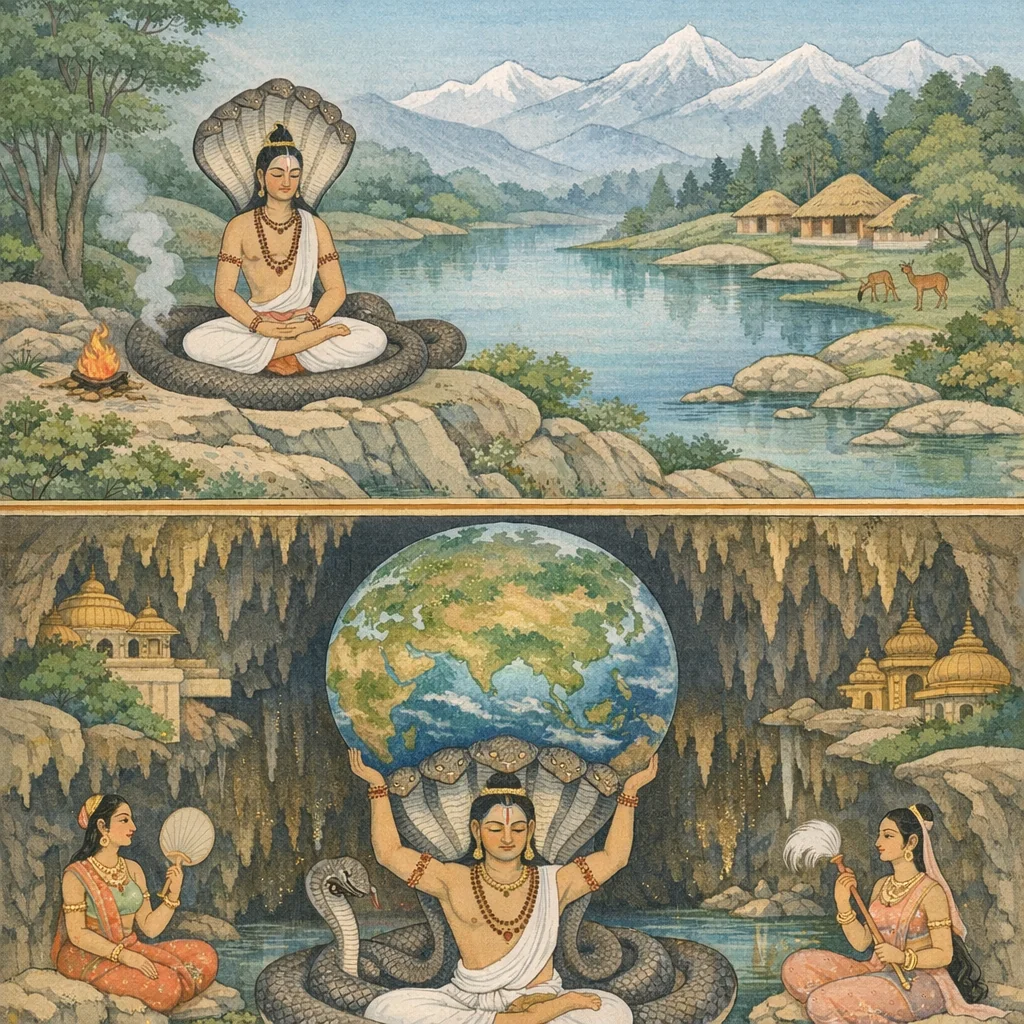
Chapter Arc: शौनक के प्रश्न के साथ नागों की वंश-गाथा में एक तेजस्वी अपवाद उभरता है—कद्रू के पुत्रों में वह एक, जो वैर और कलह से ऊबकर तप का मार्ग चुनता है: शेष/अनन्त। → भाइयों का निरन्तर द्वेष, कुल-कलह और अधर्म का वातावरण शेष को भीतर से तोड़ता है। वह निश्चय करता है कि ऐसे संग से दूर रहकर कठोर तप करेगा—गन्धमादन, बदरी, गोकर्ण, पुष्कर और हिमालय-तट जैसे तीर्थ-स्थानों में वायु-भक्षी, यत-व्रती होकर। → ब्रह्मा (पितामह) के समक्ष शेष का वर-याचन: वह राज्य, भोग या प्रतिशोध नहीं मांगता—वह मांगता है ‘धर्म में रति, शम, तप’ की स्थिर बुद्धि। तभी ब्रह्मा उसे विश्व-धारण का महाव्रत सौंपते हैं: चलायमान पृथ्वी को स्थिर रखने हेतु उसे अपने फण पर धारण करना। → शेष/अनन्त ब्रह्मा की आज्ञा से अधोभूमि में जाकर अकेले वसुधा को धारण करता है; ब्रह्मा उसे सहायक रूप में वैनतेय गरुड़ प्रदान करते हैं, जिससे उसका धैर्य और लोक-व्यवस्था सुरक्षित रहे। → अनन्त के लोक-कार्य में प्रविष्ट होते ही नाग-समाज में सत्ता-परिवर्तन होता है—उसके प्रस्थान के बाद वासुकि का नागराज्याभिषेक; आगे यह नेतृत्व नागों को किस महा-घटना (सर्पयज्ञ/अमृत-प्रसंग) की ओर ले जाएगा?
Shlokas
Verse 1
अपन क्ाता बछ। अकाल षट्त्रिशो5ध्याय: शेषनागकी तपस्या, ब्रह्माजीसे वर-प्राप्ति तथा पृथ्वीको सिरपर धारण करना शौनक उवाच आखू॒याता भुजगास्तात वीर्यवन्तो दुरासदा: । शापं तं तेडभिविज्ञाय कृतवन्तः किमुत्तरम्,शौनकजीने पूछा--तात सूतनन्दन! आपने महापराक्रमी और दुर्धर्ष नागोंका वर्णन किया। अब यह बताइये कि माता कद्रूके उस शापकी बात मालूम हो जानेपर उन्होंने उसके निवारणके लिये आगे चलकर कौन-सा कार्य किया?
Śaunaka said: “O dear son of Sūta, you have described the serpents—mighty in prowess and hard to overcome. Now tell me: after they came to know of that curse, what further step did they take in response?”
Verse 2
सौतिरुवाच तेषां तु भगवाउ्च्छेष: कद्रू त्यक्त्वा महायशा: । उग्र॑ तप: समातस्थे वायुभक्षो यतव्रत:,उग्रश्रवाजीने कहा--शौनक! उन नागोंमेंसे महा-यशस्वी भगवान् शेषनागने कद्रूका साथ छोड़कर कठोर तपस्या प्रारम्भ की। वे केवल वायु पीकर रहते और संयमपूर्वक व्रतका पालन करते थे
Sauti said: Among those Nāgas, the illustrious Lord Śeṣa, leaving Kadrū behind, began a fierce austerity. He lived on air alone and observed his vows with disciplined restraint.
Verse 3
गन्धमादनमासाद्य बदर्या च तपोरत: । गोकर्णे पुष्करारण्ये तथा हिमवतस्तटे,अपनी इन्द्रियोंको वशमें करके सदा नियमपूर्वक रहते हुए शेषजी गन्धमादन पर्वतपर जाकर बदरिकाश्रम तीर्थमें तप करने लगे। तत्पश्चात् गोकर्ण, पुष्कर, हिमालयके तटवर्ती प्रदेश तथा भिन्न-भिन्न पुण्य-तीर्थों और देवालयोंमें जा-जाकर संयम-नियमके साथ एकान्तवास करने लगे
Śaunaka said: Having reached Mount Gandhamādana and devoted himself to austerity at Badarī, he then lived with disciplined restraint at Gokarṇa, in the Puṣkara forest, and along the slopes of the Himālaya—moving through sacred places in solitude, mastering the senses and observing vows.
Verse 4
तेषु तेषु च पुण्येषु तीर्थेष्वायतनेषु च । एकान्तशीलो नियत: सततं विजितेन्द्रिय:,अपनी इन्द्रियोंको वशमें करके सदा नियमपूर्वक रहते हुए शेषजी गन्धमादन पर्वतपर जाकर बदरिकाश्रम तीर्थमें तप करने लगे। तत्पश्चात् गोकर्ण, पुष्कर, हिमालयके तटवर्ती प्रदेश तथा भिन्न-भिन्न पुण्य-तीर्थों और देवालयोंमें जा-जाकर संयम-नियमके साथ एकान्तवास करने लगे
Śaunaka said: Moving from one sacred place to another—holy fords and revered sanctuaries—he lived in seclusion, steadfast in discipline, ever self-controlled, having conquered his senses.
Verse 5
तप्यमानं तपो घोरं त॑ ददर्श पितामह: । संशुष्कमांसत्वक्स्नायुं जटाचीरधरं मुनिम्,ब्रह्माजीने देखा, शेषनाग घोर तप कर रहे हैं। उनके शरीरका मांस, त्वचा और नाड़ियाँ सूख गयी हैं। वे सिरपर जटा और शरीरपर वल्कल वस्त्र धारण किये मुनिवृत्तिसे रहते हैं। उनमें सच्चा धैर्य है और वे निरन्तर तपमें संलग्न हैं। यह सब देखकर ब्रह्माजी उनके पास आये और बोले--'शेष! तुम यह क्या कर रहे हो? समस्त प्रजाका कल्याण करो
Śaunaka said: The Grandsire (Brahmā) beheld him engaged in a fierce austerity—his flesh, skin, and sinews dried up, wearing matted locks and bark-garments, living as an ascetic. Seeing such unwavering endurance and constant absorption in penance, Brahmā approached him and spoke, urging him to turn his power toward the welfare of all beings rather than self-consuming severity.
Verse 6
तमब्रवीत् सत्यधृतिं तप्यमानं पितामह: । किमिदं कुरुषे शेष प्रजानां स्वस्ति वै कुरु,ब्रह्माजीने देखा, शेषनाग घोर तप कर रहे हैं। उनके शरीरका मांस, त्वचा और नाड़ियाँ सूख गयी हैं। वे सिरपर जटा और शरीरपर वल्कल वस्त्र धारण किये मुनिवृत्तिसे रहते हैं। उनमें सच्चा धैर्य है और वे निरन्तर तपमें संलग्न हैं। यह सब देखकर ब्रह्माजी उनके पास आये और बोले--'शेष! तुम यह क्या कर रहे हो? समस्त प्रजाका कल्याण करो
Seeing Śeṣa engaged in severe austerity, steadfast with true fortitude, the Grandsire (Brahmā) addressed him: “Śeṣa, what is this you are doing? Act for the welfare of all creatures; ensure the well-being of the worlds.”
Verse 7
त्वं हि तीव्रेण तपसा प्रजास्तापयसेडनघ । ब्रूहि कामं च मे शेष यस्ते हृदि व्यवस्थित:,“अनघ! इस तीव्र तपस्याके द्वारा तुम सम्पूर्ण प्रजावर्गको संतप्त कर रहे हो। शेषनाग! तुम्हारे हृदयमें जो कामना हो वह मुझसे कहो”
O sinless one, by your intense austerity you are indeed causing distress to all beings. Tell me, O Śeṣa—whatever desire is settled in your heart—declare it to me.
Verse 8
शेष उवाच सोदर्या मम सर्वे हि भ्रातरो मन्दचेतस: । सह तैर्नोत्सहे वस्तुं तद् भवाननुमन्यताम्,शेषनाग बोले--भगवन्! मेरे सब सहोदर भाई बड़े मन्दबुद्धि हैं, अतः मैं उनके साथ नहीं रहना चाहता। आप मेरी इस इच्छाका अनुमोदन करें
Śeṣa said: “Lord, all my full brothers are indeed dull-minded. Therefore I do not wish to live together with them. May you approve and permit this resolve of mine.”
Verse 9
अभ्यसूयन्ति सततं परस्परममित्रवत् । ततो<5हं तप आतिष्ठं नैतान् पश्येयमित्युत,वे सदा परस्पर शत्रुकी भाँति एक-दूसरेके दोष निकाला करते हैं। इससे ऊबकर मैं तपस्यामें लग गया हूँ; जिससे मैं उन्हें देख न सकूँ
They constantly find fault with one another, as if they were enemies. Wearied by this, I have taken up austerity, thinking, ‘May I not have to see them.’
Verse 10
न मर्षयन्ति ससुतां सततं विनतां च ते । अस्माकं चापरो भ्राता वैनतेयो<न्तरिक्षग:,वे विनता और उसके पुत्रोंसे डाह रखते हैं, इसलिये उनकी सुख-सुविधा सहन नहीं कर पाते। आकाशमें विचरने-वाले विनतापुत्र गरुड भी हमारे दूसरे भाई ही हैं
They cannot bear Vinatā and her son at any time; out of envy they cannot tolerate their prosperity and comfort. And the sky-ranging Garuḍa, the son of Vinatā, is also our other brother.
Verse 11
तं च द्विषन्ति सततं स चापि बलवत्तर: । वरप्रदानात् स पितु: कश्यपस्य महात्मन:,किंतु वे नाग उनसे भी सदा द्वेष रखते हैं। मेरे पिता महात्मा कश्यपजीके वरदानसे गरुड भी बड़े ही बलवान् हैं
They (the Nāgas) continually hate him (Garuḍa), and he in turn is even stronger. By the boon granted by my noble father Kaśyapa, Garuḍa has become exceedingly powerful.
Verse 12
सो<5हं तप: समास्थाय मोक्ष्यामीदं कलेवरम् | कथे मे प्रेत्पयभावेडपि न तैः: स्थात् सह संगम:,इन सब कारणोंसे मैंने यही निश्चय किया है कि तपस्या करके मैं इस शरीरको त्याग दूँगा, जिससे मरनेके बाद भी किसी तरह उन दुष्टोंक साथ मेरा समागम न हो
Therefore, having resolved upon austerity, I shall cast off this body. For how could there be, even after my death, any association or companionship with those wicked ones?
Verse 13
तमेवंवादिनं शेष॑ पितामह उवाच ह । जानामि शेष सर्वेषां भ्रातृणां ते विचेष्टितम्,ऐसी बातें करनेवाले शेषनागसे पितामह ब्रह्माजीने कहा--'शेष! मैं तुम्हारे सब भाइयोंकी कुचेष्टा जानता हूँ!
Then Pitāmaha Brahmā said to Śeṣa, who was speaking in this manner: “Śeṣa, I know the wrongful conduct of all your brothers.”
Verse 14
मातुश्नाप्यपराधाद् वै भ्रातृणां ते महद् भयम् । कृतोअत्र परिहारश्न पूर्वमेव भुजड्रम,“माताका अपराध करनेके कारण निश्चय ही तुम्हारे उन सभी भाइयोंके लिये महान् भय उपस्थित हो गया है; परंतु भुजंगम! इस विषयमें जो परिहार अपेक्षित है, उसकी व्यवस्था मैंने पहलेसे ही कर रखी है
“Because of your mother’s offense, a great danger has indeed arisen for all your brothers. But, O serpent, I have already arranged beforehand the remedy that is required in this matter.”
Verse 15
भ्रातृणां तव सर्वेषां न शोकं कर्तुमरहसि । वृणीष्व च वरं मत्त: शेष यत् तेडभिकाडुक्षितम्,“अतः अपने सम्पूर्ण भाइयोंके लिये तुम्हें शोक नहीं करना चाहिये। शेष! तुम्हें जो अभीष्ट हो, वह वर मुझसे माँग लो
“Therefore, you should not give way to grief for any of your brothers. Choose a boon from me, O Śeṣa—whatever you desire.”
Verse 16
दास्यामि हि वर तेड्द्य प्रीतिर्मे परमा त्वयि । दिष्ट्या बुद्धिश्न ते धर्मे निविष्टा पन्नगोत्तम । भूयो भूयश्ष ते बुद्धिर्धर्मे भवतु सुस्थिरा,“तुम्हारे ऊपर मेरा बड़ा प्रेम है; अतः आज मैं तुम्हें अवश्य वर दूँगा। पन्नगोत्तम! यह सौभाग्यकी बात है कि तुम्हारी बुद्धि धर्ममें दृढ़तापूर्वक लगी हुई है। मैं भी आशीर्वाद देता हूँ कि तुम्हारी बुद्धि उत्तरोत्तर धर्ममें स्थिर रहे”
“Today I shall surely grant you a boon, for my affection for you is profound. Fortunate indeed, O best of serpents, that your understanding is firmly set in dharma. I bless you further: may your discernment become steadier and steadier in righteousness.”
Verse 17
शेष उवाच एष एव वरो देव काड्क्षितो मे पितामह । धर्मे मे रमतां बुद्धि: शमे तपसि चेश्वर,शेषजीने कहा--देव! पितामह! परमेश्वर! मेरे लिये यही अभीष्ट वर है कि मेरी बुद्धि सदा धर्म, मनोनिग्रह तथा तपस्यामें लगी रहे
Śeṣa said: “O god, O Grandfather (Brahmā), O Lord—this alone is the boon I desire: may my understanding ever delight in dharma, and remain devoted to self-restraint and austerity.”
Verse 18
ब्रह्मोवाच प्रीतो5स्म्यनेन ते शेष दमेन च शमेन च । त्वया त्विदं वच: कार्य मन्नियोगात् प्रजाहितम्,ब्रह्माजी बोले--शेष! तुम्हारे इस इन्द्रियसंयम और मनोनिग्रहसे मैं बहुत प्रसन्न हूँ। अब मेरी आज्ञासे प्रजाके हितके लिये यह कार्य, जिसे मैं बता रहा हूँ, तुम्हें करना चाहिये
Brahmā said: “Śeṣa, I am greatly pleased with your restraint of the senses and your calmness. Now, by my command, for the welfare of all creatures, you must carry out the task I shall declare.”
Verse 19
इमां महीं शैलवनोपपन्नां ससागरग्रामविहारपत्तनाम् | त्वं शेष सम्यक् चलितां यथावत् संगृह तिष्तस्व यथाचला स्यात्,शेषनाग! पर्वत, वन, सागर, ग्राम, विहार और नगरोंसहित यह समूची पृथ्वी प्रायः हिलती-डुलती रहती है। तुम इसे भलीभाँति धारण करके इस प्रकार स्थित रहो, जिससे यह पूर्णतः अचल हो जाय
“This earth—endowed with mountains and forests, and furnished with oceans, villages, pleasure-groves, and cities—keeps trembling and shifting. O Śeṣa, uphold her rightly and stand firm, so that she may become completely unmoving, O serpent Śeṣa.”
Verse 20
ड ; 5 हे ः ; ४ शेष उवाच यथाह देवो वरद: प्रजापति- महीपतिर्भूतपतिर्जगत्पति: । तथा महीं धारयितास्मि निश्चलां प्रयच्छतां मे शिरसि प्रजापते,शेषनागने कहा--प्रजापते! आप वरदायक देवता, समस्त प्रजाके पालक, पृथ्वीके रक्षक, भूत-प्राणियोंके स्वामी और सम्पूर्ण जगत्के अधिपति हैं। आप जैसी आज्ञा देते हैं, उसके अनुसार मैं इस पृथ्वीको इस तरह धारण करूँगा, जिससे यह हिले-डुले नहीं। आप इसे मेरे सिरपर रख दें
Śeṣa said: “O Prajāpati, you are the boon-giving Lord—protector of the earth, master of beings, and ruler of the world. Just as you command, so shall I uphold this earth, keeping it steady and unmoving. Place it upon my head, O Prajāpati.”
Verse 21
ब्रह्मोवाच अधो महीं गच्छ भुजड़मोत्तम स्वयं तवैषा विवरं प्रदास्यति । इमां धरां धारयता त्वया हि मे महत् प्रियं शेष कृतं भविष्यति,ब्रद्माजीने कहा--नागराज शेष! तुम पृथ्वीके नीचे चले जाओ। यह स्वयं तुम्हें वहाँ जानेके लिये मार्ग दे देगी। इस पृथ्वीको धारण कर लेनेपर तुम्हारे द्वारा मेरा अत्यन्त प्रिय कार्य सम्पन्न हो जायगा
Brahmā said: “O best of serpents, go down beneath the earth; she herself will grant you an opening as a passage. By bearing this earth, O Śeṣa, you will accomplish for me a great and most cherished task.”
Verse 22
सौतिरुवाच तथैव कृत्वा विवरं प्रविश्य स प्रभुर्भुवो भुजगवराग्रज: स्थित: । बिभर्ति देवीं शिरसा महीमिमां समुद्रनेमिं परिगृहा सर्वतः,उग्रश्रवाजी कहते हैं--नागराज वासुकिके बड़े भाई सर्वसमर्थ भगवान् शेषने “बहुत अच्छा" कहकर ब्रह्माजीकी आज्ञा शिरोधार्य की और पृथ्वीके विवरमें प्रवेश करके समुद्रसे घिरी हुई इस वसुधा-देवीको उन्होंने सब ओरसे पकड़कर सिरपर धारण कर लिया (तभीसे यह पृथ्वी स्थिर हो गयी)
Sauti said: Having assented—“So be it”—and carrying out the command, the mighty lord Śeṣa, elder brother of the foremost of serpents, entered the cleft of the earth and took his station there. Encompassing on every side this Earth-goddess, ringed by the ocean, he bore her upon his head—thereby establishing her steadiness and order.
Verse 23
ब्रह्मोवाच शेषोडसि नागोत्तम धर्मदेवो महीमिमां धारयसे यदेक: । अनन्तभोगै: परिगृहा सर्वा यथाहमेवं बलभिद् यथा वा,तदनन्तर ब्रह्माजी बोले--नागोत्तम! तुम शेष हो, धर्म ही तुम्हारा आराध्यदेव है, तुम अकेले अपने अनन्त फणोंसे इस सारी पृथ्वीको पकड़कर उसी प्रकार धारण करते हो, जैसे मैं अथवा इन्द्र
Brahmā said: “O foremost of serpents, you are Śeṣa. Dharma is your presiding divinity. Alone you uphold this entire earth, clasping it on every side with your endless coils—just as I do, or as Indra, the slayer of Bala, does.”
Verse 24
सौतिरुवाच अधोभूमौ वसत्येवं नागो5नन्तः प्रतापवान् । धारयन् वसुधामेक: शासनाद् ब्रह्मणो विभु:,उग्रश्रवाजी कहते हैं--शौनक! इस प्रकार प्रतापी नाग भगवान् अनन्त अकेले ही ब्रह्माजीके आदेशसे इस सारी पृथ्वीको धारण करते हुए भूमिके नीचे पाताल-लोकमें निवास करते हैं
Sauti said: “Thus, beneath the earth dwells the mighty serpent Ananta. By the command of Brahmā, that all-powerful one alone upholds the entire world.”
Verse 25
सुपर्ण च सहायं वै भगवानमरोत्तम: । प्रादादनन्ताय तदा वैनतेयं पितामह:,तत्पश्चात् देवताओंमें श्रेष्ठ भगवान् पितामहने शेषनागके लिये विनतानन्दन गरुडको सहायक बना दिया
Then the venerable Pitāmaha (Brahmā), the foremost among the immortals, appointed Suparṇa—Vinatā’s son Garuḍa—as a helper to Ananta (Śeṣa). In the narrative frame, this establishes a divinely sanctioned partnership: the cosmic order is maintained not by rivalry among great beings, but by assigning complementary roles and mutual support.
Verse 36
(अनन्ते च प्रयाते तु वासुकि: सुमहाबल: । अभ्यषिच्यत नागैस्तु दैवतैरिव वासव: ।।) अनन्त नागके चले जानेपर नागोंने महाबली वासुकिका नागराजके पदपर उसी प्रकार अभिषेक किया, जैसे देवताओंने इन्द्रका देवराजके पदपर अभिषेक किया था। इति श्रीमहाभारते आदिपर्वणि आस्तीकपर्वणि शेषवृत्तकथने षट्त्रिशो 5ध्याय: ।। ३६ || इस प्रकार श्रीमह्ाभारत आदिपर्वके अन्तर्गत आस्तीकपर्वें शेषनागवृत्तान्त-कथनविषयक छत्तीसवाँ अध्याय पूरा हुआ
When Ananta had departed, the mighty Vāsuki was consecrated by the Nāgas as their king—just as the gods once consecrated Vāsava (Indra) to the sovereignty of heaven. The episode underscores the dharmic principle of orderly succession: authority is stabilized not merely by strength, but by communal recognition and a rite that binds ruler and realm to shared responsibility.
Frequently Asked Questions
A conflict between royal urgency (the king’s pursuit and demand for information) and ascetic protocol (the sage’s mauna-vrata): the episode tests whether authority justifies coercive disrespect when communication is withheld for religious reasons.
The chapter illustrates how misinterpretation and anger can convert a minor social friction into a long causal chain; disciplined restraint—especially when facing silence or perceived insult—is presented as a stabilizing virtue.
No explicit phalaśruti is stated here; the meta-function is structural—linking name-etymology and ascetic discipline to the ethics of kingship and to the impending curse-driven developments in the serpent-sacrifice cycle.