Adhyaya 232
Chapter Arc: मन्दपाल अपने पुत्रों की चिन्ता में जलता हुआ लपिता से पुकारता है—अग्नि और वायु के वेग में उसके बच्चे कैसे बचेंगे? → वह अपने ही सामर्थ्य और पंखों के होते हुए भी ‘सुहृज्जनों’ को पीड़ित देखकर निष्क्रिय रहने की लज्जा व्यक्त करता है; उधर लपिता/जरिता के बीच तिरस्कार, संदेह और मातृत्व-प्रतिस्पर्धा का तनाव उभरता है। → अग्नि के हटते ही जरिता पुत्र-गृद्धिनी होकर दौड़ती है और मन्दपाल भी पुत्रों के पास पहुँचता है; वहीं संबंधों की गाँठ—‘मैं अपत्यहेतु आया हूँ, फिर भी तिरस्कार?’—तीखी होकर फूट पड़ती है। → पुत्र मन्दपाल के पास यथोचित उपासना करते हैं; मन्दपाल उन्हें आश्वस्त/स्थिर करने को उद्यत होता है, और संकट के बाद परिवार का पुनर्मिलन घटित होता है। → पुत्रों की ओर से जरिता को लेकर कोई स्पष्ट निर्णय-वचन नहीं—वे न साधु कहते हैं, न असाधु; संबंधों का अंतिम संतुलन अगले प्रसंग पर टिका रहता है।
Shlokas
Verse 1
अत--#क्रत द्वात्रिशर्दाधिकद्विशततमो< ध्याय: मन्दपालका अपने बाल-बच्चोंसे मिलना वैशम्पायन उवाच मन्दपालो5पि कौरव्य चिन्तयामास पुत्रकान् | उक्त्वापि च स तिग्मांशुं नैव शर्माधिगच्छति,वैशम्पायनजी कहते हैं--जनमेजय! मन्दपाल भी अपने पुत्रोंकी चिन्तामें पड़े थे। यद्यपि वे (उनकी रक्षाके लिये) अग्निदेवसे प्रार्थना कर चुके थे, तो भी उन्हें शान्ति नहीं मिलती थी
Vaiśampāyana said: “O descendant of the Kurus, Mandapāla too was consumed with anxiety for his young sons. Even though he had already appealed to the blazing Fire-god for their protection, his mind could not attain peace.”
Verse 2
स तप्यमान: पुत्रार्थे लपितामिदमब्रवीत् | कथं नु शक्ता: शरणे लपिते मम पुत्रका:,पुत्रोंके लिये संतप्त होते हुए वे लपितासे बोले--“लपिते! मेरे बच्चे अपने घोंसलेमें कैसे बच सकेंगे?
Vaiśampāyana said: Tormented by anxiety for his offspring, he spoke these words to Lapitā: “O Lapitā, how will my little ones be able to survive in their shelter—the nest?”
Verse 3
वर्धमाने हुतवहे वाते चाशु प्रवायति । असमर्था विमोक्षाय भविष्यन्ति ममात्मजा:,“जब अग्निका वेग बढ़ेगा और हवा तीव्र गतिसे चलने लगेगी, उस समय मेरे बच्चे अपनेको आगसे बचानेमें असमर्थ हो जायाँगे
Vaiśampāyana said: “When the fire swells in might and the wind begins to race, my children will be powerless to free themselves—powerless to escape the flames.”
Verse 4
कथं त्वशक्ता त्राणाय माता तेषां तपस्विनी । भविष्यति हि शोकार्ता पुत्रत्राणमपश्यती,“उनकी तपस्विनी माता स्वयं असमर्थ है, वह बेचारी उनकी रक्षा कैसे करेगी? अपने बच्चोंके बचनेका कोई उपाय न देखकर वह शोकसे आतुर हो जायगी
Vaiśampāyana said: “How can their ascetic mother—herself powerless to protect—possibly save them? Seeing no means at all for her sons’ deliverance, she will surely be overwhelmed by grief.”
Verse 5
कथमुडुयने5शक्तान् पतने च ममात्मजान् | संतप्यमाना बहुधा वाशमाना प्रधावती,“मेरे बच्चे उड़ने और पंख फड़फड़ानेमें असमर्थ हैं। उन्हें उस दशामें देखकर संतप्त हो बार-बार चीत्कार करती और दौड़ती हुई जरिता किस दशामें होगी?
Vaiśampāyana said: “How could Jaritā have been, seeing my young ones unable to fly—unable even to flap their wings? Tormented by grief, she would cry out again and again and run about in distress.”
Verse 6
जरितारि: कथं पुत्र: सारिसृकक: कथं च मे । स्तम्बमित्र: कथं द्रोण: कथं सा च तपस्विनी,“मेरा बेटा जरितारि कैसे होगा, सारिसृक्ककी क्या अवस्था होगी, स्तम्बमित्र और द्रोण कैसे होंगे? तथा वह तपस्विनी जरिता किस हालतमें होगी?”
Vaiśampāyana said: “How is my son Jaritāri? And how is Sārisṛka, bound to me? How are Stambhamitra and Droṇa? And in what condition is that ascetic woman, Jaritā?”
Verse 7
लालप्यमानं तमृषिं मन्दपालं तथा वने । लपिता प्रत्युवाचेदं सासूयमिव भारत,भारत! मन्दपाल मुनि जब इस प्रकार वनमें (अपनी स्त्री एवं बच्चोंके लिये) विलाप कर रहे थे, उस समय लपिताने ईर्ष्यापूर्वक कहा--
Vaiśampāyana said: “As the sage Mandapāla lamented thus in the forest—bewailing his wife and children—Lapitā replied with words that seemed tinged with jealousy, O Bhārata.”
Verse 8
न ते पुत्रेष्ववेक्षास्ति यानृषीनुक्तवानसि । तेजस्विनो वीर्यवन्तो न तेषां ज्वलनादू भयम्,“तुम्हें पुत्रोंको देखनेकी चिन्ता नहीं है। तुमने जिन ऋषियोंके नाम लिये हैं, वे तेजस्वी और शक्तिशाली हैं; उन्हें अग्निसे तनिक भी भय नहीं है
Vaiśampāyana said: “You need not be anxious about looking after your sons. The sages whose names you have invoked are radiant and mighty; they have no fear at all of the blazing fire.”
Verse 9
त्वयाग्नौ ते परीताश्ष स्वयं हि मम संनिधौ । प्रतिश्रुतं तथा चेति ज्वलनेन महात्मना,“मेरे पास ही तुमने अग्निदेवको स्वयं अपने पुत्र सौंपे थे और उन महात्मा अग्निने भी उनकी रक्षाके लिये प्रतिज्ञा की थी
Vaiśampāyana said: “In my very presence you entrusted those sons to Agni himself, and that great-souled Lord of Fire likewise gave his pledged word to protect them. Therefore, it stands as a binding promise made openly and cannot be set aside.”
Verse 10
लोकपालो न तां वाचमुकक्त्वा मिथ्या करिष्यति । समक्ष बन्धुकृत्ये न तेन ते स्वस्थ मानसम्,“वे लोकपाल हैं। जब बात दे चुके हैं, तब उसे झूठी नहीं करेंगे। अतः स्वस्थ पुरुष! तुम्हारा मन अपने बच्चोंकी रक्षारूप बन्धुजनोचित कर्तव्यके पालनेके लिये उत्सुक नहीं है
Vaiśampāyana said: “A Lokapāla, having once given his word, will not make it false. Therefore, O sound-minded one, let your heart be at ease: he will not fail in the duty owed to kin—especially the protection of one’s own children—performed openly and without deceit.”
Verse 11
तामेव तु ममामित्रां चिन्तयन् परितप्यसे । ध्रुवं मयि न ते स्नेहो यथा तस्यां पुराभवत्,“तुम तो मेरी दुश्मन उसी जरिता सौतके लिये चिन्ता करते हुए संतप्त हो रहे हो। पहले जरितामें तुम्हारा जैसा स्नेह था वैसा अवश्य ही मुझपर नहीं है
“You are burning with anxiety, thinking only of that woman—my rival and enemy. Surely you do not bear toward me the same affection that you once had for her.”
Verse 12
न हि पक्षवता न्याय्यं निःस्नेहेन सुहृज्जने । पीड्यमान उपद्रष्टूं शक्तेनात्मा कथंचन,“जो सहायकोंसे सम्पन्न और शक्तिशाली है” वह मुझ-जैसे अपने सुहृद् व्यक्तिपर स्नेह नहीं रखे और अपने आत्मीय जनको पीड़ित देखकर उसकी उपेक्षा करे, यह किसी प्रकार उचित नहीं कहा जा सकता
“It is not right that one who has allies and strength should be without affection for a close friend, and, seeing one’s own kin oppressed, be able to stand by as a mere onlooker. In no way can that be called just.”
Verse 13
गच्छ त्वं जरितामेव यदर्थ परितप्यसे । चरिष्याम्यहमप्येका यथा कुपुरुषाश्रिता,“अत: अब तुम उस जरिताके ही पास जाओ, जिसके लिये तुम इतने संतप्त हो रहे हो। मैं भी दुष्ट पुरुषके आश्रयमें पड़ी हुई स्त्रीकी भाँति अकेली ही विचरूँगी”
Vaiśampāyana said: “Go now to Jaritā herself—the one for whose sake you are burning with distress. As for me, I too shall wander alone, like a woman left dependent on a wicked man.”
Verse 14
मन्दपाल उवाच नाहमेवं चरे लोके यथा त्वमभिमन्यसे । अपत्यहेतोर्विचरे तच्च कृच्छूगतं मम,मन्दपालने कहा--अरी! तू जैसा समझती है, उस भावसे मैं इस संसारमें नहीं विचरता हूँ। मेरा विचरना तो केवल संतानके लिये होता है। मेरी वह संतान ही संकटमें पड़ी हुई है
Mandapāla said: “I do not move about in this world with the motive you imagine. I wander only for the sake of offspring—and that very offspring of mine has fallen into distress.”
Verse 15
भूतं हित्वा च भाव्यर्थे योडवलम्बेत् स मन्दधी: । अवमन्येत तं लोको यथेच्छसि तथा कुरु,जो पैदा हुए बच्चोंका परित्याग कर भविष्यमें होनेवालोंका भरोसा करता है, वह मूर्ख है; सब लोग उसका अनादर करते हैं; तेरी जैसी इच्छा हो, वैसा कर
Mandapāla said: “He who abandons what is already present and clings to what is merely hoped for in the future is dull-witted. People will hold such a person in contempt. Therefore, do as you wish.”
Verse 16
एष हि प्रज्वलन्नग्निर्लेलिहानो महीरुहान् । आगविग्ने हृदि संतापं जनयत्यशिवं मम,यह प्रज्वलित आग सारे वृक्षोंको अपनी लपटोंमें लपेटती हुई मेरे उद्विग्न हृदयमें अमंगलसूचक संताप उत्पन्न कर रही है
Mandapāla said: “Look—this fire is blazing, its tongues of flame licking up the trees. In my heart, shaken with alarm at the fire, it kindles a foreboding anguish—an ominous distress.”
Verse 17
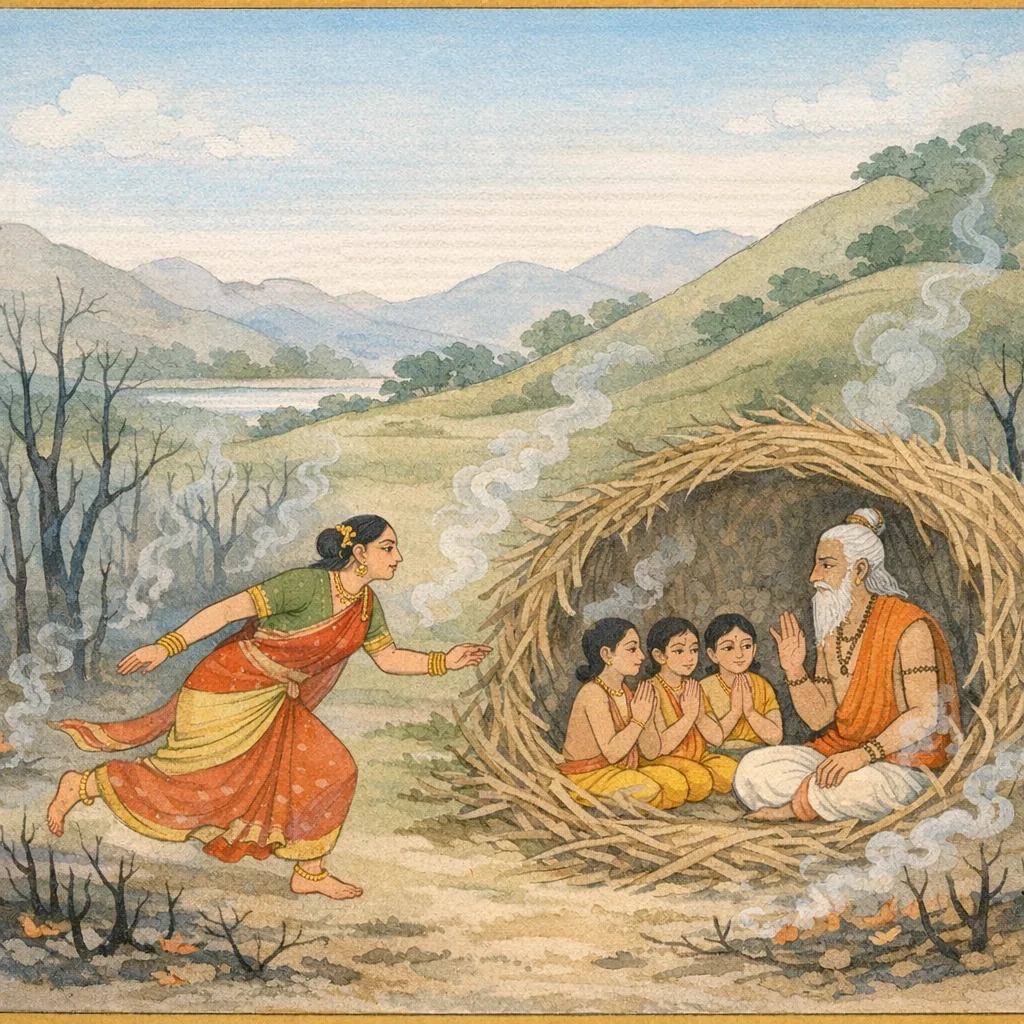
वैशम्पायन उवाच तस्माद् देशादतिक्रान्ते ज्वलने जरिता पुन: । जगाम पुत्रकानेव त्वरिता पुत्रगृद्धिनी,वैशम्पायनजी कहते हैं--जब अग्निदेव उस स्थानसे हट गये, तब पुत्रोंकी लालसा रखनेवाली जरिता पुनः शीघ्रतापूर्वक अपने बच्चोंके पास गयी
Vaiśampāyana said: When Agni had moved on from that place, Jaritā—driven by longing for her sons—hurried back again to her little children, as a mother rushing to her offspring.
Verse 18
सा तान् कुशलिन: सर्वान् विमुक्ताज्जातवेदस: । रोखूयमाणान् ददृशे वने पुत्रान् निरामयान्,उसने देखा, सभी बच्चे आगसे बच गये हैं और सकुशल हैं। उन्हें कुछ भी कष्ट नहीं हुआ है और वे वनमें जोर-जोरसे चहक रहे हैं
Vaiśampāyana said: She saw all those sons safe and well, freed from the blazing fire. Unhurt by any affliction, they were in the forest, crying out loudly—alive, vigorous, and beyond danger.
Verse 19
अश्रूणि मुमुचे तेषां दर्शनात् सा पुनः पुनः । एकैकश्येन तान् सर्वान् क्रोशमानान्वपद्यत,उन्हें बार-बार देखकर वह नेत्रोंसे आँसू बहाने लगी और बारी-बारीसे पुकारकर वह सभी बच्चोंसे मिली
Vaiśampāyana said: On seeing them, she again and again let fall tears. Then, one by one, she went to each of those children who were crying out, answering their calls and meeting them in turn—her grief and affection overflowing at the reunion.
Verse 20
ततो<भ्यगच्छत् सहसा मन्दपालो5पि भारत । अथ ते सर्व एवैनं नाभ्यनन्दंस्तदा सुता:,भारत! इतनेमें ही मन्दपाल मुनि भी सहसा वहाँ आ पहुँचे; किंतु उन बच्चोंमेंसे किसीने भी उस समय उनका अभिनन्दन नहीं किया
Then, O Bhārata, Mandapāla too suddenly arrived there. Yet at that time none of his sons welcomed him—an omission that underscores how strained bonds and unmet duties can cool even natural affection within a family.
Verse 21
वे एक-एक बच्चेसे बोलते और जरिताको भी बारबार बुलाते, परंतु वे लोग उन मुनिसे भला या बुरा कुछ भी नहीं बोले
They spoke to each child one by one and repeatedly called for Jaritā as well; yet those people did not utter to that sage anything—neither kind nor harsh. The scene underscores a guarded restraint: attention is shown to the vulnerable, while judgment toward the ascetic is withheld.
Verse 22
मन्दपाल उवाच ज्येष्ठ: सुतस्ते कतम: कतमस्तस्य चानुज: । मध्यम: कतमश्नचैव कनीयान् कतमश्च ते,मन्दपालने पूछा-्रिये! तुम्हारा ज्येष्ठ पुत्र कौन है, उससे छोटा कौन है, मझला कौन है और सबसे छोटा कौन है?
Mandapāla said: “Which of your sons is the eldest? Who is the one younger than him? Which is the middle one, and which is your youngest?”
Verse 23
एवं ब्रुवन्तं दुःखार्त कि मां न प्रतिभाषसे । कृतवानपि हि त्यागं नैव शान्तिमितो लभे,मैं इस प्रकार दुःखसे आतुर होकर तुमसे पूछ रहा हूँ, तुम मुझे उत्तर क्यों नहीं देती? यद्यपि मैंने तुम्हें त्याग दिया था, तो भी यहाँसे जानेपर मुझे शान्ति नहीं मिलती थी
Mandapāla, distressed with grief, said: “As I speak to you in this anguish, why do you not reply? Though I once abandoned you, when I left this place I found no peace.”
Verse 24
जरितोवाच कि नु ज्येष्ठेन ते कार्य किमनन्तरजेन ते । कि वा मध्यमजातेन कि कनिष्ठेन वा पुन:,जरिता बोली--तुम्हें ज्येष्ठ पुत्रसे क्या काम है, उसके बादवालेसे भी क्या लेना है, मझले अथवा छोटे पुत्रसे भी तुम्हें क्या प्रयोजन है?
Jaritā said: “What business have you with my eldest son? What do you want with the one born after him? And what concern have you with the middle-born—or again with the youngest?”
Verse 25
यां त्वं मां सर्वतो हीनामुत्सूज्यासि गत: पुरा । तामेव लपितां गच्छ तरुणीं चारुहासिनीम्,पहले तुम मुझे सबसे हीन समझकर त्यागकर जिसके पास चले गये थे, उसी मनोहर मुसकानवाली तरुणी लपिताके पास जाओ
Mandapāla said: “Go back to Lapitā, that young woman with the lovely smile—the very one for whose sake you once abandoned me, deeming me inferior in every way.”
Verse 26
मन्दपाल उवाच न ्त्रीणां विद्यते किंचिदमुत्र पुरुषान्तरात् । सापत्नकमृते लोके नान्यदर्थविनाशनम्,मन्दपालने कहा--परलोकमें स्त्रियोंके लिये परपुरुषसे सम्बन्ध और सौतियाडाहको छोड़कर दूसरा कोई दोष उनके परमार्थका नाश करनेवाला नहीं है
Mandapāla said: “For women, in the world to come, nothing ruins true welfare except involvement with another man. Apart from jealousy and rivalry arising from co-wives, nothing else here destroys their highest good.”
Verse 27
वैराग्निदीपनं चैव भृशमुद्वेगकारि च | सुव्रता चापि कल्याणी सर्वभूतेषु विश्रुता,यह सौतियाडाह वैरकी आगको भड़कानेवाला और अत्यन्त उद्घेगमें डालनेवाला है। समस्त प्राणियोंमें विख्यात और उत्तम व्रतका पालन करनेवाली कल्याणमयी अरुन्धतीने उन महात्मा वसिष्ठपर भी शंका की थी, जिनका हृदय अत्यन्त विशुद्ध है, जो सदा उनके प्रिय और हितमें लगे रहते हैं और सप्तर्षिमण्डलके मध्यमें विराजमान होते हैं। ऐसे धैर्यवान् मुनिका भी उन्होंने सौतियाडाहके कारण तिरस्कार किया था। इस अशुभ चिन्तनके कारण उनकी अंगकान्ति धूम और अरुणके समान (मंद) हो गयी। वे कभी लक्ष्य और कभी अलक्ष्य रहकर प्रच्छन्न वेषमें मानो कोई निमित्त देखा करती हैं
Mandapāla said: “This indeed kindles the fire of hostility and causes intense agitation. Even the auspicious Arundhatī—renowned among all beings and steadfast in her noble vows—once fell into doubt regarding the great sage Vasiṣṭha, whose heart is utterly pure, who is ever devoted to her welfare, and who shines in the midst of the Seven Seers. Because of such a cause, even that patient ascetic was treated with contempt.”
Verse 28
अरुन्धती महात्मानं वसिष्ठ पर्यशशड्कत । विशुद्धभावमत्यन्तं सदा प्रियहिते रतम्,यह सौतियाडाह वैरकी आगको भड़कानेवाला और अत्यन्त उद्घेगमें डालनेवाला है। समस्त प्राणियोंमें विख्यात और उत्तम व्रतका पालन करनेवाली कल्याणमयी अरुन्धतीने उन महात्मा वसिष्ठपर भी शंका की थी, जिनका हृदय अत्यन्त विशुद्ध है, जो सदा उनके प्रिय और हितमें लगे रहते हैं और सप्तर्षिमण्डलके मध्यमें विराजमान होते हैं। ऐसे धैर्यवान् मुनिका भी उन्होंने सौतियाडाहके कारण तिरस्कार किया था। इस अशुभ चिन्तनके कारण उनकी अंगकान्ति धूम और अरुणके समान (मंद) हो गयी। वे कभी लक्ष्य और कभी अलक्ष्य रहकर प्रच्छन्न वेषमें मानो कोई निमित्त देखा करती हैं
Maṇḍapāla said: Even Arundhatī once fell into doubt regarding the great-souled Vasiṣṭha—whose inner disposition was utterly pure and who was ever devoted to what was dear and beneficial. The passage shows how suspicion, once admitted into the mind, can lead even the virtuous to misjudge the blameless, and how such an inner fault clouds one’s own radiance and discernment.
Verse 29
सप्तर्षिमध्यगं धीरमवमेने च त॑ मुनिम् । अपध्यानेन सा तेन धूमारुणसमप्रभा । लक्ष्यालक्ष्या नाभिरूपा निमित्तमिव पश्यति,यह सौतियाडाह वैरकी आगको भड़कानेवाला और अत्यन्त उद्घेगमें डालनेवाला है। समस्त प्राणियोंमें विख्यात और उत्तम व्रतका पालन करनेवाली कल्याणमयी अरुन्धतीने उन महात्मा वसिष्ठपर भी शंका की थी, जिनका हृदय अत्यन्त विशुद्ध है, जो सदा उनके प्रिय और हितमें लगे रहते हैं और सप्तर्षिमण्डलके मध्यमें विराजमान होते हैं। ऐसे धैर्यवान् मुनिका भी उन्होंने सौतियाडाहके कारण तिरस्कार किया था। इस अशुभ चिन्तनके कारण उनकी अंगकान्ति धूम और अरुणके समान (मंद) हो गयी। वे कभी लक्ष्य और कभी अलक्ष्य रहकर प्रच्छन्न वेषमें मानो कोई निमित्त देखा करती हैं
Maṇḍapāla said: “She even slighted that steadfast sage who sits amid the Seven Ṛṣis. Because of that inauspicious brooding, her radiance grew dim, like smoke and the red glow of fire. Now, sometimes visible and sometimes not—no longer appearing as before—she moves as if she were an omen itself.”
Verse 30
अपत्यहेतो: सम्प्राप्तं तथा त्वमपि मामिह । इष्टमेवं गते हि त्वं सा तथैवाद्य वर्तते,मैं पुत्रोंसे मिलनेके लिये आया हूँ, तो भी तुम मेरा तिरस्कार करती हो और इस प्रकार अभीष्ट वस्तुकी प्राप्ति हो जानेपर जैसे तुम मेरे साथ संदेहयुक्त व्यवहार करती हो, वैसा ही लपिता भी करती है
Mandapāla said: “I have come here for the sake of my offspring; yet you too treat me with contempt. And now that what you desired has been attained, you behave toward me with suspicion—just as Lapitā is behaving even today.”
Verse 31
न हि भार्येति विश्वास: कार्य: पुंसा कथंचन । न हि कार्यमनुध्याति नारी पुत्रवती सती,यह मेरी भार्या है, ऐसा मानकर पुरुषको किसी प्रकार भी स्त्रीपर विश्वास नहीं करना चाहिये; क्योंकि नारी पुत्रवती हो जानेपर पतिसेवा आदि अपने कर्तव्योंपर ध्यान नहीं देती
Mandapāla said: “A man should never, under any circumstance, place trust in a woman merely on the thought, ‘She is my wife.’ For once she has become a mother of sons, a woman does not keep her mind fixed on her duties (such as service to her husband).”
Verse 32
वैशम्पायन उवाच ततस्ते सर्व एवैनं पुत्रा: सम्यगुपासते । स च तानात्मजानू् सर्वानाश्चवासयितुमुद्यतः,वैशम्पायनजी कहते हैं--तदनन्तर वे सभी पुत्र यथोचितरूपसे अपने पिताके पास आ बैठे और वे मुनि भी उन सब पुत्रोंको आश्वासन देनेके लिये उद्यत हुए
Vaiśampāyana said: Thereafter, all those sons duly gathered around him in proper attendance. And he—their father, the sage—prepared to reassure and console all his children, steadying their minds with words of confidence and care.
Verse 231
लालप्यमानमेकैकं जरितां च पुन: पुनः । न चैवोचुस्तदा किंचित् तमृषिं साध्वसाधु वा
Vaiśampāyana said: As the sage kept lamenting—now one thing, now another—and repeatedly calling out to Jaritā, they did not say anything to that ṛṣi at that time, neither words of approval nor of disapproval.
Verse 232
इति श्रीमहाभारते आदिपर्वणि मयदर्शनपर्वणि शार्कहकोपाख्याने द्वात्रिंशयदधिकद्धिशततमो<ध्याय:
Thus ends the two-hundred-and-thirty-second chapter of the Ādi Parva of the Śrī Mahābhārata, within the section called the ‘Mayadarśana Parva,’ in the sub-narrative known as the ‘Śārkaka Episode.’