Adhyaya 221
Jarītā-Śārṅgaka-saṃvādaḥ — The Dialogue of Jaritā and the Śārṅgaka Chicks (Fire-escape deliberation)
Upa-parva: Āstīka Parva (Āstīkākhāna and allied episodes)
Vaiśaṃpāyana reports a crisis episode: a forest fire advances, leaving the Śārṅgaka chicks distressed and without clear refuge. Their mother Jaritā laments the impossibility of saving all by flight—she cannot carry them, they cannot run, and she cannot abandon any without inner injury. She recalls the father’s earlier expectations for the sons’ future roles and lineage increase, intensifying her responsibility to preserve continuity. Jaritā proposes an expedient: a nearby mouse-hole (ākhor-bila) by a tree; the chicks should enter quickly, and she will seal the opening with dust, returning after the fire passes to remove the covering. The chicks object with a risk assessment: the hole entails predation by the mouse, while remaining outside risks burning; they argue that being eaten in a hole is a disgraceful death, whereas death by fire is a socially “preferred” relinquishment of the body. The chapter thus stages an ethical-technical deliberation under duress, contrasting survival strategy, honor-coded evaluations of death, and the preservation of maternal agency and lineage duty.
Chapter Arc: धर्मराज युधिष्ठिर के धर्ममय राज्य में प्रजा ऐसे सुख से रहती है जैसे देहधारी अपने ही शरीर में सुरक्षित रहता हो—इसी शांत समृद्धि के बीच कृष्ण और अर्जुन का एक साधारण-सा जलविहार आरम्भ होता है। → कृष्ण-अर्जुन वन-उपवन के निकट प्रसन्न बैठे हैं कि तभी एक अद्भुत तेजस्वी ब्राह्मण (वास्तव में अग्नि) प्रकट होता है—तरुण सूर्य-सा दहकता, जटाधारी, चीरवस्त्रधारी; उसका आगमन शांति में असामान्य कम्पन भर देता है। → तेजस्वी द्विज के निकट आते ही अर्जुन और वासुदेव आदरपूर्वक उठ खड़े होते हैं—यह क्षण संकेत देता है कि कोई दिव्य याचना/कार्य सामने है, जो सामान्य राजसुख को अचानक महाकाव्य-घटना में बदल देगा। → अध्याय का समापन इस स्थापना पर होता है कि धर्मराज के राज्य की पृष्ठभूमि में कृष्ण-अर्जुन के समक्ष एक दिव्य अतिथि उपस्थित है; आगे की कथा उसी के प्रयोजन पर टिकती है। → ब्राह्मण-रूपधारी का वास्तविक अभिप्राय क्या है, और वह कृष्ण-अर्जुन से कौन-सा असाध्य कार्य करवाना चाहता है?
Shlokas
Verse 1
/ (दाक्षिणात्य अधिक पाठके १६३ श्लोक मिलाकर कुल ९०३ श्लोक हैं) 27:22 हज हम ३. धनुर्वेदमें निम्नाँकित चार पाद बताये गये हैं--मन्त्रमुक्त, पाणिमुक्त, मुक्तामुक्त और अमुक्त। जैसा कि वचन है-- मन्त्रमुक्त पाणिमुक्तं मुक्तामुक्तं तथैव च । अमुक्तं च धनुर्वेदे चतुष्पाच्छस्त्रमीरितम् |। जिसका मन्त्रद्वारा केवल प्रयोग होता है, उपसंहार नहीं, उसे मन्त्रमुक्त कहते हैं। जिसे हाथमें लेकर धनुषद्वारा छोड़ा जाय, वह बाण आदि पाणिमुक्त कहा गया है। जिसके प्रयोग और उपसंहार दोनों हों, वह मुक्तामुक्त है। जो वस्तुत: छोड़ा नहीं जाता, जैसे मन्त्रद्वारा साधित (ध्वजा आदि) है, जिसको देखनेमात्रसे शत्रु भाग जाते हैं, वह अमुक्त कहलाता है। ये अथवा सूत्र, शिक्षा, प्रयोग तथा रहस्य--ये ही धनुर्वेदके चार पाद हैं। २. आदान, संधान, मोक्षण, निवर्तन, स्थान, मुष्टि, प्रयोग, प्रायश्चित्तत मण्डल तथा रहस्य--थनुर्वेदके ये दस अंग हैं। यथा-- आदानमथ संधानं मोक्षणं विनिवर्तनम् | स्थान मुष्टि: प्रयोगश्न प्रायश्चित्तानि मण्डलम् ।। रहस्यं चेति दशधा धनुर्वेदाड़मिष्यते । “तरकससे बाणको निकालना आदान है। उसे धनुषकी प्रत्यंचापर रखना संधान है, लक्ष्यपर छोड़ना मोक्षण कहा गया है। यदि बाण छोड़ देनेके बाद यह मालूम हो जाय कि हमारा विपक्षी निर्बल या शस्त्रहीन है, तो वीर पुरुष मन्त्रशक्तिसे उस बाणको लौटा लेते हैं। इस प्रकार छोड़े हुए अस्त्रको लौटा लेना विनिवर्तन कहलाता है। धनुष या उसकी प्रत्यंचाके धारण अथवा शरसंधानकालमें धनुष और प्रत्यंचाके मध्यदेशको स्थान कहा गया है। तीन या चार अंगुलियोंका सहयोग ही मुष्टि है। तर्जनी और मध्यमा अंगुलिके अथवा मध्यमा और अंगुष्ठके मध्यसे बाणका संधान करना प्रयोग कहलाता है। स्वतः या दूसरेसे प्राप्त होनेवाले ज्याघात (प्रत्यंचाके आधात) और बाणके आघातको रोकनेके लिये जो दस्तानों आदिका प्रयोग किया जाता है, उसका नाम प्रायश्वित्त है। चक्राकार घूमते हुए रथके साथ-साथ घूमनेवाले लक्ष्यका वेध मण्डल कहलाता है। शब्दके आधारपर लक्ष्य बींधना अथवा एक ही समय अनेक लक्ष्योंको बींध डालना, ये सब रहस्यके अन्तर्गत हैं।' 3. ब्रह्मासत्र आदिको दिव्य और खड्ग आदिको मानुष कहा गया है। (खाण्डवदाहपर्व) एकविशत्यधिकद्धिशततमो< ध्याय: युधिष्ठिरके राज्यकी विशेषता, कृष्ण और अर्जुनका खाण्डववनमें जाना तथा उन दोनोंके पास ब्राह्मणवेशधारी अग्निदेवका आगमन वैशम्पायन उवाच इन्द्रप्रस्थे वसन्तस्ते जघ्नुरन्यान् नराधिपान् | शासनादू् धृतराष्ट्रस्य राज्ञ: शान्तनवस्यथ च,वैशम्पायनजी कहते हैं--जनमेजय! राजा धृतराष्ट्र तथा शान्तनुनन्दन भीष्मकी आज्ञासे इन्द्रप्रस्थमें रहते हुए पाण्डवोंने अन्य बहुत-से राजाओंको, जो उनके शत्रु थे, मार दिया
Vaiśampāyana said: “O Janamejaya, while the Pāṇḍavas were residing at Indraprastha under the command of King Dhṛtarāṣṭra and of Śāntanu’s son Bhīṣma, they slew many other rulers—kings who stood as their enemies.”
Verse 2
आश्रित्य धर्मराजानं सर्वलोको5वसत् सुखम् । पुण्यलक्षणकर्माणं स्वदेहमिव देहिन:,धर्मराज युधिष्ठटिका आसरा लेकर सब लोग सुखसे रहने लगे, जैसे जीवात्मा पुण्यकर्मोके फलस्वरूप अपने उत्तम शरीरको पाकर सुखसे रहता है
Vaiśampāyana said: “Taking refuge in Dharmarāja Yudhiṣṭhira, all the people lived in comfort and contentment—just as an embodied being, having obtained a good body as the fruit of meritorious deeds, dwells happily.”
Verse 3
स समं धर्मकामार्थान् सिषेवे भरतर्षभ । त्रीनिवात्मसमान् बन्धून् नीतिमानिव मानयन्,भरतश्रेष्ठ! महाराज युधिष्छिर नीतिज्ञ पुरुषकी भाँति धर्म, अर्थ और काम इन तीनोंको आत्माके समान प्रिय बन्धु मानते हुए न्याय और समतापूर्वक इनका सेवन करते थे
Vaiśampāyana said: “O bull among the Bharatas, he pursued dharma, artha, and kāma in due balance. Like a man of sound policy, he honored these three as though they were dear kinsmen equal to his own self—enjoying them with fairness and restraint rather than excess.”
Verse 4
तेषां समविभक्तानां क्षितौ देहवतामिव । बभौ धर्मार्थकामानां चतुर्थ इव पार्थिव:,इस प्रकार तुल्यरूपसे बँटे हुए धर्म, अर्थ और काम तीनों पुरुषार्थ भूतलपर मानो मूर्तिमान् होकर प्रकट हो रहे थे और राजा युधिष्ठिर चौथे पुरुषार्थ मोक्षकी भाँति सुशोभित होते थे
Upon the earth, dharma, artha, and kāma—those three aims of life—seemed, though evenly apportioned, to stand forth as if embodied. And King Yudhiṣṭhira shone in splendor like the fourth aim itself: mokṣa, liberation.
Verse 5
अध्येतारं पर वेदान् प्रयोक्तारं महाध्वरे । रक्षितारं शुभालल्लोकान् लेभिरे तं जनाधिपम्,प्रजाने महाराज युधिष्ठिरके रूपमें ऐसा राजा पाया था, जो परम ब्रह्म परमात्माका चिन्तन करनेवाला, बड़े-बड़े यज्ञोंमें वेदोंका उपयोग करनेवाला और शुभ लोकोंके संरक्षणमें तत्पर रहनेवाला था
Vaiśampāyana said: The people obtained that lord of men as their king—one who had mastered the supreme Vedas, who could apply the Vedic word in great sacrificial rites, and who was ever intent on safeguarding the auspicious worlds. Thus, O king, in Yudhiṣṭhira’s very person they found a ruler devoted to contemplation of the Supreme and to the protection of righteous order.
Verse 6
अधिष्ठानवती लक्ष्मी: परायणवती मति: । वर्धमानो5खिलो धर्मस्तेनासीत् पृथिवीक्षिताम्,राजा युधिष्ठिरके द्वारा दूसरे राजाओंकी चंचल लक्ष्मी भी स्थिर हो गयी, बुद्धि उत्तम निष्ठावाली हो गयी और सम्पूर्ण धर्मकी दिनोंदिन वृद्धि होने लगी
Vaiśampāyana said: Under that ruler, prosperity became firmly established, and understanding became steadfastly devoted to the highest aim. Thus, for the kings of the earth, the whole of dharma continually increased day by day—so that even the fickle fortune of other rulers grew stable through King Yudhiṣṭhira’s governance.
Verse 7
भ्रातृभि: सहितो राजा चतुर्भिरधिकं बभौ । प्रयुज्यमानैर्विततो वेदैरिव महाध्वर:,जैसे यथावसर उपयोगमें लाये जानेवाले चारों वेदोंके द्वारा विस्तारपूर्वक आरम्भ किया हुआ महायज्ञ शोभा पाता है, उसी प्रकार अपनी आज्ञाके अधीन रहनेवाले चारों भाइयोंके साथ राजा युधिष्ठिर अत्यन्त सुशोभित होते थे
Vaiśampāyana said: With his brothers beside him, the king shone all the more—like a great sacrificial rite that appears splendid when the four Vedas, applied at the proper moments, are set forth in full and duly employed.
Verse 8
त॑ तु धौम्यादयो विप्रा: परिवार्योपतस्थिरे । बृहस्पतिसमा मुख्या: प्रजापतिमिवामरा:,जैसे बृहस्पति-सदृश मुख्य-मुख्य देवता प्रजापतिकी सेवामें उपस्थित होते हैं, उसी प्रकार धौम्य आदि ब्राह्मण राजा युधिष्ठिरको सब ओरसे घेरकर बैठते थे
Then those brahmins—headed by Dhaumya—gathered around and attended upon him. The foremost among them, comparable to Bṛhaspati, stood in service as the gods attend Prajāpati—so too did these sages surround the king, offering counsel and support in accordance with dharma.
Verse 9
धर्मराजे ह्ाृतिप्रीत्या पूर्णचन्द्र इवामले । प्रजानां रेमिरे तुल्यं नेत्राणि हृदयानि च,निर्मल एवं पूर्ण चन्द्रमाके समान आनन्दप्रद राजा युधिष्ठिरके प्रति अत्यन्त प्रीति होनेके कारण उन्हें देखकर प्रजाके नेत्र और मन एक साथ प्रफुल्लित हो उठते थे
Vaiśampāyana said: Because of their heartfelt affection for Dharmarāja (Yudhiṣṭhira)—pure and pleasing like the spotless full moon—the subjects’ eyes and hearts rejoiced together whenever they beheld him. His very presence brought a shared, unforced happiness, as though righteousness itself had become visible in a king.
Verse 10
न तु केवलदैवेन प्रजा भावेन रेमिरे । यद् बभूव मनःकान्तं कर्मणा स चकार तत्,प्रजा केवल उनके पालनरूप राजोचित कर्मसे ही संतुष्ट नहीं थी, वह उनके प्रति श्रद्धा और भक्तिभाव रखनेके कारण भी सदा आनन्दित रहती थी। राजाके प्रति प्रजाकी भक्ति इसलिये थी कि प्रजाके मनको जो प्रिय लगता था, राजा युधिष्छिर उसीको क्रियाद्वारा पूर्ण करते थे
Vaiśampāyana said: The people did not rejoice merely because of fate or good fortune; they were glad at heart. Whatever seemed dear to their minds, that very thing the king brought to fulfillment through his deeds. Hence their contentment was not only from his kingly protection, but also from heartfelt trust and devotion toward him.
Verse 11
न हायुक्त न चासत्यं नासहां न च वाप्रियम् । भाषितं चारुभाषस्य जज्ञे पार्थस्य धीमत:,सदा मीठी बातें करनेवाले बुद्धिमान् कुन्तीनन्दन राजा युधिष्ठिरके मुखसे कभी कोई अनुचित, असत्य, असहा और अप्रिय बात नहीं निकलती थी
Vaiśampāyana said: From the mouth of the wise Pārtha—Yudhiṣṭhira, Kuntī’s son, ever gentle in speech—there never arose any utterance that was improper, untrue, harsh, or unpleasant. His words were consistently aligned with propriety, truth, and considerate restraint, reflecting the ethical ideal of disciplined speech.
Verse 12
स हि सर्वस्य लोकस्य हितमात्मन एव च | चिकीर्षन् सुमहातेजा रेमे भरतसत्तम,भरतश्रेष्ठ! महातेजस्वी राजा युधिष्ठिर सब लोगोंका और अपना भी हित करनेकी चेष्टामें लगे रहकर सदा प्रसन्नतापूर्वक समय बिताते थे
For that mighty one sought the welfare of the whole world as well as his own. Ever intent on doing what was beneficial, the great-souled king Yudhiṣṭhira, O best of the Bharatas, passed his time in contentment—finding joy in righteous purpose rather than in mere pleasure.
Verse 13
तथा तु मुदिता: सर्वे पाण्डवा विगतज्वरा: । अवसन् पृथिवीपालांस्तापयन्त: स्वतेजसा,इस प्रकार सभी पाण्डव अपने तेजसे दूसरे नरेशोंको संतप्त करते हुए निश्चिन्त तथा आनन्दमग्न होकर वहाँ निवास करते थे
Thus all the Pāṇḍavas, joyful and free from anxiety, dwelt there, subduing other kings by the sheer force of their own splendor. The verse underscores a phase of stable rule: their inner composure and outward authority together establish order, not through needless cruelty but through the natural ascendancy of disciplined power.
Verse 14
ततः कतिपयाहस्य बीभत्सु: कृष्णमब्रवीत् | उष्णानि कृष्ण वर्तन्ते गच्छावो यमुनां प्रति,तदनन्तर कुछ दिनोंके बाद अर्जुनने श्रीकृष्णसे कहा--“कृष्ण! बड़ी गरमी पड़ रही है। चलिये, यमुनाजीमें स्नानके लिये चलें
Then, after a few days had passed, Bībhatsu (Arjuna) said to Kṛṣṇa: “Kṛṣṇa, the heat has grown intense. Let us go toward the Yamunā.”
Verse 15
सुहृज्जनवृतौ तत्र विहृत्य मधुसूदन । सायाह्वे पुनरेष्यावो रोचतां ते जनार्दन,“मधुसूदन! मित्रोंक साथ वहाँ जलविहार करके हमलोग शामतक फिर लौट आयेंगे। जनार्दन! यदि आपकी रुचि हो, तो चलें”
“O Madhusūdana, after enjoying ourselves there in the company of our friends, we shall return again at evening. O Janārdana, if it pleases you, let us go.”
Verse 16
वायुदेव उवाच कुन्तीमातर्ममाप्येतद् रोचते यद् वयं जले । सुहृज्जनवृता: पार्थ विहरेम यथासुखम्,वासुदेव बोले--कुन्तीनन्दन! मेरी भी ऐसी ही इच्छा हो रही है कि हमलोग सुहृदोंके साथ वहाँ चलकर सुखपूर्वक जलविहार करें
Vāsudeva (Kṛṣṇa) said: “O son of Kuntī, I too approve of this—let us, surrounded by our well-wishing friends, go into the water and enjoy ourselves there at ease.”
Verse 17
वैशम्पायन उवाच आमन्त्रय तौ धर्मराजमनुज्ञाप्य च भारत । जग्मतुः पार्थगोविन्दौ सुह्ृज्जनवृताौ तत:,वैशम्पायनजी कहते हैं--भारत! यह सलाह करके युधिष्ठिरकी आज्ञा ले अर्जुन और श्रीकृष्ण सुहदोंके साथ वहाँ गये
Vaiśampāyana said: “O Bhārata, after taking leave of Dharmarāja (Yudhiṣṭhira) and obtaining his permission, Pārtha (Arjuna) and Govinda (Kṛṣṇa), accompanied by their well-wishing friends, then proceeded to that place.”
Verse 18
विहारदेशं सम्प्राप्य नानाद्रुममनुत्तमम् । गृहैरुच्चावचैर्युक्तं पुरन्दरपुरोपमम्,यमुनाके तटपर जहाँ विहारस्थान था, वहाँ पहुँचकर श्रीकृष्ण और अर्जुनके रनिवासकी स्त्रियाँ नाना प्रकारके सुन्दर रत्नोंके साथ क्रीड़ाभवनके भीतर चली गयीं। वह उत्तम विहारभूमि नाना प्रकारके वृक्षोंसे सुशोभित थी। वहाँ बने हुए अनेक छोटे-बड़े भवनोंके कारण वह स्थान इन्द्रपुरीके समान सुशोभित होता था। अन्तःपुरकी स्त्रियोंके साथ अनेक प्रकारके भक्ष्य, भोज्य, बहुमूल्य सरस पेय, भाँति-भाँतिके पुष्पहार और सुगन्धित द्रव्य भी थे। भारत! वहाँ जाकर सब लोग अपनी-अपनी रुचिके अनुसार जलक्रीड़ा करने लगे
Vaiśampāyana said: Reaching a delightful pleasure-ground adorned with many kinds of excellent trees, and furnished with buildings of varied sizes and heights, the place shone like the city of Purandara (Indra).
Verse 19
भक्ष्यैरभोज्यैश्न पेयैश्व रसवद्धिर्महा धनै: । माल्यैश्न विविधैर्गन्धैर्युक्त वाष्णेयपार्थयो:,यमुनाके तटपर जहाँ विहारस्थान था, वहाँ पहुँचकर श्रीकृष्ण और अर्जुनके रनिवासकी स्त्रियाँ नाना प्रकारके सुन्दर रत्नोंके साथ क्रीड़ाभवनके भीतर चली गयीं। वह उत्तम विहारभूमि नाना प्रकारके वृक्षोंसे सुशोभित थी। वहाँ बने हुए अनेक छोटे-बड़े भवनोंके कारण वह स्थान इन्द्रपुरीके समान सुशोभित होता था। अन्तःपुरकी स्त्रियोंके साथ अनेक प्रकारके भक्ष्य, भोज्य, बहुमूल्य सरस पेय, भाँति-भाँतिके पुष्पहार और सुगन्धित द्रव्य भी थे। भारत! वहाँ जाकर सब लोग अपनी-अपनी रुचिके अनुसार जलक्रीड़ा करने लगे
Vaiśampāyana said: The inner apartments of Vāsudeva Kṛṣṇa and Pārtha (Arjuna) were well supplied with many kinds of delicacies and prepared foods, with rich and costly drinks, with great treasures, and with varied garlands and fragrant substances. Having reached that delightful pleasure-ground on the bank of the Yamunā, the women of their household entered the play-pavilions adorned with beautiful gems; and there, each according to her own taste, they began to sport in the water—an image of royal prosperity and refined enjoyment rather than of conflict.
Verse 20
विवेशान्त:पुरं तूर्ण रत्नैरुच्चावचै: शुभै: । यथोपजोष॑ सर्वश्ष जनश्रिक्रीड भारत,यमुनाके तटपर जहाँ विहारस्थान था, वहाँ पहुँचकर श्रीकृष्ण और अर्जुनके रनिवासकी स्त्रियाँ नाना प्रकारके सुन्दर रत्नोंके साथ क्रीड़ाभवनके भीतर चली गयीं। वह उत्तम विहारभूमि नाना प्रकारके वृक्षोंसे सुशोभित थी। वहाँ बने हुए अनेक छोटे-बड़े भवनोंके कारण वह स्थान इन्द्रपुरीके समान सुशोभित होता था। अन्तःपुरकी स्त्रियोंके साथ अनेक प्रकारके भक्ष्य, भोज्य, बहुमूल्य सरस पेय, भाँति-भाँतिके पुष्पहार और सुगन्धित द्रव्य भी थे। भारत! वहाँ जाकर सब लोग अपनी-अपनी रुचिके अनुसार जलक्रीड़ा करने लगे
Vaiśampāyana said: The women of the inner apartments quickly entered the pleasure-pavilion, bringing with them auspicious jewels of many kinds, and then, O Bhārata, all engaged in delightful recreation according to their own liking. The scene underscores royal prosperity and refined enjoyment, framed by decorum—pleasure pursued within the bounds of propriety and social order.
Verse 21
स्त्रियश्न विपुलश्रोण्यश्चारुपीनपयोधरा: । मदस्खलितगामिन्यश्रिक्रीडुर्वामलोचना:,विशाल नितम्बों और मनोहर पीन उरोजोंवाली वामलोचना वनिताएँ भी यौवनके मदके कारण डगमगाती चालसे चलकर इच्छानुसार क्रीड़ाएँ करने लगीं
Vaiśampāyana said: Even the women—broad-hipped, beautiful in form, with full breasts and lovely eyes—moved with a gait unsteady from the intoxication of youth, and began to sport about freely as they pleased. The verse paints a social scene of carefree revelry, hinting at how sensual exhilaration can loosen restraint and decorum.
Verse 22
वने काश्चिचज्जले काश्ित् काश्रिद् वेश्मसु चाड़ना: । यथायोग्यं यथाप्रीति चिक्रीडु: पार्थकृष्णयो:,वे स्त्रियाँ श्रीकृष्ण और अर्जुनकी रुचिके अनुसार कुछ वनमें, कुछ जलमें और कुछ घरोंमें यथोचितरूपसे क्रीड़ा करने लगीं
Vaiśampāyana said: Some of the women sported in the forest, some in the water, and some within the mansions—each engaging in play as was fitting and as was pleasing to Kṛṣṇa and Arjuna. The scene underscores a courtly order in which conduct is expected to be appropriate to place and occasion, and aligned with the hosts’ wishes.
Verse 23
द्रौपदी च सुभद्रा च वासांस्थाभरणानि च । प्रायच्छतां महाराज ते तु तस्मिन् मदोत्कटे,महाराज! उस समय यौवनमदसे युक्त द्रौपदी और सुभद्राने बहुत-से वस्त्र और आभूषण बाँटे
Vaiśampāyana said: O King, Draupadī and Subhadrā distributed garments and ornaments. In that moment of heightened youthful exhilaration, they gave away many such gifts—an image of festive generosity and royal largesse within the household.
Verse 24
काश्रित् प्रह्ष ननृतुश्लुक्तुशुश्च तथापरा: । जहसुश्न परा नार्यो जगुश्नान्या वरस्त्रिय:,वहाँ कुछ श्रेष्ठ स्त्रियाँ हर्षोल्लासमें भरकर नृत्य करने लगीं। कुछ जोर-जोरसे कोलाहल करने लगीं। अन्य बहुत-सी स्त्रियाँ ठठाकर हँसने लगीं तथा कुछ सुन्दरी स्त्रियाँ गीत गाने लगीं
Vaiśampāyana said: Some women, filled with delight, began to dance; others raised loud cries and commotion. Many women burst into laughter, and some choice, beautiful ladies sang songs—an outpouring of festive emotion in the scene being described.
Verse 25
रुरुधुश्चापरास्तत्र प्रजघ्नुश्न परस्परम् । मन्त्रयामासुरन्याश्व॒ रहस्यानि परस्परम्,कुछ एक-दूसरीको पकड़कर रोकने और मृदु प्रहार करने लगीं तथा कुछ दूसरी स्त्रियाँ एकान्तमें बैठकर आपसमें कुछ गुप्त बातें करने लगीं
Vaiśampāyana said: There, some women seized and held one another back, and some struck one another lightly in playful scuffling; while others sat apart in private and exchanged confidential words among themselves.
Verse 26
वेणुवीणामृदड्जानां मनोज्ञानां च सर्वशः । शब्देन पूर्यते हर्म्य तद् वन॑ं सुमहर्द्धिमत्,वहाँका राजभवन और महान् समृद्धिशाली वन वीणा, वेणु और मृदंग आदि मनोहर वाद्योंकी सुमधुर ध्वनिसे सब ओर गूँजने लगा
Vaiśampāyana said: That palace—and the exceedingly prosperous grove around it—became filled on every side with sound, as the sweet notes of delightful instruments such as the bamboo flute, the vīṇā, and the mṛdaṅga resounded everywhere.
Verse 27
तस्मिंस्तदा वर्तमाने कुरुदाशार्हनन्दनौ । समीपं जग्मतुः कंचिदुद्देशे सुमनोहरम्,इस प्रकार जब वहाँ क्रीड़ा-विहारका आनन्दमय उत्सव चल रहा था, उसी समय श्रीकृष्ण और अर्जुन पासके ही किसी अत्यन्त मनोहर प्रदेशमें गये
Vaiśampāyana said: While that festive sport and revelry was going on there, the two—Arjuna, the joy of the Kurus, and Kṛṣṇa, the delight of the Dāśārhas—went nearby to a certain exceedingly charming spot.
Verse 28
तत्र गत्वा महात्मानौ कृष्णौ परपुरंजयौ । महाहासनयो राजंस्ततस्तौ संनिषीदतु:,राजन! वहाँ जाकर शत्रुओंकी राजधानीको जीतनेवाले वे दोनों महात्मा श्रीकृष्ण और अर्जुन दो बहुमूल्य सिंहासनोंपर बैठे और पहले किये हुए पराक्रमों तथा अन्य बहुत-सी बातोंकी चर्चा करके आमोद-प्रमोद करने लगे
Vaiśampāyana said: Having gone there, the two great-souled heroes—Kṛṣṇa and Arjuna, conquerors of enemy strongholds—sat down, O King, upon two splendid and costly thrones. Then, recalling their earlier feats of valor and speaking of many other matters, they passed the time in mutual delight and friendly conversation.
Verse 29
तत्र पूर्वव्यतीतानि विक्रान्तानीतराणि च । बहूनि कथयित्वा तौ रेमाते पार्थमाधवौ,राजन! वहाँ जाकर शत्रुओंकी राजधानीको जीतनेवाले वे दोनों महात्मा श्रीकृष्ण और अर्जुन दो बहुमूल्य सिंहासनोंपर बैठे और पहले किये हुए पराक्रमों तथा अन्य बहुत-सी बातोंकी चर्चा करके आमोद-प्रमोद करने लगे
There, O king, Pārtha (Arjuna) and Mādhava (Kṛṣṇa), after recounting many matters—heroic deeds accomplished in the past as well as other events—took their ease and delighted in conversation.
Verse 30
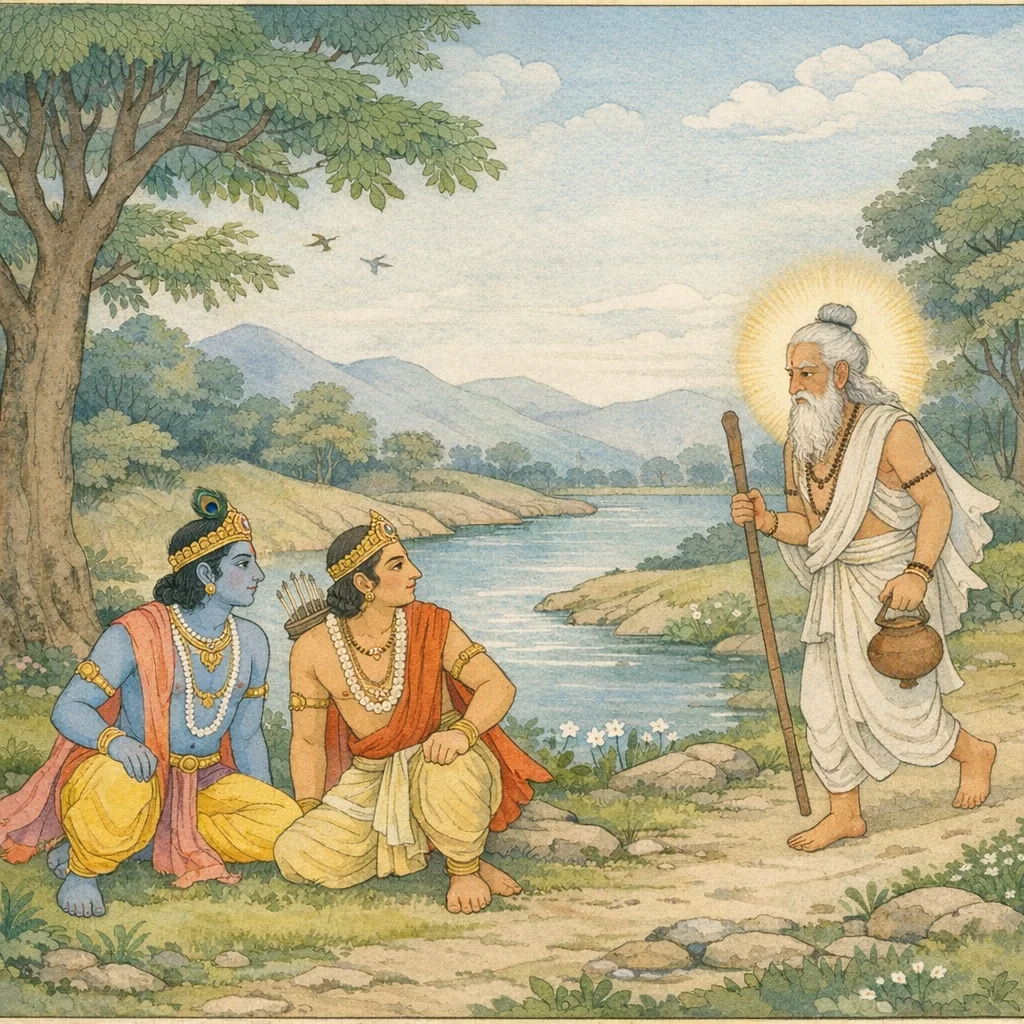
तत्रोपविष्टौ मुदितौ नाकपृष्ेउश्चिनाविव । अभ्यागच्छत् तदा विप्रो वासुदेवधनंजयौ,वहाँ प्रसन्नतापूर्वक बैठे हुए धनंजय और वासुदेव स्वर्गलोकमें स्थित अश्विनीकुमारोंकी भाँति सुशोभित हो रहे थे। उसी समय उन दोनोंके पास एक ब्राह्मणदेवता आये
Vaiśampāyana said: There, seated together in gladness, Vāsudeva and Dhanañjaya shone like the Aśvin twins in heaven. Just then a Brahmin approached the two.
Verse 31
बृहच्छालप्रतीकाश: प्रतप्तकनकप्रभ: । हरिपिड्रोज्ज्वलश्मश्रु: प्रमाणायामत: सम:,वे विशाल शालवृक्षके समान ऊँचे थे। उनकी कान्ति तपाये हुए सुवर्णके समान थी। उनके सारे अंग नीले और पीले रंगके थे, दाढ़ी-मूँछें अग्निज्वालाके समान पीतवर्णकी थीं तथा ऊँचाईके अनुसार ही उनकी मोटाई थी
Vaiśampāyana said: He appeared like a great śāla tree—tall and imposing. His radiance was like well-heated gold. His limbs showed hues of blue and yellow, and his beard and moustache shone with a tawny, flame-like brightness. In breadth and build he was proportionate to his height, a figure of formidable presence.
Verse 32
तरुणादित्यसंकाशश्वीरवासा जटाधर: । पद्मपत्रानन: पिड्ुस्तेजसा प्रज्वलन्निव,वे प्रातःकालिक सूर्यके समान तेजस्वी जान पड़ते थे। वे चीरवस्त्र पहने और मस्तकपर जटा धारण किये हुए थे। उनका मुख कमलदलके समान शोभा पा रहा था। उनकी प्रभा पिंगलवर्णकी थी और वे अपने तेजसे मानो प्रज्वलित हो रहे थे
Vaiśampāyana said: He appeared radiant like the young morning sun. Clad in bark-garments and wearing matted locks, his face shone like a lotus-petal. Tawny-hued with ascetic brilliance, he seemed as though aflame with inner spiritual power.
Verse 33
उपसूष्टं तु तं कृष्णौ भ्राजमानं द्विजोत्तमम् । अर्जुनो वासुदेवश्च तूर्णमुत्पत्य तस्थतु:,वे तेजस्वी द्विजश्रेष्ठ जब निकट आ गये, तब अर्जुन और भगवान् श्रीकृष्ण तुरंत ही आसनसे उठकर खड़े हो गये
Vaiśampāyana said: When that radiant best of Brahmins came close and was duly announced, Arjuna and Vāsudeva (Kṛṣṇa) at once rose quickly from their seats and stood up in reverence.
Verse 221
इति श्रीमहा भारते आदिपर्वणि खाण्डवदाहपर्वणि ब्राह्मणरूप्यनलागमने एकविंशत्यधिकद्वधिशततमो<ध्याय:
Thus, in the Śrī Mahābhārata, within the Ādi Parva, in the section on the burning of the Khāṇḍava forest, in the episode of Agni’s coming in the guise of a brāhmaṇa, the two-hundred-and-twenty-first chapter comes to an end. This colophon closes a narrative unit, casting the encounter as morally weighty: divine purpose advances through a human-like approach and a formal request.
Frequently Asked Questions
A constrained-choice dilemma: whether to attempt a risky refuge (the mouse-hole, with potential predation) or face the advancing fire; the mother must also decide how to act without abandoning any child, balancing care, feasibility, and duty to lineage.
In emergency ethics (āpaddharma), deliberation and proportional choice matter: one may need to select the least degrading and most duty-consistent option, while acknowledging uncertainty and avoiding paralysis when ideal solutions are unavailable.
No explicit phalaśruti is stated here; the chapter functions as an embedded exemplum, contributing interpretive guidance on duty, survival strategy, and honor-coded evaluation within the broader Ādi Parva narrative frame.