Adhyaya 201
Sundopasundayoḥ Tapas–Varadāna–Prasaṅgaḥ (Sunda and Upasunda: Austerities and the Boon)
Upa-parva: Sundopasunda-Upākhyāna (Episode of Sunda and Upasunda)
Nārada addresses Yudhiṣṭhira and begins an ancient account: in the lineage of Hiraṇyakaśipu arises the powerful daitya Nikumbha, whose two sons, Sunda and Upasunda, are portrayed as remarkably united—sharing food, conduct, and resolve as if one being in two bodies. Seeking conquest of the three worlds, they undertake initiation and proceed to the Vindhya mountains for prolonged, extreme austerities, enduring hunger and thirst, adopting ascetic markers, and sustaining rigorous vows. Their tapas generates an extraordinary effect upon the landscape (Vindhya emitting smoke), prompting fear among the devas, who attempt to obstruct the austerities through temptations and illusory threats involving female relatives and attendants; the brothers remain unshaken. Brahmā (Pitāmaha) then appears and offers boons but refuses immortality due to the conquest-motive behind their tapas. The brothers request freedom from fear from all beings in the three worlds except from each other; Brahmā grants it and confirms the death-condition accordingly. Having received the boon, they return, abandon ascetic austerity-signs, adopt royal adornments, and inaugurate extensive celebrations and pleasures across their city, with communal rejoicing described as continuous and abundant.
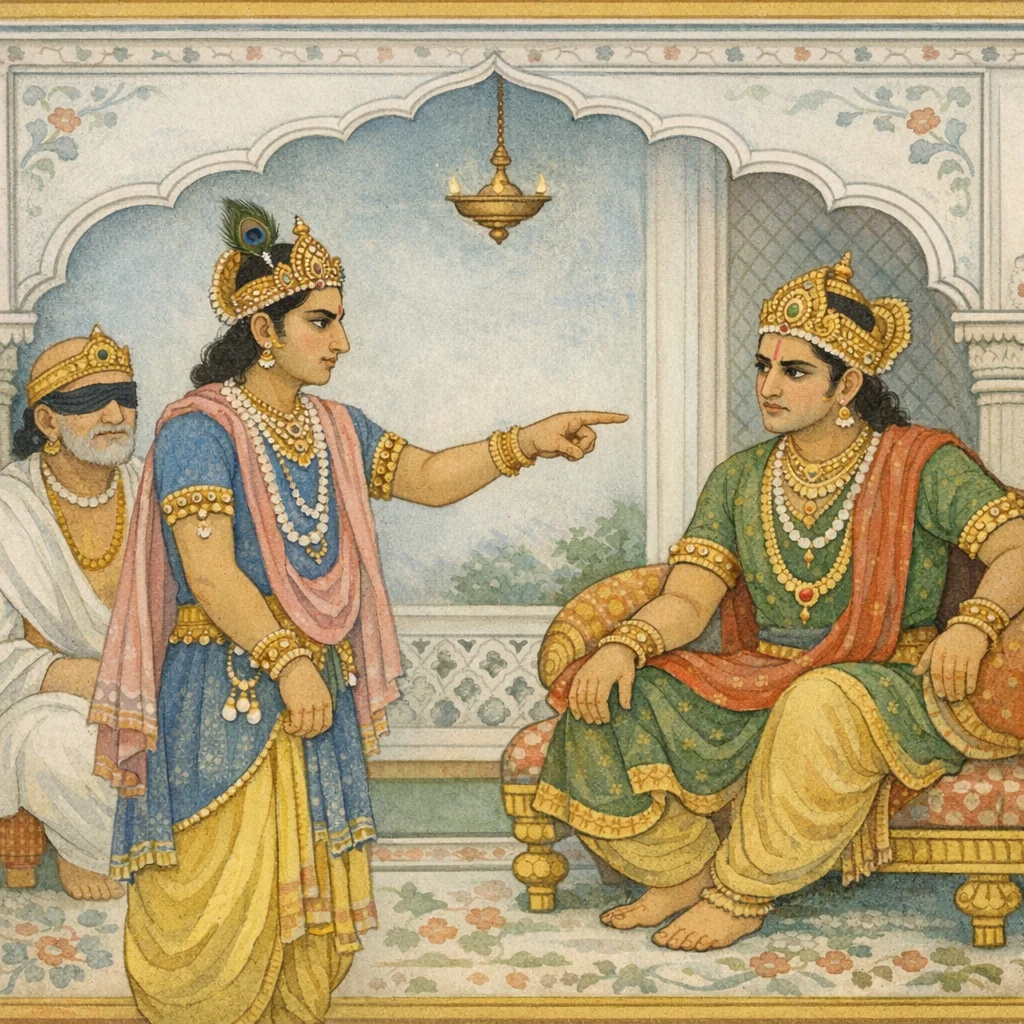
Chapter Arc: कर्ण दुर्योधन को कठोर सत्य सुनाता है—तुम्हारी बुद्धि पाण्डवों को दबाने में अब तक सफल नहीं हुई; वे तुम्हारे निकट रहते हुए भी ‘अजातपक्षा’ नहीं रहे कि सरलता से कुचले जा सकें। → कर्ण बताता है कि साम, दान, भेद—इन गुप्त उपायों से पहले भी प्रयास हो चुका और विफल रहा। द्रौपदी को फूट डालने का उपाय भी असम्भव है; पाण्डवों का परस्पर बन्धन दृढ़ है। ऊपर से पांचालराज द्रुपद धन-लोभी नहीं, राज्य-दान से भी कौन्तेयों को नहीं छोड़ेगा; जब तक द्रुपद अपने महावीर्य पुत्रों सहित उद्यम नहीं करता, तब तक कौरवों को शीघ्र निर्णायक कदम उठाना चाहिए। → कर्ण का निर्णायक निष्कर्ष—‘न हि साम्ना न दानेन न भेदेन च पाण्डवा: शक्याः… तस्माद् विक्रमेणैव तान् जहि’—पाण्डव नीति से नहीं, केवल पराक्रम/बल से ही वश में होंगे। → कर्ण की सम्मति सुनकर कौरव पक्ष का राजनीतिक ताप बढ़ता है; तत्पश्चात धृतराष्ट्र भीष्म, द्रोण आदि समस्त मन्त्रियों को बुलाकर राज्य-नीति पर विचार हेतु सभा करता है। → धृतराष्ट्र की मन्त्रणा में कौन-सा मार्ग चुना जाएगा—समझौता, छल, या खुला संघर्ष—यह अगले प्रसंग पर टिका रह जाता है।
Shlokas
Verse 1
ऑपन--माजल छा जि: एकाधिकंद्विशततमो<्ध्याय: पाण्डवोंको पराक्रमसे दबानेके लिये कर्णकी सम्मति कर्ण उवाच दुर्योधन तव प्रज्ञा न सम्यगिति मे मति: । 82 20 ते शक््या: पाण्डवा: कुरुवर्धन,कहा--दुर्योधन! मेरे विचारसे तुम्हारी यह सलाह ठीक नहीं है। कुरुवर्धन! ऐसे किसी भी उपायसे पाण्डवोंको वशमें नहीं किया जा सकता
Karna said: “Duryodhana, in my judgment your counsel is not sound. O increaser of the Kurus, the Pandavas cannot be brought under control by such means.”
Verse 2
पूर्वमेव हि ते सूक्ष्मैरुपायैर्यतितास्त्वया । निग्रहीतुं तदा वीर न चैव शकितास्त्वया,वीर! पहले भी तुमने अनेक गुप्त उपायोंद्वारा पाण्डवोंको दबानेकी चेष्टा की है, परंतु उनपर तुम्हारा वश नहीं चल सका। भूपाल! वे जब बच्चे थे और यहीं तुम्हारे पास रहते थे, उस समय उनके पक्षमें कोई नहीं था, तब भी तुम उन्हें बाधा पहुँचानेमें सफल न हो सके
Karna said: “Indeed, even earlier you tried—by subtle and secret stratagems—to subdue them. Yet then, O hero, you were not able to restrain them. Even when they were children living here under your power, with no strong party to support them, you still could not successfully harm or suppress them.”
Verse 3
इहैव वर्तमानास्ते समीपे तव पार्थिव । अजातपक्षा: शिशव: शकिता नैव बाधितुम्,वीर! पहले भी तुमने अनेक गुप्त उपायोंद्वारा पाण्डवोंको दबानेकी चेष्टा की है, परंतु उनपर तुम्हारा वश नहीं चल सका। भूपाल! वे जब बच्चे थे और यहीं तुम्हारे पास रहते थे, उस समय उनके पक्षमें कोई नहीं था, तब भी तुम उन्हें बाधा पहुँचानेमें सफल न हो सके
Karna said: “Even when they were living right here, close to you, O king—mere children, their ‘wings’ not yet grown, with no supporting party—you were still unable to harm or suppress them. Earlier too you tried many secret stratagems to keep the Pāṇḍavas down, yet you could not bring them under your control.”
Verse 4
जातपक्षा विदेशस्था विवृद्धा: सर्वशोउ्द्य ते । नोपायसाध्या: कौन्तेया ममैषा मतिरच्युत,अब तो वे विदेशमें हैं, उनके पक्षमें बहुत-से लोग हो गये हैं और सब प्रकारसे उनकी बढ़ती हो गयी है। अतः अब वे कुन्तीकुमार तुम्हारे बताये हुए उपायोंद्वारा वशमें आनेवाले नहीं हैं। पुरुषार्थसे कभी च्युत न होनेवाले वीर! मेरा तो यही विचार है
Karna said: “Today they have grown strong and established their own support; they are living away in foreign lands, and in every way their power has increased. Therefore, those sons of Kunti can no longer be brought under control by the measures you propose. O Acyuta, unfailing in manly effort—this is my considered judgment.”
Verse 5
न च ते व्यसनैर्योक्तुं शक््या दिष्टकृतेन च । शकिताश्रैप्सवश्चैव पितृपैतामहं पदम्,अब वे संकटमें नहीं डाले जा सकते। भाग्यने उन्हें शक्तिशाली बना दिया है और उनमें अपने बाप-दादोंके राज्यको प्राप्त करनेकी अभिलाषा जाग उठी है
Karna said: “Nor can they be restrained by calamities—nor even by what fate has ordained. They have become capable and resolute, and within them has arisen the desire to obtain the ancestral and paternal sovereignty.”
Verse 6
परस्परेण भेदश्न नाधातुं तेषु शक््यते । एकस्यां ये रता: पत्न्यां न भिद्यन्ते परस्परम्,उनमें आपसमें भी फ़ूट डालना सम्भव नहीं है। जो (एकराय होकर) एक ही पत्लनीमें अनुरक्त हैं, उनमें परस्पर विरोध नहीं हो सकता
Karna said: “It is not possible to create dissension among them by setting one against another. Those who are united in affection for a single wife do not fall into mutual rivalry.”
Verse 7
न चापि कृष्णा शक््येत तेभ्यो भेदयितुं पर: । परिद्यूनान् वृतवती किमुताद्य मृजावत:,कृष्णाको भी उनकी ओरसे फूट डालकर विलग करना असम्भव है; क्योंकि जब पाण्डवलोग भिक्षाभोजी होनेके कारण दीन-हीन थे, उस अवस्थामें कृष्णाने उनका वरण किया है; अब तो वे सम्पत्तिशाली होकर स्वच्छ एवं सुन्दर वेषमें रहते हैं, अब वह क्यों उनकी ओरसे विरक्त होगी?
Karna said: “Nor is it possible for anyone else to estrange Kṛṣṇā from them by sowing dissension. For she chose the Pāṇḍavas even when they were utterly reduced—living on alms and brought low; how much more, then, now that they are prosperous, clean, and well-adorned, would she ever turn away from them?”
Verse 8
ईप्सितश्न गुण: स्त्रीणामेकस्या बहुभर्तृता । तं च प्राप्तवती कृष्णा न सा भेदयितु क्षमा,प्राय: स्त्रियोंका यह अभीष्ट गुण है कि एक स्त्रीमें अनेक पुरुषोंसे सम्बन्ध स्थापित करनेकी रुचि हो। पाण्डवोंके साथ रहनेमें कृष्णाको यह लाभ स्वतः प्राप्त है; अतः उसके मनमें भेद नहीं उत्पन्न किया जा सकता
Karna said: “A quality commonly desired among women is that a single woman may have many husbands. Kṛṣṇā (Draupadī) has in fact obtained that very condition by living with the Pāṇḍavas; therefore she cannot be made to create division among them.”
Verse 9
आर्यव्रतश्न॒ पाज्चाल्यो न स राजा धनप्रिय: । न संत्यक्ष्यति कौन्तेयान् राज्यदानैरपि ध्रुवम्,पांचालराज ट्रुपद श्रेष्ठ व्ररका पालन करनेवाले हैं। वे धनके लोभी नहीं हैं। अतः तुम अपना सारा राज्य दे दो, तो भी यह निश्चय है कि वे कुन्ती-पुत्रोंका परित्याग नहीं करेंगे
Karna said: “Drupada, the king of Pañcāla, upholds the noble vows of the Āryas and is not greedy for wealth. Therefore, even if you were to offer him the entire kingdom, he would certainly not abandon Kuntī’s sons, the Kaunteyas.”
Verse 10
यथास्य पुत्रो गुणवाननुरक्तश्न पाण्डवान् | तस्मान्नोपायसाध्यांस्तानहं मन््ये कथंचन,इसी प्रकार उनका पुत्र धृष्टद्युम्न भी गुणवान् तथा पाण्डवोंका प्रेमी है। अतः मैं उन्हें पूर्वोक्त उपायोंसे वशमें करनेयोग्य कदापि नहीं मान सकता
Karna said: “Just as his son too is virtuous and devoted to the Pāṇḍavas, therefore I do not consider them—by any means—amenable to being brought under control through the previously proposed stratagems.”
Verse 11
इदं त्वद्य क्षमं कर्तुमस्माकं पुरुषर्षभ । यावन्न कृतमूलास्ते पाण्डवेया विशाम्पते,“राजन! इस समय हमारे लिये एक ही उपाय काममें लानेयोग्य है; वे पुरुषश्रेष्ठ पाण्डव जबतक अपनी जड़ नहीं जमा लेते, तभीतक उनपर प्रहार करना चाहिये। इसीसे वे काबूमें आ सकते हैं।' तात! मैं समझता हूँ, तुम्हें भी यह राय पसंद होगी। जबतक हमारा पक्ष बढ़ा-चढ़ा है और जबतक पांचालराजका बल हमसे कम है, तभीतक उनपर आक्रमण कर दिया जाय। इसमें दूसरा कुछ विचार न करो
Karna said: “O bull among men, this is the only course fitting for us to take today. O lord of the people, so long as the sons of Pāṇḍu have not yet taken firm root, we must strike them now. Only thus can they be brought under control.”
Verse 12
तावत् प्रहरणीयास्ते तत् तुभ्यं तात रोचताम् । अस्मत्पक्षो महान् यावद् यावत् पाड्चालको लघु: । तावत् प्रहरणं तेषां क्रियतां मा विचारय,“राजन! इस समय हमारे लिये एक ही उपाय काममें लानेयोग्य है; वे पुरुषश्रेष्ठ पाण्डव जबतक अपनी जड़ नहीं जमा लेते, तभीतक उनपर प्रहार करना चाहिये। इसीसे वे काबूमें आ सकते हैं।' तात! मैं समझता हूँ, तुम्हें भी यह राय पसंद होगी। जबतक हमारा पक्ष बढ़ा-चढ़ा है और जबतक पांचालराजका बल हमसे कम है, तभीतक उनपर आक्रमण कर दिया जाय। इसमें दूसरा कुछ विचार न करो
Karna said: “So long as it is possible to strike them, strike them—may this counsel, dear father, commend itself to you. While our side is still strong and while the king of the Pāñcālas remains comparatively weak, let an assault be made upon them. Do not deliberate further.”
Verse 13
वाहनानि प्रभूतानि मित्राणि च कुलानि च । यावन्न तेषां गान्धारे तावद् विक्रम पार्थिव,राजन! गान्धारीनन्दन! जबतक पाण्डवोंके पास बहुत-से वाहन, मित्र और कुट॒म्बी नहीं हो जाते, तभीतक तुम उनके ऊपर पराक्रम कर लो
Karna said: “So long as they have not yet secured abundant chariots and other conveyances, allies, and supporting families, O king—O son of Gandhārī—display your valor against them now. Strike while the Pāṇḍavas are still without a strong base of resources and relationships.”
Verse 14
यावच्च राजा पाज्चाल्यो नोद्यमे कुरुते मन: । सह पुन्रैर्महावीर्यैस्तावद् विक्रम पार्थिव,पृथ्वीपते! जबतक पांचालनरेश अपने महा-पराक्रमी पुत्रोंके साथ हमारे ऊपर चढ़ाई करनेका विचार नहीं कर रहे हैं, तभीतक तुम अपना बल-विक्रम प्रकट कर लो
Karna said: “So long as the king of the Panchalas has not yet set his mind on marching against us with his mighty sons, you, O king—lord of the earth—should display your strength and valor now.”
Verse 15
यावन्नायाति वार्ष्णेय: कर्षन् यादववाहिनीम् । राज्यार्थे पाण्डवेयानां पाड्चाल्यसदनं प्रति,इसके लिये तुम्हें तभीतक अवसर है, जबतक कि वृष्णिकुलनन्दन श्रीकृष्ण यदुवंशियोंकी सेना साथ लिये पाण्डवोंको राज्य दिलानेके उद्देश्यसे पांचालराजके घरपर नहीं आ जाते
Karna said: “You still have time only until the Vārṣṇeya (Kṛṣṇa) arrives—drawing along the Yādava host—on his way to the Pāñcāla king’s residence, intent on securing the kingdom for the sons of Pāṇḍu.”
Verse 16
वसूनि विविधान् भोगान् राज्यमेव च केवलम् । नात्याज्यमस्ति कृष्णस्य पाण्डवार्थे कथंचन,पाण्डवोंके लिये श्रीकृष्णकी ओरसे धन-रत्न, भाँति-भाँतिके भोग तथा सारा राज्य-- कुछ भी अदेय नहीं है
Karna said: “Wealth of many kinds, pleasures of every sort, and even the entire kingdom—there is nothing at all that Krishna would withhold, in any circumstance, if it serves the cause of the Pandavas.”
Verse 17
विक्रमेण मही प्राप्ता भरतेन महात्मना । विक्रमेण च लोकांस्त्रीज्जितवान्ू पाकशासन:,महात्मा भरतने पराक्रमसे ही यह पृथ्वी प्राप्त की। इन्द्रने पराक्रमसे ही तीनों लोकोंपर विजय पायी
Karna said: “By valor the great-souled Bharata won this earth; and by valor Pākaśāsana (Indra) conquered the three worlds. Sovereignty and fame are attained through heroic effort, not through mere claim or birth.”
Verse 18
विक्रमं च प्रशंसन्ति क्षत्रियस्य विशाम्पते । स्वको हि धर्म: शूराणां विक्रम: पार्थिवर्षभ,राजन! क्षत्रियके लिये पराक्रमकी ही प्रशंसा की जाती है। नृपश्रेष्ठ! पराक्रम करना ही शूरवीरोंका स्वधर्म है
O lord of the people, they praise valour as the defining excellence of a Kshatriya. Indeed, O bull among kings, for the heroic, exerting prowess is their own ordained duty—their svadharma.
Verse 19
ते बलेन वयं राजन् महता चतुरद्धिणा । प्रमथ्य ट्रुपदं शीघ्रमानयामेह पाण्डवान्,राजन्! हमलोग विशाल चतुरंगिणी सेनाके द्वारा राजा ट्रपदको कुचलकर शीघ्र ही यहाँ पाण्डवोंको कैद कर लायें
Karna said: “O King, with our strength and with a great fourfold army, we shall swiftly crush King Drupada and bring the Pāṇḍavas here as captives.”
Verse 20
न हि साम्ना न दानेन न भेदेन च पाण्डवा: । शकक््या: साधयितुं तस्माद् विक्रमेणैव ताज्जहि,न सामसे, न दानसे और न भेदकी नीतिसे पाण्डवोंको वशमें किया जा सकता है। अतः उन्हें पराक्रमसे ही नष्ट करो
Karna said: “The Pāṇḍavas cannot be brought under control—neither by conciliation, nor by gifts, nor by sowing dissension. Therefore, destroy them only by valor.”
Verse 21
तान् विक्रमेण जित्वेमामखिलां भुड्क्षव मेदिनीम् | अतो नानयं प्रपश्यामि कार्योपायं जनाधिप,पराक्रमसे पाण्डवोंको जीतकर इस सारी पृथ्वीका राज्य भोगो। नरेश्वर! इसके सिवा दूसरा कोई कार्यसिद्धिका उपाय मैं नहीं देखता
Karna said: “Conquer them by your own valor, and then enjoy sovereignty over this entire earth. O lord of men, apart from this I see no other means by which your purpose can be accomplished.”
Verse 22
वैशम्पायन उवाच श्रुत्वा तु राधेयवचो धृतराष्ट्र: प्रतापवान् | अभिपूज्य तत: पश्चादिदं वचनमब्रवीत्,वैशम्पायनजी कहते हैं--जनमेजय! कर्णकी बात सुनकर प्रतापी धृतराष्ट्रने उसकी बड़ी सराहना की और तदनन्तर इस प्रकार कहा--
Vaiśampāyana said: Having heard the words of Rādheya (Karna), the mighty Dhṛtarāṣṭra praised him with due honor; and then, thereafter, he spoke these words.
Verse 23
उपपन्नं महाप्राज्ञे कृतास्त्रे सूतनन्दने । त्वयि विक्रमसम्पन्नमिदं वचनमीदृशम्,“कर्ण! तुम परम बुद्धिमान, अस्त्र-शस्त्रोंके ज्ञाता और सूतकुलको आनन्दित करनेवाले हो। ऐसा पराक्रमयुक्त वचन तुम्हारे ही योग्य है
Vaiśaṃpāyana said: “This kind of statement is entirely fitting for you—O Karṇa—who are supremely intelligent, accomplished in the use of weapons, and a delight to the Sūta lineage. Such words, filled with valor, are worthy of you alone.”
Verse 24
भूय एव तु भीष्मश्च द्रोणो विदुर एव च । युवां च कुरुतं बुद्धि भवेद् या न: सुखोदया,“परंतु मेरा विचार है कि भीष्म, द्रोण, विदुर और तुम दोनों एक साथ बैठकर पुनः विचार कर लो तथा कोई ऐसी बात सोच निकालो, जो भविष्यमें भी हमें सुख देनेवाली हो”
Vaiśampāyana said: “But again, let Bhīṣma, Droṇa, and Vidura—and you two as well—sit together and deliberate once more, and arrive at a course of action that will bring us welfare and happiness in the time to come.”
Verse 25
तत आनाय्य तानू् सर्वान् मन्त्रिण: सुमहायशा: । धृतराष्ट्रो महाराज मन्त्रयामास वै तदा,महाराज! तदनन्तर महायशस्वी धृतराष्ट्रने भीष्म, द्रोण आदि सम्पूर्ण मन्त्रियोंको बुलवाकर उनके साथ उस समय विचार आरम्भ किया
Then, having summoned all those highly renowned ministers, King Dhṛtarāṣṭra began deliberations with them at that time.
Verse 200
इस प्रकार श्रीमहाभारत आदिपर्वके अन्तर्गत विदुरागमन-राज्यलम्भपर्वमें दुर्योधनवाक्यविषयक दो सौवाँ अध्याय पूरा हुआ
Thus ends the two-hundredth chapter of the Śrī Mahābhārata, in the Ādi Parva, within the section on Vidura’s arrival and the attainment of kingship, concerning the words of Duryodhana.
Verse 2031
इति श्रीमहाभारते आदिपर्वणि विदुरागमनराज्यलम्भपर्वणि धृतराष्ट्रमन्त्रणे एकाधिकद्विशततमो<ध्याय:
Thus ends, in the Śrī Mahābhārata, within the Ādi Parva, the section on Vidura’s arrival and the attainment of the kingdom—specifically Dhṛtarāṣṭra’s deliberation. This is the two-hundred-and-first chapter.
Frequently Asked Questions
The dilemma concerns power sought for domination: intense tapas can be 'effective' yet ethically unstable when driven by conquest, raising the question of whether extraordinary capability legitimizes the intended use.
The episode emphasizes that motive constrains outcomes: even divine boons are conditioned by intent, and carefully worded protections can embed a latent vulnerability that later governs fate.
No explicit phalaśruti appears in this excerpt; the meta-function is exemplum-based—an instructive narrative offered by Nārada to frame later ethical reasoning about boons, restraint, and the risks of unchecked ambition.