Adhyaya 142
Hiḍimbā’s Account and the Bhīma–Hiḍimba Engagement (आदि पर्व, अध्याय १४२)
Upa-parva: Hiḍimbavadha Parva (Episode of Hiḍimba’s Slaying and Hiḍimbā’s Disclosure)
Vaiśaṃpāyana reports that the Pāṇḍavas awaken and are astonished by Hiḍimbā’s extraordinary form. Kuntī questions her identity and purpose, asking whether she is a forest divinity or apsaras and why she remains there. Hiḍimbā identifies the forest as the residence of the rākṣasa Hiḍimba and herself as his sister, sent to kill Kuntī and her sons; she then explains that attraction to Bhīma altered her intent and delayed her return, prompting Hiḍimba to come personally. She directs them to witness the intense struggle between Bhīma and Hiḍimba. The brothers rise; Arjuna encourages urgency, noting twilight as a period of increased rākṣasa strength, and offers assistance. Bhīma instructs Arjuna to observe without alarm, then decisively overpowers and kills Hiḍimba, culminating in the rākṣasa’s defeat and the Pāṇḍavas’ relief. Arjuna advises immediate movement toward a nearby settlement to avoid detection by hostile parties; the group departs with Kuntī, and Hiḍimbā accompanies them.
Chapter Arc: दुर्योधन की बात सुनकर धृतराष्ट्र का मन दो फाड़ हो जाता है—शोक, भय और पुत्रमोह के बीच वह पाण्डु-पुत्रों के प्रति अपने पुराने स्नेह को याद करता है। → दुर्योधन कर्ण और शकुनि के साथ एकान्त में मंत्रणा कर धृतराष्ट्र पर दबाव बढ़ाता है: पाण्डु की लोकप्रियता, युधिष्ठिर के पक्ष में नगर-जन का झुकाव, और राज्य पर अधिकार की असुरक्षा—इन सबको वह ‘राजनीतिक संकट’ बनाकर प्रस्तुत करता है। धृतराष्ट्र प्रतिवाद करता है कि पाण्डु धर्मनिष्ठ था, प्रजा उसे मानती थी; बलपूर्वक हटाना असंभव और घातक होगा। → दुर्योधन निर्णायक प्रस्ताव रखता है: पाण्डवों को माता सहित वारणावत ‘प्रवास’ भेज दिया जाए—ऐसे कि वे आज ही निकलें। यह निर्वासन-योजना आगे के षड्यंत्र (जतुगृह) का द्वार खोलती है। → धृतराष्ट्र का अंतःकरण काँटे-सा चुभता है—नींद हराम करने वाला शोक और अपराधबोध उभरता है; फिर भी वह पुत्र की नीति-भाषा और भय-तर्कों के सामने डगमगाता दिखता है। अध्याय का स्वर निर्णय से अधिक ‘मन की हार’ का है। → वारणावत भेजने की बात तय-सी कर दी जाती है—अब प्रश्न यह है कि यह ‘प्रवास’ किस प्रकार और किस उद्देश्य से कराया जाएगा, और पाण्डव अनजान होकर किस जाल में प्रवेश करेंगे?
Shlokas
Verse 1
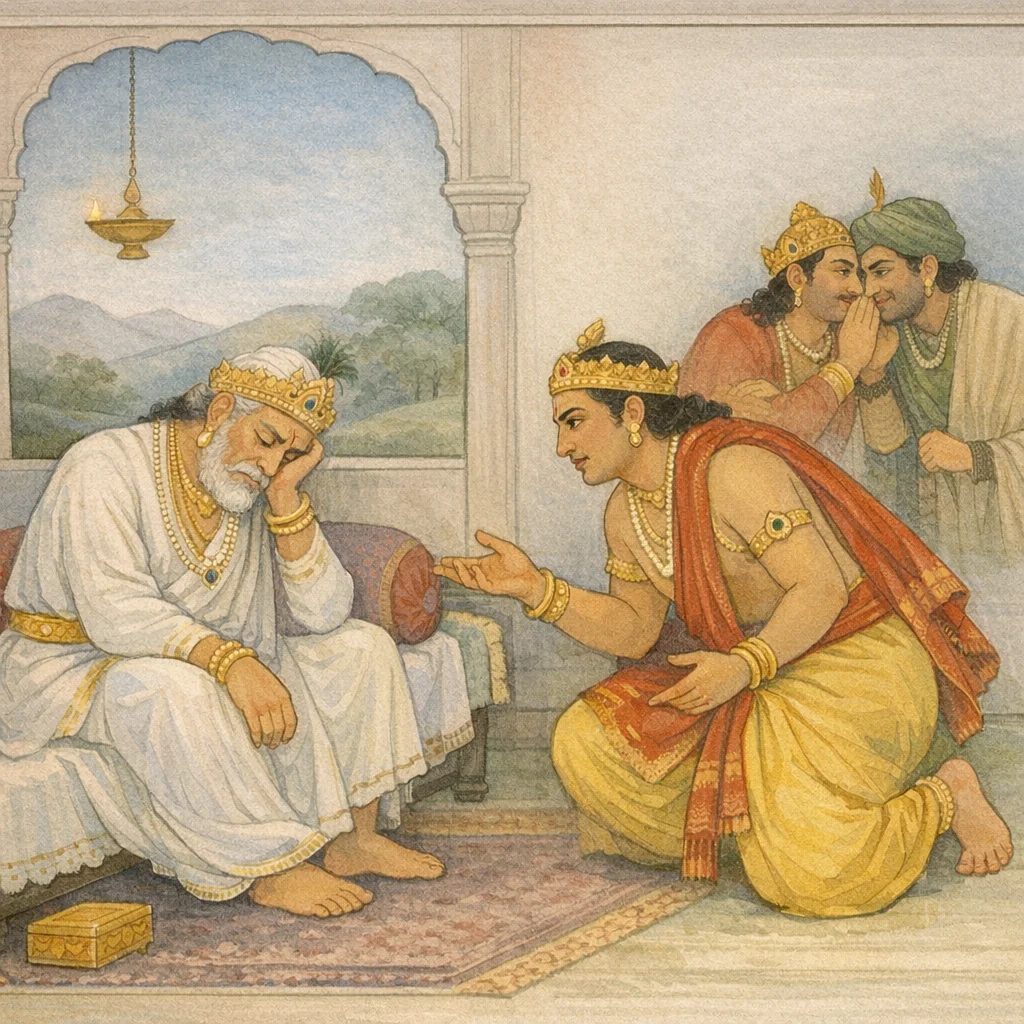
अपना बा | अड-एक्राछ - इससे महाभारतकालमें यन्त्रयुक्त नौकाओं (जहाजों)-का निर्माण सूचित होता है। एकचत्वारिंशर्दाधिकशततमो< ध्याय: दुर्योधनका धृतराष्ट्रसे पाण्डवोंको वारणावत भेज देनेका प्रस्ताव वैशम्पायन उवाच एवं श्रुत्वा तु पुत्रस्य प्रज्ञाचक्षुर्नराधिप: । कणिकस्य च वाक्यानि तानि श्रुत्वा स सर्वश:,वैशम्पायनजी कहते हैं--राजन्! अपने पुत्रकी यह बात सुनकर तथा कणिकके उन वचानोंका स्मरण करके प्रज्ञाचक्षु महाराज धृतराष्ट्रका चित्त सब प्रकारसे दुविधामें पड़ गया। वे शोकसे आतुर हो गये। दुर्योधन, कर्ण, सुबलपुत्र शकुनि तथा चौथे दुःशासन इन सबने एक जगह बैठकर सलाह की; फिर राजा दुर्योधनने धृतराष्ट्रसे कहा--
Vaiśampāyana said: “O king, having heard his son’s words, and also recalling the counsel spoken by Kaṇika, the lord of men Dhṛtarāṣṭra—though ‘seeing’ through wisdom rather than sight—became wholly conflicted in mind. Overcome by grief, he wavered, while Duryodhana and his circle moved toward a calculated course of action against the Pāṇḍavas, sharpening the tension between paternal duty and political fear.”
Verse 2
धृतराष्ट्रो द्विधाचित्त: शोकार्त: समपद्यत । दुर्योधनश्व॒ कर्णश्न शकुनि: सौबलस्तथा,वैशम्पायनजी कहते हैं--राजन्! अपने पुत्रकी यह बात सुनकर तथा कणिकके उन वचानोंका स्मरण करके प्रज्ञाचक्षु महाराज धृतराष्ट्रका चित्त सब प्रकारसे दुविधामें पड़ गया। वे शोकसे आतुर हो गये। दुर्योधन, कर्ण, सुबलपुत्र शकुनि तथा चौथे दुःशासन इन सबने एक जगह बैठकर सलाह की; फिर राजा दुर्योधनने धृतराष्ट्रसे कहा--
Vaiśampāyana said: Hearing his son’s words and recalling Kaṇika’s counsel, King Dhṛtarāṣṭra—though possessed of insight—fell into a profound inner conflict and was overcome by grief. Meanwhile Duryodhana, Karṇa, and Śakuni the son of Subala gathered together to deliberate, setting in motion the next step in their scheme.
Verse 3
दुःशासनचतुर्थास्ति मन्त्रयामासुरेकत: । ततो दुर्योधनो राजा धृतराष्ट्रमभाषत,वैशम्पायनजी कहते हैं--राजन्! अपने पुत्रकी यह बात सुनकर तथा कणिकके उन वचानोंका स्मरण करके प्रज्ञाचक्षु महाराज धृतराष्ट्रका चित्त सब प्रकारसे दुविधामें पड़ गया। वे शोकसे आतुर हो गये। दुर्योधन, कर्ण, सुबलपुत्र शकुनि तथा चौथे दुःशासन इन सबने एक जगह बैठकर सलाह की; फिर राजा दुर्योधनने धृतराष्ट्रसे कहा--
Vaiśampāyana said: Duryodhana, together with Karṇa, Śakuni the son of Subala, and Duḥśāsana as the fourth, sat in one place and held counsel. After their private deliberation, King Duryodhana approached Dhṛtarāṣṭra and addressed him—signaling the Kauravas’ turn from anxious reflection to calculated planning, where ambition and partiality begin to press against the demands of dharma.
Verse 4
पाण्डवेभ्यो भयं न स्यात् तान् विवासयतां भवान् | निपुणेनाभ्युपायेन नगरं वारणावतम्,“पिताजी! हमें पाण्डवोंसे भय न हो, इसलिये आप किसी उत्तम उपायसे उन्हें यहाँसे हटाकर वारणावत नगरमें भेज दीजिये”
Vaiśampāyana said: “So that we may have no fear from the Pāṇḍavas, let you, sir, cause them to be sent away—by a clever and well-devised stratagem—to the city of Vāraṇāvata.”
Verse 5
धृतराष्ट्रस्तु पुत्रेण श्रुव्वा वचनमीरितम् | मुहूर्तमिव संचिन्त्य दुर्योधनमथाब्रवीत्,अपने पुत्रकी कही हुई यह बात सुनकर धृतराष्ट्र दो घड़ीतक भारी चिन्तामें पड़े रहे; फिर दुर्योधनसे बोले
Hearing the words spoken by his son, Dhṛtarāṣṭra paused as if for a moment, weighed them in his mind, and then addressed Duryodhana.
Verse 6
धृतराष्ट्र रवाच धर्मनित्य: सदा पाण्डुस्तथा धर्मपरायण: । सर्वेषु ज्ञातिषु तथा मयि त्वासीद् विशेषत:,धृतराष्ट्रने कहा--बेटा! पाण्डु अपने जीवनभर धर्मको ही नित्य मानकर सम्पूर्ण ज्ञातिजनोंके साथ धर्मानुकूल व्यवहार ही करते थे; मेरे प्रति तो विशेषरूपसे
Dhṛtarāṣṭra said: “My son, Pāṇḍu ever held dharma as his constant rule, and toward all our kinsmen he acted in accordance with dharma; and toward me, most especially…”
Verse 7
नासौ किंचिद् विजानाति भोजनादि चिकीर्षितम् | निवेदयति नित्यं हि मम राज्यं धृतव्रतः,वे इतने भोले-भाले थे कि अपने स्नान-भोजन आदि अभीष्ट कर्तव्योंके सम्बन्धमें भी कुछ नहीं जानते थे। वे उत्तम व्रतका पालन करते हुए प्रतिदिन मुझसे यही कहते थे कि “यह राज्य तो आपका ही है”
He did not understand in the least even the ordinary duties he ought to attend to—such as bathing and taking food. Yet, steadfast in his vow and disciplined in conduct, he would daily submit to me the same declaration: “This kingdom is yours alone.”
Verse 8
तस्य पुत्रो यथा पाण्डुस्तथा धर्मपरायण: । गुणवॉल्लोकविख्यात: पौरवाणां सुसम्मत:,उनके पुत्र युधिष्ठिर भी वैसे ही धर्मपरायण हैं, जैसे स्वयं पाण्डु थे। वे उत्तम गुणोंसे सम्पन्न, सम्पूर्ण जगत्में विख्यात तथा पूरुवंशियोंके अत्यन्त प्रिय हैं
Vaiśaṃpāyana said: “His son too—like Pāṇḍu himself—is steadfastly devoted to dharma. Endowed with noble qualities, renowned throughout the world, he is held in the highest esteem by the descendants of Pūru.”
Verse 9
स कथं शक््यते<स्माभिरपाकर्तु बलादित: | पितृपैतामहाद् राज्यात् ससहायो विशेषतः,फिर उन्हें उनके बाप-दादोंके राज्यसे बलपूर्वक कैसे हटाया जा सकता है? विशेषत: ऐसे समयमें, जब कि उनके सहायक अधिक हैं
Vaiśampāyana said: “How can we possibly drive him out from here by sheer force—from the kingdom inherited from his father and forefathers—especially when he is not alone but supported by many allies?”
Verse 10
भृता हि पाण्डुनामात्या बल॑ च सततं भृतम् । भृताः पुत्राश्न पौत्राश्ष॒ तेषामपि विशेषत:,पाण्डुने सभी मन्त्रियों तथा सैनिकोंका सदा पालन-पोषण किया था। उनका ही नहीं, उनके पुत्र-पौत्रोंक भी भरण-पोषणका विशेष ध्यान रखा था
Vaiśampāyana said: “Indeed, Pāṇḍu continually maintained his ministers and his army. Not only them—he also supported their sons and grandsons, showing special care even for their families.”
Verse 11
ते पुरा सत्कृतास्तात पाण्डुना नागरा जना: । कथं युधिष्ठिरस्यार्थे न नो हन्यु: सबान्धवान्,तात! पाण्डुने पहले नागरिकोंके साथ बड़ा ही सद्धावपूर्ण व्यवहार किया है। अब वे विद्रोही होकर युधिष्ठिरके हितके लिये भाई-बन्धुओंके साथ हम सब लोगोंकी हत्या क्यों न कर डालेंगे?
Vaiśampāyana said: “Dear one, in former times King Pāṇḍu treated the citizens with great honor and goodwill. If they now turn hostile, why would they not, for Yudhiṣṭhira’s sake, kill even us along with our kinsmen?”
Verse 12
दुर्योधन उवाच एवमेतन्मया तात भावितं दोषमात्मनि । दृष्टवा प्रकृतय: सर्वा अर्थमानेन पूजिता:,दुर्योधन बोला--पिताजी! मैंने भी अपने हृदयमें इस दोष (प्रजाके विरोधी होने)-की सम्भावना की थी और इसीपर दृष्टि रखकर पहले ही अर्थ और सम्मानके द्वारा समस्त प्रजाका आदर-सत्कार किया है
Duryodhana said: “Father, I too had foreseen in my heart the possibility of this fault in myself. Therefore, keeping that in view, and seeing that all the people are honored by wealth and esteem, I have already shown respect and hospitality to the whole realm through gifts and honors.”
Verse 13
ध्रुवमस्मत्सहायास्ते भविष्यन्ति प्रधानतः । अर्थवर्ग: सहामात्यो मत्संस्थोड्द्य महीपते,अब निश्चय ही वे लोग मुख्यतासे हमारे सहायक होंगे। राजन! इस समय खजाना और मन्त्रिमण्डल हमारे ही अधीन हैं
Duryodhana said: “Surely, in the main, they will become our allies. O king, at present the treasury and the circle of ministers are under my control.”
Verse 14
स भवान् पाण्डवानाशु विवासयितुम्ति । मृदुनैवाभ्युपायेन नगरं वारणावतम्,अतः आप किसी मृदुल उपायसे ही जितना शीघ्र सम्भाव हो, पाण्डवोंको वारणावत नगरमें भेज दें
Duryodhana said: “Therefore, please arrange to send the Pāṇḍavas away at once—by a gentle, seemingly proper stratagem—to the city of Vāraṇāvata.”
Verse 15
यदा प्रतिष्ठितं राज्यं मयि राजन् भविष्यति । तदा कुन्ती सहापत्या पुनरेष्यति भारत,भरतवंशके महाराज! जब यह राज्य पूरी तरहसे मेरे अधिकारमें आ जायगा, उस समय कुन्तीदेवी अपने पुत्रोंके साथ पुनः: यहाँ आकर रह सकती हैं
Duryodhana said: “O King, scion of Bharata, when the kingdom is firmly established under my authority, then Kuntī, together with her sons, may return here again.”
Verse 16
धृतराष्ट उवाच दुर्योधन ममाप्येतद् हृदि सम्परिवर्तते । अभिप्रायस्य पापत्वान्नैवं तु विवृणोम्पहम्,धृतराष्ट्र बोले--दुर्योधन! मेरे हृदयमें भी यही बात घूम रही है; किंतु हमलोगोंका यह अभिप्राय पापपूर्ण है, इसलिये मैं इसे खोलकर कह नहीं पाता
Dhṛtarāṣṭra said: “Duryodhana, this very thought is also turning over and over within my heart. Yet, because our intention is sinful, I cannot bring myself to disclose it openly.”
Verse 17
न च भीष्मो न च द्रोणो न च क्षत्ता न गौतम: । विवास्यमानान् कौन्तेयाननुमंस्यन्ति कहिचित्,मुझे यह भी विश्वास है कि भीष्म, द्रोण, विदुर और कृपाचार्य--इनमेंसे कोई भी कुन्तीपुत्रोंको यहाँसे अन्यत्र भेजे जानेकी कदापि अनुमति नहीं देंगे
Dhṛtarāṣṭra said: “Neither Bhīṣma nor Droṇa, nor Vidura the chamberlain, nor Gautama (Kṛpa) will ever consent to the Pāṇḍavas—the sons of Kuntī—being driven away from here to some other place.”
Verse 18
समा हि कौरवेयाणां वयं ते चैव पुत्रक । नैते विषममिच्छेयुर्थर्मयुक्ता मनस्विन:,बेटा! इन सभी कुरुवंशियोंके लिये हमलोग और पाण्डव समान हैं। ये धर्मपरायण मनस्वी महापुरुष उनके प्रति विषम व्यवहार करना नहीं चाहेंगे
Dhṛtarāṣṭra said: “My son, for all the descendants of Kuru, we and the sons of Pāṇḍu are equally dear—equally our own. Those high-minded men, steadfast in dharma, would not wish to treat them with partiality or unfairness.”
Verse 19
ते वयं कौरवेयाणामेतेषां च महात्मनाम् । कथं न वध्यतां तात गच्छाम जगतस्तथा,दुर्योधन! यदि हम पाण्डवोंके साथ विषम व्यवहार करेंगे तो सम्पूर्ण कुरुवंशी और ये (भीष्म, द्रोण आदि) महात्मा एवं सम्पूर्ण जगत्के लोग हमें वध करनेयोग्य क्यों न समझेंगे
Dhṛtarāṣṭra said: “Duryodhana, if we act unjustly toward the Pāṇḍavas, how would we not be judged worthy of punishment—by our own Kuru kinsmen, by these great-souled elders such as Bhīṣma and Droṇa, and by the wider world as well? If we choose the path of unfairness, why would society not deem us fit to be slain?”
Verse 20
दुर्योधन उवाच मध्यस्थ: सततं भीष्मो द्रोणपुत्रो मयि स्थित: । यतः: पुत्रस्ततो द्रोणो भविता नात्र संशय:,दुर्योधन बोला--पिताजी! भीष्म तो सदा ही मध्यस्थ हैं, द्रोणपुत्र अश्वत्थामा मेरे पक्षमें हैं, द्रोणाचार्य भी उधर ही रहेंगे, जिधर उनका पुत्र होगा--इसमें तनिक भी संशय नहीं है
Duryodhana said: “Father, Bhīṣma always remains impartial. But Droṇa’s son stands on my side; and wherever the son is, there Droṇa will surely be as well—there is no doubt of it.”
Verse 21
कृप: शारद्वतश्वैव यत एतौ ततो भवेत् । द्रोणं च भागिनेयं च न स त्यक्ष्यति करहिचित्,जिस पक्षमें ये दोनों होंगे, उसी ओर शरद्वानके पुत्र कृपाचार्य भी रहेंगे। वे अपने बहनोई द्रोण और भानजे अभ्वत्थामाको कभी छोड़ न सकेंगे
Duryodhana said: “Wherever those two stand, there Kṛpa Śāradvata will stand as well. He will never abandon Droṇa, his brother-in-law, nor his nephew (Aśvatthāman).”
Verse 22
क्षत्तार्थबद्धस्त्वस्माकं प्रच्छन्न॑ संयत: परै: । न चैक: स समर्थोडस्मान् पाण्डवार्थेडधिबाधितुम्,विदुर भी हमारे आर्थिक बन्धनमें हैं, यद्यपि वे छिपे-छिपे हमारे शत्रुओंके स्नेहपाशमें बँधे हैं। परंतु वे अकेले पाण्डवोंके हितके लिये हमें बाधा पहुँचानेमें समर्थ न हो सकेंगे
Duryodhana said: “Vidura is bound to us by material dependence, though in secret he is held fast by affection for our enemies. Yet, being only one man, he will not be capable of obstructing us for the sake of the Pāṇḍavas.”
Verse 23
स विस्रब्ध: पाण्डुपुत्रान् सह मात्रा प्रवासय । वारणावतमद्यैव यथा यान्ति तथा कुरु,इसलिये आप पूर्ण निश्चिन्त होकर पाण्डवोंको उनकी माताके साथ वारणावत भेज दीजिये और ऐसी व्यवस्था कीजिये, जिससे वे आज ही चले जायाँ
Duryodhana said: “With complete confidence and without any misgiving, send the sons of Pāṇḍu away together with their mother—dispatch them to Vāraṇāvata. Make such arrangements that they depart this very day.”
Verse 24
विनिद्रकरणं घोरं हृदि शल्यमिवार्पितम् | शोकपावकमुद्धूतं कर्मणैतेन नाशय,मेरे हृदयमें भयंकर काँटा-सा चुभ रहा है, जो मुझे नींद नहीं लेने देता। शोककी आग प्रजवलित हो उठी है, आप (मेरे द्वारा प्रस्तावित) इस कार्यको पूरा करके मेरे हृदयकी शोकाग्निको बुझा दीजिये
Duryodhana said: “A dreadful, sleep-destroying pain—like a thorn embedded in my heart—torments me. The fire of grief has been stirred up; by carrying out this deed, extinguish the blaze of sorrow within me.”
Verse 141
इति श्रीमहा भारते आदिपर्वणि जतुगृहपर्वणि दुर्योधनपरामर्शे एकचत्वारिंशदधिकशततमो<ध्याय:
Thus, in the revered Mahābhārata, within the Ādi Parva, in the section concerning the lac-house episode, in the chapter describing Duryodhana’s counsel and deliberation, ends the one hundred and forty-first chapter.
Frequently Asked Questions
Hiḍimbā embodies a conflict between kin-obedience (carrying out a brother’s violent command) and emergent personal agency; her disclosure shifts from complicity to warning, raising questions about duty, consent, and protection under coercive authority.
The chapter emphasizes disciplined protection: allocate responsibilities, avoid panic, and act decisively when a threat is imminent—while recognizing that intention and ethical direction can change when an agent re-evaluates harm toward vulnerable persons.
No explicit phalaśruti appears in this adhyāya; its significance is narrative-functional, reinforcing the epic’s ethical logic of protection and readiness during exile rather than offering a stated salvific reward formula.