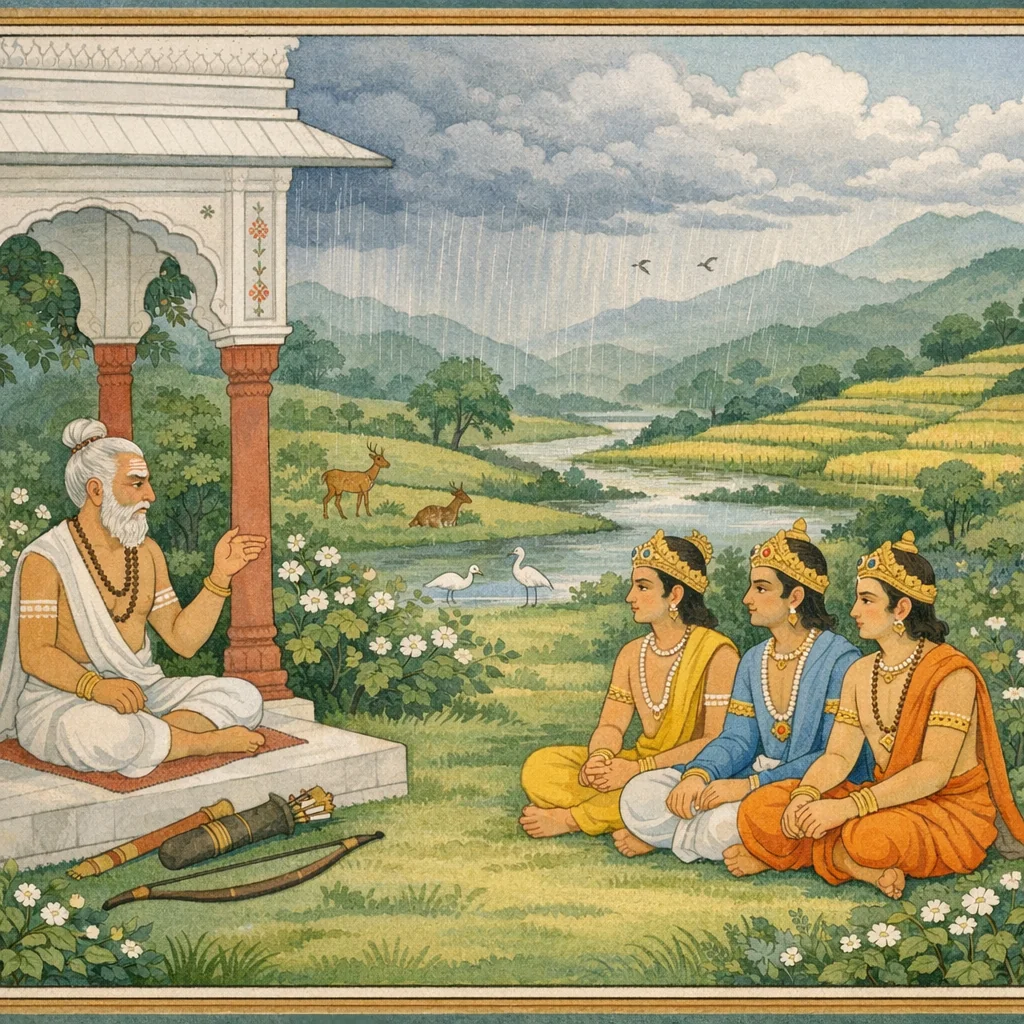
Adhyaya 109
Ādi-parva 109: Pāṇḍu’s Forest Hunt and Kiṃdama’s Curse (पाण्डोर्मृगयावृत्तान्तः—किंदमशापः)
Upa-parva: Sambhava Upa-Parva (Genealogical Origins and Birth Narratives)
Janamejaya asks Vaiśaṃpāyana to recount the Pāṇḍavas’ names and complete birth-origins, noting their exceptional prowess and previously mentioned divine portions in the aṃśāvataraṇa framework. Vaiśaṃpāyana shifts to an etiological episode: King Pāṇḍu, in a great forest frequented by beasts, sees a deer-leader engaged in mating and shoots the pair with sharp arrows. The struck deer collapses and speaks in human voice, framing Pāṇḍu’s act as ethically blameworthy due to its context and cruelty, despite Pāṇḍu’s defense that hunting is a kingly practice supported by precedent. The speaker reveals himself as the ascetic Kiṃdama, who had assumed deer-form to mate discreetly, and clarifies that Pāṇḍu acted without knowing this identity. Kiṃdama nonetheless imposes a consequence: when Pāṇḍu approaches intimacy with a beloved in a similar state of desire, death will ensue, and the beloved will follow him in devotion. The chapter closes with Vaiśaṃpāyana noting Kiṃdama’s death and Pāṇḍu’s immediate grief, marking the curse as a decisive constraint shaping subsequent lineage continuity.
Chapter Arc: वैशम्पायन जनमेजय को कुरुदेश की उस अद्भुत समृद्धि का चित्र दिखाते हैं जो भीष्म के धर्मपूर्ण शासन से फूटी—भूमि ऊर्ध्वसस्या हुई, अन्न रसवन्त हुए, और ऋतुओं के अनुसार वर्षा होने लगी। → समृद्धि केवल खेतों तक नहीं रहती—वाहन (घोड़े-हाथी) हृष्ट-पुष्ट, मृग-पक्षी मुदित, पुष्प-फल सुगन्धित; कुएँ, उद्यान, सभाभवन, वापियाँ और ब्राह्मण-आवास सर्व-ऋद्धि से युक्त होकर राष्ट्र को ‘सदोत्सव’ बना देते हैं। इस आदर्श व्यवस्था के भीतर एक सूक्ष्म प्रश्न उभरता है: क्या यह सुव्यवस्था केवल प्रकृति का अनुग्रह है, या धर्म-रक्षा का प्रतिफल? → भीष्म द्वारा ‘सर्वतः परिरक्षित’ कुरुदेश का वैभव चरम पर पहुँचता है—चैत्य और यूपों से अंकित रमणीय भूमि, और साथ ही धृतराष्ट्र, पाण्डु तथा विदुर का पुत्रवत् पालन-पोषण; संस्कार, व्रत, अध्ययन, श्रम-व्यायाम से युक्त होकर वे यौवन को प्राप्त होते हैं। → अध्याय यह स्थापित करता है कि कुरुवंश की अगली पीढ़ी का नैतिक-शारीरिक निर्माण भीष्म के हाथों हुआ—राज्य की उन्नति और राजकुमारों का संस्कार एक ही धर्म-नीति की दो धाराएँ हैं। → एक समय नीति-श्रेष्ठ भीष्म धर्मतत्त्वज्ञ विदुर से यथोचित वचन कहते हैं—आगामी अध्यायों के लिए नीति-परामर्श और राज-व्यवस्था के निर्णायक संवाद का द्वार खुलता है।
Shlokas
Verse 1
भीकम (2 अमान अष्टाधिकशततमोब< ध्याय: धृतराष्ट्र आदिके जन्म तथा भीष्मजीके धर्मपूर्ण शासनसे कुरुदेशकी सर्वांगीण उन्नतिका दिग्दर्शन वैशम्पायन उवाच (धृतराष्ट्रे च पाण्डौ च विदुरे च महात्मनि ।) तेषु त्रिषु कुमारेषु जातेषु कुरुजाड्लम् । कुरवो5थ कुरुक्षेत्र त्रयमेतदवर्धत,वैशम्पायनजी कहते हैं--जनमेजय! धृतराष्ट्र, पाण्डु और महात्मा विदुर--इन तीनों कुमारोंके जन्मसे कुरुवंश, कुरुजांगल देश और कुरुक्षेत्र--इन तीनोंकी बड़ी उन्नति हुई
Vaiśampāyana said: “O Janamejaya, when those three princes—Dhṛtarāṣṭra, Pāṇḍu, and the great-souled Vidura—were born, three things flourished greatly: the Kuru lineage, the land called Kuru-jāṅgala, and the sacred field of Kurukṣetra.”
Verse 2
ऊर्ध्वसस्या भवद् भूमि: सस्यानि रसवन्ति च । यर्थर्तुवर्षी पर्जन्यो बहुपुष्पफला द्रुमा:,पृथ्वीपर खेतीकी उपज बहुत बढ़ गयी, सभी अन्न सरस होने लगे, बादल ठीक समयपर वर्षा करते थे, वृक्षोंमें बहुत-से फल और फूल लगने लगे
Vaiśampāyana said: The earth became rich with upright, abundant crops, and the grains grew full of sap and flavor. The rain-god sent showers in their proper seasons, and the trees bore many flowers and fruits. Thus, under righteous order, nature itself turned generous and life became prosperous.
Verse 3
वाहनानि प्रहृष्टानि मुदिता मृगपक्षिण: । गन्धवन्ति च माल्यानि रसवन्ति फलानि च,घोड़े-हाथी आदि वाहन हृष्ट-पुष्ट रहते थे, मृग और पक्षी बड़े आनन्दसे दिन बिताते थे, फूलों और मालाओंमें अनुपम सुगन्ध होती थी और फलोंमें अनोखा रस होता था
Vaiśampāyana said: The conveyances were lively and thriving; the beasts and birds passed their days in gladness. Garlands were richly fragrant, and fruits were full of distinctive sweetness—signs of a land in harmony, where prosperity and well-being naturally pervaded life.
Verse 4
वणिमभ्भिक्षान्वकीर्यन्त नगराण्यथ शिल्पिभि: । शूराश्न कृतविद्याश्व सन््तश्न सुखिनो&5भवन्,सभी नगर व्यापार-कुशल वैश्यों तथा शिल्पकलामें निपुण कारीगरोंसे भरे रहते थे। शूर-वीर, विद्वान् और संत सुखी हो गये
Vaiśampāyana said: The cities became filled with merchants and with artisans of many crafts. The brave, the well-educated, and the virtuous were content, and they lived in happiness—signaling a social order where prosperity, skill, learning, and goodness supported public well-being.
Verse 5
नाभवन् दस्यव: केचिन्नाधर्मरुचयो जना: । प्रदेशेष्वपि राष्ट्राणां कृतं युगमवर्तत,कोई भी मनुष्य डाकू नहीं था। पापमें रुचि रखनेवाले लोगोंका सर्वथा अभाव था। राष्ट्रके विभिन्न प्रान्तोंमें सत्ययुग छा रहा था
Vaiśampāyana said: No bandits existed anywhere, and there were no people inclined toward unrighteousness. Even across the various provinces of the kingdoms, it was as though the Kṛta (Satya) Yuga prevailed—truth and moral order holding sway throughout the land.
Verse 6
धर्मक्रिया यज्ञशीला: सत्यव्रतपरायणा: । अन्योन्यप्रीतिसंयुक्ता व्यवर्थन्त प्रजास्तदा,उस समयकी प्रजा सत्य-व्रतके पालनमें तत्पर हो स्वभावतः यज्ञ-कर्ममें लगी रहती और धर्मानुकूल कर्मोमें संलग्न रहकर एक-दूसरेको प्रसन्न रखती हुई सदा उन्नतिके पथपर बढ़ती जाती थी
Vaiśampāyana said: In those days the people were devoted to righteous conduct, naturally inclined to sacrificial duties, steadfast in vows of truth, and bound together by mutual affection; thus they continually prospered and advanced along the path of well-being.
Verse 7
मानक्रोधविहीनाश्न नरा लोभविवर्जिता: । अन्योन्यमभ्यनन्दन्त धर्मोत्तरमवर्तत,सब लोग अभिमान और क्रोधसे रहित तथा लोभसे दूर रहनेवाले थे; सभी एक- दूसरेको प्रसन्न रखनेकी चेष्टा करते थे। लोगोंके आचार-व्यवहारमें धर्मकी ही प्रधानता थी
Vaiśampāyana said: The people were free from pride and anger, and they kept themselves apart from greed. They strove to gladden one another, and in their conduct and dealings, dharma prevailed above all else.
Verse 8
तन्महोदधिवत् पूर्ण नगरं वै व्यरोचत । द्वारतोरणनिर्यूहैर्युक्तम भ्रचयोपमै:,समुद्रकी भाँति सब प्रकारसे भरा-पूरा कौरवनगर मेघसमूहोंके समान बड़े-बड़े दरवाजों, फाटकों और गोपुरोंसे सुशोभित था
Vaiśaṃpāyana said: The city shone forth, filled to the brim like the great ocean. It was adorned with lofty gateways, archways, and projecting entrance-structures, resembling masses of clouds—conveying the Kaurava capital’s grandeur, order, and prosperity as an outward sign of royal power and civic discipline.
Verse 9
प्रासादशतसम्बाध॑ महेन्द्रपुरसंनिभम् । नदीषु वनखण्डेषु वापीपल्वलसानुषु । काननेषु च रम्येषु विजहुर्मुदिता जना:,सैकड़ों महलोंसे संयुक्त वह पुरी देवराज इन्द्रकी अमरावतीके समान शोभा पाती थी। वहाँके लोग नदियों, वनखण्डों, बावलियों, छोटे-छोटे जलाशयों, पर्वतशिखरों तथा रमणीय काननोंमें प्रसन्नतापूर्वक विहार करते थे
Vaiśaṃpāyana said: The city, crowded with hundreds of palaces, shone like Mahendra’s own capital. There the people, joyful at heart, spent their time in recreation—by rivers, in forest tracts, near wells and small ponds, upon slopes and uplands, and in delightful groves—depicting a civic life ordered enough to allow prosperity, leisure, and contentment.
Verse 10
उत्तरै: कुरुभि: सार्ध दक्षिणा: कुरवस्तथा । विस्पर्थमाना व्यचरंस्तथा देवर्षिचारणै:,उस समय दक्षिणकुरु देशके निवासी उत्तरकुरुमें रहनेवाले लोगों, देवताओं, ऋषियों तथा चारणोंके साथ होड़-सी लगाते हुए स्वच्छन्द विचरण करते थे
Vaiśampāyana said: The Southern Kurus too, along with the Northern Kurus, roamed freely—moving about in a spirit of friendly rivalry—keeping company with the gods, the divine seers, and the Cāraṇas. The scene conveys an idealized realm where beings of different orders mingle without fear, and excellence is pursued through emulation rather than hostility.
Verse 11
नाभवत् कृपण: ककश्रिन्नाभवन् विधवा: स्त्रिय: । तस्मिञज्जनपदे रम्ये कुरुभिबहुलीकृते,कौरवोंद्वारा बढ़ाये हुए उस रमणीय जनपदमें न तो कोई कंजूस था और न विधवा स्त्रियाँ देखी जाती थीं
Vaiśampāyana said: In that delightful realm, made populous and flourishing by the Kurus, there was not a single miser, and no women were seen living as widows.
Verse 12
कूपारामसभावाप्यो ब्राह्म॒णावसथास्तथा । बभूवु: सर्वर्द्धियुतास्तस्मिन् राष्ट्र सदोत्सवा:,उस राष्ट्रके कुओं, बगीचों, सभाभवनों, बावलियों तथा ब्राह्मणोंके घरोंमें सब प्रकारकी समृद्धियाँ भरी रहती थीं और वहाँ नित्य-नूतन उत्सव हुआ करते थे
Vaiśampāyana said: In that kingdom, the wells, pleasure-groves, assembly halls, and stepwells, as well as the dwellings of the brāhmaṇas, were all endowed with every kind of prosperity; and the land was continually alive with festivals.
Verse 13
भीष्मेण धर्मतो राजन् सर्वतः परिरक्षिते | बभूव रमणीयश्व चैत्ययूपशताड्कित:,जनमेजय! भीष्मजीके द्वारा सब ओससे धर्मपूर्वक सुरक्षित भूमण्डलमें वह कुरुदेश सैकड़ों देवस्थानों और यज्ञस्तम्भोंसे चिह्नित होनेके कारण बड़ी शोभा पाता था
Vaiśampāyana said: O King Janamejaya, when Bhīṣma protected the realm on every side in accordance with dharma, the land of the Kurus became truly delightful—distinguished everywhere by hundreds of sacred shrines and sacrificial posts.
Verse 14
स देश: परराष्ट्राणि विमृज्याभिप्रवर्धित: । भीष्मेण विहितं राष्ट्रे धर्मचक्रमवर्तत,वह देश दूसरे राष्ट्रोंका भी शोधन करके निरन्तर उन्नतिके पथपर अग्रसर हो रहा था। राष्ट्रमें सब ओर भीष्मजीके द्वारा चलाया हुआ धर्मका शासन चल रहा था
Vaiśampāyana said: That realm, having also subdued and brought other kingdoms under control, continued to grow and advance. Within the kingdom, the wheel of dharma—an orderly rule grounded in righteousness—set in motion by Bhīṣma, prevailed everywhere.
Verse 15
क्रियमाणेषु कृत्येषु कुमाराणां महात्मनाम् | पौरजानपदा: सर्वे बभूवु: सततोत्सवा:,उन महात्मा कुमारोंके यज्ञोपवीतादि संस्कार किये जानेके समय नगर और देशके सभी लोग निरन्तर उत्सव मनाते थे
Vaiśampāyana said: While the prescribed rites for those noble princes were being performed—such as the investiture with the sacred thread and related sacraments—all the townspeople and countryfolk remained in a continual festive spirit.
Verse 16
गृहेषु कुरुमुख्यानां पौराणां च नराधिप । दीयतां भुज्यतां चेति वाचो<श्रूयन्त सर्वश:,जनमेजय! कुरुकुलके प्रधान-प्रधान पुरुषों तथा अन्य नगरनिवासियोंके घरोंमें सदा सब ओर यही बात सुनायी देती थी कि “दान दो और अतिथियोंको भोजन कराओ'
Vaiśampāyana said: “O king, in the homes of the foremost men of the Kuru line and of the townspeople as well, everywhere one continually heard the same refrain: ‘Give in charity, and feed the guests.’”
Verse 17
धृतराष्ट्रश्न पाण्डुश्व विदुरश्ष महामति: । जन्मप्रभृति भीष्मेण पुत्रवत् परिपालिता:,धृतराष्ट्र, पाण्डु तथा परम बुद्धिमान् विदुर--इन तीनों भाइयोंका भीष्मजीने जन्मसे ही पुत्रकी भाँति पालन किया
Vaiśampāyana said: Dhṛtarāṣṭra, Pāṇḍu, and the great-minded Vidura—these three brothers were cared for by Bhīṣma from their very birth, protected and raised as though they were his own sons.
Verse 18
संस्कारै: संस्कृतास्ते तु व्रताध्ययनसंयुता: । श्रमव्यायामकुशला: समपद्यन्त यौवनम्,उन्होंने ही उनके सब संस्कार कराये। फिर वे ब्रह्मचर्यव्रतके पालन और वेदोंके स्वाध्यायमें तत्पर हो गये। परिश्रम और व्यायाममें भी उन्होंने बड़ी कुशलता प्राप्त की। फिर धीरे-धीरे वे युवावस्थाको प्राप्त हुए
Having been duly refined by the prescribed rites of passage, they became steadfast in the discipline of brahmacarya and devoted to Vedic study. Skilled as well in exertion and physical training, they gradually came to the threshold of youth.
Verse 19
धनुर्वेदे5श्वपृष्ठे च गदायुद्धेडसिचर्मणि । तथैव गजशिक्षायां नीतिशास्त्रेषु पारगा:,धनुर्वेद, घोड़ेकी सवारी, गदायुद्ध, ढाल-तलवारके प्रयोग, गजशिक्षा तथा नीतिशास्त्रमें वे तीनों भाई पारंगत हो गये
Vaiśampāyana said: The three brothers became fully accomplished in the science of archery, in riding on horseback, in combat with the mace, in the use of sword and shield, and likewise in the training of elephants and in the treatises on polity and right conduct.
Verse 20
इतिहासपुराणेषु नानाशिक्षासु बोधिता: । वेदवेदाड्तत्त्वज्ञा: सर्वत्र कृतनिश्चया:,उन्हें इतिहास, पुराण तथा नाना प्रकारके शिष्टाचारोंका भी ज्ञान कराया गया। वे वेद- वेदांगोंके तत्त्वज्ञ तथा सर्वत्र एक निश्चित सिद्धान्तके माननेवाले थे
Vaiśampāyana said: They were instructed in the Itihāsas and Purāṇas, and trained in many disciplines of proper conduct and education. They were knowers of the true purport of the Veda and its auxiliary sciences, and in every matter they stood firm in settled conviction—guided by a consistent principle.
Verse 21
पाण्डुर्थनुषि विक्रान्तो नरेष्वभ्यधिको5भवत् | अन्येभ्यो बलवानासीद्ू धृतराष्ट्री महीपति:,पाण्डु धर्नुर्विद्यामें उस समयके मनुष्योंमें सबसे बढ़-चढ़कर पराक्रमी थे। इसी प्रकार राजा धृतराष्ट्र दूसरे लोगोंकी अपेक्षा शारीरिक बलमें बहुत बढ़कर थे
Pāṇḍu, mighty in the science of the bow, surpassed all men in valor; and likewise King Dhṛtarāṣṭra exceeded others by sheer bodily strength.
Verse 22
त्रिषु लोकेषु न त्वासीत् कश्चिद् विदुरसम्मित: । धर्मनित्यस्तथा राजन् धर्मे च परमं गत:,राजन! तीनों लोकोंमें विदुरजीके समान दूसरा कोई भी मनुष्य धर्मपरायण तथा धर्ममें ऊँची अवस्थाको प्राप्त (आत्मद्रष्टा)- नहीं था
O king, in the three worlds there was none equal to Vidura—ever devoted to dharma, steadfast in righteousness, and risen to dharma’s highest state.
Verse 23
प्रणष्टं शन्तनोर्वशं समीक्ष्य पुनरुद्धृतम् । ततो निर्वचनं लोके सर्वराष्ट्रेष्ववर्तत,नष्ट हुए शान्तनुके वंशका पुनः उद्धार हुआ देखकर समस्त राष्ट्रके लोग परस्पर कहने लगे--
Seeing that Śantanu’s lineage—once thought to have perished—had been raised up again, people in every kingdom began to speak of it among themselves, and the report spread far and wide.
Verse 24
वीरसूनां काशिसुते देशानां कुरुजाड्लम् | सर्वधर्मविदां भीष्म: पुराणां गजसाह्नयम्,“वीर पुत्रोंको जन्म देनेवाली स्त्रियोंमें काशिराजकी दोनों पुत्रियाँ सबसे श्रेष्ठ हैं, देशोंमें कुरुजांगल देश सबसे उत्तम है, सम्पूर्ण धर्मज्ञोंमें भीष्मजीका स्थान सबसे ऊँचा है तथा नगरोंमें हस्तिनापुर सर्वोत्तम है।” धृतराष्ट्र अंधे होनेके कारण और विदुरजी पारशव (शूट्राके गर्भसे ब्राह्मणद्वारा उत्पन्न) होनेसे राज्य न पा सके; अतः सबसे छोटे पाण्डु ही राजा हुए
Vaiśampāyana said: “Among women famed for bearing heroic sons, the two daughters of the king of Kāśī are foremost. Among regions, Kuru-jāṅgala is the best. Among all who know dharma in its fullness, Bhīṣma stands highest. And among cities, Gajasāhvaya (Hastināpura) is supreme.” In this setting, the succession is made clear: Dhṛtarāṣṭra, being blind, and Vidura, being of pārasava birth, did not obtain the kingdom; therefore the youngest, Pāṇḍu, became king.
Verse 25
धृतराष्ट्रस्त्वचक्षुष्टवाद् राज्यं न प्रत्यपद्यत | पारसवत्वाद् विदुरो राजा पाण्डु्बभूव ह,“वीर पुत्रोंको जन्म देनेवाली स्त्रियोंमें काशिराजकी दोनों पुत्रियाँ सबसे श्रेष्ठ हैं, देशोंमें कुरुजांगल देश सबसे उत्तम है, सम्पूर्ण धर्मज्ञोंमें भीष्मजीका स्थान सबसे ऊँचा है तथा नगरोंमें हस्तिनापुर सर्वोत्तम है।” धृतराष्ट्र अंधे होनेके कारण और विदुरजी पारशव (शूट्राके गर्भसे ब्राह्मणद्वारा उत्पन्न) होनेसे राज्य न पा सके; अतः सबसे छोटे पाण्डु ही राजा हुए
Because Dhṛtarāṣṭra was blind, he did not obtain the kingship; and because Vidura was of pārasava birth, he too could not become king. Therefore Pāṇḍu became the ruler.
Verse 26
कदाचिदयथ गाड़ेय: सर्वनीतिमतां वर: | विदुरं धर्मतत्त्वज्ञं वाक्यमाह यथोचितम्,एक समयकी बात है, सम्पूर्ण नीतिज्ञ पुरुषोंमें श्रेष्ठ गंगानन्दन भीष्मजी धर्मके तत्त्वको जाननेवाले विदुरजीसे इस प्रकार न्यायोचित वचन बोले
Vaiśampāyana said: Once, Bhīṣma—the son of the Gaṅgā and the foremost among all who know statecraft and right conduct—addressed Vidura, the knower of dharma’s true principles, speaking to him words that were fitting and just.
Verse 107
इस प्रकार श्रीमहाभारत आदिपरव्वके अन्तर्गत सम्भवपर्वमें अणीमाण्डव्योपाख्यानविषयक एक सौ सातवाँ अध्याय पूरा हुआ
Thus ends the one hundred and seventh chapter of the Sambhava Parva, a section within the Ādi Parva of the Śrī Mahābhārata, dealing with the episode of the sage Aṇīmāṇḍavya. The colophon marks the completion of this narrative unit, signaling a transition while underscoring the Mahābhārata’s ethical concern with dharma, justice, and the consequences of actions.
Verse 108
इति श्रीमहाभारते आदिपर्वणि सम्भवपर्वणि पाण्डुराज्याभिषेकेडष्टाधिकशततमो<ध्याय:
Thus, in the Śrī Mahābhārata, within the Ādi Parva and specifically the Sambhava Parva, ends the one-hundred-and-eighth chapter, concerning the consecration (abhiṣeka) of Pāṇḍu to royal sovereignty. This closing colophon marks the completion of a narrative unit that legitimizes kingship through orderly succession and ritual sanction, underscoring the epic’s concern for dharma-based governance.
Frequently Asked Questions
The dilemma concerns whether a ruler’s sanctioned practice (hunting) remains ethically valid when performed in a vulnerable context (animals mating) and whether institutional permission overrides compassion, timing, and avoidable harm.
The chapter teaches that dharma is not only rule-based but context-dependent: intention, circumstance, and restraint matter, and actions performed under passion or negligence can generate binding consequences beyond immediate awareness.
No explicit phalaśruti is stated; the meta-function is etiological—explaining a causal constraint (the curse) that organizes later narrative developments and underscores karmic accountability within the epic’s moral architecture.