Adhyaya 202
Strīroga–Prasava Cikitsā, Bāla-Rakṣā, Rasāyana and Vājīkaraṇa Prayogas
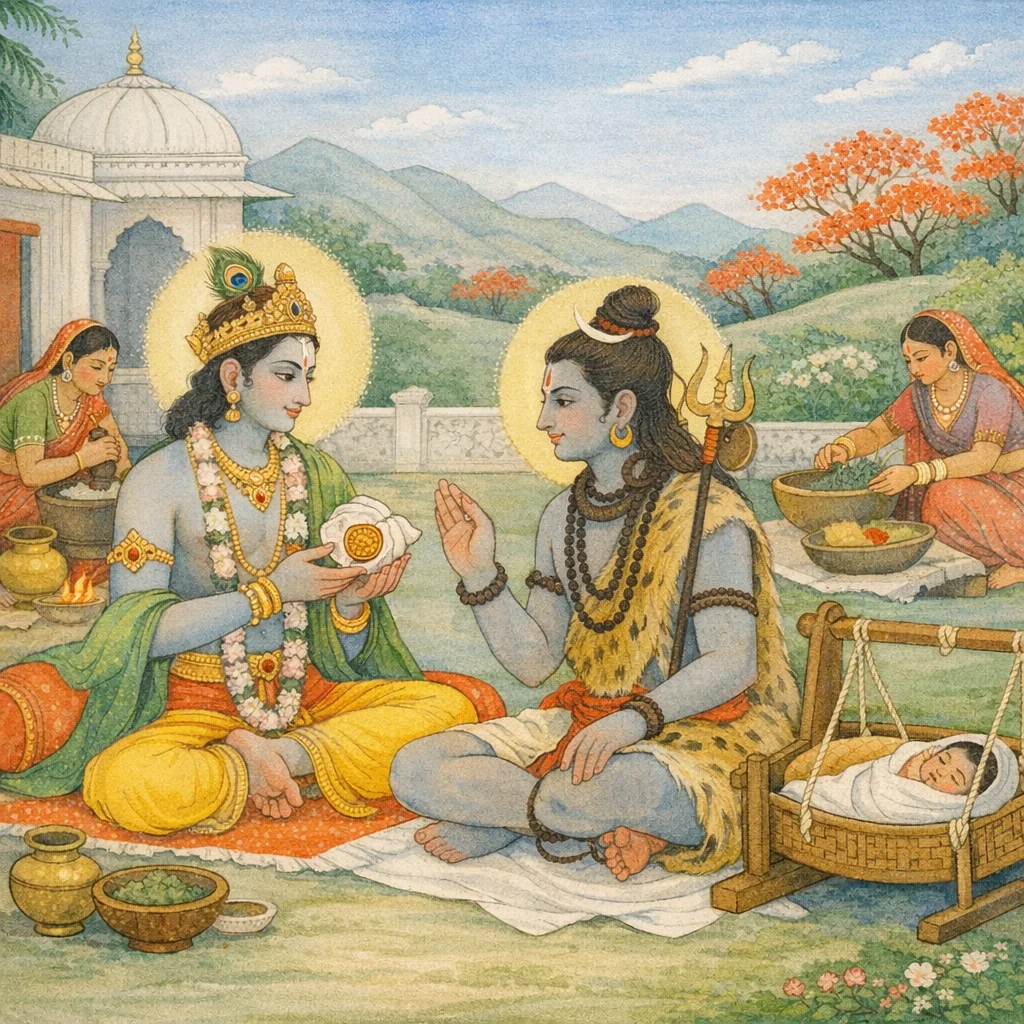
Continuing the Purāṇic teaching of practical dharma and bodily well-being, Hari instructs Śiva in a sequence of household remedies and rites. It first treats women’s reproductive pain and obstetric distress with roots and pastes (punarnavā, apāmārga, rudrendravāruṇī), then turns to lactation support (bhūmi-kūṣmāṇḍa/rice-flour with milk) and gynecological disorders such as womb-colic, pradara, and blood-gulma through powders, decoctions, and cooling measures. Measures to prevent miscarriage and promote delivery are added, including ingestible preparations (asafoetida with rock-salt) and symbolic bindings or utterances involving roots. The scope then widens to child-protection: tilaka with gorocanā, drinks with sugar and kuṣṭha, and amulets of śaṅkha-nābhi, vacā, kuṣṭha, and iron. Finally it moves to rasāyana and vājīkaraṇa—palāśa-based recipes for intellect and longevity, claims of rejuvenation and eloquence, fragrance and lifespan formulas, and strength/sexual-vigor preparations including a mercurial compound and black-gram milk preparations. Thus the chapter bridges reproductive care to protective dharma and culminates in rejuvenation, framing health-practice as auspicious, sin-dispersing, and life-enhancing discipline.
Shlokas
Verse 1
नामैकाधिकद्विशततमो ऽध्यायः हरिरुवाच / एकं पुनर्नवामूलमपामार्गस्य वा शिव / सरसं योनिनिः क्षिप्तं वराङ्गस्य व्यथां हरेत् / प्रसूतिवेदनाञ्चैव तरुणीनां व्यथां हरेत्
Hari said: “O Śiva, if a single root of punarnavā or of apāmārga is made moist and placed within the yoni, it removes pain in the woman’s genital region; it also eases the pains of childbirth and the distress of young women.”
Verse 2
भूमि कूष्माण्डमूलं वै शालिचूर्णमथापि वा / सप्ताहं दुग्धपीतं स्यात्स्त्रीणां बहुपयस्करम्
Indeed, if the root of bhūmi-kūṣmāṇḍa (a gourd-like plant), or even rice flour, is taken with milk for seven days, it is said to increase abundant breast-milk in women.
Verse 3
रुद्रेन्द्रवारुणीमुलं लेपात्स्त्रीस्तनवेदना / नश्येत घृतपक्वा च कार्यावश्यन्तु पोलिका
By applying a paste (lepa) made from the root called Rudrendravāruṇī, a woman’s pain in the breasts is destroyed. It should be prepared by cooking it in ghee, and a poultice (polikā) should certainly be applied.
Verse 4
भक्षिता सा महेशान योनिशूलं विनाशयेत् / प्रलेपिता कारवेल्लमूलेनैव विनिर्गता
O Maheśāna, when it is eaten it destroys pain in the womb (gynecological colic). When applied as a paste with the root of kāravella (bitter gourd), it causes the obstructing condition to be expelled and come out.
Verse 5
योनिः प्रवेशमायाति नात्र कार्या विचारणा / नीलीपटोलमूलानि साज्यानि तिलवारिणा
It enters the womb—there is no need for further doubt about this. With sesame-water mixed with ghee, one should administer the roots of nīlī and paṭola as the prescribed remedy.
Verse 6
पिष्टान्येषां प्रलेपो वै ज्वालागर्दभरागनत् / पाठामूलं रुद्र पीतं पिष्टं तण्डुलवारिणा
For these afflictions, a plaster made of ground ingredients is prescribed—one that counters burning heat, foul irritation, and heavy distress. The root of pāṭhā, together with rudra-pīta, should be ground and applied, triturated with rice-water.
Verse 7
पापरोगहरं स्याच्च कुष्ठपानं तथैव च / वास्योदकञ्च समधु पीतमन्तर्गतस्य वै
The drink called Kuṣṭha-pāna is said to remove sins and diseases; likewise, drinking Vāsya-water mixed with honey is indeed beneficial for one’s internal ailments.
Verse 8
पापरोगस्य सन्तापनिवृक्तिं कुरुते शिव / घृततुल्या रुद्र लाक्षा पीता क्षीरेण वै सह
O Śiva, Rudra-lākṣā—unctuous like ghee—when drunk together with milk, removes the burning torment of diseases that arise from sin.
Verse 9
प्रदरं हरते रोगं नात्र कार्या विचारणा / द्विजयष्टी त्रिकटुकं चूर्णं पीतं हरेच्छिव
This remedy removes the disease called pradara; there is no need for doubt. Powder of dvijayaṣṭī along with trikaṭuka, when taken internally, surely removes pradara.
Verse 10
तिलक्वाथेन संयुक्तं रक्तगुल्मं स्त्रिया हर / कुसुमस्य निबद्धञ्च तरुणीनां महेश्वर
O Maheśvara, for a woman, a decoction prepared with sesame is said to remove the disorder called “blood-gulma”; and likewise, a floral binding, like an amulet, is prescribed for young women.
Verse 11
रक्तोत्पलस्य वै कन्दं-शर्करातिलसंयुतम् / पीतं सशर्करं स्त्रीणां धारयेद्गर्भपातनम्
The rhizome of the red lotus, mixed with sugar and sesame, when taken as a drink with sugar, is said to help a woman retain the fetus—preventing miscarriage.
Verse 12
रक्तस्त्रावस्य नाशः स्याच्छीतोदकनिषेवणात् / पीतन्तु काञ्जिक रुद्र क्वथितं शरपुङ्खया
Bleeding is said to subside by the use of cold water. Also, one should drink kāñjika (sour gruel) boiled with the herb śarapuṅkhā as a remedial preparation.
Verse 13
हिङ्गुस्त्रैन्धवसंयुक्तं शीघ्रं स्त्रीणां प्रसूतिकृत् / मातुलुङ्गस्य वै मूलं कटिबद्धं प्रसूतिकृत्
Asafoetida (hiṅgu) mixed with saindhava (rock-salt) swiftly promotes a woman’s delivery. Likewise, the root of the citron (mātuluṅga), when bound about the waist, is said to aid childbirth.
Verse 14
अपामार्गस्य वै मूले गर्भवत्यास्तु नामतः / उत्पाट्यमाने सकले पुत्त्रः स्यादान्यथा सुता
At the root of the apāmārga plant, if the pregnant woman’s name is uttered, then—when that root is wholly uprooted—a son is said to be born; otherwise, a daughter.
Verse 15
अपामार्गस्य वै मूले नारीणां शिरसि स्थिते / गर्भशूलं विनश्येत नात्र कार्या विचारणा
If the root of apāmārga is placed upon a woman’s head, the pain arising in pregnancy is said to be destroyed—of this there is no need for further deliberation.
Verse 16
कर्पूर-मदनफल-मधुकैः पूरितः शिव / योनिः सुभा स्याद्वृद्धाया युवत्याः किं पुनर्हर
O Śiva—if the yoni is filled with camphor, the madana-fruit, and honey, it becomes auspicious even for an elderly woman; how much more so, O Hara, for a young woman.
Verse 17
यस्य बालस्य तिलकः कृतो गौरोचनाख्यया / शर्करा-कुष्ठपानञ्च दत्तं स स्याच्च निर्भयः / विष-भूत-ग्रहादिभ्यो व्याधिभ्यो बालकः शिव
A child upon whom a tilaka is made with the substance called gorocanā, and who is also given a drink prepared with sugar and kuṣṭha, becomes fearless—guarded from poison, from spirits and grahas (seizing influences), and from other diseases; O Śiva, that child becomes auspicious and well.
Verse 18
शङ्ख-नाभि-वचा-कुष्ठ-लोहानां धारणं सदा / बालानामुपसर्गेभ्यो रुद्र रक्षाकरं भवेत्
If one always wears, as protective amulets, śaṅkha-nābhi, vacā, kuṣṭha, and iron, it becomes Rudra’s protection, guarding children from afflictions and contagious influences.
Verse 19
पलाशचूर्णं समधु गव्याज्यामलकान्वितम् / सविडङ्गं पीतमात्रं नरं कुर्यान्महामतिम्
Palāśa (Butea) flower-powder mixed with honey, combined with cow’s ghee and āmalaka, and taken together with viḍaṅga—mere drinking of this preparation makes a man greatly intelligent.
Verse 20
मासैकेन महादेव जरा-मरणवर्जितः
O Mahādeva, within a single month one becomes free from old age and death.
Verse 21
पलाशबीजं सघृतं तिल-मध्वन्वितं समम् / सप्ताहं भक्षितं रुद्र जरां नयति संक्षयम्
O Rudra, palāśa seeds taken with ghee and mixed in equal measure with sesame and honey—when eaten for seven days—cause old age to diminish and waste away.
Verse 22
रुद्रामलकचूर्णं वै मधु-तैल घृतान्वितम् / जग्ध्वा मासं युवा स्याच्च नरो वागीश्वरी भवेत्
Indeed, if a man consumes for a month the powder of rudrāmalaka mixed with honey, oil, and ghee, he becomes youthful—and he attains mastery of speech, becoming eloquent like Vāgīśvarī.
Verse 23
शिवामलकचूर्णं वै मधुना उदकेन वा / बलानि कुर्यान्नासायाः प्रत्यूषे भक्षितं शिव
Powdered śivā (harītakī) and āmalaka, taken with honey or with water, strengthens the nose and its functions. O Śiva, when eaten at dawn it increases vitality.
Verse 24
कुष्ठचूर्णं साज्य-मधु प्रातर्जग्ध्वा भवेन्नरः / साक्षात्सुरभिदेहो वै जीवेद्वर्षसहस्रकम्
A man who eats kuṣṭha (costus) powder mixed with ghee and honey in the morning becomes truly fragrant-bodied, and indeed lives for a thousand years.
Verse 25
माषस्य विदलान्ये वितुषाणि महेश्वर / घृतभावितशुष्काणि पयसा साधितानि वै
O Maheśvara, those split black-gram lentils, dehusked, dried after being coated with ghee, and then cooked in milk—indeed, such a preparation is prescribed.
Verse 26
समाध्वाज्यपयोभिश्च भक्षयित्वा च कामयेत् / स्त्रीणां शतं महादेव तत्क्षणान्नात्र संशयः
Having eaten it along with ghee and milk, desire for sexual enjoyment arises. O Mahādeva, he will obtain a hundred women instantly—of this there is no doubt.
Verse 27
रसश्चैरण्डतैलेन गन्धकेन शुभो भवेत् / त्रिकालोदकसंघुष्टो बलकृद्भक्षणाद्भवेत्
This rasa (mercurial) preparation becomes beneficial when combined with castor oil and gandhaka (sulphur). When it is washed or agitated with water three times a day, consuming it is said to promote strength.
Verse 28
दुग्धं वितुषमाषैश्च शिम्बाबीजैश्च साधितम् / अपामार्गस्य तैलेन पीतं स्त्रीशतकामकृत्
Milk cooked with dehusked black gram and the seeds of the śimbā plant, when drunk together with apāmārga oil, is said to kindle desire—as though for a hundred women.
Frequently Asked Questions
It states that pradara is removed by taking a powder of dvijayaṣṭī together with trikaṭuka. The framing is both therapeutic and dharmic: relief from disease is linked to the pacification of sin-born afflictions, placing gynecological care within a moral-auspicious worldview.
Childbirth is aided through ingestible and external measures (e.g., asafoetida with rock-salt for promoting delivery; mātuluṅga root tied at the waist). Miscarriage prevention is described via a drink of red-lotus rhizome mixed with sugar and sesame. The text presents these as pragmatic household interventions with auspicious intent.
A tilaka using gorocanā and a drink with sugar and kuṣṭha are said to protect from poison, spirits, grahas, and diseases. Additionally, wearing śaṅkha-nābhi, vacā, kuṣṭha, and iron is described as a Rudra-protection guarding children from afflictions and contagion-like influences.
Rasāyana themes include palāśa-based preparations for intelligence and claims of youthfulness/eloquence through āmalaka/harītakī and related compounds. Vājīkaraṇa elements appear in black-gram milk preparations and other formulas said to intensify desire and sexual capacity, including a mercurial preparation combined with castor oil and sulphur.