Adhyaya 191
Viṣa-hara Yogas: Puṣya-Nakṣatra Remedies for Serpents, Stings, and Compounded Poisons
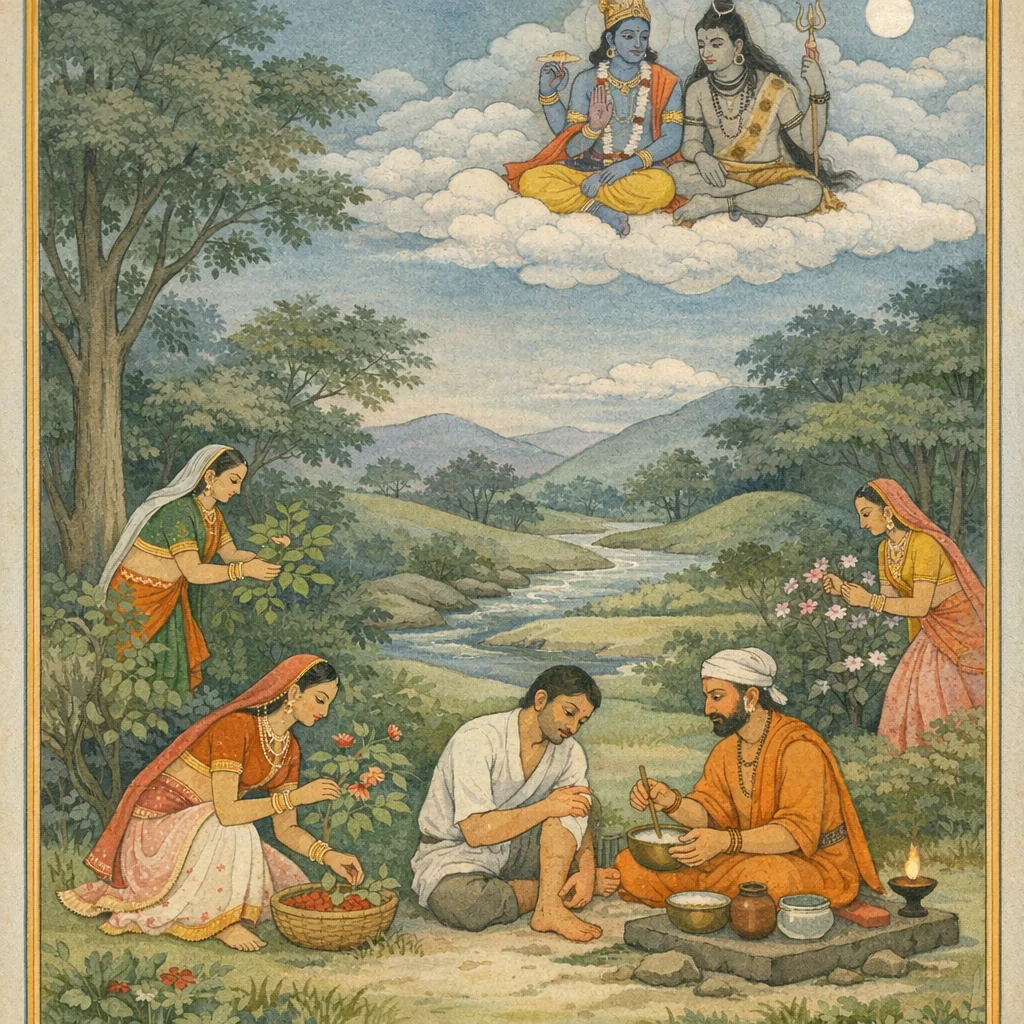
Continuing the Garuḍa Purāṇa’s practical, dharma-guided teaching, Hari instructs Śiva in a sequence of protections and antidotal formulas against many kinds of poison (viṣa). The chapter opens with gathering roots on Puṣya day (punarnavā, śalmali, arka, lajjālukā) and a strong serpent-protection theme, including wearing a Garuḍa (Tārkṣya) image so that serpents become as though “unable to see” the wearer. It then lists internal drinks (rice-water with ghee, milk-based preparations, sugar with licorice, ash-gourd juice) and external applications (pastes of salts, herbs, and minerals) for bites and stings—snake, scorpion, bee, spider—as well as special conditions like gara-viṣa and poison-caused mouth or tooth pain. Remedies also address animal-related afflictions (dog, frog) and household harms (rat poison, intoxication), and the adhyāya ends with topical treatment for itching in horses. Overall it reads as a therapeutic manual within sacred dialogue, reinforcing the Purāṇic theme that right timing, right substances, and divinely sanctioned practice can lessen calamity and restore order.
Shlokas
Verse 1
ऽध्यायः हरिरुवाच / पुनर्नवाया मूलञ्च श्वेतं पुष्ये समाहृतम् / वारि पीतं तस्य पार्श्व भवनेषु न पन्नगाः
Hari said: “On the day of the Puṣya nakṣatra, gather the white root of punarnavā. If its water is drunk, then in the nearby dwellings serpents do not remain.”
Verse 2
तार्क्ष्यमूर्तिं वहेद्यो वै भल्लूकदन्तनिर्मिताम् / स पन्नगैर्न दृश्येत यावज्जीवं वृषध्वज
O Vṛṣadhvaja (Śiva), whoever bears an image of Tārkṣya (Garuḍa) made from a bear’s tooth will not be seen by serpents for as long as he lives.
Verse 3
पिबेच्छल्मलिमूलं यः पुष्यर्क्षे रुद्र वारिणा / तस्मिन्नपास्तदशना नागाः स्युर्नात्र संशयः
O Rudra, whoever on the Puṣya nakṣatra drinks the root of the śalmali tree mixed with “Rudra-water”—toward that person the nāgas become bereft of fangs; of this there is no doubt.
Verse 4
पुष्ये लज्जालुकामूले हस्तबद्धे तु पन्नगान् / गृह्णीयाल्लेपतो वापि नात्र कार्या विचारणा
When the nakṣatra is Puṣya, one should seize serpents by means of the root of the lajjālukā plant—either with the hand bound for protection or even by applying a smear/paste; in this matter no further deliberation is required.
Verse 5
पुष्येश्वेतार्कमूलन्तु पीतं शीतेन वारिणा / नश्येतु दंशकविषं करवीरादिजं विषम्
If, on the day of the Puṣya nakṣatra, the root of the white arka plant is drunk with cold water, then the poison from bites and stings, as well as poisons arising from plants such as karavīra (oleander), is destroyed.
Verse 6
महाकालस्य वै मूलं पिष्टं तत्काञ्जिकेन वै / वोड्राणां डुण्डुभानां च तल्लोपो हरते विषम्
The root of Mahākāla, ground and mixed with kāñjika (sour gruel), removes poison; and when applied, it also counteracts the poison that manifests as voḍrā and the venom of ḍuṇḍubha (serpent-poison).
Verse 7
तण्डुलीयकमूलं च पिष्टं तण्डुलवारिणा / घृतेन सह पीतन्तु हरेत्सर्वाविषाणि च
The root of taṇḍulīyaka, ground with rice-water and drunk together with ghṛta (ghee), removes all kinds of poisons.
Verse 8
नीलीलज्जालुकामूलं पिष्टं तण्डुलवारिणा / पीतं तद्दंशकविषं नश्येदेकेन वोभयोः
If the roots of nīlī and lajjālukā are ground with rice-water and then drunk, the poison arising from a bite or sting is destroyed; by this single remedy, both effects are removed.
Verse 9
कूष्माण्डकस्य स्वरसः सगुडः सहशर्करः / पीतः सदुग्धो हन्याच्च दंशकस्यविषं च वै
The fresh juice of kūṣmāṇḍa (ash-gourd), mixed with guda (jaggery) and sugar and drunk together with milk, indeed destroys the poison of a biting creature.
Verse 10
तथा कोद्रवमूलस्य मोहस्य हर एव च / यष्टीमधुसमायुक्ता तथा पीता च शर्करा
Likewise, a preparation made from the root of kodrava removes moha (delusion); and sugar, taken together with yaṣṭīmadhu (licorice), is also to be consumed.
Verse 11
सदुग्धा च त्रिरात्रेण मूषकानां विषं हरेत् / चुलुकत्रयपानाच्च वारिणः शीतलस्य वै
Good milk, taken for three nights, removes the poison of rats; likewise, by drinking three palmfuls of cool water, its effect is truly eased.
Verse 12
ताम्बूलदग्धमुखस्य लालास्त्रावो विनश्यति / घृतं सशर्करं षीत्वा मद्यपानमदो न वै
For one whose mouth has been scorched by chewing betel, the excessive flow of saliva is checked. Likewise, after taking cooled ghee mixed with sugar, the intoxication born of liquor does not remain.
Verse 13
कृष्णाङ्कोलस्य मूलेन पीतं सुक्वथितं जलम् / ततो नश्यद्गरविषं त्रिरात्रेण महेश्वर
O Maheśvara, if water well boiled with the root of kṛṣṇāṅkola is drunk, then the compounded poison (gara-viṣa) is destroyed within three nights.
Verse 14
उष्णं गव्यघृतं चैव सैन्धवेन समन्वितम् / नाशयेत्तन्महादेव वेदनां वृश्चिकोद्भवाम्
Warm cow’s ghee, mixed with rock-salt—O Mahādeva—destroys the pain that arises from a scorpion’s sting.
Verse 15
कुसुभं कङ्कुमञ्चैव हरितालं मनः शिला / करञ्जं पिषितं चैव ह्यर्कमूलं च शङ्कर
Kusubha (safflower), kankuma (saffron), haritāla (orpiment), manaḥ-śilā (realgar), the pulp of karañja, and the root of arka—O Śaṅkara—(these are to be used).
Verse 16
विषंनृणां विनश्येत्तु एतेषां भक्षणाच्छिव / दीपतैलप्रदानाच्च दंशैराकीटजैः शिव / खर्जूरकविषं नश्येत्तदा वै नात्र संशयः
O Śiva, the poison in human beings is destroyed by consuming these remedies. And by offering lamp-oil for the sacred lamp, the poison arising from the bites of insects and other small creatures is removed. Likewise, the poison caused by kharjūraka is dispelled—of this there is no doubt.
Verse 17
दंशस्थानं वृश्चिकस्य शुण्ठी तगरसंयुता / नश्येन्मधुमक्षिकाया एतेषां लेपतो विषम्
If dry ginger mixed with tagara is applied to the site of a scorpion’s sting, then by smearing this paste the poison of a honey-bee sting is also destroyed.
Verse 18
शतपुष्पा सैन्धवञ्च साज्यं वा तेन लेपयेत् / शिरीषस्य तु बीजंवै सिद्ध क्षीरेण घर्षितम्
One should apply as a paste either śatapuṣpā along with rock-salt (saindhava), or mixed with ghee. Alternatively, the seed of the śirīṣa tree, ground with well-boiled (medicated) milk, should be applied.
Verse 19
तल्लेपेन महादेव नश्येत्कुक्कुरजं विषम् / ज्वलिताग्निर्वारिसेको तथा दर्दुरजं विषम्
O Mahādeva, by applying that ointment the poison produced from a dog is destroyed; likewise, as water sprinkled upon a blazing fire, the poison produced from a frog is destroyed.
Verse 20
धत्तूरकरसोन्मिश्रं क्षीराद्यगुडपानतः / शूनां विषं विनश्येत्तु शशाङ्काङ्कितशेखर
O Śaśāṅkāṅkitaśekhara (Śiva, whose crest bears the moon), by drinking jaggery mixed with milk and the juice of dhattūra, the poison of a dog is destroyed.
Verse 21
वटनिम्बशमीनाञ्च वल्कलैः क्वथितं जलम् / तत्सेकान्मुखदन्तानां नश्येद्वै विषवेदना
Water boiled with the bark of the banyan, neem, and śamī trees—used as a mouth-rinse—indeed removes the pain of poison affecting the mouth and teeth.
Verse 22
लेपनाद्देवदारोश्च गैरिकस्य च लेपनात् / नागेश्वरो दरिद्रे द्वे तथा मञ्जिष्ठका हर / एभिर्लेपाद्विनश्येत्तु लूताविषमुमापते
O Lord Umāpati (Śiva), by applying a paste made from deva-dāru (cedar), red ochre (gairika), nāgeśvara, the two daridrā herbs, and mañjiṣṭhā, the poison of a spider is destroyed.
Verse 23
करञ्जस्य तु बीजानि वरुणच्छदमेव च / तिलाश्च सर्षपा हन्युर्विषं वै नात्र संशयः
But the seeds of the karañja tree, the leaf-covering of varuṇa, as well as sesame and mustard, surely destroy poison—of this there is no doubt.
Verse 24
घृतं कुमारीपत्रं वै दत्तं सलवणं हर / तुरङ्गमशरीराणां कण्डूर्नश्येद्दशाहतः
O Hara, when ghee mixed with aloe (kumārī) leaf and salt is applied, the itching of horses’ bodies is destroyed within ten days.
Frequently Asked Questions
Garuḍa functions as an apotropaic force: the text states that bearing a Garuḍa image (here specified as made from a bear’s tooth) prevents serpents from perceiving the bearer, reinforcing the Purāṇic Garuḍa–nāga polarity as protective theology.
It prescribes drinking water well-boiled with the root of kṛṣṇāṅkola, stating that gara-viṣa is destroyed within three nights—presented as a time-bound therapeutic assurance.