Adhyaya 112
Sevaka-parīkṣā (Testing and Appointment of Servants) and Rājadharma Outcomes
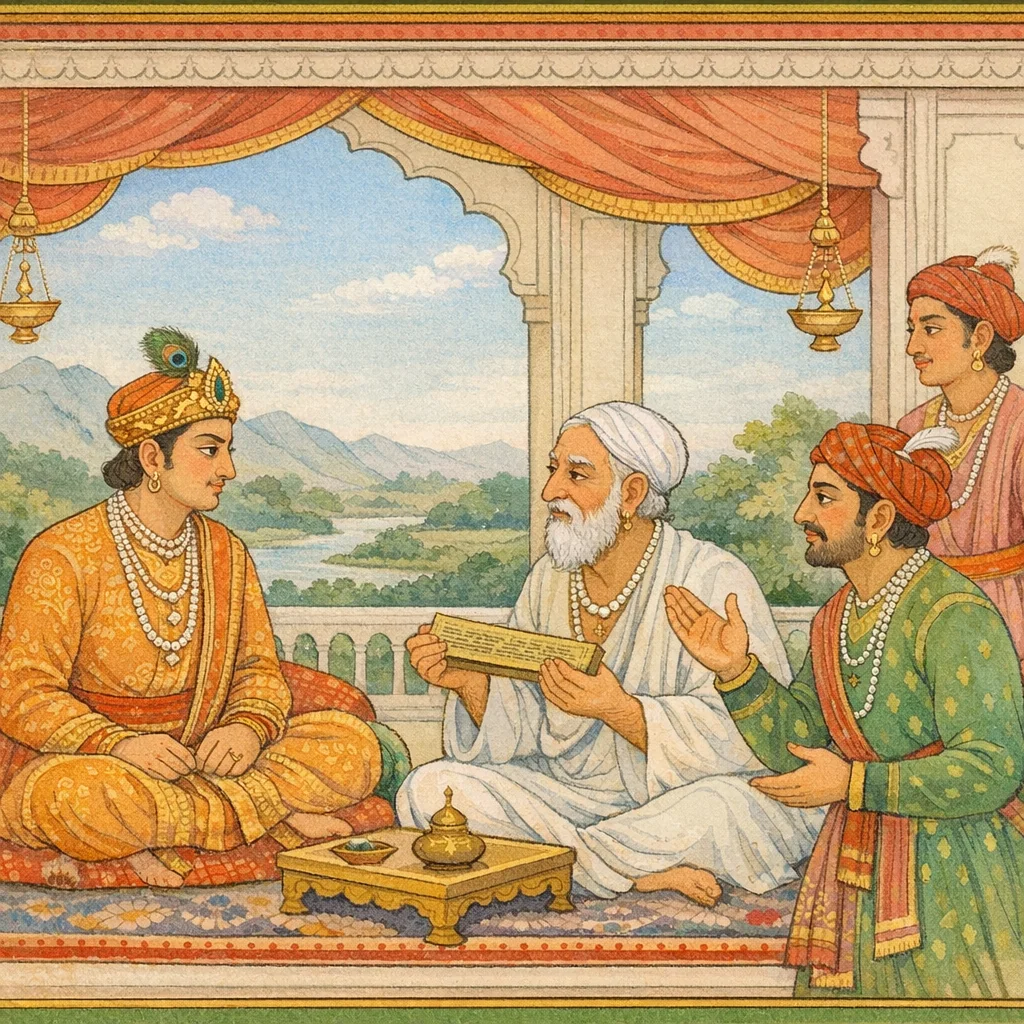
Continuing the Ācāra-khaṇḍa’s teaching on right conduct and kingship, Sūta classifies servants as excellent, middling, or inferior and insists they be assigned only to work suited to their nature. He sets forth a fourfold test—discipline, conduct, competence, and performance—likened to assaying gold. The chapter then states the ideal qualifications for key royal offices: treasurer, gem-assessor, commander, pratīhāra (palace doorkeeper/chamberlain), scribe, envoy, judge and overseer of dharma, cook, physician, and royal priest. It warns against employing unreliable types and portrays the wicked as dangerous even when learned. Ethical and strategic counsel follows: dismiss cruel, greedy, deceitful, fearful, or incompetent servants; store weapons in the fort; make truces to consolidate strength; and avoid appointing fools, lest ruin ensue. The chapter closes by affirming that a king’s prosperity subtly rises or falls through the deeds of his servants, preparing for later instructions where personnel, policy, and dharma are inseparable.
Shlokas
Verse 1
ऽध्यायः सूत उवाच / भृत्या बहुविधा ज्ञेया उत्तमाधममध्यमाः / नियोक्तव्या यथार्हेषु त्रिविधेष्वेव कर्मसु
Sūta said: Servants are to be understood as of many kinds—excellent, inferior, and middling. They should be employed according to their suitability, in the three kinds of work alone.
Verse 2
भृत्ये परिक्षणं वक्ष्ये यस्ययस्य हि यो गुणः / तमिमं संप्रवक्ष्यामि ये यथाकथितं किल
I shall describe the examination of a servant—what qualities each should possess. Now I will state them precisely, just as they have been handed down in tradition.
Verse 3
यथा चतुर्भिः कनकं परीक्ष्यते निघर्षणच्छेदनतापताडनैः / तथा चतुर्भिर्भृतकं परीक्षयेद्वतेन शीलेन कलेन कर्मणा
Just as gold is tested in four ways—by rubbing, cutting, heating, and hammering—so too should a hired servant be tested in four ways: by his vows (discipline), his conduct, his skill, and his work.
Verse 4
कुलशीलगुणोपेतः सत्यधर्मपरायणः / रूपवान्सुप्रसन्नश्च कोशाध्यक्षो विधीयते
One endowed with noble lineage, good conduct, and virtues—devoted to truth and dharma—handsome and of a cheerful disposition, should be appointed superintendent of the treasury.
Verse 5
मूल्यरूपपरीक्षाकृद्भवे द्रत्नपरीक्षकः / बलाबलपरिज्ञाता सेनाध्यक्षो विधीयते
One skilled in examining value and appearance should serve as an assessor of jewels; and one who understands strength and weakness should be appointed commander of the army.
Verse 6
इङ्गिताकारतत्त्वज्ञो बलवान् प्रियदर्शनः / अप्रमादी प्रमाथी च प्रतीहारः स उच्यते
One who understands others’ gestures and outward expressions, who is strong and pleasing to behold, vigilant and decisive in action—such a person is called a pratīhāra (chamberlain, door-keeper, and attendant).
Verse 7
मेधावी वाक्पटुः प्राज्ञः सत्यवादी जितेन्द्रियः / सर्वशास्त्रसमालोकी ह्येष साधुः स लेखकः
He is intelligent, eloquent, wise, truthful, and self-controlled; well-versed in the study of all śāstras—such a man is a sādhū, righteous and fit to be a scribe.
Verse 8
बुद्धिमान्मतिमांश्चैव परचित्तोपलक्षकः / क्रूरो यथोक्तवादी च एष दूतो विधीयते
A messenger (dūta of Yama) is one who is intelligent and discerning, able to read another’s mind, stern in demeanor, and who speaks exactly as instructed—such is the envoy appointed.
Verse 9
समस्तस्मृतिशास्त्रज्ञः पण्डितो ऽथ जितेन्द्रियः / शौर्यवीर्यगुणोपेतो धर्माध्यक्षो विधीयते
One learned in the entire corpus of Smṛti and śāstras, truly wise and self-controlled, and endowed with valor, strength, and noble qualities—such a person is appointed as dharmādhyakṣa, the superintendent of dharma (judge of righteousness).
Verse 10
पितृपैतामहो दक्षः शास्त्रज्ञः सत्यवाचकः / शुचिश्च कठिनश्चैव सूपकारः स उच्यते
Mindful of the rites for the ancestors and forefathers, capable, learned in the scriptures, truthful in speech, pure, and firm—such a person is called a sūpakāra, a good cook.
Verse 11
आयुर्वेदकृताभ्यासः सर्वेषां प्रियदर्शनः / आयुः शीलगुणोपेतो वैद्य एव विधीयते
One who has cultivated practice in Āyurveda, who is pleasing in appearance to all, and who is endowed with long life and virtues of good conduct—such a person alone is deemed a vaidya, a true physician.
Verse 12
वेदवेदाङ्गतत्त्वज्ञो जपहमपरायणः / आशीर्वादपरो नित्यमेष राजपुरोहित
The king’s royal priest is one who knows the true principles of the Vedas and the Vedāṅgas, ever devoted to japa (sacred recitation) and homa (fire-offerings), and always intent on bestowing blessings.
Verse 13
लेखकः पाठकश्चैव गणकः प्रतिरोधकः / आलस्ययुक्तश्चैद्राजा कर्म संवर्जयेत्सदा
A scribe, a reader, an accountant, an obstructer of others’ work, and a king given to laziness—one should always avoid employing such persons in one’s duties.
Verse 14
द्विजिह्वमुद्वेगकरं क्रूरमेकान्तदारुणम् / खलस्याहेश्च वदनमपकाराय केवलम्
The face of a wicked man—and of a serpent—two-tongued, fear-producing, cruel, and utterly merciless, exists only for causing harm.
Verse 15
दुर्जनः परिहर्तव्यो विद्ययालङ्कृतो ऽपिसन् / मणिना भूषितः सर्पः किमसौ न भयङ्करः
A wicked person should be avoided, even if adorned with learning; for is not a serpent terrifying even when decorated with a jewel?
Verse 16
अकारणविष्कृतकोपधारिणः खलाद्भयं कस्य न नाम जायते / विषं महाहेर्विषमस्य दुर्वचः सदुः सहं सन्निपतेत्सदा मुखे
Who would not fear a wicked person who harbors anger without cause? The poison of a great serpent is dreadful, but the harsh speech of a crooked man is even more unbearable—it strikes the face again and again.
Verse 17
तुल्यार्थं तुल्यसामर्थ्यं मर्मज्ञं व्यवसायिनम् / अर्धराज्यहरं भृत्यं यो हन्यात्स न हन्यते
Whoever kills a servant equal in aim and equal in ability, one who knows the vital matters, is industrious, and bears half the burden of the kingdom—such a slayer, in dharma, is not regarded as a killer.
Verse 18
शूरत्वयुक्ता मृदुमन्दवाक्या जितेन्द्रियाः सत्यपराक्रमाश्च / प्रागेव पश्चाद्विपरी तरुपा ये ते तु भृत्या न हिता भवन्ति
Even if servants seem brave, speak gently and sweetly, are self-restrained, and display valor grounded in truth—those who are one way at first but later turn contrary in nature are not truly beneficial servants.
Verse 19
निरालस्याः सुसन्तुष्टाः प्रतिबोधकाः / सुखदुः खसमा धीरा भृत्या लोकेषु दुर्लभाः
Servants who are free from laziness, truly content, able to offer timely counsel and guidance, and steady—equal-minded in pleasure and pain—are rare in the world.
Verse 20
क्षान्तिस्तयविहीनश्च क्रूरबुद्धिश्च निन्दकः / दाम्भिकः कपटी चैव शठश्च स्पृहयान्वितः / अशक्तो भयभीतश्च राज्ञा त्यक्तव्य एव सः
One who lacks patience and generosity, is cruel-minded and given to slander; hypocritical and deceitful, crooked and driven by greed; incompetent and fearful—such a person should indeed be abandoned by the king.
Verse 21
सुसन्धानानि चास्त्राणि शस्त्राणि विविधानि च / दुर्गे प्रवेशितव्यानि ततः शत्रुं निपातयेत्
Well-fitted missiles and various weapons should be brought into the fortress; then one should bring down the enemy.
Verse 22
षण्मासमथ वर्षं वा सन्धिं कुर्यान्नराधिपः / पश्यन्सञ्चितमात्मानं पुनः शत्रुं निपातयेत्
A king should make a truce for six months or even for a year; and, seeing his own strength and resources well amassed, he should then strike down the enemy again.
Verse 23
मूर्खान्नियोजयेद्यस्तु त्रयो ऽप्येते महीपतेः / अयशश्चार्थनाशश्च नरके चैव पातनम्
But the king who appoints fools to offices—three things arise for him: disgrace, loss of wealth, and a fall into hell.
Verse 24
यत्किञ्चित्कुरुते कर्म शुभं वा यादि वाशुभम् / तेन स्म वर्धते राजा सूक्ष्मतो भृत्यकार्यतः
Whatever action a servant performs—whether auspicious or inauspicious—by that the king’s power and fortune increase subtly, through the work carried out by his attendants.
Verse 25
तस्माद्भूमीश्वरः प्राज्ञं धर्मकामार्थसाधने / नियोज येद्धिसततं गोब्राह्मणहिताय वै
Therefore, the lord of the land should continually appoint a wise person for the accomplishment of dharma, kāma, and artha—indeed, for the welfare of cows and brāhmaṇas.
Frequently Asked Questions
Noble lineage, good conduct and virtues, devotion to truth and dharma, pleasing appearance, and a cheerful disposition—these traits mark the person fit to supervise the treasury.
Skill in reading gestures and outward expressions, physical strength, pleasing presence, vigilance, and decisiveness in action—indicating both perceptiveness and readiness.
Because they undermine execution of duty: obstruction, unreliability, and indolence corrode governance, whereas the king’s success depends on steady, competent, truthful service.
It states that whatever auspicious or inauspicious act servants perform, the king’s power and prosperity subtly expand or diminish through those delegated works—making staffing a moral and practical root-cause.