Adhyaya 35
दिक्पालादि-शिवलोकान्तर-कथनम् (Account of the Dikpālas and Intervening Realms toward Śiva’s Worlds)
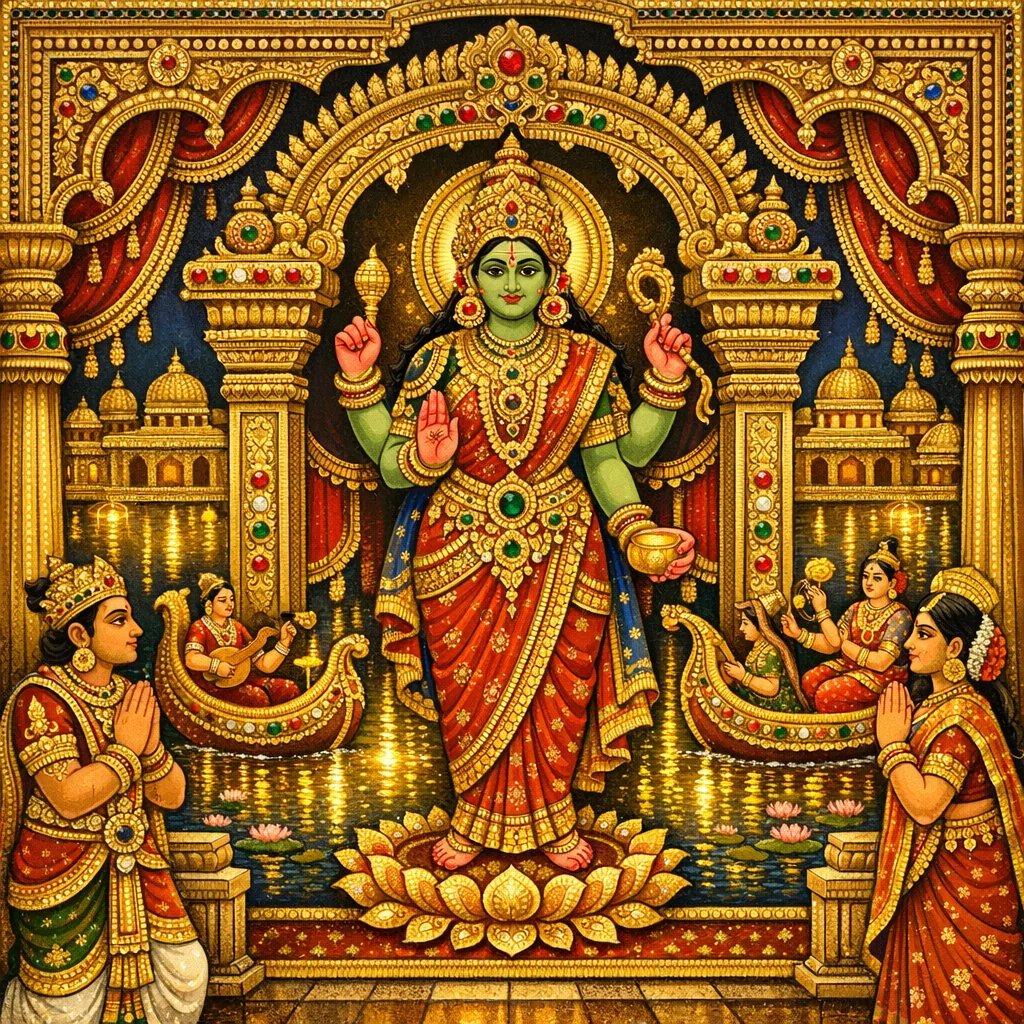
In the Hayagrīva–Agastya dialogue of the Lalitopākhyāna, Hayagrīva begins a technical account of graded enclosures (kakṣyā-bheda) and the sacred architecture of a divine complex. The cited verses highlight a jewel-adorned great hall (mahāśālā), fortified gateways, and a central region ruled by an amṛta-vāpikā, a lake of nectar. The amṛta is taught as rasāyana: drinking it—and even inhaling its fragrance—bestows siddhi, strength, and freedom from impurity, making yogins and even birds deathless. Entry is regulated: passage is not ordinary but requires boats, and authority is exercised by appointed śaktis, especially Tārā as toraṇeśvarī, with attendants crossing in gem-like boats while singing and playing instruments. Cosmologically, the chapter encodes sacred geography as initiatory space, where purity, permission (ājñā), guardianship, and a mantric ambience around Lalitā’s supreme mantra serve as the “coordinates” of higher realms.
Shlokas
Verse 1
इति श्रीब्रह्माण्डमहापुराणे उत्तरभागे हयग्रीवागस्त्य संवादे ललितोपाख्याने दिक्पालादिशिवलोकान्तरकथनं ना चतुस्त्रिंशो ऽध्यायः हयग्रीव उवाच अथ वापीत्र यादीनां कक्ष्याभेदान्प्रचक्ष्महे / एषां श्रवणमात्रेण जायते श्रीमहोदयः
Thus, in the Śrī Brahmāṇḍa Mahāpurāṇa, in the Uttara section, in the dialogue of Hayagrīva and Agastya, within the Lalitā episode, is the thirty-fourth chapter, describing the intervening realms of the Dikpālas and the worlds of Śiva. Hayagrīva said: Now we shall declare the distinctions of their several tiers (kakṣyā); by the mere hearing of these, great auspicious prosperity (śrī-mahodaya) arises.
Verse 2
सहस्रस्तम्भशालस्यातरमारुतयोजने / मनो नाम महाशालः सर्वरत्नविचित्रितः
A yojana away, in the direction of the wind from the hall of a thousand pillars, stands a great mansion named Mano, wondrously adorned with every kind of jewel.
Verse 3
पूर्ववद्गोपुरद्वारकपाटार्गलसंयुतः / तन्मध्यकक्ष्याभागस्तु सर्वाप्यमृतवापिका
As before, there is a gopura gateway furnished with doors and bolts; and the central portion of that enclosure is wholly a pool of amṛta.
Verse 4
यत्पीत्वा योगिनः सिद्धा वज्रकाया महाबलाः / भवन्ति पुरुषाः प्राज्ञास्तदेव हि रसायनम्
Having drunk it, perfected yogins become Siddhas—adamantine in body like vajra, mighty in strength, and wise in understanding; that indeed is the true rasāyana.
Verse 5
वाप्याममृतमय्यां तु वर्तते तोयतां गतम् / तद्गन्धाघ्राणमात्रेण सिद्धिकान्तापतिर्भवेत्
In that pool made wholly of amṛta, the amṛta abides having taken the form of water; by merely inhaling its fragrance, one becomes the lord and spouse of Siddhikāntā, the beloved of spiritual attainments.
Verse 6
अस्पृशन्नपि विन्धयारे पुरुषः क्षीणकल्मषः / उभयोः शालयोः पार्श्वे सुधावापीतटद्वये
Though touching nothing, the man crossed the Vindhya pass, his stains of sin worn away; beside the two śālā halls he stood, by the twin banks of the sudhā pool.
Verse 7
अधक्रोशसमायामा अन्यास्सर्वाश्च वापिकाः / चतुर्योजनदूरं तु तलं तस्या जलान्तरे
All the other ponds were about a krośa in length; but the bed of that one, within its waters, lay as far as four yojanas down.
Verse 8
सोपानावलयस्तस्या नानारत्नविचित्रिताः / स्वर्णवर्णा रत्नवर्णास्तस्यां हंसाश्च सारसाः
The encircling stairways of that pool were inlaid with many gems; they shone with gold-hue and jewel-hue, and within it were haṃsas and sārasā birds.
Verse 9
आस्फोट्यते तटद्वन्द्वतरङ्गैर्मन्दचञ्चलैः / पक्षिणस्तज्जलं पीत्वा रसायनमयं नवम्
Gentle, softly stirring waves splashed upon the twin banks; the birds, drinking that water, gained a fresh rasāyana—an elixir of renewal.
Verse 10
अजरामरतां प्राप्तास्तत्र विन्ध्यनिषूदन / सदाकूजितलक्षेण तत्र कारण्डवद्विजाः
O subduer of Vindhya, there they attained the state beyond age and death; and there, kāraṇḍava birds in multitudes filled the place with ceaseless calls.
Verse 11
जपन्ति ललितादेव्या मन्त्रमेव महत्तरम् / परितो वापिकाचक्रपरिवेषणभूयसा
They perform japa, chanting the most exalted mantra of Goddess Lalitā, all around the circular lake and its broad encircling banks.
Verse 12
न तत्र गन्तु मार्गो ऽस्ति नौकावाहनमन्तरा / आज्ञया केवलं तत्र मन्त्रिणी दण्डनाथयोः / तारा नाम महाशक्तिर्वर्तते तोरणेश्वरी
There is no path to reach that place without a boat as conveyance. Only by the command of Mantriṇī and Daṇḍanātha does the Mahāśakti named Tārā abide there, as Toraṇeśvarī, Lady of the Gate.
Verse 13
बह्व्यस्तत्रोत्पलश्यामास्तारायाः परिचारिकाः / रत्ननौकासहस्रेण खेलन्त्यो सरसीजले
There are many attendants of Tārā there, dark-hued like blue lotuses, sporting upon the lake’s waters with thousands of jewel-like boats.
Verse 14
अपरं पारमायान्ति पुनर्यान्ति परं तटम् / वीणावेणुमृदङ्गादि वादयन्त्यो मुहुर्मुहुः
They reach one shore and again go to the opposite bank, repeatedly playing the vīṇā, the veṇu flute, the mṛdaṅga drum, and other instruments.
Verse 15
कोटिशस्तत्र ताराया नाविक्यो नवयौवनाः / मुहुर्गायन्ति नृत्यन्ति देव्याः पुण्यतमं यशः
There, by countless koṭis, are Tārā’s boatmaidens in the bloom of youth; again and again they sing and dance, praising the Goddess’s most holy renown.
Verse 16
अरित्रपाणयः काश्चित्काश्चिच्छूगाम्बुपाणयः / पिबन्त्यस्तत्सुधातोयं संचरन्त्यस्तरीशतैः
Some held oars in their hands, and some held vessels for drawing water; they drank that nectar-like water and moved about in hundreds of boats.
Verse 17
तासां नौकावाहिकानां शक्तीनां श्यामलत्विषाम् / प्रधानभूता तारांबा जलौघशमनक्षमा
Among those Śaktis who piloted the boats, dark-hued in radiance, the foremost was Tārāmbā, able to quell surging floods of water.
Verse 18
आज्ञां विना तयोस्तारा मन्त्रिणीदण्डधारयोः / त्रिनेत्रस्यापि नो दत्ते वापिकांभसि सन्तरम्
Without the command of Tārā—the minister and bearer of the staff—she grants not even the Three-Eyed One passage across the waters of the pond.
Verse 19
गायन्तीनां चलन्तीनां नौकाभिर्मणिचारुभिः / महाराज्ञी महौदार्यं पतन्तीनां पदेपदे
Singing as they moved along in gem-adorned, lovely boats, the Great Queen displayed boundless generosity to those who stumbled at every step.
Verse 20
पिबन्तीनां मधु भृशं माणिक्यचषकोदरैः / प्रतिनौकं मणिगृहे वसन्तीनां मनोहरे
They drank honey in abundance from deep-bellied ruby cups; and on each boat they dwelt in a captivating mansion of gems.
Verse 21
तारातरणिशक्तीनां समवायो ऽतिसुन्दरः / काश्चिन्नौकाः सुवर्णाढ्याः काश्चिद्रत्नकृता मुने
The confluence of Tārā’s powers and the Sun’s powers was exceedingly beautiful. O sage, some boats were laden with gold, and some were fashioned of jewels.
Verse 22
मकराकारमापन्नाः काश्चिन्नौका मृगाननाः / काश्चित्सिंहासना नावः काश्चिद्दन्तावलाननाः
Some boats assumed the form of a makara; some bore the faces of beasts. Some vessels were like lion-thrones, and some had the visage of tusked elephants.
Verse 23
इत्थं विचित्ररूपाभिर्नौङ्काभिः परिवेष्टिता / तारांबामहतीं नौकामधिगम्य विराजते
Thus she was encircled by boats of wondrous forms; and upon reaching the great vessel of Mother Tārā, she shone in radiant splendor.
Verse 24
अनुलोमविलोमाभ्यां सञ्चारं वापिकाजले / तन्वाना सततं तारा कक्ष्यामेनां हि रक्षति
In the pond’s waters Tārā moves ceaselessly, now with the current and now against it; thus she ever guards this enclosure as a sacred protection.
Verse 25
मनशालस्यान्तराले सप्तयोजनदूरतः / बुद्धिशाल इति ख्यातश्चतुर्योजनमुच्छ्रितः
In the space within Manaśāla, at a distance of seven yojanas, stood a structure famed as “Buddhiśāla,” rising to a height of four yojanas.
Verse 26
तन्मध्यकक्ष्याभागे ऽस्ति सर्वाप्यानन्दवापिका / तत्र दिव्यं महामद्यं बकुलामोदमेदुरम् / प्रतप्तकनकच्छायं तज्जलत्वेन वर्त्तते
In the central chamber there is the Ānandavāpikā, a pool wholly filled with bliss. There a divine, mighty liquor, rich with the fragrance of bakulā blossoms, gleams like heated gold and abides as the very water of that pool.
Verse 27
आनन्दवापिकागाधाः पूर्ववत्परिकीर्त्तिताः / सोपानादिक्रमश्चैव पक्षिणास्तत्र पूर्ववत्
The depths of the Ānandavāpikā have been described just as before. The arrangement of steps and stairways is likewise as earlier, and the birds there are the same as previously told.
Verse 28
तत्रत्यं सलिलं मद्यं पायम्पायं तटस्थिताः / विहरन्ति मदोन्मत्ताः शक्तयो मदपाटलाः
The water there is wine; those standing on the banks drink and drink again. And the Śakti maidens, flushed crimson with intoxication, roam and revel there, maddened by the rapture of drink.
Verse 29
साक्षाच्च वारुणी देवी तत्र नौकाधिनायिका / यां सुधामालिनीमाहुर्यामा हुरमृतेश्वरीम्
There, manifest in person, is the goddess Vāruṇī, the mistress who commands the boat. She is called Sudhāmālinī, and also Yāmā, the sovereign lady of amṛta, the nectar of immortality.
Verse 30
सा तत्र मणिनौकास्थशक्तिसेनासमावृता / ईषदालोकमात्रेण त्रैलोक्यमददायिनी
She abides there upon a jewel-boat, surrounded by an army of Śakti powers. By the merest glance she bestows intoxication upon the three worlds.
Verse 31
तरुणादित्य सङ्काश मदारक्तकपोलभूः / पारिजातप्रसूनस्रक्परिवीतकचाचिता
She shone like the youthful sun, her cheeks flushed red with intoxication; her hair was wreathed and adorned with garlands of pārijāta blossoms.
Verse 32
वहन्ती मदिरापूर्णं चषकं लोलदुत्पलम् / पक्वं पिशितखण्डं च मणिपात्रे तथान्यके
She bore a cup brimming with wine, with a wavering blue lotus beside it; and pieces of cooked flesh in a jeweled vessel and in other bowls as well.
Verse 33
वारुणीतरणिश्रेणीनायिका तत्र राजते / साप्याज्ञयैव सर्वेषां मन्त्रिणीदण्डनाथयोः / ददाति वापीतरणं त्रिनेत्रस्यापि नान्यथा
There the mistress who leads Vāruṇī’s solar ranks shines in splendor. Only by the command of the ministers and the lord of the rod does she grant all the passage across the pool; even the Three-Eyed One is no exception.
Verse 34
अथ बुद्धिमहाशालान्तरे मारुतयोजने / अहङ्कारमहाशालः पूर्ववद्गोपुरान्वितः
Then, within the expanse of the great hall of Buddhi, at a distance of one yojana in the realm of wind, stood the great hall of Ahaṅkāra, as before, furnished with gopuras.
Verse 35
तयोस्तु शालयोर्मध्ये कक्ष्याभूरखिला मुने / विमर्शवापिका नाम सौषुम्णामृतरूपिणी
O sage, between those two halls there lay a vast courtyard in its entirety. There was a pool named Vimarśa-vāpikā, taking the form of Suṣumnā’s amṛta.
Verse 36
तन्महायोगिनामन्तर्मनो मारुतपूरितम् / सुषुम्णदण्डविवरे जागर्ति परमामृतम्
Within the inner mind of the great yogins, filled with the breath of prāṇa, in the cleft of the Suṣumṇā channel the supreme Amṛta awakens.
Verse 37
तदेव तस्याः सलिलं वापिकायास्तपोधन / पूर्ववत्तटसोपानपक्षिनौका हि ताः स्मृताः
O ascetic rich in tapas, that very thing is the water of that pond; as before, it is remembered to have banks, steps, birds, and boats.
Verse 38
तत्र नौकेश्वरी देवी क्लरुकुल्लेतिविश्रुता / तमालश्यामलाकारा श्यामकञ्चुकधारिणी
There dwells the Boat-Sovereign Goddess, famed as Klarukullē; dark-hued like the tamāla tree, she wears a dusky garment.
Verse 39
नौकेश्वरीभिरन्याभिस्स्वसमानाभिरावृता / रत्नारित्रकरा नित्यमुल्लसन्मदमांसला
She is surrounded by other Boat-Sovereign goddesses, her equals; with jewel-oars in their hands, ever shining, full of exultant majesty.
Verse 40
परितो भ्राम्यति मुने मणिनौकाधिरोहिणी / वापिका पयसागाधा पूर्ववत्परिकीर्तिता
O sage, riding upon a jewel-boat she circles all around; and that pond is proclaimed as before—deep with milk-white waters.
Verse 41
अहङ्कारस्य शालस्यान्तरे मारुतयोजने / सूर्यबिंबमहाशालश्चतुर्योजन मुच्छ्रितः
Within the hall of Ahaṅkāra, at a distance of one yojana by the measure of the wind, a great pillar like the Sun’s disk rises, four yojanas high.
Verse 42
सूर्यस्यापि महानासीद्यदभूदरुणोदयः / तन्मध्यकक्ष्या वसुधा खचिता कुरविन्दकैः
Even the Sun’s great crimson dawn, the Aruṇa-udaya, was vast; in its middle orbit the earth was inlaid with kuravindaka gems.
Verse 43
तत्र बालातपोद्गारे ललिता परमेश्वरी / अतितीव्रतपस्तप्त्वा सूर्यो ऽलभत तां द्युतिम्
There, as the tender young sunlight welled forth, Lalitā Parameśvarī performed exceedingly fierce tapas; and the Sun attained that radiance.
Verse 44
ग्रहराशिगणाः सर्वे नक्षत्राण्यपि तारकाः / ते ऽत्रेव हि तपस्तप्त्वा लोकभासकतां गताः
All the hosts of planets and zodiacal signs, and the nakṣatras and stars as well—here indeed they performed tapas and became the illuminers of the worlds.
Verse 46
मार्तण्डभैरवस्तत्र भिन्नो द्वादशधा मुने / शक्तिभिस्तैजसीभिश्च कोटिसंख्याभिरन्वितः ३५।४५ / महाप्रकाशरूपश्च मदारुणविलोचनः / कङ्कोलितरुखण्डेषु नित्यं क्रीडारसोत्सुकः / वर्तते विन्ध्यदर्पारे पारे यस्तन्मयस्थितः
There, O Muni, Mārtaṇḍa Bhairava was divided into twelve forms, attended by radiant śaktis numbering in koṭis. He is of the nature of vast splendor, with Aruṇa-red eyes as if intoxicated; ever eager for the savor of play among groves of kaṅkolita trees, he abides beyond the gate of Vindhya, established in that very essence.
Verse 47
महाप्रकाशनाम्रास्ति तस्य शक्तिर्महीयसी / चक्षुष्मत्यपराशक्तिश्छाया देवी परा स्मृता
He bears the name “Mahāprakāśa,” and His Śakti is exceedingly great. Another Śakti is called “Cakṣuṣmatī,” and “Chāyā” is remembered as the supreme Goddess.
Verse 48
इत्थं तिसृभि रिष्टाभिः शक्तिभिः परिवारितः / ललिताया महेशान्याः सदा विद्या हृदा जपन्
Thus, surrounded by three venerable Śaktis, he ever repeats within his heart the Vidyā (sacred mantra) of Lalitā, Maheśānī.
Verse 49
तद्भक्तानामिन्द्रियाणि भास्वराणि प्रकाशयन् / बहिरन्तस्तमोजालं समूलमवमर्दयन्
He makes the senses (indriyas) of His devotees shine with splendor, and crushes to the very root the net of darkness, without and within.
Verse 50
तत्र बालातपोद्गारे भाति मार्तण्डभैरवः / सूर्यबिम्बमहाशालान्तरे मारुतयोजने
There, as the tender rays of the young sun arise, Mārtaṇḍa-bhairava shines forth. Within the vast hall fashioned like the solar orb, the span extends one yojana in the course of the wind.
Verse 51
चन्द्रबिम्बमयः शालश्चतुर्योजनमुच्छ्रितः / पूर्ववद्गोपुरद्वारकपाटार्गलसंयुतः
There is a hall made of the lunar orb, rising four yojanas high. As before, it is furnished with a gopura-gate, door-leaves, and bolts with bars.
Verse 52
तन्मध्यभूः समस्तापि चन्द्रिकाद्वारमुच्यते
That entire central region is spoken of as the “Gate of Candrikā.”
Verse 53
तत्रैव चन्द्रिकाद्वारे तपस्तप्त्वा सुदारुणम् / अत्रिनेत्रसमुत्पन्नश्चन्द्रमाः कान्तिमाययौ
There, at the Gate of Candrikā, Candra—the Moon born from Atri’s eye—performed a most dreadful austerity and attained enchanting radiance.
Verse 54
अत्र श्रीसोमनाथाख्यो वर्तते निर्मलाकृतिः / देवस्त्रलोक्यतिमिरध्वंसी संसारवर्तकः
Here abides the glorious Śrī Somanātha, of stainless form— the Deva who destroys the darkness of the three worlds and sets the wheel of saṃsāra in motion.
Verse 55
पिबञ्च षकसम्पूर्णं निर्मलं चन्द्रिकामृतम् / सप्तविंशतिनक्षत्रशक्तिभिः परिवारितः
He drinks the spotless Candrikā-nectar, complete in every part, and is encircled by the powers of the twenty-seven Nakṣatras.
Verse 56
सदा पूर्णनिजाकारो निष्कलङ्को निजाकृतिः / तत्रैव चन्द्रिकाद्वारे वर्तते भगवाञ्छशी
Ever perfect in his own form, stainless in his very nature, the Blessed Śaśī abides there indeed, at the Gate of Candrikā.
Verse 57
ललिताया जपैध्यानैः स्तोत्रैः पूजाशतैरपि / अश्विन्यादियुतस्तत्र कालं नयति चन्द्रमाः
By japa and meditation, by stotras and even by hundreds of pūjās offered to the holy Lalitā, the Moon—joined with Aśvinī and the other nakṣatras—there causes time to pass.
Verse 58
अन्याश्च शक्तयस्तारानामधेयाः सहस्रशः / सन्ति तस्यैव निकटे सा कक्षा तत्प्र पूरिता
And there are other Śaktis as well, thousands upon thousands, bearing the names of the stars; they abide close to Her, and that orbit (kakṣā) is filled with them.
Verse 59
अथ चन्द्रस्य शालस्यान्तरे मारुतयोजने / शृङ्गारो नाम शालो ऽस्ति चतुर्योजनमुच्छ्रितः
Then, within the Moon’s hall, by the measure of a māruta-yojana, there stands a sāla tree named Śṛṅgāra, rising to a height of four yojanas.
Verse 60
शृङ्गारागाररूपैस्तु कौस्तुभैरिव निर्मितः / महाशृङ्गारपरिखा तन्मध्ये वसुधाखिला
It is fashioned in the form of a Śṛṅgāra mansion, as though wrought of Kaustubha jewels; in its midst lies the great moat called Mahā-Śṛṅgāra, and within it is the whole earth.
Verse 61
परिखावलये तत्र शृङ्गाररसपूरिते / शृङ्गारशक्तयः सन्ति नानाभूषणभासुराः
Within that encircling moat, filled with the rasa of Śṛṅgāra, dwell the Śṛṅgāra Śaktis, radiant with ornaments of many kinds.
Verse 62
तत्र नौकासहस्रेण संचरन्त्यो मदोद्धताः / उपासते सदा सत्तं नौकास्थं कुसुमायुधम्
There, the maidens—exultant, intoxicated with pride—move about in thousands of boats; and ever they worship the Pure One, Kusumāyudha, the Flower-Weaponed Lord, seated upon a boat.
Verse 63
स तु संमोहयत्येव विश्वं सम्मोहनादिभिः / विशिखैरखिलांल्लोकांल्ललिताज्ञावशंवदः
He indeed bewilders the whole universe by powers of delusion and the like; and with tipless arrows he brings all worlds into obedience to Lalitā’s command.
Verse 64
तत्प्रभावेण संमूढा महापद्माटवीस्थलम् / वनितुं शुद्धवेषाश्च ललिताभक्तिनिर्भराः / सावधानेन मनसा यान्ति पद्माटदीस्थलम्
By his power the maidens are bewildered in the region of the great lotus-forest, Mahāpadma; clad in pure attire, filled with devotion to Lalitā, they go with vigilant minds to the land of Padmāṭadī.
Verse 65
न गन्तुं पारयत्येव सुरसिद्धनराः सुराः / ब्रह्मविष्णुमहेशास्तु शुद्धचित्ताः स्वभावतः / तदाज्ञया परं यान्ति महापद्माटवीस्थलम्
Neither gods, siddhas, nor men are able to go there; but Brahmā, Viṣṇu, and Maheśa—pure in mind by their very nature—by her command alone proceed to the supreme region of the Mahāpadma forest.
Verse 66
संसारिणश्च रागान्धाबहुसंकल्पकल्पनाः / महाकुलाश्च पुरुषा विकल्पज्ञानधूसराः
Those who wander in saṃsāra are blinded by passion, fashioning countless intentions and imaginings; and even men of great lineage are dimmed by the dust of discriminative knowledge—vikalpa.
Verse 67
प्रभूतरागगहनाः प्रौढव्यामोहदायिनीम् / महाशृङ्गारपरिखान्तरितुं न विचक्षणाः
Sunk in dense rāga, and facing her who bestows profound delusion, the undiscerning cannot cross the moat of Great Śṛṅgāra.
Verse 68
यस्मादजेयसैन्दर्यस्त्रैलोक्यजनमोहनः / महाशृङ्गारपरिखाधिकारी वर्तते स्मरः
For Smara (Kāmadeva), of unconquerable beauty and the enchanter of beings in the three worlds, stands as the lord of the moat of Great Śṛṅgāra.
Verse 69
तस्य सर्वमतिक्रम्य महतामपि मोहनम् / महापद्माटवीं गन्तुं न को ऽपि भवति क्षमः
Even surpassing his enchantment that bewilders the great, no one is able to go to the forest called Mahāpadmāṭavī.
Verse 70
अथ शृङ्गारशालस्यान्तराले सप्तयोजने / चिन्तामणिगृहं नाम चक्रराजमहालयः
Then, within the precincts of the Śṛṅgāra hall, at a distance of seven yojanas, stood a mansion called Cintāmaṇi-gṛha, the great abode of Cakrarāja.
Verse 71
तन्मध्यभूः समस्तापि परितो रत्नभूषिता / महापद्माटवी नाम सर्वसौभाग्यदायिनी
Its entire central ground was adorned all around with jewels; it is called Mahāpadmāṭavī, bestower of every auspicious fortune.
Verse 72
शृङ्गाराख्यामहाकालपर्यन्तं गोपुरं मुने / चतुर्दिक्ष्वप्येवमेव गोपुराणां व्यवस्थितिः
O sage, the gopura called “Śṛṅgāra” extends up to “Mahākāla”; and in the four directions likewise is the ordered placement of the gopuras.
Verse 73
सर्वदिक्षु तदुक्तानि गोपुराणिशत मुने / शालास्तु विंशतिः प्रोक्ताः पञ्चसंख्याधिकाः शुभाः
O sage, in every direction there are a hundred gopuras, as has been declared. The śālās (halls) are said to be twenty, with five more besides—all auspicious.
Verse 74
सर्वेषामपि शालानां मूलं योजनसंमितम् / पद्माटवीस्थलं वक्ष्ये सावधानो मुने शृणु
The foundation of all the śālās measures one yojana. Now I shall speak of the region called Padmāṭavī; listen attentively, O sage.
Verse 75
समस्तरत्नखचिते तत्र षड्योजनान्तरे / परितस्थलपद्मानि महाकाण्डानि संति वै
There, adorned with every jewel, within an interval of six yojanas, lotuses spread around upon the ground, and truly there are great, massive stalks.
Verse 76
काण्डास्तु योजनायामा मृदुभिः कण्टकैर्वृताः / पत्राणि तालदशकमात्रायामानि संति वै
Those stalks are one yojana in length, encircled by gentle thorns; and the leaves, indeed, extend to the measure of ten tālas.
Verse 77
केसराश्च सरोजानां पञ्चतालसमायताः / दशतालसमुन्नम्रः कर्णिकाः परिकीर्तिताः
The filaments (kesara) of the lotuses extend to five tālas in length; and the karṇikā, the flower’s heart, is declared to rise to ten tālas.
Verse 78
अत्यन्तकोमलान्यत्र सदा विकसितानि च / नवसौरभहृद्यानि विशङ्कटदलानि च / बहुशः संति पद्मानि कोडीनामपि कोडिशः
There the lotuses are exceedingly tender and ever in bloom; their fresh fragrance delights the heart, and their petals are broad and unconfined. Countless lotuses are found—koṭis upon koṭis.
Verse 79
महापद्माडवीकक्ष्यापूर्वभागे घटोद्भव / क्रोशोन्नतो वह्निरूपो वर्तुलाकारसंस्थितः
O Kumbhasambhava (Agastya), in the eastern part of the great forest of lotuses stands a form of fire, circular in shape and set like a ring, rising to the height of one krośa.
Verse 80
अर्द्धयोजनविस्तारः कलाभिर्दशभिर्युतः / अर्घ्यपात्रमहाधारो वर्तते कुम्भसम्भव
O Kumbhasambhava, it spans half a yojana and is endowed with ten kalās; as a great support for the arghya vessel of offering, it stands there.
Verse 81
तदाधारस्य परितः शक्तयोदीप्तविग्रहाः / धूम्रार्चिःप्रमुखा भान्ति कला दश विभावसोः
Around that base shine the Śaktis, their forms ablaze with radiance; the ten kalās of Vibhāvasu, the Fire, beginning with Dhūmrārci, gleam forth.
Verse 82
दीप्ततारुण्यलक्ष्मीका नानालङ्कारभूषिताः / आधाररूपं श्रीमन्तं भगवन्तं हविर्भुजम् / परिष्वज्यैव परितो वर्तन्ते मन्मथालसाः
Radiant with the splendor of youth and adorned with many ornaments, they embrace the blessed Havirbhuj (Agni), the auspicious Lord who is the very foundation, and linger all around Him, languid with Manmatha’s desire.
Verse 83
धूम्रार्चिरुष्णा ज्वलिनी ज्वालिनी विस्फुलिङ्गिनी / सुश्रीःसुरूपा कपिला हव्यकव्यवहेतिच / एता दशकलाः प्रोक्ता वह्नेराधाररूपिणः
Dhūmrārci-ruṣṇā, Jvalinī, Jvālinī, Visphuliṅginī, Suśrī, Surūpā, Kapilā, and Havyakavyavahā—these are declared to be the ten kalās, the supporting manifestations of Vahni, the Fire.
Verse 84
तत्राधारे स्थितो देवः पात्ररूपं समाश्रितः / सूर्यस्त्रिलोकीतिमिरप्रध्वंसप्रथितोदयः
There, upon that support, the Deva abides, assuming the form of a vessel—Sūrya, whose famed rising destroys the darkness of the three worlds.
Verse 85
सूर्यात्मकं तु तत्पात्रं सार्द्धयोजनमुन्नतम् / योजनायामविस्तारं महाज्योतिः प्रकाशितम्
That vessel is of solar essence: one and a half yojanas in height and one yojana in breadth, revealed as a great and shining light.
Verse 86
तत्पात्रात्परितः सक्तवपुषः पुत्रिका इव / वर्तन्ते द्वादश कला अतिभास्वररोचिषः
Around that vessel, clinging to its form like daughters, move the twelve kalās, radiant with exceedingly brilliant splendor.
Verse 87
तपिनी तापिनी धूम्रा मरीचिर्ज्वलिनी रुचिः / सुषुम्णा भोगदा विश्वा बोधिनी धारिणी क्षमा
Tapinī, Tāpinī, Dhūmrā, Marīci, Jvalinī, Ruci; Suṣumṇā, Bhogadā, Viśvā, Bodhinī, Dhāriṇī, Kṣamā.
Verse 88
तस्मिन्पात्रे परानन्दकारणं परमामृतम् / सर्वौंषधि रसाढ्यं च हृद्यसौरभसंयुतम्
In that vessel was the supreme Amṛta, the very cause of highest bliss; rich with the essence of all healing herbs, and joined with a fragrance delightful to the heart.
Verse 89
नीलोत्पलैश्च कह्लारैरम्लानैरतिसौरभैः / वास्यमानं सदा हृद्यं शीतलं लघु निर्मलम्
Ever scented with blue lotuses and kahlāra blooms, unwithered and richly fragrant; always pleasing to the heart—cool, light, and pure.
Verse 90
चलद्वीचिशतोदारं ललिताब्यर्चनोचितम् / सदा शब्दायमानं च भासतेर्ऽचनकारणम्
Splendid and expansive with hundreds of moving waves, fit for the worship of Lalitā; ever resounding and shining forth, it becomes the very occasion for arcanā.
Verse 91
तदर्घ्यममृतं प्रोक्तं निशाकरकलामयम् / तस्मिंस्तनीयसीर्नौङ्का मणिकॢप्ताः समास्थिताः / निशाकरकला हृद्याः क्रीडन्ति नवयौवनाः
That Amṛta is spoken of as arghya, formed of the kalās of the Moon-lord; within it are tiny boats, set with jewels, standing in place; the heart-delighting lunar kalās sport like maidens in the bloom of new youth.
Verse 92
अमृता मानदा पूष्णा तुष्टिः पुष्टी रतिर्धृतिः / शशिनी चन्द्रिका कान्तिर्ज्योत्स्ना श्रीः प्रीतिरङ्गदा
Amṛtā, Mānadā (bestower of honor), Pūṣṇā, Tuṣṭi (contentment), Puṣṭi (nourishment), Rati and Dhṛti; Śaśinī, Candrikā, Kānti, Jyotsnā (moonlight), Śrī, and Prīti-Aṅgadā.
Verse 93
पूर्णा पूर्णामृता चेति कलाः पीयूष रोचिषः / नवयौवनसंपूर्णाः सदा प्रहसिताननाः
“Pūrṇā” (Fulness) and “Pūrṇāmṛtā” (Fulness of amṛta): thus are the kalā, radiant like nectar; complete in ever-new youth, their faces ever smiling.
Verse 94
पुष्टिरृद्धिः स्थितिर्मेधा कान्तिर्लक्ष्मीर्द्युतिर्धृतिः / जरा सिद्धिरिति प्रोक्ताः क्रीडन्ति ब्रह्मणः कलाः
Puṣṭi (nourishment), Ṛddhi (prosperity), Sthiti (steadfastness), Medhā (wisdom), Kānti (radiance), Lakṣmī (holy fortune), Dyuti (splendor), Dhṛti (fortitude); and also Jarā (age) and Siddhi (attainment)—thus are named the kalā of Brahmā, sporting there.
Verse 95
स्थितिश्च पालिनी शान्तिश्चेश्वरी ततिकामिके / वरदाह्लादिनी प्रीतिर्दीर्घा चेति हरेः कलाः
Sthiti and Pālinī (the Protectress), Śānti (peace) and Īśvarī (the Sovereign Lady), Tatikāmike; Varadā (granting boons), Āhlādinī (bestowing delight), Prīti (love), and Dīrghā (endurance)—these are the kalā of Hari (Viṣṇu).
Verse 96
तीक्ष्णा रौद्री भया निद्रा तन्द्रा क्षुत्क्रोधिनी त्रपा / उत्कारी मृत्युरप्येता रोद्ध्र्यस्तत्र स्थिताः कालाः
Tīkṣṇā (the keen), Raudrī (the fierce), Bhayā (fear), Nidrā (sleep), Tandrā (drowsiness), Kṣut-krodhinī (hunger that kindles wrath), Trapā (shame), Utkārī (the impelling), and even Mṛtyu (death)—these kālā abide there as restraining powers.
Verse 97
ईश्वरस्य कलाः पीताः श्वेताश्चैवारुणाः सिताः / चतस्रेव प्रोक्तास्तु शङ्करस्य कला अथ
The kalā of Lord Īśvara are yellow, white, and aruna—the ruddy hue of dawn. Thus it is declared that Śaṅkara’s kalā are fourfold.
Verse 98
निवृत्तिश्च प्रतिष्ठा च त्रिद्या शान्तिस्तथैव च / इन्दिरा दीपिका चैव रेचिका चैव मोचिका
Nivṛtti and Pratiṣṭhā, Tridyā, and likewise Śānti; also Indirā, Dīpikā, Recikā, and Mocikā.
Verse 99
परा सूक्ष्मा च विन्ध्यारे तथा सूक्ष्मामृता कला / ज्ञानामृता व्याधिनी च व्यापिनी व्योमरूपिका / एतां षोडश संप्रोक्तास्तत्र क्रीडन्ति शक्तयः
There are Parā and Sūkṣmā, Vindhyāre and the kalā called Sūkṣmāmṛtā; Jñānāmṛtā, Vyādhinī, Vyāpinī, and Vyomarūpikā. These are declared to be sixteen kalā; there the Śakti sport in divine play.
Verse 100
रुद्रनौकासमारूढास्ततश्चेतश्च चञ्चलाः / शक्तिरुपेण खेलन्ति तत्र विद्याः सहस्रशः
They board Rudra’s boat, and then the mind grows restless and wavering. There, thousands upon thousands of Vidyā sport in the form of Śakti.
Verse 101
अर्घ्यसंशोधनार्थाय कल्पिताः परमेष्ठिना / तदर्घ्यममृतं पीत्वा सदा माद्यन्ति शक्तयः
It was ordained by Parameṣṭhin for the purification of the arghya offering. Drinking that arghya, which is amṛta, the Śakti are ever intoxicated with bliss.
Verse 102
महापद्माटवीवासा महाचक्रस्थिता अपि / मुहुर्मुहुर्नवनवं मुहुस्चाबद्धसौरभम्
She dwells in the forest of the Great Lotus; though established upon the Great Wheel, again and again she appears ever-new, and again and again an unbroken sacred fragrance is bound about her.
Verse 103
रत्नकुम्भसहस्रैश्च सुवर्णघटकोटिभिः / आपूर्यापूर्य सततं तदर्घ्यममृतं महत्
With thousands of jewel-pitchers and myriads of golden jars, that arghya offering is filled and filled again continually—vast, immortal amṛta.
Verse 104
चिन्तामणिगृहस्थानां परिचारकशक्तयः / अणिमादिकशक्तीनामर्घ्ययन्ति मदोद्धताः
The attendant śaktis who abide in the Cintāmaṇi mansion, elated in their rapture, offer arghya to the powers of Aṇimā and the other siddhis.
Verse 105
महापद्माटवीकक्ष्यापूर्वभागेर्ऽघ्यकल्पनम् / इत्थ समीरितं पश्चात्तत्रान्यदपि कथ्यते
Thus has the arrangement of the arghya in the forepart of the precinct of the Mahāpadma forest been described; thereafter, other matters there are also told.
Frequently Asked Questions
No royal or sage vaṃśa is cataloged in the sampled scope of Adhyāya 35. The chapter is primarily a cosmographic and initiatory-topological description (kakṣyā-bheda, halls, lakes, guardianship) within Lalitopākhyāna, serving as spatial metadata rather than dynastic enumeration.
The sample gives architectural and spatial measures rather than planetary distances: e.g., other vāpikās described as roughly a krośa in extent, and the lake-bed depth indicated as four yojanas. These numbers function as sacral scale-markers for divine space rather than empirical astronomy.
The chapter foregrounds mantra-governed access and Śakti-mediated thresholds rather than a named yantra. Lalitā’s “mahattara mantra” is portrayed as the ambient power around the amṛta-vāpikā, while Tārā’s role as toraṇeśvarī encodes the Śākta principle that higher realms are entered through authorization, mantra, and guardianship—symbolizing inner ascent (siddhi, purification, and immortality as rasāyana).