Adhyaya 27
भण्डपुत्रशोकः (Bhaṇḍa’s Lament for His Sons) — Lalitopākhyāna Episode
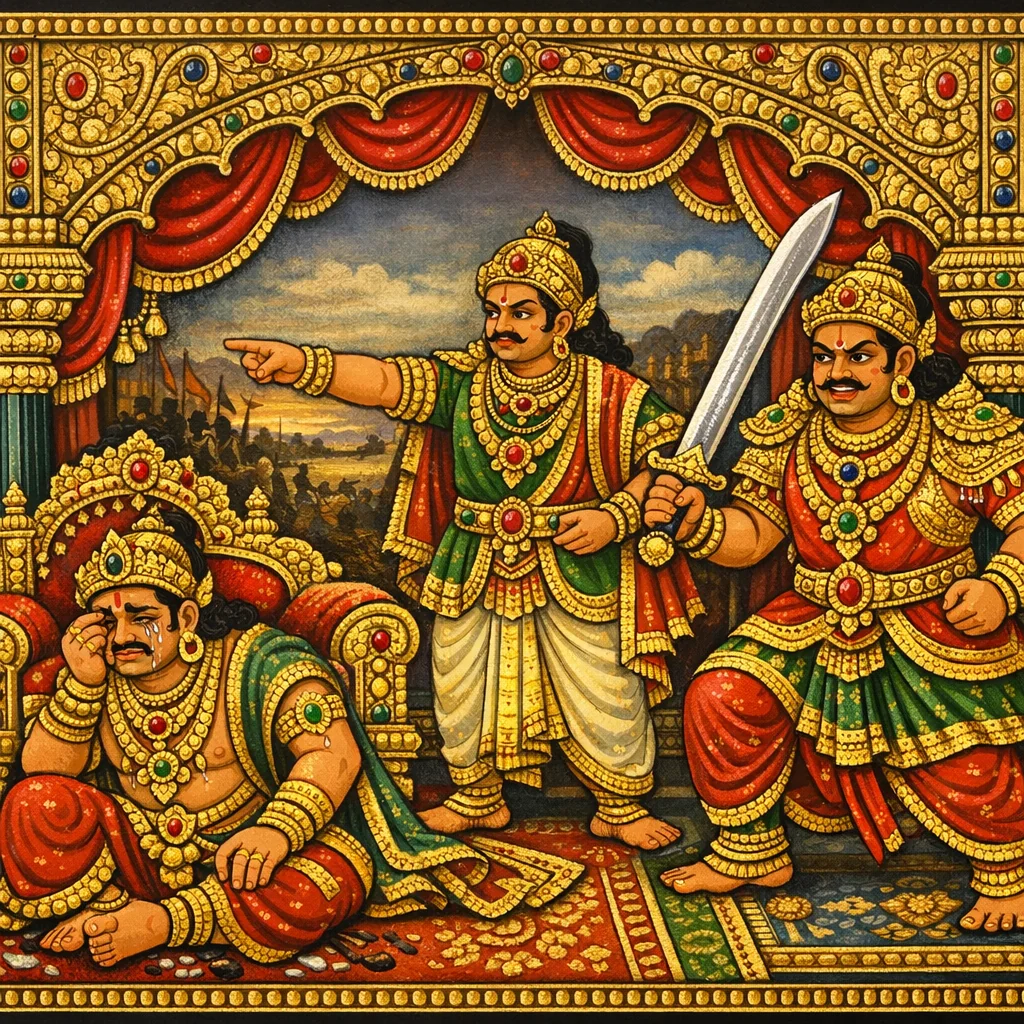
This chapter (in the Lalitopākhyāna, framed by the Hayagrīva–Agastya dialogue) shifts from battlefield result to psychological and cosmic consequence. After his sons are destroyed, the daitya-king Bhaṇḍa is consumed by grief, lamenting the ruin of his lineage and the emptiness of his kingdom and assembly; he wails and collapses. His counselors—especially Viśukra, with Viṣaṅga and Kuṭilākṣa present—urge him back to the warrior’s dharma and inflame him with the outrage that a “woman” (the Goddess’s power) has slain elite fighters. Thus śoka (sorrow) is turned into krodha (wrath), and Bhaṇḍa draws a terrifying sword, preparing to escalate the war anew. The episode highlights vaṃśa-kṣaya (lineage-loss) as the spark for further adharmic retaliation, advancing the battle-arc of this section.
Shlokas
Verse 1
इति श्रीब्रह्माण्डे महापुराणे उत्तरभागे हयग्रीवागस्त्यसंवादे ललितोपाख्याने भण्डपुत्रवधो नाम षड्विंशो ऽध्यायः अथ नष्टेषु पुत्रेषु शोकानलपरिप्लुतः / विललाप स दैत्येन्द्रो मत्वा जातं कुलक्षयम्
Thus, in the Śrī Brahmāṇḍa Mahāpurāṇa, in the latter section, in the dialogue of Hayagrīva and Agastya, within the Lalitā narrative, is the twenty-sixth chapter, called “The Slaying of Bhaṇḍa’s Sons.” Then, when his sons were lost, the lord of the Daityas, engulfed by the fire of grief, lamented aloud, deeming his lineage brought to ruin.
Verse 2
हा पुत्रा हा गुणोदारा हा मदेकपरायणाः / हा मन्नेत्रसुधापूरा हा मत्कुलविवर्धनाः
Alas, my sons! Alas, you of broad and noble virtue! Alas, you who took refuge in me alone! Alas, you who were a flood of nectar in my eyes! Alas, you who made my lineage flourish!
Verse 3
हा समस्तसुरश्रेष्ठमदभञ्जनतत्पराः / हा समस्तसुरस्त्रीणामन्तर्मोहनमन्मथाः
Alas, you who strove to shatter the pride of all the foremost devas! Alas, you who, like Manmatha, bewitched the inmost hearts of all the celestial women!
Verse 4
दिशत प्रीतिवाचं मे ममाङ्के वल्गताधुना / किमिदानीमिमं तातमवमुच्य सुखं गताः
Speak to me a word of love; even now, sport upon my lap. Why have you, leaving this father, gone away to bliss?
Verse 5
युष्मान्विना न शोभन्ते मम राज्यानि पुत्रकाः / रिक्तानि मम गेहानि रिक्ता राजसभापि मे
My little sons, without you my kingdoms do not shine. Empty are my homes, and empty too is my royal court.
Verse 6
कथमेवं विनिःशेषं हतायूयं दुराशयाः / अप्रधृष्यभुजासत्त्वान्भवतो मत्कुलाङ्कुरान् / कथमेकपदे दुष्टा वनिता संगरे ऽवधीत्
How were you all slain to the last by a wicked woman of evil intent? You, heroes of arms hard to assail, tender shoots of my lineage—how did that vile one kill you on the battlefield as though in a single step?
Verse 7
मम नष्टानि सौख्यानि मम नष्टाः कुलस्त्रियः / इतः परं कुले क्षीणे साहसानि सुखानि च
My comforts are destroyed; the women of my lineage are lost. Henceforth, when the clan is diminished, joys too shall fade away, and even daring pleasures will be no more.
Verse 8
भवतः सुकृतैर्लब्ध्वा मम पूर्वजनुःकृतैः / नाशो ऽयं भवतामद्य जातो नष्टस्ततो ऽस्म्यहम्
By your virtuous deeds, and by the merits I wrought in former births, I gained all this. Yet today this ruin has arisen through you; therefore I am undone.
Verse 9
हा हतो ऽस्मि विपन्नो ऽस्मि मन्दभाग्यो ऽस्मि पुत्रकाः / इति शोकात्स पर्यस्यन्प्रलपन्मुक्तमूर्धजः / मूर्च्छया लुप्तहृदयो निष्पपात नुपासनात्
“Alas! I am slain, I am ruined, I am ill‑fated—O my sons!” Thus, overturned by grief, he writhed and wailed, his hair unbound. Then, fainting, his heart as though gone, he fell down from his seat.
Verse 10
विशुक्रश्च विषङ्गश्च कुटिलाक्षश्च संसदि / भण्डमाश्वासयामासुर्दैवस्य कुटिलक्रमैः
In the assembly, Viśukra, Viṣaṅga, and Kuṭilākṣa consoled Bhaṇḍa, speaking of the crooked courses of Daiva—fate’s subtle ways.
Verse 11
विशुक्र उवाच देवकि प्राकृत इव प्राप्तः शोकस्य वश्यताम् / लपसि त्वे प्रति सुतान्प्राप्तमृत्यून्महाहवे
Viśukra said: “O Devakī, like a common man you have fallen under grief’s dominion. You lament your sons, who met their death in the great battle.”
Verse 12
धर्मवान्विहितः पन्था वीराणामेष शाश्वतः / अशोच्यमाहवे मृत्युं प्राप्नुवन्ति यदर्हितम्
This is the righteous and eternal path ordained for heroes; they attain a death in battle that merits no grief, for it is worthy.
Verse 13
एतदेव विनाशाय शल्यवद्बाधते मनः / यत्स्त्री समागत्य हठान्नि हन्ति सुभटान्रणे
Only this torments my mind like a sharp thorn leading to ruin: that a woman, charging forward, violently slays mighty warriors in battle.
Verse 14
इत्युक्ते तेन दैत्येन पुत्रशोको व्यमुच्यत / भण्डेन चण्डकालाग्निसदृशः क्रोध आदधे
When this was spoken by that Daitya, he cast aside grief for his sons; Bhanda then assumed a rage resembling the fierce fire of the apocalypse.
Verse 15
स कोशात्क्षिप्रमुद्धृत्य खड्गमुग्रं यमोपमम् / विस्फारिताक्षियुगलो भृशं जज्वाल तेजसा
Quickly drawing from its sheath a terrible sword resembling Yama, the God of Death, he blazed intensely with energy, his eyes wide open.
Verse 16
इदानीमेव तां दुष्टां खड्गेनानेन खण्डशः / शकलीकृत्य समरे श्रमं प्राप्स्यामि बन्धुभिः
Even now, having cut that wicked woman into pieces with this sword in battle, I shall find relief alongside my kinsmen.
Verse 17
इति रोषस्खलद्वर्णः श्वसन्निव भुजङ्गमः / खड्गं विधुन्वन्नुत्थाय प्रचचाला तिमत्तवत्
Thus, his complexion wavering with wrath, hissing as it were like a serpent, he shook his sword, sprang up, and lurched forward like one deeply intoxicated.
Verse 18
तं निरुध्य च संभ्रान्ताः सर्वे दानवपुङ्गवाः / वाचमूचुरतिक्रोधाज्ज्वलन्तो ललितां प्रति
Checking him, all the foremost Dānavas were thrown into agitation; blazing with excessive wrath, they spoke words toward Lalitā.
Verse 19
न तदर्थे त्वया कार्यः स्वामिन्संभ्रम ईदृशः / अस्माभिः स्वबलैर्युक्तै रणोत्साहो विधीयते
Master, for that you need not be so perturbed; we, endowed with our own strength, shall rouse the ardor of battle.
Verse 20
भवदाज्ञालवं प्राप्य समस्तभुवनं हठात् / विमर्द्दयितुमीशाः स्मः किमु तां मुग्धभामिनीम्
Having gained but a mere fraction of your command, we are able to crush the entire universe by sheer force—how much more that deluded, tender maiden?
Verse 21
किं चूषयामः सप्ताब्धीन्क्षोदयामो ऽथ वा गिरीन् / अधरोत्तरमेवैतत्त्रैलोक्यं करवाम वा
Shall we drain the seven oceans dry, or grind the mountains to dust? Or shall we turn the three worlds upside down, making the lower become the upper?
Verse 22
छिनदाम सुरान्सर्वान्भिनदाम तदालयान् / पिन्षाम हरित्पालानाज्ञां देहि महामते
“We shall cut down all the Devas, shatter their abodes, and crush the Haritpālas; grant the command, O great-minded one.”
Verse 23
इत्युदीरित माकर्ण्य महाहङ्कारगर्वितम् / उवाच वचनं क्रुद्धः प्रतिघारुणलोचनः
Hearing those words, swollen with great ego and pride, he spoke in wrath, his eyes fierce and dreadful.
Verse 24
विशुक्र भवता गत्वा मायान्तार्हितवर्ष्मणा / जयविघ्नं महायन्त्रं कर्त्तव्यं कटके द्विषाम्
“O Viśukra, go forth with your form concealed by māyā; within the enemies’ camp you must fashion the great engine ‘Jayavighna’, the hindrance to victory.”
Verse 25
इति तस्य वचः श्रुत्वा विशुक्रो रोषरूषितः / मायातिरोहितवपुर्जगाम ललिताबलम्
Hearing his words, Viśukra, seething with rage, hid his body by māyā and went to Lalitā’s host.
Verse 26
तस्मिन्प्रयातुमुद्युक्ते सुर्यो ऽस्तं समुपागतः / पर्यस्तकिरणस्तोमपाटलीकृतदिङ्मुखः
As he readied to depart, Sūrya drew near to setting; his clustered rays fell away, and the faces of the quarters blushed pāṭalī-pink.
Verse 27
अनुरागवती संध्या प्रयान्तं भानुमालिनम् / अनुवव्राज पातालकुञ्जे रन्तुमिवोत्सुका
Dusk, filled with longing love, followed the departing Sun, wreathed in garlands of radiance, as though eager to sport within the cavern-groves of Pātāla.
Verse 28
वेगात्प्रपततो भानोर्देहसंगात्समुत्थिताः / चरमाब्धेरिव पयःकणास्तारा विरेजिरे
As the Sun plunged down with speed, the sparks born of the contact of his radiant body shone forth as stars, like droplets flung up from the ocean at the world’s farthest edge.
Verse 29
अथाससाद बहुलं तमः कज्जलमेचकम् / सार्थं कर्त्तुमिवोद्युक्तं सवर्णस्यासिदुर्धिया
Then there spread a heavy darkness, black as collyrium and soot; with wicked intent it seemed poised to muster a host of those of its own hue.
Verse 30
मायारथं समारूढो गूढशर्वरसंवृतः / अदृश्यवपुरापेदे ललिताकटकं खलः
That villain mounted the chariot of Māyā, shrouded in the hidden essence of night; with an unseen form he came to Lalitākaṭaka.
Verse 31
तत्र गत्वा ज्वलज्ज्वालं वह्निप्राकारमण्डलम् / शतयोजनविस्तारामालोकयत् दुर्मतिः
Having gone there, the ill-minded one beheld a circular rampart of fire, its flames blazing, spread out to a breadth of a hundred yojanas.
Verse 32
परितो विभ्रमञ्शालमवकाशमवाप्नुवन् / दक्षिणं द्वारमासाद्य निदध्यौ क्षणमुद्धतः
Circling the tumultuous hall, he found an open space; reaching the southern gate, he paused for a moment and meditated, his spirit resolute.
Verse 33
तत्रापश्यन्महासत्त्वास्सावधाना धृतायुधाः / आरूढयानाः सनद्धवर्माणो द्वारदेशतः
There he saw great heroes, vigilant and bearing weapons; mounted on their conveyances, clad in armor, stationed at the very gate.
Verse 34
स्तंभिनीप्रमुखाः शक्तीर्विशत्यक्षौहिणीयुताः / सर्वदा द्वाररक्षार्थं निर्दिष्टा दण्डनाथया
The Śakti-forces, led by Stambhinī and the rest, bore strength equal to twenty akṣauhiṇī hosts; Daṇḍanātha had ever appointed them to guard the gate.
Verse 35
विलोक्य विस्मयाविष्टो विचार्य च चिरं तदा / शालस्य बहिरेवासौ स्थित्वा यन्त्रं समातनोत्
Seeing this, he was seized with wonder and pondered long; then, standing outside the hall, he spread out and set in order a yantra.
Verse 36
गव्यूतिमात्रकायामे तत्समानप्रविस्तरे / शिलापट्टे सुमहति प्रालिखद्यन्त्रमुत्तमम्
Upon a vast stone slab, a gavyūti in length and of equal breadth, he carefully inscribed the most excellent yantra.
Verse 37
अष्टदिक्ष्वष्टशूलेन संहाराक्षरमौलिना / अष्टभिर्दैवतैश्चैव युक्तं यन्त्रं समालिखत्
In the eight directions he drew a yantra, joined with eight tridents, crowned with the Saṃhāra syllable of dissolution, and united with eight deities.
Verse 38
अलसा कृपणा दीना नितन्द्राच प्रमीलिका / क्लीबा च निरहङ्कारा चेत्यष्टौ देवताः स्मृताः
Alasā, Kṛpaṇā, Dīnā, Nitandrā, Pramīlikā, Klībā, and Nirahaṅkārā—these are remembered as the eight deities.
Verse 39
देवताष्टकमेतश्च शूलाष्टकपुटोपरि / नियोज्य लिखितं यन्त्रं मायावी सममन्त्रयत्
The Māyāvī set this octet of deities upon the enclosure of the eight tridents; and the yantra he had drawn, he empowered by chanting the mantras in unison.
Verse 40
पूजां विधाय मन्त्रस्य बलिभिश्छागलादिभिः / तद्यन्त्रं चारिकटके प्राक्षिपत्समरे ऽसुरः
Having performed worship of the mantra and offered bali—goats and the like—the asura cast that yantra into the midst of the army in the battle.
Verse 41
पाकारस्य बहिर्भागे वर्तिना तेन दुर्धिया / क्षिप्तमुल्लङ्घ्य च रणे पपात कटकान्तरे
By that ill-minded one it was hurled from outside the rampart; leaping across the fray, it fell within the midst of the army.
Verse 42
तद्यन्त्रस्य विकारेण कटकस्थास्तुशक्तयः / विमुक्तशस्त्रसंन्यासमास्थिता दीनमानसाः
By the alteration of that yantra, the powers stationed in the encirclement cast down their weapons, embraced the laying aside of arms, and grew faint of heart.
Verse 43
किं हतैरसुरैः कार्यं शस्त्राशस्त्रिक्रमैरलम् / जयसिद्धफलं किं वा प्राणिहिंसा च पापदा
What need is there of asuras already slain? Enough of stratagems with weapons and without. What fruit is victory itself, when the harming of living beings bestows only sin?
Verse 44
अमराणां कृते को ऽयं किमस्माकं भविष्यति / वृथा कलकलं कृत्वा न फलं युद्धकर्मणा
Is this undertaken for the sake of the Amaras, the deathless gods? Then what shall become of us? We raise a clamor in vain; the labor of war yields no fruit.
Verse 45
का स्वामिनी महाराज्ञी का वासौ दण्डनायिका / का वा सा मन्त्रिणी श्यामा भृत्यत्वं नो ऽथ कीदृशम्
Who is the Lady, the Great Queen? Who is Vāsau, the dispenser of punishment? Who is that dark-hued minister Śyāmā? And what, then, shall our servitude be like?
Verse 46
इह सर्वाभिरस्माभिर्भृत्यभूताभिरेकिका / वनिता स्वामिनीकृत्ये किं फलं मोक्ष्यते परम्
Here, all of us, having become servants, must make a single woman our mistress—what highest fruit, even mokṣa itself, will then be cast away?
Verse 47
परेषां मर्मभिदुरैरायुधैर्न प्रयोजनम् / युद्धं शाम्यतु चास्माकं देहशस्त्रक्षतिप्रदम्
There is no need to wield weapons that pierce the vital secrets of others. Let this war be stilled, for it grants our bodies only wounds from blades.
Verse 48
युद्धे च मरणं भावि वृथा स्युर्जीवितानि नः / युद्धे मृत्युर्भवेदेव इति तत्र प्रमैव का
In war, death is bound to come; our lives would be wasted. If in battle death alone is certain, what further proof is needed?
Verse 49
उत्साहेन फलं नास्ति निद्रैवैका सुखावहा / आलस्यसदृशं नास्ति चित्तविश्रान्तिदायकम्
From mere zeal there is no fruit; sleep alone brings ease. Nothing equals idleness in granting rest to the mind.
Verse 50
एतादृशीश्च नो ज्ञात्वा सा राज्ञी किं करिष्यति / तस्या राज्ञीत्वमपि नः समवायेन कल्पितम्
Knowing that we are thus, what can that queen do? Even her queenship was established by our collective accord.
Verse 51
एवं चोपेक्षितास्माभिः सा विनष्टबला भवेत् / नष्ट सत्त्वा च सा राज्ञी कान्नः शिक्षां करिष्यति
If we continue to disregard her thus, she will become bereft of strength. And when her courage is lost, with what can that queen instruct us?
Verse 52
एवमेव रणारंभं विमुच्य विधुतायुधाः / शक्तयो निद्रया द्वारे घूर्णमाना इवाभवन्
Even so, the Śaktis, abandoning the very onset of battle, their weapons shaken loose, by the power of Nidrā became as though whirling and reeling at the gate.
Verse 53
सर्वत्र मान्द्यं कार्येषु महदालस्यमागतम् / शिथिलं चाभवत्सर्वं शक्तीनां कटकं महत्
Everywhere, in all undertakings, dullness arose and a great sloth descended; everything became slack, even the mighty host of the Śaktis.
Verse 54
जयविघ्नं महायन्त्रमिति कृत्वा स दानवः
That Dānava, deeming it “Jayavighna, the great yantra,” acted accordingly.
Verse 55
निर्विद्य तत्प्रभावेण कटकं प्रमिमन्थिषुः / द्वितीययुद्धदिवसस्यार्धरात्रे गते सति
Wearied by its potency, they began to crush and break up the host, when the midnight of the second day of battle had passed.
Verse 56
निस्मृत्य नगराद्भूयस्त्रिंशदक्षौहिणीवृतः / आजगाम पुनर्दैत्यो विशुक्रः कटकं द्विषाम्
As though forgetting his departure from the city, the Daitya Viśukra came again, surrounded by thirty akṣauhiṇīs, advancing upon the camp of his foes.
Verse 57
अश्रूयन्त ततस्तस्य रणनिःसाणनिस्वनाः / तथापि ता निरुद्योगाः शक्तयः कटके ऽभवन्
Then were heard the tumult of battle, the creaking and clashing sounds; yet those Śaktis within the army’s ranks remained without exertion, taking no action.
Verse 58
तदा महानुभावत्वाद्विकारैर्विघ्नयन्त्रजैः / अस्पृष्टे मन्त्रिणीदण्डनाथे चिन्तामवा पतुः
Then, by virtue of their great majesty, the distortions born of obstacle-engines did not touch Mantriṇī and Daṇḍanātha; yet anxiety fell upon them.
Verse 59
अहो बत महत्कष्टमिदमापतितं भयम् / कस्य वाथ विकारेण सैनिका निर्गतोद्यमाः
Alas! A great calamity—this fear—has befallen us. By whose strange change have the soldiers lost their zeal and fallen from endeavor?
Verse 60
निरस्तायुधसंरंभा निद्रातन्द्राविघूर्णिताः / न मानयन्ति वाक्यानि रार्चयन्ति महेश्वरीम् / औदासीन्यं वितन्वन्ति शक्तयो निस्पृहा इमाः
They cast aside the ardor for weapons, reeling in sleep and drowsy stupor. They heed no commands; instead they worship Maheśvarī. These Śaktis, free of desire, spread a detached indifference.
Verse 61
इति ते मन्त्रिणीदण्डनाथे चिन्तापरायणे / चक्रस्यन्दनमारूढे महाराज्ञीं समूचतुः
Thus Mantriṇī and Daṇḍanātha, intent upon their anxiety, mounted the wheeled chariot and addressed the Mahārājñī, the great queen.
Verse 62
मन्त्रिण्युवाच देवि सक्य विकारो ऽयं शक्तयो विगतोद्यमाः / न शृण्वन्ति महाराज्ञि तवाज्ञां विश्वपालिताम्
The ministeress said: “O Devi, this disorder can indeed arise; the powers have lost all enterprise. O great queen, they do not heed your command, though you are the guardian of the world.”
Verse 63
अन्योन्यं च विरक्तास्ताः पराच्यः सर्वकर्मसु / निद्रातन्द्रामुकुलिता दुर्वाक्यानि वितन्वते
They have grown estranged from one another and turn away from every duty. Drowsy with sleep and torpor, they spread harsh and wicked words.
Verse 64
का दण्डिनी मन्त्रिणी का महाराज्ञीति का पुनः / युद्धं च कीदृशमिति क्षेपं भूरि वितन्वते
They hurl many taunts: “Who is the punisher? Who is the minister? And who, pray, is this great queen?” And, “What kind of war is this?”—thus they spread abundant mockery.
Verse 65
अस्मिन्नेवान्तरे शत्रुरागच्छति महाबलः / उद्दण्डभेरीनिस्वानैर्विभिन्दन्निव रोदसी
Just then the mighty foe drew near, the unbridled roar of war-drums resounding as though it would cleave heaven and earth.
Verse 66
अत्र यत्प्राप्तरूपं तन्महाराज्ञि प्रपद्यताम् / इत्युक्त्वा सह दण्डिन्या मन्त्रिणी प्रणतिं व्यधात्
She said: “O great queen, here accept the form that the present circumstance has brought.” Having spoken thus, the ministeress, together with the punisher, made a reverent obeisance.
Verse 67
ततः सा ललिता देवी कामेश्वरमुखं प्रति / दत्तदृष्टडिः समहसदतिरक्तरदावलिः
Then the Goddess Lalitā cast her gaze upon the face of Kāmeśvara; she smiled gently, and her intensely crimson row of teeth shone.
Verse 68
तस्याः स्मितप्रभापुञ्जे कुञ्जराकृतिमान्मुखे / कटक्रोडगलद्दानः कश्चिदेव व्यजृंभत
Within the clustered radiance of her smile, upon that elephant-shaped face, there seemed to unfold a being like an elephant, with the dāna-ichor dripping from his throat.
Verse 69
जपापटलपाटल्यो बालचन्द्रवपुर्धरः / बीजपूरगदामिक्षुचापं शूलं सुदर्शनम्
Rosy as the japā blossom and bearing the form of the young moon, he held the bījapūra fruit, the mace, the sugarcane bow, the śūla, and the Sudarśana discus.
Verse 70
अब्जपाशोत्पलव्रीहिमञ्जरीवरदां कुशान् / रत्नकुंभं च दशभिः स्वकैर्हस्तैः समुद्वहन्
With his own ten hands he bore aloft the lotus, the pāśa noose, the utpala, a sheaf of rice-ears, the varadā boon-giving hand, kuśa grass, and a jeweled jar.
Verse 71
तुन्दिलश्चन्द्रचूडालो मन्द्रबृंहितनिस्वनः / सिद्धिलक्ष्मीसमाश्लिष्टः प्रणनाम महेश्वरीम्
Pot-bellied, moon-crested, and deep-voiced in resonant utterance, embraced by Siddhi-Lakṣmī, he bowed down in reverence to Maheśvarī.
Verse 72
तया कृताशीः स महान्गणनाथो गजाननः / जयविघ्नमहायन्त्रंभेत्तुं वेगाद्विनिर्ययौ
Blessed by her, the great Lord of the Gaṇas, Gajānana, sped forth to shatter the mighty engine of “Jaya‑Vighna.”
Verse 73
अन्तरेवहि शालस्य भ्रमद्दन्तावलाननः / निभृतं कुत्रचिल्लग्नं जयविघ्नं व्यलोकयत्
Even within the hall, the elephant‑faced One, his tusks whirling, beheld “Jaya‑Vighna” clinging in concealment somewhere, in hushed secrecy.
Verse 74
स देवो घोरनिर्घातैर्दुःसहैर्दन्तपातनैः / क्षणाच्चूर्मीकरोति स्म जयविघ्नमहाशिलाम्
That Deva, with dreadful crashes and unbearable blows of his tusks, in a moment ground the great “Jaya‑Vighna” rock to dust.
Verse 75
तत्र स्थिताभिर्दुष्टाभिर्देवताभिः सहैव सः / परागशेषतां नीत्वा तद्यन्त्रं प्रक्षिपद्दिवि
There, together with the wicked deities who stood by, he reduced that yantra to mere dust and cast it up into the sky.
Verse 76
ततः किलकिलारावं कृत्वाऽलस्यविवर्जिताः / उद्यताः समरं कर्तुं शक्तयः शस्त्रपाणयः
Then, raising the cry of “kilakilā” and casting off all sloth, the Śaktis, weapons in hand, rose up ready to wage war.
Verse 77
स देतिवदनः कण्ठकलिताकुण्ठनिस्वनः / जययन्त्रं हि तत्सृष्टं तथा रात्रौ व्यनाशयत्
That Asura, bearing a detiva-like visage and an unceasing roar rising from his throat, destroyed in the night the Jayayantra—the engine of victory that had been fashioned.
Verse 78
इमं वृत्तान्तमाकर्ण्य भण्डः स क्षोभमाययौ / ससर्जय बहूनात्मरूपान्दन्तावलाननान्
Hearing this account, Bhaṇḍa was stirred into furious agitation; and he sent forth many forms of himself—elephant-faced, with rows of tusks.
Verse 79
ते कटक्रोडविगलन्मदसौरभचञ्चलैः / चञ्चरीककुलैरग्रे गीयमानमहोदयाः
From their loins flowed the intoxicating fragrance of mada, stirring the swarms of bees; and the bee-hosts, flying before them, seemed to sing of their mighty splendor.
Verse 80
स्फुरद्दाडिमकिञ्जल्कविक्षेपकररोचिषः / सदा रत्नाकरानेकहेलया पातुमुद्यताः
The radiance of their hands flashed as though scattering the glittering pollen of the pomegranate; ever they stood ready, as in sport, to drink up the many jewel-bearing oceans.
Verse 81
आमोदप्रमुखा ऋद्धिमुख्यशक्तिनिषेविताः / आमोदश्च प्रमोदश्च मुमुखो दुर्मुखस्तथा
With Āmoda at their head, they were attended by the foremost Śaktis, such as Ṛddhi; and there were Āmoda and Pramoda, Mumukha and also Durmukha.
Verse 82
अरिघ्नो विघ्नकर्त्ता च षडेते विघ्ननायकाः / ते सप्तकोटिसंख्यानां हेरंबाणामधीश्वराः
Arighna and Vighnakarttā—these six are the lords of obstacles; they are the supreme rulers over the Herambas, numbering seven koṭis.
Verse 83
ते पुरश्चलितास्तस्य महागणपते रणे / अग्निप्राकारवलयाद्विनिर्गत्य गजाननाः
In the battle of the great Gaṇapati, they moved forth in the vanguard; the elephant-faced ones emerged from the ring of fiery ramparts.
Verse 84
क्रोधहुङ्कारतुमुलाः प्रत्य पद्यन्त दानवान् / पुनः प्रचण्डफूत्कारबधिरीकृतविष्टपाः
Roaring with the tumult of wrathful huṅkāras, they charged against the Dānavas; and again, with fierce blasts, they made the three worlds as though deaf.
Verse 85
पपात दैत्यसैन्येषु गणचक्रचमूगणः / अच्छिदन्निशितैर्बाणैर्गणनाथः स दानवान्
The host of Gaṇas, whirling like a discus, fell upon the Daitya ranks; and the Lord of the Gaṇas cut down the Dānavas with keen arrows.
Verse 86
गणनाथेन तस्याभूद्विशुक्रस्य महौजसः / युद्धमुद्धतहुङ्कारभिन्नकार्मुकनिःस्वनम्
Then arose a battle between the Lord of the Gaṇas and the mighty Viśukra, a war whose fierce huṅkāras shattered the very twang of bows.
Verse 87
भ्रुकुटी कुटिले चक्रे दष्टोष्ठमतिपाटलम् / विशुक्रो युधि बिभ्राणः समयुध्यत तेन सः
Viśukra knit his brows into a crooked frown, bit his crimson lips, and, bearing his weapons in the battlefield, fought him face to face.
Verse 88
शस्त्राघट्टननिस्वानैर् हुंकारैश्च सुरद्विषाम् / दैत्यसप्तिखुरक्रीडत्कुद्दालीकूटनिस्वनैः
With the clang of weapons striking, with the “huṃ” war-cries of the foes of the gods, with the thunder of Daitya horses’ hooves as if in play, and with resounding blows like the pounding of a pickaxe.
Verse 89
फेत्कारैश्च गचेन्द्राणां भयेनाक्रन्दनैरपि / हेषया च हयश्रेण्या रथचक्रस्वनैरपि
And with the trumpeting of lordly elephants and the cries of terror, with the neighing of ranks of horses, and with the rumble of chariot wheels.
Verse 90
धनुषां गुणनिस्स्वानैश्चक्रचीत्करणैरपि
With the twang of bowstrings drawn taut, and with the sharp whirring cry of the spinning discus (cakra) as well.
Verse 91
शरसात्कारघोषैश्च वीरभाषाकदंबकैः / अट्टहासैर्महेन्द्राणां सिंहनादैश्चभूरिशः
With the roar of arrows striking and with clusters of heroic cries, with the thunderous laughter of the Mahendras, and with many a lion-like roar resounding everywhere.
Verse 92
क्षुभ्यद्दिगन्तरं तत्र ववृधे युद्धमुद्धतम् / त्रिंशदक्षौहिणी सेना विशुक्रस्य दुरात्मनः
There the horizons of all directions trembled, and the fierce battle swelled. It was the army of thirty akṣauhiṇīs of Viśukra, the wicked-souled.
Verse 93
प्रत्येकं योधया मासुर्गणनाथा महारथाः / दन्तैर्मर्म विभिन्दन्तो विष्टंयतश्च शुण्डया
The lords of the hosts, mighty chariot-warriors, fought each one in turn. With their tusks they pierced the vital spots, and with their trunks they wrenched and dragged.
Verse 94
क्रोधयन्तः कर्णतालैः पुष्कलावर्त्तकोपमैः / नासाश्वासैश्च परुषैर्विक्षिपन्तः पताकिनीम्
They roused their fury with the flapping of their ears, like a mighty whirl of wrath; and with harsh snorts from their nostrils they tossed and scattered the army’s banners.
Verse 95
उरोभिर्मर्दयन्तश्च शैलवप्रसमप्रभैः / पिंषन्तश्च पदाघातैः पीनैर्घ्नन्तस्तथोदरैः
They crushed with their broad chests, firm as mountain cliffs; they ground down with stamping feet, and slew as well with the blows of their massive bellies.
Verse 96
विभिन्दन्तश्च शूलेन कृत्तन्तश्चक्रपातनैः / शङ्खस्वनेन महता त्रासयन्तो वरूथिनीम्
They pierced with spears and cut down with the falling chakras; and with the mighty sound of the sacred conch (śaṅkha) they struck terror into the army’s ranks.
Verse 97
गणनाथमुखोद्भूता गजवक्राः सहस्रशः / धूलीशेषं समस्तं तत्सैन्यं चक्रुर्महोद्यताः
From the face of Gaṇanātha (Śrī Gaṇeśa) there sprang forth, by the thousand, beings with elephant-like visages; in mighty ardor they turned that entire host into mere remnants of dust.
Verse 98
अथ क्रोधसमाविष्टो निजसैन्यपुरोगमः / प्रेषयामास देवस्य गजासुर मसौ पुनः
Then Gajāsura, seized by wrath and leading his own army from the fore, once again dispatched an assault against the Deva.
Verse 99
प्रचण्डसिंहनादेन गजदैत्येन दुर्धिया / सप्ताक्षौहिणियुक्तेन युयुधे स गणेश्वरः
With a fierce lion-like roar, the elephant-demon, crooked of mind, arrayed with seven akṣauhiṇīs, fought against Gaṇeśvara.
Verse 100
हीयमानं समालोक्य गजासुरभुजाबलम् / वर्धमानं च तद्वीर्यं विशुक्रः प्रपलायितः
Seeing Gajāsura’s arm-strength waning, and that might ever increasing, Viśukra fled in haste.
Verse 101
स एक एव वीरेद्रः प्रचलन्नाखुवाहनः / सप्ताक्षौहिणिकायुक्तं गजासुरममर्दयत्
He alone, that sovereign hero, moving forth upon Ākhu (the mouse), crushed Gajāsura, though he was backed by seven akṣauhiṇīs of troops.
Verse 102
गजासुरे च निहते विशुक्रे प्रपलायिते / ललितान्तिकमापेदे महागमपतिर्मृधात्
When Gajāsura was slain and Viśukra fled in panic, the great Gaṇapati withdrew from the fray and drew near to Lalitā.
Verse 103
कालरात्रिश्च दैत्यानां सा रात्रिर्विरतिं गता / ललिता चाति मुदिता बभूवास्य पराक्रमैः
For the Daityas it was the Night of Kālarātri, and that night came to its end. Lalitā was exceedingly delighted by his valor.
Verse 104
विततार महाराज्ञीप्रीयमाणा गणेशितुः / सर्वदैवतपूजायाः पूर्वपूज्यत्वमुत्तमम्
The Great Queen (Lalitā), pleased with Gaṇeśa, Lord of the Gaṇas, bestowed upon him the supreme honor: in the worship of all deities, he is to be adored first.
Frequently Asked Questions
It marks the transition from defeat to renewed escalation: lineage-loss (vaṃśa-kṣaya) produces grief, which is then strategically converted into anger to justify further conflict against the Goddess’s forces.
Viśukra (with Viṣaṅga and Kuṭilākṣa present) argues that death in battle is the sanctioned path for heroes and should not be mourned—then pivots to the affront that a female power has slain warriors, provoking retaliatory rage.
Bhaṇḍa frames the event as kulakṣaya (destruction of the clan-line), making genealogy the emotional and political stake; the war becomes not only territorial but also a struggle over continuity of lineage and legitimacy.