Adhyaya 74
Viṣṇu-māhātmya-varṇana & Vamśa-prasaṅga (Genealogical Continuation)
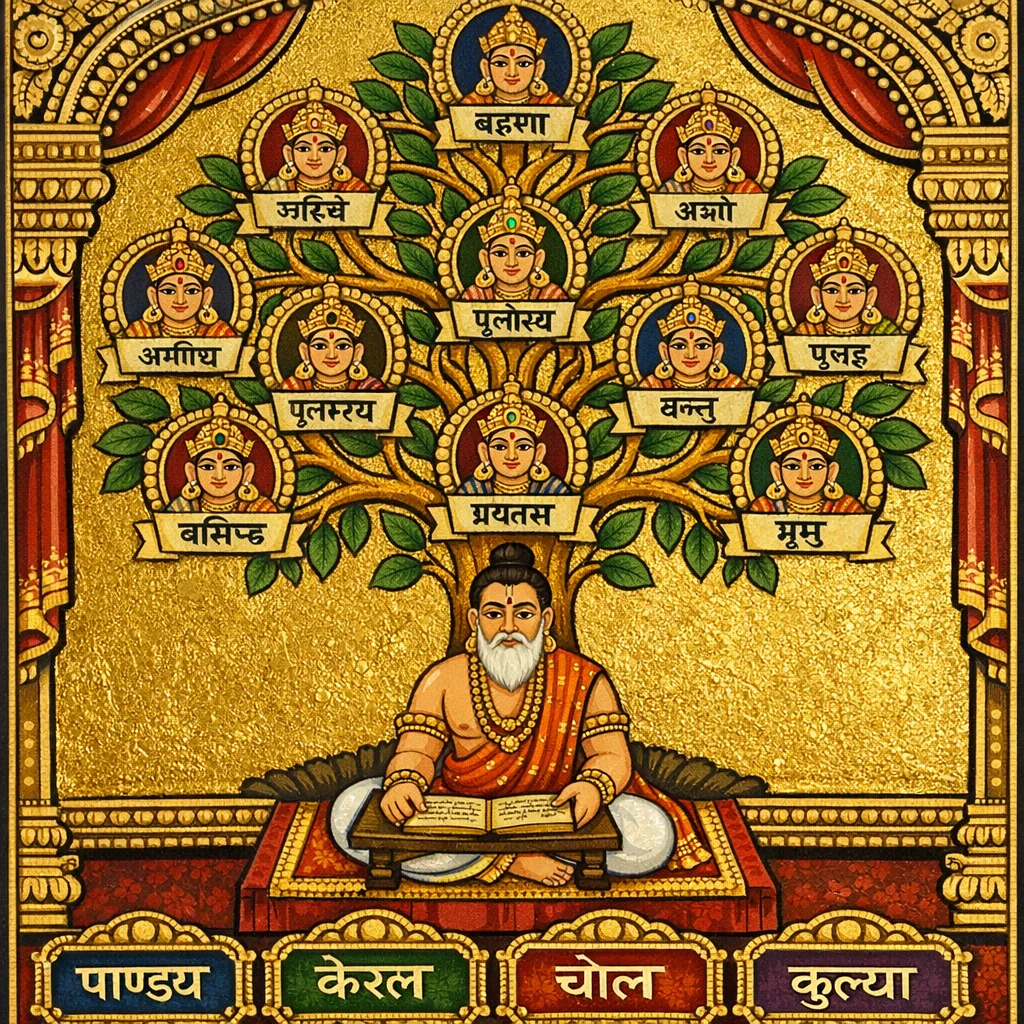
This chapter presents a Sūta-narrated genealogical register under the colophon “Viṣṇumāhātmya-varṇana,” a Purāṇic mode in which praise of Lord Viṣṇu frames and accompanies dynastic history. The account proceeds as a father→son lineage with brief notes: Marutta is described as childless (anapatya) yet adopts/appoints Duṣkanta of the Paurava line as his son. A dynastic shift is explained through Yayāti’s curse and the jarā-saṃkramaṇa motif, showing how a Paurava element enters Turvasu’s line. The register then branches into eponymous founders of regions—Pāṇḍya, Kerala, Cola, and Kulya—explicitly linked to janapadas, so genealogy doubles as a geographic-etymological map. Another branch traces Druhyu’s descendants (Babhrū, Setu, Aruddha), includes a lengthy war episode, and culminates in Gāndhāra as the name-giver of the “Gāndhāra-viṣaya.” The chapter also notes northern (udīcī) mleccha-rāṣṭra rulers and lists Anu’s sons (Sabhānara, Kālacakṣu, Parākṣa), continuing through Kālānala, Sṛñjaya, Purañjaya, and others—forming a typical Purāṇic dynastic grid that joins political memory with cosmological-historical order.
Shlokas
Verse 1
इति श्रीब्रह्माण्डे महापुराणे वायुप्रोक्ते मध्यमभागे तृतीय उपोद्धातपादे विष्णुमाहात्म्यवर्णनं नाम त्रिसप्ततितमो ऽध्यायः // ७३// सूत उवाच तुर्वसोस्तु सुतो वह्निर्वह्नेर्गोभानुरात्मजः / गोभानोस्तु सुतो वीर स्त्रिसानुरपाजितः
Thus, in the Śrī Brahmāṇḍa Mahāpurāṇa, in the middle section spoken by Vāyu, within the third introductory quarter, is the seventy-third chapter called “The Description of Viṣṇu’s Greatness.” Sūta said: Turvasu’s son was Vahni; Vahni’s son was Gobhānu; and Gobhānu’s heroic son was Strisānu (Apājita).
Verse 2
करन्धमस्तु त्रैसानो मरुत्तस्तस्य चात्मजः / अन्यस्त्वाविज्ञितो राजा मरुत्तः कथितः पुरा
Traisānu’s son was Karandhama, and his son was Marutta. In ancient times, another king—little known—was also spoken of as “Marutta.”
Verse 3
अनपत्यो मरुत्तस्तु स राजासीदिति श्रुतम् / दुष्कन्तं पौरवं चापि स वै पुत्रमकल्पयत्
It is heard that King Marutta was without offspring. Therefore he accepted Duṣkanta of the Paurava line as his son.
Verse 4
एवं ययातिशापेन जरासंक्रमणे पुरा / तुर्वसोः पौरवं वंशं प्रविवेश पुरा किल
Thus, by Yayāti’s curse, long ago at the time of the transference of old age (jarā-saṅkramaṇa), Turvasu’s line is said to have entered the Paurava dynasty.
Verse 5
दुष्कन्तस्य तु दायादः सरूप्यो नाम पार्थिवः / सरूप्यात्तु तथाण्डीरश्चत्वारस्तस्य चात्मजाः
Duṣkanta’s heir was a king named Sarūpya. From Sarūpya were born Āṇḍīra and his four sons.
Verse 6
पाण्ड्यश्च केरलश्चैव चोलः कुल्यस्तथैव च / तेषां जनपदाः कुल्याः पाण्ड्याश्चोलाः सकेरलाः
Pandya, Kerala, Chola, and Kulya were famed as janapadas; and their realms were known as Kulya, Pandya, Chola, and Kerala.
Verse 7
द्रुह्योश्च तनयौ वीरौ बभ्रुः सेतुश्च विश्रुतौ / अरुद्धः सेतुपुत्रस्तु बाब्रवो रिपुरुच्यते
Druhyu had two renowned heroic sons, Babhru and Setu; and Aruddha, the son of Setu, was also called Bābrava, said to be a destroyer of foes.
Verse 8
यौवनाश्वेन समितौ कृच्छेण निहतो बली / युद्धं सुमहदासीत्तु मासान्परिचतुर्दश
Meeting Yauvanāśva in battle, the mighty one was slain only with great difficulty; the war was vast indeed and lasted fourteen months.
Verse 9
अरुद्धस्य तु दायादो गान्धारो नाम पार्थिवः / ख्यायते यस्य नाम्ना तु गान्धारविषयो महान्
Aruddha’s heir was a king named Gāndhāra; and by his very name the great realm of Gandhāra became renowned.
Verse 10
गान्धारादेशजाश्चापि तुरगा वाजिनां वराः / गान्धारपुत्रो धर्मस्तु धृतस्तस्य सुतो ऽभवत्
Horses born in the land of Gandhāra too were counted the finest among steeds; Gandhāra’s son was Dharma, and Dharma’s son was Dhṛta.
Verse 11
धृतस्य दुर्दमो जज्ञे प्रचेतास्तस्य चात्मजः / प्रचेतसः पुत्रशतं राजानः सर्व एव ते
To Dhṛta was born a son named Durdama, and his son was Praceta. Pracetas had a hundred sons; all of them indeed were kings.
Verse 12
म्लेच्छराष्ट्राधिपाः सर्वे ह्युदीचीं दिशमास्थिताः / अनोश्चैव सुता वीरास्त्रयः परमधार्मिकाः
All of them were rulers of the Mleccha realms, settled in the northern quarter. And Anu too had three heroic sons, supremely devoted to Dharma.
Verse 13
सभानरः कालचक्षुः पराक्षस्चेति विश्रुताः / सभानरस्य पुत्रस्तु विद्वान्कालानलो नृपः
They were renowned as Sabhānara, Kālacakṣu, and Parākṣa. Sabhānara’s son was the learned king named Kālānala.
Verse 14
कालानलस्य धर्मात्मा सृंजयो नाम विश्रुतः / सृंजयस्याभवत्पुत्रो वीरो नाम्ना पुरञ्जयः
Kālānala’s righteous son was famed as Sṛñjaya. And Sṛñjaya had a son, a hero named Purañjaya.
Verse 15
आसीदिन्द्रसमो राजा प्रतिष्टितयशादिवि / महामनाः सुतस्तस्य महाशालस्य धार्मिकः
That king was like Indra, and his fame stood established even in heaven. His righteous son was named Mahāmanā, the son of Mahāśāla.
Verse 16
सप्तद्वीपेश्वरो राजा चक्रवर्त्ती महायशाः / महामनास्तु द्वौ पुत्रौ जनयामास विश्रुतौ
The illustrious cakravartin king, lord of the seven continents, in his great-heartedness begot two sons renowned in the world.
Verse 17
उशीनरं च धर्मज्ञं तितिक्षुं चैव धार्मिकम् / उशीनरस्य पत्न्यस्तु पञ्च राजर्षिवंशजाः
Uśīnara was a knower of dharma—patient and righteous. The wives of Uśīnara were five, born of the lineage of royal seers.
Verse 18
नृगा कृमी नवा दर्वा पञ्चमी च दृषद्वती / उशीनरस्य पुत्र्यस्तु पञ्च तासु कुलोद्वहाः
Nṛgā, Kṛmī, Navā, Darvā, and as the fifth Dṛṣadvatī—these were Uśīnara’s five daughters; from them were born the upholders of the line.
Verse 19
तपस्यतः सुमहतो जाता वृद्धस्य धार्मिकाः / नृगायास्तु नृगः पुत्रो नवाया नव एव तु
To the aged one, engaged in mighty austerities, were born righteous offspring. From Nṛgā came a son, Nṛga; from Navā, a son named Nava.
Verse 20
कृम्याः कृमिस्तु दर्वायाः सुव्रतो नाम धार्मिकः / दृषद्वती सुतश्चापि शिबिरौशीनरो द्विजाः
From Kṛmī was born a son, Kṛmi; from Darvā, a righteous son named Suvrata. And from Dṛṣadvatī too were born two noble sons—Śibi and Auśīnara—like eminent dvijas.
Verse 21
शिबे शिवपुरं ख्यातं यौधेयं तु नृगस्य च / नवस्य नवराष्ट्रं तु कृमेस्तु कृमिला पुरी
For Śibe, the sacred city famed is Śivapura; for Nṛga, Yaudheya; for Nava, Navarāṣṭra; and for Kṛmi, the city called Kṛmilā.
Verse 22
सुव्रतस्य तथांबष्टा शिबिपुत्रान्निबोधत / शिबेस्तु शिबयः पुत्राश्चत्वारो लोकसंमताः
For Suvrata there is the land called Ambaṣṭā; and know the sons of Śibi. For Śibe, four sons named Śibaya are accepted and renowned in the world.
Verse 23
वृषदर्भः सुवीरस्तु केकयो मद्रकस्तथा / तेषां जनपदाः स्फीताः केकया मद्रकास्तथा
Vṛṣadarbha, Suvīra, Kekaya, and Madraka—such were they. Their realms grew abundant and flourishing; the lands of the Kekayas and the Madrakas likewise prospered.
Verse 24
वृषदर्भाः सुवीराश्च तितिक्षोः शृणुत प्रजाः / तितिक्षुरभवद्राजा पूर्वस्यां दिशि विश्रुतः
Vṛṣadarbha and Suvīra were the people of Titiḳṣu—hear this. Titiḳṣu became a king, renowned in the eastern quarter.
Verse 25
उशद्रथो महाबाहुस्तस्य हेमः सुतो ऽभवत् / हेमस्य सुतपा जज्ञे सुतः सुतपसो बलिः
Uśadratha was mighty-armed; his son was Hema. From Hema was born Sutapā, and Sutapā’s son was Bali.
Verse 26
जातो मनुष्ययोन्यां वै क्षीणे वंशे प्रजेप्सया / महायोगी स तु बलिर्बद्धो यः स महामनाः
When the lineage had waned, desiring progeny he was born in a human womb; that Bali—bound though he was—was a great yogin, a man of lofty mind.
Verse 27
पुत्रानुत्पादयामास जातुर्वर्ण्यकरान्भुवि / अङ्गं स जनयामास वङ्गं सुह्मं तथैव च
Upon the earth he begot sons who established the order of the four varṇas; and he also fathered Aṅga, Vaṅga, and Suhma.
Verse 28
युद्धं कलिङ्गं च तथा वालेयं क्षत्रमुच्यते / वालेया ब्राह्मणाश्चैव तस्य वंशकराः प्रभोः
Yuddha, Kaliṅga, and Valeya are spoken of as kṣatriyas; and the Valeya brāhmaṇas too became increasers of that lord’s lineage.
Verse 29
बलेस्तु ब्रह्मणा दत्ता वराः प्रीतेन धीमतः / महायोगित्वमायुश्च कल्पस्य परिमाणकम्
To the wise Bali, Brahmā, well pleased, granted boons: the attainment of great yoga and a lifespan measured as a full kalpa.
Verse 30
संग्रामे वाप्यजेयत्वं धर्मे चैव प्रभावतः / त्रैलोक्यदर्शनं चैव प्राधान्यं प्रसवे तथा
Invincibility in battle, and mighty influence in dharma; the vision of the three worlds as well, and preeminence in the begetting of offspring.
Verse 31
बलेश्चा प्रतिमत्वं वे धर्मतत्त्वार्थदर्शनम् / चतुरो नियतान्वर्णांस्त्वं वै स्थापयितेति वै
O Bali, may you become a sacred exemplar and behold the meaning of Dharma’s truth; you indeed shall establish the four ordained varnas—so it was declared.
Verse 32
इत्युक्तो विभुना राजा बलिः शान्ति पराययौ / कालेन महता विद्वान्स्वं च स्थानमुपागतः
Thus addressed by the Sovereign Lord, King Bali took refuge in peace; after a long span of time, the wise one returned to his own abode.
Verse 33
तेषां जनपदाः स्फीता अङ्गवङ्गाश्च सुह्मकाः / पुण्ड्राः कलिङ्गश्च तथा तेषां वंशं निबोधत
Their realms were flourishing—Anga, Vanga, and Suhma; likewise Pundra and Kalinga. Now, understand their lineage.
Verse 34
तस्य ते तनयाः सर्वे क्षेत्रजा मुनिसंभवाः / संभूता दीर्घतमसः सुदेष्णायां महौजसः
All his sons were kṣetrajā—born through a sage; from the mighty seer Dīrghatamas they were brought forth in Sudeṣṇā.
Verse 35
ऋषय ऊचुः कथं बलेः सुताः पञ्च जनिताः क्षेत्रजाः प्रभो / ऋषिणा दीर्घतमसा ह्येतत्प्रब्रूहि पृच्छताम्
The sages said: “O Lord, how were Bali’s five sons born as kṣetrajā? Tell us who ask—how did this come to pass through the seer Dīrghatamas?”
Verse 36
सूत उवाच उशिजो नाम विख्यात आसीद्धीमानृषिः पुरा / भार्या वै ममता नाम बभूवास्य महात्मनः
Sūta said: In ancient times there was a renowned, wise ṛṣi named Uśija. The wife of that great-souled one was called Mamatā.
Verse 37
उशिजस्य कनीयांस्तु पुरोधा यो दिवौकसाम् / बृहस्पतिर्बृहत्तेजा ममतां सो ऽभ्यपद्यत
Uśija’s younger brother, Bṛhaspati—radiant and the priest of the gods—approached Mamatā and sought her.
Verse 38
उवाच ममता तं तु बृहस्पतिमनिच्छती / अन्तर्वत्न्यस्मि ते भ्रातुर्ज्येष्ठस्यास्य च भामिनी
Mamatā, unwilling, said to Bṛhaspati: “I am with child; I am the wife of your elder brother.”
Verse 39
अयं हि मे महान्गर्भो रोरवीति बृहस्पते / अजस्रं ब्रह्म चाभ्यस्य षडङ्गं वेदमुद्गिरन्
O Bṛhaspati! This great child within my womb cries out; unceasingly he practices Brahman and utters the Veda with its six limbs.
Verse 40
अमोघरे तास्त्वं चापि न मां भजितुमर्हसि / अस्मिन्नेव यथाकाले यथा वा मन्यसे विभो
O Amogha-retā! Even you are not fit to take me; at this very time, at the proper season—do as you deem right, O Lord.
Verse 41
एवमुक्तस्तया सम्यग्बृहतेजा बृहस्पतिः / कामात्मानं महात्मापि नात्मानं सो ऽभ्यधारयत्
Though she spoke thus rightly, Bṛhaspati of mighty splendor—though a great-souled one—did not restrain himself; desire took hold of him.
Verse 42
संबभूवैव धर्मात्मा तया सार्द्धं बृहस्पति / उत्सृजन्तं तदा रेतो गर्भस्थः सो ऽस्य भाषत
Then Bṛhaspati, righteous at heart, united with her. As he was releasing his seed, the one dwelling in the womb spoke to him.
Verse 43
शुक्रं त्याक्षीश्च मा जीव द्वयोर्नेहास्ति संभवः / अमोघरेतास्त्वं वापि पूर्वं चाहमिहागतः
“O living one, abandon the seed and live; here there can be no coexistence for the two of us. You too possess unfailing potency, and I have already come here before you.”
Verse 44
शशाप तं तदा क्रुद्ध एवमुक्तो बृहस्पतिः / उशिजस्य सुतं भ्रातुर्गर्भस्थं भगवानृषिः
Thus addressed, Bṛhaspati—the venerable seer—grew wrathful and then cursed him: Uśij’s son, the child abiding in his brother’s womb.
Verse 45
यस्मात्त्वमीदृशे काले सर्वभूतेप्सिते सति / मामेवमुक्तवान्मोहात्तमो दीर्घं ग्रवेक्ष्यसि
“Because, at such a time—desired by all beings for offspring—you spoke to me thus in delusion, you shall behold darkness for a long while.”
Verse 46
ततो दीर्घतमा नाम शापादृषिरजायत / अथौशिजो बृहत्कीर्तिर्बृहस्पतिरिबौजसा
Then, by the power of a curse, the seer named Dīrghatamā was born; and thereafter Bṛhatkīrti of the Auśija line arose, mighty in splendor like Bṛhaspati.
Verse 47
ऊर्द्ध्वरेतास्ततश्चापि न्यवसद्भ्रातुराश्रमे / गोधर्मं सौरभेयात्तु वृषभाच्छतवान्प्रभोः
Thereafter, as one of uplifted seed (ūrdhvareta), he dwelt in his brother’s āśrama; and from the Lord’s sacred bull he received the teaching of godharma, born of Surabhī.
Verse 48
तस्य भ्राता पितृव्यस्तु चकार भवनं तदा / तस्मिन्हि तत्र वसति यदृच्छाभ्यागतो वृषः
Then his brother—like an uncle to him—built a dwelling; and as he lived there, a bull happened to arrive of its own accord.
Verse 49
दर्शार्थमास्तृतान्दर्भाञ्चचार सुरभीसुतः / जग्राह तं दीर्घ तमा विस्फुरन्तं तु शृङ्गयोः
For the sake of darśana, the son of Surabhī walked upon the darbha grass that had been spread; then Dīrghatamā seized that bull, whose horns were quivering.
Verse 50
स तेन निगृहीतस्तु न चचाल पदात्पदम् / ततो ऽब्रवीद् वृषस्तं वै सुंच मां बलिनां वर
Though held fast by him, the bull did not move even a step; then the bull said, “Release me, O best among the mighty.”
Verse 51
न मया सादितस्तात बलवांस्तद्विधः क्वचित् / त्र्यंबकं वहता देवं यतो जातो ऽस्मि भूतले
O father, never have I been subdued by one so mighty, nor by any like him; for upon this earth I was born of him who bore the god Tryambaka.
Verse 52
सुंच मां बलिनां श्रेष्ठ प्रतिस्नेहं वरं वृणु / एवमुक्तो ऽब्रवीदेनं जीवंस्त्वं मे क्व यास्यसि
O best among the mighty, release me and choose a boon of love returned. Thus addressed, he replied to him: “If you remain alive, where will you go away from me?”
Verse 53
तेन त्वाहं न मोक्ष्यामि परस्वादं चतुष्पदम् / ततस्तं दीर्घतमसं स वृषः प्रत्युवाच ह
Therefore I will not release you, O four-footed one who craves another’s taste. Then that bull spoke in reply to Dīrghatamas.
Verse 54
नास्माकं विद्यते तात पातकं स्तेयमेव च / भक्ष्याभक्ष्यं न जानीमः पेयापेयं च सर्वशः
O father, for us there is neither sin nor theft; we do not at all know what is fit to eat or unfit, what is fit to drink or unfit.
Verse 55
कार्या कार्यं च वै विप्र गम्यगम्यं तथैव च / न पाप्मानो वयं विप्र धर्मो ह्येष गवां श्रुतः
O vipra, what is to be done and not done, what is to be gone to and not gone to—so it is. O vipra, we are not sinners, for this is the dharma heard of among the cows.
Verse 56
गवां नाम स वे श्रुत्वा संभ्रान्तस्त ममुञ्चत / भक्त्या चानुश्रविकया गोसुतं वै प्रसादयन्
Hearing the very name of the cows, he grew agitated and released him. Then, with devotion and with pious words handed down by sacred hearing, he pleased the holy Son of the Cow.
Verse 57
प्रसादतो वृषेन्द्रस्य गोधर्मं जगृहे ऽथ सः / मनसैव तदा दध्रे तद्विधस्तत्परायणः
By the favor of Vṛṣendra, he accepted the dharma of the cow. Then he held it within his mind alone, becoming one who followed that rule and was wholly devoted to it.
Verse 58
ततो यवीयसः पत्नीमौतथ्यस्याभ्यमन्यत / विचेष्टमानां रुदतीं दैवात्संमूढचेतनः
Then, by the turn of fate, his mind became bewildered; and he conceived the thought of dishonoring Autathya’s younger wife, who was weeping and trembling in distress.
Verse 59
अवलेपं तु तंमत्वा सुरद्वांस्तस्य नाक्षमत् / गोधर्म वै बलं कृत्वा स्नुषां स ह्यभ्यमन्यत
Knowing his arrogance, Suradvān could not endure it. Taking the dharma of the cow as his very strength, he set his mind on dishonoring his daughter-in-law (snuṣā).
Verse 60
विपर्ययं तु तं दृष्ट्वा शरद्वान्प्रविचिन्त्य च / भविष्यमर्थं ज्ञात्वा च महात्मा त्ववमत्य तम्
Seeing that perversion, Śaradvān reflected deeply. Knowing the import of what was to come, the great-souled one deemed him insignificant and disregarded him.
Verse 61
प्रोवाच दीर्घतमसं क्रोधात्संरक्तलोचनः / गम्यागम्यं न जानीषे गोधर्मात्प्रार्थयन्स्रुषाम्
With eyes reddened by wrath, he spoke to Dīrghatamas: “You do not know what is fit and unfit; invoking the dharma of the cow, you beg from women.”
Verse 62
दुर्वृत्तं त्वां त्यजाम्येष गच्छ त्वं स्वेन कर्मणा / यस्मात्त्वमन्धो वृद्धश्च भर्त्तव्यो दुरनुष्ठितः
You of wicked conduct, I cast you off; go according to your own karma. For you are blind and aged, and though your ways are ill-performed, you still must be maintained.
Verse 63
तेनासि त्वं परित्यक्तो दुराचारो ऽसि मे मतः / सूत उवाच कर्मण्यस्मिंस्ततः क्रूरे तस्य बुद्धिरजायत
Therefore you are forsaken; in my judgment you are of evil conduct. Sūta said: after that cruel deed, a thought arose in his mind.
Verse 64
निर्भर्त्स्य चैव बहुशो बाहुभ्यां परिगृह्य च / कोष्टे समुद्रे प्रक्षिप्य गङ्गांभसि समुत्सृजत्
He rebuked him again and again, seized him in both arms, put him into a chest, cast it into the sea, and set it adrift upon the waters of the Gaṅgā.
Verse 65
उह्यमानः समुद्रस्तु सप्ताहं श्रोतसा तदा / तं सस्त्रीको बलिर्नाम राजा धर्मार्थतत्त्ववित्
Then he was borne along by the ocean’s current for seven days. King Bali, together with his queen, a knower of the true principles of dharma and artha, found him.
Verse 66
अपश्यन्मज्जमानं तु स्रोतसोभ्यासमागतम् / तं गृहीत्वा स धर्मात्मा बलिर्वैरोचनस्तदा
Seeing him, come near the currents and sinking, the righteous Bali Vairochana at once seized him and held him fast.
Verse 67
अन्तःपुरे जुगोपैनं भक्ष्यैर्भोज्यैश्च तर्पयन् / प्रीतः स वै वरेणाथ च्छन्दयामास वै बलिम्
He sheltered him within the inner palace, nourishing him with food and drink; pleased, the lord granted a boon and thus satisfied Bali.
Verse 68
स च तस्माद्वरं वव्रे पुत्रार्थी दानवर्षभः / बलिरुवाच संतानार्थं महाभाग भार्यायां मम मानद
The bull among the Dānavas, longing for a son, asked him for a boon. Bali said: “O greatly blessed one, giver of honor, grant offspring to my wife.”
Verse 69
पुत्रान्धर्मार्थसंयुक्तानुत्पादयितुमर्हसि / एवमुक्तस्तुतेनर्षिस्तथास्त्वित्युक्तवान्हितम्
“May you be fit to beget sons endowed with dharma and artha.” Thus addressed, the rishi spoke what was auspicious: “Tathāstu—so be it.”
Verse 70
सुदेष्णां नाम भार्यां स्वां राजास्मै प्राहिणोत्तदा / अन्धं वृद्धं च तं दृष्ट्वा न सा देवी जगाम ह
Then the king sent his own wife, named Sudeṣṇā, to him. But seeing him blind and aged, the queen did not go to him.
Verse 71
स्वां च धात्रेयिकां तस्मै भूषयित्वा व्यसर्जयत् / कक्षीवच्चक्षुषौ तस्यां शूद्रयोन्यामृषिर्वशी
He adorned his own dhātreyikā maiden and sent her to him. In that śūdra womb, the self-controlled ṛṣi begot two sons—Kakṣīvacc and Cakṣuṣa.
Verse 72
जनया मास धर्मात्मा पुत्रावेतौ महौजसौ / कक्षीवच्चक्षुषौ तौ तु दृष्ट्वा राजा बलिस्तदा
The righteous one, within a single month, brought forth those two sons of great might—Kakṣīvacc and Cakṣuṣa. Seeing them, King Bali was then astonished.
Verse 73
अधीतौ विधिवत्सम्य गीश्वरौ ब्रह्मवादिनौ / सिद्धौ प्रत्यक्षधर्माणौ बुद्धौ श्रेष्ठतमावपि
Both had duly studied in the proper manner; they were masters of speech and proclaimers of Brahman. Accomplished ones, with dharma made manifest, they were also foremost in intellect.
Verse 74
ममैताविति होवाच बलिर्वैरोचनस्त्वृषिम् / नेत्युवाच ततस्तं तु ममैताविति चाब्रवीत्
Then Bali, son of Virocana, said to the ṛṣi, “These two are mine.” The ṛṣi replied, “No.” Thereupon Bali again declared, “These two are mine indeed.”
Verse 75
उत्पन्नौ शूद्रयोनौ तु भवतः क्ष्मासुरोत्तमौ / अन्धं वृद्धं च मां मत्वा सुदेष्णा महिषी तव
O foremost of asuras upon the earth! These two were born from your śūdra womb. Your queen Sudeṣṇā, taking me to be blind and aged, (acted thus).
Verse 76
प्राहिणोदवमानीय शूद्रीं धात्रेयिकां मम / ततः प्रसादयामास पुनस्तमृषिसत्तमम्
She disregarded the command and sent my nurse-maid, a Shudra woman. Then, the King propitiated that best of sages again.
Verse 77
बलिर्भार्यां सुदेष्णा च भर्त्सयामास वै प्रभुः / पुनश्चैनामलङ्कृत्य ऋषये प्रत्यपादयत्
Lord Bali scolded his wife Sudeshna. Then, having adorned her again, he presented her to the sage.
Verse 78
तां स दीर्घतमा देवीमब्रवीद्यदि मां शुभे / दध्ना लवणमिश्रेण स्वभ्यक्तं नग्नकं तथा
That sage Dirghatamas said to that queen: 'O auspicious one, if you lick my naked body smeared with curd mixed with salt...'
Verse 79
लेहिष्यस्यजुगुप्सन्ती ह्यापादतलमस्तकम् / ततस्त्वं प्राप्स्यसे देवि पुत्रांश्च मनसेप्सितान्
'...lick from the soles of my feet to my head without feeling disgust, then, O Queen, you shall obtain the sons desired by your mind.'
Verse 80
तस्य सा तद्वचो देवी सर्वं कृतवती तथा / अपानं च समासाद्य जुगुप्संती ह्यवर्जयत्
The queen did everything exactly according to his words. However, upon reaching the anus, feeling disgust, she avoided it.
Verse 81
तमुवाच ततः सर्षिर्यस्ते परिहृतं शुभे / विनापानं कुमारं त्वं जनयिष्यसि पूर्वजम्
Then the rishi said: “O auspicious lady, as for what you have set aside— even without the apāna, you shall beget a young son, like an ancestor.”
Verse 82
ततस्तं दीर्घतमसं सा देवी प्रत्युवाच ह // नार्हसि त्वं महाभाग पुत्रं दातुं ममेदृशम्
Then the देवी replied to Dīrghatamas: “O greatly fortunate one, it is not fitting for you to grant a son such as this to one like me.”
Verse 83
ऋषिरुवाच तवापरधो देव्येष नान्यथा भविता तु वै / देवीदृशं च ते पौत्रमहं दास्यामि सुप्रते
The rishi said: “Goddess, this is your own fault; it shall not be otherwise. O fair one, I shall grant you a grandchild like a goddess.”
Verse 84
तस्यापानं विना चैव योग्यभावो भविष्यति / तां स दीर्घतमाश्चैव कुक्षौ स्पृष्ट्वदमब्रवीत्
Even without the apāna, he will possess the proper fitness. Then Dīrghatamas touched her womb and spoke these words.
Verse 85
प्राशितं दधियत्ते ऽद्य ममाङ्गाद्वै शुचिस्मिते / तेन ते पूरितो गर्भः पौर्णमास्यामिवोदधिः
O pure-smiling one, today you have drunk the dadhi that came forth from my own body; by that, your womb is filled—like the ocean on the full-moon night.
Verse 86
भविष्यन्ति कुमारास्ते पञ्च देवसुतोपमाः / तेजस्विनः पराक्रान्ता यज्वानो धार्मिकास्तथा
Those five princes shall be like sons of the gods—radiant, mighty in valor, performers of yajña, and steadfast in dharma.
Verse 87
ततोंऽगस्तु सुदेष्णाया ज्येष्ठपुत्रो व्यजायत / वङ्गस्तस्मात्कलिङ्गस्तु पुण्ड्रः सुह्मस्तथैव च
Then to Sudeṣṇā was born the eldest son, Aṅga; and from him were born Vaṅga, Kaliṅga, Puṇḍra, and likewise Suhma.
Verse 88
वंशभाजस्तु पञ्चैते बलेः क्षेत्रे ऽभवंस्तदा / इत्येते दीर्घतमसा बलेर्दत्ताः सुताः पुरा
These five, inheritors of the lineage, were then born in Bali’s kṣetra; thus, in ancient times, Dīrghatamas had given them to Bali as sons.
Verse 89
प्रजा ह्युपहतास्तस्य ब्रह्मणा कारणं प्रति / अपत्यमस्य दारेषु स्वेषु माभून्महात्मनः
His people were stricken due to a cause proceeding from Brahmā; therefore it was ordained that the great-souled one should have no offspring from his own wives.
Verse 90
ततो मनुष्ययोन्यां वै जनयामास स प्रजाः / सुरभिर्दीर्घत मसमथ प्रीतो वचो ऽब्रवीत्
Then he brought forth the people within the human womb; and Surabhī, pleased, spoke words to Dīrghatamas.
Verse 91
विचार्य यस्माद्गोधर्मं त्वमेवं कृतवानसि / भक्त्या चानन्ययास्मासु मुने प्रीतास्मि तेन ते
O sage, since you reflected on the dharma of the cow and acted thus, and bore unwavering devotion toward us, therefore I am pleased with you.
Verse 92
तस्मात्तव तमो दीर्घं निस्तदाम्यद्य पश्य वै / बार्हस्पत्यं च यत्ते ऽन्यत्पापं संतिष्ठते तनौ
Therefore, behold: today I dispel your long darkness, and I also remove the other sin of Bārhaspatya nature that still abides in your body.
Verse 93
जरामृत्युभयं चैव ह्याघ्राय प्रणुदामि ते / आघ्रातमात्रो ऽसा पश्यत्सद्यस्तमसि नाशिते
By merely inhaling, I drive away from you the fear of old age and death; behold, as soon as it was inhaled, the darkness was destroyed and he saw at once.
Verse 94
आयुष्मांश्च युवा चैव चक्षुष्मांश्च ततो ऽभवत् / गवा हृततमाः सो ऽथ गौतमः समपद्यत
Then he became long-lived, youthful, and clear-sighted; and Gautama, whose darkness had been taken away by the cow, regained his proper state.
Verse 95
कक्षीवांस्तु ततो गत्वा सह पित्रा गिरिव्रजम् / यथोद्दिष्टं हि पित्राथ चचार विपुलं तपः
Then Kakṣīvān went with his father to Girivraja, and, as his father had instructed, he undertook vast and mighty austerities (tapas).
Verse 96
ततः कालेन महता तपसा भावितः स वै / विधूय सानुजो दोषान्ब्राह्मण्यं प्राप्तवान्प्रभुः
Then, in the course of a long time, ripened by great austerity, he—together with his younger brother—shook off his faults, and the Lord attained the state of Brahminhood.
Verse 97
ततो ऽब्रवीत्पिता त्वेनं पुत्रवानस्म्यहं प्रभो / सुपुत्रेण त्वया तात कृतार्थश्च यशस्विना
Then his father said to him, “O Lord, I am now blessed with a son; dear child, through you—a noble and renowned son—I have found fulfillment.”
Verse 98
युक्तात्मानं ततः सो ऽथ प्राप्तवान्ब्रह्मणः क्षयम् / ब्राह्मण्यं प्राप्य कक्षीवान्सहस्रमसृजत्सुतान्
Thereafter, with his self well-yoked, he reached the abode of Brahmā; and having attained Brahminhood, Kakṣīvān brought forth a thousand sons.
Verse 99
कूष्माण्डा गौतमास्ते वै स्मृताः कक्षीवतः सुताः / इत्येष दीर्घतमसो बलेर्वैरोचनस्य वै
The sons of Kakṣīvān are remembered as Kūṣmāṇḍa and Gautama; thus is told this account concerning Dīrghatamas and Bali, the son of Virocana.
Verse 100
समागमः समाख्यातः संतानश्चोभयोस्तथा / बलिस्तानभिषिच्येह पञ्च पुत्रानकल्मषान्
Here has been recounted the meeting of the two, and likewise the lineage of both; and in this very account Bali consecrated here five sons, stainless and pure.
Verse 101
कृतार्थः सो ऽपि योगात्मा योगमाश्रित्य च प्रभुः / अदृश्यः सर्वभूतानां कालाकाक्षी चरत्युत
That Lord, whose very soul is Yoga, took refuge in Yoga and became fulfilled; unseen by all beings, he moves about, awaiting the time of Kāla.
Verse 102
तत्राङ्गस्य तु राजर्षे राजासीद्दधिवाहनः / सो ऽपराधात्सुदेष्णाया अनपानो ऽभवन्नृपः
O royal seer, there the king of Aṅga was Dadhivāhana; through an offense against Sudeṣṇā, that ruler came to be known as Anapāna.
Verse 103
अनपानस्य पुत्रस्तु राजा दिविरथः स्मृतः / पुत्रो दिविरथस्यासीद्विद्वान्धर्मरथो नृपः
Anapāna’s son is remembered as King Diviratha; Diviratha’s son was the learned ruler Dharmaratha.
Verse 104
एते एक्ष्वाकवः प्रोक्ता भवितारः कलौ युगे / बृहद्बलान्वये जाता महावीर्यपराक्रमाः
These are declared to be descendants of Ikṣvāku, who shall arise in the Kali age; born in the line of Bṛhadbala, mighty in valor and prowess.
Verse 105
शूराश्च कृतविद्याश्च सत्यसंधा जितेन्द्रियाः / अत्रानुवंशश्लोको ऽयं भविष्यज्ज्ञैरुदाहृतः
They are heroic and well-schooled, steadfast in truth and masters of the senses; here this genealogical verse was uttered by those who know what is to come.
Verse 106
इक्ष्वाकूणामयं वंशः सुमित्रान्तो भविष्यति / सुमित्रं प्राप्य राजानं संस्थां प्राप्स्यति वै कलौ
This line of the Ikṣvākus shall come to its end with Sumitrā. In the Kali age, upon attaining the king named Sumitra, it will indeed reach its final close.
Verse 107
इत्येतन्मानवं क्षत्रमैलं च समुदात्दृतम् / अत ऊर्ध्वं प्रवक्ष्यामि मगधो यो बृहद्रथः
Thus has the kṣatriya line of the Mānava race, and the Aila line as well, been recounted. Now, from here onward, I shall speak of Bṛhadratha of Magadha.
Verse 108
जरासंधस्य ये वंशे सहदेवान्वये नृपाः / अतीता वर्त्तमानाश्च भविष्याश्च तथा पुनः
The kings in the line of Jarāsandha, in the succession of Sahadeva—those of the past, those now present, and those yet to come—are likewise (to be spoken of).
Verse 109
प्राधान्यतः प्रवक्ष्यामि गदतो मे निबोधत / संग्रामे भारते तस्मिन्सहदेवो निपातितः
I shall speak chiefly of what is foremost; heed my words. In that Bhārata war, Sahadeva was struck down and fell.
Verse 110
सोमापिस्तस्य तनयो राजर्षिः स गिरिव्रजे / पञ्चाशतं तथाष्टौ च समा राज्यमकारयत्
His son was Somāpi, a royal sage in Girivraja. He ruled the kingdom for fifty-eight years.
Verse 111
श्रुतश्रवाः सप्तषष्टिः समास्तस्य सुतो ऽभवत् / अयुतायुस्तु षड्विंशद्राज्यं वर्षाण्यकारयत्
Śrutaśravā became his son and lived for sixty-seven years. Ayutāyu then ruled the kingdom for twenty-six years.
Verse 112
समाः शतं निरामित्रो महीं भुक्त्वा दिवं गतः / पञ्चाशतं समाः षट् च सुक्षत्रः प्राप्तवान्महीम्
Nirāmitra enjoyed sovereignty over the earth for a hundred years and then went to heaven. After him, Sukṣatra attained the rule of the earth for fifty-six years.
Verse 113
त्रयोविंशद्बृहत्कर्मा राज्यं वर्षाण्यकारयत् / सेनाजित्सांप्रतं चापि एता वै भोक्ष्यते समाः
Bṛhatkarmā ruled the kingdom for twenty-three years. And now Senājit too shall surely enjoy the reign for that very number of years.
Verse 114
श्रुतञ्जयस्तु वर्षाणि चत्वारिंशद्भविष्यति / रिपुञ्जयो महाबाहुर्महाबुद्धिपराक्रमः
Śrutañjaya shall reign for forty years. Ripuñjaya will be mighty-armed, of great intellect, and radiant in valor.
Verse 115
पञ्जत्रिंशत्तु वर्षाणि महीं पालयिता नृपः / अष्टपञ्जाशतं जाब्दान्राज्ये स्थास्यति वै शुचिः
That king will protect the earth for thirty-five years. And Śuci shall surely remain established in the kingdom for fifty-eight years.
Verse 116
अष्टाविंशत्समाः पूर्णाः क्षेमो राजा भविष्यति / सुव्रतस्तु चतुःषष्टिं राज्यं प्राप्स्यति वीर्यवान्
When twenty-eight years are complete, Kṣema shall become king. And the valiant Suvrata shall attain the kingdom for sixty-four years.
Verse 117
पञ्च वर्षाणि पूर्णानि धर्मनेत्रो भविष्यति / भोक्ष्यते नृपतिश्चेमा अष्टपञ्चाशतं समाः
When five years are complete, Dharmanetra shall arise. And King Cema shall rule for fifty-eight years.
Verse 118
अष्टत्रिंशत्समाराष्ट्रं सुश्रमस्य भविष्यति / चत्वारिंशद्दशाष्टौ च दृढसेनो भविष्यति
Suśrama’s realm shall endure for thirty-eight years. And Dṛḍhasena shall be king for forty-eight years.
Verse 119
त्रयस्त्रिंशत्तु वर्षाणि सुमतिः प्राप्स्यते ततः / चत्वारिंशत्समा राजा सुनेत्रो भोक्ष्यते ततः
Thereafter Sumati shall attain the kingdom for thirty-three years. Then King Sunetra shall rule for forty years.
Verse 120
सत्यजित्पृथिवी राष्ट्रं त्र्यशीतिं भोक्ष्यते समाः / प्राप्येमं विश्वाजिच्चापि पञ्चविंशद्भविष्यति
Satyajit shall enjoy sovereignty over the earth for eighty-three years. Having attained it, Viśvājit too shall reign for twenty-five years.
Verse 121
अरिञ्जयस्तु वर्षाणां पञ्चाशत्प्राप्यते महीम् / द्वाविंशच्च नृपा ह्येते भवितारो बृहद्रथाः
Ariñjaya shall attain sovereignty over the earth for fifty years. These shall be twenty-two kings, known as the Bṛhadrathas.
Verse 122
पूर्मं वर्षसहस्रं वै तेषां राज्यं भविष्यति / बृहद्रथेष्वतीतेषु वीरहन्तृष्ववर्त्तिषु
Their sovereignty shall endure for a full thousand years. When the Bṛhadrathas have passed away, slayers of heroes shall come to power.
Verse 123
शुनकः स्वामिनं हत्वा पुत्रं समभिषेक्ष्यति / मिषतां क्षत्रियाणां हि प्रद्योतिं नृपतिं बलात्
Śunaka, having slain his lord, shall anoint his son. While the kṣatriyas look on, he shall by force install Pradyota as king.
Verse 124
स वै प्रणतसामन्तो भविष्येण प्रवर्त्तितः / त्रयोविंशत्समा राजा भविता स नरोत्तमः
In times to come he shall be set in motion by vassals who bow in submission. That best of men shall reign as king for twenty-three years.
Verse 125
चतुर्विंशत्समा राजा पालको भविता ततः / विशाखयूपो भविता नृपः पञ्चाशतं समाः
Thereafter Pālaka shall be king for twenty-four years. Then Viśākhayūpa shall arise as ruler, reigning for fifty years.
Verse 126
एकविंशत्समा राज्य मजकस्य भविष्यति / भविष्यति समा विंशत्तत्सुतो नन्दिवर्द्धनः
Majaka shall reign for twenty-one years; and his son Nandivarddhana shall reign for twenty years.
Verse 127
अष्टत्रिंशच्छतं भाव्याः प्राद्योताः पञ्च ते नृपाः / हत्वा तेषां यशः कृत्स्नं शिशुनागो भविष्यति
The five kings of the Pradyota line shall endure for a total of one hundred and thirty-eight years; then, having extinguished all their glory, Shishunaga shall arise.
Verse 128
वाराणस्यां सुतस्तस्य संयास्यति गिरिव्रजम् / शिशुनागश्च वर्षाणि चत्वारिंशद्भविष्यति
His son shall be born in Varanasi and shall establish the realm at Girivraja; and Shishunaga shall reign for forty years.
Verse 129
काकवर्णः सुतस्तस्य पट्त्रिंशच्च भविष्यति / ततस्तु विंशतिं राजा क्षेमधर्मा भवष्यति
His son Kakavarna shall reign for thirty-five years; thereafter King Ksemadharma shall rule for twenty years.
Verse 130
चत्वारिंशत्समा राष्ट्रं क्षत्रौजाः प्राप्स्यते ततः / अष्टत्रिंशत्समा राजाविधिसारो भविष्यति
Thereafter Ksatrouja shall obtain the kingdom for forty years; and then the king named Vidhisara shall reign for thirty-eight years.
Verse 131
अजातशत्रुर्भविता पञ्चविंशत्समा नृपः / पञ्चत्रिंशत्समा राजा दर्भकस्तु भविष्यति
The king named Ajātaśatru shall reign for twenty-five years; and Darbhaka shall be king for thirty-five years.
Verse 132
उदयी भविता तस्मात्त्रयस्त्रिंशत्समा नृपः / स वै पुरवरं राजा वृथिव्यां कुसुमाह्वयम्
Thereafter King Udayī shall reign for thirty-three years; he will found upon the earth the foremost city called Kusuma.
Verse 133
गगाया दक्षिणे कूले चतुर्थे ऽह्नि कारिष्यति / चत्वारिशत्समा भाव्यो राजा वै नन्दिवर्द्धनः
On the southern bank of the Gaṅgā, on the fourth day he shall accomplish that deed; and King Nandivardhana is destined to reign for forty years.
Verse 134
चत्वारिशत्त्रयश्चैव सहानन्दिर्भविष्यति / भविष्यन्ति च वर्षाणि षष्ट्युत्तरशतत्रयम्
Sahānandi likewise shall reign for forty-three years; and the years in all shall amount to three hundred and sixty (360).
Verse 135
शिशुनागा दशैवैते राजानः क्षत्रबन्धवः / एतैः सार्द्धं भविष्यन्ति तावत्कालं नृपाः परे
These ten kings of the Śiśunāga line are called kṣatrabandhavas; and alongside them, for that same span of time, other rulers too shall arise.
Verse 136
एक्ष्वाकवश्चतुर्विंशत्पञ्चालाः पञ्चविंशतिः / कालकास्तु चतुर्विंशच्चतुर्विंशत्तु हैहयाः
In the Ikṣvāku line there shall be twenty-four; in Pañcāla, twenty-five; the Kālakas, twenty-four, and the Haihayas likewise twenty-four (kings).
Verse 137
द्वात्रिंशदेकलिङ्गास्तु पञ्चविंशत्तथा शकाः / कुरवश्चापि षट्त्रिंशदष्टाविंशति मैथिलाः
The Ekalīṅgas shall be thirty-two, and the Śakas twenty-five; the Kurus thirty-six, and the Maithilas twenty-eight (kings).
Verse 138
शूरसेनास्त्रयोविंशद्वीतिहोत्राश्च विंशतिः / तुल्यकालं भविष्यन्ति सर्वं एव महीक्षितः
The Śūrasenas shall be twenty-three, and the Vītihotras twenty; O Mahīkṣit, all of them shall endure for an equal span of time (in rule).
Verse 139
महानन्दिसुतश्चापि शूद्रायाः कालसंवृतः / उत्पत्स्यते महा पद्मः सर्वक्षत्रान्तकृन्नृपः
The son of Mahānandi, born of a Śūdrā woman and shrouded by the course of time, shall arise as King Mahāpadma, the bringer of the end of all Kṣatriyas.
Verse 140
ततः प्रभृति राजानो भविष्यः शूद्रयोनयः / एकराट् स महापद्म एकच्चत्रो भविष्यति
From that time onward, the kings shall be of Śūdra birth; that Mahāpadma shall be the sole sovereign (ekarāṭ), ruling under a single royal canopy (ekacchatra).
Verse 141
अष्टाशीति तु वर्षाणि पृथिवीं पालयिष्यति / सर्वक्षत्रं समुद्धृत्य भाविनोर्ऽथस्य वै बलात्
He shall rule the earth for eighty-eight years. By the force of what is to come, he will uproot and subdue the whole power of the Kshatriyas.
Verse 142
तत्पश्चात्तत्सुता ह्यष्टौ समाद्वादश ते नृपाः / महापद्मस्य पर्याये भविष्यन्ति नृपाः क्रमात्
After him there will be eight sons, and from them twelve kings. In the succession after Mahāpadma, those rulers will arise in due order.
Verse 143
उद्धरिष्यति तान्सर्वान्कौटिल्यो वै द्विजर्षभः / भुक्त्वा महीं वर्षशतं नरेद्रः स भविष्यति
Kauṭilya, the foremost of Brahmins, will remove them all. Having enjoyed and ruled the earth for a hundred years, he will become a mighty sovereign.
Verse 144
चन्द्रगुप्तं नृपं राज्ये कौटिल्यः स्थापयिष्यति / चतुर्विंशत्समा राजा चन्द्रगुप्तो भविष्यति
Kauṭilya will establish Candragupta as king upon the throne. King Candragupta will reign for twenty-four years.
Verse 145
भविता भद्रसारस्तु पञ्चविंशत्समा नृपः / षट्त्रिंशत्तु समा राजा अशोकानां च तृप्तिदः
Bhadrāsāra will be king for twenty-five years. And for thirty-six years he will be a ruler who grants satisfaction to the Aśokas and brings contentment to the realm.
Verse 146
तस्य पुत्रः कुलालस्तु वर्षाण्यष्टौ भविष्यति / कुशालसूनुरष्टौ च भोक्ता वै बन्धुपालितः
His son, Kulāla, shall reign for eight years; and Bandhupālita, the son of Kuśāla, shall likewise rule for eight years.
Verse 147
बन्धुपालितदायादो भविता चेन्द्रपालितः / भविता सप्त वर्षाणि देववर्मा नराधिपः
The heir of Bandhupālita shall be Indrapālita; and King Devavarmā shall rule for seven years.
Verse 148
राजा शतधनुश्चापि तस्य पुत्रो भविष्यति / बृहद्रथश्च वर्षाणि सप्त वै भविता नृपः
His son shall be King Śatadhanu; and the ruler Bṛhadratha shall reign for seven years.
Verse 149
इत्येते नव मौर्या वै भोक्ष्यन्ति च वसुंधराम् / सप्तत्रिंशच्छतं पूर्णं तेभ्यः शुङ्गो गमिष्यति
Thus these nine Mauryas shall rule the earth; when three hundred and thirty-seven years are complete, after them the Śuṅga line shall arise.
Verse 150
पुष्पमित्रस्तु सेनानीरुद्धृत्यतु बृहद्रथम् / कारयिष्यति वै राज्यं समाः षष्टिं स चैव तु
The commander Puṣyamitra, having overthrown Bṛhadratha, shall govern the kingdom; he shall reign for sixty years.
Verse 151
अग्निमित्रो नृपश्चाष्टौ भविष्यति समा नृपः / भविता चापि सुज्येष्टः सप्त वर्षाणि वै ततः
King Agnimitra shall reign for eight years; thereafter Sujyeṣṭha too shall rule, indeed, for seven years.
Verse 152
वसुमित्रस्ततो भाव्यो दशवर्षाणि पार्थिवः / ततो भद्रः समे द्वे तु भविष्यति नृपश्च वै
Then King Vasumitra shall rule for ten years; after him, King Bhadra shall reign for two years.
Verse 153
भविष्यति समास्तस्मात्तिस्र एव पुलिन्दकः / राजा घोषस्ततश्चापि वर्षाणि भविता त्रयः
After that, King Pulindaka shall reign for three years; then King Ghoṣa too shall rule for three years.
Verse 154
सप्त वै वज्र मित्रंस्तु समा राजा ततः पुनः / द्वात्रिंशद्भविता वापि समा भागवतो नृपः
King Vajramitra shall reign for seven years; thereafter King Bhāgavata shall rule for thirty-two years.
Verse 155
भविष्यति सुतस्तस्य देवभूमिः समा दश / दशैते शुङ्गराजानो भोक्ष्यन्तीमां वसुंधराम्
His son Devabhūmi shall reign for ten years. Thus these ten Śuṅga kings shall rule this earth, Vasundharā.
Verse 156
शतं पूर्मं दश द्वे च तेभ्यः कण्वं गमिष्यति / अमात्यो वसुदेवस्तु बाल्याद्व्यसनिनं नृपम्
First a hundred, and then twelve years more; thereafter Kanva shall attain the kingship. His minister Vasudeva shall be a king given to indulgence from childhood.
Verse 157
देवभूमिं ततो हत्वा शुङ्गेषु भविता नृपः / भविष्यति समा राजा पञ्च कण्वायनस्तु सः
Then, having slain Devabhumi, he shall become king among the Shungas. That Kanvayana shall reign for five years.
Verse 158
भूमिमित्रः सुतस्तस्य चतुर्विंशद्भविष्यति / भविता द्वादश समास्तस्मान्नारायणो नृपः
His son Bhumimitra shall reign for twenty-four years. After him, the king named Narayana shall rule for twelve years.
Verse 159
सुशर्मा तत्सुतश्चापि भविष्यति चतुःसमाः / कण्वायनास्तु चत्वारश्चत्वारिंशच्च पञ्च च
His son Susarma too shall reign for four years. The four Kanvayanas together shall rule for forty-five years.
Verse 160
समा भोक्ष्यन्ति वृथिवीं पुनरन्ध्रान्गमिष्यति / कण्वायनमथोद्धृत्य सुशर्माणं प्रसह्य तम्
For those years they shall rule the earth; then the sovereignty shall pass again to the Andhras. Thereupon the Kanvayana line will be uprooted, and that Susarma will be cast down by force.
Verse 161
सिंधुको ह्यन्ध्रजातीयः प्राप्स्यतीमां वसुंधराम् / त्रयोविंशत्समा राजा सिंधुको भविता त्वथ
King Sindhuka, born of the Andhra line, shall obtain this earth; thereafter Sindhuka shall reign for twenty-three years.
Verse 162
कृष्णो भ्रातास्य वर्षाणि सो ऽस्माद्दश भविष्यति / श्रीशान्तकर्णिर्भविता तस्य पुत्रस्तु वै महान्
His brother Krishna shall reign after him for ten years; and his son shall be the great Śrī Śāntakarṇi.
Verse 163
पञ्चाशत्तु समाः षट् च शान्तकर्णिर् भविष्यति / आपोलवोद्वादश वै तस्य पुत्रो भविष्यति
Śāntakarṇi shall reign for fifty-six years; and his son Āpolava shall reign for twelve years.
Verse 164
चतुर्विंशत्तु वर्षाणि पटुमांश्च भविष्यति / भवितानिष्टकर्मा तु वर्षाणां पञ्चविंशतिम्
Paṭumān shall reign for twenty-four years; and Aniṣṭakarmā shall reign for twenty-five years.
Verse 165
ततः संवत्सरं पूर्णं हालो राजा भविष्यति / पञ्चपत्तल्लको नाम भविष्यति महाबलः
Thereafter Hāla shall be king for one full year; then a mighty ruler named Pañcapattallaka shall arise.
Verse 166
भाव्यःपुरीषभीरुस्तु समाः सो ऽप्येकविंशतिम् / शातकर्णिर्वर्षमेकं भविष्यति नराधिपः
Bhāvya, called Purīṣabhīru, will reign for twenty-one years; thereafter Śātakarṇi, lord among men, will rule for one year.
Verse 167
अष्टविंशतिवर्षाणि शिवस्वातिर्भविष्यति / राजा च गौतमी पुत्र एकविंशत्समा नृपः
Śivasvāti will reign for twenty-eight years; and the king, the son of Gautamī, will rule as sovereign for twenty-one years.
Verse 168
एकोनविंशति राजा यज्ञः श्रीशातकर्ण्यथ / षडेव भविता त्समाद्विजयस्तु समानृपः
King Yajña, Śrīśātakarṇi, will reign for nineteen years; and Vijayā will rule as king for six years.
Verse 169
देडश्रीशातकर्णी च तस्य पुत्रः समास्त्रयः / पुलोमारिः समाः सप्त ततश्चैषां भविष्यति
Deḍaśrīśātakarṇi and his son will reign for three years; Pulomāri for seven years; and thereafter, successors will arise after them.
Verse 170
इत्येते वै नृपास्त्रिंशदन्ध्रा भोक्ष्यन्ति वै महीम् / समाः शतानि चत्वारि पञ्चाशत्षट् तथैव च
Thus these thirty Andhra kings will rule the earth for a total of four hundred and fifty-six years.
Verse 171
अन्ध्राणां संस्थिताः पञ्च तेषां वंश्याश्च ये पुनः / सप्तैव तु भविष्यन्ति दशाभीरास्ततो नृपाः
Among the Andhras, five kings shall be established; then their descendants shall again be seven. Thereafter, ten Abhira kings shall arise.
Verse 172
सप्त गर्दभिनश्चापि ततो ऽथ दश वै शकाः / यवनाष्टौ भविष्यन्ति तुषारास्तु चतुर्दश
Then there shall be seven Gardabhinas; thereafter, indeed, ten Śakas. Eight Yavanas shall arise, and the Tuṣāras shall be fourteen.
Verse 173
त्रयोदश गुरुण्डाश्च मौना ह्येकादशैव तु / अन्ध्रा भोक्ष्यन्ति वसुधां शते द्वे च शतञ्च वै
There shall be thirteen Gurundas, and the Maunas only eleven. The Andhras shall rule the earth for two hundred and one hundred—indeed, three hundred years.
Verse 174
सप्तषष्टिं च वर्षाणि दशाभीरास्ततो नृपाः / सप्त गर्दभिनश्चैव भोक्ष्यन्तीमां द्विसप्ततिम्
Thereafter, ten Abhira kings shall reign for sixty-seven years. And seven Gardabhinas shall likewise rule this earth for seventy-two years.
Verse 175
शतानि त्रीण्यशीतिं च भोक्ष्यन्ति वसुधां शकाः / आशीती द्वे च वर्षाणि भोक्तारो यवना महीम्
The Śakas shall rule the earth for three hundred and eighty years. The Yavanas shall hold sway over the land for eighty-two years.
Verse 176
पञ्चवर्षशतानीह तुषाराणां मही स्मृता / शतान्यर्द्धचतुर्थानि भवितारस्त्रयोदश
Here it is remembered that the realm of the Tuṣāras endures for five hundred years; thirteen kings shall arise and rule for three hundred and fifty years.
Verse 177
गुरुण्डा वृषलैः सार्द्धं भोक्ष्यन्ते म्लेच्छजातयः / शतानि त्रीणि भोक्ष्यन्ते मौना एकादशैव तु
The Guruṇḍas, together with the vṛṣalas, shall be ruled by mleccha lineages; thereafter eleven kings called the Maunās shall reign for three hundred years.
Verse 178
तेषु च्छिन्नेषु कालेन ततः किलकिलो नृपः / ततः किलकिलेभ्यश्च विन्ध्यशक्तिर्भविष्यति
When their time is cut off by the course of ages, a king named Kilakilo shall arise; and after the Kilakilos, Vindhyaśakti shall come to be.
Verse 179
समाः षण्णवतिं चैव पृथिवीं तु समेष्यति / नृपान्वैदिशकांश्चाथ भविष्यांस्तु निबोधत
For ninety-six years he shall rule/roam over the earth; now understand the Vaidishaka kings and those yet to come.
Verse 180
शेषस्य नागराजस्य पुत्रः सुर पुरञ्जयः / भोगी भविष्यते राजा नृपो नागकुलोद्वहः
The son of Śeṣa, king of the Nāgas, is Surapurañjaya; and Bhogī shall become king, the exalted bearer of the Nāga lineage.
Verse 181
सदाचन्द्रस्तु चन्द्राशुर्द्वितीयो नखवांस्तथा / धनधर्मा ततश्चापि चतुर्थो वंशजः स्मृतः
Sadācandra; the second was Candrāśu, and likewise Nakhavān. Thereafter Dhanadharmā is remembered as the fourth descendant.
Verse 182
भूतिनन्दस्ततश्चापि वैदिशे तु भविष्यति / तस्य भ्राता यवीयांस्तु नाम्ना नन्दियशाः किल
Thereafter Bhūtinanda will arise in Vaidiśa; his younger brother, it is said, was named Nandiyaśā.
Verse 183
तस्यान्वयो भविष्यन्ति राजानस्ते त्रयस्तु वै / दैहित्रः शिशिको नाम पूरिकायां नृपो ऽभवत्
In his lineage there will be three kings; his daughter’s son, named Śiśika, became ruler in Pūrikā.
Verse 184
विन्ध्यशक्तिसुतश्चापि प्रवीरो नाम वीर्यवान् / भोक्ष्यते च समाः षष्टिं पुरीं काञ्चनकां च वै
Vindhyaśakti’s son, the mighty Pravīra, will rule for sixty years, and govern the city of Kāñcanakā.
Verse 185
यक्ष्यते वाजपेयैश्च समाप्तवरदक्षिणैः / तस्य पुत्रास्तु चत्वारो भविष्यन्ति नराधिपाः
He will perform Vājapeya sacrifices, complete with noble and fitting gifts (dakṣiṇā); and his four sons will become kings.
Verse 186
विन्ध्यकानां कुलानां ते नृपा वैवाहिकास्त्रयः / सुप्रतीको गभीरश्च समा भोक्ष्यति विंशतिम्
Among the clans of Vindhya, three kings of the Vaivāhika line shall arise. Of them, Supratīka and Gabhīra shall each enjoy the kingdom for twenty years.
Verse 187
शङ्कमानो ऽभवद्राजा महिषीणां महीपतिः / पुष्पमित्रा भविष्यन्ति षट् स्त्रिमित्रास्त्रयोदश
A king named Śaṅkamāno arose, lord even over his queens. Thereafter shall come six called Puṣpamitra and thirteen called Strīmitra.
Verse 188
मेकलायां नृपाः सप्त भविष्यन्ति च सप्ततिः / कोमलायां तु राजानो भविष्यन्ति महाबलाः
In Mekalā there shall be seven and seventy kings. And in Komalā, kings of great might shall arise.
Verse 189
मेघा इति समाख्याता बुद्धिमन्तो नवैव तु / नैषधाः पार्थिवाः सर्वे भविष्यन्त्यामनुक्षयात्
Nine wise rulers, renowned by the name “Meghā”, shall arise. All of them shall be kings of Naiṣadha, born of an unwaning succession.
Verse 190
नलवंशप्रसूतास्ते वीर्यवन्तो महाबलाः / मगधानां महावीर्यो विश्वस्फाणिर्भविष्यति
Born of the lineage of Nala, they shall be valorous and of great might. And in Magadha there shall arise the mighty hero Viśvasphāṇi.
Verse 191
उत्साद्य पार्थिवान्सर्वान्सो ऽन्यान्वर्णान्करिष्यति / कैवर्त्तान्मद्रकांश्चेव पुलिन्दान्ब्राह्मणांस्तथा
He will overthrow all the kings of the earth and set up other varnas; the Kaivartas, the Madrakas, the Pulindas, and even the Brahmanas likewise he will make so.
Verse 192
स्थापयिष्यन्ति गजानो नानादेशेषु ते जनान् / विश्वस्फाणिर्महासत्त्वो युद्धे विष्णुसमप्रभः
Those Gajānas will settle those people in many lands; Viśvasphāṇi, of great might, will shine in battle with a splendor equal to Viṣṇu.
Verse 193
विश्वस्फाणिर्नरपतिः क्लीबाकृतिरिवोच्यते / उत्सादयित्वा क्षत्रं तु क्षत्रमन्यत्करिष्यति
King Viśvasphāṇi is spoken of as having a eunuch-like form; having destroyed the kṣatra, he will establish another kṣatra in its place.
Verse 194
नव नागास्तु भोक्ष्यति पुरीं चंपावतीं नृपाः / मथुरां च पुरा रम्यां नागा भोक्ष्यन्ति सप्त वै
Nine Nāga kings will rule the city of Campāvatī; and fair Mathurā of old, indeed, will be ruled by seven Nāgas.
Verse 195
अनुगङ्गाप्रयागं च साकेतं मगधांस्तथा / एताञ्जनपदान्सर्वान्भोक्ष्यन्ते सप्तवंशजाः
Anugaṅgā-Prayāga, Sāketa, and Magadha as well—over all these realms the descendants of seven lineages shall rule.
Verse 196
नैष धान्य दुकांश्चैव शैशीतान् कालतोयकान् / एताञ्जनपदान्सर्वान्भोक्ष्यन्ते मणिधान्यजान्
All these realms, rich in grain and watered by the season’s cold-time rains, shall be enjoyed and ruled by the descendants of Maṇidhānyaja.
Verse 197
कोशलांश्चान्ध्रपैण्ड्रांश्च ताम्रलिप्तान्ससागरान् / चंपां चैव पुरीं रम्यां भोक्ष्यन्ते देवरक्षिताः
Guarded by the gods, they shall possess Kosala, Andhra, Paiṇḍra, Tāmralipta with its seas, and the lovely city of Campā.
Verse 198
कलिङ्गा महिषाश्चैव महेन्द्रनिलयाश्च ये / एताञ्जनपदान्सर्वान् पालयिष्यति वै गुहः
Kaliṅga, Mahiṣa, and those who dwell in Mahendra—Guha shall surely protect and rule all these realms.
Verse 199
स्त्रीराष्ट्रभोजकांश्चैव भोक्ष्यते कनकाह्वयः / तुल्यकालं भविष्यन्ति सर्वे ह्यते महीक्षितः
Kanakāhvaya too shall possess Strīrāṣṭra and the land of the Bhojakas; and all these kings will reign for equal spans of time.
Verse 200
अल्पप्रसादा ह्यनृता महाक्रोधा ह्यधार्मिकाः / भविष्यन्तीह यवना धर्मतः कामतोर्ऽथतः
Here the Yavanas will be sparing in favor, given to falsehood, fierce in wrath, and devoid of dharma; in dharma, kāma, and artha they will go astray.
Frequently Asked Questions
The chapter samples show multiple connected lines: a Turvasu-linked succession (Turvasu → Vahni → Gobhanu → Trisanu/Apajita → Karandhama → Marutta) with a Paurava insertion via Duṣkanta, plus Druhyu’s branch (Babhrū/Setu → Aruddha → Gāndhāra) and Anu’s sons (Sabhānara, Kālacakṣu, Parākṣa) continuing into later kings.
Pāṇḍya, Kerala, Cola, and Kulya are presented as descendants whose names define their janapadas; likewise Gāndhāra is stated to give his name to the “Gāndhāra-viṣaya,” mapping genealogy directly onto regional toponyms.
No—based on the provided verses, the content is genealogical and regional-historical (vamsha/janapada) rather than Śākta esoterica; there is no indication of Lalitopākhyāna-specific Vidyā, Yantra, or Bhaṇḍāsura narratives in this excerpt.