Adhyaya 4
Ṛṣabhadeva’s Enthronement, Exemplary Household Life, and the Birth of Bharata and the Nine Yogendras
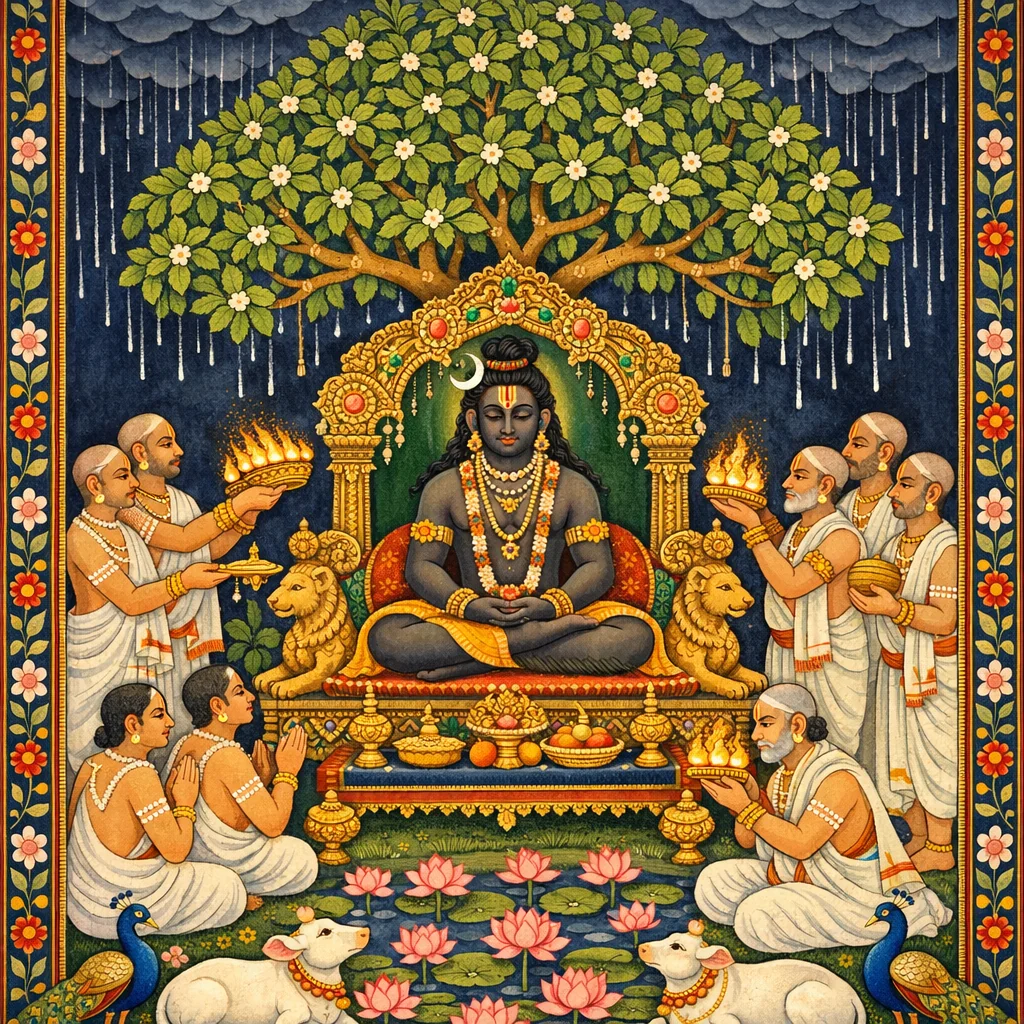
Following King Nābhi’s successful worship that drew the Supreme Lord into his dynasty, this chapter begins as Ṛṣabhadeva’s divine marks and virtues become publicly manifest, and citizens with brāhmaṇas request His coronation. Indra’s envy appears as drought, but Ṛṣabhadeva, smiling, restores rain through yoga-māyā, affirming the Lord’s sovereignty over the devas. Nābhi, overwhelmed by parental affection under yoga-māyā, enthrones Ṛṣabhadeva and retires with Merudevī to Badarikāśrama to worship Nara-Nārāyaṇa, attaining Vaikuṇṭha. Ṛṣabhadeva then exemplifies the full course of gṛhastha-dharma: brahmacarya in the gurukula, offering guru-dakṣiṇā, marriage to Jayantī (given by Indra), and the begetting of one hundred sons. The chapter names Bharata—whose name sanctifies Bhārata-varṣa—along with nine elder sons, the nine Yogendras (future Bhāgavata preachers), and eighty-one sons trained as brāhmaṇas. It ends by turning to Ṛṣabhadeva’s public instruction at Brahmāvarta, preparing for the next chapter’s teachings to His sons.
Shlokas
Verse 1
श्रीशुक उवाच अथ ह तमुत्पत्त्यैवाभिव्यज्यमानभगवल्लक्षणं साम्योपशमवैराग्यैश्वर्यमहाविभूतिभिरनुदिनमेधमानानुभावं प्रकृतय: प्रजा ब्राह्मणा देवताश्चावनितलसमवनायातितरां जगृधु: ॥ १ ॥
Śrī Śukadeva Gosvāmī said: As soon as the Lord was born as Mahārāja Nābhi’s son, the signs of the Supreme appeared, such as the emblems on His soles. He was equal to all, peaceful, master of mind and senses; though endowed with all opulence, He had no thirst for material enjoyment. His potency increased day by day, and thus the citizens, brāhmaṇas, devas, and ministers desired that Ṛṣabhadeva be installed as ruler of the earth.
Verse 2
तस्य ह वा इत्थं वर्ष्मणा वरीयसा बृहच्छ्लोकेन चौजसा बलेन श्रिया यशसा वीर्यशौर्याभ्यां च पिता ऋषभ इतीदं नाम चकार ॥ २ ॥
When Mahārāja Nābhi’s son became visible, He displayed all the noble qualities praised by great poets—an excellent form, vast renown, vigor, strength, beauty, prosperity, fame, influence, and heroic valor. Seeing this, His father Nābhi, deeming Him the best, gave Him the name Ṛṣabha.
Verse 3
यस्य हीन्द्र: स्पर्धमानो भगवान् वर्षे न ववर्ष तदवधार्य भगवानृषभदेवो योगेश्वर: प्रहस्यात्मयोगमायया स्ववर्षमजनाभं नामाभ्यवर्षत् ॥ ३ ॥
Indra, out of envy, withheld rain from Ṛṣabhadeva’s realm. Understanding his intent, Bhagavān Ṛṣabhadeva, master of all yogic power, smiled slightly and, by His own yoga-māyā, poured abundant rain upon His own land known as Ajanābha.
Verse 4
नाभिस्तु यथाभिलषितं सुप्रजस्त्वमवरुध्यातिप्रमोदभरविह्वलो गद्गदाक्षरया गिरा स्वैरं गृहीत नरलोकसधर्मं भगवन्तं पुराणपुरुषं मायाविलसितमतिर्वत्स तातेति सानुरागमुपलालयन् परां निर्वृतिमुपगत: ॥ ४ ॥
Having obtained the perfect son he desired, King Nābhi was overwhelmed with transcendental joy and affection. With a voice choked in ecstasy he would call, “My child, my darling,” for by the influence of yoga-māyā he accepted the Purāṇa-puruṣa, the Supreme Lord, as his own son. Out of supreme goodwill, the Lord behaved according to human dharma, as if an ordinary child. Thus Nābhi raised his divine son with deep love, immersed in bhakti and spiritual bliss.
Verse 5
विदितानुरागमापौरप्रकृति जनपदो राजा नाभिरात्मजं समयसेतुरक्षायामभिषिच्य ब्राह्मणेषूपनिधाय सह मेरुदेव्या विशालायां प्रसन्ननिपुणेन तपसा समाधियोगेन नरनारायणाख्यं भगवन्तं वासुदेवमुपासीन: कालेन तन्महिमानमवाप ॥ ५ ॥
King Nābhi, knowing that his son Ṛṣabhadeva was dearly loved by the citizens and the ministers, enthroned Him as the emperor to protect the people by upholding the boundary of Vedic dharma, and entrusted Him to learned brāhmaṇas for guidance in governance. Then Nābhi Mahārāja, with Merudevī, went to Badarikāśrama in the Himalayas and, with joyful skill, practiced austerity and samādhi-yoga, worshiping Bhagavān Vāsudeva as Nara-Nārāyaṇa; in time he attained the spiritual realm of Vaikuṇṭha.
Verse 6
यस्य ह पाण्डवेय श्लोकावुदाहरन्ति— को नु तत्कर्म राजर्षेर्नाभेरन्वाचरेत्पुमान् । अपत्यतामगाद्यस्य हरि: शुद्धेन कर्मणा ॥ ६ ॥
O descendant of the Pāṇḍavas, to glorify Mahārāja Nābhi the ancient sages spoke two verses. One declares: “Who can follow the deeds of the royal sage Nābhi? By his pure acts and devotion, Hari consented to become his son.”
Verse 7
ब्रह्मण्योऽन्य: कुतो नाभेर्विप्रा मङ्गलपूजिता: । यस्य बर्हिषि यज्ञेशं दर्शयामासुरोजसा ॥ ७ ॥
“Who could be a greater worshiper of the brāhmaṇas than Mahārāja Nābhi? Having satisfied the qualified brāhmaṇas with auspicious honor, they, by their brahminical potency, revealed to him upon the sacrificial altar Bhagavān Nārāyaṇa, the Lord of yajña, in person.”
Verse 8
अथ ह भगवानृषभदेव: स्ववर्षं कर्मक्षेत्रमनुमन्यमान: प्रदर्शितगुरुकुलवासो लब्धवरैर्गुरुभिरनुज्ञातो गृहमेधिनां धर्माननुशिक्षमाणो जयन्त्यामिन्द्रदत्तायामुभयलक्षणं कर्म समाम्नायाम्नातमभियुञ्जन्नात्मजानामात्मसमानानां शतं जनयामास ॥ ८ ॥
After Mahārāja Nābhi left for Badarikāśrama, Bhagavān Ṛṣabhadeva accepted His own kingdom as His field of action. To set the example, He first embraced brahmacarya under His spiritual masters and lived in the gurukula. When His studies were complete, He offered guru-dakṣiṇā and, with the gurus’ permission, entered householder life, teaching the duties of gṛhastha-dharma. He accepted Jayantī, presented by Indra, as His wife and, following the rites enjoined in śruti and smṛti, begot one hundred sons equal to Himself in strength and virtue.
Verse 9
येषां खलु महायोगी भरतो ज्येष्ठ: श्रेष्ठगुण आसीद्येनेदं वर्षं भारतमिति व्यपदिशन्ति ॥ ९ ॥
Among Ṛṣabhadeva’s one hundred sons, the eldest—Bharata—was a mahāyogī and an exalted devotee adorned with the finest virtues; in his honor this land is known as Bhārata-varṣa.
Verse 10
तमनु कुशावर्त इलावर्तो ब्रह्मावर्तो मलय: केतुर्भद्रसेन इन्द्रस्पृग्विदर्भ: कीकट इति नव नवति प्रधाना: ॥ १० ॥
After Bharata, ninety-nine more sons were born. Among them, nine elder sons—Kuśāvarta, Ilāvarta, Brahmāvarta, Malaya, Ketu, Bhadrasena, Indraspṛk, Vidarbha, and Kīkaṭa—were foremost.
Verse 11
कविर्हविरन्तरिक्ष: प्रबुद्ध: पिप्पलायन: । आविर्होत्रोऽथ द्रुमिलश्चमस: करभाजन: ॥ ११ ॥ इति भागवतधर्मदर्शना नव महाभागवतास्तेषां सुचरितं भगवन्महिमोपबृंहितं वसुदेवनारदसंवादमुपशमायनमुपरिष्टाद्वर्णयिष्याम: ॥ १२ ॥
In addition there were Kavi, Havi, Antarikṣa, Prabuddha, Pippalāyana, Āvirhotra, Drumila, Camasa, and Karabhājana. These nine were mahā-bhāgavatas—seers of bhāgavata-dharma and authorized preachers of Śrīmad-Bhāgavatam—glorified by their steadfast bhakti to Vāsudeva, the Supreme Personality of Godhead. To bring perfect peace to the mind, later, in the narration of the dialogue between Nārada and Vasudeva, I shall describe their characteristics.
Verse 12
कविर्हविरन्तरिक्ष: प्रबुद्ध: पिप्पलायन: । आविर्होत्रोऽथ द्रुमिलश्चमस: करभाजन: ॥ ११ ॥ इति भागवतधर्मदर्शना नव महाभागवतास्तेषां सुचरितं भगवन्महिमोपबृंहितं वसुदेवनारदसंवादमुपशमायनमुपरिष्टाद्वर्णयिष्याम: ॥ १२ ॥
In addition there were Kavi, Havi, Antarikṣa, Prabuddha, Pippalāyana, Āvirhotra, Drumila, Camasa, and Karabhājana. These nine were mahā-bhāgavatas—seers of bhāgavata-dharma and authorized preachers of Śrīmad-Bhāgavatam—glorified by their steadfast bhakti to Vāsudeva, the Supreme Personality of Godhead. To bring perfect peace to the mind, later, in the narration of the dialogue between Nārada and Vasudeva, I shall describe their characteristics.
Verse 13
यवीयांस एकाशीतिर्जायन्तेया: पितुरादेशकरा महाशालीना महाश्रोत्रिया यज्ञशीला: कर्मविशुद्धा ब्राह्मणा बभूवु: ॥ १३ ॥
In addition to the sons mentioned above, there were eighty-one younger sons, born of Ṛṣabhadeva and Jayantī. Obeying their father’s order, they became refined and well-conducted, pure in their deeds, learned in Vedic wisdom, and devoted to the performance of yajñas; thus they all became fully qualified brāhmaṇas.
Verse 14
भगवानृषभसंज्ञ आत्मतन्त्र: स्वयं नित्यनिवृत्तानर्थपरम्पर: केवलानन्दानुभव ईश्वर एव विपरीतवत्कर्माण्यारभमाण: कालेनानुगतं धर्ममाचरणेनोपशिक्षयन्नतद्विदां सम उपशान्तो मैत्र: कारुणिको धर्मार्थयश: प्रजानन्दामृतावरोधेन गृहेषु लोकं नियमयत् ॥ १४ ॥
As an incarnation of the Supreme Personality of Godhead, Lord Ṛṣabhadeva was fully independent; His form was spiritual, eternal, and filled with transcendental ānanda. He was forever untouched by the chain of material miseries—birth, death, old age, and disease—and free from worldly attachment. Equipoised, equal to all, friendly and compassionate, He nonetheless acted as though an ordinary conditioned soul. Thus, by strictly observing the varṇāśrama-dharma that had become neglected in time, He instructed the ignorant through His own conduct. In this way He regulated society in household life, guiding people toward dharma, artha, good repute, progeny, enjoyment, and ultimately the immortal supreme welfare, like amṛta.
Verse 15
यद्यच्छीर्षण्याचरितं तत्तदनुवर्तते लोक: ॥ १५ ॥
Whatever deed a great person performs, common people follow that very path.
Verse 16
यद्यपि स्वविदितं सकलधर्मं ब्राह्मं गुह्यं ब्राह्मणैर्दर्शितमार्गेण सामादिभिरुपायैर्जनतामनुशशास ॥ १६ ॥
Although Bhagavān Ṛṣabhadeva fully knew the confidential Vedic brahma-knowledge embracing all dharmas, He still followed the path shown by the brāhmaṇas and, through means such as conciliation and the like, instructed the people in control of mind and senses, tolerance, and other virtues, ruling in harmony with varṇāśrama-dharma.
Verse 17
द्रव्यदेशकालवय:श्रद्धर्त्विग्विविधोद्देशोपचितै: सर्वैरपि क्रतुभिर्यथोपदेशं शतकृत्व इयाज ॥ १७ ॥
Following Vedic injunctions, Bhagavān Ṛṣabhadeva performed every kind of sacrifice one hundred times, complete with finest offerings, sacred places, proper times, and youthful priests endowed with śraddhā; thus He satisfied Śrī Viṣṇu in every respect.
Verse 18
भगवतर्षभेण परिरक्ष्यमाण एतस्मिन् वर्षे न कश्चन पुरुषो वाञ्छत्यविद्यमानमिवात्मनोऽन्यस्मात्कथञ्चन किमपि कर्हिचिदवेक्षते भर्तर्यनुसवनं विजृम्भितस्नेहातिशयमन्तरेण ॥ १८ ॥
While Bhāratavarṣa was protected by Bhagavān Ṛṣabhadeva, no one ever asked anything from anyone; apart from ever-expanding affection for the King, their hearts turned to nothing else.
Verse 19
स कदाचिदटमानो भगवानृषभो ब्रह्मावर्तगतो ब्रह्मर्षिप्रवरसभायां प्रजानां निशामयन्तीनामात्मजानवहितात्मन: प्रश्रयप्रणयभरसुयन्त्रितानप्युपशिक्षयन्निति होवाच ॥ १९ ॥
Once, while touring the world, Bhagavān Ṛṣabhadeva came to Brahmāvarta, where an august assembly of foremost brahmarṣis was convened and the citizens listened. There He instructed His sons—already humble, affectionate, and well qualified—so that they might one day rule the world flawlessly; thus He spoke.
Frequently Asked Questions
Indra’s action arises from envy of Ṛṣabhadeva’s growing glory and authority. Ṛṣabhadeva’s calm smile and immediate restoration of rainfall through yoga-māyā demonstrates that devas are not independent controllers; their powers operate under Bhagavān. The episode teaches divine sovereignty (aiśvarya) and the futility of pride, while also showing the Lord’s protective role toward His subjects.
Nābhi retires to Badarikāśrama and worships Nara-Nārāyaṇa in samādhi with austerity and devotion, culminating in elevation to Vaikuṇṭha. The narrative highlights that kingship is not the final goal; when duties are completed, śāstra supports vānaprastha/renunciation oriented to bhagavad-upāsanā. Nara-Nārāyaṇa represents the Lord’s ascetic, dharma-protecting manifestation, fitting Nābhi’s transition from rule to tapas.
Kavi, Havi, Antarikṣa, Prabuddha, Pippalāyana, Āvirhotra, Drumila, Camasa, and Karabhājana are described as exalted devotees and authorized preachers of Śrīmad-Bhāgavatam. Their importance unfolds later through their teachings (notably in dialogues involving Nārada and Vasudeva), where they articulate mature bhakti philosophy, making them a key transmission line of devotional wisdom.
The chapter states that Ṛṣabhadeva’s eldest son, Bharata, was a great devotee with the best qualities, and the planet (region) became known as Bhārata-varṣa in his honor. The naming signals vaṁśānucarita: sacred history where geography becomes devotional memory, and it prepares for Bharata’s later narrative as a paradigmatic case of spiritual attainment and vigilance.
Ṛṣabhadeva remains fully transcendental yet follows brahmacarya, guru-sevā, marriage, sacrifice, and social regulation to teach the public a workable path. The point is not that ritual and social duty are ultimate, but that when performed under brāhmaṇical guidance and for Viṣṇu’s satisfaction, they purify the heart and mature into bhakti—showing how household life can culminate in perfection rather than bondage.