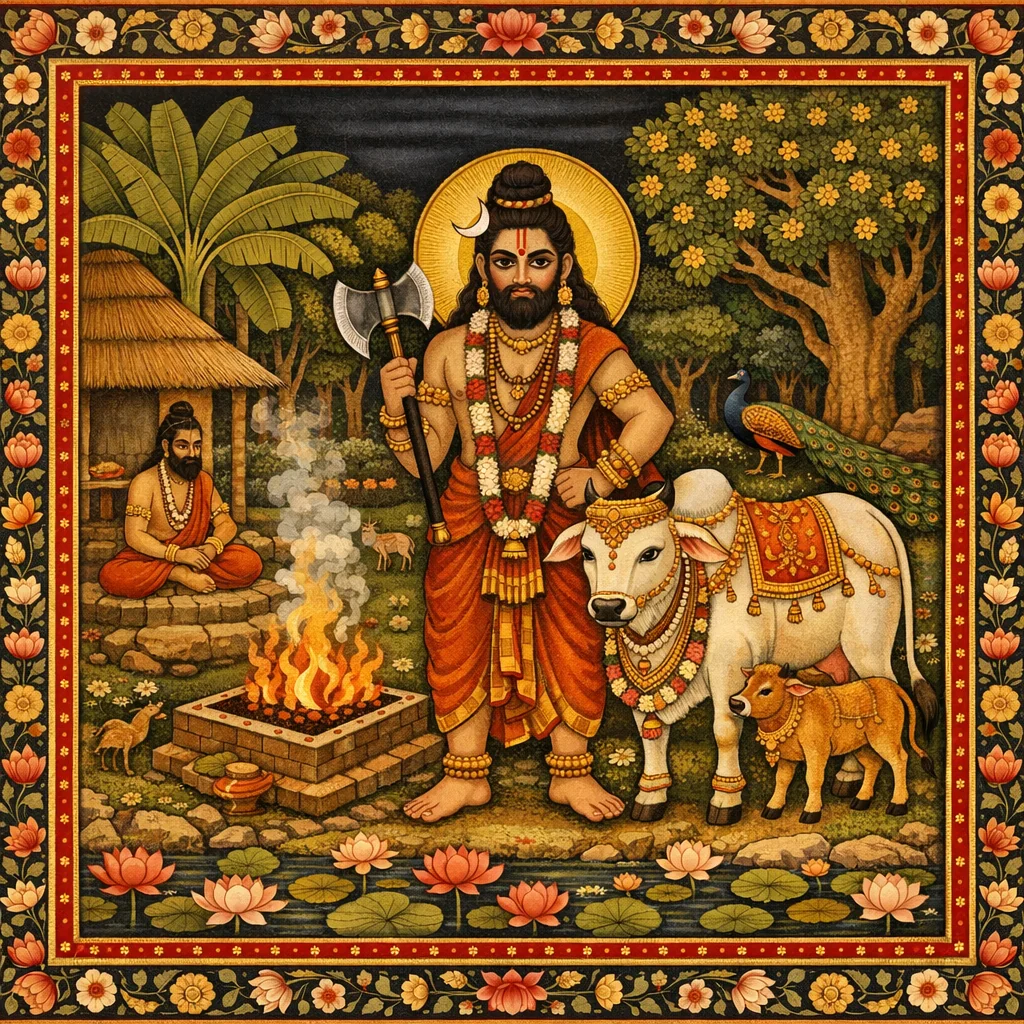
Adhyaya 15
Paraśurāma, Kārtavīryārjuna, and the Kāmadhenu Offense (with Lunar-line Genealogy to Gādhi and Jamadagni)
This chapter continues the Lunar dynasty from Purūravā and Urvaśī through their sons to Jahnu—famed for drinking the Gaṅgā—and onward through Kuśa’s line to King Gādhi. It then turns from genealogy to moral causation: Ṛcīka Muni marries Gādhi’s daughter Satyavatī after producing Varuṇa’s thousand moon-bright horses as dowry; a swap of consecrated oblations reshapes destiny, bringing forth Jamadagni and transforming Satyavatī into the river Kauśikī. Jamadagni begets Paraśurāma, an avatāra of Vāsudeva, whose mission sharpens when kṣatriya pride overwhelms dharma. Asked by Parīkṣit what offense led to Paraśurāma’s repeated destruction of kṣatriyas, Śukadeva recounts Kārtavīryārjuna’s vast boons from Dattātreya, his arrogance, and the decisive theft of Jamadagni’s kāmadhenu. Paraśurāma alone routs the Haihaya armies, kills Kārtavīryārjuna, and restores the cow. The chapter ends with Jamadagni’s brāhmaṇical rebuke: even a sinful king’s killing is grave, and Paraśurāma must atone through bhakti and pilgrimage—setting the ethical tension between righteous punishment and brāhmaṇa forgiveness.
Shlokas
Verse 1
श्रीबादरायणिरुवाच ऐलस्य चोर्वशीगर्भात् षडासन्नात्मजा नृप । आयु: श्रुतायु: सत्यायू रयोऽथ विजयो जय: ॥ १ ॥
Śukadeva Gosvāmī continued: O King Parīkṣit, from the womb of Urvaśī, Purūravā (the son of Ilā) begot six sons—Āyu, Śrutāyu, Satyāyu, Raya, Vijaya, and Jaya.
Verse 2
श्रुतायोर्वसुमान् पुत्र: सत्यायोश्च श्रुतञ्जय: । रयस्य सुत एकश्च जयस्य तनयोऽमित: ॥ २ ॥ भीमस्तु विजयस्याथ काञ्चनो होत्रकस्तत: । तस्य जह्नु: सुतो गङ्गां गण्डूषीकृत्य योऽपिबत् ॥ ३ ॥
The son of Śrutāyu was Vasumān; the son of Satyāyu was Śrutañjaya; the son of Raya was Eka; the son of Jaya was Amita; and the son of Vijaya was Bhīma. Bhīma’s son was Kāñcana; Kāñcana’s son was Hotraka; and Hotraka’s son was Jahnu, who drank the sacred Gaṅgā in a single sip.
Verse 3
श्रुतायोर्वसुमान् पुत्र: सत्यायोश्च श्रुतञ्जय: । रयस्य सुत एकश्च जयस्य तनयोऽमित: ॥ २ ॥ भीमस्तु विजयस्याथ काञ्चनो होत्रकस्तत: । तस्य जह्नु: सुतो गङ्गां गण्डूषीकृत्य योऽपिबत् ॥ ३ ॥
The son of Śrutāyu was Vasumān; the son of Satyāyu was Śrutañjaya; the son of Raya was Eka; the son of Jaya was Amita; and the son of Vijaya was Bhīma. Bhīma’s son was Kāñcana; Kāñcana’s son was Hotraka; and Hotraka’s son was Jahnu, who drank the sacred Gaṅgā in a single sip.
Verse 4
जह्नोस्तु पुरुस्तस्याथ बलाकश्चात्मजोऽजक: । तत: कुश: कुशस्यापि कुशाम्बुस्तनयो वसु: । कुशनाभश्च चत्वारो गाधिरासीत् कुशाम्बुज: ॥ ४ ॥
Jahnu’s son was Puru; Puru’s son was Balāka; Balāka’s son was Ajaka; and Ajaka’s son was Kuśa. Kuśa had four sons—Kuśāmbu, Tanaya, Vasu, and Kuśanābha—and Kuśāmbu’s son was Gādhi.
Verse 5
तस्य सत्यवतीं कन्यामृचीकोऽयाचत द्विज: । वरं विसदृशं मत्वा गाधिर्भार्गवमब्रवीत् ॥ ५ ॥ एकत: श्यामकर्णानां हयानां चन्द्रवर्चसाम् । सहस्रं दीयतां शुल्कं कन्याया: कुशिका वयम् ॥ ६ ॥
King Gādhi had a daughter named Satyavatī, whom the brāhmaṇa sage Ṛcīka sought as his wife. But deeming him an unsuitable match, Gādhi said, “We are Kuśikas, noble kṣatriyas; therefore give a bride-price—one thousand horses radiant as moonlight, each bearing one black ear.”
Verse 6
तस्य सत्यवतीं कन्यामृचीकोऽयाचत द्विज: । वरं विसदृशं मत्वा गाधिर्भार्गवमब्रवीत् ॥ ५ ॥ एकत: श्यामकर्णानां हयानां चन्द्रवर्चसाम् । सहस्रं दीयतां शुल्कं कन्याया: कुशिका वयम् ॥ ६ ॥
King Gādhi had a daughter named Satyavatī, whom the brāhmaṇa sage Ṛcīka sought as his wife. But deeming him an unsuitable match, Gādhi said, “We are Kuśikas, noble kṣatriyas; therefore give a bride-price—one thousand horses radiant as moonlight, each bearing one black ear.”
Verse 7
इत्युक्तस्तन्मतं ज्ञात्वा गत: स वरुणान्तिकम् । आनीय दत्त्वा तानश्वानुपयेमे वराननाम् ॥ ७ ॥
When King Gādhi made this demand, the great sage Ṛcīka understood the king’s intent. He went to the deva Varuṇa and brought back the thousand horses that were required. Having delivered them, he married the king’s beautiful daughter.
Verse 8
स ऋषि: प्रार्थित: पत्न्या श्वश्र्वा चापत्यकाम्यया । श्रपयित्वोभयैर्मन्त्रैश्चरुं स्नातुं गतो मुनि: ॥ ८ ॥
Thereafter, Ṛcīka Muni’s wife and his mother-in-law, both longing for a son, requested him to prepare an oblation (caru). He cooked two portions—one for his wife with a brāhmaṇa mantra and one for his mother-in-law with a kṣatriya mantra—and then went out to bathe.
Verse 9
तावत् सत्यवती मात्रा स्वचरुं याचिता सती । श्रेष्ठं मत्वा तयायच्छन्मात्रे मातुरदत् स्वयम् ॥ ९ ॥
Meanwhile, Satyavatī’s mother thought the oblation prepared for her daughter must be superior, and she asked for it. Satyavatī gave her own portion to her mother and herself ate her mother’s portion.
Verse 10
तद् विदित्वा मुनि: प्राह पत्नीं कष्टमकारषी: । घोरो दण्डधर: पुत्रो भ्राता ते ब्रह्मवित्तम: ॥ १० ॥
When the great sage Ṛcīka returned from bathing and understood what had occurred in his absence, he said to his wife Satyavatī, “You have done a grievous wrong. Your son will become a fierce kṣatriya, bearing the rod of punishment and able to chastise all; and your brother will become a foremost knower of spiritual science.”
Verse 11
प्रसादित: सत्यवत्या मैवं भूरिति भार्गव: । अथ तर्हि भवेत् पौत्रो जमदग्निस्ततोऽभवत् ॥ ११ ॥
Satyavatī, however, soothed Bhārgava Ṛcīka with gentle words and begged that her son not become a fierce kṣatriya. Ṛcīka replied, “Then your grandson will bear the spirit of a kṣatriya.” Thus Jamadagni was born as the son of Satyavatī.
Verse 12
सा चाभूत् सुमहत्पुण्या कौशिकी लोकपावनी । रेणो: सुतां रेणुकां वै जमदग्निरुवाह याम् ॥ १२ ॥ तस्यां वै भार्गवऋषे: सुता वसुमदादय: । यवीयाञ्जज्ञ एतेषां राम इत्यभिविश्रुत: ॥ १३ ॥
Satyavatī later became the sacred river Kauśikī, purifier of the worlds. Her son, the sage Jamadagni, married Reṇukā, daughter of Reṇu. From Reṇukā’s womb, by Jamadagni’s seed, many sons were born, headed by Vasumān; the youngest was named Rāma, famed as Paraśurāma.
Verse 13
सा चाभूत् सुमहत्पुण्या कौशिकी लोकपावनी । रेणो: सुतां रेणुकां वै जमदग्निरुवाह याम् ॥ १२ ॥ तस्यां वै भार्गवऋषे: सुता वसुमदादय: । यवीयाञ्जज्ञ एतेषां राम इत्यभिविश्रुत: ॥ १३ ॥
Satyavatī later became the sacred river Kauśikī, purifier of the worlds. Her son, the sage Jamadagni, married Reṇukā, daughter of Reṇu. From Reṇukā’s womb, by Jamadagni’s seed, many sons were born, headed by Vasumān; the youngest was named Rāma, famed as Paraśurāma.
Verse 14
यमाहुर्वासुदेवांशं हैहयानां कुलान्तकम् । त्रि:सप्तकृत्वो य इमां चक्रे नि:क्षत्रियां महीम् ॥ १४ ॥
Learned sages accept Paraśurāma as the renowned expansion of Vāsudeva, the destroyer of the Haihaya line. Twenty-one times he made the earth bereft of kṣatriyas, repeatedly slaying them.
Verse 15
दृप्तं क्षत्रं भुवो भारमब्रह्मण्यमनीनशत् । रजस्तमोवृतमहन् फल्गुन्यपि कृतेꣷहसि ॥ १५ ॥
When the proud kṣatriyas, shrouded in passion and ignorance, became a burden upon the earth and ceased to honor the brāhmaṇas’ sacred law, Paraśurāma slew them. Though their offense was not exceedingly grave, he acted to lighten the world’s load.
Verse 16
श्रीराजोवाच किं तदंहो भगवतो राजन्यैरजितात्मभि: । कृतं येन कुलं नष्टं क्षत्रियाणामभीक्ष्णश: ॥ १६ ॥
King Parīkṣit asked: “O exalted sage, what offense did the kṣatriyas—unable to master their senses—commit against Lord Paraśurāma, the incarnation of the Supreme Personality of Godhead, that their dynasty was destroyed again and again?”
Verse 17
श्रीबादरायणिरुवाच हैहयानामधिपतिरर्जुन: क्षत्रियर्षभ: । दत्तं नारायणांशांशमाराध्य परिकर्मभि: ॥ १७ ॥ बाहून् दशशतं लेभे दुर्धर्षत्वमरातिषु । अव्याहतेन्द्रियौज:श्रीतेजोवीर्ययशोबलम् ॥ १८ ॥ योगेश्वरत्वमैश्वर्यं गुणा यत्राणिमादय: । चचाराव्याहतगतिर्लोकेषु पवनो यथा ॥ १९ ॥
Śukadeva Gosvāmī said: Kārtavīryārjuna, lord of the Haihayas and the best of kṣatriyas, worshiped Dattātreya—an expansion of Nārāyaṇa—and thus obtained one thousand arms.
Verse 18
श्रीबादरायणिरुवाच हैहयानामधिपतिरर्जुन: क्षत्रियर्षभ: । दत्तं नारायणांशांशमाराध्य परिकर्मभि: ॥ १७ ॥ बाहून् दशशतं लेभे दुर्धर्षत्वमरातिषु । अव्याहतेन्द्रियौज:श्रीतेजोवीर्ययशोबलम् ॥ १८ ॥ योगेश्वरत्वमैश्वर्यं गुणा यत्राणिमादय: । चचाराव्याहतगतिर्लोकेषु पवनो यथा ॥ १९ ॥
He became unassailable to his foes and gained unobstructed sensory power, beauty, influence, strength, fame, and the mystic potency to attain the yogic perfections.
Verse 19
श्रीबादरायणिरुवाच हैहयानामधिपतिरर्जुन: क्षत्रियर्षभ: । दत्तं नारायणांशांशमाराध्य परिकर्मभि: ॥ १७ ॥ बाहून् दशशतं लेभे दुर्धर्षत्वमरातिषु । अव्याहतेन्द्रियौज:श्रीतेजोवीर्ययशोबलम् ॥ १८ ॥ योगेश्वरत्वमैश्वर्यं गुणा यत्राणिमादय: । चचाराव्याहतगतिर्लोकेषु पवनो यथा ॥ १९ ॥
He attained yogic lordship and opulence, endowed with perfections such as aṇimā; thus fully prosperous, he wandered through all worlds without opposition, like the wind.
Verse 20
स्त्रीरत्नैरावृत: क्रीडन् रेवाम्भसि मदोत्कट: । वैजयन्तीं स्रजं बिभ्रद् रुरोध सरितं भुजै: ॥ २० ॥
Once, while sporting in the waters of the Reva (Narmadā), the pride-swollen Kārtavīryārjuna, surrounded by lovely women and wearing a garland of victory, stopped the river’s flow with his arms.
Verse 21
विप्लावितं स्वशिबिरं प्रतिस्रोत:सरिज्जलै: । नामृष्यत् तस्य तद् वीर्यं वीरमानी दशानन: ॥ २१ ॥
Because he made the river flow against its current, Rāvaṇa’s camp was flooded; the ten-headed Rāvaṇa, proud of his own heroism, could not tolerate Kārtavīryārjuna’s might.
Verse 22
गृहीतो लीलया स्त्रीणां समक्षं कृतकिल्बिष: । माहिष्मत्यां सन्निरुद्धो मुक्तो येन कपिर्यथा ॥ २२ ॥
When Rāvaṇa tried to insult Kārtavīryārjuna before the women, he incurred offense. Kārtavīryārjuna easily seized him like a monkey, confined him in Māhiṣmatī, and later released him with indifference.
Verse 23
स एकदा तु मृगयां विचरन् विजने वने । यदृच्छयाश्रमपदं जमदग्नेरुपाविशत् ॥ २३ ॥
Once, while Kārtavīryārjuna wandered hunting in a lonely forest, he happened upon the hermitage of the sage Jamadagni.
Verse 24
तस्मै स नरदेवाय मुनिरर्हणमाहरत् । ससैन्यामात्यवाहाय हविष्मत्या तपोधन: ॥ २४ ॥
The sage Jamadagni, mighty in austerity within the forest, properly honored that king along with his soldiers, ministers, and attendants. Possessing Havishmatī, the kāmadhenu cow, he provided all necessities for worshipful hospitality.
Verse 25
स वै रत्नं तु तद् दृष्ट्वा आत्मैश्वर्यातिशायनम् । तन्नाद्रियताग्निहोत्र्यां साभिलाष: सहैहय: ॥ २५ ॥
Seeing the kāmadhenu, jewel-like in form, Kārtavīryārjuna deemed Jamadagni more opulent and powerful than himself. Thus he and the Haihayas did not truly value the sage’s reception; instead they coveted that kāmadhenu, useful for the agnihotra sacrifice.
Verse 26
हविर्धानीमृषेर्दर्पान्नरान् हर्तुमचोदयत् । ते च माहिष्मतीं निन्यु: सवत्सां क्रन्दतीं बलात् ॥ २६ ॥
Puffed up with worldly power, Kārtavīryārjuna urged his men to steal the sage’s Havirdhānī, the kāmadhenu. They forcibly carried the crying cow, along with her calf, to Māhiṣmatī.
Verse 27
अथ राजनि निर्याते राम आश्रम आगत: । श्रुत्वा तत् तस्य दौरात्म्यं चुक्रोधाहिरिवाहत: ॥ २७ ॥
Thereafter King Kārtavīryārjuna departed, taking the kāmadhenu. Paraśurāma returned to the āśrama, and on hearing of that wicked deed, Jamadagni’s youngest son blazed with wrath like a snake trampled underfoot.
Verse 28
घोरमादाय परशुं सतूणं वर्म कार्मुकम् । अन्वधावत दुर्मर्षो मृगेन्द्र इव यूथपम् ॥ २८ ॥
Taking up his fearsome paraśu, along with quiver, armor, and bow, Paraśurāma—unbearable in wrath—chased Kārtavīryārjuna as a lion pursues an elephant.
Verse 29
तमापतन्तं भृगुवर्यमोजसा धनुर्धरं बाणपरश्वधायुधम् । ऐणेयचर्माम्बरमर्कधामभि- र्युतं जटाभिर्ददृशे पुरीं विशन् ॥ २९ ॥
As Kārtavīryārjuna entered his capital, Māhiṣmatī Purī, he beheld Paraśurāma—the foremost of the Bhṛgu line—rushing upon him, bearing bow and arrows, paraśu and shield; clad in black deerskin, his matted locks shining like the sun.
Verse 30
अचोदयद्धस्तिरथाश्वपत्तिभि- र्गदासिबाणर्ष्टिशतघ्निशक्तिभि: । अक्षौहिणी: सप्तदशातिभीषणा- स्ता राम एको भगवानसूदयत् ॥ ३० ॥
Seeing Paraśurāma, Kārtavīryārjuna at once grew afraid and dispatched elephants, chariots, horses, and infantry armed with clubs, swords, arrows, ṛṣṭis, śataghnīs, śaktis, and the like—seventeen full akṣauhiṇīs of dreadful troops. Yet Lord Paraśurāma alone slew them all.
Verse 31
यतो यतोऽसौ प्रहरत्परश्वधो मनोऽनिलौजा: परचक्रसूदन: । ततस्ततश्छिन्नभुजोरुकन्धरा निपेतुरुर्व्यां हतसूतवाहना: ॥ ३१ ॥
Paraśurāma, expert in crushing the enemy’s might, moved with the speed of mind and wind, cleaving with his paraśu. Wherever he struck, foes fell—arms, thighs, and shoulders severed; charioteers slain, and the carriers, elephants and horses, utterly destroyed.
Verse 32
दृष्ट्वा स्वसैन्यं रुधिरौघकर्दमे रणाजिरे रामकुठारसायकै: । विवृक्णवर्मध्वजचापविग्रहं निपातितं हैहय आपतद् रुषा ॥ ३२ ॥
By manipulating his axe and arrows, Lord Parashurama cut to pieces the shields, flags, bows and bodies of Kartaviryarjuna’s soldiers, who fell on the battlefield, muddying the ground with their blood. Seeing these reverses, Kartaviryarjuna, infuriated, rushed to the battlefield.
Verse 33
अथार्जुन: पञ्चशतेषु बाहुभि- र्धनु:षु बाणान् युगपत् स सन्दधे । रामाय रामोऽस्त्रभृतां समग्रणी- स्तान्येकधन्वेषुभिराच्छिनत् समम् ॥ ३३ ॥
Then Kartaviryarjuna, with his one thousand arms, simultaneously fixed arrows on five hundred bows to kill Lord Parashurama. But Lord Parashurama, the best of fighters, released enough arrows with only one bow to cut to pieces immediately all the arrows and bows in the hands of Kartaviryarjuna.
Verse 34
पुन: स्वहस्तैरचलान् मृधेऽङ्घ्रिपा- नुत्क्षिप्य वेगादभिधावतो युधि । भुजान् कुठारेण कठोरनेमिना चिच्छेद राम: प्रसभं त्वहेरिव ॥ ३४ ॥
When his arrows were cut to pieces, Kartaviryarjuna uprooted many trees and hills with his own hands and again rushed strongly toward Lord Parashurama to kill him. But Parashurama then used his axe with great force to cut off Kartaviryarjuna’s arms, just as one might lop off the hoods of a serpent.
Verse 35
कृत्तबाहो: शिरस्तस्य गिरे: शृङ्गमिवाहरत् । हते पितरि तत्पुत्रा अयुतं दुद्रुवुर्भयात् ॥ ३५ ॥ अग्निहोत्रीमुपावर्त्य सवत्सां परवीरहा । समुपेत्याश्रमं पित्रे परिक्लिष्टां समर्पयत् ॥ ३६ ॥
Thereafter, Parashurama cut off like a mountain peak the head of Kartaviryarjuna, who had already lost his arms. When Kartaviryarjuna’s ten thousand sons saw their father killed, they all fled in fear. Then Parashurama, having killed the enemy, released the kamadhenu and brought it back to his father, Jamadagni.
Verse 36
कृत्तबाहो: शिरस्तस्य गिरे: शृङ्गमिवाहरत् । हते पितरि तत्पुत्रा अयुतं दुद्रुवुर्भयात् ॥ ३५ ॥ अग्निहोत्रीमुपावर्त्य सवत्सां परवीरहा । समुपेत्याश्रमं पित्रे परिक्लिष्टां समर्पयत् ॥ ३६ ॥
Thereafter, Parashurama cut off like a mountain peak the head of Kartaviryarjuna, who had already lost his arms. When Kartaviryarjuna’s ten thousand sons saw their father killed, they all fled in fear. Then Parashurama, having killed the enemy, released the kamadhenu and brought it back to his father, Jamadagni.
Verse 37
स्वकर्म तत्कृतं राम: पित्रे भ्रातृभ्य एव च । वर्णयामास तच्छ्रुत्वा जमदग्निरभाषत ॥ ३७ ॥
Paraśurāma recounted to his father and brothers the deeds he had done, including the slaying of Kārtavīryārjuna. Hearing this, Jamadagni spoke to his son.
Verse 38
राम राम महाबाहो भवान् पापमकारषीत् । अवधीन्नरदेवं यत्सर्वदेवमयं वृथा ॥ ३८ ॥
O Rāma of mighty arms, you have committed sin without need, for you have slain the king, revered as the embodiment of all the demigods.
Verse 39
वयं हि ब्राह्मणास्तात क्षमयार्हणतां गता: । यया लोकगुरुर्देव: पारमेष्ठ्यमगात् पदम् ॥ ३९ ॥
My son, we are brāhmaṇas; by the virtue of forgiveness we have become worthy of reverence among all people. By that very quality, Lord Brahmā, the guru of the worlds, attained his supreme post.
Verse 40
क्षमया रोचते लक्ष्मीर्ब्राह्मी सौरी यथा प्रभा । क्षमिणामाशु भगवांस्तुष्यते हरिरीश्वर: ॥ ४० ॥
By forgiveness, brāhmaṇical fortune shines like the radiance of the sun. The Supreme Lord Hari is swiftly pleased with those who are forgiving.
Verse 41
राज्ञो मूर्धाभिषिक्तस्य वधो ब्रह्मवधाद् गुरु: । तीर्थसंसेवया चांहो जह्यङ्गाच्युतचेतन: ॥ ४१ ॥
My son, killing a consecrated emperor is a sin even graver than killing a brāhmaṇa. Yet now, if you fix your mind on Acyuta (Kṛṣṇa) and serve the holy tīrthas, this great sin can be atoned for.
Frequently Asked Questions
The chapter frames the repeated annihilation as avatāra-kārya: when ruling dynasties, inflated by rajas and tamas, disregard brāhmaṇical law and become irreligious, the Lord intervenes to reduce the burden of the earth. The immediate narrative trigger is the Haihaya king Kārtavīryārjuna’s abuse of power culminating in the theft of Jamadagni’s kāmadhenu—an attack on the sacrificial order (yajña) that sustains society.
Though extraordinarily blessed through worship of Dattātreya, Kārtavīryārjuna becomes proud and covetous. After being hospitably received, he and the Haihayas forcibly seize Jamadagni’s kāmadhenu and her calf for their own use in agnihotra and royal prestige. This is portrayed as a direct violation of saintly property, guest-honor (atithi-satkāra), and the brāhmaṇa-protected sacrificial economy—provoking Paraśurāma’s punitive response.
Jamadagni speaks from brāhmaṇa-dharma, where forgiveness and restraint are central virtues and where the king is regarded as a representative of divine administration. He teaches that killing an emperor is karmically weighty, even when the king is at fault, and therefore prescribes prāyaścitta through intensified devotion (Hari-bhajana/Kṛṣṇa consciousness) and tīrtha-sevā (worship of holy places). The point is not to deny justice, but to underline the spiritual gravity of violence and the brāhmaṇa ideal of forbearance.