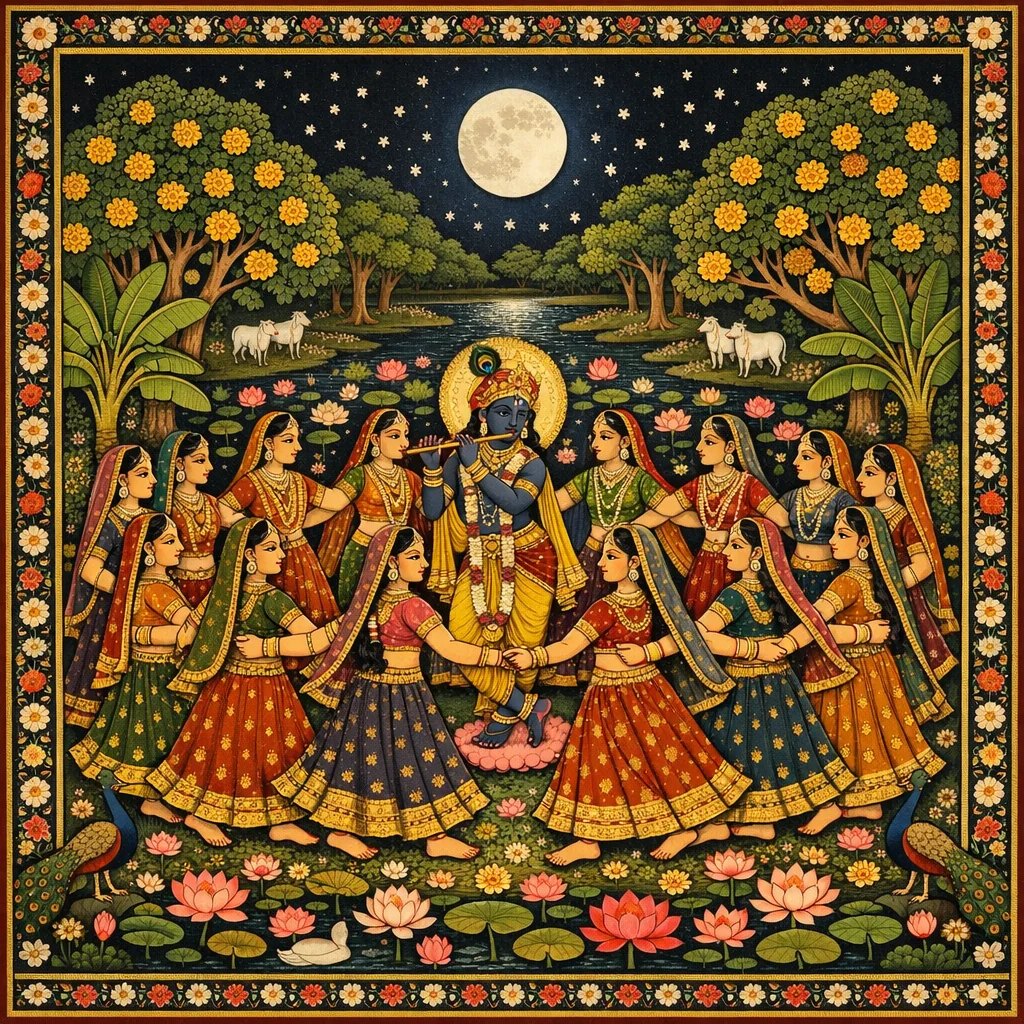
Adhyaya 32
Gopī-gīta Aftermath: Kṛṣṇa Returns and Explains Divine Non-Reciprocation (Rāsa-līlā Dialogue)
After the gopīs’ intense lament and song of separation (gopī-gīta), Śrī Kṛṣṇa reappears smiling, restoring their very life-breath and dissolving the pain of viraha. The gopīs respond in varied ways—reverent service, passionate embrace, loving anger, and yogic inward absorption—each expressing a distinct bhāva within the same exclusive bhakti. Kṛṣṇa leads them to the moonlit bank of the Kālindī, where fragrant breezes, soft sands, and autumn moonlight heighten the rasa. Seated among them like the Paramātmā surrounded by His śaktis, He is worshiped; yet the still-wounded gopīs question the ethics of love and reciprocity: why some return affection, some love unconditionally, and some love none. Kṛṣṇa distinguishes selfish friendship, natural compassion, and non-reciprocation born of self-satisfaction or envy, and reveals that His apparent “delay” was meant to intensify their bhakti. He concludes by declaring He cannot repay the gopīs’ spotless service, bridging into the continuing rāsa-līlā where intimacy is framed as the highest dharma of prema.
Shlokas
Verse 1
श्रीशुक उवाच इति गोप्य: प्रगायन्त्य: प्रलपन्त्यश्च चित्रधा । रुरुदु: सुस्वरं राजन् कृष्णदर्शनलालसा: ॥ १ ॥
Śukadeva Gosvāmī said: O King, the gopīs, having sung and poured out their hearts in many charming ways, began to weep aloud, yearning for the darśana of Lord Kṛṣṇa.
Verse 2
तासामाविरभूच्छौरि: स्मयमानमुखाम्बुज: । पीताम्बरधर: स्रग्वी साक्षान्मन्मथमन्मथ: ॥ २ ॥
Then Śauri, Lord Kṛṣṇa, appeared before the gopīs with a smile upon His lotus face, wearing a yellow garment and a garland—He who bewilders even Cupid, the bewilderer of all.
Verse 3
तं विलोक्यागतं प्रेष्ठं प्रीत्युत्फुल्लदृशोऽबला: । उत्तस्थुर्युगपत् सर्वास्तन्व: प्राणमिवागतम् ॥ ३ ॥
Seeing their dearmost Kṛṣṇa return, the gopīs all rose at once, their eyes blooming with love, as if the very prāṇa of life had reentered their bodies.
Verse 4
काचित् कराम्बुजं शौरेर्जगृहेऽञ्जलिना मुदा । काचिद् दधार तद्बाहुमंसे चन्दनभूषितम् ॥ ४ ॥
One gopī joyfully held Śauri’s lotus hand between her folded palms, and another placed His arm, anointed with sandalwood paste, upon her shoulder.
Verse 5
काचिदञ्जलिनागृह्णात्तन्वी ताम्बूलचर्वितम् । एका तदङ्घ्रिकमलं सन्तप्ता स्तनयोरधात् ॥ ५ ॥
One slender gopī reverently received in her joined palms the tāmbūla He had chewed, and another, burning with longing, placed His lotus feet upon her breasts.
Verse 6
एका भ्रुकुटिमाबध्य प्रेमसंरम्भविह्वला । घ्नन्तीवैक्षत् कटाक्षेपै: सन्दष्टदशनच्छदा ॥ ६ ॥
One gopī, overwhelmed by loving anger, knit her brows, bit her lips, and fixed Him with harsh sidelong glances, as if to wound Him with her eyes.
Verse 7
अपरानिमिषद्दृग्भ्यां जुषाणा तन्मुखाम्बुजम् । आपीतमपि नातृप्यत् सन्तस्तच्चरणं यथा ॥ ७ ॥
Another gopī gazed without blinking upon His lotus face; though she drank in its sweetness deeply, she was not satisfied—just as saints are never sated while meditating on the Lord’s feet.
Verse 8
तं काचिन्नेत्ररन्ध्रेण हृदिकृत्वा निमील्य च । पुलकाङ्ग्युपगुह्यास्ते योगीवानन्द सम्प्लुता ॥ ८ ॥
One gopī drew the Lord in through the gateway of her eyes and placed Him within her heart. Then, eyes closed and hairs standing on end, she kept embracing Him within, immersed in transcendental ecstasy like a yogī meditating on the Lord.
Verse 9
सर्वास्ता: केशवालोकपरमोत्सवनिर्वृता: । जहुर्विरहजं तापं प्राज्ञं प्राप्य यथा जना: ॥ ९ ॥
Seeing their beloved Keśava again, all the gopīs rejoiced in the greatest celebration. They cast off the burning pain of separation, just as people forget their misery when they gain the company of an enlightened sage.
Verse 10
ताभिर्विधूतशोकाभिर्भगवानच्युतो वृत: । व्यरोचताधिकं तात पुरुष: शक्तिभिर्यथा ॥ १० ॥
Encircled by the gopīs, now freed from sorrow, Lord Acyuta shone all the more splendidly. O King, Kṛṣṇa appeared like the Paramātmā surrounded by His own spiritual potencies.
Verse 11
ता: समादाय कालिन्द्या निर्विश्य पुलिनं विभु: । विकसत्कुन्दमन्दारसुरभ्यनिलषट्पदम् ॥ ११ ॥ शरच्चन्द्रांशुसन्दोहध्वस्तदोषातम: शिवम् । कृष्णाया हस्ततरलाचितकोमलवालुकम् ॥ १२ ॥
Then the almighty Lord Śrī Kṛṣṇa led the gopīs onto the sandy bank of the Kāлиндī (Yamunā), where the river’s waves, like gentle hands, had strewn heaps of soft sand. There a breeze fragrant with blooming kunda and mandāra flowers drew swarms of bees, and the abundant rays of the autumn moon dispelled the night’s darkness, making the place auspicious.
Verse 12
ता: समादाय कालिन्द्या निर्विश्य पुलिनं विभु: । विकसत्कुन्दमन्दारसुरभ्यनिलषट्पदम् ॥ ११ ॥ शरच्चन्द्रांशुसन्दोहध्वस्तदोषातम: शिवम् । कृष्णाया हस्ततरलाचितकोमलवालुकम् ॥ १२ ॥
The plentiful rays of the autumn moon destroyed the night’s darkness and made that riverbank most auspicious. Kāлиндī’s waves, like hands, had spread soft sand upon the shore, and a breeze scented with blooming kunda and mandāra flowers drew in swarms of bees.
Verse 13
तद्दर्शनाह्लादविधूतहृद्रुजो मनोरथान्तं श्रुतयो यथा ययु: । स्वैरुत्तरीयै: कुचकुङ्कुमाङ्कितै- रचीक्लृपन्नासनमात्मबन्धवे ॥ १३ ॥
Ecstatic upon seeing Kṛṣṇa, the gopīs had the ache of their hearts washed away, and—like the Vedas personified—they felt their desires brought to perfect fulfillment. Then, for their dear friend Śrī Kṛṣṇa, they arranged a seat by spreading their shawls, stained with the kuṅkuma from their breasts.
Verse 14
तत्रोपविष्टो भगवान् स ईश्वरो योगेश्वरान्तर्हृदि कल्पितासन: । चकास गोपीपरिषद्गतोऽर्चित- स्त्रैलोक्यलक्ष्म्येकपदं वपुर्दधत् ॥ १४ ॥
There, within the assembly of the gopīs, Lord Bhagavān Śrī Kṛṣṇa took His seat—He for whom the great yogic masters fashion a throne within the heart. As the gopīs worshiped Him, His transcendental form, the sole abode of beauty and opulence in the three worlds, shone with radiant splendor.
Verse 15
सभाजयित्वा तमनङ्गदीपनं सहासलीलेक्षणविभ्रमभ्रुवा । संस्पर्शनेनाङ्ककृताङ्घ्रिहस्तयो: संस्तुत्य ईषत्कुपिता बभाषिरे ॥ १५ ॥
They honored Śrī Kṛṣṇa, who had kindled the fire of love within them, with playful smiling glances, with amorous gestures of the eyebrows, and by placing His hands and feet upon their laps and gently massaging them in devotion. Yet even as they worshiped Him, they were somewhat displeased, and so they addressed Him as follows.
Verse 16
श्रीगोप्य ऊचु: भजतोऽनुभजन्त्येक एक एतद्विपर्ययम् । नोभयांश्च भजन्त्येक एतन्नो ब्रूहि साधु भो: ॥ १६ ॥
The gopīs said: Some return affection only to those who love them; others show love even to the indifferent or the hostile; and still others love no one at all. Dear Kṛṣṇa, please explain this truth to us properly.
Verse 17
श्रीभगवानुवाच मिथो भजन्ति ये सख्य: स्वार्थैकान्तोद्यमा हि ते । न तत्र सौहृदं धर्म: स्वार्थार्थं तद्धि नान्यथा ॥ १७ ॥
The Supreme Lord said: Those who show affection to one another as “friends” only for their own advantage are selfish. In that there is neither true friendship nor true dharma; without personal gain they would not reciprocate.
Verse 18
भजन्त्यभजतो ये वै करुणा: पितरौ यथा । धर्मो निरपवादोऽत्र सौहृदं च सुमध्यमा: ॥ १८ ॥
My slender-waisted gopīs, some serve with devotion even those who do not reciprocate; they are truly compassionate, like the natural affection of parents. Such persons follow the faultless path of dharma and are genuine well-wishers.
Verse 19
भजतोऽपि न वै केचिद् भजन्त्यभजत: कुत: । आत्मारामा ह्याप्तकामा अकृतज्ञा गुरुद्रुह: ॥ १९ ॥
And there are those who will not love even those who love them—what to speak of enemies. They may be self-satisfied, materially fulfilled, or by nature ungrateful and envious of those above them.
Verse 20
नाहं तु सख्यो भजतोऽपि जन्तून् भजाम्यमीषामनुवृत्तिवृत्तये । यथाधनो लब्धधने विनष्टे तच्चिन्तयान्यन्निभृतो न वेद ॥ २० ॥
But, O gopīs, I do not immediately reciprocate even when living beings worship Me, because I wish to intensify their loving bhakti. They become like a poor man who gains wealth and then loses it—so anxious that he can think of nothing else.
Verse 21
एवं मदर्थोज्झितलोकवेद- स्वानां हि वो मय्यनुवृत्तयेऽबला: । मयापरोक्षं भजता तिरोहितं मासूयितुं मार्हथ तत् प्रियं प्रिया: ॥ २१ ॥
My beloved gopīs, for My sake you set aside worldly opinion, Vedic authority, and even family ties, and followed Me. I disappeared from your sight only to deepen your loving attachment to Me; yet My love for you never ceased. Therefore, dear ones, do not hold any ill feeling toward Me, your Beloved.
Verse 22
न पारयेऽहं निरवद्यसंयुजां स्वसाधुकृत्यं विबुधायुषापि व: । या माभजन् दुर्जरगेहशृङ्खला: संवृश्च्य तद् व: प्रतियातु साधुना ॥ २२ ॥
I cannot repay the debt of your flawless service, not even over the span of Brahmā’s lifetime. You worshiped Me by cutting through the hard-to-break chains of household life. Therefore let your own glorious deeds be your recompense.
Frequently Asked Questions
Kṛṣṇa’s disappearance functions as an intensifier of bhakti: by removing His visible presence, He concentrates the gopīs’ consciousness exclusively upon Him, converting desire into single-pointed prema. His return signifies divine validation of their surrender—He restores their life and reveals that His apparent withdrawal was not neglect but a pedagogical mercy meant to deepen attachment (āsakti) and love (prema).
The text presents multiple devotional psychologies (bhāvas) as equally centered on Kṛṣṇa: some serve externally (pāda-sevā), some express māna (loving pique) that presupposes intimacy, and some internalize Him through the eyes into the heart, resembling yogic dhyāna. The Bhāgavata’s point is that Kṛṣṇa is the object of both yoga and bhakti, yet in Vraja the same absorption is propelled by love rather than austerity.
He explains that delayed reciprocation can be an act of grace: it intensifies longing until the devotee’s mind cannot rest in anything else, making devotion irrevocable and exclusive. The analogy is a poor person who gains wealth and loses it—anxiety fixes the mind; similarly, separation fixes the heart on Kṛṣṇa, purifying motivation from mixed desires.
First are those who reciprocate only for self-benefit (transactional friendship). Second are those naturally compassionate—like parents—who serve even without return (faultless dharma). Third are those who do not love even those who love them, due to self-satisfaction, material fullness, ingratitude, or envy of superiors. Kṛṣṇa uses this typology to clarify that His own apparent non-reciprocation is neither selfish nor envious but purposeful for elevating devotion.
Because their devotion is described as spotless and total: they cut through difficult domestic bonds and social/Vedic constraints solely for His sake, offering themselves without calculation. In bhakti theology, such prema places Bhagavān in a position of loving ‘debt’ (ṛṇa), underscoring that pure devotion conquers the unconquerable and is valued above all cosmic reward.