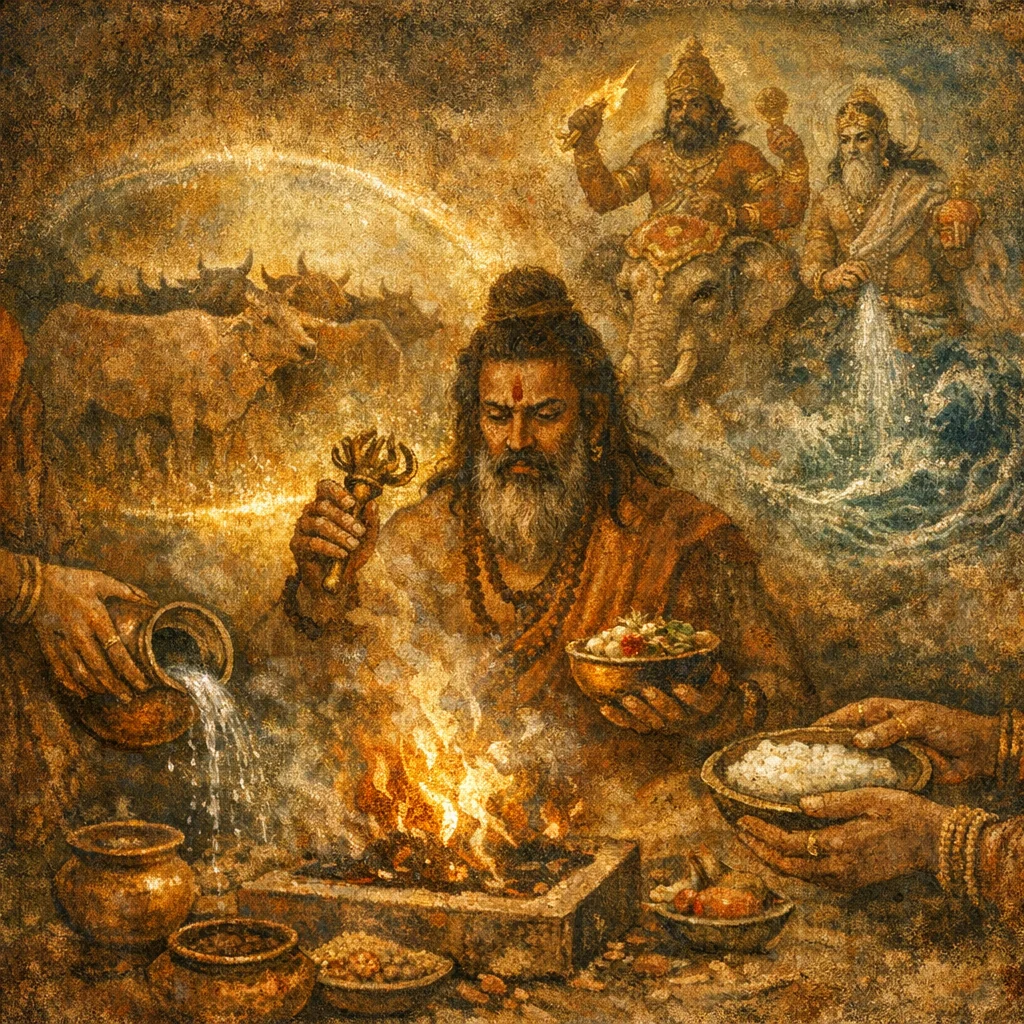
Sukta 92
Rishi: RV-derived (AV 20 compilation); seer as in RV source
Devata: Indra
Chandas: Gāyatrī (short tri-pāda style typical of many Indra stotras)
Mantras
Mantra 1
अभि प्र गोपतिं गिरेन्द्रमर्च यथा विदे। सूतुं सत्यस्य सत्पतिम्
With song praise forth, unto Indra, lord of cattle, that I may win him—him, the impeller of the True, the Lord of the goodly.
Mantra 2
आ हरयः ससृज्रिरेऽरुषीरधि बर्हिषि । यत्राभि संनवामहे
Hither have sped the tawny, ruddy steeds, upon the sacred grass—there where we come together to meet (thee).
Mantra 3
इन्द्राय गाव आशिरं दुदुह्रे वज्रिणे मधु । यत् सीमुपह्वरे विदत्
For Indra the Cows have milked forth the strengthening mixture, sweet for the Thunderer, when at our near-invocation he is found.
Mantra 4
उद् यद् ब्रध्नस्य विष्टपं गृहमिन्द्रश्च गन्वहि । मध्वः पीत्वा सचेवहि त्रिः सप्त सख्युः पदे
When upward to the Ruddy One’s high station, to his dwelling, may we—and Indra—attain; having drunk of sweetness, may we be joined in fellowship, in the thrice-sevenfold place of friendship.
Mantra 5
अर्चत प्रार्चत प्रियमेधासो अर्चत । अर्चन्तु पुत्रका उत पुरं न धृष्ण्वऽर्चत
Chant ye, chant forth; O ye of welcome wisdom, chant ye. Let the sons chant also—yea, chant ye boldly, as one chants for the safeguarding of a stronghold.
Mantra 6
अव स्वराति गर्गरो गोधा परि सनिष्वणत्। पिङ्गा परि चनिष्कददिन्द्राय ब्रह्मोद्यतम्
Downward there resoundeth the gargar; the iguana rang about on every side. The tawny one leapt round about, when for Indra the holy spell was uplifted.
Mantra 7
आ यत् पतन्त्येन्यः सुदुघा अनपस्फुरः । अपस्फुरं गृभायत सोममिन्द्राय पातवे
When hither fly the eager, the well-yielding, that scatter not, then seize ye the scattering-away: lay hold of Soma for Indra to drink.
Mantra 8
अपादिन्द्रो अपादग्निर्विश्वे देवा अमत्सत । वरुण इदिह क्षयत् तमापो अभ्यऽनूषत वत्सं संशिश्वरीरिव
Indra protected; Agni protected; all the Gods rejoiced. Varuṇa, even he, here took up his dwelling: the Waters sang to him around, as lowing mothers gather to the calf.
Mantra 9
सुदेवो असि वरुण यस्य ते सप्त सिन्धवः । अनुक्षरन्ति काकुदं सूर्यं सुषिरामिव
Graciously divine art thou, O Varuṇa, whose seven rivers follow their flowing. They stream on toward the Sun’s high crest, as through a land well-channeled with fair veins.
Mantra 10
यो व्यतींरफाणयत् सुयुक्तां उप दाशुषे । तक्वो नेता तदिद् वपुरुपमा यो अमुच्यत
He who urged the well-yoked (car) across the crossings, in aid of the liberal worshipper—swift guide he; that very deed is his manifest form, the pattern, he who was loosed free.
Mantra 11
अतीदु शक्र ओहत इन्द्रो विश्वा अति द्विषः । भिनत् कनीन ओदनं पच्यमानं परो गिरा
Yea, the Mighty—Indra—drove beyond, beyond all haters; the young one clave apart, by his uttered song, the porridge as it cooked, and sent it far away.
Mantra 12
अर्भको न कुमारकोऽधि तिष्ठन्नवं रथम्। स पक्षन्महिषं मृगं पित्रे मात्रे विभुक्रतुम्
Like a mere child, like a young boy, standing upon the swift chariot, he tore at the buffalo, the wild beast, for father and for mother—he of far-reaching might of will.
Mantra 13
आ तू सुशिप्र दंपते रथं तिष्ठा हिरण्ययम्। अध द्युक्षं सचेवहि सहस्रपादमरुषं स्वस्तिगामनेहसम्
Come now, fair-lipped lord of the house; mount the golden chariot. Then bring with thee the shining one—thousand-footed, ruddy—hastening hither for our welfare in the going.
Mantra 14
तं घेमित्था नमस्विन उप स्वराजमासते । अर्थं चिदस्य सुधितं यदेतव आवर्तयन्ति दावने
To him, even so, the reverent draw near and sit—unto the self-ruling lord; for even his benefit, well-ordered, the steeds bring back again, when they turn for bestowal.
Mantra 15
अनु प्रत्नस्यौकसः प्रियमेधास एषाम्। पूर्वामनु प्रयतिं वृक्तबर्हिषो हितप्रयस आशत
Following the ancient seat (of worship), these men of acceptable skill in sacrifice—having strewn the grass and set the offerings in order—attained, in due succession, the former path of advance.
Mantra 16
यो राजा चर्षणीनां याता रथेभिरध्रिगुः । विश्वासां तरुता पृतनानां ज्येष्ठो यो वृत्रहा गृणे
He who is king of the peoples, who fares with chariots, unrestrained; the overcomer of all battles, the chief—him, the Vṛtra-slayer, I hymn.
Mantra 17
इन्द्रं तं शुम्भ पुरुहन्मन्नवसे यस्य द्विता विधर्तरि । हस्ताय वज्रः प्रति धायि दर्शतो महो दिवे न सूर्यः
Adorn in song that Indra, O slayer of many, for our succour—whose thunderbolt was set into his hand, in double wise, by the Sustainer—splendid to behold, great for heaven, as is the Sun.
Mantra 18
नकिष्टं कर्मणा नशद् यश्चकार सदावृधम्। इन्द्रं न यज्ञैर्विश्वगूर्तमृभ्वसमधृष्टं धृष्ण्वोऽजसम्
None by deed attains to him who hath made himself ever-growing; nor (do men reach) Indra—universally lauded with sacrifices—skilful, unassailed, bold, unfailing.
Mantra 19
अषाल्हमुग्रं पृतनासु सासहिं यस्मिन् महीरुरुज्रयः । सं धेनवो जायमाने अनोनवुर्द्यावः क्षामो अनोनवुः
Invincible, fierce, victorious in battles—he in whom the great wide-striding powers abide: at his birth the milch-cows resounded; heaven and earth resounded.
Mantra 20
यद् द्याव इन्द्र ते शतं शतं भूमीरुत स्युः । न त्वा वज्रिन्त्सहस्रं सूर्या अनु न जातमष्ट रोदसी
Though, Indra, for thee there were a hundred heavens and a hundred earths besides, yet, O Vajrin, not a thousand Suns, nor aught that is born, following on, attain unto thee—(no, not) within the eightfold compass of the Two Worlds.
Mantra 21
आ पप्राथ महिना वृष्ण्या वृषन् विश्वा शविष्ठ शवसा । अस्मां अव मघवन् गोमति व्रजे वज्रिं चित्राभिरूतिभिः
Thou hast spread abroad, by greatness and by manly vigor, O Bull, all things with strength, O mightiest: do thou protect us, O bounteous one, in the cattle-rich fold, O Vajrin, with thy wondrous helps.
Frequently Asked Questions
It is mainly a paustika (prosperity) Indra-hymn used to attract Indra’s patronage for cattle-wealth, stable gains, and protective success, including victory in contests.
In Vedic symbolism, cows (dhenu/go) represent nourishment, wealth, and social stability. Calling Indra gopati frames him as the giver and protector of these core forms of prosperity.
Not necessarily. A clean setting and focused recitation are primary; optionally, milk or ghee can be kept as a prosperity symbol, and a small act of giving (dāna) after recitation matches the hymn’s gift motif.