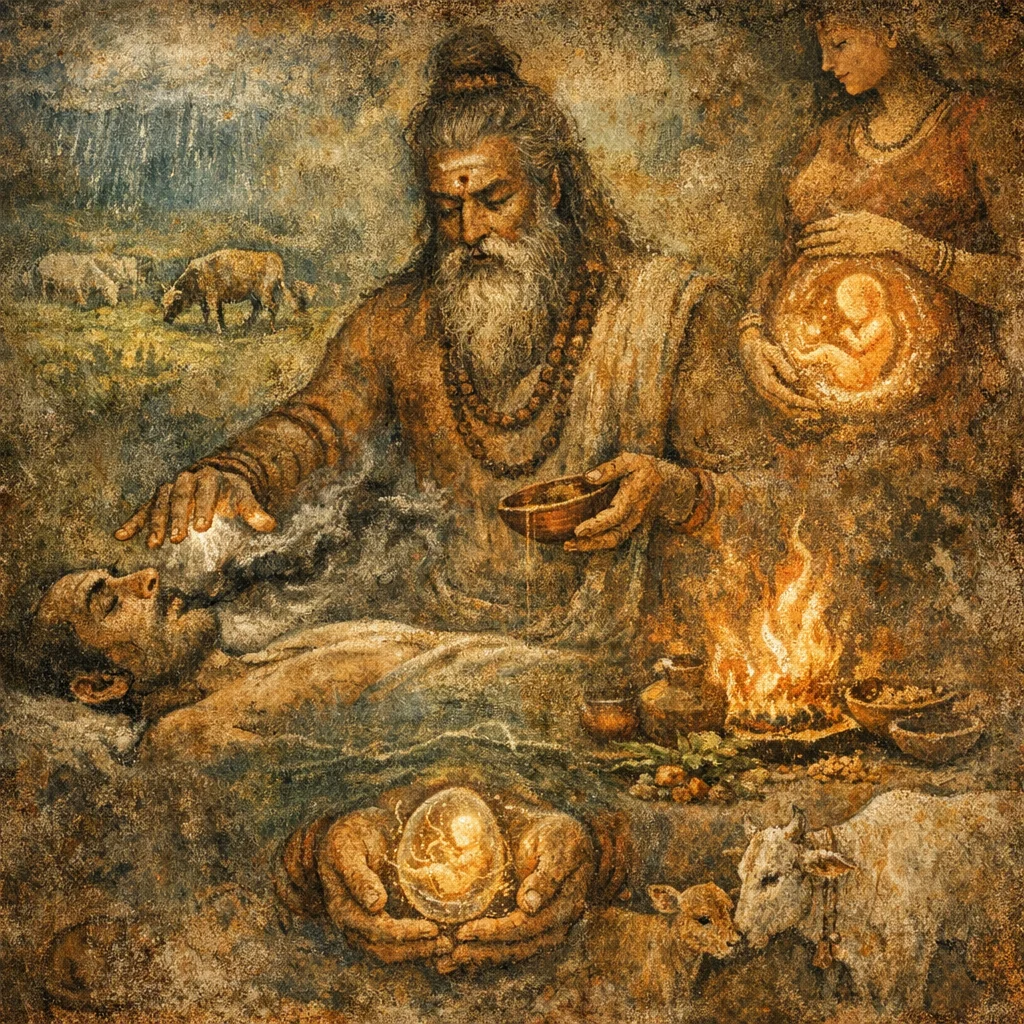
Sukta 4
Rishi: Prāṇa-hymn tradition (often attributed in ancillary tradition to Atharvanic seers; exact r̥ṣi per anukramaṇī to be verified).
Devata: Prāṇa (personified vital breath).
Chandas: Mixed; predominantly anuṣṭubh-like with prose-like segmentation.
Mantras
Mantra 1
प्राणः। प्राणाय नमो यस्य सर्वमिदं वशे । यो भूतः सर्वस्येश्वरो यस्मिन्त्सर्वं प्रतिष्ठितम्
Prāṇa!—obeisance unto Prāṇa, in whose dominion is all this; who, having become, is the lord of all, in whom all is established.
Mantra 2
नमस्ते प्राण क्रन्दाय नमस्ते स्तनयित्नवे । नमस्ते प्राण विद्युते नमस्ते प्राण वर्षते
Obeisance to thee, O Prāṇa, as the Roarer; obeisance to thee as the Thunderer. Obeisance to thee, O Prāṇa, as the Lightning; obeisance to thee, O Prāṇa, as the Rainer.
Mantra 3
यत् प्राण स्तनयित्नुनाभिक्रन्दत्योषधीः । प्र वीयन्ते गर्भान् दधतेऽथो बह्वीर्वि जायन्ते
When Prāṇa, with thunder for his fellow, crieth aloud upon the Herbs, then do they spread forth; they take to them the embryos, and, moreover, many are they that are born abroad.
Mantra 4
यत् प्राण ऋतावागतेऽभिक्रन्दत्योषधीः । सर्वं तदा प्र मोदते यत् किं च भूम्यामधि
When Prāṇa, the season duly come, crieth aloud upon the Herbs, then all that is upon the earth—whatsoever it be—putteth forth its gladness and doth prosper.
Mantra 5
यदा प्राणो अभ्यवर्षीद् वर्षेण पृथिवीं महीम्। पशवस्तत् प्र मोदन्ते महो वै नो भविष्यति
When Prāṇa hath rained upon the mighty Earth with rain, then do the cattle thereat rejoice and thrive: great good, indeed, shall be for us.
Mantra 6
अभिवृष्टा ओषधयः प्राणेन समवादिरन्। आयुर्वै नः प्रातीतरः सर्वा नः सुरभीरकः
The Herbs, well rained upon, have spoken forth in concord with Prāṇa: may Life, indeed, bear us across; and may all of them be for us of kindly fragrance and of gracious power.
Mantra 7
नमस्ते अस्त्वायते नमो अस्तु परायते। नमस्ते प्राण तिष्ठत आसीनायोत ते नमः
Homage be unto thee as thou goest forth; homage be unto thee as thou departest. Homage to thee, O Prāṇa, as thou standest; and to thee as thou sittest—yea, homage unto thee.
Mantra 8
नमस्ते प्राण प्राणते नमो अस्त्वपानते। पराचीनाय ते नमः प्रतीचीनाय ते नमः सर्वस्मै त इदं नमः
Obeisance be to thee, O Prāṇa, to thee that breathest; obeisance—let it be—to Apāna. To thee turned outward, obeisance; to thee turned inward, obeisance: to all of thee, to thee is this obeisance.
Mantra 9
या ते प्राण प्रिया तनूर्यो ते प्राण प्रेयसी । अथो यद् भेषजं तव तस्य नो धेहि जीवसे
That body of thine, O Prāṇa, which is dear, that, O Prāṇa, which is dearest—moreover, whatever remedy is thine, thereof do thou bestow upon us, for life.
Mantra 10
प्राणः प्रजा अनु वस्ते पिता पुत्रमिव प्रियम्। प्राणो ह सर्वस्येश्वरो यच्च प्राणति यच्च न
Prāṇa abideth along with the creatures, as a father with a dear son. Prāṇa, verily, is lord of all—of what breatheth, and of what breatheth not.
Mantra 11
प्राणो मृत्युः प्राणस्तक्मा प्राणं देवा उपासते । प्राणो ह सत्यवादिनमुत्तमे लोक आ दधत्
Prāṇa is Death; Prāṇa is Takman-fever; Prāṇa the Gods themselves revere. Prāṇa, indeed, establisheth the truth-speaker in the highest world.
Mantra 12
प्राणो विराट् प्राणो देष्ट्री प्राणं सर्व उपासते । प्राणो ह सूर्यश्चन्द्रमाः प्राणमाहुः प्रजापतिम्
Prāṇa is Virāṭ; Prāṇa is the Directress; Prāṇa all men worship and attend. Prāṇa, indeed, is Sun and Moon; Prāṇa they call Prajāpati.
Mantra 13
प्राणापानौ व्रीहियवावनड्वान् प्राण उच्यते । यवे ह प्राण आहितोऽपानो व्रीहिरुच्यते
The In-breath and the Out-breath are called the Rice and Barley; the draught-ox is called the Breath. Verily in barley Breath is deposited; the Out-breath is called the rice.
Mantra 14
अपानति प्राणति पुरुषो गर्भे अन्तरा। यदा त्वं प्राण जिन्वस्यथ स जायते पुनः
He breathes out, he breathes in—the man within the womb. When thou, O Breath, dost quicken him, then is he born again.
Mantra 15
प्राणमाहुर्मातरिश्वानं वातो ह प्राण उच्यते । प्राणे ह भूतं भव्यं च प्राणे सर्वं प्रतिष्ठितम्
They call the Breath Mātariśvan; the Wind, forsooth, is called the Breath. In Breath are set what hath been and what shall be; in Breath is all established fast.
Mantra 16
आथर्वणीराङ्गिरसीर्दैवीर्मनुष्यजा उत। ओषधयः प्र जायन्ते यदा त्वं प्राण जिन्वसि
Atharvanic, Angirasic—divine, and also born among men—these healing herbs spring forth, when thou, O Breath, dost quicken them.
Mantra 17
यदा प्राणो अभ्यवर्षीद् वर्षेण पृथिवीं महीम्। ओषधयः प्र जायन्तेऽथो याः काश्च वीरुधः
When Breath rained down upon the mighty Earth with rain, then spring forth the healing herbs, and also whatsoever plants there be.
Mantra 18
यस्ते प्राणेदं वेद यस्मिंश्चासि प्रतिष्ठितः । सर्वे तस्मै बलिं हरानमुष्मिंल्लोक उत्तमे
Whoso, O Prāṇa, knoweth this of thee—(even) that wherein thou art firmly founded—let all bear tribute unto him in yonder highest world.
Mantra 19
यथा प्राण बलिहृतस्तुभ्यं सर्वाः प्रजा इमाः । एवा तस्मै बलिं हरान् यस्त्वा शृणवत् सुश्रवः
As, O Prāṇa, all these creatures bear thee tribute, so bear ye tribute unto him who heareth thee, O thou of good renown.
Mantra 20
अन्तर्गर्भश्चरति देवतास्वाभूतो भूतः स उ जायते पुनः । स भूतो भव्यं भविष्यत् पिता पुत्रं प्र विवेशा शचीभिः
With inner womb he moveth among the deities; become what hath become, he verily is born again. He, having been, becometh what shall be: the Father, with his powers, hath entered forth into the Son.
Mantra 21
एकं पादं नोत्खिदति सलिलाद्धंस उच्चरन्। यदङ्ग स तमुत्खिदेन्नैवाद्य न श्वः स्यान्न रात्री नाहः स्यान्न व्युऽछेत् कदा चन
One foot he dislodgeth not, the Swan uprising from the waters. If, verily, he should dislodge that, then neither to-day nor morrow would be; neither nights nor days would be, nor would dawn break forth at any time.
Mantra 22
अष्टाचक्रं वर्तत एकनेमि सहस्राक्षरं प्र पुरो नि पश्चा। अर्धेन विश्वं भुवनं जजान यदस्यार्धं कतमः स केतुः
An eight-wheeled wheel rolleth on, of single nave, of thousand syllables, forward before and downward behind. With half it hath generated all this world: which of its halves is that, the Sign?
Mantra 23
यो अस्य विश्वजन्मन ईशे विश्वस्य चेष्टतः । अन्येषु क्षिप्रधन्वने तस्मै प्राण नमोऽस्तु ते
He who, with mind that begetteth all, is lord of this one, lord also of all that stirreth and bestirs itself;—to that swift-shooting Power among all beings, to Prāṇa, be reverence: homage be to thee.
Mantra 24
यो अस्य सर्वजन्मन ईशे सर्वस्य चेष्टतः । अतन्द्रो ब्रह्मणा धीरः प्राणो मानु तिष्ठातु
He who, with mind that begetteth all, is lord of this one, lord of all activity,—unwearied, steadfast, by holy power: let Prāṇa stand firm for thee, O Manu, for mankind.
Mantra 25
ऊर्ध्वः सुप्तेषु जागार ननु तिर्यङ् नि पद्यते । न सुप्तमस्य सुप्तेष्वनु शुश्राव कश्चन
Upright he waketh among the sleepers; surely he sinketh not down awry. None, when all are sleeping, hath ever heard that he sleepeth.
Mantra 26
प्राण मा मत् पर्यावृतो न मदन्यो भविष्यसि । अपां गर्भमिव जीवसे प्राण बध्नामि त्वा मयि
O Prāṇa, turn not away from me; become not other than mine. As the embryo of the waters, for life, O Prāṇa, I bind thee fast within me.
Frequently Asked Questions
To praise and stabilize Prāṇa as the ruling life-force, so vitality returns, life remains established, and weakening or life-threatening collapse is averted.
Both. It functions as a healing/protective charm (bhaisajya/āyuṣya) while also teaching a brahmavāda view: breath is a cosmic sovereignty that upholds all beings and order.
No specific substances are required by the hymn. The primary ‘instrument’ is disciplined recitation with a steady, calming intent; optional water or a simple protective thread may be used by local tradition.