Adhyaya 96
अगस्त्यस्य वित्तयाचनं तथा इल्वलोपभिक्षणनिर्णयः (Agastya’s request for wealth and the decision to seek resources from Ilvala)
Upa-parva: Agastya–Ilvala Wealth-Request Episode (within Āraṇyaka-parva)
Lomāśa narrates how Agastya approaches King Śrutarvāṇa to request wealth, specifying that the gift should be made according to capacity without harming others (yathāśakti-avihiṃsyānyān). The king presents complete accounts of income and expenditure; seeing them balanced, Agastya judges that taking from such a treasury would inflict distress upon living beings and declines. Agastya then proceeds with Śrutarvāṇa to King Vadhryaśva, who receives them with arghya and pādya and inquires about their purpose; Agastya repeats the same non-harm-conditioned request. Again, after the king’s fiscal disclosure, Agastya refuses to accept due to the risk of social injury. The group then goes to the wealthy Ikṣvāku king Trasadasyu (Paurukutsa), who similarly offers formal reception and asks their intent; Agastya repeats the request, and the same ethical refusal follows after reviewing the accounts. The assembled kings confer and propose that Ilvala, a wealthy dānava on earth, is an appropriate target for requesting wealth; they agree upon approaching him collectively and proceed toward Ilvala.
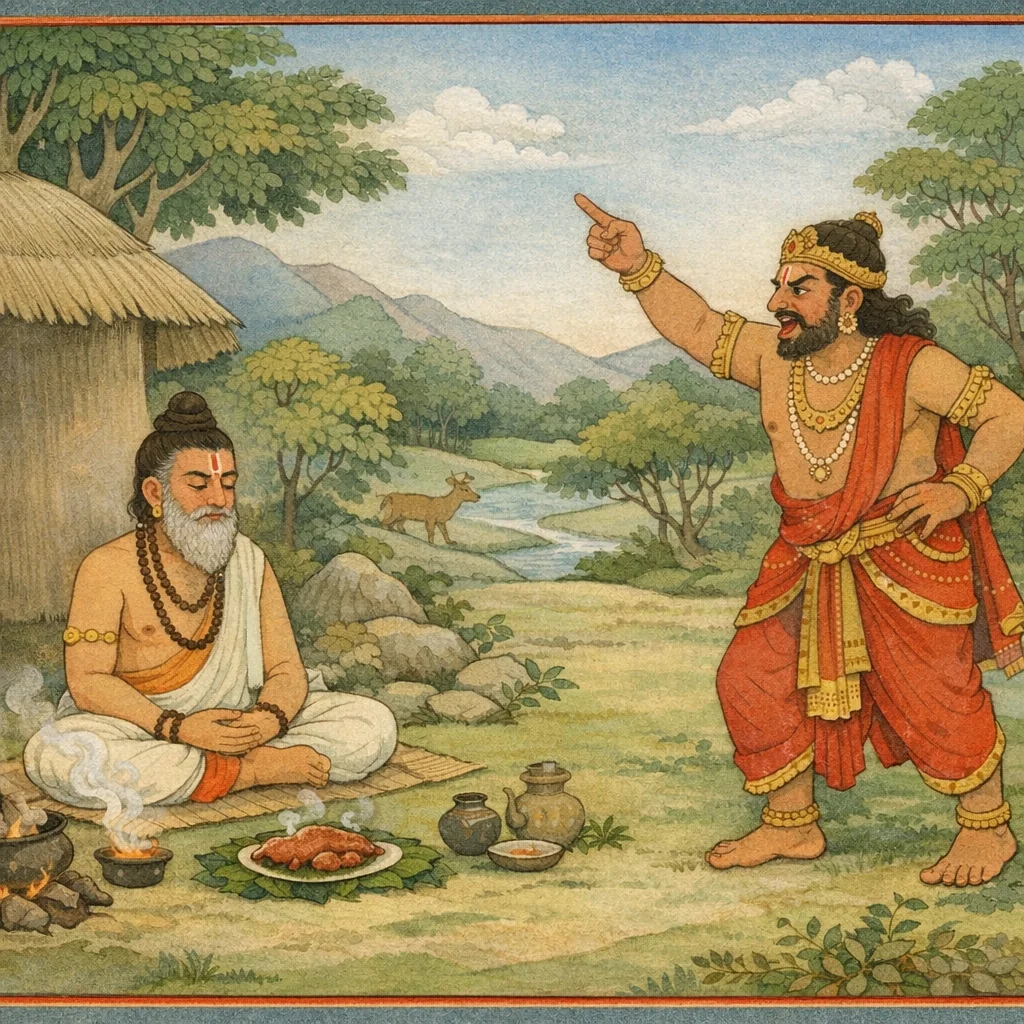
Chapter Arc: तीर्थयात्रा के प्रवाह में युधिष्ठिर लोमश ऋषि से एक ज्वलंत जिज्ञासा करते हैं—महर्षि अगस्त्य ने मनुष्यों का संहार करने वाले दैत्य वातापि को किस कारण शांत/नष्ट किया? → लोमश अगस्त्य-उपाख्यान का सूत्र पकड़ते हैं: इल्वल और वातापि की मायावी योजना—अतिथि-सत्कार का छल, बकरे का रूप, भोजन के बाद ‘वातापि निकल आ’ की पुकार—और ब्राह्मणों की हत्या का क्रम। श्रोता के मन में भय और क्रोध साथ-साथ बढ़ते हैं कि धर्म के आवरण में अधर्म कैसे फलता है। → अगस्त्य के सामने वही छल रचा जाता है—वातापि को मेष बनाकर पकाया जाता है, अतिथि को खिलाया जाता है, और फिर इल्वल हँसते हुए दैत्य को बाहर आने का आह्वान करता है। यहाँ निर्णायक क्षण आता है: अगस्त्य की तपोबल-सम्पन्न वाणी/शक्ति से वातापि का पुनर्जन्म-प्रयास निष्फल हो जाता है—दैत्य ‘उपशामित’ हो जाता है, छल का चक्र टूटता है। → लोमश के कथन से स्पष्ट होता है कि अगस्त्य ने क्रोध नहीं, लोक-रक्षा के धर्म से प्रेरित होकर इस अनर्थ-परंपरा का अंत किया। अतिथि-धर्म का अपमान करने वाले असुरों का दंड स्थापित होता है और तीर्थयात्रा की कथा-धारा में एक नैतिक उदाहरण जुड़ जाता है। → अगस्त्य-उपाख्यान की आगे की कड़ियाँ और इल्वल के भाग्य/परिणाम का विस्तार अगले प्रसंग की ओर संकेत करता है।
Shlokas
Verse 1
#:73...8 #::3-:.:.7 () ऑञिेजा आ।ा८ज - यहाँ पाण्डवोंके द्वारा गोदान और धनदान करनेके विषयमें यह शंका होती है कि इनके पास ये सब कहाँसे आये पर ऐसी शंका नहीं करनी चाहिये; क्योंकि वनपर्वके बारहवें अध्यायमें आता है कि काम्यकवनमें पाण्डवोंसे मिलनेके लिये भगवान् श्रीकृष्ण एवं भोजवंशी, वृष्णिवंशी और अन्धककुलके राजागण तथा ट्रुपद, धृष्टद्युम्न, धृष्टकेतु एवं केकय राजकुमार आये थे। उनका पाण्डवोंसे मिलकर अपने-अपने राज्यमें लौट जानेका भी वर्णन वनपर्वके बाईसवें अध्यायमें आया है। इससे अनुमान होता है कि इन राजाओंने पाण्डवोंको भेंटमें प्रचुर धन दिया होगा। षण्णवतितमोब< ध्याय: इल्वचल और वातापिका वर्णन, महर्षि अगस्त्यका पितरोंके उद्धारके लिये विवाह करनेका विचार तथा विदर्भराजका महर्षि अगस्त्यसे एक कन्या पाना वैशम्पायन उवाच ततः सम्प्रस्थितो राजा कौन्तेयो भूरिदक्षिण: । अगस्त्याश्रममासाद्य दुर्जयायामुवास ह,वैशम्पायनजी कहते हैं--जनमेजय! तदनन्तर प्रचुर दक्षिणा देनेवाले कुन्तीनन्दन राजा युधिष्ठिरने गयासे प्रस्थान किया और अगस्त्याश्रममें जाकर दुर्जय मणिमती नगरीमें निवास किया
Vaiśampāyana said: Then the Kuntī-born king (Yudhiṣṭhira), renowned for giving abundant gifts, set out from there. Reaching the hermitage of Agastya, he took up residence in the city called Durjayā. The verse frames Yudhiṣṭhira’s journey as guided by dharma—seeking the company of a great sage and sustaining a culture of generosity even during exile.
Verse 2
तत्रैव लोमशं राजा पप्रच्छ वदतां वर: । अगस्त्येनेह वातापि: किमर्थमुपशामित:,वहीं वक्ताओंमें श्रेष्ठ राजा युधिष्ठिरने महर्षि लोमशसे पूछा--“ब्रह्मन्! अगस्त्यजीने यहाँ वातापिको किसलिये नष्ट किया?
Right there, King Yudhiṣṭhira—foremost among speakers—questioned the sage Lomaśa: “Revered Brāhmaṇa, for what reason did Agastya here bring about the destruction (pacification) of Vātāpi?”
Verse 3
आसीद्दा कि प्रभावश्लू स दैत्यो मानवान्तक: । किमर्थ चोदितो मन्युरगस्त्यस्य महात्मन:,“मनुष्योंका विनाश करनेवाले उस दैत्यका प्रभाव कैसा था? और महात्मा अगस्त्यजीके मनमें क्रोधका उदय कैसे हुआ”?
Vaiśampāyana said: “Indeed, there once was that Daitya named Mānavāntaka, famed for his formidable power and for bringing destruction upon human beings. What was the nature of his might, and for what reason did anger arise in the heart of the great-souled sage Agastya?”
Verse 4
लोगश उवाच इल्वलो नाम दैतेय आसीत् कौरवनन्दन । मणिमत्यां पुरि पुरा वातापिस्तस्य चानुज:,लोमशजीने कहा--कौरवनन्दन! पूर्वकालकी बात है, इस मणिमती नगरीमें इल्वल नामक दैत्य रहता था। वातापि उसीका छोटा भाई था
Lomaśa said: “O delight of the Kuru line, long ago in the city of Maṇimatī there lived a Daitya named Ilvala. Vātāpi was his younger brother.”
Verse 5
स ब्राह्मणं तपोयुक्तमुवाच दितिनन्दन: । पुत्र मे भगवानेकमिन्द्रतुल्यं प्रयच्छतु,एक दिन दितिनन्दन इल्वलने एक तपस्वी ब्राह्मणसे कहा--“भगवन्! आप मुझे ऐसा पुत्र दें, जो इन्द्रके समान पराक्रमी हो।' उन ब्राह्मणदेवताने इल्चलको इन्द्रके समान पुत्र नहीं दिया। इससे वह असुर उन ब्राह्मणदेवतापर बहुत कुपित हो उठा। राजन्! तभीसे इल्वल दैत्य क्रोधमें भरकर ब्राह्मणोंकी हत्या करने लगा। वह मायावी अपने भाई वातापिको मायासे बकरा बना देता था। वातापि भी इच्छानुसार रूप धारण करनेमें समर्थ था! अतः वह क्षणभरमें भेड़ा और बकरा बन जाता था। फिर इल्वल उस भेड़ या बकरेको पकाकर उसका मांस राँधता और किसी ब्राह्मणको खिला देता था। इसके बाद वह ब्राह्मणको मारनेकी इच्छा करता था
Diti’s son (the demon Ilvala) addressed a Brahmin endowed with austerity and said: “O Blessed one, grant me a son—one who is equal to Indra in might.” The request, driven by ambition and rivalry with the gods, sets the stage for Ilvala’s resentment when his desire is not fulfilled, and it foreshadows his later turn toward deceit and violence against Brahmins—an ethical fall from seeking power through blessing to pursuing it through harm.
Verse 6
तस्मै स ब्राह्मणो नादात् पुत्रं वासवसम्मितम् । चुक्रोध सो5सुरस्तस्य ब्राह्मणस्य ततो भूशम्,एक दिन दितिनन्दन इल्वलने एक तपस्वी ब्राह्मणसे कहा--“भगवन्! आप मुझे ऐसा पुत्र दें, जो इन्द्रके समान पराक्रमी हो।' उन ब्राह्मणदेवताने इल्चलको इन्द्रके समान पुत्र नहीं दिया। इससे वह असुर उन ब्राह्मणदेवतापर बहुत कुपित हो उठा। राजन्! तभीसे इल्वल दैत्य क्रोधमें भरकर ब्राह्मणोंकी हत्या करने लगा। वह मायावी अपने भाई वातापिको मायासे बकरा बना देता था। वातापि भी इच्छानुसार रूप धारण करनेमें समर्थ था! अतः वह क्षणभरमें भेड़ा और बकरा बन जाता था। फिर इल्वल उस भेड़ या बकरेको पकाकर उसका मांस राँधता और किसी ब्राह्मणको खिला देता था। इसके बाद वह ब्राह्मणको मारनेकी इच्छा करता था
The brāhmaṇa did not grant him a son equal to Vāsava (Indra) in prowess. Enraged at this refusal, the asura became violently angry with that brāhmaṇa. From then on, Ilvala, burning with wrath, took to killing brāhmaṇas by deceit: he would use his magic to turn his brother Vātāpi into a ram or goat, cook the flesh, and feed it to an unsuspecting brāhmaṇa—seeking thereafter to bring about the eater’s death. The episode highlights how wounded pride and denied desire can devolve into adharma, especially when power is used to target the innocent and the sacred.
Verse 7
तदाप्रभृति राजेन्द्र इल्वलो ब्रह्महासुर: । मन्युमान् भ्रातरं छागं मायावी हाकरोत् ततः,एक दिन दितिनन्दन इल्वलने एक तपस्वी ब्राह्मणसे कहा--“भगवन्! आप मुझे ऐसा पुत्र दें, जो इन्द्रके समान पराक्रमी हो।' उन ब्राह्मणदेवताने इल्चलको इन्द्रके समान पुत्र नहीं दिया। इससे वह असुर उन ब्राह्मणदेवतापर बहुत कुपित हो उठा। राजन्! तभीसे इल्वल दैत्य क्रोधमें भरकर ब्राह्मणोंकी हत्या करने लगा। वह मायावी अपने भाई वातापिको मायासे बकरा बना देता था। वातापि भी इच्छानुसार रूप धारण करनेमें समर्थ था! अतः वह क्षणभरमें भेड़ा और बकरा बन जाता था। फिर इल्वल उस भेड़ या बकरेको पकाकर उसका मांस राँधता और किसी ब्राह्मणको खिला देता था। इसके बाद वह ब्राह्मणको मारनेकी इच्छा करता था
From that time onward, O best of kings, Ilvala—an Asura stained by the sin of slaying Brahmins—became filled with wrath. Then his brother, the sorcerer Māyāvī, would by illusion turn their brother Vātāpi into a goat. Ilvala would cook that goat’s flesh and feed it to an unsuspecting Brahmin, intending thereby to bring about the Brahmin’s death. The episode underscores how anger and frustrated desire, when joined to deceit, lead to deliberate violations of dharma—especially the gravest offense of harming those devoted to tapas and sacred learning.
Verse 8
मेषरूपी च वातापि: कामरूप्यभवत् क्षणात् | संस्कृत्य च भोजयति ततो विप्रं जिघांसति,एक दिन दितिनन्दन इल्वलने एक तपस्वी ब्राह्मणसे कहा--“भगवन्! आप मुझे ऐसा पुत्र दें, जो इन्द्रके समान पराक्रमी हो।' उन ब्राह्मणदेवताने इल्चलको इन्द्रके समान पुत्र नहीं दिया। इससे वह असुर उन ब्राह्मणदेवतापर बहुत कुपित हो उठा। राजन्! तभीसे इल्वल दैत्य क्रोधमें भरकर ब्राह्मणोंकी हत्या करने लगा। वह मायावी अपने भाई वातापिको मायासे बकरा बना देता था। वातापि भी इच्छानुसार रूप धारण करनेमें समर्थ था! अतः वह क्षणभरमें भेड़ा और बकरा बन जाता था। फिर इल्वल उस भेड़ या बकरेको पकाकर उसका मांस राँधता और किसी ब्राह्मणको खिला देता था। इसके बाद वह ब्राह्मणको मारनेकी इच्छा करता था
Lomaśa said: “Vātāpi, assuming the form of a ram, could become whatever form he wished in an instant. Ilvala would then cook (that flesh) and feed it to a brāhmaṇa; afterward, he would desire to kill the brāhmaṇa.” The passage underscores a grave adharma: the deliberate deception and violence against brāhmaṇas, using illusion and hospitality as a weapon, turning sacred norms of feeding guests into a means of slaughter.
Verse 9
स चाह्दयति यं वाचा गतं वैवस्वतक्षयम् | स पुनर्देहमास्थाय जीवन् सम प्रत्यदृश्यत,इल्वलमें यह शक्ति थी कि वह जिस किसी भी यमलोकमें गये हुए प्राणीको उसका नाम लेकर बुलाता वह पुन: शरीर धारण करके जीवित दिखायी देने लगता था
He had the power to summon, merely by uttering a name, any being who had gone to the abode of Vaivasvata (Yama). That person would then take up a body again and be seen once more as living. In the narrative, this extraordinary ability highlights a troubling misuse of power: reversing death by command, not for dharma or compassion, but as a display of control—thereby unsettling the moral order guarded by Yama.
Verse 10
ततो वातापिमसुरं छागं कृत्वा सुसंस्कृतम् । त॑ ब्राह्मणं भोजयित्वा पुनरेव समाह्दयत्,उस दिन वातापि दैत्यको बकरा बनाकर इल्वल उसके मांसका संस्कार किया और उन ब्राह्मणदेवको वह मांस खिलाकर पुन: अपने भाईको पुकारा
Then Ilvala turned the demon Vātāpi into a goat and had it well prepared as food. After feeding that meat to the brāhmaṇa, he again called out to his brother—setting in motion his cruel deception against a guest, a grave violation of dharma.
Verse 11
तामिल्वलेन महता स्वरेण वाचमीरिताम् । श्रुत्वातिमायो बलवान क्षिप्रं ब्राह्मगकण्टक:,राजन! इल्वलके द्वारा उच्चस्वरसे बोली हुई वाणी सुनकर वह अत्यन्त मायावी ब्राह्मणशत्रु बलवान् महादैत्य वातापि उस ब्राह्मणकी पसलीको फाड़कर हँसता हुआ निकल आया
Hearing the loud call uttered by Ilvala, the immensely powerful and highly deceptive demon Vātāpi—an enemy and tormentor of brahmins—quickly burst forth, laughing, by tearing open the brahmin’s side. The episode underscores how malice and deceit aimed at the righteous can appear triumphant for a moment, yet such adharma is ultimately self-defeating when confronted by true spiritual power and restraint.
Verse 12
तस्य पार्श्च विनिर्भिद्य ब्राह्मणस्य महासुर: । वातापि: प्रहसन् राजन् निश्चक्राम विशाम्पते,राजन! इल्वलके द्वारा उच्चस्वरसे बोली हुई वाणी सुनकर वह अत्यन्त मायावी ब्राह्मणशत्रु बलवान् महादैत्य वातापि उस ब्राह्मणकी पसलीको फाड़कर हँसता हुआ निकल आया
O king, the mighty asura Vātāpi—an implacable foe of brāhmaṇas—burst through the brāhmaṇa’s side and came out laughing, after hearing the loud words spoken by Ilvala. The episode underscores the peril of deceit and the violation of dharma through hostile magic directed against the innocent and the sacred order.
Verse 13
एवं स ब्राह्मणान् राजन् भोजयित्वा पुन: पुन: । हिंसयामास दैतेय इल्वलो दुष्टचेतन:,राजन! इस प्रकार दुष्टहृदय इल्वल दैत्य बार-बार ब्राह्मगोंको भोजन कराकर अपने भाईद्वारा उनकी हिंसा करा देता था (इसीलिये अगस्त्यमुनिने वातापिको नष्ट किया था)
O King, having repeatedly fed the Brahmins, the Daitya Ilvala—wicked in mind—would then cause them to be slain (through his brother). Thus he turned hospitality into a trap, violating dharma by using a sacred act of feeding as a means of violence.
Verse 14
अगस्त्यश्लापि भगवानेतस्मिन् काल एव तु । पितृन् ददर्श गर्ते वै लम्बमानानधोमुखान्,इन्हीं दिनों भगवान् अगस्त्यमुनि कहीं चले जा रहे थे। उन्होंने एक जगह अपने पितरोंको देखा जो एक गड़ढेमें नीचे मुँह किये लटक रहे थे
At that very time, the revered sage Agastya, while travelling, beheld his forefathers in a pit—hanging head-down. The scene signals a moral urgency: the continuity of family duties and the repayment of ancestral obligations are not merely social customs but are treated as a serious dharmic responsibility whose neglect brings distress to one’s lineage.
Verse 15
सो<पृच्छल्लम्बमानांस्तान् भवन्त इव कम्पिता: । (किमर्थ वेह लम्बध्वं गर्ते यूयमधोमुखा: ।) संतानहेतोरिति ते प्रत्यूचुब्रह्मयतादिन:,तब उन लटकते हुए पितरोंसे अगस्त्यजीने पूछा--“आपलोग यहाँ किसलिये नीचे मुँह किये काँपते हुए-से लटक रहे हैं? यह सुनकर उन वेदवादी पितरोंने उत्तर दिया --'संतानपरम्पराके लोपकी सम्भावनाके कारण हमारी यह दुर्दशा हो रही है”
Seeing those ancestors hanging upside down, as if trembling, the sage asked them: “Why are you hanging here in this pit, face downward?” Hearing this, the forefathers—devoted to Vedic observance and sacred discipline—replied: “It is because of the loss of our lineage; the continuity of descendants has been cut off.” The passage underscores the ethical weight placed on sustaining the family line through righteous progeny, since the welfare of ancestors is believed to depend upon it.
Verse 16
ते तस्मै कथयामासुर्वयं ते पितर: स्वका: । गर्तमेतमनुप्राप्ता लम्बाम: प्रसवार्थिन:,उन्होंने अगस्त्यके पूछनेपर बताया कि “हम तुम्हारे ही पितर हैं। संतानके इच्छुक होकर इस गड़्ढेमें लटक रहे हैं!
They replied to him: “We are your own forefathers. Having fallen into this pit, we hang here, longing for offspring.” The statement frames a moral urgency: the continuity of lineage and the performance of duties toward ancestors are not merely private desires but obligations whose neglect is pictured as ancestral distress.
Verse 17
यदि नो जनयेथास्त्वमगस्त्यापत्यमुत्तमम् | स्यान्नोअस्मान्निरयान्मोक्षस्त्वं च पुत्राप्तुया गतिम्,“अगस्त्य! यदि तुम हमारे लिये उत्तम संतान उत्पन्न कर सको तो हम इस नरकसे छुटकारा पा सकते हैं और बेटा! तुम्हें भी सदगति प्राप्त होगी”
They said: “O Agastya, if you can beget for us an excellent offspring, then we shall be released from this hell; and you too, O son, will attain a blessed destiny through the gaining of a son.”
Verse 18
स तानुवाच तेजस्वी सत्यधर्मपरायण: । करिष्ये पितर: काम॑ व्येतु वो मानसो ज्वर:,तब सत्यधर्मपरायण तेजस्वी अगस्त्यने उनसे कहा--'पितरो! मैं आपकी इच्छा पूर्ण करूँगा। आपकी मानसिक चिन्ता दूर हो जानी चाहिये”
Then the radiant one, steadfast in truth and dharma, addressed them: “O Fathers (ancestral spirits), I shall fulfill your desire. May the fever of anxiety in your minds be dispelled.” The statement frames duty as a moral promise—relieving the elders’ concern by committing to righteous action.
Verse 19
ततः प्रसवसंतानं चिन्तयन् भगवानृषि: । आत्मन: प्रसवस्यार्थे नापश्यत् सदृशीं स्त्रियम्,तब भगवान् महर्षि अगस्त्यने संतानोत्पादनकी चिन्ता करते हुए अपने अनुरूप संतानको गर्भमें धारण करनेके लिये योग्य पत्नीका अनुसंधान किया, परंतु उन्हें कोई योग्य स्त्री दिखायी नहीं दी
Then the blessed sage, reflecting on procreation and the continuance of his lineage, sought a wife fit to bear a child worthy of himself; yet he could find no woman equal and suitable for that purpose. The passage frames progeny not as mere desire, but as a deliberate, dharma-aligned responsibility requiring a worthy partnership.
Verse 20
स तस्य तस्य सच्त्वस्य तत् तदड़मनुत्तमम् | संगृहा तत्समैरड्रैनिरमिमे स्त्रियमुत्तमाम्,तब उन्होंने एक-एक जन्तुके उत्तमोत्तम अंगोंका भावनाद्वारा संग्रह करके उन सबके द्वारा एक परम सुन्दर स्त्रीका निर्माण किया
Gathering, from each and every creature, its most excellent limb, he mentally collected those finest features and, by combining comparable parts, fashioned an incomparable woman—an image of beauty assembled from the best of all beings. The episode underscores how deliberate intention and imaginative power can construct an ideal form, while also hinting at the ethical tension of treating living beings as mere sources of desirable qualities.
Verse 21
सतां विदर्भराजस्य पुत्रार्थ तप्यतस्तप: । निर्मितामात्मनो<र्थाय मुनि: प्रादान्महातपा:,उन दिनों विदर्भराज पुत्रके लिये तपस्या कर रहे थे। महातपस्वी अगस्त्यमुनिने अपने लिये निर्मित की हुई वह स्त्री राजाको दे दी
At that time the righteous king of Vidarbha was performing austerities in the hope of obtaining a son. Then the great ascetic sage gave to the king a woman whom he had fashioned for his own purpose—an act that frames the power of tapas as creative and also highlights the ethical weight of gifting and responsibility in royal lineage.
Verse 22
सा तत्र जज्ञे सुभगा विद्युत् सौदामनी यथा । विभ्राजमाना वपुषा व्यवर्धत शुभानना,उस सुन्दरी कन्याका उस राजभवनमें बिजलीके समान प्रादुर्भाव हुआ। वह शरीरसे प्रकाशमान हो रही थी। उसका मुख बहुत सुन्दर था, वह राजकन्या वहाँ दिनोदिन बढ़ने लगी
There, in that royal residence, a fortunate girl was born—appearing like a flash of lightning. Radiant in her very body, with a face of auspicious beauty, the princess grew day by day in that place. The verse underscores the auspiciousness of birth and the ethical ideal that such gifts of beauty and fortune are to be protected and nurtured within righteous royal care.
Verse 23
जातमात्रां च तां दृष्टवा वैदर्भ: पृथिवीपति: । प्रहर्षेण द्विजातिभ्यो न्न्यवेदयत भारत
Seeing the girl immediately after her birth, the king of Vidarbha was filled with joy. In his delight, he announced the news to the twice-born (Brahmin elders), O Bhārata—acting in accordance with royal custom by sharing auspicious events with learned counsellors and ritual authorities.
Verse 24
भरतनन्दन! राजा विदर्भने उस कन्याके उत्पन्न होते ही हर्षमें भरकर ब्राह्मणोंको यह शुभ संवाद सुनाया ।। अभ्यनन्दन्त तां सर्वे ब्राह्मणा वसुधाधिप । लोपामुद्रेति तस्याश्न॒ चक्रिरे नाम ते द्विजा:,राजन्! उस समय सब ब्राह्मणोंने रुजाका अभिनन्दन किया और उस कन्याका नाम “'लोपामुद्रा” रख दिया
O scion of Bharata, as soon as the princess was born, the king of Vidarbha—filled with joy—announced this auspicious news to the Brahmins. All the Brahmins blessed and celebrated the newborn girl, and those twice-born men bestowed upon her the name “Lopāmudrā.” The scene underscores the cultural ethic that a child’s arrival is sanctified through communal benediction and the conferral of a meaningful name by learned elders.
Verse 25
ववृधे सा महाराज बिश्रती रूपमुत्तमम् । अप्स्विवोत्पलिनी शीघ्रमग्नेरिव शिखा शुभा,महाराज! उत्तम रूप धारण करनेवाली वह राजकुमारी जलमें कमलिनी तथा यज्ञवेदीपर प्रज्वलित शुभ्र अग्निशिखाकी भाँति शीघ्रतापूर्वक बढ़ने लगी
Lomaśa said: “O King, that princess—radiant and bearing a most excellent beauty—began to grow swiftly, like a lotus-creeper spreading upon the waters, and like an auspicious flame of fire rising on the sacrificial altar.” The verse underscores the ideal of inner and outer flourishing under righteous protection, using sacrificial and natural imagery to suggest purity, auspiciousness, and rightful maturation.
Verse 26
तां यौवनस्थां राजेन्द्र शतं कन्या: स्वलंकृता: । दास्य: शतं च कल्याणीमुपातस्थुर्वशानुगा:,राजेन्द्र! जब उसने युवावस्थामें पदार्पण किया, उस समय उस कल्याणी कन्याको वस्त्राभूषणोंसे विभूषित सौ सुन्दरी कन्याएँ और सौ दासियाँ उसकी आज्ञाके अधीन होकर घेरे रहतीं और उसकी सेवा किया करती थीं
O king, when she had entered the bloom of youth, a hundred maidens, beautifully adorned, and a hundred maidservants stood around that auspicious girl—obedient to her will—attending upon her in constant service. The narration underscores the royal abundance and the disciplined order of a household where many remain under a single person’s command.
Verse 27
सा सम दासीशतवृता मध्ये कन्याशतस्य च । आस्ते तेजस्विनी कन्या रोहिणीव दिवि प्रभा,सौ दासियों और सौ कन्याओंके बीचमें वह तेजस्विनी कन्या आकाशमें सूर्यकी प्रभा तथा नक्षत्रोंमें रोहिणीके समान सुशोभित होती थी
Surrounded by a hundred maidservants and standing amid a hundred maidens, that radiant young woman sat resplendent—like a bright light in the sky, like Rohiṇī among the stars. The description underscores her exceptional dignity and inner brilliance, suggesting that true excellence shines even within a crowd and is recognized by its natural splendor rather than by force or display.
Verse 28
यौवनस्थामपि च तां शीलाचारसमन्विताम् | न वव्रे पुरुष: कश्चिद् भयात् तस्य महात्मन:,यद्यपि वह युवती और शील एवं सदाचारसे सम्पन्न थी तो भी महात्मा अगस्त्यके भयसे किसी राजकुमारने उसका वरण नहीं किया
Though she was in the bloom of youth and endowed with good character and proper conduct, no man chose her in marriage, for all were afraid of that great-souled sage (Agastya).
Verse 29
सा तु सत्यवती कन्या रूपेणाप्सरसो<प्यति | तोषयामास पितरं शीलेन स्वजनं तथा,वह सत्यवती राजकुमारी रूपमें अप्सराओंसे भी बढ़कर थी। उसने अपने शील- स्वभावसे पिता तथा स्वजनोंको संतुष्ट कर दिया था
That maiden Satyavatī was, in beauty, even surpassing the apsarases. Yet it was by her virtuous conduct and gentle character that she truly won hearts—pleasing her father and likewise satisfying her own kinsfolk.
Verse 30
वैदर्भी तु तथायुक्तां युवती प्रेक्ष्य वै पिता । मनसा चिन्तयामास कस्मै दद्यामिमां सुताम्,पिता विदर्भराजकुमारीको युवावस्थामें प्रविष्ट हुई देख मन-ही-मन यह विचार करने लगे कि “इस कन्याका किसके साथ विवाह करूँ”
Seeing the princess of Vidarbha now properly come of age as a young woman, her father reflected inwardly: “To whom should I give this daughter of mine in marriage?” The verse frames a king’s ethical responsibility to choose a worthy husband, balancing paternal duty, social order, and the daughter’s future welfare.
Verse 95
इस प्रकार श्रीमहाभारत वनपर्वके अन्तर्गत तीर्थयात्रापर्चमें लोमश-ती ्थयात्राके प्रसंगमें गयके यज्ञका वर्णन'-विषयक पंचानबेवाँ अध्याय पूरा हुआ
Thus, in the Śrī Mahābhārata’s Vana Parva, within the section on pilgrimage, in the context of Lomasha’s pilgrimage narrative, the ninety-fifth chapter—whose subject is the description of the sacrifice at Gayā—comes to an end. The closing note frames pilgrimage as a dharmic practice: sacred travel and ritual are presented as means of purification, remembrance of exemplary rites, and reinforcement of ethical order through reverence for holy places and prescribed acts.
Verse 96
इति श्रीमहा भारते वनपर्वणि तीर्थयात्रापर्वणि लोमशतीर्थयात्रायां अगस्त्योपाख्याने षण्णवतितमो<ध्याय:
Thus ends the ninety-sixth chapter in the Vana Parva of the Mahābhārata, within the section on pilgrimage to sacred fords (Tīrthayātrā Parva), in the account of Lomāśa’s pilgrimage, in the episode concerning Agastya. This colophon marks the close of the chapter and situates the narrative within the larger ethical frame of pilgrimage, purification, and the transmission of sacred exemplars.
Frequently Asked Questions
Whether an ascetic’s request for wealth can be ethically fulfilled when royal resources are tightly balanced; the dilemma centers on accepting gifts that may indirectly cause harm to subjects or living beings through extraction or deprivation.
Material acquisition—even for sanctioned purposes—must be governed by ahiṃsā and prudential assessment: transparent accounts and awareness of downstream harm are necessary conditions for righteous giving and receiving.
No explicit phalaśruti appears in this excerpt; the meta-lesson is conveyed through narrative structure—repetition of the request, audit of accounts, and refusal—underscoring ethical restraint as the interpretive key.