Adhyaya 93
Tīrtha-yātrā: Prayāga-saṅgama and Gayaśiras—Rājarṣi Gaya’s Mahāyajña
Upa-parva: Tīrtha-yātrā (Pilgrimage Circuit) — Gomati–Prayāga–Gaya Segment
Vaiśaṃpāyana reports that the Pāṇḍavas, moving in order through various regions, reach Naimiṣāraṇya in the transmission frame and then the narrative focuses on their pilgrimage through sacred tīrthas on the Gomatī. They undertake ritual bathing/abhiṣeka and distribute gifts and wealth, repeatedly performing tarpaṇa to devas, pitṛs, and brāhmaṇas at named sites (Kanyātīrtha, Aśvatīrtha, Gavāṃ-tīrtha, Vālakoṭī, Vṛṣaprastha, Girāvuṣya, Bāhudā). At Prayāga, the confluence of Gaṅgā and Yamunā, they bathe, engage in elevated tapas, and provide resources to brāhmaṇas. They then proceed with brāhmaṇas to Prajāpati’s altar-ground, reside there, and sustain ascetics with forest offerings. The chapter transitions to the Gayaśiras/Brahmasaras region—associated with Agastya, Sanātana Dharma, and Mahādeva—where the Pāṇḍavas perform Cāturmāsya rites amid many learned brāhmaṇas. In the assembly, Śamaṭha narrates the exemplary deeds of Rājarṣi Gaya, emphasizing an extraordinary sacrifice marked by abundance, continuous giving, and a pervasive ‘brahma-sound’ that fills the directions; popular gāthās celebrate the scale of hospitality and the unmatched nature of Gaya’s yajña.
Chapter Arc: ऋषिगण पाण्डवों के पास आते हैं, नमस्कार-आशीर्वाद के साथ युधिष्ठिर को पुण्यतीर्थ-यात्रा का आग्रह करते हैं—मानो वनवास का दुःख अब धर्म-मार्ग की यात्रा में ढलने वाला हो। → ऋषि कहते हैं कि वे भी साथ चलना चाहते हैं, पर तीर्थों में राक्षसों का उपद्रव है; अतः वे पाण्डवों से रक्षा की याचना करते हैं। यात्रा केवल साधना नहीं, संकट-भरी परीक्षा बन जाती है। → युधिष्ठिर लोमश, धौम्य, नारद, व्यास, पर्वत आदि महर्षियों का चरण-स्पर्श कर उनकी अनुमति लेते हैं; पाण्डव अस्त्र-शस्त्र धारण कर, सेवकों-रथों सहित, तीर्थ-यात्रा के लिए प्रस्थान का संकल्प दृढ़ करते हैं। → ऋषियों के सम्मान और आशीर्वाद के साथ यात्रा की व्यवस्था पूर्ण होती है—सेवक (इन्द्रसेन आदि), रथ, शस्त्र, और द्रौपदी सहित पाण्डवों का मन गमन हेतु स्थिर हो जाता है। → तीर्थों में भरे राक्षसों से सामना और यात्रापथ की अनिश्चितता—अगले चरण में कौन-सा तीर्थ, कौन-सा विघ्न, और कौन-सी परीक्षा सामने आएगी?
Shlokas
Verse 1
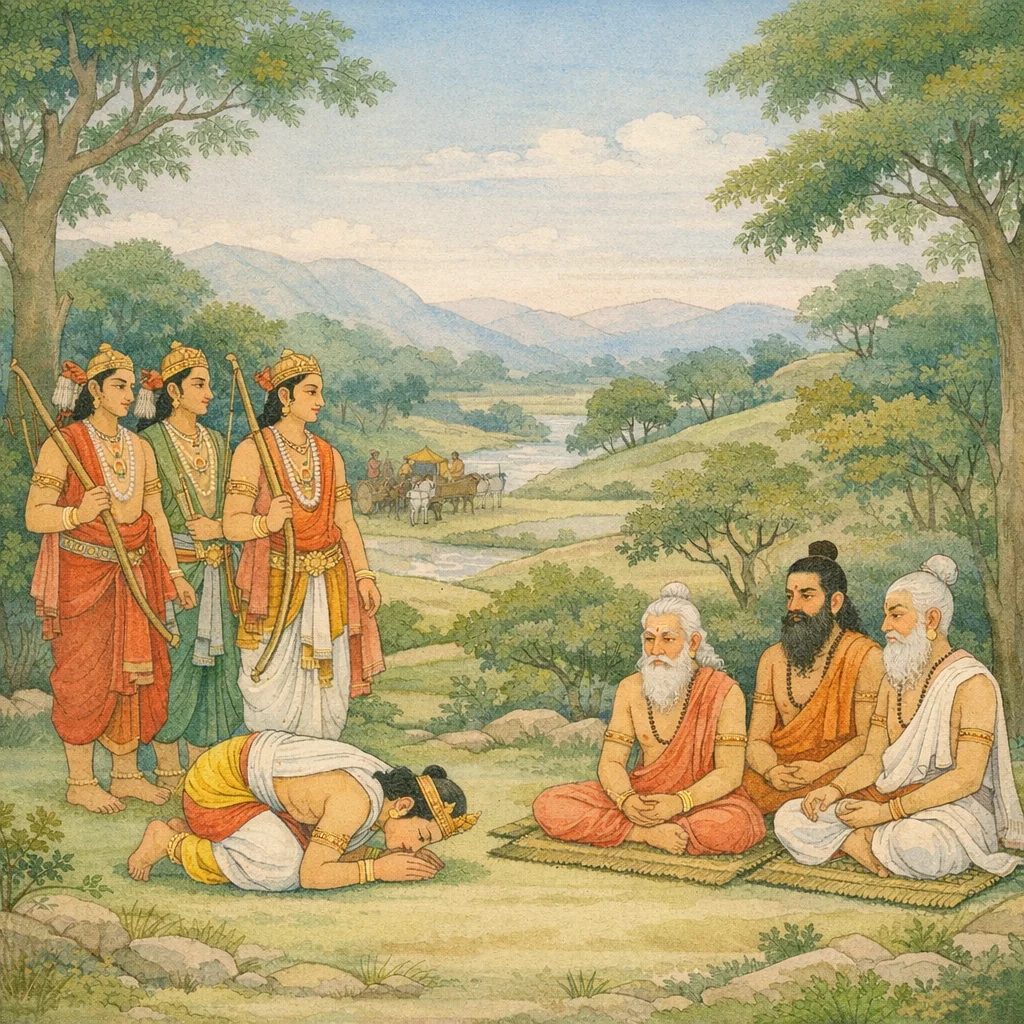
#:73:.8 #::3.7 () हि २ 7 त्रिनवतितमो<्थ्याय: ऋषियोंको नमस्कार करके पाण्डवोंका तीर्थयात्राके लिये विदा होना वैशम्पायन उवाच ततः प्रयान्तं कौन्तेयं ब्राह्मणा वनवासिन: । अभिगम्य तदा राजन्निदं वचनमन्रुवन्,वैशम्पायनजी कहते हैं--राजन! कुन्तीपुत्र युधिष्ठिरको तीर्थयात्राके लिये उद्यत जान काम्य-कवनके निवासी ब्राह्मण उनके निकट आकर इस प्रकार बोले--
Vaiśampāyana said: Then, O King, as the son of Kuntī was setting out, the forest-dwelling brāhmaṇas approached him and spoke these words. The scene frames Yudhiṣṭhira’s intended pilgrimage as a dharmic undertaking, and it shows the reciprocal bond of duty: the king protects and honors the brāhmaṇas, while they guide and counsel him in righteous conduct.
Verse 2
राजंस्तीर्थानि गन्तासि पुण्यानि भ्रातृभि: सह । ऋषिणा चैव सहितो लोमशेन महात्मना,“महाराज! आप अपने भाइयों तथा महात्मा लोमश मुनिके साथ पुण्यतीर्थोंमें जानेवाले हैं
Vaiśampāyana said: “O King, you will go to the sacred pilgrimage-fords—holy tīrthas—together with your brothers, and accompanied as well by the great-souled sage Lomaśa.”
Verse 3
अस्मानपि महाराज नेतुमरहसि पाण्डव । अस्माभिहिं न शक्यानि त्वदृते तानि कौरव,“कुरुकुलतिलक पाण्डुनन्दन! हमें भी अपने साथ ले चलें। महाराज! आपके बिना हमलोग उन तीथर्थोंकी यात्रा नहीं कर सकते
Vaiśampāyana said: “O great king, O Pāṇḍava, you should take us also with you. For without you, O scion of the Kuru line, we are not able to undertake those pilgrimages.” The request highlights reliance on the righteous leader: sacred travel is not merely movement through places, but a disciplined journey best pursued under the guidance and protection of one who embodies dharma.
Verse 4
श्वापदेरुपसृष्टानि दुर्गाणि विषमाणि च । अगम्यानि नरैरल्पैस्तीर्थानि मनुजेश्वर,“मनुजेश्वर! वे सभी तीर्थ हिंसक जन्तुओंसे भरे पड़े हैं। दुर्गण और विषम भी हैं। थोड़े से मनुष्य वहाँकी यात्रा नहीं कर सकते
Vaiśampāyana said: “O lord of men, those sacred fords are infested with wild beasts; the routes are rugged and perilous. With only a small band of men, they are not easily accessible.”
Verse 5
भवतो भ्रातर: शूरा धनुर्धरवरा: सदा | भवद्धिः पालिता: शूरैर्गच्छामो वयमप्युत,“आपके भाई शूरवीर हैं और सदा श्रेष्ठ धनुष धारण किये रहते हैं। आप-जैसे शूरवीरोंसे सुरक्षित होकर हम भी उन तीर्थोंकी यात्रा पूरी कर लेंगे
Vaiśampāyana said: “Your brothers are valiant, ever foremost among bowmen. Protected by heroes like you, we too shall be able to proceed and complete the pilgrimage to those sacred fords.”
Verse 6
भवत्प्रसादाद्धि वयं प्राप्रुयाम सुखं फलम् | तीर्थानां पृथिवीपाल वनानां च विशाम्पते,'भूपाल! प्रजानाथ! आपके प्रसादसे हमलोग भी उन तीर्थों और वनोंकी यात्राका फल अनायास ही पा लेंगे
Vaiśampāyana said: “By your gracious favor, O protector of the earth, O lord of the people, we too shall easily obtain the happy fruit that comes from visiting sacred fords and forest holy places.”
Verse 7
तव वीर्यपरित्राता: शुद्धास्तीर्थपरिप्लुता: । भवेम धूतपाप्मानस्तीर्थसंदर्शनान्नप,“नरेश्वरर आपके बल-पराक्रमसे सुरक्षित हो हम भी तीर्थोमें स्नान करके शुद्ध हो जायँगे और उन तीर्थोंके दर्शनसे हमारे सब पाप धुल जायूँगे
Protected by your valor, O king, we shall bathe at the sacred fords and become purified; and by the very sight of those holy places our sins will be washed away.
Verse 8
भवानपि नरेन्द्रस्य कार्तवीर्यस्थ भारत । अष्टकस्य च राजर्षेलॉमपादस्य चैव ह,'भूपाल! भरतनन्दन! आप भी तीर्थोमें नहाकर राजा कार्तवीर्य अर्जुन, राजर्षि अष्टक, लोमपाद और भूमण्डलमें सर्वत्र विदित सम्राट् वीरवर भरतको मिलनेवाले दुर्लभ लोकोंको अवश्य प्राप्त कर लेंगे
Verse 9
भरतस्य च वीरस्य सार्वभौमस्य पार्थिव । ध्रुव॑ प्राप्स्यसि दुष्प्रापाललोकांस्तीर्थपरिप्लुत:,'भूपाल! भरतनन्दन! आप भी तीर्थोमें नहाकर राजा कार्तवीर्य अर्जुन, राजर्षि अष्टक, लोमपाद और भूमण्डलमें सर्वत्र विदित सम्राट् वीरवर भरतको मिलनेवाले दुर्लभ लोकोंको अवश्य प्राप्त कर लेंगे
Vaiśampāyana said: “O king, you too—purified by bathing at the sacred fords—will surely attain those hard-to-reach worlds that were won by the heroic emperor Bharata, the universal sovereign. The merit of pilgrimage, when undertaken with discipline and reverence, leads one toward the exalted destinies reached by the righteous of old.”
Verse 10
प्रभासादीनि तीर्थानि महेन्द्रादीं श्ष॒ पर्वतान् गज्ाद्या: सरितश्लैव प्लक्षादींश्व॒ वनस्पतीन्,कुरु क्षिप्रं वचो5स्माकं तत: श्रेयोडभिपत्स्यसे । “महीपाल! प्रभास आदि तीथर्थों, महेन्द्र आदि पर्वतों, गंगा आदि नदियों तथा प्लक्ष आदि वृक्षोंका हम आपके साथ दर्शन करना चाहते हैं। जनेश्वर! यदि आपके मनमें ब्राह्मणोंके प्रति कुछ प्रेम है तो आप हमारी बात शीघ्र मान लीजिये; इससे आपका कल्याण होगा
Vaiśampāyana said: “Prabhāsa and other sacred fords, Mahendra and other mountains, the Gaṅgā and other rivers, and the plakṣa and other great trees—these we wish to behold in your company. Therefore, O king, quickly heed our request; by doing so you will attain what is truly beneficial. O protector of the earth, if there is even a little regard in your heart for brāhmaṇas, accept our words without delay—your welfare will follow from it.”
Verse 11
त्वया सह महीपाल द्रष्टमिच्छामहे वयम् । यदि ते ब्राह्मणेष्वस्ति काचित् प्रीतिर्जनाधिप
Vaiśampāyana said: “O king, we wish to see it together with you. If you have any regard at all for the brāhmaṇas, O lord of men, then (grant this request).”
Verse 12
तीर्थानि हि महाबाहो तपोविघ्नकरै: सदा
Vaiśampāyana said: “O mighty-armed one, sacred pilgrimage places are, indeed, always frequented by those who create obstacles to ascetic practice.”
Verse 13
तीर्थान्युक्तानि धौम्येन नारदेन च धीमता
Vaiśampāyana said: The sacred pilgrimage places were described—by Dhaumya and also by the wise Nārada—thus guiding the hearers toward meritorious conduct through the discipline of tīrtha-journeys and their dharmic fruits.
Verse 14
यान्युवाच च देवर्षिलोमश: सुमहातपा: । विधिवत् तानि सर्वाणि पर्यटस्व नराधिप
Vaiśampāyana said: “O king, duly undertake the pilgrimage and visit all those sacred places exactly as the divine seer Lomasa—of great austerity—has described.”
Verse 15
धूतपाप्मा सहास्माभिलोंमशेनाभिपालित: । “नरेश्वर! आप पापरहित हैं, धौम्य मुनि, परम बुद्धिमान् नारदजी तथा महातपस्वी देवर्षि लोमशने जिन-जिन तीर्थोंका वर्णन किया है, उन सबमें आप महर्षि लोमशजीसे सुरक्षित हो हमारे साथ विधिपूर्वक भ्रमण करें” ।। १३-१४ $ ।। स राजा पूज्यमानस्तैहर्षादश्रुपरिप्लुत:,लोमशं समनुज्ञाप्य धौम्यं चैव पुरोहितम् । पाण्डवश्रेष्ठ युधिष्ठिर अपने वीर भ्राता भीमसेन आदिसे घिरकर खड़े थे। उन ब्राह्मणोंद्वारा इस प्रकार सम्मानित होनेपर उनके नेत्रोंमें हर्षके आँसू भर आये। उन्होंने देवर्षि लोमश तथा पुरोहित धौम्यजीकी आज्ञा लेकर उन सब ऋषियोंसे “बहुत अच्छा' कहकर उनका अनुरोध स्वीकार कर लिया
Vaiśampāyana said: “O king, you are free from sin. The sage Dhaumya, the supremely wise Nārada, and the great ascetic Devarṣi Lomaśa have described many sacred fords; therefore, protected by Maharṣi Lomaśa, travel with us to all those tīrthas in due and proper manner.” Honoured in this way by those Brahmins, the king (Yudhiṣṭhira) was overcome with joy and his eyes filled with tears. Surrounded by his heroic brothers such as Bhīmasena, he sought the permission of Devarṣi Lomaśa and of his priest Dhaumya, and then, saying “So be it,” accepted the request of the assembled sages.
Verse 16
भीमसेनादिभिरवर्वरिर््रातृभि: परिवारित: । बाढमित्यब्रवीत् सर्वास्तानृषीन् पाण्डवर्षभ:
Surrounded by his brothers—Bhīmasena and the rest—the bull among the Pāṇḍavas replied to all those sages, “So be it.” In the presence of holy seers, he gives a measured assent, showing respect for spiritual counsel and readiness to act in accordance with righteous guidance.
Verse 17
ततः स पाण्डवश्रेष्ठो भ्रातृभि: सहितो वशी
Then that foremost of the Pāṇḍavas, self-controlled and steadfast, proceeded together with his brothers—acting in disciplined unity as the narrative turns to their next course of action.
Verse 18
अथ व्यासो महाभागस्तथा पर्वतनारदौ,इतनेहीमें महाभाग व्यास, पर्वत और नारद आदि मनीषीजन काम्यकवनमें पाण्डुनन्दन युधिष्ठिससे मिलनेके लिये आये। राजा युधिष्ठिरने उनकी विधिपूर्वक पूजा की। उनसे सत्कार पाकर वे महाभाग महर्षि महाराज युधिष्ठिरसे इस प्रकार बोले
Vaiśampāyana said: Then the illustrious sage Vyāsa, along with the sages Parvata and Nārada, came to the Kāmyaka forest to meet Yudhiṣṭhira, the son of Pāṇḍu. King Yudhiṣṭhira received them with due rites and reverent hospitality. Pleased by his respectful welcome, those great seers addressed Maharaja Yudhiṣṭhira in these words—setting the stage for counsel grounded in dharma, humility, and the duties of a righteous king even in exile.
Verse 19
काम्यके पाण्डवं द्रष्ट समाजग्मुर्मनीषिण: । तेषां युधिष्ठिरो राजा पूजां चक्रे यथाविधि । सत्कृतास्ते महाभाग युधिष्ठिरमथाब्रुवन्,इतनेहीमें महाभाग व्यास, पर्वत और नारद आदि मनीषीजन काम्यकवनमें पाण्डुनन्दन युधिष्ठिससे मिलनेके लिये आये। राजा युधिष्ठिरने उनकी विधिपूर्वक पूजा की। उनसे सत्कार पाकर वे महाभाग महर्षि महाराज युधिष्ठिरसे इस प्रकार बोले
In the Kāmyaka forest, sages and learned seers assembled to see the Pāṇḍava. King Yudhiṣṭhira received them with due rites and proper hospitality. Honoured in this way, those illustrious men then addressed Yudhiṣṭhira—setting the stage for counsel in dharma, restraint, and right conduct amid exile.
Verse 20
ऋषय ऊचु: युधिष्ठिर यमौ भीम मनसा कुरुतार्जवम् | मनसा कृतशौचा वै शुद्धास्तीर्थानि यास्यथ,ऋषियोंने कहा--युधिष्ठिर! भीमसेन! नकुल! और सहदेव! तुमलोग तीथ्थोंके प्रति मनसे श्रद्धापूर्वक सरलभाव रखो। मनसे शुद्धिका सम्पादन करके शुद्धचित्त होकर तीथोॉमें जाओ
The sages said: “O Yudhiṣṭhira, O Bhīma, and you twin brothers—keep your minds straightforward and sincere, with reverent intent toward the sacred fords. Having purified yourselves inwardly through mental discipline, go to the tīrthas with a cleansed heart.”
Verse 21
शरीरनियमं प्राहुब्राह्मिणा मानुषं व्रतम् । मनोविशुद्धां बुद्धि च दैवमाहुर्त्रतं द्विजा:,ब्राह्मणलोग शरीर-शुद्धिके नियमको “मानुषव्रत” बताते हैं और मनके द्वारा शुद्ध की हुई बुद्धिको 'दैवव्रत' कहते हैं
Vaiśampāyana said: The Brahmins declare bodily discipline to be the “human vow,” while the twice-born call a mind-purified intellect the “divine vow.” The teaching distinguishes external restraint from inner purification, placing higher ethical value on the clarity and sanctity of one’s understanding.
Verse 22
मनो हादुष्टं शौचाय पर्याप्तं वै नराधिप । मैत्रीं बुद्धिं समास्थाय शुद्धास्तीर्थानि द्रक्ष्यथ,नरेश्वर! यदि मन राग-द्वेषसे दूषित न हो तो वह शुद्धिके लिये पर्याप्त माना गया है। सब प्राणियोंके प्रति मैत्री-बुद्धिका आश्रय ले शुद्धभावसे तीर्थोंका दर्शन करो
Verse 23
ते यूयं मानसै: शुद्धा: शरीरनियमव्रतै: । दैव॑ं ब्रत॑ं समास्थाय यथोक्तं फलमाप्स्यथ,तुम मानसिक और शारीरिक नियमत्रतोंसे शुद्ध हो। दैवव्रतका आश्रय ले यात्रा करोगे तो तीर्थोंका तुम्हें यथावत् फल प्राप्त होगा
Vaiśampāyana said: “You, purified by inner discipline and by bodily vows of restraint, should undertake the divine observance as prescribed. If you proceed in this spirit, you will obtain the fruits exactly as the tradition declares.”
Verse 24
ते तथेति प्रतिज्ञाय कृष्णया सह पाण्डवा: । कृतस्वस्त्ययना: सर्वे मुनिभिर्दिव्यमानुषै:,महर्षियोंके ऐसा कहनेपर द्रौपदीसहित पाण्डवोंने “बहुत अच्छा” कहकर (उनकी आज्ञाएँ शिरोधार्य कीं और उनके बताये हुए नियमोंका पालन करनेकी) प्रतिज्ञा की। तत्पश्चात् उन दिव्य और मानव महर्षियोंने उन सबके लिये स्वस्तिवाचन किया
Vaiśampāyana said: The Pāṇḍavas, together with Kṛṣṇā (Draupadī), assented—“So be it”—and pledged themselves to follow what had been enjoined. Thereupon those great seers, both celestial and human, performed auspicious benedictions for them all, invoking well-being as they set forth in accordance with dharma.
Verse 25
लोमशस्योपसंगृहा[ पादौ द्वैपायनस्य च । नारदस्य च राजेन्द्र देवर्षे: पर्वतस्य च,राजेन्द्र! तदनन्तर महर्षि लोमश, द्वैपायन व्यास, देवर्षि नारद और पर्वतके चरणोंका स्पर्श करके वनवासी ब्राह्मणों, पुरोहित धौम्य और लोमश आदिके साथ वीर पाण्डव तीर्थयात्राके लिये निकले। मार्गशीर्षकी पूर्णिमा व्यतीत होनेपर जब पुष्य नक्षत्र आया तब उसी नक्षत्रमें उन्होंने यात्रा प्रारम्भ की
Vaiśampāyana said: “O king, having respectfully touched the feet of the sage Lomaśa, of Dvaipāyana Vyāsa, and also of the divine seer Nārada and the devarṣi Parvata, the valiant Pāṇḍavas set out on their pilgrimage to sacred fords, accompanied by the forest-dwelling brāhmaṇas and their priest Dhaumya, along with Lomaśa and others. When the full-moon of Mārgaśīrṣa had passed and the Puṣya lunar mansion arrived, they began their journey under that auspicious constellation.”
Verse 26
धौम्येन सहिता वीरास्तथा तैर्वनवासिभि: । मार्गशीर्ष्पामतीतायां पुष्येण प्रययुस्तत:,राजेन्द्र! तदनन्तर महर्षि लोमश, द्वैपायन व्यास, देवर्षि नारद और पर्वतके चरणोंका स्पर्श करके वनवासी ब्राह्मणों, पुरोहित धौम्य और लोमश आदिके साथ वीर पाण्डव तीर्थयात्राके लिये निकले। मार्गशीर्षकी पूर्णिमा व्यतीत होनेपर जब पुष्य नक्षत्र आया तब उसी नक्षत्रमें उन्होंने यात्रा प्रारम्भ की
Vaiśampāyana said: O best of kings, once the full-moon of Mārgaśīrṣa had passed and the Puṣya lunar mansion arrived, the heroic Pāṇḍavas set out on their pilgrimage, accompanied by their priest Dhaumya and by the Brahmins dwelling in the forest. The timing underscores a disciplined, auspicious beginning—undertaken with reverence for sages and with the guidance of learned elders, aligning their journey with dharma and sacred observance.
Verse 27
कठिनानि समादाय चीराजिनजटाधरा: । अभेद्यै: कवचैरयुक्तास्तीर्थान्यन्वचरंस्तत:,उन सबने शरीरपर फटे-पुराने वस्त्र या मृगचर्म धारण कर रखे थे। उनके मस्तकपर जटाएँ थीं। उनके अंग अभेद्य कवचोंसे ढके हुए थे। वे सूर्यप्रदत्त बटलोई आदि पात्र लेकर वहाँ तीर्थोमें विचरण करने लगे
Vaiśaṃpāyana said: Bearing their hard implements and wearing ragged bark-garments and deer-skins, with matted locks upon their heads and their bodies protected by impenetrable armor, they then began to wander from one sacred ford to another. The scene underscores a deliberate adoption of austere, ascetic appearance and disciplined movement through holy places—an outward form meant to signal restraint, endurance, and a life oriented toward religious merit.
Verse 28
इन्द्रसेनादिभिर्भुत्यै रथै: परिचतुर्दशै: । महानस्व्यापृतैश्न तथान्यै: परिचारकै:,उनके साथ इन्द्रसेन आदि चौदहसे अधिक सेवक रथ लिये पीछे-पीछे जा रहे थे। रसोईके काममें संलग्न रहनेवाले अन्यान्य सेवक भी उनके साथ थे
Vaiśampāyana said: Along with them went Indrasena and other attendants—more than fourteen chariots in number—following behind. Other servants too accompanied them, including those engaged in the work of the great kitchen, indicating a well-ordered retinue and the practical arrangements that sustain a righteous household and journey.
Verse 29
सायुधा बद्धनिस्त्रिंशास्तूणवन्त: समार्गणा: । प्राडमुखा: प्रययुर्वीरा: पाण्डवा जनमेजय,जनमेजय! वीर पाण्डव आवश्यक अस्त्र-शस्त्र ले कमरमें तलवार बाँधकर पीठपर तरकस कसे हुए हाथोंमें बाण लिये पूर्वदिशाकी ओर मुँह करके वहाँसे प्रस्थित हुए
Vaiśampāyana said: Armed and ready, with swords fastened at their waists, quivers strapped on, and arrows in hand, the heroic Pāṇḍavas set out, O Janamejaya, facing east—departing with disciplined resolve for the task before them.
Verse 92
इस प्रकार श्रीमहाभारत वनपर्वके अन्तर्गत तीर्थयात्रापर्चमें लोमशतीर्थयात्राविषयक बानबेवाँ अध्याय पूरा हुआ
Thus, in the Śrī Mahābhārata, within the Vana Parva—specifically in the Tīrthayātrā sub-section—the ninety-third chapter, dealing with Lomāśa’s account of the pilgrimage to sacred fords, is concluded. The closing formula underscores the text’s emphasis on purification through sacred travel and the orderly transmission of dharma through narrated tradition.
Verse 93
इति श्रीमहाभारते वनपर्वणि तीर्थयात्रापर्वणि लोमशतीर्थयात्रायां त्रिनवतितमो<5ध्याय:
Thus, in the revered Mahābhārata, within the Vana Parva—specifically the section on pilgrimage (Tīrthayātrā Parva), in the account of Lomāśa’s pilgrimage—ends the ninety-third chapter. This closing colophon frames the narrative as a sacred journey, emphasizing the ethical and purificatory value traditionally associated with visiting holy places under the guidance of a wise seer.
Verse 116
कुरु क्षिप्रं वचो5स्माकं तत: श्रेयोडभिपत्स्यसे । “महीपाल! प्रभास आदि तीथर्थों, महेन्द्र आदि पर्वतों, गंगा आदि नदियों तथा प्लक्ष आदि वृक्षोंका हम आपके साथ दर्शन करना चाहते हैं। जनेश्वर! यदि आपके मनमें ब्राह्मणोंके प्रति कुछ प्रेम है तो आप हमारी बात शीघ्र मान लीजिये; इससे आपका कल्याण होगा
Vaiśampāyana said: “Do our bidding quickly; then you will attain what is truly beneficial. O protector of the earth, we wish to visit with you the sacred fords beginning with Prabhāsa, the mountains beginning with Mahendra, the rivers beginning with the Gaṅgā, and the trees beginning with the Plakṣa. O lord of men, if there is any affection in your heart toward brāhmaṇas, accept our request without delay—your welfare lies in that.”
Verse 123
अनुकीणर्णानि रक्षोभिस्तेभ्यो नस्त्रातुमरहसि । “महाबाहो! तपस्यामें विघ्न डालनेवाले बहुत-से राक्षस उन तीथ्थोंमें भरे पड़े हैं, उनसे आप हमारी रक्षा करनेमें समर्थ हैं'
Vaiśampāyana said: “Those sacred fords are infested with rākṣasas; you ought to protect us from them. O mighty-armed one, many demons who obstruct my austerities crowd those tīrthas—only you are capable of safeguarding us from them.”
Verse 1636
लोमशं समनुज्ञाप्य धौम्यं चैव पुरोहितम् । पाण्डवश्रेष्ठ युधिष्ठिर अपने वीर भ्राता भीमसेन आदिसे घिरकर खड़े थे। उन ब्राह्मणोंद्वारा इस प्रकार सम्मानित होनेपर उनके नेत्रोंमें हर्षके आँसू भर आये। उन्होंने देवर्षि लोमश तथा पुरोहित धौम्यजीकी आज्ञा लेकर उन सब ऋषियोंसे “बहुत अच्छा' कहकर उनका अनुरोध स्वीकार कर लिया
Vaiśampāyana said: Having first sought the permission of the sage Lomasha and of Dhaumya, his family priest, Yudhiṣṭhira—the foremost of the Pāṇḍavas—stood surrounded by his heroic brothers, beginning with Bhīmasena. When those brāhmaṇas honored him in this manner, his eyes filled with tears of joy. After taking leave of the divine seer Lomasha and of the priest Dhaumya, he replied “Well said,” and accepted the request of all those ṛṣis—showing humility, gratitude, and reverence for spiritual authority.
Verse 1736
द्रौपद्या चानवद्याड़्या गमनाय मनो दधे । तदनन्तर मन-इन्द्रियोंको वशमें रखनेवाले पाण्डवश्रेष्ठ युधिष्ठिरने भाइयों तथा सुन्दर अंगोंवाली द्रौपदीके साथ यात्रा करनेका मन-ही-मन निश्चय किया
Vaiśampāyana said: Blameless Draupadī set her mind on departure. Thereafter Yudhiṣṭhira—the foremost of the Pāṇḍavas, one who kept his mind and senses under control—resolved inwardly to begin the journey together with his brothers and with Draupadī of graceful limbs.
Frequently Asked Questions
The chapter implicitly stages the tension between exile-scarcity and the obligation to uphold public virtue: despite reduced political power, the Pāṇḍavas sustain dharma through costly generosity, ritual correctness, and support of brāhmaṇas and ascetics.
Exemplary action is measured by continuity of giving and disciplined intention: the account of Rājarṣi Gaya presents yajña and hospitality as civic ethics, where abundance is ethically meaningful when it becomes non-extractive support for others.
Rather than an explicit phalaśruti formula, the chapter uses reputational gāthās and the ‘brahmaghoṣa’ motif as meta-commentary: communal remembrance and pervasive sacred sound function as narrative signals of enduring merit and exemplary status within the epic’s moral economy.