Adhyaya 17
Āraṇyaka-parva, Adhyāya 17 — Śālva’s encampment and the Yādava counter-engagement at Dvārakā
Upa-parva: Dvārikā-ākhyāna (Śālva–Sāubha episode) — contextualized within Āraṇyaka-parva narration
Vāsudeva recounts Śālva’s approach after advancing toward the target region and establishing a large, well-supplied encampment near abundant water. The force is described as caturaṅga (chariots, elephants, horses, and infantry), richly equipped, and carefully positioned while avoiding cremation grounds and sacred precincts; internal routes and slopes within the camp are organized through unit division. Śālva then drives the assault toward Dvārakā with speed. Yādava princes sortie to meet the incursion: Cārudeṣṇa, Sāmba, and Pradyumna engage elite opponents. Sāmba fights Śālva’s commander Kṣemavṛddhi, exchanging dense arrow volleys; Kṣemavṛddhi replies with a larger, illusion-associated missile-net, which Sāmba counters before forcing the commander’s withdrawal. A daiteya named Vegavān attacks, and Sāmba drops him with a forceful mace strike, then presses into the broader army. Parallelly, Cārudeṣṇa battles the dānava Vivindhya in a fierce duel, culminating in Vivindhya’s defeat by a weapon empowered through mantra and great astral technique. Seeing disruption in his ranks, Śālva returns via the mobile Sāubha. Dvārakā’s defenders become unsettled until Pradyumna reorders the force and delivers a confidence-building address, instructing others to hold and witness his effort to repel Sāubha and its king, framing the engagement as a decisive containment of the aggressor.
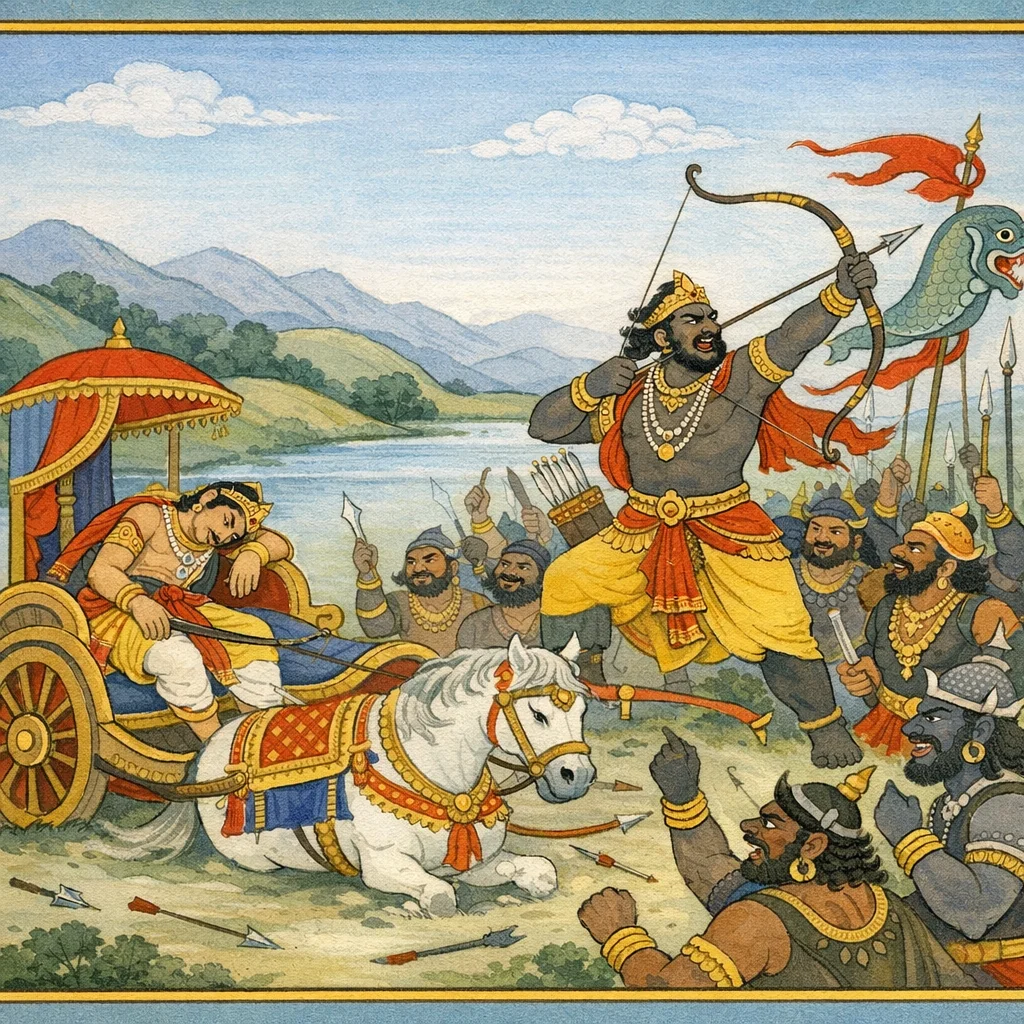
Chapter Arc: वायुदेव का वचन—रौक्मिणेय प्रद्युम्न रथ पर आरूढ़ होकर हरि-युक्त अश्वों से शाल्व के सौभ-विमान की ओर झपटता है; युद्ध का द्वार अचानक खुल जाता है। → प्रद्युम्न ध्वजा उठाए, धनुष की टंकार और शस्त्र-सज्जा के साथ शत्रु-सेना को चीरता है; शाल्व भी अग्नि-सम बाणों की वर्षा कर प्रतिघात करता है, और दोनों की वीरता से लोक विस्मित होता है। → प्रद्युम्न के बाणों से घायल होकर भी शाल्व क्रोध में दीप्त बाण छोड़ता है; प्रद्युम्न मूर्च्छित होकर रणभूमि में निश्चेष्ट हो जाता है—यही अध्याय का शिखर-क्षण है। → शाल्व के अचेत गिरने पर उसकी दानव-सेना में हाहाकार मचता है, पर उसी उथल-पुथल के बीच शाल्व पुनः उग्र होकर प्रद्युम्न को बेधता और सिंहनाद से पृथ्वी भर देता है; युद्ध का परिणाम स्थिर नहीं होता। → प्रद्युम्न रण में मोहित/निश्चेष्ट पड़ा है और शाल्व की बाण-वर्षा जारी—अब उसे कौन संभालेगा और युद्ध किस ओर मुड़ेगा?
Shlokas
Verse 1
/ हि आय ० () है 7 सप्तदशो< ध्याय: प्रद्युम्म और शाल्वका घोर युद्ध वायुदेव उवाच एवमुक्त्वा रौक्मिणेयो यादवान् भरतर्षभ । दंशितै्हरिभियुक्ते रथमास्थाय काज्चनम्
Vāyudeva said: Having spoken thus, O bull among the Bharatas, Raukmiṇeya (Pradyumna), foremost among the Yādavas, mounted his golden chariot, yoked with well-armoured horses. The verse sets the scene for a grave combat, highlighting the warrior’s readiness and disciplined resolve as he enters battle after deliberate speech—action following counsel, not impulse.
Verse 2
उच्छ़ित्य मकर केतु व्यात्ताननमिवान्तकम् । उत्पतद्धिरिवाकाशं तैहयैरन्वयात् परान्
Vāyu said: “Raising aloft the banner marked with the makara and gaping wide-mouthed like Death himself, he pursued the others with those horses, as though he were leaping up into the very sky.”
Verse 3
विक्षिपन् नादयंश्वापि धनु: श्रेष्ठ महाबल: । तूणखड्गधर: शूरो बद्धगोधाड्गुलित्रवान्
Vāyu said: “Though he did not twang the bow or make it resound, that mighty hero—excellent in strength—moved with controlled readiness, bearing a quiver and sword, and wearing a bound iguana-skin thumb-guard.” The verse highlights disciplined power: true prowess is shown not by noise or display, but by preparedness and restraint.
Verse 4
भगवान् श्रीकृष्ण कहते हैं--भरतश्रेष्ठ! यादवोंसे ऐसा कहकर रुक्मिणीनन्दन प्रद्युम्न एक सुवर्णमय रथपर आरूढ़ हुए, जिसमें बख्तर पहनाये हुए घोड़े जुते थे। उन्होंने अपनी मकरचिह्लित ध्वजाको ऊँचा किया, जो मुह बाये हुए कालके समान प्रतीत होती थी। उनके रथके घोड़े ऐसे चलते थे, मानो आकाशमें उड़े जा रहे हों। ऐसे अश्वोंसे जुते हुए रथके द्वारा महाबली प्रद्युम्नने शत्रुओंपर आक्रमण किया। वे अपने श्रेष्ठ धनुषको बारंबार खींचकर उसकी टंकार फैलाते हुए आगे बढ़े। उन्होंने पीझठपर तरकस और कमरमें तलवार बाँध ली थी। उनमें शौर्य भरा था और उन्होंने गोहके चमड़ेके बने हुए दस्ताने पहन रखे थे || १-- ३।। स विद्युच्छुरितं चापं विहरन् वै तलातू तलम् । मोहयामास दैतेयान् सर्वान् सौभनिवासिन:,वे अपने धनुषको एक हाथसे दूसरे हाथमें ले लिया करते थे। उस समय वह धनुष बिजलीके समान चमक रहा था। उन्होंने उस धनुषके द्वारा सौभ विमानमें रहनेवाले समस्त दैत्योंको मूर्च्छिंत कर दिया
Pradyumna, deftly shifting his bow from hand to hand, made it flash like lightning. With that dazzling display and the force of his archery, he bewildered and overwhelmed all the Daityas who dwelt within the Saubha aerial fortress—breaking their composure and battle-order through sheer martial brilliance.
Verse 5
तस्य विक्षिपतश्चापं संदधानस्य चासकृत् । नानन््तरं ददृशे कश्रिन्निघ्नतः शात्रवान् रणे,वे बारंबार धनुषको खींचते, उसपर बाण रखते और उसके द्वारा शत्रुसैनिकोंको युद्धमें मार डालते थे। उनकी उक्त क्रियाओंमें किसीको थोड़ा-सा भी अन्तर नहीं दिखायी देता था
Verse 6
मुखस्य वर्णो न विकल्पते5स्य चेलुश्व गात्राणि न चापि तस्य । सिंहोन्नतं चाप्यभिगर्जतो<5स्य शुश्राव लोको<द्धुतवीर्यमग्रयम्,उनके मुखका रंग तनिक भी नहीं बदलता था। उनके अंग भी विचलित नहीं होते थे। सब ओर गर्जना करते हुए प्रद्युम्नका उत्तम एवं अद्भुत बल-पराक्रमका सूचक सिंहनाद सब लोगोंको सुनायी देता था
His face did not change color in the least; nor did his limbs tremble. As he roared on all sides with a lion-like, lofty cry, the people heard it—an unmistakable sign of his supreme and wondrous valor. The verse highlights the ethical ideal of steadfast courage: inner composure and bodily steadiness in the face of danger, expressed not as reckless rage but as controlled, heroic confidence.
Verse 7
जलेचर: काञ्चनयष्टिसंस्थो व्यात्तानन: सर्वतिमिप्रमाथी । वित्रासयन् राजति वाहमुख्ये शाल्वस्य सेनाप्रमुखे ध्वजाग्रय:,शाल्वकी सेनाके ठीक सामने प्रद्युम्नके श्रेष्ठ रथपर उनकी उत्तम ध्वजा फहराती हुई शोभा पा रही थी। उस ध्वजाके सुवर्णमय दण्डके ऊपर सब तिमि नामक जल-जन्तुओंका प्रमथन करनेवाले मुँह बाये एक मगरमच्छका चिह्न था। वह शशत्रुसैनिकोंको अत्यन्त भयभीत कर रहा था
At the very front of Śālva’s army, upon the foremost chariot, a splendid banner shone. Fixed on a golden staff was the emblem of a crocodile—its jaws gaping—renowned as a destroyer of all the great sea-creatures called timi. That very standard, blazing with martial pride, struck deep terror into the enemy ranks, proclaiming the charioteer’s might and the intimidation that precedes battle.
Verse 8
ततस्तूर्ण विनिष्पत्य प्रद्युम्न: शत्रुकर्षण: । शाल्वमेवाभिदुद्राव विधित्सु: कलहं नूप,नरेश्वर! तदनन्तर शत्रुहन्ता प्रद्युम्न तुरंत आगे बढ़कर राजा शाल्वके साथ युद्ध करनेकी इच्छासे उसीकी ओर दौड़े
Then Pradyumna, the afflicter of foes, sprang forth swiftly. Intent on engaging in combat, he rushed straight at King Śālva, eager to meet him in battle. The verse highlights the warrior’s decisive resolve and the immediate turning of intent into action within the ethics of kṣatriya confrontation.
Verse 9
अभियान तु वीरेण प्रद्युम्नेन महारणे । नामर्षयत संक्रुद्ध: शाल्व: कुरुकुलोद्ह,कुरुकुलतिलक! उस महासंग्राममें वीर प्रद्युम्नके द्वारा किया हुआ वह आक्रमण क्रुद्ध हुआ राजा शाल्व न सह सका
Vāyu said: In that great battle, King Śālva—already inflamed with anger—could not endure the fierce onslaught delivered by the heroic Pradyumna. The verse highlights how unchecked wrath makes a ruler lose patience and composure when confronted by a worthy opponent’s valor.
Verse 10
स रोषमदमत्तो वै कामगादवरुह्मु च । प्रद्युम्नं योधयामास शाल्व: परपुरंजय:,शत्रुकी राजधानीपर विजय पानेवाले शाल्वने रोष एवं बलके मदसे उन्मत्त हो इच्छानुसार चलनेवाले विमानसे उतरकर प्रद्युम्नसे युद्ध आरम्भ किया
Maddened with wrath and pride, Śālva—the conqueror of enemy cities—descended from his wish-moving aerial craft and began battle with Pradyumna. The scene underscores how anger and intoxication of power propel a warrior into violent action, setting the moral contrast between disciplined valor and passion-driven aggression.
Verse 11
तयो: सुतुमुलं युद्ध शाल्ववृष्णिप्रवीरयो: । समेता ददृशुलोंका बलिवासवयोरिव,शाल्व तथा वृष्णिवंशी वीर प्रद्युम्ममें बलि और इन्द्रके समान घोर युद्ध होने लगा। उस समय सब लोग एकत्र होकर उन दोनोंका युद्ध देखने लगे
Then a most tumultuous battle arose between the foremost heroes—Śālva and the champion of the Vṛṣṇi line. People gathered together to watch, for their combat raged with the same awe-inspiring intensity as that of Bali and Vāsava (Indra).
Verse 12
तस्य मायामयो वीर रथो हेमपरिष्कृत: । सपताक: सध्वजश्न सानुकर्ष: स तूणवान्,वीर! शाल्वके पास सुवर्णभूषित मायामय रथ था। वह रथ ध्वजा, पताका, अनुकर्ष (हरसा)- और तरकससे युक्त था
Vāyu said: “O hero, his chariot was a magical, illusory creation, richly adorned with gold. It was furnished with banner and flag, equipped with the yoke and fittings for drawing, and provided with a quiver—thus fully prepared for battle.”
Verse 13
सतं रथवरं श्रीमान् समारुह्मु किल प्रभो । मुमोच बाणान् कौरव्य प्रद्युम्नाय महाबल:,प्रभो कुरुनन्दन! श्रीमान् महाबली शाल्वने उस श्रेष्ठ रथपर आरूढ़ हो प्रद्युम्नपर बाणोंकी वर्षा आरम्भ की
O lord, the illustrious and mighty Śālva is said to have mounted that excellent chariot and then began releasing volleys of arrows at Pradyumna. The scene underscores how prowess and splendor in battle, when driven by hostility, become instruments of harm rather than guardians of righteousness.
Verse 14
ततो बाणमयं वर्ष व्यसृजत् तरसा रणे । प्रद्युम्नो भुजवेगेन शाल्वं सम्मोहयन्निव,तब प्रद्युम्न भी युद्धभूमिमें अपनी भुजाओंके वेगसे शाल्वको मोहित करते हुए-से उसके ऊपर शीघ्रतापूर्वक बाणोंकी बौछार करने लगे
Then, in the press of battle, Pradyumna swiftly unleashed a rain of arrows. With the force of his arms he seemed to bewilder Śālva, overwhelming him through sheer martial prowess and disciplined resolve.
Verse 15
स तैरभिहत: संख्ये नामर्षयत सौभराट् । शरान् दीप्ताग्निसंकाशान् मुमोच तनये मम,सौभ विमानका स्वामी राजा शाल्व युद्धमें प्रद्युममके बाणोंसे घायल होनेपर यह सहन नहीं कर सका--अमर्षमें भर गया और मेरे पुत्रपर प्रजवलित अग्निके समान तेजस्वी बाण छोड़ने लगा
Struck by those arrows in the thick of battle, the lord of Saubha could not endure the affront. Burning with wrath, he released upon my son arrows blazing like kindled fire—an escalation driven by wounded pride and the heat of combat rather than restraint.
Verse 16
इस प्रकार श्रीमह्याभारत वनपर्वके अन्तर्गत अर्जुनाथिगमनपर्वमें सौभवधोपाख्यानविषयक सोलहवाँ अध्याय पूरा हुआ,तमापतन्तं बाणौघं स चिच्छेद महाबल: । ततश्चान्याछ्छरान् दीप्तान् प्रचिक्षेप सुते मम महाबली प्रद्युम्नने उन बाणोंको आते ही काट गिराया। तत्पश्चात् शाल्वने मेरे पुत्रपर और भी बहुत-से प्रज्वलित बाण छोड़े
As that dense volley of arrows came rushing in, the mighty warrior cut it down mid-flight. Then, in response, he hurled other blazing shafts at my son—intensifying the combat. The scene underscores the kṣatriya ethic of steadfastness under attack and measured retaliation within the rules of battle, where skill and self-control are tested amid escalating violence.
Verse 17
स शाल्वबाणै राजेन्द्र विद्धो रुक्मिणिनन्दन: । मुमोच बाणं त्वरितो मर्मभेदिनमाहवे,राजेन्द्र! शाल्वके बाणोंसे घायल होकर रुक्मिणी-नन्दन प्रद्युम्नने तुरंत ही उस युद्धभूमिमें शाल्वपर एक ऐसा बाण चलाया, जो मर्मस्थलको विदीर्ण कर देनेवाला था इति श्रीमहाभारते वनपर्वणि अर्जुनाभिगमनपर्वणि सौभवधोपाख्याने सप्तदशो<ड्ध्याय:
Vāyu said: O king, struck by Śālva’s arrows, Pradyumna—the beloved son of Rukmiṇī—swiftly loosed in that battle a shaft meant to pierce a vital spot. The scene underscores the warrior’s duty to respond decisively under attack, yet also the grim precision of warfare where victory is sought by targeting the opponent’s vulnerable points.
Verse 18
तस्य वर्म विभिवद्याशु स बाणो मत्सुतेरित: । विव्याध हृदयं पत्री स मुमोह पपात च,मेरे पुत्रके चलाये हुए उस बाणने शाल्वके कवचको छेदकर उसके हृदयको बींध डाला। इससे वह मूर्च्छित होकर गिर पड़ा
The arrow, swiftly loosed by my son, pierced through his armour and struck straight into his heart. Wounded thus, he lost consciousness and fell to the ground—showing how, in battle, skill and fate can overturn even a well-protected warrior in an instant.
Verse 19
तस्मिन् निपतिते वीरे शाल्वराजे विचेतसि । सम्प्राद्रवन् दानवेन्द्रा दारयन्तो वसुंधराम्,वीर शाल्वराजके अचेत होकर गिर जानेपर उसकी सेनाके समस्त दानवराज पृथ्वीको विदीर्ण करके पातालमें पलायन कर गये
When that heroic king of Śālva fell down unconscious, the foremost of the Dānavas fled in panic—rending the earth as they went—and escaped into the netherworld. The scene underscores how the fall of a leader can shatter an army’s resolve, and how those aligned with adharma often choose flight and concealment over steadfast accountability.
Verse 20
हाहाकृतमभूत् सैन्यं शाल्वस्य पृथिवीपते । नष्टसंज्ञे निपतिते तदा सौभपतौ नृूपे,पृथ्वीपते! उस समय सौभ विमानका स्वामी राजा शाल्व जब संज्ञाशून्य होकर धराशायी हो गया, तब उसकी समस्त सेनामें हाहाकार मच गया
O king, when Śālva—the lord of the earth and master of the Saubha aerial city—fell down senseless, his entire army was thrown into panic, and a great cry of distress arose. The scene underscores how quickly martial confidence collapses when leadership is struck down, and how the fortunes of war hinge upon steadiness of mind and command.
Verse 21
तत उत्थाय कौरव्य प्रतिलभ्य च चेतनाम् । मुमोच बाणान् सहसा प्रद्युम्नाय महाबल:,कुरुश्रेष्ठ! तत्पश्चात् जब चेत हुआ, तब महाबली शाल्व सहसा उठकर प्रद्युम्नपर बाणोंकी वर्षा करने लगा
Then, O scion of the Kurus, regaining consciousness, the mighty warrior suddenly rose and released a swift shower of arrows at Pradyumna. The scene underscores a recurring martial ethic of the epic: even after being struck down or stunned, a fighter who recovers does not abandon his resolve, but returns at once to the contest—persistence and prowess driving the momentum of battle.
Verse 22
तैः स विद्धों महाबाहु: प्रद्युम्न: समरे स्थित: । जन्रुदेशे भृशं वीरो व्यवासीदद् रथे तदा,शाल्वके उन बाणोंद्वारा कण्ठके मूलभागमें गहरा आघात लगनेसे अत्यन्त घायल होकर समरमें स्थित महाबाहु वीर प्रद्युम्म उस समय रथपर मूर्च्छित हो गये
Struck by those arrows, the mighty-armed Pradyumna, though still standing in the thick of battle, was grievously wounded at the region of the neck. Overpowered by the blow, the heroic warrior then collapsed senseless upon his chariot—an image of how even great valor can be checked by the harsh, impersonal force of war.
Verse 23
तं स विद्धवा महाराज शाल्वो रुक्मिणिनन्दनम् | ननाद सिंहनादं वै नादेनापूरयन् महीम्,महाराज! रुक्मिणीनन्दन प्रद्युम्मको घायल करके शाल्व बड़े जोर-जोरसे सिंहनाद करने लगा। उसकी आवाजसे वहाँकी सारी पृथ्वी गूँज उठी
O King, having struck down Pradyumna, the son of Rukmiṇī, Śālva let out a mighty lion-roar, filling the earth with its reverberation. The cry signals not only battlefield triumph but also the warrior’s urge to proclaim dominance and shake the morale of opponents—an outward display of victory that tests the steadiness and dharma of those who hear it.
Verse 24
ततो मोहं समापन्ने तनये मम भारत । मुमोच बाणांस्त्वरित: पुनरन्यान् दुरासदान्,भारत! मेरे पुत्रके मूर्च्छित हो जानेपर भी शाल्वने उनपर और भी बहुत-से दुर्धर्ष बाण शीघ्रतापूर्वक छोड़े
Then, O Bhārata, when my son had fallen into a swoon, Śālva—undeterred even by that helpless state—swiftly released yet more arrows, hard to withstand. The passage underscores the harsh momentum of battle, where a warrior’s aggression can persist even when the opponent is incapacitated, raising an implicit ethical tension between martial ferocity and restraint.
Verse 25
स तैरभिहतो बाणैर्बहुभिस्तेन मोहित: । निश्चेष्ट: कौरवश्रेष्ठ प्रद्युम्नो5भूद् रणाजिरे,कौरवश्रेष्ठ! इस प्रकार बहुत-से बाणोंसे आहत होनेके कारण प्रद्युम्न उस रणांगणमें मूर्च्छित एवं निश्चेष्ट हो गये
Struck by many arrows, he was overwhelmed and fell into a stupor. Thus, O best of the Kurus, Pradyumna became senseless and motionless on the battlefield—showing how, in war, even the mighty can be brought low when assailed in great numbers.
Frequently Asked Questions
The dilemma is how to respond rapidly to an incursion while preserving order and norms: the narrative emphasizes disciplined camp placement (avoiding sacred/liminal spaces) and coordinated sortie rather than uncontrolled retaliation.
Leadership is portrayed as performative responsibility: the commander reduces collective fear by re-establishing formation discipline, assigning roles (others hold position), and personally committing to the primary counter-action against the aggressor.
No explicit phalaśruti appears in the provided verses; the chapter’s meta-function is structural—documenting how orderly deployment, tactical resilience against extraordinary weapons, and morale speech operate as practical dharma in crisis.