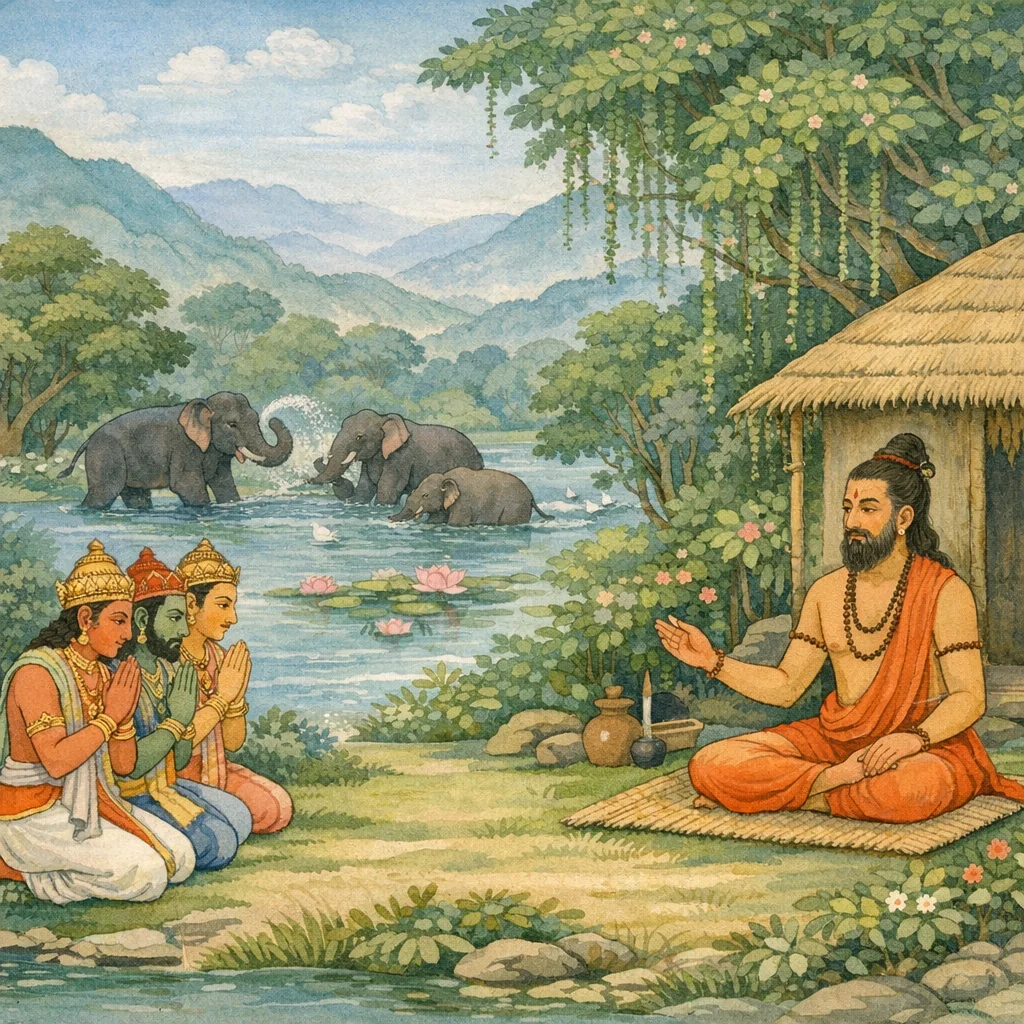
Adhyaya 100
Kāleya-Āśrama-Vināśaḥ — The Kāleyas’ nocturnal raids and the devas’ supplication to Nārāyaṇa
Upa-parva: Kāleya-Dānava Upākhyāna (Account of the Kāleyas and the gods’ appeal to Nārāyaṇa)
Lomāśa reports that the Kāleya dānavas, taking refuge in the ocean (Varuṇa’s watery treasury) by day, emerge at night to attack hermitages and consume sages. Specific losses are enumerated: at Vasiṣṭha’s āśrama, eighty-eight plus nine ascetics are killed; at Cyavana’s, one hundred fruit-and-root subsisting munis are harmed; at Bharadvāja’s, twenty disciplined brahmacārins—some sustained by air or water—are struck down. The attackers move systematically across āśramas at night, and people do not understand the pattern or the perpetrators’ oceanic refuge. At dawn, the bodies of austerity-worn munis are seen on the ground; the terrain is described as strewn with remains and with broken ritual implements (pots, ladles) and scattered agnihotra materials. The world is characterized as losing svādhyāya and vaṣaṭ utterances; yajña and festive rites collapse; fear spreads, leading to flight into caves and ravines, and even to death from panic. Armed heroes attempt to find the dānavas but fail because the beings are hidden in the sea, exhausting themselves. With ritual life suppressed, the devas themselves become distressed; Indra and the gods assemble, place Nārāyaṇa (Vaikuṇṭha, the unconquered) at the forefront, and petition him by recalling earlier salvific interventions (Varāha lifting the earth, Narasiṃha against Hiraṇyakaśipu, Vāmana against Bali, and the defeat of Jambha). They conclude that Nārāyaṇa is their refuge and request protection of the worlds, the gods, and Indra from the great fear.
Chapter Arc: लोमश ऋषि युधिष्ठिर से कहते हैं—एक दिव्य, अद्भुत और अतिमानुष कथा सुनो: जब देवता वृत्रासुर और कालकेय दानवों के आतंक से त्रस्त हो उठे, तब विजय का उपाय एक असंभव-सा दिखने लगा। → कृतयुग के परमदारुण कालकेय दानव वृत्र के आश्रय में अनेक अस्त्र-शस्त्रों से सज्ज होकर इन्द्र-प्रमुख देवताओं को चारों ओर से घेर लेते हैं। देवगण भय, अपमान और पराजय की छाया में ब्रह्मा के पास जाते हैं; ब्रह्मा उनके मन की बात जानकर भी संकेत देते हैं कि समाधान साधारण नहीं—एक महर्षि के त्याग से ही देवबल पुनः खड़ा होगा। → ब्रह्मा के निर्देश पर देवता नारायण को अग्र में रखकर सरस्वती के पार दधीचि के आश्रम पहुँचते हैं—जहाँ वन, लताएँ, सरोवर, मदधारा बहाते गजराज-गजिनियाँ और क्रीड़ारत प्रकृति एक शांत, पवित्र विरोधाभास रचती है। वहीं देवता दधीचि से ‘अस्थिदान’ का याचना-रूप कठोर सत्य रखते हैं—विजय के लिए ऋषि की देह ही वज्र का आधार बने। → देवता आगे त्वष्टा प्रजापति के पास जाकर अपना प्रयोजन बताते हैं; कथा ‘वज्र-निर्माण’ की दिशा में स्थिर हो जाती है—दैवी योजना, ऋषि-त्याग और शिल्प-निर्माण एक ही धारा में जुड़ते हैं। अध्याय का स्वर यह स्थापित करता है कि देवताओं की रक्षा केवल शस्त्र से नहीं, तप और दान के परम त्याग से संभव होती है। → वज्र का निर्माण किस प्रकार होगा, और दधीचि का त्याग देवताओं को वृत्र के विरुद्ध निर्णायक सामर्थ्य कैसे देगा—यह आगे की कथा के लिए उत्कंठा छोड़ देता है।
Shlokas
Verse 1
(दाक्षिणात्य अधिक पाठके ३ श्लोक मिलाकर कुल ७४ श्लोक हैं) अऑरड..2 #९23. | हि २ 7 शततमो< ध्याय: वृत्रासुरसे त्रस््त देवताओंको महर्षि दधीचका अस्थिदान एवं वज्रका निर्माण युधिछिर उवाच भूय एवाहमिच्छामि महर्षेस्तस्य धीमत: । कर्मणां विस्तरं श्रोतुमगस्त्यस्य द्विजोत्तम,युधिष्ठिरने कहा-दद्विजश्रेष्ठ! मैं पुनः बुद्धिमान् महर्षि अगस्त्यजीके चरित्रका विस्तारपूर्वक वर्णन सुनना चाहता हूँ
Yudhiṣṭhira said: “O best of twice-born sages, I wish once again to hear in full detail the deeds of that wise great seer Agastya.”
Verse 2
लोगमश उवाच शृणु राजन् कथां दिव्यामद्भुतामतिमानुषीम् । अगस्त्यस्य महाराज प्रभावममितौजस:,लोमशजीने कहा--महाराज! अमिततेजस्वी महर्षि अगस्त्यकी कथा दिव्य, अद्भुत और अलौकिक है। उनका प्रभाव महान् है। मैं उसका वर्णन करता हूँ, सुनो
Lomaśa said: O King, listen to a divine tale—wondrous and beyond ordinary human measure. It concerns the mighty sage Agastya, O great king, whose splendor is immeasurable and whose power is profound; I shall recount his greatness—hear it.
Verse 3
आसन कृतयुगे घोरा दानवा युद्धदुर्मदा: । कालकेया इति ख्याता गणा: परमदारुणा:,सत्ययुगकी बात है, दैत्योंके बहुत-से भयंकर दल थे जो कालकेय नामसे विख्यात थे। उनका स्वभाव अत्यन्त निर्दय था। वे युद्धमें उन््मत्त होकर लड़ते थे
Lomasha said: In the Kṛta Yuga there existed dreadful Dānava hosts, intoxicated with the arrogance of battle. They were renowned by the name Kālakeyas—bands of beings exceedingly cruel by nature, who fought in war with frenzied ferocity. The verse frames them as a moral counter-image to the ideal of the age: even in a time associated with truth and order, violent pride and ruthless conduct can arise and must be recognized as adharma.
Verse 4
ते तु वृत्रं समाश्रित्य नानाप्रहरणोद्यता: । समन्तात् पर्यधावन्त महेन्द्रप्रमुखान् सुरान्,उन सबने एक दिन वृत्रासुरकी शरण ले उसकी अध्यक्षतामें नाना प्रकारके आयुधोंसे सुसज्जित हो महेन्द्र आदि देवताओंपर चारों ओरसे आक्रमण किया
Taking refuge with Vṛtra and rallying under his leadership, they armed themselves with many kinds of weapons and, from all sides, rushed to attack the gods headed by Mahendra (Indra). The episode underscores how collective resolve, when placed under an unrighteous commander, can turn into a coordinated assault against the guardians of cosmic order.
Verse 5
ततो वृत्रवधे यत्नमकुर्वस्त्रिदशा: पुरा । पुरंदरं पुरस्कृत्य ब्रह्माणमुपतस्थिरे,तब समस्त देवता वृत्रासुरके वधके प्रयत्नमें लग गये। वे देवराज इन्द्रको आगे करके ब्रह्माजीके पास गये
Then, in former times, the gods exerted themselves to bring about the slaying of Vṛtra. Placing Purandara (Indra) at their head, they approached Brahmā, seeking guidance and support for the righteous resolution of a grave cosmic threat.
Verse 6
कृताञ्जलीस्तु तान् सर्वान् परमेष्ठीत्युवाच ह । विदितं मे सुरा: सर्व यद् वः कार्य चिकीर्षितम्,वहाँ पहुँचकर सब देवता हाथ जोड़कर खड़े हो गये। तब ब्रह्माजीने उनसे कहा --देवताओ! तुम जो कार्य सिद्ध करना चाहते हो वह सब मुझे मालूम है
Lomaśa said: Then all the gods stood with folded hands, and Parameṣṭhin (Brahmā) spoke to them: “O gods, I already know in full the task you intend to accomplish.” The scene underscores reverence toward the cosmic order and the idea that righteous aims are transparent to the highest wisdom.
Verse 7
तमुपायं प्रवक्ष्यामि यथा वृत्रं वधिष्यथ । दधीच इति विख्यातो महानृषिरुदारधी:,“मैं तुम्हें एक उपाय बता रहा हूँ, जिससे तुम वृत्रासुरका वध कर सकोगे। दधीच नामसे विख्यात जो उदारचेता महर्षि हैं, उनके पास जाकर तुम सब लोग एक साथ एक ही वर माँगो। वे बड़े धर्मात्मा हैं। अत्यन्त प्रसन्नमनसे तुम्हें मुँहमाँगी वस्तु देंगे
Lomaśa said: “I shall tell you the means by which you will be able to slay Vṛtra. There is a great sage, renowned by the name Dadhīca, noble-minded and generous in spirit. Go to him together and ask for a single boon with one accord. Being deeply devoted to dharma, he will gladly grant you whatever you desire.”
Verse 8
त॑ गत्वा सहिता: सर्वे वरं वै सम्प्रयाचत । स वो दास्यति धर्मात्मा सुप्रीतेनान्तरात्मना,“मैं तुम्हें एक उपाय बता रहा हूँ, जिससे तुम वृत्रासुरका वध कर सकोगे। दधीच नामसे विख्यात जो उदारचेता महर्षि हैं, उनके पास जाकर तुम सब लोग एक साथ एक ही वर माँगो। वे बड़े धर्मात्मा हैं। अत्यन्त प्रसन्नमनसे तुम्हें मुँहमाँगी वस्तु देंगे
Lomasa said: “Go to him, all of you together, and earnestly ask for a boon. That righteous-souled sage, whose inner self is deeply pleased, will grant it to you.” The counsel underscores that success against a formidable foe is to be sought not merely through force, but through approaching a virtuous person with unity, humility, and a dharmic purpose.
Verse 9
स वाच्य: सहितै: सर्वैर्भवद्धिर्जयकाड्क्षिभि: । स्वान्यस्थीनि प्रयच्छेति त्रैलोक्यस्य हिताय वै,“जब वे वर देना स्वीकार कर लें तब विजयकी अभिलाषा रखनेवाले तुम सब लोग उनसे एक साथ यों कहना--“महात्मन्! आप तीनों लोकोंके हितके लिये अपने शरीरकी हड्डियाँ प्रदान करें"
Verse 10
स शरीर समुत्सज्य स्वान्यस्थीनि प्रदास्यति । तस्यास्थिभिर्महाघोरं वजन संस्क्रियतां दृढम्,“तुम्हारे माँगनेपर वे शरीर त्यागकर अपनी हड्डियाँ दे देंगे। उनकी उन हलड्डियोंद्वारा तुमलोग सुदृढ़ एवं अत्यन्त भयंकर वज्रका निर्माण करो
Lomasa said: “At your request he will relinquish his body and give you his own bones. With those bones, fashion a firm vajra—an exceedingly terrible weapon—so that the intended task may be accomplished.”
Verse 11
महच्छत्रुहणं घोरं षडश्र॑ भीमनि:स्वनम् । तेन वज्नेण वै वृत्रं वधिष्यति शतक्रतु:,देवराज इन्द्रका वजके प्रहारसे वृत्रासुरका वध करना “उसकी आकृति षट्कोणके समान होगी। वह महान् एवं घोर शत्रुनाशक अस्त्र भयंकर गड़गड़ाहट पैदा करनेवाला होगा। उस वचज्के द्वारा इन्द्र निश्चय ही वृत्रासुरका वध कर डालेंगे
Lomasha said: “That thunderbolt will be vast, dreadful, and a destroyer of mighty foes; six-angled in form and roaring with a terrifying sound. With that vajra, Śatakratu—Indra, king of the gods—will surely slay Vṛtra.” In the narrative frame, the verse underscores that even divine victory is presented as dependent on a specific, purpose-made weapon and a resolute commitment to remove a grave threat to cosmic order.
Verse 12
एतद् व: सर्वमाख्यातं तस्माच्छीघ्रं विधीयताम् । एवमुक्तास्ततो देवा अनुज्ञाप्प पितामहम्,'ये सब बातें मैंने तुम्हें बता दी हैं। अतः अब शीघ्रता करो।' ब्रह्माजीके ऐसा करनेपर सब देवता उनकी आज्ञा ले भगवान् नारायणको आगे करके दधीचके आश्रमपर गये। वह आश्रम सरस्वती नदीके उस पार था। अनेक प्रकारके वृक्ष और लताएँ उसे घेरे हुए थीं
Lomaśa said, “I have told you all this; therefore act without delay.” Thus addressed, the gods took leave of the Grandsire (Brahmā) and, placing Lord Nārāyaṇa at their head, proceeded to the hermitage of Dadhīca—situated beyond the river Sarasvatī and encircled by many kinds of trees and creepers. The passage underscores the ethical urgency of timely action once right counsel has been received, and the propriety of seeking permission and proceeding under rightful leadership.
Verse 13
नारायणं पुरस्कृत्य दधीचस्वाश्रमं ययु: । सरस्वत्या: परे पारे नानाद्रुमलतावृतम्,'ये सब बातें मैंने तुम्हें बता दी हैं। अतः अब शीघ्रता करो।' ब्रह्माजीके ऐसा करनेपर सब देवता उनकी आज्ञा ले भगवान् नारायणको आगे करके दधीचके आश्रमपर गये। वह आश्रम सरस्वती नदीके उस पार था। अनेक प्रकारके वृक्ष और लताएँ उसे घेरे हुए थीं
Lomasha said: Having placed Nārāyaṇa at their head, the gods went to the hermitage of Dadhīca. That hermitage lay on the far bank of the Sarasvatī, encircled by many kinds of trees and climbing vines. The passage underscores reverent leadership—approaching a great sage with the divine as guide—and the urgency of acting in accord with higher counsel.
Verse 14
षट्पदोदगीतनिनदैर्विघुष्टं सामगैरिव । पुंस्कोकिलरवोन्मिश्र॑ं जीव॑ं जीवकनादितम्,भ्रमरोंके गीतोंकी ध्वनिसे वह स्थान इस प्रकार गूँज रहा था, मानो सामगान करनेवाले ब्राह्मणोंद्वारा सामवेदका पाठ हो रहा हो। कोकिलके कलरवोंसे कूजित और दूसरे जन्तुओं (पशु-पक्षियों) के शब्दोंसे कोलाहलपूर्ण बना हुआ वह आश्रम सजीव-सा जान पड़ता था
Lomasha said: “That place resounded with the humming songs of bees, as though it were the chanting of Sāman-hymns by Sāma-singers. Mingled with the calls of male cuckoos and alive with the cries of jīvaka-birds, the hermitage—filled with the sounds of other creatures as well—seemed vibrant and living.”
Verse 15
महिषैश्न वराहैश्न सृमरैश्वमरैरपि । तत्र तत्रानुचरितं शार्टूलभयवर्जिति:,भैंसे, सूअर, बालमृग और चवँरी गायें बाघ-सिंहोंके भयसे रहित हो उस आश्रमके आस-पास विचर रही थीं
Lomasa said: In that hermitage-region, buffaloes, boars, timid deer, and even yak-like cattle moved about freely here and there—untroubled by fear of tigers. The scene underscores the moral power of a sanctified place: where ascetic restraint and dharma prevail, ordinary hostility and predation are subdued, allowing beings to dwell without terror.
Verse 16
करेणुभिवररिणैश्व प्रभिन्नकरटामुखै: । सरो<वगाढै: क्रीडद्धि:ः समन््तादनुनादितम्,अपने कपोलोंसे मदकी धारा बहानेवाले हाथी और हथिनियाँ वहाँ सरोवरके जलनमें गोते लगाकर क्रीड़ाएँ कर रहे थे, जिससे आश्रमके चारों ओर कोलाहल-सा हो रहा था
Lomasa said: “There, elephants and cow-elephants—mighty and rut-maddened, with streams of ichor flowing from their temples—had plunged into the lake and were sporting in the water. Their play sent a resounding din in every direction, so that the whole hermitage-region seemed filled with reverberation.”
Verse 17
सिंहव्याप्रैर्महानादान्नदद्धिरनुनादितम् । अपरैश्नापि संलीनैर्गुहाकन्दरशायिभि:
Lomāśa said: “It was made to resound again and again by lions and tigers, roaring with mighty cries; and also by other beasts that lay hidden, dwelling in caves and rocky hollows.”
Verse 18
पर्वतोंकी गुफाओं तथा कन्दराओंमें लेटे, झाड़ियोंमें छिपे और वनमें विचरते हुए जोर- जोरसे दहाड़नेवाले सिंहों और व्याप्रोंकी गर्जनासे वह स्थान गूँज रहा था ।। तेषु तेष्ववकाशेषु शोभितं सुमनोरमम् । त्रिविष्टपसमप्रख्यं दधीचाश्रममागमन्,विभिन्न स्थानोंमें अधिक शोभा पानेवाला महर्षि दधीचका वह मनोरम आश्रम स्वर्गके समान प्रतीत होता था। देवता लोग वहाँ आ पहुँचे
Lomaśa said: In that forest region, the roaring of lions and tigers—lying in mountain caves and ravines, hidden in thickets, and roaming through the woods—made the place resound. Amid such varied tracts stood the exceedingly beautiful hermitage of the great sage Dadhīca, radiant in different spots and seeming like heaven itself; and the gods arrived there. The scene underscores a moral contrast: even where nature is fierce and untamed, a life of tapas and restraint can create a sanctuary that draws the divine.
Verse 19
तत्रापश्यन् दधीचं ते दिवाकरसमद्युतिम् | जाज्वल्यमानं वपुषा यथा लक्ष्म्या पितामहम्,उन्होंने देखा, महर्षि दधीच भगवान् सूर्यके समान तेजसे प्रकाशित हो रहे हैं। अपने शरीरकी दिव्य कान्तिसे साक्षात॒ ब्रह्माजीके समान जान पड़ते हैं
There they beheld the sage Dadhīca, radiant with a splendor equal to the Sun. His body blazed with divine brilliance, so that he appeared like Pitāmaha (Brahmā) himself in majesty and glory.
Verse 20
तस्य पादौ सुरा राजन्नभिवाद्य प्रणम्य च | अयाचन्त वरं सर्वे यथोक्तं परमेछ्टिना,राजन! उस समय सब देवताओंने महर्षिके चरणोंमें अभिवादन एवं प्रणाम करके ब्रह्माजीने जैसे कहा था, उसी प्रकार उनसे वर माँगा
O King, the gods approached the sage with reverence: they bowed to his feet, offered salutations, and, in accordance with what the Creator (Brahmā) had prescribed, all of them requested a boon from him. The episode underscores the ethic that even the mighty seek rightful ends through humility, proper procedure, and respect for spiritual authority.
Verse 21
ततो दधीच: परमप्रतीत: सुरोत्तमांस्तानिदम भ्युवाच । करोमि यद् वो हितमद्य देवा: स्वं चापि देहं स्वयमुत्सूजामि,तब महर्षि दधीचने अत्यन्त प्रसन्न होकर उन श्रेष्ठ देवताओंसे इस प्रकार कहा --देवगण! आज मैं वही करूँगा, जिससे आपलोगोंका हित हो। अपने इस शरीरको मैं स्वयं ही त्याग देता हूँ!
Then the sage Dadhīca, filled with deep satisfaction, addressed those foremost of the gods: “O gods, today I will do what is for your welfare. I shall myself relinquish this very body of mine.”
Verse 22
स एवमुकक्त्वा द्विपदां वरिष्ठ: प्राणान् वशी स्वान् सहसोत्ससर्ज | ततः सुरास्ते जगृहुः परासो- रस्थीनि तस्याथ यथोपदेशम्,ऐसा कहकर मनुष्योंमें श्रेष्ठ, जितेन्द्रिय महर्षि दधीचने सहसा अपने प्राणोंका त्याग कर दिया। तब देवताओंने ब्रह्माजीके उपदेशके अनुसार महर्षिके निर्जीव शरीरसे हड्डियाँ ले लीं
Having spoken thus, the best among men—self-controlled and master of his vital powers—Dadhīci suddenly relinquished his own life-breath. Then the gods, in accordance with the instruction given (by Brahmā), took the bones from his lifeless body, to be used for the divine purpose at hand. The episode foregrounds the ethic of self-sacrifice for the protection of the world and the fulfillment of dharma.
Verse 23
प्रह्ृष्टरूपा कश्ष॒ जयाय देवा- स्त्वष्टारमागम्य तमर्थमूचु: । त्वष्टा तु तेषां वचन निशम्य प्रह्ृष्टरूप: प्रयत: प्रयत्नात्
Lomāśa said: The gods, their faces bright with joy, approached Tvaṣṭṛ and conveyed their purpose to him. Hearing their words, Tvaṣṭṛ—himself delighted—set about the task with disciplined care and deliberate effort.
Verse 24
चकार वजं भृशमुग्ररूप॑ं कृत्वा च शक्रं स उवाच हृष्ट: । अनेन वज्प्रवरेण देव भस्मीकुरुष्वाद्य सुरारिमुग्रम्
Lomāśa said: “He fashioned a thunderbolt of exceedingly fearsome form; and, having prepared it, he spoke to Śakra with delight: ‘O god, with this foremost of thunderbolts, reduce today the fierce enemy of the gods to ashes.’” The passage frames righteous force as a divinely sanctioned instrument meant to remove a grave threat to cosmic order rather than as violence for its own sake.
Verse 25
इसके बाद वे हर्षोल्लाससे भरकर विजयकी आशा लिये त्वष्टा प्रजापतिके पास आये और उनसे अपना प्रयोजन बताया। देवताओंकी बात सुनकर त्वष्टा प्रजापति बड़े प्रसन्न हुए। उन्होंने एकाग्रचित्त हो प्रयत्नपूर्वक अत्यन्त भयंकर वज्रका निर्माण किया। तत्पश्चात् वे हर्षमें भरकर इन्द्रसे बोले--'देव! इस उत्तम वज़से आप आज ही भयंकर देवद्रोही वृत्रासुरको भस्म कर डालिये ।। ततो हतारि: सगण: सुखं वै प्रशाधि कृत्स्नं त्रिदिवं दिविष्ठ: । त्वष्टा तथोक्तस्तु पुरंदरस्तद् वज् प्रद्ृष्ट: प्रयतो हागृह्नात्,“इस प्रकार शत्रुके मारे जानेपर आप देवगणोंके साथ स्वर्गमें रहकर सुखपूर्वक सम्पूर्ण स्वर्गका शासन एवं पालन कीजिये।” त्वष्टा प्रजापतिके ऐसा कहनेपर इन्द्रको बड़ी प्रसन्नता हुई। उन्होंने शुद्धचित्त होकर उनके हाथसे वह वज्र ले लिया
Then, with the enemy slain, dwell in heaven together with the host of gods, and in peace govern and protect the whole of the threefold heaven, O you who abide among the gods. Thus addressed by Tvaṣṭṛ, Indra (the city-destroyer), seeing the thunderbolt presented, reverently and with a purified intent accepted that vajra from his hand—ready to use it against Vṛtra, the betrayer of the gods. The passage frames righteous kingship as protective stewardship after the removal of a destructive aggressor, and it emphasizes disciplined, consecrated power rather than mere triumphal violence.
Verse 99
इस प्रकार श्रीमह्याभारत वनपर्वके अन्तर्गत तीर्थयात्रापर्वमें लोगशती ्थयात्राके प्रसंगमें परशुरामके तेजकी हानिविषयक +िन्यानबेवाँ अध्याय पूरा हुआ
Thus ends the ninety-ninth chapter of the Vana Parva of the Śrī Mahābhārata, within the Tīrthayātrā Parva, in the context of the pilgrimage to Logaśa-tīrtha, dealing with the theme of Paraśurāma’s loss or diminution of spiritual and martial radiance. The colophon signals a transition: the narrative frames sacred travel as morally formative, and it highlights how even a mighty figure’s power is not absolute but conditioned by conduct, restraint, and dharma.
Verse 100
इति श्रीमहाभारते वनपर्वणि तीर्थयात्रापर्वणि लोमशतीर्थयात्रायां वजनिर्माणक थने शततमो<ध्याय:
Thus, in the Śrī Mahābhārata, within the Vana Parva—specifically the section on the pilgrimage to sacred fords (Tīrthayātrā Parva)—in the episode of Lomaśa’s pilgrimage, at the sacred spot associated with the making of the thunderbolt (vajra), ends the hundredth chapter. The line functions as a colophon, marking the close of a narrative unit and situating it within the larger ethical frame of pilgrimage, purification, and the acquisition of merit through sacred travel.
Frequently Asked Questions
The dilemma is collective: how society preserves dharma when its caretakers (munis and āśramas) are targeted and ordinary protective measures fail to identify or reach the threat concealed in an inaccessible refuge.
The chapter frames ritual-learning communities as foundational to social order; when they are harmed, the decline affects all realms. It also models śaraṇāgati: disciplined petition to a higher protective principle when human capacity is exhausted.
No explicit phalaśruti is stated in the provided verses; the meta-function is illustrative—demonstrating the consequences of disrupting yajña and svādhyāya and the narrative logic of seeking Nārāyaṇa as ultimate refuge.