Adhyaya 22
Strī-parva Adhyāya 22 — Gāndhārī’s Battlefield Lament for the Fallen (Āvantya, Bāhlika, Jayadratha, and Duḥśalā)
Upa-parva: Strī-parva — Gāndhārī-śoka (Lamentation and Battlefield Witnessing Episode)
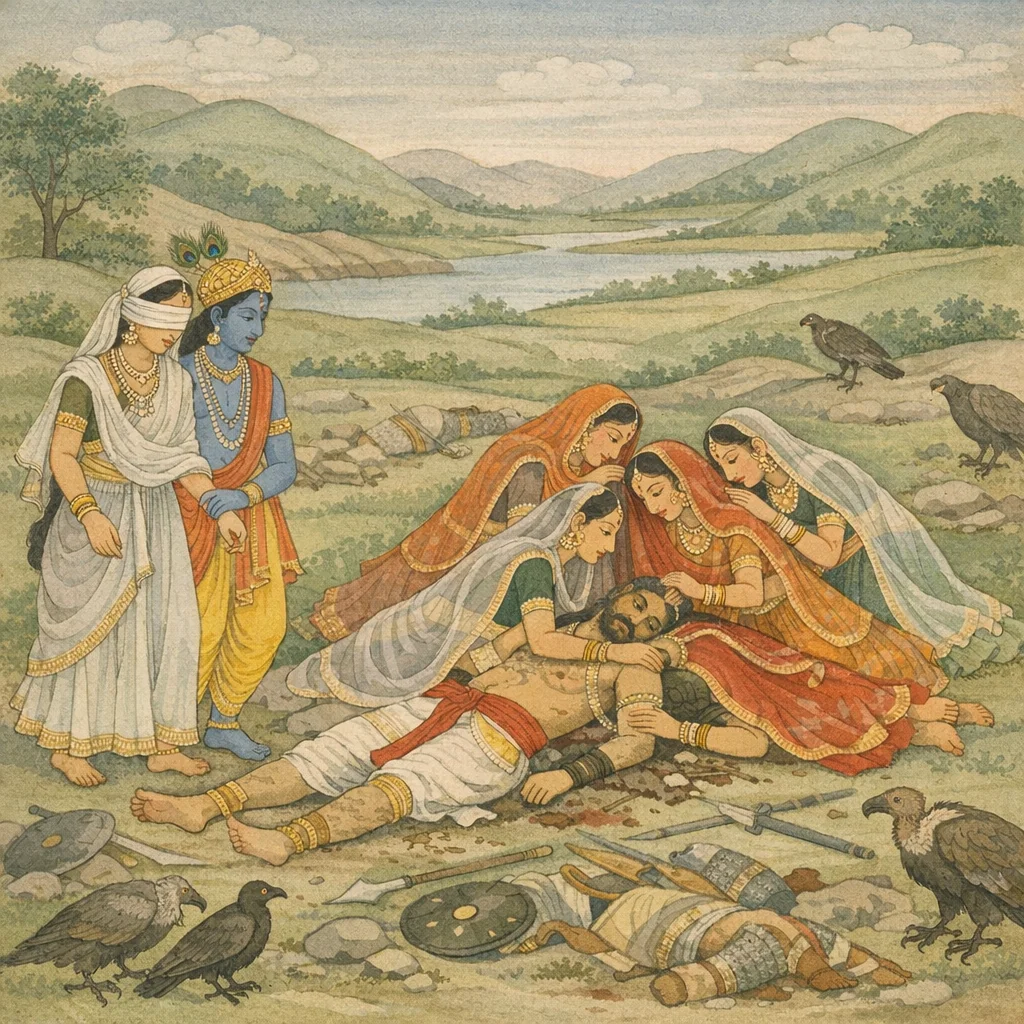
Gāndhārī addresses Kṛṣṇa while pointing out the fallen on the battlefield. She observes Āvantya, struck down by Bhīmasena, now exposed to scavengers, illustrating the reversal of heroic status under kāla. She then draws attention to Bāhlika (Prātipīya), described with a striking aesthetic contrast: even in death his face retains a moonlike radiance, emphasizing the epic’s tension between bodily beauty and mortal finality. The discourse turns to Jayadratha, whose prior offense involving Kṛṣṇā (Draupadī) is recalled as the ethical predicate for his destined death; his body is shown being dragged despite the presence of devoted wives. The chapter closes with Duḥśalā’s acute grief as a widowed daughter, intensifying the parva’s focus on familial collapse and the social aftershock of elite casualties. Across these vignettes, the chapter functions as moral witnessing: cataloging loss, interpreting causality, and foregrounding the human cost of political conflict.
Chapter Arc: गान्धारी श्रीकृष्ण को रणभूमि के शवों की ओर ले जाकर एक-एक वीर का करुण दृश्य दिखाती हैं—अवन्ती-नरेश, जो कभी बन्धु-बान्धवों से घिरा था, आज गीध-गीदड़ के बीच बन्धुहीन पड़ा है। → वह ‘काल-पर्यय’ का संकेत करती हैं: रक्त से सनी वीरशय्या पर पड़े शूरों को सियार, कंक और क्रव्याद जीव घसीट रहे हैं; पास ही स्त्रियाँ विलाप करती हुई अपने स्वामी के चारों ओर घूमती हैं—युद्ध की विजय-गाथा नहीं, स्त्री-हृदय का शोक-पुराण बन जाता है। → गान्धारी जयद्रथ के वध पर ठहरती हैं—अर्जुन ने पुत्रशोक से संतप्त होकर अपनी प्रतिज्ञा निभाई, अनेक सेनाएँ भेदकर जयद्रथ को रण में गिराया; पर इस ‘धर्म-प्रतिज्ञा’ की परिणति स्त्रियों के लिए विधवापन और कुल-नाश बनकर फूटती है। → जयद्रथ के चारों ओर स्त्रियों का घेरा—वे उसे ‘अत्यन्त दुर्जय’ वीर मानकर रोती हैं; गान्धारी अपने दुःख को श्रीकृष्ण के सामने प्रश्न बनाती हैं: मेरे लिए इससे बढ़कर दुःख क्या होगा कि मेरी पुत्रियाँ/वधुएँ बाल-विधवा होकर भटकें? → गान्धारी का शोक धीरे-धीरे आरोप और नैतिक प्रश्न में बदलता है—इस विनाश का उत्तरदायी कौन, और क्या यह सब रोका जा सकता था?
Shlokas
Verse 1
गान्धारी बोलीं--भीमसेनने जिसे मार गिराया था, वह शूरवीर अवन्तीनरेश बहुतेरे बन्धु-बान्धवोंसे सम्पन्न था; परंतु आज उसे बन्धुहीनकी भाँति गीध और गीदड़ नोच- नोचकर खा रहे हैं,मतवाले हाथीके समान उस परम दुर्जय वीरको सब ओरसे घेरकर ये चन्द्रमुखी रमणियाँ रो रही हैं ।। इति श्रीमहाभारते स्त्रीपर्वणि स्त्रीविलापपर्वणि गान्धारीवाक्ये द्वाविंशो5ध्याय: ।। २२ || इस प्रकार श्रीमह्मा भारत स्त्रीपर्वके अन्तर्गत स्त्रीविलापपर्वमें गान्धारीका वाक्यविषयक बाईसवाँ अध्याय पूरा हुआ ॥/ २२ ॥। ऑपन- मा बक। अर त्रयोविशो<् ध्याय: शल्य, भगदत्त, भीष्म और द्रोणको देखकर श्रीकृष्णके सम्मुख गान्धारीका विलाप गान्धायुवाच एष शल्यो हत: शेते साक्षान्रकुलमातुल: । धर्मज्ञेन हतस्तात धर्मराजेन संयुगे
Gāndhārī said: “That heroic king of Avanti, whom Bhīmasena struck down, once had many kinsmen and allies. Yet today he lies as though bereft of family—vultures and jackals tear at him and devour him. Like a maddened elephant, that most unconquerable warrior is now surrounded on every side, while these moon-faced women weep around him.”
Verse 2
त॑ पश्य कदन कृत्वा शूराणां मधुसूदन । शयानं वीरशयने रुधिरेण समुक्षितम्,मधुसूदन! देखो, अनेकों शूरवीरोंका संहार करके वह खूनसे लथपथ हो वीरशय्यापर सो रहा है
Vaiśampāyana said: “O Madhusūdana, look at him—having wrought a slaughter of many heroes, he now lies upon a hero’s bed, drenched in blood.” The line underscores the grim moral aftermath of war: valor and victory culminate not in joy but in a blood-soaked stillness that demands ethical reflection.
Verse 3
तं शुगालाश्व कड्काश्ष क्रव्यादाश्न पृथग्विधा: । तेन तेन विकर्षन्ति पश्य कालस्य पर्ययम्,उसे सियार, कंक और नाना प्रकारके मांसभक्षी जीव-जन्तु इधर-उधर खींच रहे हैं। यह समयका उलट-फेर तो देखो
Vaiśampāyana said: “Various flesh-eating creatures—jackals, hyenas, vultures, and others—are dragging that body this way and that. Behold how time has turned upside down.”
Verse 4
शयानं वीरशयने शूरमाक्रन्दकारिणम् | आवन्त्यमभितो नार्यो रुदत्य: पर्युपासते,भयानक मारकाट मचानेवाले इस शूरवीर अवन्तीनरेशको वीरशय्यापर सोया हुआ देख उसकी स्त्रियाँ रोती हुई उसे सब ओरसे घेरकर बैठी हैं
Vaiśampāyana said: Seeing the Avanti king—this valiant warrior—lying upon the hero’s bed, a cause of lamentation, his womenfolk sit around him on every side, weeping. The scene underscores the human cost of war: the fall of a kṣatriya hero becomes the grief of those who depended on his protection and presence.
Verse 5
प्रातिपेयं महेष्वासं हतं भल्लेन बाह्विकम् | प्रसुप्तमिव शार्दूलं पश्य कृष्ण मनस्विनम्,श्रीकृष्ण! देखो, महाधनुर्धर प्रतीपनन्दन मनस्वी बाह्लिक भल्लसे मारे जाकर सोये हुए सिंहके समान पड़े हैं
Vaiśampāyana said: “Behold, O Kṛṣṇa, Prātīpeya Bāhlika—an eminent archer—slain by a bhalla-arrow. That high-minded warrior lies there like a tiger fallen into sleep.”
Verse 6
अतीव मुखवर्णोडस्य निहतस्यापि शो भते । सोमस्येवाभिपूर्णस्य पौर्णमास्यां समुद्यत:,रणभूमिमें मारे जानेपर भी पूर्णमासीको उगते हुए पूर्ण चन्द्रमाकी भाँति इनके मुखकी कान्ति अत्यन्त प्रकाशित हो रही है
Vaiśampāyana said: Even though he has been slain, the radiance of his face shines exceedingly—like the full moon rising on the night of the full-moon, perfectly filled with lunar light. The verse underscores a moral vision of heroic dignity: death on the battlefield does not erase the splendor of one whose bearing and inner worth remain evident even in defeat.
Verse 7
पुत्रशोकाभिततप्तेन प्रतिज्ञां चाभिरक्षता । पाकशासनिना संख्ये वार्थक्षत्रि्निपातित:
Vaiśampāyana said: Burnt by grief for his son and intent on keeping his vow, he was struck down in the thick of battle by Pākaśāsana (Indra). The verse underscores how personal sorrow and rigid commitment to a pledge can drive one into fatal confrontation, where even a mighty warrior’s resolve meets the higher force of destiny and divine power.
Verse 8
एकादश चमूर्भित्त्वा रक्ष्यमाणं महात्मना । सत्यं चिकीर्षता पश्य हतमेनं जयद्रथम्
Vaiśampāyana said: “Having broken through eleven battle-formations, behold Jayadratha lying slain—though he was being guarded by a great warrior—because one was resolved to make a solemn vow come true.”
Verse 9
श्रीकृष्ण! पुत्रशोकसे संतप्त हो अपनी की हुई प्रतिज्ञाका पालन करते हुए इन्द्रकुमार अर्जुनने युद्धस्थलमें वृद्धक्षत्रके पुत्र जयद्रथको मार गिराया है। यद्यपि उसकी रक्षाकी पूरी व्यवस्था की गयी थी, तब भी अपनी प्रतिज्ञाको सत्य कर दिखाने की इच्छावाले महात्मा अर्जुनने ग्यारह अक्षौहिणी सेनाओंका भेदन करके जिसे मार डाला था, वही यह जयद्रथ यहाँ पड़ा है। इसे देखो ।। सिन्धुसौवीरभर्तरिं दर्पपूर्ण मनस्विनम् । भक्षयन्ति शिवा गृध्रा जनार्दन जयद्रथम्,जनार्दन! सिन्धु और सौवीर देशके स्वामी अभिमानी और मनस्वी जयद्रथको गीध और सियार नोच-नोचकर खा रहे हैं
Vaiśampāyana said: “O Śrī Kṛṣṇa! Tormented by grief for his son, yet steadfast in the vow he had made, Indra’s son Arjuna struck down Jayadratha, the son of Vṛddhakṣatra, on the battlefield. Although every measure had been arranged for Jayadratha’s protection, Arjuna—resolved to make his pledge true—broke through eleven akṣauhiṇīs of troops and killed him. There lies Jayadratha; look upon him. O Janārdana, vultures and jackals are tearing and devouring Jayadratha, the lord of Sindhu and Sauvīra, proud and high-spirited.”
Verse 10
संरक्ष्यमाणं भायाभिरनुरक्ताभिरच्युत । भीषयन्त्यो विकर्षन्ति गहनं निम्नमन्तिकात्,अच्युत! इसमें अनुराग रखनेवाली इसकी पत्नियाँ यद्यपि रक्षामें लगी हुई हैं, तथापि गीदड़ियाँ उन्हें डरवाकर जयद्रथकी लाशको उनके निकटसे गहरे गड्ढलेकी ओर खींचे लिये जा रही हैं
Verse 11
तमेता:ः पर्युपासन्ते रक्ष्यमाणं महाभुजम् । सिन्धुसौवीरभर्तारें काम्बोजयवनस्त्रिय:,ये काम्बोज और यवनदेशकी स्त्रियाँ सिन्धु और सौवीरदेशके स्वामी महाबाहु जयद्रथको चारों ओरसे घेरकर बैठी हैं और वह उन्हींके द्वारा सुरक्षित हो रहा है
Vaiśampāyana said: Those women of the Kāmboja and Yavana lands sat all around the mighty-armed lord of Sindhu and Sauvīra, attending upon him; and he was being guarded and kept safe by them.
Verse 12
यदा कृष्णामुपादाय प्राद्रवत् केकयै: सह । तदैव वध्य: पाण्डूनां जनार्दन जयद्रथ:,जनार्दन! जिस दिन जयद्रथ द्रौपदीको हरकर केकयोंके साथ भागा था, उसी दिन यह पाण्डवोंके द्वारा वध्य हो गया था; परंतु उस समय दुःशलाका सम्मान करते हुए उन्होंने जयद्रथको जीवित छोड़ दिया था! श्रीकृष्ण! उन्हीं पाण्डवोंने आज फिर क्यों नहीं उसका सम्मान किया?
Vaiśampāyana said: “O Janārdana, on the very day Jayadratha seized Kṛṣṇā (Draupadī) and fled away together with the Kekayas, he had already become fit to be slain by the Pāṇḍavas. Yet, out of regard for the honor of Duḥśalā, they spared his life then. Why, O Kṛṣṇa, did those same Pāṇḍavas not honor that consideration again today?”
Verse 13
दुःशलां मानयद्धिस्तु तदा मुक्तो जयद्रथ: । कथमटद्य न तां कृष्ण मानयन्ति सम ते पुनः,जनार्दन! जिस दिन जयद्रथ द्रौपदीको हरकर केकयोंके साथ भागा था, उसी दिन यह पाण्डवोंके द्वारा वध्य हो गया था; परंतु उस समय दुःशलाका सम्मान करते हुए उन्होंने जयद्रथको जीवित छोड़ दिया था! श्रीकृष्ण! उन्हीं पाण्डवोंने आज फिर क्यों नहीं उसका सम्मान किया?
Vaiśampāyana said: “Indeed, it was out of regard for Duḥśalā that Jayadratha was released on that earlier occasion. O Kṛṣṇa, O Janārdana—how is it that those very Pāṇḍavas today do not again show her the same respect?”
Verse 14
सैषा मम सुता बाला विलपन्ती च दुःखिता । आत्मना हन्ति चात्मानमाक्रोशन्ती च पाण्डवान्,देखो, वहीं मेरी यह बेटी दुःशला जो अभी बालिका है, किस तरह दुःखी हो-होकर विलाप कर रही है? और पाण्डवोंको कोसती हुई स्वयं ही अपनी छाती पीट रही है!
Vaiśaṃpāyana said: “Behold—this is my young daughter Duḥśalā. Overwhelmed by sorrow, she is wailing aloud; and as she cries out against the Pāṇḍavas, she strikes her own body in anguish.”
Verse 15
कि नु दुःखतरं कृष्ण परं मम भविष्यति । यत् सुता विधवा बाला स्नुषाश्न निहतेश्वरा:,श्रीकृष्ण! मेरे लिये इससे बढ़कर महान् दुःखकी बात और क्या होगी कि यह छोटी अवस्थाकी मेरी बेटी विधवा हो गयी तथा मेरी सारी पुत्रवधुएँ भी अनाथा हो गयीं
Vaiśampāyana said: “O Kṛṣṇa, what sorrow could ever be greater for me than this—that my young daughter has become a widow, and that all my daughters-in-law have been left without their lords?”
Verse 16
हा हा धिग् दुःशलां पश्य वीतशोकभयामिव । शिरो भर्तुरनासाद्य धावमानामितस्तत:,हाय! हाय, धिक्कार है! देखो, देखो दःशला शोक और भयसे रहित-सी होकर अपने पतिका मस्तक न पानेके कारण इधर-उधर दौड़ रही है
Vaiśampāyana said: “Alas, alas—shame! Look at Duḥśalā: she appears as though emptied of grief and fear. Unable to find her husband’s severed head, she runs about here and there.”
Verse 17
वारयामास य: सर्वान् पाण्डवान् पुत्रगृद्धिन: । स हत्वा विपुला: सेना: स्वयं मृत्युवशं गत:,जिस वीरने अपने पुत्रको बचानेकी इच्छावाले समस्त पाण्डवोंको अकेले रोक दिया था, वही कितनी ही सेनाओंका संहार करके स्वयं मृत्युके अधीन हो गया
He who, driven by the urge to protect his son, single-handedly held back all the Pāṇḍavas—after cutting down vast forces—at last himself fell under the dominion of Death. The verse underscores the tragic cost of war: even valor born of parental attachment culminates in mortality, and heroic resistance cannot ultimately escape the law of impermanence.
Verse 18
त॑ मत्तमिव मातजुूं वीरं॑ परमदुर्जयम् । परिवार्य रुदन्त्येताः स्त्रियश्षुन्द्रोपमानना:
Vaiśampāyana said: Encircling that hero—like one maddened, a mighty warrior exceedingly hard to overcome—those women, their faces darkened and disfigured by grief, wept aloud around him. The scene underscores how war’s vaunted heroism ends in helpless suffering for the innocent, as the bereaved confront the ruin left by violence.
Frequently Asked Questions
The chapter implicitly questions how victory can be ethically assessed when its visible outcome is the degradation of heroic bodies and the collapse of households, leaving a moral remainder beyond formal duty.
Kāla is presented as a leveling force that renders rank and protection contingent, urging the listener to interpret political success within a broader horizon of impermanence and accountability.
No explicit phalaśruti appears in the provided verses; the meta-commentary operates indirectly through exemplification—named cases that teach impermanence, consequence, and the social cost of conflict.