Adhyaya 19
स्त्रीपर्व — गान्धारीविलापः (Strī Parva — Gāndhārī’s Lament over the Fallen)
Upa-parva: Strī-vilāpa (Gāndhārī’s Battlefield Lament) — Adhyāya 19 Context Unit
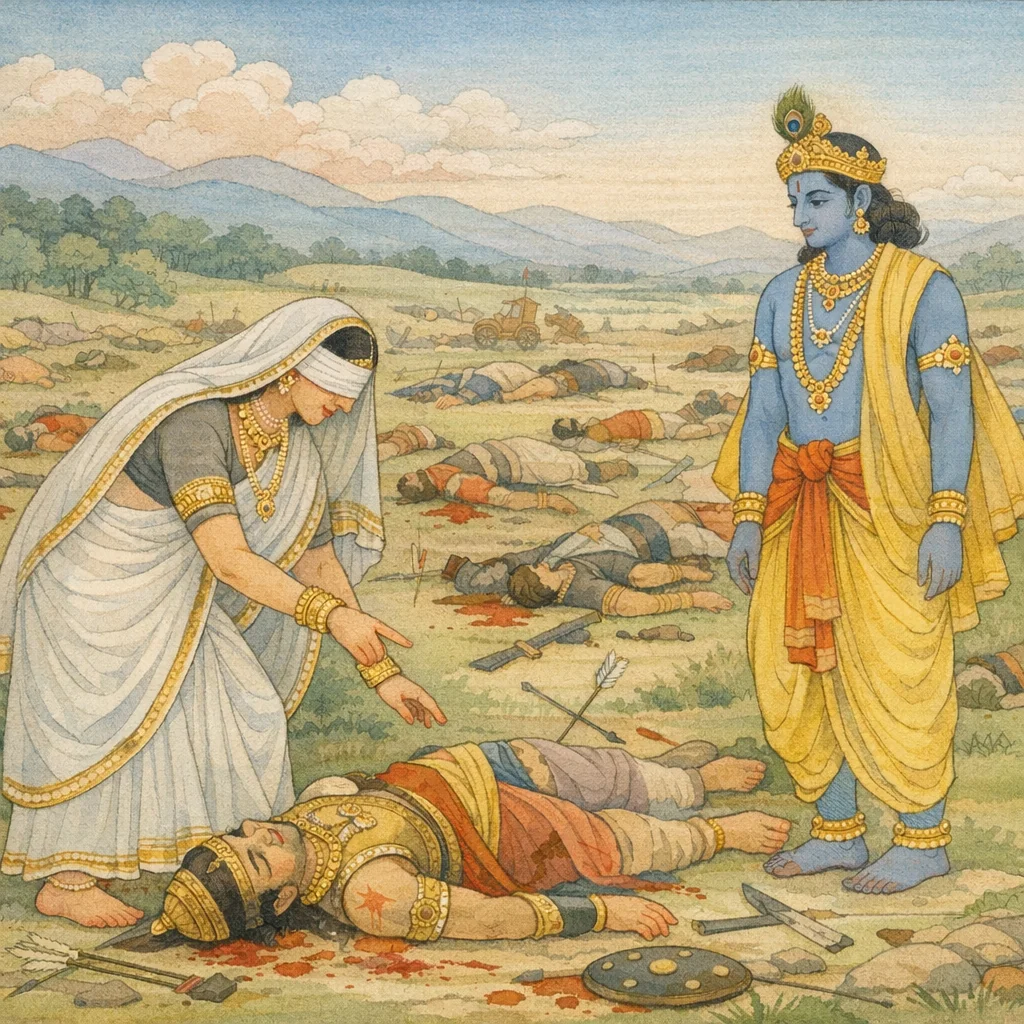
Gāndhārī addresses Kṛṣṇa (Mādhava/Madhusūdana) while surveying the battlefield. She points out her son Vikarṇa, described as wise and heroic, now lying slain and disfigured; she notes the contrast between his former comfort and his present state in dust, and the predation of birds and beasts. She observes a young wife attempting unsuccessfully to ward off vultures from the corpse, emphasizing helplessness and the erosion of dignity after conflict. She then identifies other fallen Dhārtarāṣṭra warriors—Durmukha (killed while facing the enemy), Citraseṇa (likened to an exemplar among archers), Viviṃśati (surrounded by vultures, yet still portrayed with striking facial beauty), and Duḥsaha (his body covered with arrows, compared to a mountain adorned with blossoming trees). The chapter’s technique is elegiac cataloguing: heroic epithets and aesthetic similes are juxtaposed with bodily ruin, converting martial praise into an ethical indictment of the war’s cost.
Chapter Arc: कुरुक्षेत्र के शवों के बीच गान्धारी श्रीकृष्ण के सम्मुख आती हैं—और एक-एक करके अपने पुत्रों के निर्जीव शरीर दिखाकर विलाप आरम्भ करती हैं। → वह विकर्ण, दुर्मुख, चित्रसेन, विविंशति और दुःसह के रूप-लक्षण, शौर्य, प्रतिज्ञा-पालन और युद्ध-वैभव का स्मरण कराती हैं; फिर उसी स्मरण को उनके कटे-फटे, बाणों से ढँके शरीरों की दृश्य-यथार्थता से टकराती हैं। → गान्धारी का विलाप चरम पर पहुँचता है जब वह विकर्ण के ‘सम्मानित’ और ‘सुखार्ह’ होने का वर्णन करते हुए भीमसेन द्वारा उसके ‘सौ-सौ टुकड़े’ किए जाने की बात कहती हैं—वीरता और क्रूर अंत का यह तीखा विरोध अध्याय का शिखर बनता है। → वह दुःसह के शरीर को शरों से आच्छादित, स्वर्णमाला और दीप्त कवच से युक्त बताकर दिखाती हैं—मृत्यु के बाद भी शौर्य-आभा का एक अंतिम, करुण प्रकाश; और कृष्ण के सामने अपने शोक को साक्षी-रूप में स्थिर कर देती हैं। → कृष्ण के प्रति गान्धारी का यह आरोप-भरा शोक आगे किस दिशा में जाएगा—सांत्वना, तर्क, या शाप—इसकी छाया अध्याय के अंत में बनी रहती है।
Shlokas
Verse 1
प्याज बक। अऑफि्--छऋाय एकोनविशो< ध्याय: विकर्ण, दुर्मुख, चित्रसेन, विविंशति तथा 5 हक देखकर गान्धारीका श्रीकृष्णके सम्मुख िलाप गान्धायुवाच एष माधव पुत्रो मे विकर्ण: प्राज्ञसम्मत: । भूमौ विनिहत: शेते भीमेन शतधा कृत:,इस प्रकार श्रीमह्माभारत स्त्रीपर्वके अन्तर्गत स्त्रीविलापपर्वमें गान्धारीवाक्यविषयक उन्नीसवाँ अध्याय पूरा हुआ ॥/ १९ ॥ ऑपन-माज बछ। डे विशो< ध्याय: गान्धारीद्वारा श्रीकृष्णके प्रति उत्तरा और विराटकुलकी स्त्रियोंक शोक एवं विलापका वर्णन गान्धायुवाच अध्यर्धगुणमाहुर्य बले शौर्ये च केशव । पित्रा त्वया च दाशार्ह दृप्तं सिंहमिवोत्कटम्
Gandhārī said: “O Keśava, they used to declare him superior by a half again in strength and in valor. O Dāśārha, he was reared by his father and by you, proud and formidable—like an enraged lion.”
Verse 2
गान्धारी बोलीं--माधव! यह मेरा पुत्र विकर्ण, जो दिद्दानोंद्वारा सम्मानित होता था, भूमिपर मरा पड़ा है। भीमसेनने इसके भी सौ-सौ टुकड़े कर डाले हैं ।। गजमध्ये हतः शेते विकर्णो मधुसूदन । नीलमेघपरिक्षिप्त: शरदीव निशाकर:,मधुसूदन! जैसे शरत्कालमें काले मेघोंकी घटासे घिरा हुआ चन्द्रमा शोभा पा रहा हो, उसी प्रकार भीमद्वारा मारा गया विकर्ण हाथियोंकी सेनाके बीचमें सो रहा है
Vaiśaṃpāyana said: “O Madhusūdana, Vikarna lies slain amid the ranks of elephants. Like the moon in autumn, made radiant though encircled by masses of dark clouds, so does Vikarna—struck down in battle—lie there, his fallen form paradoxically marked by a grim, mournful splendor. The scene underscores the ethical tragedy of kin-slaying in war: valor and nobility do not shield one from the ruin that adharma-driven conflict brings upon a family.”
Verse 3
अस्य चापग्रहेणैव पाणि: कृतकिणो महान् | कथज्जचिच्छिद्यते गृप्रैरत्तुकामैस्तलत्रवान्,बराबर धनुष लिये रहनेसे इसकी विशाल हथेलीमें घट्ठा पड़ गया है। इसके हाथमें इस समय भी दस्ताना बँधा हुआ है; इसलिये इसे खानेकी इच्छावाले गीध बड़ी कठिनाईसे किसी-किसी तरह काट पाते हैं
Vaiśampāyana said: “By the very act of gripping the bow, his great palm has become hardened with thick calluses. And since his hand is still covered with a protective glove, the vultures that long to feed can only with great difficulty manage to tear and cut it.”
Verse 4
अस्य भार्या5<मिषप्रेप्सून् गृध्रकाकांस्तपस्विनी । वारयत्यनिशं बाला न च शकनोति माधव,माधव! उसकी तपस्विनी पत्नी जो अभी बालिका है, मांसलोलुप गीधों और कौओंको हटानेकी निरन्तर चेष्टा करती है; परंतु सफल नहीं हो पाती है
His wife—an ascetic woman, still only a young girl—keeps trying without pause to drive away the flesh-seeking vultures and crows; yet, O Mādhava, she is unable to succeed. The scene underscores the helplessness of the innocent amid the aftermath of violence and the grim persistence of death’s consequences after war.
Verse 5
युवा वृन्दारक: शूरो विकर्ण: पुरुषर्षभ । सुखोषित: सुखार्हश्च शेते पांसुषु माधव,पुरुषप्रवर माधव! विकर्ण नवयुवक, देवताके समान कान्तिमान्, शूरवीर, सुखमें पला हुआ तथा सुख भोगनेके ही योग्य था; परंतु आज धूलमें लोट रहा है
Vaiśampāyana said: “O bull among men, Mādhava—Vikarṇa, a youthful prince, radiant like a god and renowned for valor, reared in comfort and fit only for enjoyment—now lies sprawled in the dust.” The line underscores the moral shock of war: even those born to refinement and rightful pleasures are reduced to the same earth, revealing the leveling, tragic cost of adharma-driven conflict.
Verse 6
कर्णिनालीकनाराचैभिंन्नमर्माणमाहवे । अद्यापि न जहात्येन॑ लक्ष्मीर्भरतसत्तमम्,युद्धमें कर्णी, नालीक और नाराचोंके प्रहारसे इसके मर्मस्थल विदीर्ण हो गये हैं तो भी इस भरत-भूषण वीरको अभीतक लक्ष्मी (अंगकान्ति) छोड़ नहीं रही है
Vaiśampāyana said: “Though in battle his vital points have been pierced and torn apart by karṇin, nālīka, and nārāca arrows, even now Lakṣmī—his radiance and auspicious splendor—does not abandon this best of the Bharatas.”
Verse 7
एष संग्रामशूरेण प्रतिज्ञां पालयिष्यता । दुर्मुखो5भिमुख: शेते हतोडरिगणहा रणे,जो शत्रुसमूहोंका संहार करनेवाला था, वह दुर्मुख प्रतिज्ञा पालन करनेवाले संग्राम-शूर भीमसेनके हाथों मारा जाकर समरमें सम्मुख सो रहा है
Vaiśampāyana said: Here lies Durmukha, fallen in the battle—slain face-to-face by the war-hero who was determined to keep his vow. Though he had been a destroyer of hosts of enemies, he now rests on the battlefield, brought down by Bhīmasena’s pledge-bound resolve. The verse underscores how, in war, prowess and slaughter are finally checked by another’s steadfast commitment to a declared duty.
Verse 8
तस्यैतद् वदनं कृष्ण श्वापदैरर्धभक्षितम् । विभात्यभ्यधिकं तात सप्तम्यामिव चन्द्रमा:,तात श्रीकृष्ण! इसका यह मुख हिंसक जन्तुओंद्वारा आधा खा लिया गया है, इसलिये सप्तमीके चन्द्रमाकी भाँति सुशोभित हो रहा है
Vaiśaṃpāyana said: “O Kṛṣṇa, this face of his, half-devoured by wild beasts, appears all the more striking—like the moon on the seventh lunar day. In the aftermath of war, even a mutilated body can be described with unsettling ‘beauty,’ underscoring the moral horror of violence and the tragic inversion of values that follows mass slaughter.”
Verse 9
शूरस्य हि रणे कृष्ण पश्याननमथेदृशम् । स कथं निहतोअमित्रै: पांसून् ग्रसति मे सुत:,श्रीकृष्ण! देखो, मेरे इस रणशूर पुत्रका मुख कैसा तेजस्वी है? पता नहीं, मेरा यह वीर पुत्र किस तरह शत्रुओंके हाथसे मारा जाकर धूल फाँक रहा है?
Vaiśampāyana said: “O Kṛṣṇa, look at the face of my son—how radiant it is, the very face of a hero in battle. How could it be that this brave son of mine has been slain by enemies and now lies there, forced to swallow dust?”
Verse 10
यस्याहवमुखे सौम्य स्थाता नैवोपपद्यते । स कथं दुर्मुखोमित्रैहतो विबुधलोकजित्,सौम्य! युद्धके मुहानेपर जिसके सामने कोई ठहर नहीं पाता था, उस देवलोकविजयी दुर्मुखको शत्रुओंने कैसे मार डाला?
Vaiśampāyana said: “O gentle one, in the very forefront of battle none could even stand before him. How then was Durmukha—who had conquered the realms of the gods—slain by his foes in the mouth of war?”
Verse 11
चित्रसेनं हतं भूमौ शयानं मधुसूदन । धार्तराष्ट्रमिमं पश्य प्रतिमानं धनुष्मताम्,मधुसूदन! देखो, जो धनुर्धरोंका आदर्श था, वही यह धृतराष्ट्रका पुत्र चित्रसेन मारा जाकर पृथ्वीपर पड़ा हुआ है
Vaiśampāyana said: “O Madhusūdana, behold Citrasena—Dhṛtarāṣṭra’s son—slain and lying upon the earth. Look upon him who once stood as a model among archers. Thus does the war lay low even those celebrated for prowess, turning exemplars into warnings about the fragility of pride and the ruin that follows adharma.”
Verse 12
तं चित्रमाल्याभरणं युवत्य: शोककर्शिता: । क्रव्यादसंघै: सहिता रुदत्य: पर्युपासते,विचित्र माला और आभूषण धारण करनेवाले उस चित्रसेनको घेरकर शोकसे कातर हो रोती हुई युवतियाँ हिंसक जन्तुओंके साथ उसके पास बैठी हैं
Vaiśampāyana said: The young women, wasted by grief, weeping, and accompanied by packs of flesh-eating creatures, sit all around that man adorned with splendid garlands and ornaments. The scene underscores the moral inversion wrought by war: beauty and adornment remain on the body, yet life, protection, and human order have collapsed, leaving mourners and scavengers to share the same space.
Verse 13
सत्रीणां रुदितनिर्घोष: श्वापदानां च गर्जितम् | चित्ररूपमिदं कृष्ण विचित्र प्रतिभाति मे,श्रीकृष्ण! एक ओर स्त्रियोंके रोनेकी आवाज है तो दूसरी ओर हिंसक जन्तुओंकी गर्जना हो रही है। यह अद्भुत दृश्य मुझे विचित्र प्रतीत होता है
Vaiśampāyana said: “On one side there is the loud wailing of women, and on the other the roaring of beasts of prey. O Kṛṣṇa, this scene is strangely variegated—an uncanny spectacle that strikes me as deeply unsettling.”
Verse 14
युवा वृन्दारको नित्यं प्रवरस्त्रीनिषेवित: । विविंशतिरसौ शेते ध्वस्त: पांसुषु माधव,माधव! देखो, वह देवतुल्य नवयुवक विविंशति, जिसकी सुन्दरी स्त्रियाँ सदा सेवा किया करती थीं, आज विध्वस्त होकर धूलमें पड़ा है
Vaiśampāyana said: “Behold, O Mādhava: here lies Viviṁśati—once a godlike youth, ever attended by noble women—now shattered and cast down in the dust. Such is the ruin that war brings, reducing the honored and the cherished to the same earth.”
Verse 15
शरसंकृत्तवर्माणं वीरं॑ विशसने हतम् । परिवायसिते गृश्रा: पश्य कृष्ण विविंशतिम्,श्रीकृष्ण! देखो, बाणोंसे इसका कवच छिजत्न-भिन्न हो गया है। युद्धमें मारे गये इस वीर विविंशतिको गीध चारों ओरसे घेरकर बैठे हैं
Vaiśampāyana said: “Behold, O Kṛṣṇa—this hero Viviṁśati, slain on the battlefield, has had his armor shredded and cut apart by arrows. Vultures sit all around him, encircling the fallen.” The verse starkly underscores the moral cost of war: even the valiant meet a grim end, and the battlefield reduces glory to a scene of impermanence and desecration, prompting sober reflection rather than triumph.
Verse 16
प्रविश्य समरे शूर: पाण्डवानामनीकिनीम् | स वीरशयमने शेते पर: सत्पुरुषोचिते,जो शूरवीर समरांगणमें पाण्डवोंकी सेनाके भीतर घुसकर लोहा लेता था, वही आज सत्पुरुषोचित वीरशय्यापर शयन कर रहा है
Vaiśampāyana said: “That hero who, entering the battle, would break into the Pandavas’ army and win glory by force of arms—he now lies upon a warrior’s bed, a resting-place befitting a noble and righteous man.” The verse contrasts battlefield ferocity with the dignified, ethically charged stillness of death, underscoring how valor is ultimately measured by the honorable end and the ideals of the ‘good man’ (satpuruṣa).
Verse 17
स्मितोपपन्नं सुनसं सुभ्रु ताराधिपोपमम् | अतीव शुभ्र॑ वदनं कृष्ण पश्य विविंशते:,श्रीकृष्ण! देखो, विविंशतिका मुख अत्यन्त उज्ज्वल है, इसके अधरोंपर मुसकराहट खेल रही है, नासिका मनोहर और भौंहें सुन्दर हैं। यह मुख चन्द्रमाके समान शोभा पा रहा है
Vaiśampāyana said: “O Kṛṣṇa, behold Viviṁśati’s face—exceedingly bright and radiant. A gentle smile plays upon his lips; his nose is well-formed and his brows are beautiful. His countenance shines like the lord of stars, the moon.”
Verse 18
एनं हि पर्युपासन्ते बहुधा वरयोषित: । क्रीडन्तमिव गन्धर्व देवकन्या: सहस्रश:,जैसे क्रीडा करते हुए गन्धर्वके साथ सहस्रों देवकन्याएँ होती हैं, उसी प्रकार इस विविंशतिकी सेवामें बहुत-सी सुन्दरी स्त्रियाँ रहा करती थीं
Vaiśampāyana said: Many excellent women attended upon him in various ways, just as thousands of celestial maidens surround a Gandharva as he sports. The verse paints a picture of lavish service and allure, hinting at the courtly culture of pleasure and display that stands in stark contrast to the grief and moral reckoning that pervade the Strī-parvan after the war.
Verse 19
हन्तारं परसैन्यानां शूरं समितिशो भनम् । निबर्हणममित्राणां दु:सहं विषहेत कः,शत्रुकी सेनाओंका संहार करनेमें समर्थ तथा युद्धमें शोभा पानेवाले शूरवीर शत्रुसूदन दुःसहका वेग कौन सह सकता था? इति श्रीमहाभारते स्त्रीपर्वणि स्त्रीविलापपर्वणि गान्धारीवाक्ये एकोनविंशो5 ध्याय:
Vaiśampāyana said: “Who could possibly endure the irresistible Duḥsaha—heroic, radiant in the clash of battle, capable of slaughtering the enemy’s armies and crushing his foes?”
Verse 20
दुःसहस्यैतदाभाति शरीरं संवृतं शरै: । गिरिरात्मगतै: फुल्लै: कर्णिकारैरिवाचित:,उसी दुःसहका यह शरीर बाणोंसे खचाखच भरा हुआ है, जो अपने ऊपर खिले हुए कनेरके फूलोंसे व्याप्त पर्वतके समान सुशोभित होता है
Vaiśampāyana said: “This is the body of Duḥsaha, now appearing densely covered with arrows. It looks like a mountain spread over with fully blossomed karṇikāra flowers growing upon it—strangely adorned even in the midst of violent death.”
Verse 21
शातकौम्या स्रजा भाति कवचेन च भास्वता । अग्निनेव गिरि: श्वेतो गतासुरपि दुःसह:,यद्यपि दुःसहके प्राण चले गये हैं तो भी वह सोनेकी माला और तेजस्वी कवचसे सुशोभित हो अग्नियुक्त श्वेत पर्वतके समान जान पड़ता है
Vaiśaṃpāyana said: Even though Duḥsaha’s life-breath had departed, he still appeared splendid—adorned with a golden garland and a radiant coat of mail—like a white mountain lit by fire. The verse underscores the tragic irony of war: outward glory and martial ornament remain, while the inner life is gone.
Frequently Asked Questions
The chapter presents the dilemma of how to interpret kṣātra duty when its outcomes include indignity for the dead and suffering for survivors—forcing a reassessment of whether “heroic” action can be ethically complete without care, restraint, and accountability.
The implied upadeśa is that power, beauty, and martial excellence are impermanent and ethically insufficient as final measures; true evaluation requires compassion and a willingness to face consequences beyond immediate political outcomes.
No explicit phalaśruti is present in the provided passage; the chapter functions instead as narrative-ethical testimony, where understanding arises from witnessing and reflection rather than from a stated ritual reward.