Adhyaya 69
Brahmāstra-pratisaṃhāraḥ, Parīkṣit-nāmakaraṇam, Nagarotsava-varṇanam (Withdrawal of the Brahmāstra; Naming of Parīkṣit; Description of Civic Festivities)
Upa-parva: Parīkṣit-jīvana-prasaṅga (Episode of Parīkṣit’s revival, naming, and public rejoicing)
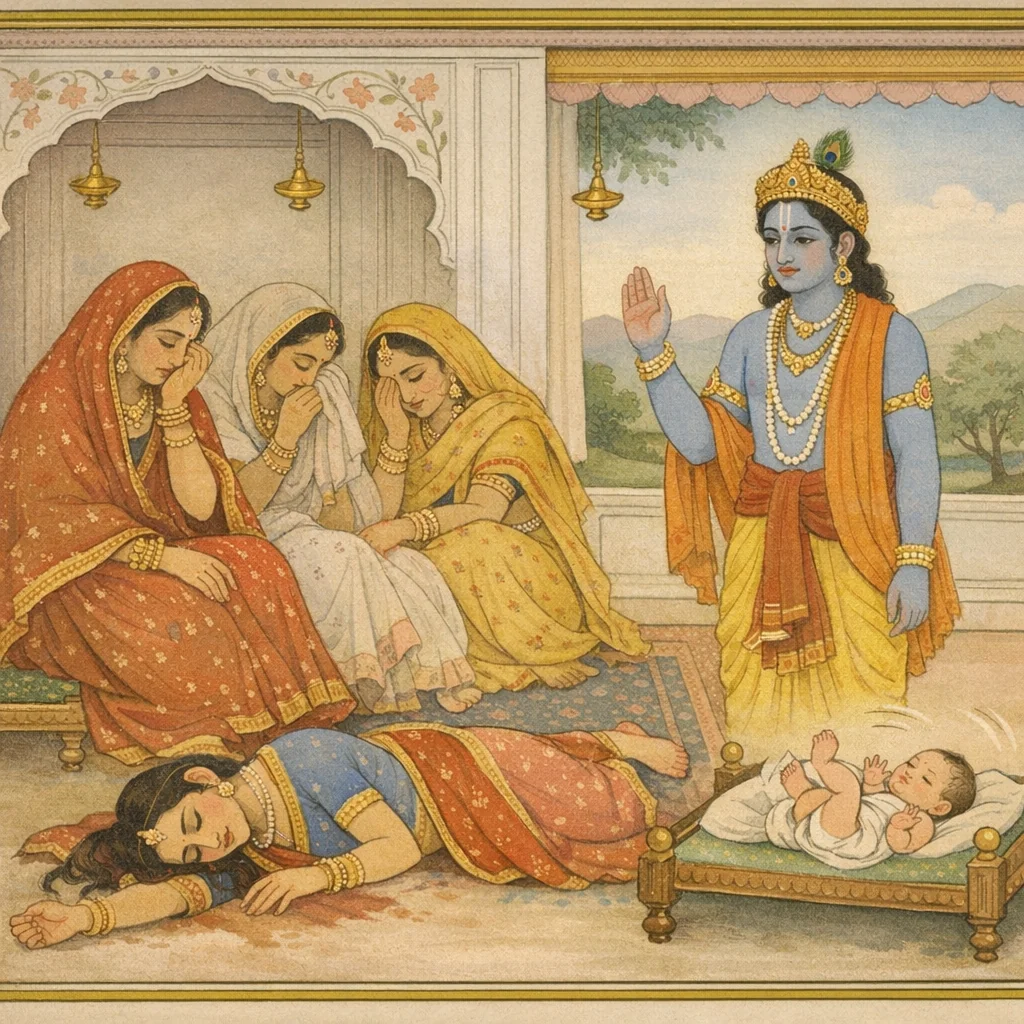
Vaiśaṃpāyana reports that when Kṛṣṇa withdraws the brahmāstra, the previously threatened dwelling is no longer consumed by its radiance; hostile beings flee, and an approving celestial voice praises Keśava. The weapon’s blazing force departs toward the Pitāmaha, and the child—identified as the listener’s father—regains life and begins to move with infant strength. The Bharata women rejoice; at Govinda’s instruction, Brahmins recite auspicious texts, and prominent women (Kuntī, Draupadī, Subhadrā, Uttarā) and others praise Janārdana as if having gained a safe crossing. Performers and bards extol him with blessings upon the Kuru line. Uttarā respectfully greets Kṛṣṇa with her son; pleased, he gives her many jewels and formally names the child Parīkṣit, explaining the name in relation to a diminished lineage. The child grows in due course, delighting people. As the Pāṇḍavas arrive with abundant gems, the Vṛṣṇis and citizens go out to welcome them; the city is decorated with garlands, flags, and banners; Vidura arranges varied worship at shrines; roads are adorned with flowers; music and dance fill the city; heralds announce a night-long festivity characterized by ornaments and jewels.
Chapter Arc: अभिमन्यु के वंश-दीप के बुझ जाने की आशंका से उत्तरा पृथ्वी पर गिरकर करुण विलाप करती है; पाण्डव-गृह एक क्षण में शोक-ध्वनि से भर उठता है। → कुन्ती और भरत-कुल की स्त्रियाँ उत्तरा को पुत्र-शोक में डूबा देख चीख उठती हैं; भवन ‘अप्रेक्षणीय’ हो जाता है—सबके सामने प्रश्न खड़ा होता है: क्या अब पाण्डव-वंश का अंत निश्चित है? → अच्युत कृष्ण जगत् के सामने प्रतिज्ञा करते हैं कि वे उत्तरा से असत्य नहीं बोलेंगे और सब देहधारियों के देखते-देखते मृत शिशु को संजीवित करेंगे; सत्य-धर्म की शक्ति का आह्वान कर वे शिशु के जीवन का संकल्प उच्चारित करते हैं। → कृष्ण के वचन-बल और सत्य-धर्म-प्रतिष्ठा के प्रभाव से शिशु में धीरे-धीरे चेतना लौटती है; शोक का ज्वार उतरता है और आशा पुनः स्थापित होती है—अभिमन्यु का पुत्र जीवित रहता है। → वंश-रक्षा तो हो गई, पर आगे यह बालक (परिक्षित) किस प्रकार धर्म-राज्य का भार उठाएगा और पाण्डव-उत्तरकाल की दिशा क्या होगी—यह प्रश्न शेष रहता है।
Shlokas
Verse 1
है ० बक। हक २ 2 एकोनसप्ततितमो<ध्याय: उत्तराका विलाप और भगवान् श्रीकृष्णका उसके मृत बालकको जीवन-दान देना वैशम्पायन उवाच सैवं विलप्य करुणं सोन्मादेव तपस्विनी । उत्तरा न्यपतद् भूमौ कृपणा पुत्रगृद्धिनी,वैशम्पायनजी कहते हैं--जनमेजय! पुत्रका जीवन चाहनेवाली तपस्विनी उत्तरा उन्मादिनी-सी होकर इस प्रकार दीनभावसे करुण विलाप करके पृथ्वीपर गिर पड़ी
Vaiśampāyana said: Having thus lamented piteously, the ascetic lady Uttarā—almost maddened by grief—collapsed upon the earth, wretched and consumed by longing for her child’s life. The scene frames maternal love as a powerful moral force, and prepares the ground for divine compassion to restore what violence and fate have taken.
Verse 2
तां तु दृष्टवा निपतितां हतपुत्रपरिच्छदाम् । चुक्रोश कुन्ती दुःखार्ता सर्वाश्व भरतस्त्रिय:,जिसका पुत्ररूपी परिवार नष्ट हो गया था, उस उत्तराको पृथ्वीपर पड़ी हुई देख दुःखसे आतुर हुई कुन्तीदेवी तथा भरतवंशकी सारी स्त्रियाँ फ़ूट-फ़ूटकर रोने लगीं
Seeing her fallen to the ground—bereft of the ‘household’ that was her son—Kuntī, overwhelmed by grief, cried out; and all the women of the Bharata line likewise burst into lamentation. The scene underscores the ethical cost of dynastic conflict: even after victory and ritual restoration, the deepest wound is the destruction of lineage and the suffering of mothers and widows.
Verse 3
मुहूर्तमिव राजेन्द्र पाण्डवानां निवेशनम् । अप्रेक्षणीयमभवदार्तस्वनविनादितम्,राजेन्द्र! दो घड़ीतक पाण्डवोंका वह भवन आर्तनादसे गूँजता रहा। उस समय उसकी ओर देखते नहीं बनता था
Vaiśampāyana said: “O king, for a short while the dwelling of the Pāṇḍavas became a sight one could hardly bear to look upon, resounding with the cries of the distressed.”
Verse 4
सा मुहूर्त च राजेन्द्र पुत्रशोकाभिपीडिता । कश्मलाभिहता वीर वैराटी त्वभवत् तदा,वीर राजेन्द्र! पुत्रशोकसे पीड़ित वह विराटकुमारी उत्तरा उस समय दो घड़ीतक मूर्च्छामें पड़ी रही
Vaiśampāyana said: O king, stricken by grief for her son and overwhelmed by faintness, the princess of Virāṭa lay unconscious for a short while. The passage underscores how even the noble are shaken by bereavement, and it frames sorrow as a human trial that momentarily eclipses composure and duty.
Verse 5
प्रतिलभ्य तु सा संज्ञामुत्तरा भरतर्षभ । अड्कमारोप्य त॑ पुत्रमिदं वचनमब्रवीत्,भरतश्रेष्ठ! थोड़ी देर बाद उत्तरा जब होशमें आयी, तब उस मरे हुए पुत्रको गोदमें लेकर यों कहने लगी--
Vaiśampāyana said: After a short while, Uttarā regained consciousness. Taking that son upon her lap, she spoke these words—an image that underscores the depth of maternal grief and the moral weight of loss in the aftermath of war.
Verse 6
धर्मज्ञस्य सुतः स त्वमधर्म नावबुध्यसे । यस्त्वं वृष्णिप्रवीरस्य कुरुषे नाभिवादनम्,“बेटा! तू तो धर्मज्ञ पिताका पुत्र है। फिर तेरे द्वारा जो अधर्म हो रहा है, उसे तू क्यों नहीं समझता? वृष्णिवंशके श्रेष्ठ वीर भगवान् श्रीकृष्ण सामने खड़े हैं तो भी तू इन्हें प्रणाम क्यों नहीं करता?
Vaiśampāyana said: “You are the son of a father who knows dharma—why, then, do you fail to recognize the unrighteousness in your own conduct? The foremost hero of the Vṛṣṇis, Śrī Kṛṣṇa, stands before you; why do you not offer him respectful salutation?”
Verse 7
पुत्र गत्वा मम वचो ब्रूयास्त्वं पितरं त्विदम् । दुर्मरं प्राणिनां वीर काले<प्राप्ते कथंचन
Vaiśaṃpāyana said: “My son, go and convey these words of mine to your father: ‘O hero, for living beings death is hard to avoid—when the appointed time has arrived, it cannot be averted by any means.’”
Verse 8
याहं त्वया विनाद्येह पत्या पुत्रेण चैव ह । मर्तव्ये सति जीवामि हतस्वस्तिरकिंचना
“Here and now, without you—without my husband and my son—though death is what should have come to me, I still go on living, stripped of all auspiciousness and left with nothing.”
Verse 9
“वत्स! परलोकमें जाकर तू अपने पितासे मेरी यह बात कहना--“वीर! अन्तकाल आये बिना प्राणियोंके लिये किसी तरह भी मरना बड़ा कठिन होता है। तभी तो मैं यहाँ आप-जैसे पति तथा इस पुत्रसे बिछुड़कर भी जब कि मुझे मर जाना चाहिये, अबतक जी रही हूँ; मेरा सारा मंगल नष्ट हो गया है। मैं अकिंचन हो गयी हूँ” ।। अथवा धर्मराज्ञाहमनुज्ञाता महाभुज | भक्षयिष्ये विष घोरें प्रवेक्ष्ये वा हुताशनम्,“महाबाहो! अब मैं धर्मराजकी आज्ञा लेकर भयानक विष खा लूँगी अथवा प्रज्वलित अग्निमें समा जाऊँगी
Vaiśampāyana said: “My child, when you go to the next world, convey this message of mine to your father: ‘O hero, without the arrival of one’s destined final hour, it is exceedingly hard for living beings to die by any means. That is why, though I have been separated here from a husband like you and from this son, and though I ought to have died, I still live on; all my auspiciousness has been destroyed, and I have become utterly destitute.’ Or else, O mighty-armed one, having obtained permission from Dharmarāja, I shall consume dreadful poison or enter the blazing fire.”
Verse 10
अथवा दुर्मरं तात यदिदं मे सहस्नधा । पतिपुत्रविहीनाया हृदयं न विदीर्यते,“तात! जान पड़ता है, मनुष्यके लिये मरना अत्यन्त कठिन है, क्योंकि पति और पुत्रसे हीन होनेपर भी मेरे इस हृदयके हजारों टुकड़े नहीं हो रहे हैं
Or else, dear one, it seems that dying is exceedingly difficult for a human being—for even though I am bereft of husband and sons, my heart is not splitting into a thousand pieces. The utterance conveys the speaker’s stunned endurance: grief is so overwhelming that one expects life to end, yet the body persists, revealing the harsh resilience of embodied existence amid bereavement.
Verse 11
उत्तिष्ठ पुत्र पश्येमं दुःखितां प्रपितामहीम् । आर्ताममुपप्लुतां दीनां निमग्नां शोकसागरे,“बेटा! उठकर खड़ा हो जा। देख! ये तेरी परदादी (कुन्ती) कितनी दुखी हैं। ये तेरे लिये आर्त, व्यथित एवं दीन होकर शोकके समुद्रमें डूब गयी हैं
Vaiśampāyana said: “Rise, my son. Look at your great-grandmother—how afflicted she is. For your sake she has become distressed, overwhelmed and helpless, sinking into an ocean of grief.”
Verse 12
आर्या च पश्य पाज्चालीं सात्वतीं च तपस्विनीम् । मां च पश्य सुदुःखार्ता व्याधविद्धां मृगीमिव,'आर्या पांचाली (द्रौपदी)-की ओर देख, अपनी दादी तपस्विनी सुभद्राकी ओर दृष्टिपात कर और व्याथके बाणोंसे बिंधी हुई हरिणीकी भाँति अत्यन्त दुःखसे आर्त हुई मुझ अपनी माँको भी देख ले
Vaiśampāyana said: “Look upon the noble lady Pāñcālī (Draupadī), and also upon the Sātvati woman, the ascetic. And look upon me as well—overwhelmed by intense sorrow—like a doe pierced by a hunter’s arrow.”
Verse 13
उत्तिष्ठ पश्य वदनं लोकनाथस्य धीमत: । पुण्डरीकपलाशारक्ष पुरेव चपलेक्षणम्,“बेटा! उठकर खड़ा हो जा और बुद्धिमान् जगदीश्वर श्रीकृष्णके कमलदलके समान नेत्रोंवाले मुखारविन्दकी शोभा निहार, ठीक उसी तरह जैसे पहले मैं चंचल नेत्रोंवाले तेरे पिताका मुँह निहारा करती थी”
Vaiśampāyana said: “Rise and look upon the face of the wise Lord of the world—his lotus-petal-like eyes and radiant countenance. Behold it just as, long ago, I used to gaze upon your father’s face with my restless eyes.”
Verse 14
एवं विप्रलपन्तीं तु दृष्टवा निपतितां पुनः । उत्तरां तां स्त्रियं सर्वा: पुनरुत्थापयंस्तत:,इस प्रकार विलाप करती हुई उत्तराको पुनः पृथ्वीपर पड़ी देख सब स्त्रियोंने उसे फिर उठाकर बिठाया
Seeing Uttarā again fallen to the ground while lamenting in this way, all the women there at once lifted her up again and helped her to rise—an act of shared compassion amid grief and the duties of the household after war.
Verse 15
उत्थाय च पुनर्धर्यात् तदा मत्स्यपते: सुता । प्राउ्जलि: पुण्डरीकाक्षं भूमावेवाभ्यवादयत्,पुनः उठकर धैर्य धारण करके मत्स्यराजकुमारीने पृथ्वीपर ही हाथ जोड़कर कमलनयन भगवान् श्रीकृष्णको प्रणाम किया
Then, rising again and regaining her composure, the daughter of the lord of the Matsyas joined her palms and, right there upon the ground, reverently saluted lotus-eyed Śrī Kṛṣṇa. The scene underscores the ethic of humility and self-restraint: when shaken, one steadies oneself and returns to respectful conduct toward the righteous and the divine.
Verse 16
श्रुत्वा स तस्या विपुलं विलापं पुरुषर्षभ: । उपस्पृश्य ततः कृष्णो ब्रह्मास्त्रं प्रत्यसंहरत्,उसका महान् विलाप सुनकर पुरुषोत्तम श्रीकृष्णने आचमन करके अभश्वत्थामाके चलाये हुए ब्रह्मास्त्रको शान्त कर दिया
Hearing her intense and overflowing lament, Kṛṣṇa—the foremost among men—first performed ācamana for ritual composure and purity, and then counteracted and withdrew the Brahmāstra that Aśvatthāman had unleashed. The episode underscores that even in the aftermath of war, supreme power must be restrained by dharma and exercised to protect the innocent rather than to prolong vengeance.
Verse 17
प्रतिजज्ञे च दाशा्हस्तस्य जीवितमच्युत: । अब्रवीच्च विशुद्धात्मा सर्व विश्रावयन् जगत्,तत्पश्चात् विशुद्ध हृदयवाले और कभी अपनी महिमासे विचलित न होनेवाले भगवान् श्रीकृष्णने उस बालकको जीवित करनेकी प्रतिज्ञा की और सम्पूर्ण जगत्को सुनाते हुए इस प्रकार कहा--
Vaiśampāyana said: Then Acyuta, the pure-souled Kṛṣṇa of the Dāśārha line, vowed to restore that child’s life. And, making his words heard by all the world, he spoke as follows.
Verse 18
न ब्रवीम्युत्तरे मिथ्या सत्यमेतद् भविष्यति । एष संजीवयाम्येनं पश्यतां सर्वदेहिनाम्,“बेटी उत्तरा! मैं झूठ नहीं बोलता। मैंने जो प्रतिज्ञा की है, वह सत्य होकर ही रहेगी। देखो, मैं समस्त देहधारियोंके देखते-देखते अभी इस बालकको जिलाये देता हूँ
Vaiśampāyana said: “O Uttarā, I do not speak falsely. The vow I have made will indeed come true. Look—before the eyes of all embodied beings, I shall restore this child to life.”
Verse 19
नोक्तपूर्व मया मिथ्या स्वैरेष्वपि कदाचन । न च युद्धात् परावृत्तस्तथा संजीवतामयम्,“मैंने खेल-कूदमें भी कभी मिथ्या भाषण नहीं किया है और युद्धमें पीठ नहीं दिखायी है। इस शक्तिके प्रभावसे अभिमन्युका यह बालक जीवित हो जाय
Vaiśampāyana said: “Never before have I spoken a falsehood— not even in moments of play or carefree sport. Nor have I ever turned back from battle. By the power of this truth, may this child live again.”
Verse 20
यथा मे दयितो धर्मों ब्राह्मणश्न विशेषत: । अभिमन्यो: सुतो जातो मृतो जीवत्वयं तथा,“यदि धर्म और ब्राह्मण मुझे विशेष प्रिय हों तो अभिमन्युका यह पुत्र, जो पैदा होते ही मर गया था, फिर जीवित हो जाय
Vaiśampāyana said: “If dharma and the Brāhmaṇas are especially dear to me, then let this son of Abhimanyu—who died the moment he was born—be restored to life.”
Verse 21
यथाहं नाभिजानामि विजये तु कदाचन । विरोधं तेन सत्येन मृतो जीवत्वयं शिशु:,'मैंने कभी अर्जुनसे विरोध किया हो, इसका स्मरण नहीं है; इस सत्यके प्रभावसे यह मरा हुआ बालक अभी जीवित हो जाय
Vaiśampāyana said: “As I do not recall ever having opposed Vijaya (Arjuna) at any time, by the power of that truth—let this child, though dead, become alive again.” The utterance presents a satya-kriyā: a vow-like declaration of truth invoked as a moral force capable of restoring life, grounding miraculous efficacy in ethical integrity rather than mere power.
Verse 22
यथा सत्यं च धर्मश्न मयि नित्यं प्रतिष्ठितौ । तथा मृत: शिशुरयं जीवतादभिमन्युज:,“यदि मुझमें सत्य और धर्मकी निरन्तर स्थिति बनी रहती हो तो अभिमन्युका यह मरा हुआ बालक जी उठे
Vaiśampāyana said: “If truth and dharma are indeed ever firmly established in me, then let this dead infant—the son of Abhimanyu—return to life.”
Verse 23
यथा कंसश्ष केशी च धर्मेण निहतौ मया । तेन सत्येन बालो<5यं पुन: संजीवतामयम्,“मैंने कंस और केशीका धर्मके अनुसार वध किया है, इस सत्यके प्रभावसे यह बालक फिर जीवित हो जाय'
Vaiśaṃpāyana said: “Just as Kaṃsa and Keśī were slain by me in accordance with dharma, by the power of that truth may this child here come to life again.”
Verse 24
इत्युक्तो वासुदेवेन स बालो भरतर्षभ । शनै: शनैर्महाराज प्रास्पन्दत सचेतन:,भरतश्रेष्ठ) महाराज! भगवान् श्रीकृष्णके ऐसा कहनेपर उस बालकमें चेतना आ गयी। वह धीरे-धीरे अंग-संचालन करने लगा
Vaiśampāyana said: Thus addressed by Vāsudeva, that child—O bull among the Bharatas—regained consciousness. O king, he began, little by little, to move his limbs. The passage underscores the restorative power of divine assurance and compassionate intervention, where life and awareness return through grace rather than force.
Verse 69
इति श्रीमहाभारते आश्वमेधिके पर्वणि अनुगीतापर्वणि परिक्षित्संजीवने एकोनसप्ततितमो< ध्याय:,इस प्रकार श्रीमहाभारत आश्वमेधिकपर्वके अन्तर्गत अनुगीतापर्वमें परिक्षित॒को जीवनदानविषयक उनहतत्तरवाँ अध्याय पूरा हुआ
Thus ends the sixty-ninth chapter in the Aśvamedhika Parva of the Śrī Mahābhārata, within the Anugītā sub-section, concerning the restoration of life to Parīkṣit. This colophon marks the completion of the chapter’s narrative unit, emphasizing the preservation of lineage and the ethical weight of protecting life after the devastations of war.
Frequently Asked Questions
It implicitly contrasts unchecked destructive capability with responsible restraint: the ethical problem is how extraordinary force is neutralized to protect innocents and preserve continuity without further escalation.
Stability after crisis is achieved through disciplined power, protection of life, and public acts that restore trust—ritual recitation, naming, gifts, and civic order function as ethical instruments of renewal.
No explicit phalaśruti is stated here; the chapter’s meta-function is narrative-legitimizing—linking the heir’s survival and naming to communal rejoicing and the reconstitution of the Kuru polity.