Adhyaya 97
Ādi-parva Adhyāya 97: Satyavatī’s appeal and Bhīṣma’s reaffirmation of satya
Upa-parva: Bhīṣma-Pratijñā / Āpaddharma deliberations (Satyavatī–Bhīṣma dialogue)
Vaiśaṃpāyana reports Satyavatī’s grief and urgency after completing her son’s funerary obligations. She addresses Bhīṣma (Gāṅgeya), praising his learning in dharma and the Vedas, and asserting that Śaṃtanu’s offerings, fame, and lineage now depend upon him. She frames the situation as a dynastic emergency: Bhīṣma’s brother has died childless, leaving two Kāsī princesses as widowed queens who desire offspring. Satyavatī proposes a remedial course—urging Bhīṣma to be installed as ruler, to govern the Bhāratas, and to produce progeny through niyoga for the continuity of the kula. Bhīṣma replies with a principled refusal: he acknowledges the high dharma she invokes but emphasizes his prior pledge regarding progeny, reiterating that he will abandon kingdoms and even cosmic rewards rather than abandon truth. Satyavatī concedes his steadfastness yet presses him to consider āpaddharma and the ancestral burden. Bhīṣma responds by warning against abandoning dharma, stating that deviation from satya is not praised for a kṣatriya, and advises that any crisis-resolution should be pursued in consultation with learned counselors and purohitas who understand dharma, artha, and public order.
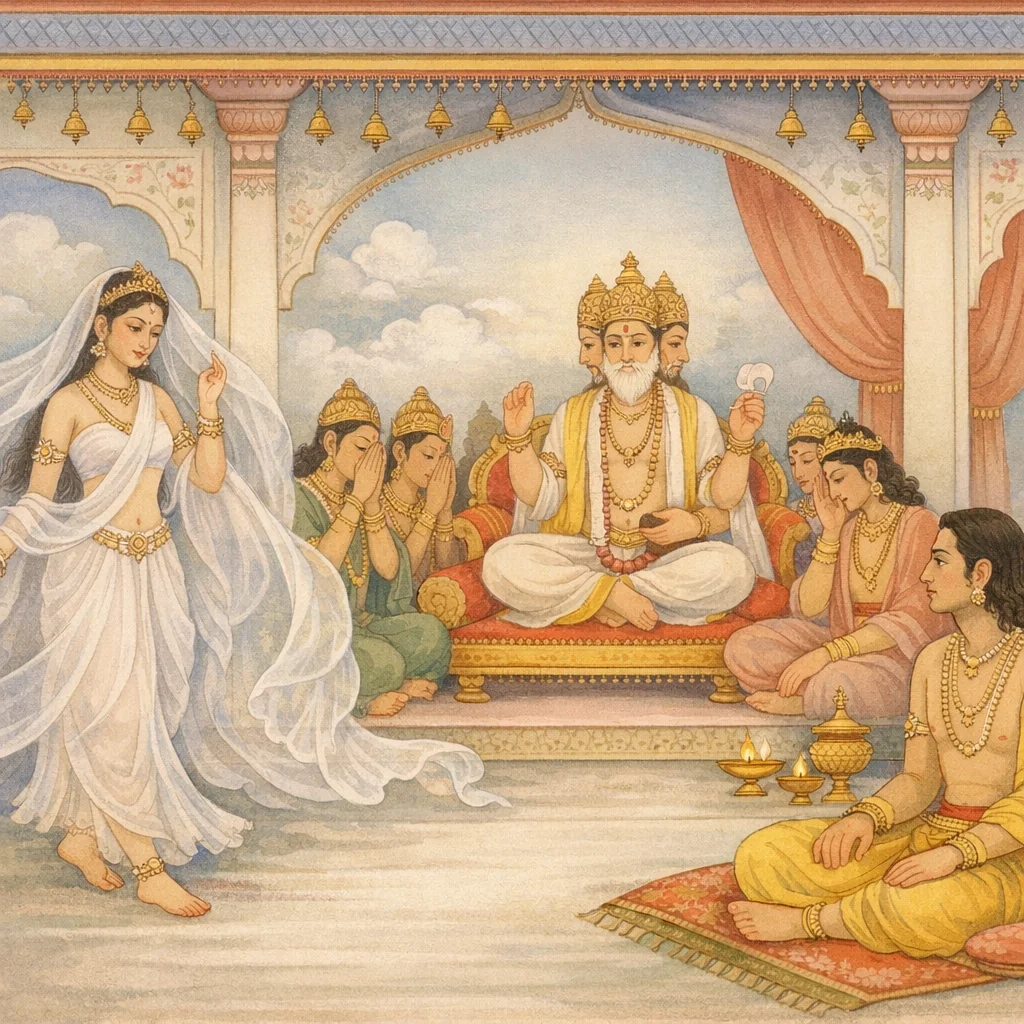
Chapter Arc: वैशम्पायन जनमेजय को इक्ष्वाकुवंशी राजा महाभिष की कथा सुनाते हैं—जिसने असंख्य यज्ञों से देवेश को तुष्ट कर स्वर्ग पाया, पर स्वर्ग में ही उसके लिए एक अदृश्य परीक्षा प्रतीक्षा कर रही थी। → ब्रह्मा की सभा में देवगण और राजर्षि उपस्थित हैं; तभी सरिताओं में श्रेष्ठ गंगा आती है और वायु से उसका वस्त्र क्षणभर उड़ जाता है। देवता लज्जा/मर्यादा से मुख फेर लेते हैं, किंतु महाभिष अनिमेष दृष्टि से गंगा को देखता रह जाता है—सभा की मर्यादा भंग होती है। → ब्रह्मा महाभिष के इस ‘असंयमित’ दृष्टिपात को अपराध मानकर शाप देते हैं—स्वर्ग से पतन कर उसे मर्त्यलोक में जन्म लेना होगा। समानांतर धारा में, वसु देवता भी शापग्रस्त होकर गंगा के पास आते हैं और उससे मर्त्यलोक में जन्म-बंधन से शीघ्र मुक्ति का उपाय पूछते हैं। → गंगा वसुओं से शर्त करती है: वह उनकी माता बनेगी और जन्म लेते ही उन्हें जल में प्रवाहित कर देगी ताकि वे शीघ्र शाप-मुक्त हों; पर एक वसु के लिए नियम कठोर होगा—वह अधिक समय मर्त्यलोक में रहेगा और उसकी आगे संतति न होगी; वही वीर्यवान पुत्र गंगा को प्राप्त होगा। वसु गंगा से समय-निश्चय कर प्रसन्न होकर अपने संकल्पानुसार प्रस्थान करते हैं। → शाप और शर्त का यह जाल अब मर्त्यलोक में उतरने को है—कौन होगा वह पुरुषश्रेष्ठ पिता, और कैसे गंगा अपने ही पुत्रों को जल में प्रवाहित करेगी?
Shlokas
Verse 1
अत--#कत षण्णवतितमोब< ध्याय: महाभिषको ब्रह्माजीका शाप तथा शापग्रस्त वसु ओंके साथ गंगाकी बातचीत वैशम्पायन उवाच इक्ष्वाकुवंशप्रभवो राजा55सीत् पृथिवीपति: । महाभिष इति ख्यातः सत्यवाक् सत्यविक्रम:,वैशम्पायनजी कहते हैं-जनमेजय! इश्वाकु-वंशमें उत्पन्न महाभिष नामसे प्रसिद्ध एक राजा हो गये हैं, जो सत्यवादी होनेके साथ ही सत्यपराक्रमी भी थे। उन्होंने एक हजार अश्वमेध और एक सौ राजसूय यज्ञोंद्वारा देवेश्वर इन्द्रको संतुष्ट किया और उन यज्ञोंके पुण्यसे उन शक्तिशाली नरेशने स्वर्गलोग प्राप्त कर लिया
Vaiśampāyana said: There arose a king, lord of the earth, born in the Ikṣvāku lineage, renowned by the name Mahābhiṣa—one whose speech was truthful and whose valor was steadfast in truth. The verse introduces him as an exemplar of royal integrity, setting the ethical tone that merit and conduct shape one’s destiny.
Verse 2
सो<श्वमेधसहस्रेण राजसूयशतेन च । तोषयामास देवेशं स्वर्ग लेभे ततः प्रभु:,वैशम्पायनजी कहते हैं-जनमेजय! इश्वाकु-वंशमें उत्पन्न महाभिष नामसे प्रसिद्ध एक राजा हो गये हैं, जो सत्यवादी होनेके साथ ही सत्यपराक्रमी भी थे। उन्होंने एक हजार अश्वमेध और एक सौ राजसूय यज्ञोंद्वारा देवेश्वर इन्द्रको संतुष्ट किया और उन यज्ञोंके पुण्यसे उन शक्तिशाली नरेशने स्वर्गलोग प्राप्त कर लिया
Vaiśampāyana said: By a thousand Aśvamedha sacrifices and a hundred Rājasūya rites, he pleased the Lord of the gods; thereafter that mighty king attained heaven. The passage underscores the Mahābhārata’s recurring ethic that royal power is to be disciplined through sanctioned ritual and generosity, and that merit (puṇya) gained by such acts is believed to yield exalted posthumous destiny.
Verse 3
ततः कदाचिद् ब्रह्माणमुपासांचक्रिरे सुरा: । तत्र राजर्षयो ह्ासन् स च राजा महाभिष:,तदनन्तर एक समय सब देवता ब्रह्माजीकी सेवामें उनके समीप बैठे हुए थे। वहाँ बहुत-से राजर्षि तथा पूर्वोक्त राजा महाभिष भी उपस्थित थे
Then, on one occasion, the gods gathered to attend upon Brahmā in reverent service. There, many royal seers were present, and King Mahābhiṣa too was in that august assembly. The scene frames an ethical setting: proximity to the Creator and the company of sages heighten the expectation of self-restraint and dharmic conduct.
Verse 4
अथ गज्ज सरिच्छेष्ठा समुपायात् पितामहम् | तस्या वास: समुद्धूतं मारुतेन शशिप्रभम्,इसी समय सरिताआओंमें श्रेष्ठ गंगा ब्रह्माजीके समीप आयी। उस समय वायुके झोंकेसे उसके शरीरका चाँदनीके समान उज्ज्वल वस्त्र सहसा ऊपरकी ओर उठ गया
Vaiśampāyana said: Then Gaṅgā, the foremost of rivers, approached Pitāmaha (Brahmā). At that moment, stirred by a gust of wind, her moon-bright garment was suddenly lifted upward—an incident that sets the scene for the ensuing moral tension around modesty, restraint, and the conduct expected even in divine or semi-divine encounters.
Verse 5
ततो5भवन् सुरगणा: सहसावाड्मुखास्तदा | महाभिषस्तु राजर्षिरशड्को दृष्टवान् नदीम्,यह देख सब देवताओंने तुरंत अपना मुँह नीचेकी ओर कर लिया; किंतु राजर्षि महाभिष नि:शंक होकर देवनदीकी ओर देखते ही रह गये
Then, at that moment, the hosts of gods suddenly turned their faces downward in modest restraint; but the royal sage Mahābhiṣa, free of hesitation, continued to gaze upon the divine river. The scene highlights the ethical contrast between reverent self-control before a sacred presence and the peril of unchecked looking that can transgress celestial decorum.
Verse 6
सो<5पध्यातो भगवता ब्रह्मणा तु महाभिष: । उक्तश्न जातो मर्त्येषु पुनलोकानवाप्स्यसि,तब भगवान् ब्रह्माने महाभिषको शाप देते हुए कहा--दुर्मते! तुम मनुष्योंमें जन्म लेकर फिर पुण्यलोकोंमें आओगे। जिस गंगाने तुम्हारे चित्तको चुरा लिया है, वही मनुष्यलोकमें तुम्हारे प्रतिकूल आचरण करेगी
Vaiśampāyana said: Then the venerable Brahmā, having pronounced a curse upon Mahābhiṣa, declared, “You shall be born among mortals, and thereafter you will regain the higher worlds.” In the narrative’s moral frame, the fall from heaven is not sheer annihilation but a corrective consequence: a lapse of restraint leads to human birth, and the return to blessed realms is made possible through enduring the ordained result of one’s act.
Verse 7
यया55हृतमनाश्चासि गड़या त्वं हि दुर्मते । साते वै मानुषे लोके विप्रियाण्याचरिष्यति,तब भगवान् ब्रह्माने महाभिषको शाप देते हुए कहा--दुर्मते! तुम मनुष्योंमें जन्म लेकर फिर पुण्यलोकोंमें आओगे। जिस गंगाने तुम्हारे चित्तको चुरा लिया है, वही मनुष्यलोकमें तुम्हारे प्रतिकूल आचरण करेगी
Vaiśampāyana said: “Since your mind has been stolen away by the river Gaṅgā, you—foolish one—have become deluded. Therefore, in the human world she will act against your wishes.” (In context, Brahmā is portrayed as pronouncing a curse: the offender must be born among humans and only thereafter regain the higher worlds; and the very Gaṅgā who captivated him will become the instrument of his distress.)
Verse 8
यदा ते भविता मन्युस्तदा शापादू विमोक्ष्यसे । “जब तुम्हें गंगापर क्रोध आ जायगा, तब तुम भी शापसे छूट जाओगे।” वैशम्पायन उवाच स चिन्तयित्वा नृपतिर्न॒पानन्यांस्तपोधनान्,वैशम्पायनजी कहते हैं--जनमेजय! तब राजा महाभिषने अन्य बहुत-से तपस्वी राजाओंका चिन्तन करके महातेजस्वी राजा प्रतीपको ही अपना पिता बनानेके योग्य चुना --उन््हींको पसंद किया। महानदी गंगा राजा महाभिषको धैर्य खोते देख मन-ही-मन उन्हींका चिन्तन करती हुई लौटी। मार्गसे जाती हुई गंगाने वसुदेवताओंको देखा। उनका शरीर स्वर्गसे नीचे गिर रहा था। वे मोहाच्छन्न एवं मलिन दिखायी दे रहे थे। उन्हें इस रूपमें देखकर नदियोंमें श्रेष्ठ गंगाने पूछा--
Vaiśampāyana said: “When anger arises in you, then you will be released from the curse.” The statement frames liberation not as a random event but as one tied to an inner moral turning-point: the moment righteous indignation awakens, the binding power of the curse ends.
Verse 9
प्रतीपं रोचयामास पितरं भूरितेजसम् । महाभिषं तु त॑ दृष्टवा नदी धैर्याच्च्युतं नृपम्,वैशम्पायनजी कहते हैं--जनमेजय! तब राजा महाभिषने अन्य बहुत-से तपस्वी राजाओंका चिन्तन करके महातेजस्वी राजा प्रतीपको ही अपना पिता बनानेके योग्य चुना --उन््हींको पसंद किया। महानदी गंगा राजा महाभिषको धैर्य खोते देख मन-ही-मन उन्हींका चिन्तन करती हुई लौटी। मार्गसे जाती हुई गंगाने वसुदेवताओंको देखा। उनका शरीर स्वर्गसे नीचे गिर रहा था। वे मोहाच्छन्न एवं मलिन दिखायी दे रहे थे। उन्हें इस रूपमें देखकर नदियोंमें श्रेष्ठ गंगाने पूछा--
Vaiśampāyana said: King Mahābhiṣa, after reflecting upon many ascetic royal sages, chose the greatly radiant King Pratīpa alone as the worthy one to be his father. But when the river Gaṅgā saw King Mahābhiṣa fallen from steadfast self-control, she withdrew, turning back while inwardly contemplating him—signaling that even exalted beings are bound by the moral consequences of a lapse in restraint.
Verse 10
तमेव मनसा ध्यायन्त्युपावर्तत् सरिद्वरा । सा तु विध्वस्तवपुष: कश्मलाभिहतान् नृप,वैशम्पायनजी कहते हैं--जनमेजय! तब राजा महाभिषने अन्य बहुत-से तपस्वी राजाओंका चिन्तन करके महातेजस्वी राजा प्रतीपको ही अपना पिता बनानेके योग्य चुना --उन््हींको पसंद किया। महानदी गंगा राजा महाभिषको धैर्य खोते देख मन-ही-मन उन्हींका चिन्तन करती हुई लौटी। मार्गसे जाती हुई गंगाने वसुदेवताओंको देखा। उनका शरीर स्वर्गसे नीचे गिर रहा था। वे मोहाच्छन्न एवं मलिन दिखायी दे रहे थे। उन्हें इस रूपमें देखकर नदियोंमें श्रेष्ठ गंगाने पूछा--
Vaiśampāyana said: “O king, the river-best, Gaṅgā, keeping him alone in her mind, turned back. On her way she saw the Vasus, their forms shattered as they were falling down from heaven—overwhelmed by delusion and stained by sin.”
Verse 11
ददर्श पथि गच्छन्ती वसून् देवान् दिवौकस: । तथारूपांश्व तान् दृष्टवा पप्रच्छ सरितां वरा,वैशम्पायनजी कहते हैं--जनमेजय! तब राजा महाभिषने अन्य बहुत-से तपस्वी राजाओंका चिन्तन करके महातेजस्वी राजा प्रतीपको ही अपना पिता बनानेके योग्य चुना --उन््हींको पसंद किया। महानदी गंगा राजा महाभिषको धैर्य खोते देख मन-ही-मन उन्हींका चिन्तन करती हुई लौटी। मार्गसे जाती हुई गंगाने वसुदेवताओंको देखा। उनका शरीर स्वर्गसे नीचे गिर रहा था। वे मोहाच्छन्न एवं मलिन दिखायी दे रहे थे। उन्हें इस रूपमें देखकर नदियोंमें श्रेष्ठ गंगाने पूछा--
Vaiśampāyana said: As Gaṅgā, the best of rivers, was moving along her way, she saw the Vasus—heaven-dwelling gods—passing by. Seeing them in such a condition, she questioned them. The scene underscores a moral order in which even divine beings may fall from their station when their merit is exhausted or their conduct is impaired, and it frames Gaṅgā as a discerning witness who seeks the cause behind a visible decline.
Verse 12
किमिदं नष्टरूपा: स्थ कच्चित् क्षेमं दिवौकसाम् | तामूचुर्वसवो देवा: शप्ता: स्मो वै महानदि
Vaiśaṃpāyana said: “What is this—why do you appear bereft of your former splendor? Is all well with the dwellers of heaven?” Then the Vasus, the gods, replied to her: “O great river, we have indeed been cursed.”
Verse 13
अल्पे5पराधे संरम्भाद् वसिष्ठेन महात्मना । विमूढा हि वयं सर्वे प्रच्छन्नमूषिसत्तमम्
Vaiśaṃpāyana said: “Because the great-souled Vasiṣṭha, in sudden anger, treated a minor fault as a grave offense, we all became bewildered—failing to recognize the foremost of sages who was present in disguise.”
Verse 14
संध्यां वसिष्ठमासीनं तमत्यभिसूता: पुरा । तेन कोपाद् वयं शप्ता योनौ सम्भवतेति ह
Vaiśampāyana said: Formerly, when the sage Vasiṣṭha was seated at the time of twilight worship, we behaved with grave impropriety toward him. Because of that, in anger he cursed us, saying, ‘You shall be born from a womb.’
Verse 15
तुमलोगोंका दिव्य रूप नष्ट कैसे हो गया? देवता सकुशल तो हैं न? तब वसुदेवताओंने गंगासे कहा--“महानदी! महात्मा वसिष्ठने थोड़े-से अपराधपर क्रोधमें आकर हमें शाप दे दिया है। पहलेकी बात है एक दिन जब वसिष्ठजी पेड़ोंकी आड़में संध्योपासना कर रहे थे, हम सब मोहवश उनका उल्लंघन करके चले गये (और उनकी धेनुका अपहरण कर लिया)। इससे कुपित होकर उन्होंने हमें शाप दिया कि “तुमलोग मनुष्ययोनिमें जन्म लो” || १२-- १४ || न निवर्तयितुं शक््यं यदुक्तं ब्रह्मवादिना । त्वमस्मान् मानुषी भूत्वा सृज पुत्रान-वसून् भुवि,“उन ब्रह्मवादी महर्षिने जो बात कह दी है, वह टाली नहीं जा सकती; अतः हमारी प्रार्थना है कि तुम पृथ्वीपर मानवपत्नी होकर हम वसुओंको अपने पुत्ररूपसे उत्पन्न करो
“What has been spoken by that brahma-speaking seer cannot be turned back. Therefore, we entreat you: become a human woman upon the earth and bring us—the Vasus—forth as your sons.” In the narrative frame, the Vasus accept the moral weight of a sage’s utterance: a wrongful act has consequences, and even divine beings must submit to the binding force of a rishi’s truth-spoken word. The request to Gaṅgā seeks a lawful, compassionate means to undergo the curse while preserving cosmic order and the welfare of the gods.
Verse 16
न मानुषीणां जठरं प्रविशेम वयं शुभे । इत्युक्ता तैश्न वसुभिस्तथेत्युक्त्वाब्रवीदिदम्,'शुभे! हमें मानुषी स्त्रियोंके उदरमें प्रवेश न करना पड़े, इसीलिये हमने यह अनुरोध किया है।” वसुओंके ऐसा कहनेपर गंगाजी “तथास्तु” कहकर यों बोलीं
Vaiśaṃpāyana said: Addressing her as ‘O auspicious one,’ the Vasus pleaded, “May we not have to enter the womb of human women.” When the Vasus spoke thus, Gaṅgā replied, “So be it,” and then spoke further.
Verse 17
गजड़ोवाच मर्त्येषु पुरुषश्रेष्ठ: को वः कर्ता भविष्यति । गंगाजीने कहा--वसुओ! मर्त्यलोकमें ऐसे श्रेष्ठ पुरुष कौन हैं; जो तुमलोगोंके पिता होंगे। वसव ऊचु. प्रतीपस्य सुतो राजा शान्तनुलोंकविश्रुत: । भविता मानुषे लोके स न: कर्ता भविष्यति,वसुगण बोले--प्रतीपके पुत्र राजा शान्तनु लोकविख्यात साधु पुरुष होंगे। मनुष्यलोकमें वे ही मारे जनक होंगे
The Vasus replied: “King Śāntanu, the son of Pratīpa, renowned throughout the world, will be born among humans. He will be the one who becomes our begetter (father) in the mortal realm.” This response frames their descent into human life as governed by moral causality and providence: even divine beings, when bound by a condition or consequence, seek a righteous and celebrated human lineage through which their earthly birth will occur.
Verse 18
गज़ोवाच ममाप्येवं मतं देवा यथा मां वदतानघा: । प्रियं तस्य करिष्यामि युष्माकं॑ चैतदीप्सितम्,गंगाजीने कहा--निष्पाप देवताओ! तुमलोग जैसा कहते हो, वैसा ही मेरा भी विचार है। मैं राजा शान्तनुका प्रिय करूँगी और तुम्हारे इस अभीष्ट कार्यको भी सिद्ध करूँगी
Gaṅgā said: “O gods, free from sin, my own resolve is exactly as you say. I shall do what is dear to him (King Śāntanu), and I shall also accomplish this purpose of yours that you desire.”
Verse 19
वसव ऊचु. जातान् कुमारान् स्वानप्सु प्रक्षेप्तुं वै त्वमहसि । यथा न चिरकाल नो निष्कृतिः स्यात् त्रिलोकगे,वसुगण बोले--तीनों लोकोंमें प्रवाहित होनेवाली गंगे! हमलोग जब तुम्हारे गर्भसे जन्म लें, तब तुम पैदा होते ही हमें अपने जलमें फेंक देना; जिससे शीघ्र ही हमारा मर्त्यलोकसे छुटकारा हो जाय
The Vasus said: “O you who move through the three worlds! When our sons are born from your womb, you must cast us into the waters at once, so that our expiation may not be delayed and we may quickly be released from mortal existence.”
Verse 20
गजड़ोवाच एवमेतत् करिष्यामि पुत्रस्तस्य विधीयताम् । नास्य मोघ: संगम: स्यात् पुत्रहेतोर्मया सह,गंगाजीने कहा--ठीक है, मैं ऐसा ही करूँगी; परंतु उस राजाका मेरे साथ पुत्रके लिये किया हुआ सम्बन्ध व्यर्थ न हो जाय, इसलिये उनके लिये एक पुत्रकी भी व्यवस्था होनी चाहिये
Verse 21
वसव ऊचु. तुरीयार्ध प्रदास्पामो वीर्यस्यैकैकशो वयम् | तेन वीर्येण पुत्रस्ते भविता तस्य चेप्सित:,वसुगण बोले--हम सब लोग अपने तेजका एक-एक अष्टमांश देंगे। उस तेजसे जो तुम्हारा एक पुत्र होगा, वह उस राजाकी इच्छाके अनुरूप होगा
The Vasus said: “We shall each contribute a share of our own potency—one by one—so that a fourth portion is bestowed. From that combined power, you will have a son; and that son will be in accordance with the king’s desire.”
Verse 22
न सम्पत्स्यति मर्त्येषु पुनस्तस्य तु संततिः । तस्मादतपुत्र: पुत्रस्ते भविष्यति स वीर्यवान्,किंतु मर्त्पलोकमें उसकी कोई संतान न होगी। अतः तुम्हारा वह पुत्र संतानहीन होनेके साथ ही अत्यन्त पराक्रमी होगा
Vaiśampāyana said: “His lineage will not continue again among mortals. Therefore, your son will be without offspring, yet he will be a man of great prowess.”
Verse 23
एवं ते समयं कृत्वा गड़या वसव: सह । जग्मु: संहृष्टममसो यथासंकल्पमणञ्जसा,इस प्रकार गंगाजीके साथ शर्त करके वसुगण प्रसन्नतापूर्वक अपनी इच्छाके अनुसार चले गये
Having thus made an agreement with Gaṅgā, the Vasus departed together, their minds delighted, proceeding swiftly and without hindrance in accordance with their intended plan. The verse underscores the binding force of a mutually accepted pledge and the moral weight of acting in line with one’s declared resolve.
Verse 96
इति श्रीमहाभारते आदिपर्वणि सम्भवपर्वणि महाभिषोपाख्याने षण्णवतितमो<ध्याय:
Thus, in the Śrī Mahābhārata, within the Ādi Parva—specifically the Sambhava Parva—ends the ninety-sixth chapter, in the section known as the ‘Narrative of the Great Consecration (Mahābhiṣa)’.
Frequently Asked Questions
Whether preserving the Kuru lineage through exceptional measures (including niyoga and a change in rulership) can justify overriding Bhīṣma’s prior vow, or whether satya and vow-keeping remain non-negotiable even during dynastic crisis.
The chapter models dharma as a deliberative practice: crisis-arguments must be weighed against binding commitments, and legitimate resolution should be pursued through principled reasoning and consultation rather than expediency.
No explicit phalaśruti is stated in these verses; the meta-level emphasis is instead on the exemplary force of satya and the procedural norm of seeking guidance from knowledgeable counselors when dharma becomes contested.