Adhyaya 46
शृङ्गिशापः—तक्षककाश्यपसंवादः (Śṛṅgī’s Curse and the Takṣaka–Kāśyapa Dialogue)
Upa-parva: Pauloma Parva (Janamejaya–Parikṣit–Takṣaka Cycle; Sarpasatra Prelude)
Court ministers recount to Janamejaya the causal sequence behind Parikṣit’s death. After the king places a dead serpent on an ascetic’s shoulder, the sage’s son Śṛṅgī—described as powerful, irascible, and ascetically radiant—hears of the insult and pronounces a time-bound curse: Takṣaka will kill the king in seven nights. The father communicates the curse to Parikṣit, who becomes vigilant. On the appointed day, the healer-sage Kāśyapa sets out to neutralize the impending serpent-attack, asserting that under his protection no serpent can harm the king. Takṣaka intercepts Kāśyapa, questions his intent, and offers inducement; Kāśyapa, characterized as wealth-seeking in this telling, accepts payment and turns back. Takṣaka then approaches in disguise and kills Parikṣit with “poison-fire,” after which Janamejaya is consecrated. The ministers add a witness-chain explaining how the Takṣaka–Kāśyapa encounter became known: a wood-gatherer in a tree is burned along with the tree during the demonstration of power, survives due to the brahmin’s influence, and reports the event. Hearing all this, Janamejaya grieves, articulates a retaliatory resolve against Takṣaka, and frames his response as both filial reparation and alignment with Uttanka’s interest.
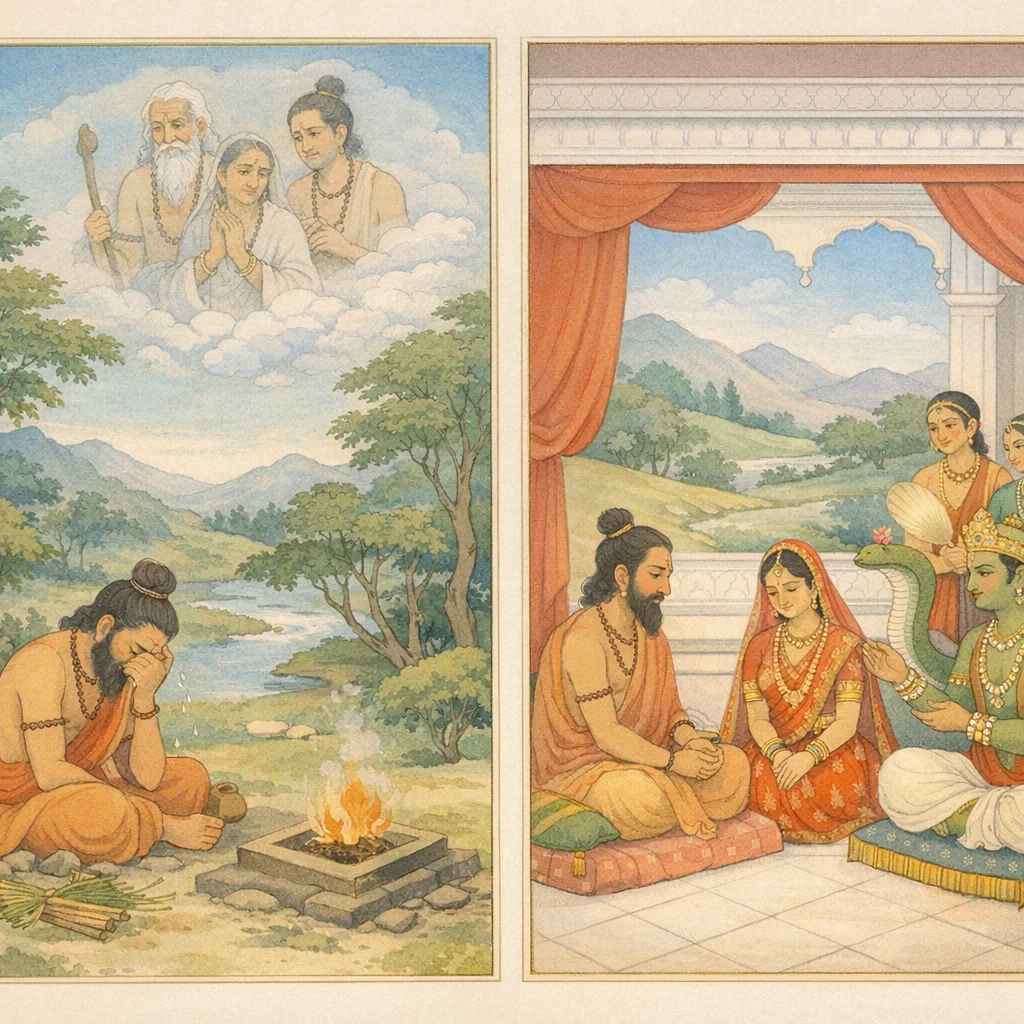
Chapter Arc: उग्रश्रवा सुनाते हैं कि जैसे ही जरत्कारु ने अपने पितरों को अधोगति में लटकते देखा, वे शोक से विह्वल हो आँसू बहाते हुए गद्गद वाणी में उनसे संवाद करते हैं—“मैं ही वह अपराधी पुत्र हूँ; बताइए, आपकी प्रिय-इच्छा के लिए मैं क्या करूँ?” → पितर स्पष्ट संकेत देते हैं कि वंश-परंपरा का तंतु टूट रहा है; पुत्र-उत्पत्ति के बिना उनका उद्धार नहीं। वैराग्य की ओर झुके जरत्कारु पर गृहस्थ-धर्म का दबाव बढ़ता है। वे स्वयं को दोषी मानकर दंड-योग्य कहते हैं, फिर भी पितृ-आज्ञा से विवाह हेतु निकलने का निश्चय करते हैं—पर शर्त रखते हैं कि कन्या ‘भिक्षा’ की भाँति दी जाए, नाम भी ‘जरत्कारु’ ही हो, और पालन-पोषण का भार वे न उठाएँ। → धरती भर में ‘कन्या-भिक्षा’ खोजते हुए अंततः नागेन्द्र वासुकि उन्हें अपनी बहन प्रदान करते हैं। पर जरत्कारु क्षण भर को संदेह में पड़ जाते हैं—“असनाम्नी” (मेरे नाम जैसी नहीं) तो नहीं? और “भरण” (पालन-पोषण) का भार मैं कैसे लूँ?—यही क्षण अध्याय का तीव्रतम तनाव है, जहाँ पितृ-उद्धार और संन्यास-वृत्ति आमने-सामने खड़े हैं। → जरत्कारु कन्या का नाम पूछते हैं और वासुकि से स्पष्ट कहते हैं कि वे उसका भरण-पोषण नहीं करेंगे—अर्थात विवाह-स्वीकृति उनकी कठोर शर्तों के अधीन ही संभव है। वासुकि, पितृ-कार्य और नाग-वंश की आवश्यकता से प्रेरित, इस संवाद को स्वीकार्यता की दिशा में ले जाता है। → कन्या का नाम और शर्तों पर अंतिम सहमति—क्या यह विवाह वास्तव में घटेगा और पितरों का उद्धार होगा? (अगले अध्याय की ओर संकेत)
Shlokas
Verse 1
उग्रश्रवाजी कहते हैं--शौनकजी! यह सुनकर जरत्कारु अत्यन्त शोकमें मग्न हो गये और दु:खसे आँसू बहाते हुए गदगद वाणीमें अपने पितरोंसे बोले
Ugraśravas said: “O Śaunaka, hearing this, Jaratkāru was overwhelmed by grief. His eyes streamed with tears, and with a voice choked by sorrow he addressed his forefathers.” The passage frames a moral urgency: one’s duties toward ancestors and lineage are not merely personal concerns but part of a wider ethical order, and neglect of them can become a cause of profound remorse.
Verse 2
जरत्कारुर्वाच मम पूर्वे भवन्तो वै पितर: सपितामहा: । तद् ब्रूत यन्मया कार्य भवतां प्रियकाम्यया,जरत्कारुने कहा--आप मेरे ही पूर्वज पिता और पितामह आदि हैं। अतः बताइये आपका प्रिय करनेके लिये मुझे क्या करना चाहिये। मैं ही आपलोगोंका पुत्र पापी जरत्कारु हूँ। आप मुझ अकृतात्मा पापीको इच्छानुसार दण्ड दें
Jaratkāru said: “You are indeed my forefathers—my fathers and grandfathers. Therefore tell me what I should do, desiring to act for your welfare and satisfaction. I am your son, Jaratkāru, stained by sin; punish me as you wish, for I am of unfulfilled discipline and blameworthy.”
Verse 3
अहमेव जरत्कारु: किल्बिषी भवतां सुतः । ते दण्डं धारयत मे दुष्कृतेरकृतात्मन:,जरत्कारुने कहा--आप मेरे ही पूर्वज पिता और पितामह आदि हैं। अतः बताइये आपका प्रिय करनेके लिये मुझे क्या करना चाहिये। मैं ही आपलोगोंका पुत्र पापी जरत्कारु हूँ। आप मुझ अकृतात्मा पापीको इच्छानुसार दण्ड दें
Takṣaka said: “I am indeed Jaratkāru—your sinful son. For the wrongdoing of me, a man of ungoverned self, you may impose upon me whatever punishment you deem fit.”
Verse 4
पितर ऊचु. पुत्र दिष्ट्यासि सम्प्राप्त इमं देशं यदृच्छया । किमर्थ च त्वया ब्रह्मन् न कृतो दारसंग्रह:,पितर बोले--पुत्र! बड़े सौभाग्यकी बात है जो तुम अकस्मात् इस स्थानपर आ गये। ब्रह्मन! तुमने अबतक विवाह क्यों नहीं किया?
The Fathers said: “Son, it is indeed fortunate that you have arrived at this place by chance. O Brahmin, for what reason have you not yet taken a wife and entered the householder’s state?”
Verse 5
जरत्कारुर्वाच ममायं पितरो नित्य यद्यर्थ: परिवर्तते | ऊर्ध्वरेता: शरीर वै प्रापयेयममुत्र वै,जरत्कारुने कहा--पितृगण! मेरे हृदयमें यह बात निरन्तर घूमती रहती थी कि मैं ऊर्ध्विता (अखण्ड ब्रह्मचर्यका पालक) होकर इस शरीरको परलोक ([पुष्यधाम)-में पहुँचाऊँ
Jaratkāru said: “O Fathers, this thought has constantly revolved within me: that, remaining an ūrdhvaretas—one who preserves strict continence—I might carry this very body onward to the other world.”
Verse 6
न दारान् वै करिष्येडहमिति मे भावितं मन: । एवं दृष्टवा तु भवत: शकुन्तानिव लम्बत:,अतः मैंने अपने मनमें यह दृढ़ निश्चय कर लिया था कि “मैं कभी पत्नी-परिग्रह (विवाह) नहीं करूँगा।” किंतु पितामहो! आपको पक्षियोंकी भाँति लटकते देख अखण्ड ब्रह्मचर्यके पालन-सम्बन्धी निश्चयसे मैंने अपनी बुद्धि लौटा ली है। अब मैं आपका प्रिय मनोरथ पूर्ण करूँगा, निश्चय ही विवाह कर लूँगा
Takṣaka said: “I had firmly resolved in my mind, ‘I will never take a wife.’ But, seeing you hanging like a bird, my revered elder, I have turned back from that resolve of strict celibacy. Now I shall fulfill what you desire; I will indeed marry.”
Verse 7
मया निवर्तिता बुद्धिरब्रह्मचर्यात् पितामहा: । करिष्ये व: प्रियं काम॑ निवेक्ष्येडहहमसंशयम्,अतः मैंने अपने मनमें यह दृढ़ निश्चय कर लिया था कि “मैं कभी पत्नी-परिग्रह (विवाह) नहीं करूँगा।” किंतु पितामहो! आपको पक्षियोंकी भाँति लटकते देख अखण्ड ब्रह्मचर्यके पालन-सम्बन्धी निश्चयसे मैंने अपनी बुद्धि लौटा ली है। अब मैं आपका प्रिय मनोरथ पूर्ण करूँगा, निश्चय ही विवाह कर लूँगा
Takṣaka said: “Grandfather, I had turned my mind away from the path of non-celibacy, resolved to remain without taking a wife. But seeing you hanging like a bird, I have withdrawn that resolve of lifelong celibacy. I will now fulfill what is dear to you—without doubt, I will enter household life (marriage).”
Verse 8
सनाम्नीं यद्य॒हं कनन््यामुपलप्स्ये कदाचन । भविष्यति च या काचिद् भैक्ष्यवत् स्वयमुद्यता,(परंतु इसके लिये एक शर्त होगी--) “यदि मैं कभी अपने ही जैसे नामवाली कुमारी कन्या पाऊँगा, उसमें भी जो भिक्षाकी भाँति बिना माँगे स्वयं ही विवाहके लिये प्रस्तुत हो जायगी और जिसके पालन-पोषणका भार मुझपर न होगा, उसीका मैं पाणिग्रहण करूँगा।” यदि ऐसा विवाह मुझे सुलभ हो जाय तो कर लूँगा, अन्यथा विवाह करूँगा ही नहीं। पितामहो! यह मेरा सत्य निश्चय है
Takṣaka said: “If ever I should find a maiden bearing the same name as mine, and if there is any such girl who, like alms, comes forward of her own accord for marriage—without being sought—and whose maintenance does not become a burden upon me, then I will take her hand in marriage. If such a marriage is easily obtained, I will accept it; otherwise I will not marry at all. Grandfather, this is my firm and truthful resolve.”
Verse 9
प्रतिग्रहीता तामस्मि न भरेयं च यामहम् । एवंविधमहं कुर्या निवेशं प्राप्तुयां यदि । अन्यथा न करिष्ये5हं सत्यमेतत् पितामहा:,(परंतु इसके लिये एक शर्त होगी--) “यदि मैं कभी अपने ही जैसे नामवाली कुमारी कन्या पाऊँगा, उसमें भी जो भिक्षाकी भाँति बिना माँगे स्वयं ही विवाहके लिये प्रस्तुत हो जायगी और जिसके पालन-पोषणका भार मुझपर न होगा, उसीका मैं पाणिग्रहण करूँगा।” यदि ऐसा विवाह मुझे सुलभ हो जाय तो कर लूँगा, अन्यथा विवाह करूँगा ही नहीं। पितामहो! यह मेरा सत्य निश्चय है
Takṣaka said: “I am prepared to accept her hand, yet I will not undertake the burden of maintaining a wife. I would enter into such a marriage only if I were to obtain a maiden of my own name and kind—one who, like an unsolicited alms, offers herself for marriage without being asked, and whose upkeep does not fall upon me. If such a match becomes available, I will marry; otherwise I will not marry at all. Grandfather, this is my truthful resolve.”
Verse 10
तत्र चोत्पत्स्यते जन्तुर्भवतां तारणाय वै । शाश्वताश्चाव्ययाश्वैव तिष्ठन्तु पितरो मम,वैसे विवाहसे जो पत्नी मिलेगी, उसीके गर्भसे आपलोगोंको तारनेके लिये कोई प्राणी उत्पन्न होगा। मैं चाहता हूँ मेरे पितर नित्य शाश्वत लोकोंमें बने रहें, वहाँ वे अक्षय सुखके भागी हों
Verse 11
सौतिरुवाच एवमुक्त्वा तु स के श्वचार पृथिवीं मुनि: । न च सम लभते भार्या वृद्धोड्यमिति शौनक,उग्रश्रवाजी कहते हैं--शौनकजी! इस प्रकार पितरोंसे कहकर जरत्कारु मुनि पूर्ववत् पृथ्वीपर विचरने लगे। परंतु “यह बूढ़ा है” ऐसा समझकर किसीने कन्या नहीं दी, अतः उन्हें पत्नी उपलब्ध न हो सकी
Sauti said: Having spoken thus, the sage wandered over the earth as before. Yet he could not obtain a wife, for people, thinking, “He is old,” would not give him a maiden. The passage underscores the tension between urgent ancestral duty and society’s outward judgments that obstruct the fulfillment of dharma.
Verse 12
यदा निर्वेदमापन्न: पितृभिश्नोदितस्तथा । तदारण्यं स गत्वोच्चैश्लुक्रोश भृूशदु:खित:,जब वे विवाहकी प्रतीक्षामें खिन्न हो गये, तब पितरोंसे प्रेरित होनेके कारण वनमें जाकर अत्यन्त दुःखी हो जोर-जोरसे ब्याहके लिये पुकारने लगे
When he had fallen into deep despondency, and was likewise urged on by the ancestral spirits, he went into the forest; there, overwhelmed with intense sorrow, he cried out loudly—calling again and again for a marriage to be arranged. The passage frames his personal frustration as being intensified by the pressure of lineage and ancestral expectation, showing how private desire and social duty can collide and drive a person into anguish.
Verse 13
स त्वरण्यगतः प्राज्ञ: पितृणां हितकाम्यया । उवाच कनन््यां याचामि तिसत्रो वाच: शनैरिमा:,वनमें जानेपर विद्वान् जरत्कारुने पितरोंके हितकी कामनासे तीन बार धीरे-धीरे यह बात कही--मैं कन्या माँगता हूँ”
Having gone into the forest, the wise man—seeking the welfare of his forefathers—spoke these words softly, three times: “I ask for a maiden (in marriage).” The moment underscores a dharmic motive: personal desire is subordinated to ancestral duty and the restoration of a broken familial obligation.
Verse 14
यानि भूतानि सन्तीह स्थावराणि चराणि च । अन्तर्हितानि वा यानि तानि शृण्वन्तु मे वच:,(फिर जोरसे बोले--) “यहाँ जो स्थावर-जंगम, दृश्य या अदृश्य प्राणी हैं, वे सब मेरी बात सुनें---
Takṣaka said: “Let all beings that exist here—whether immobile or moving, whether visible or hidden—listen to my words.”
Verse 15
उग्रे तपसि वर्तन्ते पितरश्वोदयन्ति माम् । निविशस्वेति दु:खार्ता: संतानस्य चिकीर्षया,“मेरे पितर भयंकर कष्टमें पड़े हैं और दुःखसे आतुर हो संतान-प्राप्तिकी इच्छा रखकर मुझे प्रेरित कर रहे हैं कि 'तुम विवाह कर लो”
Takṣaka said: “My forefathers are engaged in severe austerity, and they urge me on. Afflicted by sorrow and longing for progeny, they press me, saying, ‘Settle into household life—marry.’”
Verse 16
निवेशायाखिलां भूमिं कन्याभैक्ष्यं चरामि भो: । दरिद्रो दःखशीलश्न पितृभि: संनियोजित:,“अतः विवाहके लिये मैं सारी पृथ्वीपर घूमकर कन्याकी भिक्षा चाहता हूँ। यद्यपि मैं दरिद्र हूँ और सुविधाओंके अभावमें दुःखी हूँ, तो भी पितरोंकी आज्ञासे विवाहके लिये उद्यत हूँ
Verse 17
यस्य कन्यास्ति भूतस्य ये मयेह प्रकीर्तिता: । ते मे कन्यां प्रयच्छन्तु चरत: सर्वतोदिशम्,“मैंने यहाँ जिनका नाम लेकर पुकारा है, उनमेंसे जिस किसी भी प्राणीके पास विवाहके योग्य विख्यात गुणोंवाली कन्या हो, वह सब दिशाओंमें विचरनेवाले मुझ ब्राह्मणगको अपनी कन्या दे
Verse 18
मम कन्या सनाम्नी या भैक्ष्यवच्चोदिता भवेत् | भरेय॑ चैव यां नाहं तां मे कनन््यां प्रयच्छत,“जो कन्या मेरे ही जैसे नामवाली हो, भिक्षाकी भाँति मुझे दी जा सकती हो और जिसके भरण-पोषणका भार मुझपर न हो, ऐसी कन्या कोई मुझे दे”
Takṣaka said: “Give me a maiden who bears the same name as I do—one who can be handed over to me as easily as alms are given, and whose maintenance will not fall upon me. Provide me such a girl.”
Verse 19
ततस्ते पन्नगा ये वै जरत्कारौ समाहिता: । तामादाय प्रवृत्ति ते वासुके: प्रत्यवेदयन्,तब उन नागोंने जो जरत्कारु मुनिकी खोजमें लगाये गये थे, उनका यह समाचार पाकर उन्होंने नागराज वासुकिको सूचित किया
Then those serpents who had been attentively assigned to search for Jaratkāru, having obtained this report, carried the news and informed Vāsuki, the king of the Nāgas. The episode underscores disciplined service to one’s leader and the swift communication of intelligence in pursuit of a larger communal duty.
Verse 20
तेषां श्रुत्वा स नागेन्द्रस्तां कन््यां समलंकृताम् । प्रगृह्मारण्यमगमत् समीप॑ं तस्य पन्नग:,उनकी बात सुनकर नागराज वासुकि अपनी उस कुमारी बहिनको वस्त्राभूषणोंसे विभूषित करके साथ ले वनमें मुनिके समीप गये
Hearing their words, the lord of serpents had that maiden adorned with garments and ornaments. Taking her with him, the serpent went into the forest and approached the sage—acting promptly to carry out what had been agreed, and showing the weight of pledged word and duty even among the Nāgas.
Verse 21
तत्र तां भैक्ष्यवत् कन्यां प्रादात् तस्मै महात्मने । नागेन्द्रो वासुकिर्ब्रह्मनू न स तां प्रत्यगृह्लत,ब्रह्मन! वहाँ नागेन्द्र वासुकिने महात्मा जरत्कारुको भिक्षाकी भाँति वह कन्या समर्पित की; किंतु उन्होंने सहसा उसे स्वीकार नहीं किया
Thereupon, O Brāhmaṇa, the lord of serpents Vāsuki offered that maiden to the noble Jaratkāru as though she were alms given to a mendicant. Yet Jaratkāru did not at once accept her—signaling his careful adherence to the conditions of dharma and propriety in marriage rather than a hasty consent.
Verse 22
असनामेति वै मत्वा भरणे चाविचारिते । मोक्षभावे स्थितश्नापि मन्दीभूत: परिग्रहे,सोचा, सम्भव है। यह कन्या मेरे-जैसे नामवाली न हो। इसके भरण-पोषणका भार किसपर रहेगा, इस बातका निर्णय भी अभीतक नहीं हो पाया है। इसके सिवा मैं मोक्षभावमें स्थित हूँ, यही सोचकर उन्होंने पत्नी-परिग्रहमें शिथिलता दिखायी। भृगुनन्दन! इसीलिये पहले उन्होंने वासुकिसे उस कन्याका नाम पूछा और यह स्पष्ट कह दिया---मैं इसका भरण-पोषण नहीं करूँगा”
Takṣaka said: “Thinking, ‘She may not bear the same name as I do,’ and with the question of her maintenance still undecided, he—though established in a mood of renunciation—grew slack in taking on the burden of a wife. Therefore, O descendant of Bhṛgu, he first asked Vāsuki the girl’s name and stated plainly: ‘I will not undertake her upkeep.’”
Verse 23
ततो नाम स कन्याया: पप्रच्छ भृगुनन्दन । वासुकिं भरणं चास्या न कुर्यामित्युवाच ह,सोचा, सम्भव है। यह कन्या मेरे-जैसे नामवाली न हो। इसके भरण-पोषणका भार किसपर रहेगा, इस बातका निर्णय भी अभीतक नहीं हो पाया है। इसके सिवा मैं मोक्षभावमें स्थित हूँ, यही सोचकर उन्होंने पत्नी-परिग्रहमें शिथिलता दिखायी। भृगुनन्दन! इसीलिये पहले उन्होंने वासुकिसे उस कन्याका नाम पूछा और यह स्पष्ट कह दिया---मैं इसका भरण-पोषण नहीं करूँगा”
Then he asked the name of the girl, O delight of the Bhṛgus. And he clearly declared, “I will not undertake her maintenance,” indicating reluctance to assume responsibility for her upbringing and support. In narrative terms, the verse foregrounds the ethical tension between kinship/guardianship duties and a speaker’s attempt to withdraw from worldly obligations.
Verse 46
इति श्रीमहाभारते आदिपर्वणि आस्तीकपर्वणि वासुकिजरत्कारुसमागमे षट्चत्वारिंशो5ध्याय:
Thus ends the forty-sixth chapter of the Ādi Parva of the Śrī Mahābhārata, within the Āstīka section, describing the meeting of Vāsuki and Jaratkāru. This is a colophon marking the close of the chapter and situating the narrative within the larger ethical arc of lineage, duty, and the consequences of vows and curses.
Frequently Asked Questions
The chapter stages a dharma-sankat between royal authority and ascetic sanctity: a king’s moment of disrespect triggers a curse, while a healer’s duty to protect life is compromised by inducement, raising questions of responsibility, proportionality, and preventability.
Ethical causality is shown as cumulative: small breaches of restraint can activate large consequences, and social trust collapses when protectors (rulers or healers) fail their roles; vigilance and humility toward tapas are presented as stabilizing virtues.
No explicit phalaśruti is stated; the meta-function is etiological—explaining the grounds of Janamejaya’s later ritual-political action and positioning the episode as a cautionary link in the epic’s broader dharma–karma framework.