Adhyaya 204
Tilottamā, Sunda–Upasunda, and the Pāṇḍava Samaya (Ādi Parva 204)
Upa-parva: Draupadī-Svayaṃvara and Pāṇḍava Samaya (Tilottamā–Sunda-Upasunda Exemplum)
Nārada recounts that the daitya-brothers Sunda and Upasunda, after subduing the earth and extracting treasures, live in unopposed pleasure. While enjoying revelry in the Vindhya region, they see Tilottamā gathering flowers; intoxicated and desire-driven, each seizes one of her hands and claims exclusive right. Anger escalates into armed confrontation; they strike one another with maces and fall dead, causing their followers to flee in fear. Brahmā arrives with gods and sages to honor Tilottamā, grants her a boon and declares her unassailable in beauty; he then restores governance to Indra and returns to Brahmaloka. Nārada applies the exemplum as counsel to the Pāṇḍavas: they must avoid division concerning Draupadī. Vaiśaṃpāyana concludes that the Pāṇḍavas, in Nārada’s presence, establish a rule: whoever intrudes upon another while seated with Draupadī must live twelve years in the forest as a celibate; thereafter they maintain mutual non-interference.
Chapter Arc: धृतराष्ट्र के सम्मुख विदुर, भीष्म और द्रोण के पूर्वोक्त हित-वचनों का समर्थन करते हुए निर्भीकता से कहते हैं कि राजा को बान्धवों द्वारा ‘श्रेयो’ ही सुनना चाहिए—प्रिय नहीं, सत्य। → विदुर धृतराष्ट्र को स्मरण कराते हैं कि भीष्म- द्रोण ने जो हित कहा, उसे कर्ण ‘हित’ नहीं मानता; और राजा के पास ऐसा कोई समर्थ पुरुष नहीं जो अर्जुन-भीम जैसे सिंहों से बढ़कर हो। पाण्डव-पक्ष की शक्ति—भीम का अतुल बल, कृष्ण का मन्त्रित्व, बलराम-सात्यकि का पक्ष—एक-एक कर उजागर होती जाती है। → विदुर का निर्णायक निष्कर्ष: ‘यतः कृष्णस्ततः सर्वे, यतः कृष्णस्ततो जयः’—जहाँ कृष्ण हैं, वहीं समस्त सामर्थ्य और विजय है; अतः दुर्योधन के अपराध से राज्य-प्रजा का विनाश निश्चित है, यदि अभी भी नीति न बदली। → विदुर धृतराष्ट्र को अंतिम बार चेताते हैं कि वे गुणवान होकर भी पुत्रमोह में फँसकर कुल-क्षय का कारण न बनें; भीष्म-द्रोण की सम्मति स्वीकार कर शान्ति-मार्ग अपनाएँ। → धृतराष्ट्र क्या विदुर की कठोर-हितकारी वाणी स्वीकार करेंगे, या दुर्योधन के पक्ष में रहकर अनिवार्य विनाश की ओर बढ़ेंगे?
Shlokas
Verse 1
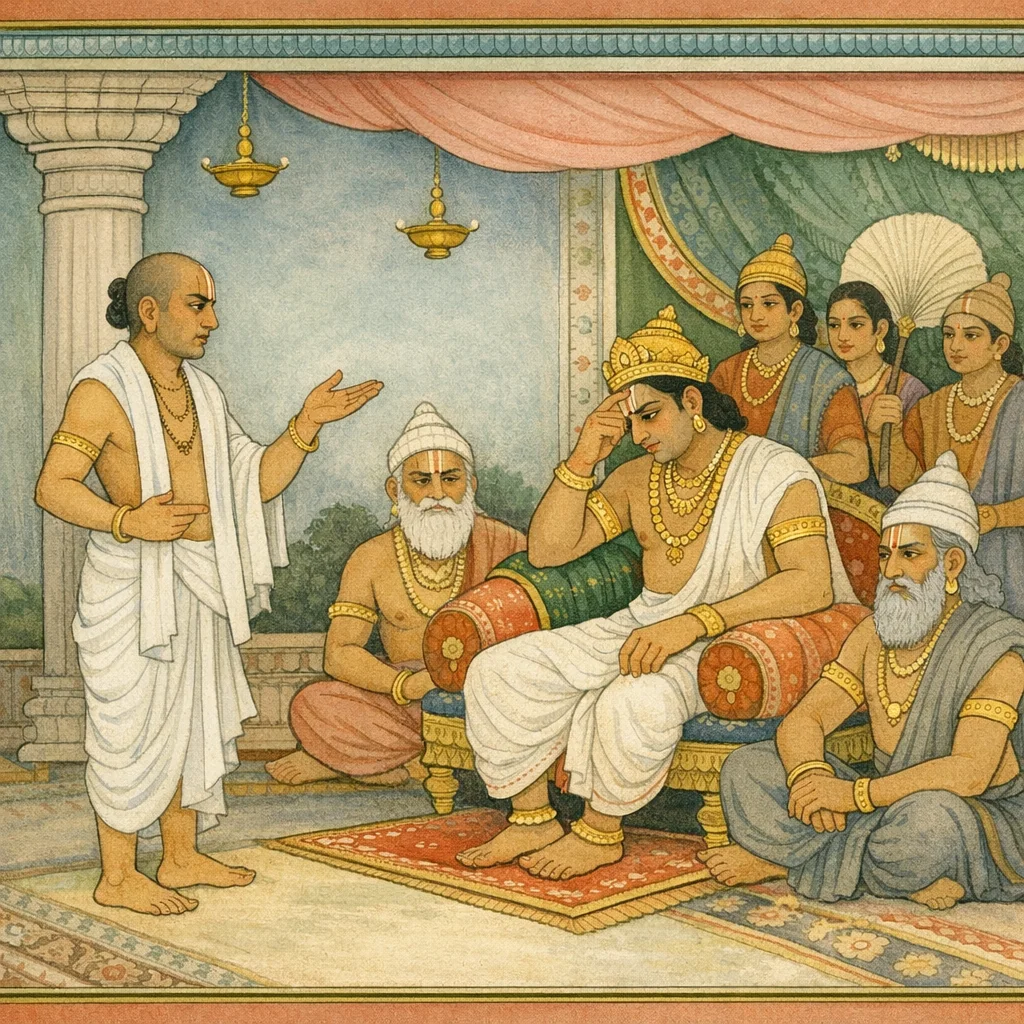
अफत--#क+ चतुर्राधिकद्विशततमो< ध्याय: विदुरजीकी सम्मति--द्रोण और भीष्मके वचनोंका ही समर्थन विदुर उवाच राजन् निःसंशयं श्रेयो वाच्यस्त्वमसि बान्धवै: । न त्वशुश्रूषमाणे वै वाक््यं सम्प्रतितिष्ठति,विदुरजी बोले--राजन्! आपके (हितैषी) बान्धवोंका यह कर्तव्य है कि वे आपको संदेहरहित हितकी बात बतायें। परंतु आप सुनना नहीं चाहते, इसलिये आपके भीतर उनकी कही हुई हितकी बात भी ठहर नहीं पा रही है
Vidura said: “O King, your kinsmen and well-wishers are duty-bound to tell you, without hesitation, what is truly for your good. But when you are unwilling to listen, their wholesome counsel finds no footing within you and cannot take root.”
Verse 2
प्रियं हितं च तद् वाक्यमुक्तवान् कुरुसत्तम: । भीष्म: शांतनवो राजन प्रतिगृह्नासि तन्न च,राजन! कुरुश्रेष्ठ शंतनुनन्दन भीष्मने आपसे प्रिय और हितकी बात कही है; परंतु आप उसे ग्रहण नहीं कर रहे हैं। इसी प्रकार आचार्य द्रोणने अनेक प्रकारसे आपके लिये उत्तम हितकी बात बतायी है; किंतु राधानन्दन कर्ण उसे आपके लिये हितकर नहीं मानते
Vidura said: “O king, Bhishma, the son of Shantanu—foremost among the Kurus—has spoken words that are both pleasing and truly beneficial. Yet you do not accept them.”
Verse 3
तथा द्रोणेन बहुधा भाषितं हितमुत्तमम् । तच्च राधासुत: कर्णो मनन््यते न हित॑ तव,राजन! कुरुश्रेष्ठ शंतनुनन्दन भीष्मने आपसे प्रिय और हितकी बात कही है; परंतु आप उसे ग्रहण नहीं कर रहे हैं। इसी प्रकार आचार्य द्रोणने अनेक प्रकारसे आपके लिये उत्तम हितकी बात बतायी है; किंतु राधानन्दन कर्ण उसे आपके लिये हितकर नहीं मानते
Vidura says: “Likewise, Droṇa has spoken to you in many ways—excellent counsel meant for your welfare. Yet Karṇa, the son of Rādhā, does not regard that counsel as beneficial for you, O king.” The ethical thrust is a warning that a ruler’s good is undermined when wise advice is rejected and when close allies redefine ‘benefit’ according to pride, rivalry, or factional interest rather than dharma and long-term stability.
Verse 4
चिन्तयंश्व न पश्यामि राजंस्तव सुद्दत्तमम् । आशभ्यां पुरुषसिंहा भ्यां यो वा स्यात् प्रज्याधिक:,महाराज! मैं बहुत सोचने-विचारनेपर भी आपके किसी ऐसे परम सुहृद् व्यक्तिको नहीं देखता, जो इन दोनों वीर महापुरुषोंसे बुद्धि या विचारशक्तिमें अधिक हो
Vidura said: O King, even after much reflection I do not see among your closest well-wishers anyone more perfectly endowed than those two lion-like men—anyone who could surpass them in discernment and sound judgment. The ethical thrust is a warning: a ruler should recognize true wisdom and counsel, and not let partiality or suspicion eclipse the best advisers and allies.
Verse 5
इमौ हि वृद्धौ वयसा प्रज्ञया च श्रुतेन च । समौ च त्वयि राजेन्द्र तथा पाण्डुसुतेषु च,राजेन्द्र! अवस्था, बुद्धि और शास्त्रज्ञान--सभी बातोंमें ये दोनों बढ़े-चढ़े हैं और आपफमें तथा पाण्डवोंमें समानभाव रखते हैं
Vidura says: “These two elders are superior in age, wisdom, and learning. O best of kings, they hold an equal attitude toward you and toward the sons of Pāṇḍu as well.” The ethical force of the statement is a counsel to respect impartial, well-qualified elders whose judgment is not swayed by faction.
Verse 6
धर्मे चानवरौ राजन् सत्यतायां च भारत । रामाद् दाशरथेश्वैव गयाच्चैव न संशय:,भरतवंशी नरेश! ये दोनों धर्म और सत्यवादितामें दशरथनन्दन श्रीराम तथा राजा गयसे कम नहीं हैं। मेरा यह कथन सर्वथा संशयरहित है
Vidura said: “O King, O scion of Bharata, in righteousness and in devotion to truth these two are in no way inferior—neither to Rāma, the son of Daśaratha, nor to King Gaya. Of this there is no doubt.”
Verse 7
न चोक्तवन्तावश्रेय: पुरस्तादपि किंचन । न चाप्यपकृतं किंचिदनयोर्लक्ष्यते त्वयि,उन्होंने आपके सामने भी (कभी) कोई ऐसी बात नहीं कही होगी, जो आपके लिये अनिष्टकारक सिद्ध हुई हो तथा इनके द्वारा आपका कुछ अपकार हुआ हो, ऐसा भी देखनेमें नहीं आता
Vidura said: “Nor have those two ever spoken anything in your presence that could bring you harm; and no act of injury by them toward you is seen at all. Therefore, the suspicion you hold against them has no evident basis in word or deed.”
Verse 8
तावुभौ पुरुषव्याप्रावनागसि नृपे त्वयि । न मन्त्रयेतां त्वच्छेय: कथं सत्यपराक्रमौ,महाराज! आपने भी इनका कोई अपराध नहीं किया है; फिर ये दोनों सत्यपराक्रमी पुरुषसिंह आपको हितकारक सलाह न दें, यह कैसे हो सकता है?
Vidura said: “O King, you have committed no offense against those two energetic and noble men. How, then, could they—men whose valor is grounded in truth—fail to counsel you for your welfare, O great king?”
Verse 9
प्रज्ञावन्ती नरश्रेष्ठावस्मिललोके नराधिप । त्वन्निमित्तमतो नेमौ किंचिज्जिद्यां वदिष्यत:,नरेश्वर! ये दोनों इस लोकमें नरश्रेष्ठ और बुद्धिमान हैं, अतः आपके लिये ये कोई कुटिलतापूर्ण बात नहीं कहेंगे
Vidura said: “O king, these two are the foremost of men and wise in this world. Therefore, for your sake, they will not speak anything crooked or deceitful.”
Verse 10
इति मे नैछिकी बुद्धिर्वर्ततेि कुरुनन्दन । न चार्थहेतोर्धर्मज्ञौ वक्ष्यत: पक्षसंश्रितम्,कुरुनन्दन! इनके विषयमें मेरा यह निश्चित विचार है कि ये दोनों धर्मके ज्ञाता महापुरुष हैं, अतः स्वार्थके लिये किसी एक ही पक्षको लाभ पहुँचाने-वाली बात नहीं कहेंगे
“Such is my settled conviction, O joy of the Kurus: those two are knowers of dharma, and therefore they will not, for the sake of personal gain, speak words that cling to one side or serve a partisan interest.”
Verse 11
एतद्धि परम श्रेयो मन्ये5हं तव भारत । दुर्योधनप्रभूतय: पुत्रा राजन् यथा तव,भारत! इन्होंने जो सम्मति दी है, इसीको मैं आपके लिये परम कल्याणकारक मानता हूँ। महाराज! जैसे दुर्योधन आदि आपके पुत्र हैं, वैसे ही पाण्डव भी आपके पुत्र हैं--इसमें संशय नहीं है। इस बातको न जाननेवाले कुछ मन्त्री यदि आपको पाण्डवोंके अहितकी सलाह दें तो यह कहना पड़ेगा कि वे मन्त्रीलोग, आपका कल्याण किस बातमें है, यह विशेषरूपमें नहीं देख पा रहे हैं। राजन! यदि आपके ह्ृदयमें अपने पुत्रोंपर विशेष पक्षपात है तो आपके भीतरके छिपे हुए भावको बाहर सबके सामने प्रकट करनेवाले लोग निश्चय ही आपका भला नहीं कर सकते
Vidura said: “O Bharata, I consider this to be the highest good for you. O King, just as Duryodhana and the others are your sons, so too are the Pāṇḍavas your sons—there is no doubt about this. If some ministers, failing to grasp this truth, advise you to harm the Pāṇḍavas, it must be said that they do not clearly perceive where your true welfare lies. And if your heart harbors a special partiality toward your own sons, then those who expose that hidden bias before all cannot truly be acting for your benefit.”
Verse 12
तथैव पाण्डवेयास्ते पुत्रा राजन् न संशय: । तेषु चेदहितं किंचिन्मन्त्रयेयुरतद्विद:,भारत! इन्होंने जो सम्मति दी है, इसीको मैं आपके लिये परम कल्याणकारक मानता हूँ। महाराज! जैसे दुर्योधन आदि आपके पुत्र हैं, वैसे ही पाण्डव भी आपके पुत्र हैं--इसमें संशय नहीं है। इस बातको न जाननेवाले कुछ मन्त्री यदि आपको पाण्डवोंके अहितकी सलाह दें तो यह कहना पड़ेगा कि वे मन्त्रीलोग, आपका कल्याण किस बातमें है, यह विशेषरूपमें नहीं देख पा रहे हैं। राजन! यदि आपके ह्ृदयमें अपने पुत्रोंपर विशेष पक्षपात है तो आपके भीतरके छिपे हुए भावको बाहर सबके सामने प्रकट करनेवाले लोग निश्चय ही आपका भला नहीं कर सकते
Vidura said: “So too, O King—without any doubt—the sons of Pāṇḍu are your sons. If some advisers, lacking true discernment, were to counsel you toward anything harmful to the Pāṇḍavas, it would have to be said that those ministers do not clearly perceive where your real welfare lies.”
Verse 13
मन्त्रिणस्ते न च श्रेय: प्रपश्यन्ति विशेषत: । अथ ते हृदये राजन् विशेष: स्वेषु वर्तते । अन्तरस्थं विवृण्वाना: श्रेय: कुर्युर्न ते ध्रुवम्,भारत! इन्होंने जो सम्मति दी है, इसीको मैं आपके लिये परम कल्याणकारक मानता हूँ। महाराज! जैसे दुर्योधन आदि आपके पुत्र हैं, वैसे ही पाण्डव भी आपके पुत्र हैं--इसमें संशय नहीं है। इस बातको न जाननेवाले कुछ मन्त्री यदि आपको पाण्डवोंके अहितकी सलाह दें तो यह कहना पड़ेगा कि वे मन्त्रीलोग, आपका कल्याण किस बातमें है, यह विशेषरूपमें नहीं देख पा रहे हैं। राजन! यदि आपके ह्ृदयमें अपने पुत्रोंपर विशेष पक्षपात है तो आपके भीतरके छिपे हुए भावको बाहर सबके सामने प्रकट करनेवाले लोग निश्चय ही आपका भला नहीं कर सकते
Vidura said: “Your ministers do not clearly discern what is truly beneficial for you. And if, O King, there is a special partiality in your heart toward your own sons, then those who merely expose the hidden feelings within you before others will certainly not bring about your lasting good, O Bharata.”
Verse 14
एतदर्थमिमौ राजन् महात्मानौ महाद्युती । नोचतुर्विवृतं किंचिन्न होष तव निश्चय:,महाराज! इसीलिये ये दोनों महातेजस्वी महात्मा आपके सामने कुछ खोलकर नहीं कह सके हैं। इन्होंने आपको ठीक ही सलाह दी है; परंतु आप उसे निश्चितरूपसे स्वीकार नहीं करते हैं
Vidura said: “For this very reason, O King, these two great-souled, radiant men could not speak anything to you in an open and explicit way. They have indeed offered you sound counsel; yet your resolve does not settle upon it.”
Verse 15
यच्चाप्यशक्यतां तेषामाहतु: पुरुषर्षभौ । तत् तथा पुरुषव्याप्र तव तद् भद्रमस्तु ते,इन पुरुषशिरोमणियोंने जो पाण्डवोंके अजेय होनेकी बात बतायी है, वह बिलकुल ठीक है। पुरुषसिंह! आपका कल्याण हो
Vidura said: “And as for what those two best of men declared—that the Pāṇḍavas are impossible to overcome—this is indeed exactly so. O tiger among men, may that truth turn to your welfare.”
Verse 16
कथं हि पाण्डव: श्रीमान् सव्यसाची धनंजय: । शक्यो विजेतुं संग्रामे राजन् मघवतापि हि,राजन! दायें-बायें दोनों हाथोंसे बाण चलानेवाले श्रीमान् पाण्डुकुमार धनंजयको साक्षात् इन्द्र भी युद्धमें कैसे जीत सकते हैं?
Vidura asks, in a pointed moral warning to the king: “How could the illustrious Pāṇḍava, Dhanañjaya—Arjuna, famed as Savyasācī for his ambidextrous mastery—ever be conquered in battle? O King, even Maghavat (Indra) himself could scarcely defeat him in war.” The statement underscores Vidura’s ethical counsel: reckless hostility toward the righteous and capable invites ruin, and wise rule requires restraint and discernment rather than prideful aggression.
Verse 17
भीमसेनो महाबाहुर्नागायुतबलो महान् | कथं सम युधि शक््येत विजेतुममरैरपि,दस हजार हाथियोंके समान महान् बलवान् महाबाहु भीमसेनको युद्धमें देवता भी कैसे जीत सकते हैं?
Vidura said: “Bhīmasena, the mighty-armed hero, is vast in strength—equal to ten thousand elephants. How could he possibly be conquered in battle, even by the gods themselves?”
Verse 18
तथैव कृतिनौ युद्धे यमौ यमसुताविव । कथं विजेतुं शक््यौ तौ रणे जीवितुमिच्छता,इसी प्रकार जो जीवित रहना चाहता है, उसके द्वारा युद्धमें निपुण तथा यमराजके पुत्रोंकी भाँति भयंकर दोनों भाई नकुल-सहदेव कैसे जीते जा सकते हैं?
Likewise, those two—skilled in battle, the twin brothers, dreadful like the sons of Yama—how could they be overcome in war by one who still wishes to preserve his life? Vidura’s point is ethical as well as practical: to choose a course that provokes such warriors is to invite ruin, and prudent counsel restrains reckless hostility.
Verse 19
यस्मिन् धृतिरनुक्रोश: क्षमा सत्यं पराक्रम: । नित्यानि पाण्डवे ज्येष्ठे स जीयेत रणे कथम्,जिन ज्येष्ठ पाण्डव युधिष्ठिरमें धैर्य, दया, क्षमा, सत्य और पराक्रम आदि गुण नित्य निवास करते हैं, उन्हें रणभूमिमें कैसे हटाया जा सकता है?
Vidura said: “In the eldest of the Pāṇḍavas, steadfastness, compassion, forgiveness, truthfulness, and heroic strength abide continually. How, then, could such a man ever be overcome in battle?”
Verse 20
येषां पक्षधरो रामो येषां मन्त्री जनार्दन: । कि नु तैरजितं संख्ये येषां पक्षे च सात्यकि:,बलरामजी जिनके पक्षपाती हैं, भगवान् श्रीकृष्ण जिनके सलाहकार हैं तथा जिनके पक्षमें सात्यकि-जैसा वीर है, वे पाण्डव युद्धमें किसे नहीं परास्त कर देंगे?
Vidura says: When Balarāma stands as their supporter, when Janārdana (Śrī Kṛṣṇa) serves as their counsellor, and when a hero like Sātyaki fights on their side—whom could those men fail to defeat in battle? The verse underscores that righteous strength is amplified by wise counsel and steadfast allies, making victory in a just cause appear inevitable.
Verse 21
ट्रुपद: श्वशुरो येषां येषां श्यालाश्व पार्षता: । धृष्टद्युम्नमुखा वीरा भ्रातरो द्रुपदात्मजा:,द्रपद जिनके श्वशुर हैं और उनके पुत्र पृषतवंशी धृष्टद्युम्न आदि वीर भ्राता जिनके साले हैं, भारत! ऐसे पाण्डवोंको रणभूमिमें जीतना असम्भव है। इस बातको जानकर तथा पहले उनके पिताका राज्य होनेके कारण वे ही धर्मपूर्वक इस राज्यके उत्तराधिकारी हैं, इस बातकी ओर ध्यान देकर आप उनके साथ उत्तम बर्ताव कीजिये
Vidura said: “Those for whom Drupada is father-in-law, and for whom the Pārṣatas are brothers-in-law—those heroic sons of Drupada led by Dhṛṣṭadyumna—such Pāṇḍavas are impossible to defeat on the battlefield, O Bhārata. Knowing this, and also keeping in mind that, since their father previously held the kingdom, they are in justice the rightful heirs, you should treat them with the best conduct.”
Verse 22
सो<5शकक््यतां च विज्ञाय तेषामग्रे च भारत । दायाद्यतां च धर्मेण सम्यक् तेषु समाचर,द्रपद जिनके श्वशुर हैं और उनके पुत्र पृषतवंशी धृष्टद्युम्न आदि वीर भ्राता जिनके साले हैं, भारत! ऐसे पाण्डवोंको रणभूमिमें जीतना असम्भव है। इस बातको जानकर तथा पहले उनके पिताका राज्य होनेके कारण वे ही धर्मपूर्वक इस राज्यके उत्तराधिकारी हैं, इस बातकी ओर ध्यान देकर आप उनके साथ उत्तम बर्ताव कीजिये
Vidura said: “O Bhārata, recognizing their invincibility in battle, and also keeping in mind their prior claim—since their father formerly held the kingdom—treat them rightly. Acknowledge, in accordance with dharma, that they are the lawful heirs, and conduct yourself toward them with proper and honorable regard.”
Verse 23
इदं निर्दिष्टमयश: पुरोचनकृतं महत् | तेषामनुग्रहेणाद्य राजन् प्रक्षालयात्मन:,राजन! पुरोचनके हाथों जो कुछ कराया गया, उससे आपका बहुत बड़ा अपयश सब ओर फैल गया है। अपने उस कलंकको आज आप पाण्डवोंपर अनुग्रह करके थो डालिये
Vidura said: “This great disgrace, brought about by Purocana, has become widely known and has stained your name. O King, wash away that blemish today by showing favor to the Pāṇḍavas.”
Verse 24
तेषामनुग्रहश्चायं सर्वेषां चैव न: कुले । जीवितं च परं श्रेय: क्षत्रस्यथ च विवर्धनम्,पाण्डवोंपर किया हुआ यह अनुग्रह हमारे कुलके सभी लोगोंके जीवनका रक्षक, परम हितकारक और सम्पूर्ण क्षत्रिय जातिका अभ्युदय करनेवाला होगा
Vidura said: “This act of favor shown to them will, in our entire lineage, safeguard life itself, bring the highest welfare, and further the prosperity and standing of the kṣatriya order.”
Verse 25
ट्रुपदो5पि महान् राजा कृतवैरश्न नः पुरा । तस्य संग्रहणं राजन् स्वपक्षस्य विवर्धनम्,राजन! ट्रुपद भी बहुत बड़े राजा हैं और पहले हमारे साथ उनका वैर भी हो चुका है। अतः मित्रके रूपमें उनका संग्रह हमारे अपने पक्षकी वृद्धिका कारण होगा
Vidura said: “Drupada too is a great king, and in former times he even bore enmity toward us. Therefore, O King, to win him over as an ally would strengthen our own side.”
Verse 26
बलवन्तश्न दाशार्हा बहवश्न विशाम्पते । यत: कृष्णस्ततः सर्वे यतः कृष्णस्ततो जय:,पृथ्वीपते! यदुवंशियोंकी संख्या बहुत है और वे बलवान् भी हैं। जिस ओर श्रीकृष्ण रहेंगे, उधर ही वे सभी रहेंगे। इसलिये जिस पक्षमें श्रीकृष्ण होंगे, उस पक्षकी विजय अवश्य होगी
Vidura said: “O lord of the people, the Dāśārhas (the Yādavas) are many and they are mighty. Wherever Kṛṣṇa stands, there all of them will stand. Therefore, O king of the earth, whichever side has Kṛṣṇa will surely have victory.”
Verse 27
यच्च साम्नैव शक्येत कार्य साधयितुं नूप । को दैवशप्तस्तत् कार्य विग्रहेण समाचरेत्,महाराज! जो कार्य शान्तिपूर्वक समझाने-बुझानेसे ही सिद्ध हो जा सकता है, उसीको कौन दैवका मारा हुआ मनुष्य युद्धके द्वारा सिद्ध करेगा
Vidura said: “O king, if a task can be accomplished by conciliation alone—by calm counsel and persuasion—then who, cursed by fate, would choose to achieve that very end through conflict? To prefer quarrel where peace suffices is not strength but blindness, and it violates the kingly duty to protect life and order.”
Verse 28
श्रुत्वा च जीवत: पार्थान् पौरजानपदा जना: । बलवदू दर्शने हृष्टास्तेषां राजन् प्रियं कुरू,कुन्तीके पुत्रोंकी जीवित सुनकर नगर और जनपदके सभी लोग उन्हें देखनेके लिये अत्यन्त उत्सुक हो रहे हैं। राजन! उन सबका प्रिय कीजिये
Vidura said: “Having heard that the sons of Pṛthā (the Pāṇḍavas) are alive, the townspeople and the folk of the surrounding countryside are powerfully stirred with joy and eager to see them. O King, grant them what is dear to them—let them have that sight and satisfaction.”
Verse 29
दुर्योधनश्व कर्णश्व शकुनिश्चापि सौबल: । अधर्मयुक्ता दुष्प्रज्ञा बाला मैषां वच: कृथा:,दुर्योधन, कर्ण और सुबलपुत्र शकुनि--ये अधर्मपरायण, खोटी बुद्धिवाले और मूर्ख हैं; अतः इनका कहना न मानिये
Vidura warns that Duryodhana, Karṇa, and Śakuni (son of Subala) are aligned with adharma—misguided in judgment and immature in counsel—and therefore their words should not be followed. The ethical thrust is to reject advice rooted in unrighteousness, even when it comes from powerful or persuasive figures.
Verse 30
उक्तमेतत् पुरा राजन् मया गुणवतस्तव । दुर्योधनापराधेन प्रजेयं वै विनड्क्ष्यति,भूपाल! आप गुणवान् हैं। आपसे तो मैंने पहले ही यह कह दिया था कि दुर्योधनके अपराधसे निश्चय ही यह समस्त प्रजा नष्ट हो जायगी
Vidura said: “O King, this very warning was spoken long ago by me to you, for you are a man of virtue. Because of Duryodhana’s wrongdoing, this entire people will surely be ruined, O protector of the earth.”
Verse 203
इस प्रकार श्रीमहाभारत आदिपर्वके अन्तर्गत विदुरागमन-राज्यलम्भपर्वमें द्रोणवाक्यविषयक दो सौ तीसरा अध्याय पूरा हुआ
Thus ends the two-hundred-and-thirteenth chapter of the Ādi Parva of the Śrī Mahābhārata, within the section concerning Vidura’s arrival and the attainment of kingship, specifically dealing with Droṇa’s words. This closing colophon signals the completion of a narrative unit and frames Droṇa’s speech as the chapter’s ethical and instructional focus.
Verse 204
इति श्रीमहाभारते आदिपर्वणि विदुरागमनराज्यलम्भपर्वणि विदुरवाक्ये चतुरधिकद्विशततमो<ध्याय:
Thus, in the Śrī Mahābhārata, within the Ādi Parva—specifically in the section concerning Vidura’s arrival and the attainment of the kingdom—ends the two-hundred-and-fourth chapter, titled “Vidura’s Speech.”
Frequently Asked Questions
The dilemma is how to prevent fraternal unity from collapsing under exclusive possessiveness: the narrative contrasts cooperative power with the risk that unchecked desire can convert shared prosperity into rivalry and self-harm.
Desire (kāma), when unregulated by restraint and agreed norms, becomes a catalyst for conflict; sustainable harmony requires explicit boundaries, self-control, and accountability mechanisms that protect relationships and social order.
Rather than a formal phalaśruti, the chapter provides applied meta-commentary: Nārada converts the exemplum into prescriptive guidance, and the Pāṇḍavas institutionalize it as a samaya with a defined disciplinary outcome, signaling the epic’s emphasis on practice over mere narration.