Adhyaya 198
विदुरस्य द्रुपदसमीपगमनम् — Vidura Conveys Dhṛtarāṣṭra’s Message to Drupada
Upa-parva: Vidurāgamana (Vidura’s Embassy to Pāñcāla)
The chapter opens with Dhṛtarāṣṭra’s speech that outwardly affirms parity of entitlement between his sons and the Pāṇḍavas “according to dharma,” and instructs Vidura to bring the Pāṇḍavas with Kuntī and Draupadī, ensuring respectful treatment. He expresses satisfaction at their survival and notes the cessation of Purocana (linked to prior hostile stratagems), framing events as fortunate. Vaiśaṃpāyana then narrates Vidura’s journey to Drupada’s court, where Vidura is received in accordance with propriety; mutual inquiries of welfare and affectionate embraces follow, including meeting Vāsudeva. Vidura delivers a carefully constructed message: Dhṛtarāṣṭra, Bhīṣma, and Droṇa send repeated greetings, emphasize strengthened kinship through alliance, and request that Drupada dispatch the Pāṇḍavas promptly to Hastināpura. The text underscores urgency (Kuru eagerness to see the heirs), social anticipation (Kuru women wishing to see Draupadī), and the diplomatic blending of courtesy with strategic intent. The chapter closes with Drupada’s implied consent to release them, after which Vidura plans to send swift messengers to inform Dhṛtarāṣṭra of their impending arrival.
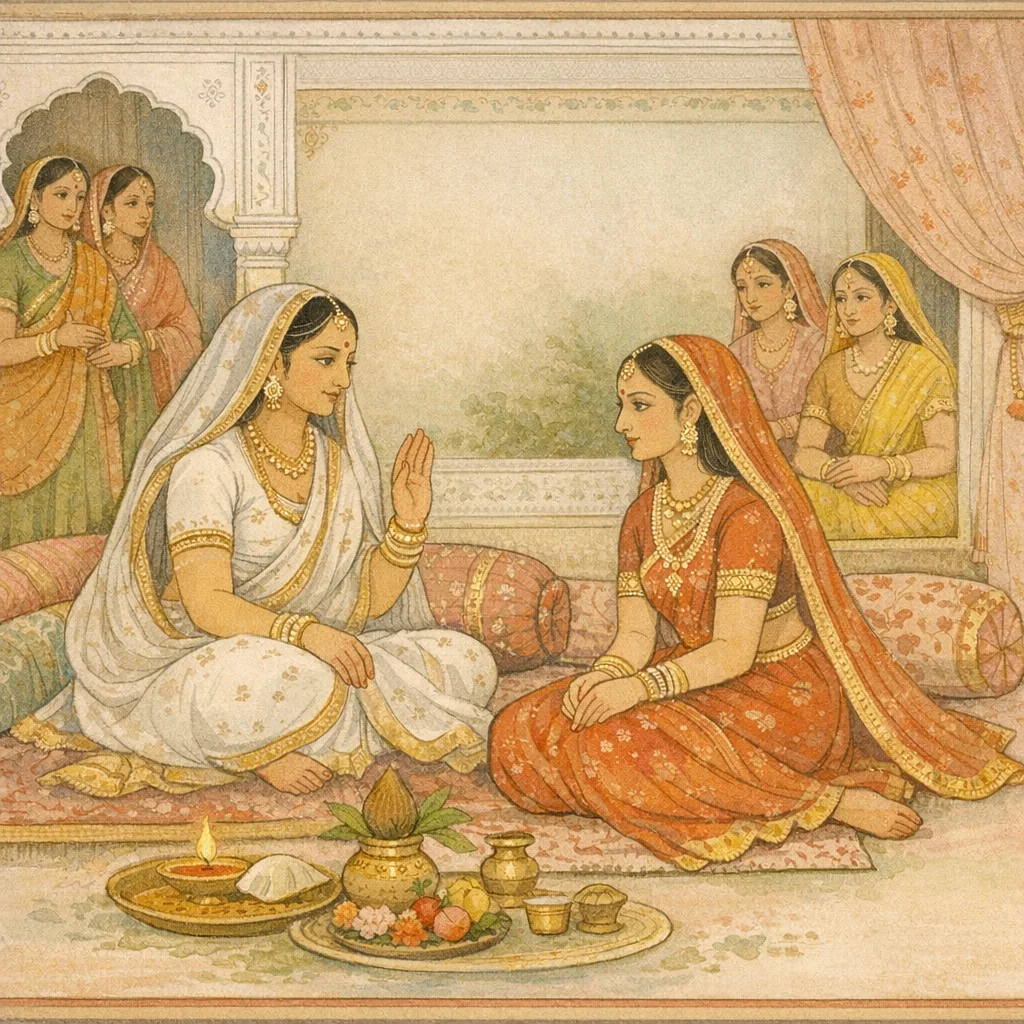
Chapter Arc: द्रुपदकुल की स्त्रियाँ कुन्ती के पास आती हैं—नववधू द्रौपदी के लिए मातृ-हृदय से उपदेश और आशीर्वाद का क्षण उपस्थित होता है। → कृष्णा (द्रौपदी) मंगल-वेश में, हाथ जोड़कर श्वशुर-परिवार के सम्मुख खड़ी होती है; कुन्ती उसे आदर्श पतिव्रता स्त्रियों के उदाहरण देकर गृहधर्म की मर्यादा समझाती है—अतिथि, साधु, वृद्ध, बालक और गुरु-जन की सेवा का विधान विशेष रूप से उभरता है। → कुन्ती का आशीर्वचन अपने चरम पर पहुँचता है—‘जैसे इन्द्राणी इन्द्र में, स्वाहा अग्नि में, रोहिणी चन्द्र में, दमयन्ती नल में’—वैसे ही द्रौपदी अपने पतियों में प्रतिष्ठित हो; और वह नित्य-नियम से सबका यथान्याय पूजन करे। → विवाहोत्तर व्यवस्था में श्रीकृष्ण (मधुसूदन) पाण्डवों के लिए शयन-आसन, वैदूर्य-चित्रित पात्र, रथ-घोड़े, विनीत गज आदि बहुमूल्य उपहार भेजते हैं; धर्मराज युधिष्ठिर उन्हें प्रसन्नता से स्वीकार करते हैं, गोविन्द की प्रियता और कृतज्ञता के साथ।
Shlokas
Verse 1
(दाक्षिणात्य अधिक पाठका १ श्लोक मिलाकर कुल १९ श्लोक हैं) अपन बछ। है २ >> अष्टनवर्त्याधेकशततमोब् ध्याय: कुन्तीका द्रौपदीको उपदेश और आशीर्वाद तथा भगवान् श्रीकृष्णका पाण्डवोंके लिये उपहार भेजना वैशम्पायन उवाच पाण्डवै: सह संयोगं गतस्य द्रुपदस्य ह | न बभूव भयं किंचिद् देवेभ्योडपि कथंचन,वैशम्पायनजी कहते हैं--जनमेजय! पाण्डवोंसे सम्बन्ध हो जानेपर राजा ट्रुपदको देवताओंसे भी किसी प्रकारका कुछ भी भय नहीं रहा, फिर मनुष्योंसे तो हो ही कैसे सकता था
Vaiśampāyana said: “O Janamejaya, once King Drupada had entered into alliance and kinship with the Pāṇḍavas, he no longer felt the slightest fear from anyone—indeed, not even from the gods; how then could he fear mere human beings?”
Verse 2
कुन्तीमासाद्य ता नारयों द्रुपदस्य महात्मन: । नाम संकीर्तयन्त्योडस्या जग्मु: पादौ स्वमूर्थभि:,महात्मा द्रुपदके कुटुम्बकी स्त्रियाँ कुन्तीके पास आकर अपने नाम ले-लेकर उनके चरणोंमें मस्तक नवाकर प्रणाम करने लगीं
Vaiśaṃpāyana said: Having approached Kuntī, the women of the great-souled Drupada’s household came forward, each announcing her own name, and bowed at her feet, touching them with their heads. The scene underscores the ethic of respectful greeting and the social dharma of honoring a revered elder and guest through humble salutation.
Verse 3
कृष्णा च क्षौमसंवीता कृतकौतुकमड़ला । कृताभिवादना श्वश्व्वास्तस्थौ प्रह्दठा कृताज्जलि:,कृष्णा भी रेशमी साड़ी पहने मांगलिक कार्य सम्पन्न करनेके पश्चात् सासके चरणोंमें प्रणाम करके उनके सामने हाथ जोड़ विनीतभावसे खड़ी हुई
Vaiśampāyana said: Kṛṣṇā (Draupadī), clad in fine linen and having completed the auspicious rites and adornments, offered her salutations to her mother-in-law. Then, delighted and composed, she stood before her with hands joined in reverence—embodying modesty, respect for elders, and the household ethic of honoring one’s new family.
Verse 4
रूपलक्षणसम्पन्नां शीलाचारसमन्विताम् | द्रौोपदीमवदत् प्रेमणा पृथा55शीर्वचनं स्नुषाम्,सुन्दर रूप तथा उत्तम लक्षणोंसे सम्पन्न, शील और सदाचारसे सुशोभित अपनी बहू द्रौपदीको सामने देख कुन्तीदेवी उसे प्रेमपूर्वक आशीर्वाद देती हुई बोलीं--
Vaiśampāyana said: Seeing Draupadī—endowed with beauty and auspicious marks, and adorned with good character and proper conduct—Pṛthā (Kuntī) addressed her with affection, offering words of blessing to her daughter-in-law.
Verse 5
यथेन्द्राणी हरिहये स्वाहा चैव विभावसौ । रोहिणी च यथा सोमे दमयन्ती यथा नले,“बेटी! जैसे इन्द्राणी इन्द्रमें, स्वाहा अग्निमें, रोहिणी चन्द्रमामें, दमयन्ती नलमें, भद्रा कुबेरमें, अरुन्धती वसिष्ठमें तथा लक्ष्मी भगवान् नारायणमें भक्ति-भाव एवं प्रेम रखती हैं, उसी प्रकार तुम भी अपने पतियोंमें अनुरक्त रहो
Vaiśampāyana said: “Just as Indrāṇī is devoted to Indra, Svāhā to Agni, Rohiṇī to Soma, and Damayantī to Nala—so too should you remain lovingly attached and faithful to your husbands.” The verse teaches by revered exemplars that a wife’s dharma is expressed through steadfast affection, loyalty, and committed partnership within marriage.
Verse 6
यथा वैश्रवणे भद्रा वसिष्ठे चाप्यरुन्धती । यथा नारायणो लक्ष्मीस्तथा त्वं भव भर्तृषु,“बेटी! जैसे इन्द्राणी इन्द्रमें, स्वाहा अग्निमें, रोहिणी चन्द्रमामें, दमयन्ती नलमें, भद्रा कुबेरमें, अरुन्धती वसिष्ठमें तथा लक्ष्मी भगवान् नारायणमें भक्ति-भाव एवं प्रेम रखती हैं, उसी प्रकार तुम भी अपने पतियोंमें अनुरक्त रहो
Vaiśampāyana said: “As Bhadrā is devoted to Vaiśravaṇa (Kubera), and as Arundhatī is devoted to Vasiṣṭha; and as Lakṣmī is ever united in loving fidelity with Nārāyaṇa—so may you also be devoted, with affectionate loyalty, to your husbands.”
Verse 7
जीवसूर्वीरसूर्भद्रे बहुसौख्यसमन्विता । सुभगा भोगसम्पन्ना यज्ञपत्नी पतिव्रता,'भद्रे! तुम अनन्त सौख्यसे सम्पन्न होकर दीर्घजीवी तथा वीर पुत्रोंकी जननी बनो। सौभाग्यशालिनी, भोगसामग्रीसे सम्पन्न, पतिके साथ यज्ञमें बैठनेवाली तथा पतिव्रता होओ
Vaiśampāyana said: “O auspicious lady, may you be long-lived and become the mother of heroic sons. May you be fortunate, endowed with abundant comforts and enjoyments, seated beside your husband as the wife who shares in sacrificial rites, and steadfast in wifely fidelity.”
Verse 8
अतिथीनागतान् साधून् वृद्धान् बालांस्तथा गुरून् । पूजयन्त्या यथान्यायं शश्वद् गच्छन्तु ते समा:,“अपने घरपर आये हुए अतिथियों, साधु पुरुषों, बड़े-बूढ़ों, बालकों तथा गुरुजनोंका यथायोग्य सत्कार करनेमें ही तुम्हारा प्रत्येक वर्ष बीते
Vaiśampāyana said: “By honoring, in the proper manner, the guests who arrive at your home—saintly people, the aged, children, and your teachers—may your years continually pass in this way.”
Verse 9
कुरुजाड्रलमुख्येषु राष्ट्रेषु नगरेषु च । अनु त्वमभिषिच्यस्व नृपतिं धर्मवत्सला,“तुम्हारे पति कुरुजांगल देशके प्रधान-प्रधान राष्ट्रों तथा नगरोंके राजा हों और उनके साथ ही रानीके पदपर तुम्हारा अभिषेक हो। धर्मके प्रति तुम्हारे हृदयमें स्वाभाविक स्नेह हो
Verse 10
पतिभिर्निर्जितामुर्वी विक्रमेण महाबलै: । कुरु ब्राह्मणसात् सर्वामश्वमेधे महाक्रतौ,“तुम्हारे महाबली पतियोंद्वारा पराक्रमसे जीती हुई इस समूची पृथ्वीको तुम अश्वमेध नामक महायजञ्ञमें ब्राह्मणोंके हवाले कर दो
Vaiśampāyana said: “Hand over, as a gift to the Brahmins, this entire earth that has been conquered by your mighty husbands through their valor, in the great sacrificial rite—the Aśvamedha.”
Verse 11
पृथिव्यां यानि रत्नानि गुणवन्ति गुणान्विते । तान्याप्रुहि त्वं कल्याणि सुखिनी शरदां शतम्,“कल्याणमयी गुणवती बहू! पृथ्वीपर जितने गुणवान् रत्न हैं, वे सब तुम्हें प्राप्त हों और तुम सौ वर्षतक सुखी रहो
Vaiśampāyana said: “O auspicious lady, endowed with virtues—may all the precious treasures on the earth that possess excellence come to you. May you live happily for a hundred autumns (i.e., a full long life).” The utterance functions as a formal blessing, praising virtue and wishing prosperity and longevity as fitting fruits of good qualities.
Verse 12
यथा च त्वाभिनन्दामि वध्वद्य क्षौमसंवृताम् तथा भूयो5भिनन्दिष्ये जातपुत्रां गुणान्विताम्,“बहू! आज तुम्हें वैवाहिक रेशमी वस्त्रोंस सुशोभित देखकर जिस प्रकार मैं तुम्हारा अभिनन्दन करती हूँ, उसी प्रकार जब तुम पुत्रवती होओगी, उस समय भी अभिनन्दन करूँगी; तुम सदगुणसम्पन्न हो”
Vaiśaṃpāyana said: “Just as I greet and bless you today, O bride, seeing you adorned in fine linen garments, so too shall I again greet you when you become the mother of a son—endowed with good qualities.”
Verse 13
वैशम्पायन उवाच ततस्तु कृतदारेभ्य: पाण्डुभ्य: प्राहिणोद्धरि: । वैदूर्यमणिचित्राणि हैमान्याभरणानि च,वैशम्पायनजी कहते हैं--जनमेजय! तदनन्तर विवाह हो जानेपर पाण्डवोंके लिये भगवान् _श्रीकृष्णने वैदूर्यमणि-जटित सोनेके बहुत-से आभूषण, बहुमूल्य वस्त्र, अनेक देशोंके बने हुए कोमल स्पर्शवाले कम्बल, मृगचर्म, सुन्दर रत्न, शय्याएँ, आसन, भाँति- भाँतिके बड़े-बड़े वाहन तथा वैदूर्य और वज्रमणि (हीरे)-से खचित सैकड़ों बर्तन भेंटके तौरपर भेजे
Vaiśampāyana said: Then, after the Pāṇḍavas had been married, Hari (Śrī Kṛṣṇa) sent them gifts—golden ornaments inlaid with vaidūrya gems and other splendid valuables. In the narrative setting, this marks the formal honoring of a newly established household through generous offerings, reflecting the social dharma of hospitality, alliance, and auspicious support for righteous kin.
Verse 14
वासांसि च महाहाणि नानादेश्यानि माधव: । कम्बलाजिनरत्नानि स्पर्शवन्ति शुभानि च,वैशम्पायनजी कहते हैं--जनमेजय! तदनन्तर विवाह हो जानेपर पाण्डवोंके लिये भगवान् _श्रीकृष्णने वैदूर्यमणि-जटित सोनेके बहुत-से आभूषण, बहुमूल्य वस्त्र, अनेक देशोंके बने हुए कोमल स्पर्शवाले कम्बल, मृगचर्म, सुन्दर रत्न, शय्याएँ, आसन, भाँति- भाँतिके बड़े-बड़े वाहन तथा वैदूर्य और वज्रमणि (हीरे)-से खचित सैकड़ों बर्तन भेंटके तौरपर भेजे
Vaiśampāyana said: “O Janamejaya, Mādhava (Śrī Kṛṣṇa) sent for the Pāṇḍavas many costly garments of various regions, along with fine blankets, deer-skins, and auspicious gems—soft to the touch and fit for honorable use.”
Verse 15
शयनासनयानानि विविधानि महान्ति च । वैदूर्यवज़चित्राणि शतशो भाजनानि च,वैशम्पायनजी कहते हैं--जनमेजय! तदनन्तर विवाह हो जानेपर पाण्डवोंके लिये भगवान् _श्रीकृष्णने वैदूर्यमणि-जटित सोनेके बहुत-से आभूषण, बहुमूल्य वस्त्र, अनेक देशोंके बने हुए कोमल स्पर्शवाले कम्बल, मृगचर्म, सुन्दर रत्न, शय्याएँ, आसन, भाँति- भाँतिके बड़े-बड़े वाहन तथा वैदूर्य और वज्रमणि (हीरे)-से खचित सैकड़ों बर्तन भेंटके तौरपर भेजे
Vaiśampāyana said: “There were beds and seats, and also many kinds of large conveyances; and hundreds of vessels, richly inlaid with vaidūrya (cat’s-eye gem) and vajra (diamond).” In context, the verse highlights the royal custom of gifting abundant, splendid household and ceremonial goods after a marriage—an outward sign of alliance, honor, and prosperity rather than a moral teaching in itself.
Verse 16
रूपयौवनदाक्षिण्यैरुपेताश्व स्वलंकृता: । प्रेष्या: सम्प्रददौ कृष्णो नानादेश्या: स्वलंकृता:,रूप-यौवन और चातुर्य आदि गुणोंसे सम्पन्न तथा वस्त्राभूषणोंसे अलंकृत अनेक देशोंकी सजी-धजी बहुत सी सुन्दरी सेविकाएँ भी समर्पित कीं
Vaiśaṃpāyana said: Kṛṣṇa also presented many attendant maidservants—women from various regions—endowed with beauty, youth, and gracious skill, and adorned with fine garments and ornaments. In the narrative context, this forms part of a formal gift-offering that reflects the period’s courtly norms of wealth and hospitality, while also raising an ethical tension between social custom and the personal agency of those treated as transferable property.
Verse 17
गजान् विनीतान् भद्रांश्न सदश्नांश्न स्वलंकृतान् रथांश्व दान्तान् सौवर्ण: शुभ्रे: पट्टैरलंकृतान्,इसके सिवा अमेयात्मा मधुसूदनने सुशिक्षित और वशमें रहनेवाले अच्छी जातिके हाथी, गहनोंसे सजे हुए उत्तम घोड़े, चमकते हुए सोनेके पत्रोंसे सुशोभित और सधे हुए घोड़ोंसे युक्त बहुत-से सुन्दर रथ, करोड़ों स्वर्णमुद्राएँ तथा पंक्तिमें रखी हुई सुवर्णकी ढेरियाँ उनके लिये भेजीं
Vaiśampāyana said: He sent well-trained, auspicious elephants and excellently adorned horses; and he also dispatched disciplined chariot-horses and splendid chariots decorated with bright golden fittings and fine white trappings—an offering that displays royal generosity and the intent to honor and secure goodwill through lawful gifts rather than coercion.
Verse 18
कोटिश श्व सुवर्ण च तेषामकृतकं तथा । वीथीकृतममेयात्मा प्राहिणोन्मधुसूदन:,इसके सिवा अमेयात्मा मधुसूदनने सुशिक्षित और वशमें रहनेवाले अच्छी जातिके हाथी, गहनोंसे सजे हुए उत्तम घोड़े, चमकते हुए सोनेके पत्रोंसे सुशोभित और सधे हुए घोड़ोंसे युक्त बहुत-से सुन्दर रथ, करोड़ों स्वर्णमुद्राएँ तथा पंक्तिमें रखी हुई सुवर्णकी ढेरियाँ उनके लिये भेजीं
Vaiśampāyana said: The immeasurable-souled Madhusūdana sent them vast wealth as well—crores of gold, and also uncoined (raw) gold arranged in orderly rows. The act underscores royal generosity and the ethical duty of honoring and supporting worthy recipients through properly bestowed gifts.
Verse 19
तत् सर्व प्रतिजग्राह धर्मराजो युधिष्ठिर: । मुदा परमया युक्तो गोविन्दप्रियकाम्यया,धर्मराज युधिष्ठिरने अत्यन्त प्रसन्न होकर भगवान् श्रीकृष्णकी प्रसन्नताके लिये वह सारा उपहार ग्रहण कर लिया
Vaiśampāyana said: King Yudhiṣṭhira, renowned for his commitment to dharma, accepted all of those gifts. He did so with the highest joy, motivated by the wish to please Govinda (Śrī Kṛṣṇa)—an acceptance framed not as greed, but as a dharmic, devotional response aligned with honoring Kṛṣṇa’s satisfaction.
Verse 197
इस प्रकार श्रीमहाभारत आदिपरव्वके अन्तर्गत वैवाहिकपर्वमें द्रौपदीविवाहविषयक एक यौ सत्तानबेवाँ अध्याय पूरा हुआ
Thus concludes the one hundred and ninety-seventh chapter of the Śrī Mahābhārata’s Ādi Parva, within the Vaivāhika section, dealing with the account of Draupadī’s marriage. The narrator signals a formal closure of the episode, marking the completion of this narrative unit in the transmission of the epic.
Verse 198
इति श्रीमहाभारते आदिपर्वणि वैवाहिकपर्वणि अष्टनवत्यधिकशततमो<ध्याय: ।। १९८ || इस प्रकार श्रीमहाभारत आदिपव॑के अन्तर्गत वैवाहिकपर्वमें एक सौ अटद्ठानबेवाँ अध्याय पूरा हुआ
Vaiśampāyana said: “Thus, in the Śrī Mahābhārata, within the Ādi Parvan, in the Vaivāhika Parvan, the one-hundred-and-ninety-eighth chapter is concluded.”
Frequently Asked Questions
The dilemma is the tension between declared fairness (“dharma-based” parity for heirs) and the strategic context of prior hostility: whether diplomatic language reflects genuine justice or functions as calculated statecraft.
Legitimacy in public life depends not only on power but on ethically legible speech and protocol; however, the chapter also illustrates that moral vocabulary can be used instrumentally, requiring discernment about intention behind courteous forms.
No explicit phalaśruti appears here; the meta-significance lies in how the narrative models diplomatic procedure (dūta conduct, reception, and message framing) as a consequential mechanism within the epic’s moral-causal structure.