Adhyaya 186
Ādi Parva, Adhyāya 186 — Drupada’s Summons and the Pāñcāla Reception
Upa-parva: Svayaṃvara-Anantara (Pāñcāla-gamana) Episode within Ādi Parva
A messenger announces that King Drupada has prepared food provisions and wedding arrangements, urging the party to complete remaining tasks and not delay Kṛṣṇā (Draupadī) there. Ornate, royal-appropriate chariots are presented for immediate departure to the Pāñcāla residence. Vaiśaṃpāyana narrates that the Kuru leaders set out, first sending/placing the family priest in the lead, traveling in great conveyances with Kuntī and Kṛṣṇā together. Responding to the priest’s words and out of prudent inquiry, Dharmarāja (Yudhiṣṭhira) gathers diverse materials: fruits, garlands, hides, armor, seats, cattle, ropes, agricultural implements, artisanal goods, and recreation items, alongside extensive martial equipment (swords, bows, arrows, spears, axes, and other battlefield stores) and well-prepared beds and seats. Kuntī escorts Draupadī into Drupada’s inner apartments, where the women honor her as the Kaurava bride. Observing the arriving heroes—depicted with disciplined bearing and ascetic-like attire—Drupada’s court (king, ministers, sons, friends, servants) rejoices; the guests are seated in order on costly seats and served varied royal foods in fine vessels by well-dressed attendants. After dining to satisfaction, the heroes proceed to view the assembled resources and war-ready supplies. Drupada’s son and the king, with chief counselors, approach and formally honor the sons of Kuntī, recognizing their royal stature and strengthening the alliance through public ceremony.
Chapter Arc: द्रौपदी-स्वयंवर के रंगमंच पर अनेक नवयुवक राजा आभूषणों से दीप्त, कानों में कुण्डल, हाथों में अस्त्र-शस्त्र लिये, परस्पर लाग-डाँट और स्पर्धा करते हुए एकत्र होते हैं—हर दृष्टि लक्ष्य पर नहीं, ‘कृष्णा मेरी ही’ के दर्प पर टिकी है। → राजा रूप, कुल, शील, धन और यौवन के मद में हिमालयी गजों-से उन्मत्त होकर एक-दूसरे को तौलते हैं; फिर एक-एक कर उस ‘सुदृढ़ धनुष’ के पास बढ़ते हैं। पर धनुष का भार और कठोरता उनके बल-वीर्य को अपमानित करती है—किसी के मुकुट-हार ढीले पड़ते हैं, कोई भूमि पर गिरता है, कोई हाँफता हुआ लौटता है; सभा में ‘हाहा’ का कोलाहल उठता है। → जरासंध पर्वत-सा अचल होकर आगे आता है, शल्य भी प्रयास करता है, और फिर दुर्योधन अपने समस्त राजलक्षणों और मान के साथ उठता है—पर वह भी उस धनुष के आगे विवश होता है। राजमण्डल का अभिमान द्रौपदी-निमित्त टूटता दिखता है; उसी क्षण परदे के पीछे छिपे पाण्डव-बल का संकेत उभरता है—बलराम (राम) किसी पाण्डुसुत की ‘हस्तगत’ विजय को भाँपकर भीतर ही भीतर चकित/हर्षित होता है, जबकि अन्य नृपवीर उस छिपे रूप को नहीं पहचानते। → अनेक राजाओं की असफलता से यह स्पष्ट हो जाता है कि केवल राजवैभव और दर्प इस परीक्षा को नहीं जीत सकते। सभा का उत्साह अब अनिश्चितता और जिज्ञासा में बदलता है—कौन है जो इस धनुष को साधेगा? → जिस पाण्डुसुत की सामर्थ्य को बलराम पहचान लेता है, वह अभी प्रकट नहीं हुआ—अगला क्षण उसी अज्ञात साधक के उदय की ओर बढ़ता है।
Shlokas
Verse 1
वैशम्पायनजी कहते हैं-जनमेजय! वे सब नवयुवक राजा अनेक आशभूषणोंसे विभूषित हो कानोंमें कुण्डल पहने और परस्पर लाग-डाँट रखते हुए हाथोंमें अस्त्र-शस्त्र लिये अपने-अपने आसनोंसे उठने लगे। उन्हें अपनेमें ही सबसे अधिक अस्त्रविद्या और बलके होनेका अभिमान था; सभीको अपने रूप, पराक्रम, कुल, शील, धन और जवानीका बड़ा घमंड था। वे सभी मस्तकसे वेगपूर्वक मदकी धारा बहानेवाले हिमाचल-प्रदेशके गजराजोंकी भाँति उन्मत्त हो रहे थे
Vaiśampāyana said: “O Janamejaya, all those youthful kings—adorned with many ornaments, wearing earrings, jostling and taunting one another—began to rise from their seats with weapons in hand. Each was convinced that he possessed the greatest mastery of arms and the greatest strength; all were swollen with pride in their beauty, valor, lineage, conduct, wealth, and youth. Like lordly elephants of the Himalayan region, with streams of rut flowing swiftly from their temples, they grew intoxicated and reckless.”
Verse 2
रूपेण वीर्येण कुलेन चैव शीलेन वित्तेन च यौवनेन । समिद्धदर्पा मदवेगभिनज्ना मत्ता यथा हैमवता गजेन्द्रा:,वैशम्पायनजी कहते हैं-जनमेजय! वे सब नवयुवक राजा अनेक आशभूषणोंसे विभूषित हो कानोंमें कुण्डल पहने और परस्पर लाग-डाँट रखते हुए हाथोंमें अस्त्र-शस्त्र लिये अपने-अपने आसनोंसे उठने लगे। उन्हें अपनेमें ही सबसे अधिक अस्त्रविद्या और बलके होनेका अभिमान था; सभीको अपने रूप, पराक्रम, कुल, शील, धन और जवानीका बड़ा घमंड था। वे सभी मस्तकसे वेगपूर्वक मदकी धारा बहानेवाले हिमाचल-प्रदेशके गजराजोंकी भाँति उन्मत्त हो रहे थे
Vaiśampāyana said: “O Janamejaya, those young kings, intoxicated with pride, exulted in their own beauty, valor, lineage, conduct, wealth, and youth. Their arrogance blazed high; their judgment was shattered by the rush of intoxication. Like the lordly elephants of the Himālaya, they became frenzied—an image that warns how prosperity and power, when ungoverned by self-restraint, quickly turn into heedless aggression.”
Verse 3
परस्परं स्पर्धया प्रेक्षमाणा: संकल्पजेनाभिपरिप्लुताज्ा: | कृष्णा ममैवेत्यभिभाषमाणा नृपासनेभ्य: सहसोदतिष्ठन्,वे एक-दूसरेको बड़ी स्पर्धासे देख रहे थे। उनके सभी अंगोंमें कामोन्माद व्याप्त हो रहा था। 'कृष्णा तो मेरी ही होनेवाली है" यह कहते हुए वे अपने राजोचित आसनोंसे सहसा उठकर खड़े हो गये
Eyeing one another with intense rivalry, their bodies were overwhelmed by desire born of their own resolve. Declaring, “Kṛṣṇā will be mine alone,” they suddenly rose from their royal seats—an outward surge of possessiveness and competition that foreshadows the ethical tension between self-control and impulsive claim.
Verse 4
ते क्षत्रिया रड्रगता: समेता जिगीषमाणा द्रुपदात्मजां ताम् | चकाशिरे पर्वतराजकन्या- मुमां यथा देवगणा: समेता:,द्रपदकुमारीको पानेकी इच्छासे रंगमण्डपमें एकत्र हुए वे क्षत्रियनरेश गिरिराजनन्दिनी उमाके विवाहमें इकट्ठे हुए देवताओंकी भाँति शोभा पा रहे थे
Vaiśampāyana said: Those kṣatriya kings, having gathered in the arena with the desire to win Drupada’s daughter, shone splendidly—like the assembled hosts of gods at the wedding of Umā, the daughter of the king of mountains. The scene underscores how royal ambition and public contest were framed within a sacral, socially sanctioned setting, where marriage, prestige, and dharma-bound rivalry converge.
Verse 5
कन्दर्पषबाणाभिनिपीडिताड्रा: कृष्णागतैस्ते हृदयैनरिन्द्रा: । रड्भावतीर्णा द्रुपदात्मजार्थ द्वेषं प्रचक्रु: सुहदो5पि तत्र,कामदेवके बाणोंकी चोटसे उनके सभी अंगोंमें निरन्तर पीड़ा हो रही थी। उनका मन द्रौपदीमें ही लगा हुआ था। द्रुपदकुमारीको पानेके लिये रंगभूमिमें उतरे हुए वे सभी नरेश वहाँ अपने सुहृद् राजाओंसे भी ईर्ष्या करने लगे
Vaiśampāyana said: Tormented by Kāma’s arrows, those kings were in constant anguish. Their hearts were wholly drawn to Kṛṣṇā (Draupadī). Having entered the arena to win Drupada’s daughter, they there began to foster jealousy—even toward their own friendly allied kings—showing how desire can corrode fellowship and restraint.
Verse 6
अथाययुर्देवगणा विमानै रुद्रादित्या वसवो<थाश्रिनौ च । साध्याश्चव सर्वे मरुतस्तथैव यम॑ पुरस्कृत्य धनेश्वरं च,इसी समय रुद्र, आदित्य, वसु, अश्विनीकुमार, समस्त साध्यगण तथा मरुद्गण यमराज और कुबेरको आगे करके अपने-अपने विमानोंपर बैठकर वहाँ आये
Then the hosts of gods arrived in their celestial chariots—Rudras, Ādityas, Vasus, and the two Aśvins; likewise all the Sādhyas and the Maruts. Placing Yama in the forefront, and also Kubera, lord of wealth, they came to that place. The scene underscores a cosmic assembly where even divine powers proceed in ordered ranks, honoring authority and moral governance.
Verse 7
दैत्या: सुपर्णाश्न महोरगाश्न देवर्षयो गुह्मुकाश्चारणाश्न । विश्वावसुर्नारदपर्वतौ च गन्धर्वमुख्या: सहसाप्सरोभि:,दैत्य, सुपर्ण, नाग, देवर्षि, गुह्वक, चारण तथा विश्वावसु, नारद और पर्वत आदि प्रधान- प्रधान गन्धर्व भी अप्सराओंको साथ लिये सहसा आकाशमें उपस्थित हो गये
Verse 8
हलायुधस्तत्र जनार्दनश्न वृष्ण्यन्धकाश्चैव यथाप्रधानम् । प्रेक्षां सम चक्रुर्यदुपुड्रवास्ते स्थिताश्न कृष्णस्य मते महान्तः,(अन्य राजालोग द्रौपदीकी प्राप्तिके लिये लक्ष्य बेधनेके विचारमें पड़े थे, किंतु) भगवान् श्रीकृष्णकी सम्मतिके अनुसार चलनेवाले महान् यदुश्रेष्ठ, जिनमें बलराम और श्रीकृष्ण आदि वृष्णि और अन्धक वंशके प्रमुख व्यक्ति वहाँ उपस्थित थे, चुपचाप अपनी जगहपर बैठे-बैठे देख रहे थे
Vaiśampāyana said: There, Balarāma (the wielder of the plough-weapon) and Janārdana (Kṛṣṇa), along with the leading men of the Vṛṣṇi and Andhaka clans, sat in their proper order. Those eminent Yādava chiefs—acting in accordance with Kṛṣṇa’s counsel—quietly remained in their places and simply watched the proceedings.
Verse 9
दृष्टवा तु तान् मत्तगजेन्द्ररूपान् पज्चाभिपषझानिव वारणेन्द्रान् । भस्मावृताड्ानिव हव्यवाहान् कृष्ण: प्रदध्यौ यदुवीरमुख्य:,यदुवंशी वीरोंके प्रधान नेता श्रीकृष्णने लक्ष्मीके सम्मुख विराजमान गजराजों तथा राखमें छिपी हुई आगके समान मतवाले हाथीकी-सी आकृतिवाले पाण्डवोंको, जो अपने सब अंगोंमें भस्म लपेटे हुए थे, देखकर (तुरंत) पहचान लिया
Seeing them—those five, whose forms resembled intoxicated lordly elephants, like mighty elephant-kings pressed hard on every side, and like fires hidden beneath ash with their limbs coated in dust and ash—Kṛṣṇa, the foremost hero of the Yadus, at once reflected and recognized what had happened. The verse underscores discerning intelligence and loyal concern: even when the righteous are outwardly disfigured by hardship, a true ally perceives their identity and plight and prepares to act in accordance with dharma.
Verse 10
शशंस रामाय युधिष्छिरं स भीमं॑ सजिष्णुं च यमौ च वीरौ । शनै: शनैस्तान् प्रसमीक्ष्य रामो जनार्दनं प्रीतमना ददर्श ह,और बलरामजीसे धीरे-धीरे कहा--'भैया! वह देखिये, युधिष्ठिर, भीम, अर्जुन और दोनों जुड़वे वीर नकुल-सहदेव उधर बैठे हैं।! बलरामजीने उन्हें देखकर अत्यन्त प्रसन्नचित्त हो भगवान् श्रीकृष्णकी ओर दृष्टिपात किया
Vaiśampāyana said: He pointed out to Rāma, “There is Yudhiṣṭhira, and Bhīma, and Arjuna the ever-victorious, and the two heroic twins.” Then, after slowly observing them, Balarāma—his mind filled with joy—looked toward Janārdana (Kṛṣṇa). The scene underscores reverence for righteous kin and the quiet, inward movement from recognition of worldly heroes to affectionate regard for the divine guide who upholds dharma.
Verse 11
अन््ये तु वीरा नृपपुत्रपौत्रा: कृष्णागतैनेत्रमन:स्वभावै: । व्यायच्छमाना ददृशुर्न तान् वै संदष्टदन्तच्छदताम्रनेत्रा:,दूसरे-दूसरे वीर राजा, राजकुमार एवं राजाओंके पौत्र अपने नेत्रों, मन और स्वभावको द्रौपदीकी ओर लगाकर उसीको देख रहे थे, अत: पाण्डवोंकी ओर उनकी दृष्टि नहीं गयी। वे जोशमें आकर दाँतोंसे ओठ चबा रहे थे और रोषसे उनकी आँखें लाल हो रही थीं
Vaiśampāyana said: But other warriors—sons and grandsons of kings—having their eyes, minds, and very disposition drawn toward Kṛṣṇā (Draupadī), kept looking at her and did not, in fact, notice them (the Pāṇḍavas). Fired with passion and anger, they bit their lips with clenched teeth, and their eyes turned red with wrath—showing how desire and resentment can eclipse discernment and right conduct.
Verse 12
तथैव पार्था: पृथुबाहवस्ते वीरौ यमौ चैव महानुभावौ । तां द्रौपदी प्रेक्ष्य तदा सम सर्वे कन्दर्पबाणाभिहता बभूवु:,इसी प्रकार वे महाबाहु कुन्तीपुत्र तथा दोनों महानुभाव वीर नकुल-सहदेव सब-के-सब द्रौपदीको देखकर तुरंत कामदेवके बाणोंसे घायल हो गये
In the same way, those broad-armed sons of Pṛthā—along with the two heroic twins of great prowess—on seeing Draupadī then and there, all alike were struck, as it were, by Kāma’s arrows. The narrative underscores the sudden, overpowering force of desire that can seize even disciplined heroes, hinting at the ethical need to govern passion within the bounds of dharma.
Verse 13
देवर्षिगन्धर्वसमाकुलं तत् सुपर्णनागासुरसिद्धजुष्टम् । दिव्येन गन्धेन समाकुलं च दिव्यैश्व पुष्पैरवकीर्यमाणम्,राजन्! उस समय वहाँका आकाश देवर्षियों तथा गन्धर्वोंसे खचाखच भरा था। सुपर्ण, नाग, असुर और सिद्धोंका समुदाय वहाँ जुट गया था। सब ओर दिव्य सुगन्ध व्याप्त हो रही थी और दिव्य पुष्पोंकी वर्षा की जा रही थी
Vaiśampāyana said: “O King, at that time the sky there was densely filled with divine seers and Gandharvas. Hosts of Suparṇas, Nāgas, Asuras, and Siddhas had gathered as well. A celestial fragrance pervaded all directions, and divine flowers were being showered down.”
Verse 14
महास्वनैर्दुन्दुभिनादितैश्न बभूव तत् संकुलमन्तरिक्षम् । विमानसम्बाधम भूत् समन्तात् सवेणुवीणापणवानुनादम्,बृहत् शब्द करनेवाली दुन्दुभियोंके नादसे सारा अन्तरिक्ष गूँज उठा था। चारों ओरका आकाश विमानोंसे ठसाठस भरा था और वहाँ बाँसुरी, वीणा तथा ढोलकी मधुर ध्वनि हो रही थी
Vaiśampāyana said: With the mighty, far-reaching roar of kettledrums, the whole mid-air became a tumult of sound. On every side the sky was packed with aerial chariots, and it resounded with the blended music of flute, vīṇā, and paṇava-drums—an auspicious, celebratory clamor that signals a grand divine or royal occasion.
Verse 15
ततस्तु ते राजगणा: क्रमेण कृष्णानिमित्तं कृतविक्रमाश्न । सकर्णदुर्योधनशाल्वशल्य- द्रौणायनिक्राथसुनीथवक्रा:
Then those kings, one after another, displayed their prowess, taking Kṛṣṇā as the occasion and pretext for their feats—among them Karṇa, Duryodhana, Śālva, Śalya, Droṇāyana, Krātha, Sunītha, and Vakra. The scene underscores how royal ambition and competitive pride can turn a woman into a mere ‘cause’ for public heroics, revealing the ethical tension between true valor and vanity-driven display.
Verse 16
कलिजड्भवज्राधिपपाण्ड्यपौण्ड्रा विदेहराजो यवनाधिपश्न । अन्ये च नानानृपपुत्रपौत्रा राष्ट्राधिपा: पड़कजपकत्रनेत्रा:
Vaiśampāyana said: “There were also the rulers of Kaliṅga, Jaḍbha, and Vajra; the kings of the Pāṇḍyas and the Pauṇḍras; the king of Videha; and the lord of the Yavanas. Along with them came many other princes—sons and grandsons of kings—regional sovereigns of diverse lands, some marked by distinctive features and insignia. Thus the narrative underscores how widely the call of power and alliance spread, drawing in rulers from many peoples and territories.”
Verse 17
किरीटहाराड्गदचक्रवालै- विभूषिताजड्: पृथुबाहवस्ते | अनुक्रमं विक्रमसच्त्वयुक्ता बलेन वीर्येण च नर्दमाना:
Vaiśampāyana said: Adorned with crowns and garlands, and encircled by maces and discus-weapons, those broad-armed warriors—endowed with valor and steadfast courage—advanced in ordered ranks, roaring with confidence born of strength and heroic energy.
Verse 18
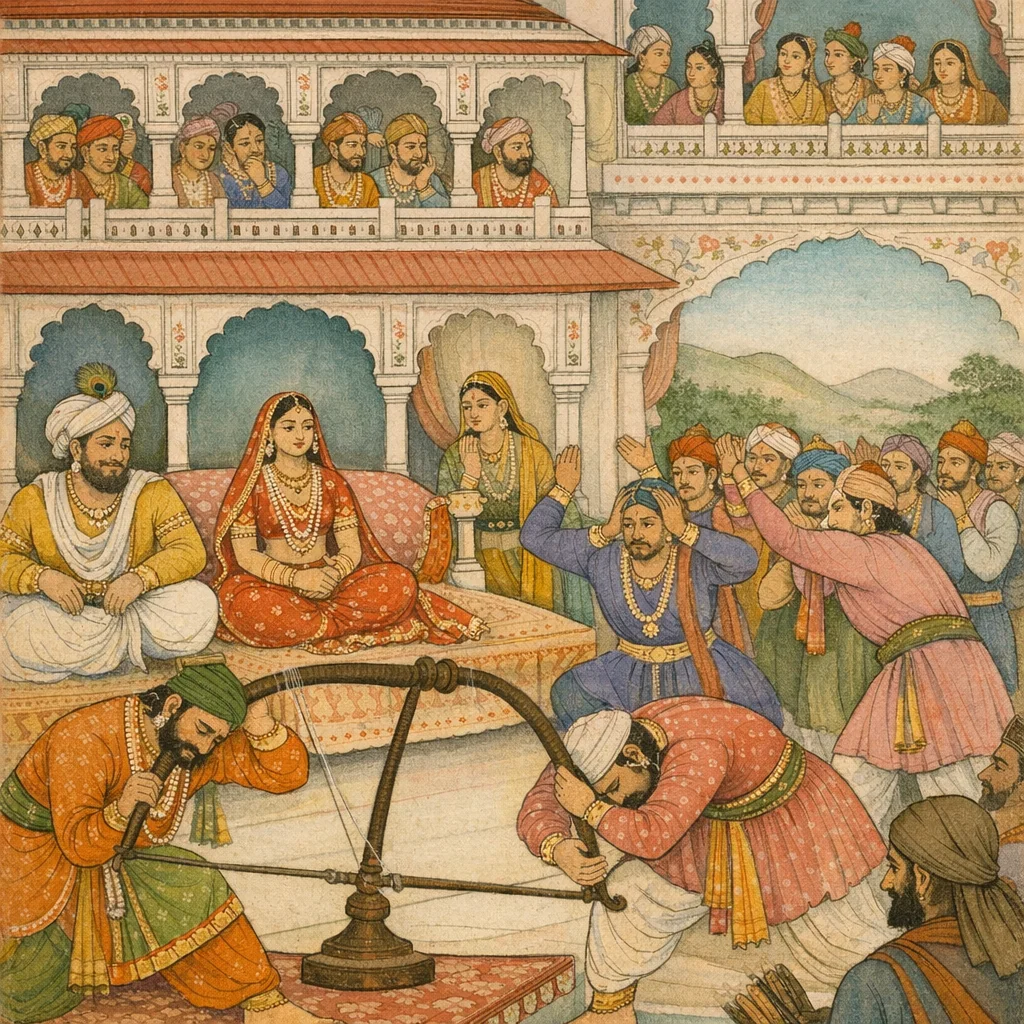
तदनन्तर वे नृपतिगण द्रौपदीके लिये क्रमशः: अपना पराक्रम प्रकट करने लगे। कर्ण, दुर्योधन, शाल्व, शल्य, अभश्वत्थामा, क्राथ, सुनीथ, वक्र, कलिंगराज, वंगनरेश, पाण्ड्यनरेश, पौण्ड्र देशके अधिपति, विदेहके राजा, यवनदेशके अधिपति तथा अन्यान्य अनेक राष्ट्रोंके स्वामी, बहुतेरे राजा, राजपुत्र तथा राजपौत्र, जिनके नेत्र प्रफुल्ल कमलपत्रके समान शोभा पा रहे थे, जिनके विभिन्न अंगोंमें किरीट, हार, अंगद (बाजूबंद) तथा कड़े आदि आभूषण शोभा दे रहे थे तथा जिनकी भुजाएँ बड़ी-बड़ी थीं, वे सब-के-सब पराक्रमी और धीैर्यसे युक्त हो अपने बल और शक्तिपर गर्जते हुए क्रमशः उस धनुषपर अपना बल दिखाने लगे ।। १५ -7१७ || तत् कार्मुक॑ संहननोपपन्न॑ सज्यं न शेकुर्मनसापि कर्तुम् । ते विक्रमन्त: स्फुरता दृढेन विक्षिप्पमाणा धनुषा नरेन्द्रा:,परंतु वे उस सुदृढ़ धनुषपर हाथसे कौन कहे, मनसे भी प्रत्यंचा न चढ़ा सके। अपने बल, शिक्षा और गुणके अनुसार उसपर जोर लगाते समय वे सभी नरेन्द्र उस सुदृढ़ एवं चमचमाते हुए धनुषके झटकेसे दूर फेंक दिये जाते और लड़खड़ाकर धरतीपर जा गिरते थे। फिर तो उनका उत्साह समाप्त हो जाता, किरीट और हार खिसककर गिर जाते और वे लंबी साँसें खींचते हुए शान्त होकर बैठ जाते थे
Then, one after another, the assembled kings began to display their prowess for Draupadī’s sake. Karṇa, Duryodhana, Śālva, Śalya, Aśvatthāmā, and many other rulers—princes and grandsons of kings—adorned with crowns, necklaces, armlets, and bracelets, their eyes bright like newly opened lotus petals and their arms long and mighty, stepped forward with confident shouts of strength. Yet that bow, compact and powerfully made, could not be strung by them—not even in imagination. As they strained according to their training and pride, the rigid, gleaming bow jolted them back; the kings were flung off balance and fell to the ground. Their enthusiasm collapsed; crowns and garlands slipped, and, drawing deep breaths, they sat down in silence. The episode underscores a moral contrast: mere rank and bravado cannot substitute for true capability, and public pride, when ungoverned by humility, ends in humiliation.
Verse 19
विचेष्टमाना धरणीतलस्था यथाबलं शैक्ष्यगुणक्रमाश्न । गतौजस: स्रस्तकिरीटहारा विनि:श्वसन्त: शमयाम्बभूवु:,परंतु वे उस सुदृढ़ धनुषपर हाथसे कौन कहे, मनसे भी प्रत्यंचा न चढ़ा सके। अपने बल, शिक्षा और गुणके अनुसार उसपर जोर लगाते समय वे सभी नरेन्द्र उस सुदृढ़ एवं चमचमाते हुए धनुषके झटकेसे दूर फेंक दिये जाते और लड़खड़ाकर धरतीपर जा गिरते थे। फिर तो उनका उत्साह समाप्त हो जाता, किरीट और हार खिसककर गिर जाते और वे लंबी साँसें खींचते हुए शान्त होकर बैठ जाते थे
Vaiśampāyana said: Struggling while standing on the ground, each king tried according to his own strength, training, and accomplishments. Yet their vigor ebbed away; their crowns and garlands slipped loose, and, breathing long sighs, they fell into silence and sat down—humbled by the bow that would not yield to mere pride or effort.
Verse 20
हाहाकृतं तद् धनुषा दृढेन विस्रस्तहाराड़चक्रवालम् । कृष्णानिमित्तं विनिवृत्तकामं राज्ञां तदा मण्डलमार्तमासीत्,उस सुदृढ़ धनुषके झटकेसे जिनके हार, बाजूबंद और कड़े आदि आभूषण दूर जा गिरे थे, वे नरेश उस समय द्रौपदीको पानेकी आशा छोड़कर अत्यन्त व्यथित हो हाहाकार कर उठे
Vaiśampāyana said: At that time the circle of kings became anguished and broke into cries of lament. Shaken by the force of that firm bow, their garlands, armlets, and bracelets had slipped and fallen away; and, with Kṛṣṇā (Draupadī) as the cause, they turned back from their desire—abandoning hope of winning her—and stood distressed.
Verse 21
सर्वान् नृपांस्तान् प्रसमीक्ष्य कर्णो धनुर्धराणां प्रवरो जगाम । उद्धृत्य तूर्ण धनुरुद्यतं तत् सज्यं चकाराशु युयोज बाणान्,उन सब राजाओंकी यह अवस्था देख धनुर्धारियोंमें श्रेष्ठ कर्ण उस धनुषके पास गया और तुरंत ही उसे उठाकर उसपर प्रत्यंचा चढ़ा दी तथा शीघ्र ही उस धनुषपर वे पाँचों बाण जोड़ दिये-
Seeing the condition of all those kings, Karṇa—the foremost among bowmen—went up to that bow. Swiftly lifting it, he at once strung it and quickly set the arrows upon it, displaying readiness and prowess before the assembled rulers.
Verse 22
दृष्टवा सूतं मेनिरे पाण्डुपुत्रा भित्त्वा नीत॑ लक्ष्यवरं धरायाम् | धनुर्धरा रागकृतप्रतिज्ञ- मत्यग्निसोमार्कमथार्कपुत्रम्,अग्नि, चन्द्रमा और सूर्यसे भी अधिक तेजस्वी सूर्यपुत्र कर्ण द्रौपदीके प्रति आसक्त होनेके कारण जब लक्ष्य भेदनेकी प्रतिज्ञा करके उठा, तब उसे देखकर महाथधनुर्धर पाण्डवोंने यह विश्वास कर लिया कि अब यह इस उत्तम लक्ष्यको भेदकर पृथ्वीपर गिरा देगा
Seeing the charioteer’s son, the sons of Pāṇḍu concluded that he would indeed strike and bring down that excellent target to the ground. That mighty bowman—Karna, son of the Sun—his vow prompted by passionate attachment, rose to attempt the mark, blazing in splendor beyond even Agni, Soma, and Sūrya.
Verse 23
दृष्टवा तु तं द्रौपदी वाक्यमुच्चै- जगाद नाहं वरयामि सूतम् । सामर्षहासं प्रसमीक्ष्य सूर्य तत्याज कर्ण: स्फुरितं धनुस्तत्,कर्णको देखकर द्रौपदीने उच्च स्वरसे यह बात कही--“मैं सूत जातिके पुरुषका वरण नहीं करूँगी।” यह सुनकर कर्णने अमर्षयुक्त हँसीके साथ भगवान् सूर्यकी ओर देखा और उस प्रकाशमान धनुषको डाल दिया
Seeing him, Draupadī spoke aloud: “I will not choose a man of the sūta class.” Hearing this, Karṇa—smiling with wounded pride—glanced toward the Sun and cast aside that gleaming bow. The moment exposes how social status and public speech can wound honor, turning a contest of merit into an ethical fault-line of exclusion and resentment.
Verse 24
एवं तेषु निवत्तेषु क्षत्रियेषु समन््तत: । चेदीनामधिपो वीरो बलवानन्तकोपम:,इस प्रकार जब वे सभी क्षत्रिय सब ओरसे हट गये, तब यमराजके समान बलवान, धीर, वीर, चेदिराज दमघोषपुत्र महाबुद्धिमान् शिशुपाल धनुष उठानेके लिये चला। परंतु उसपर हाथ लगाते ही घुटनोंके बल पृथ्वीपर गिर पड़ा
When all those kṣatriyas had withdrawn on every side, the heroic lord of the Cedis—mighty and resembling Antaka (Death)—advanced to take up the bow. Yet, the moment he laid his hand upon it, he collapsed to the earth on his knees. The scene underscores how sheer force and royal pride can be checked by an unseen moral order, and how a contested act of seizure may be thwarted despite outward valor.
Verse 25
दमघोषसुतो धीर: शिशुपालो महामतिः । धनुरादायमानस्तु जानुभ्यामगमन्महीम्,इस प्रकार जब वे सभी क्षत्रिय सब ओरसे हट गये, तब यमराजके समान बलवान, धीर, वीर, चेदिराज दमघोषपुत्र महाबुद्धिमान् शिशुपाल धनुष उठानेके लिये चला। परंतु उसपर हाथ लगाते ही घुटनोंके बल पृथ्वीपर गिर पड़ा
Vaiśaṃpāyana said: When the other kṣatriyas had withdrawn on all sides, Śiśupāla—son of Damaghoṣa, steadfast and of great resolve—advanced to take up the bow. Yet the moment he laid hands upon it, he collapsed to the earth upon his knees. The scene underscores a moral order in which mere valor is insufficient: when a deed is not supported by rightful fortune and inner steadiness, strength fails at the decisive instant.
Verse 26
ततो राजा महावीरयों जरासंधो महाबल: । धनुषो5 भ्याशमागत्य तस्थौ गिरिरिवाचल:,तदनन्तर महापराक्रमी एवं महाबली राजा जरासंध धनुषके निकट आकर पर्वतकी भाँति अविचलभावसे खड़ा हो गया
Then King Jarāsandha—renowned for great valor and immense strength—came close to the bow and stood firm, motionless like a mountain. The narration underscores the king’s resolute, unshaken readiness, presenting steadfastness and martial composure as qualities expected of a ruler in a charged encounter.
Verse 27
धनुषा पीड्यमानस्तु जानुभ्यामगमन्महीम् | तत उत्थाय राजा स स्वराष्ट्राण्यभिजग्मिवान्,परंतु उठाते समय धनुषका झटका खाकर वह भी घुटनेके बल गिर पड़ा। तब वहाँसे उठकर राजा जरासंध अपने राज्यको चला गया
Pressed and wrenched by the bow’s force, he sank down to the earth upon his knees. Then, rising again from that spot, the king departed and went back to his own realm—an episode that underscores how even mighty rulers are checked by circumstance and must withdraw when overpowered.
Verse 28
तत: शल्यो महावीरो मद्रराजो महाबल: । तदप्यारोप्यमाणस्तु जानुभ्यामगमन्महीम्,तत्पश्चात् महावीर एवं महाबली मद्रराज शल्य आये। पर उन्होंने भी उस धनुषको चढ़ाते समय धरतीपर घुटने टेक दिये
Vaiśampāyana said: Then Śalya, the great hero—king of Madra and a man of immense strength—also, while attempting to string that bow, sank down to the earth upon his knees. The episode underscores that mere fame or royal power is insufficient before a truly extraordinary test; strength must be matched by capability, steadiness, and the fitness demanded by the task.
Verse 29
(ततो दुर्योधनो राजा धार्तराष्ट्र: परंतप: । मानी दृढास्त्रसम्पन्न: सर्वेश्ष नृपलक्षणै: ।। उत्थित:ः सहसा तत्र भ्रातृमध्ये महाबल: । विलोक्य द्रौपदी हृष्टो धनुषो5भ्याशमागमत् ।। स बभौ धनुरादाय शक्रश्नापधरो यथा । आरोपयंस्तु तद् राजा धनुषा बलिना तदा ।। उत्तानशय्यमपतदड्गुल्यन्तरताडित: । स ययौ ताडितस्तेन व्रीडन्निव नराधिप: ।।) तदनन्तर शत्रुओंको संताप देनेवाला धृतराष्ट्रपुत्र महाबली राजा दुर्योधन सहसा अपने भाइयोंके बीचसे उठकर खड़ा हो गया। उसके अस्त्र-शस्त्र बड़े मजबूत थे। वह स्वाभिमानी होनेके साथ ही समस्त राजोचित लक्षणोंसे सम्पन्न था। द्रौपदीको देखकर उसका हृदय हर्षसे खिल उठा और वह शीघ्रतापूर्वक धनुषके पास आया। उस धनुषको हाथमें लेकर वह चापधारी इन्द्रके समान शोभा पाने लगा। राजा दुर्योधन उस मजबूत धनुषपर जब प्रत्यंचा चढ़ाने लगा, उस समय उसके अँगुलियोंके बीचमें झटकेसे ऐसी चोट लगी कि वह चित्त लोट गया। धनुषकी चोट खाकर राजा दुर्योधन अत्यन्त लज्जित होता हुआ-सा अपने स्थानपर लौट गया। तस्मिंस्तु सम्भ्रान्तजने समाजे निक्षिप्तवादेषु जनाधिपेषु । कुन्तीसुतो जिष्णुरियेष कर्तु सज्यं धनुस्तत् सशंर प्रवीर:,(जब इस प्रकार बड़े-बड़े प्रभावशाली राजा लक्ष्यवेध न कर सके, तब) सारा समाज सम्भ्रम (घबराहट)-में पड़ गया और लक्ष्यवेधकी बातचीततक बंद हो गयी, उसी समय प्रमुख वीर कुन्तीनन्दन अर्जुनने उस धनुषपर प्रत्यंचा चढ़ाकर उसपर बाण-संधान करनेकी अभिलाषा की
Vaiśaṃpāyana said: Then King Duryodhana, the son of Dhṛtarāṣṭra—scorcher of foes—proud and furnished with firm weapons and all the marks of royalty, suddenly rose from among his brothers. Seeing Draupadī, his heart brightened with delight, and he hurried toward the bow. Taking it up, he shone like Indra bearing his bow. But as the king tried to string that mighty bow, his fingers were struck in the gap between them; he fell flat on his back. Struck by the bow and seeming consumed by shame, the ruler returned to his place. (In the assembly, when even eminent kings had failed and talk of hitting the target fell silent in confusion, Arjuna, the foremost Kuntī’s son, desired to string the bow and set an arrow upon it.)
Verse 186
(ततो वरिष्ठ: सुरदानवाना- मुदारधीर्वृष्णिकुलप्रवीर: । जहर्ष रामेण स पीड्य हस्तं हस्तं गतां पाण्डुसुतस्य मत्वा ।। न जज्ञुरन्ये नृपवीरमुख्या: संछन्नरूपानथ पाण्डुपुत्रान् ।) यह देख देवता और दानवोंके आदरणीय, वृष्णि-वंशके प्रमुख वीर उदारबुद्धि भगवान् श्रीकृष्ण बल-रामजीके साथ उनका हाथ दबाते हुए बड़े प्रसन्न हुए। उन्हें यह विश्वास हो गया कि द्रौपदी अब पाण्डुनन्दन अर्जुनके हाथमें आ गयी। पाण्डवोंने अपना रूप छिपा रखा था, अतः दूसरे कोई राजा या प्रमुख वीर उन्हें पहचान न सके। इति श्रीमहा भारते आदिपर्वणि स्वयंवरपर्वणि राजपराड्मुखी भवने षडशीत्यधिकशततमो<ध्याय:
Then that foremost among gods and Dānavas—the noble-minded hero of the Vṛṣṇi line—was filled with joy. Along with Balarāma, he pressed his hand in greeting, having become convinced that Draupadī had now come into the hand (i.e., the rightful winning) of Arjuna, the son of Pāṇḍu. Since the Pāṇḍavas had concealed their appearance, none of the other leading kings and eminent warriors could recognize them.
Frequently Asked Questions
The chapter foregrounds an administrative-ethical tension rather than a binary dilemma: how to transform a sensitive marital outcome into publicly legitimate order through timely movement, careful protocol, and avoidance of delay that could invite dispute or instability.
Legitimacy in public life is produced through disciplined procedures—speech (invitation), movement (escorted travel), and ritualized hospitality—showing how dharma operates through institutions and conduct, not only personal intention.
No explicit phalaśruti appears here; the meta-function is narrative-structural, documenting the protocol and material arrangements that authenticate the alliance and prepare the next sequence of political recognition.