Adhyaya 163
Saṃvaraṇa–Tapatī Vivāhaḥ (The Marriage of Saṃvaraṇa and Tapatī) — Mahābhārata, Ādi Parva 163
Upa-parva: Vaṁśānucarita / Kuru-vaṁśa-prasaṅga (Genealogical and dynastic episode: Saṃvaraṇa–Tapatī narrative)
Vasiṣṭha petitions Savitṛ (the solar deity) for Tapatī’s hand on behalf of King Saṃvaraṇa, presenting the king’s suitability in reputation and dharma-oriented understanding. Savitṛ assents, praises the match, and formally entrusts Tapatī to Vasiṣṭha, who brings her to Saṃvaraṇa. The king, moved by desire and joy upon seeing Tapatī, completes a period of austerity; through tapas and Vasiṣṭha’s spiritual authority he obtains her as wife. The marriage is performed according to proper rite on a mountain frequented by divine beings. Saṃvaraṇa then remains with Tapatī for twelve years in secluded enjoyment, during which the capital and realm suffer drought and deprivation. Observing the crisis, Vasiṣṭha retrieves the king and returns him to the city; rains resume and the realm recovers. Saṃvaraṇa later performs extended rites with Tapatī, and the narrative culminates in the birth of Kuru—providing an etiological link for the Kaurava identity and Arjuna’s epithet tied to that lineage.
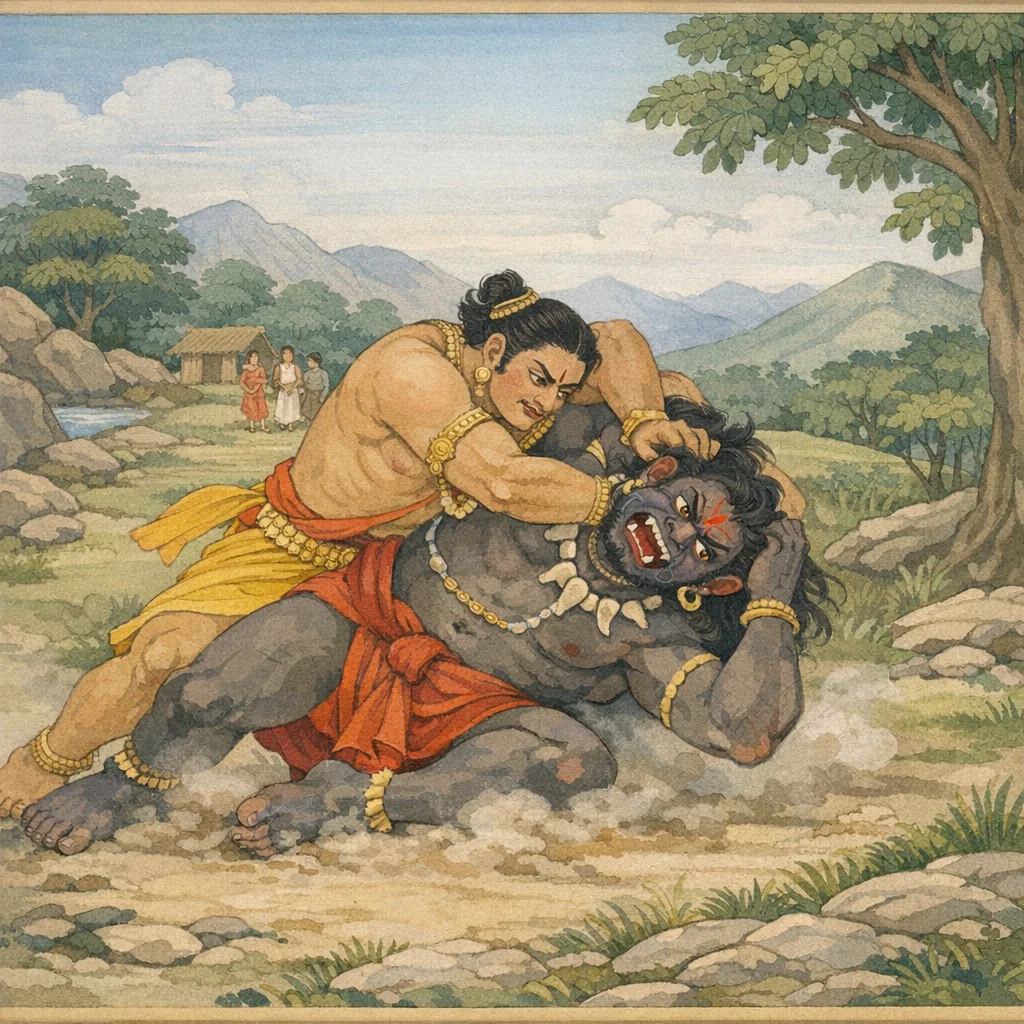
Chapter Arc: एक ब्राह्मण-परिवार की रक्षा के लिए भीमसेन स्वयं भोजन-सामग्री लेकर बकासुर के पास जाने का निश्चय करता है—और मार्ग में ही यह स्पष्ट हो जाता है कि आज ‘कर’ नहीं, ‘कर्तव्य’ चुकाया जाएगा। → युधिष्ठिर की चिंता और सावधानी—कि नगरवासी न जानें, ब्राह्मण को यत्नपूर्वक आश्वस्त रखा जाए—के बीच भीम निर्भय होकर राक्षस के हिस्से का अन्न स्वयं खा लेता है और उसे पुकारकर चुनौती देता है। यह अपमान बकासुर के क्रोध को भड़काता है और वह युद्ध के लिए दौड़ पड़ता है। → भयंकर गर्जना करता नरभक्षी बकासुर भीम पर झपटता है; दोनों महाबली एक-दूसरे को घसीटते, खींचते, भिड़ते हैं। अंततः भीम घुटने से पीठ दबाकर राक्षस की कमर तोड़ देता है—टूटते शरीर से मुख से रक्त फूट पड़ता है और बकासुर का अंत निश्चित हो जाता है। → बकासुर का वध हो जाता है; ब्राह्मण-परिवार और एकचक्रा नगर भय-मुक्त होते हैं। पाण्डवों की गुप्त पहचान सुरक्षित रहते हुए भी उनका धर्म-रक्षण प्रकट हो उठता है। → नगर में फैले इस परिवर्तन का प्रभाव—और पाण्डवों के ‘अज्ञात’ रहते हुए भी उनके यश का फैलना—आगे की घटनाओं के लिए भूमि तैयार करता है।
Shlokas
Verse 1
अड-४#-रू- द्विषष्ट्याधिकशततमो< ध्याय: भीमसेनका भोजन-सामग्री लेकर बकासुरके पास जाना और स्वयं भोजन करना तथा युद्ध करके उसे मार गिराना युधिछिर उवाच उपपन्नमिदं मातस्त्वया यद् बुद्धिपूर्वकम् । आर्तस्य ब्राह्मणस्यैतदनुक्रोशादिदं कृतम्,युधिष्ठिर बोले--माँ! आपने समझ-बूझकर जो कुछ निश्चय किया है, वह सब उचित है। आपने संकटमें पड़े हुए ब्राह्मणपर दया करके ही ऐसा विचार किया है
Yudhiṣṭhira said: “Mother, what you have resolved with deliberate forethought is wholly fitting. This has been done out of compassion for a Brahmin in distress.”
Verse 2
ध्रुवमेष्यति भीमो5यं निहत्य पुरुषादकम् | सर्वथा ब्राह्मणस्यार्थे यदनुक्रोशवत्यसि,निश्चय ही भीमसेन उस राक्षसको मारकर लौट आयेंगे; क्योंकि आप सर्वथा ब्राह्मणकी रक्षाके लिये ही उसपर इतनी दयालु हुई हैं
Yudhiṣṭhira said: “Surely this Bhīma will return after slaying the man-eating rākṣasa. For your compassion is wholly directed toward the welfare and protection of the brāhmaṇa.”
Verse 3
यथा व्विदं न विन्देयुर्नरा नगरवासिन: । तथायं ब्राह्मणो वाच्य: परिग्राह्श्च यत्नत:,आपको यत्नपूर्वक ब्राह्मणपर अनुग्रह तो करना ही चाहिये; किंतु ब्राह्मगणसे यह कह देना चाहिये कि वे इस प्रकार मौन रहें कि नगरनिवासियोंको यह बात मालूम न होने पाये
Yudhiṣṭhira said: “Arrange matters so that the townspeople do not come to know of this. Yet this brāhmaṇa must be addressed with care, and he should be supported and received with diligent attention.” The ethical thrust is discretion joined with duty: protect social order and public peace, while still extending proper honor and assistance to a brāhmaṇa.
Verse 4
वैशम्पायन उवाच (युधिष्ठिरेण सम्मन्त्रय ब्राह्मुणार्थमरिंदम । कुन्ती प्रविश्य तान् सर्वान् सान्त्ववयामास भारत ।।) ततो रात्र्यां व्यतीतायामन्नमादाय पाण्डव: । भीमसेनो ययौ तत्र यत्रासौ पुरुषादक:ः,वैशम्पायनजी कहते हैं--जनमेजय! ब्राह्मण (की रक्षा)-के निमित्त युधिष्ठिरसे इस प्रकार सलाह करके कुन्तीदेवीने भीतर जाकर समस्त ब्राह्मण-परिवारको सान्त्वना दी। तदनन्तर रात बीतनेपर पाण्डुनन्दन भीमसेन भोजनसामग्री लेकर उस स्थानपर गये, जहाँ वह नरभक्षी राक्षस रहता था। बक राक्षसके वनमें पहुँचकर महाबली पाण्डुकुमार भीमसेन उसके लिये लाये हुए अन्नको स्वयं खाते हुए राक्षसका नाम ले-लेकर उसे पुकारने लगे
Vaiśampāyana said: “O Bhārata (Janamejaya), after consulting with Yudhiṣṭhira for the sake of protecting the Brahmins, Kuntī went inside and consoled the entire Brahmin household. Then, when the night had passed, the Pāṇḍava Bhīmasena took the food provisions and went to the place where that man-eating demon dwelt.” The passage highlights a dharmic response to crisis: deliberation, compassion toward the vulnerable, and courageous action undertaken to remove a threat to the community.
Verse 5
आसाद्य तु वनं तस्य रक्षस: पाण्डवो बली । आजुहाव ततो नाम्ना तदन्नमुपपादयन्,वैशम्पायनजी कहते हैं--जनमेजय! ब्राह्मण (की रक्षा)-के निमित्त युधिष्ठिरसे इस प्रकार सलाह करके कुन्तीदेवीने भीतर जाकर समस्त ब्राह्मण-परिवारको सान्त्वना दी। तदनन्तर रात बीतनेपर पाण्डुनन्दन भीमसेन भोजनसामग्री लेकर उस स्थानपर गये, जहाँ वह नरभक्षी राक्षस रहता था। बक राक्षसके वनमें पहुँचकर महाबली पाण्डुकुमार भीमसेन उसके लिये लाये हुए अन्नको स्वयं खाते हुए राक्षसका नाम ले-लेकर उसे पुकारने लगे
Vaiśampāyana said: After reaching the forest that belonged to that rākṣasa, the mighty Pāṇḍava (Bhīma) began to call him aloud by name, while arranging the food—indeed, consuming the provisions himself—so as to draw the man-eating demon out. The episode highlights deliberate self-risk undertaken to protect others, turning personal strength into a means of safeguarding the vulnerable.
Verse 6
ततः स राक्षस: क्रुद्धो भीमस्य वचनात् तदा | आजगाम सुसंक्रुद्धो यत्र भीमो व्यवस्थित:,भीमके इस प्रकार पुकारनेसे वह राक्षस कुपित हो उठा और अत्यन्त क्रोधमें भरकर जहाँ भीमसेन बैठकर भोजन कर रहे थे, वहाँ आया
Then that rākṣasa, provoked by Bhīma’s words, flared up in anger. Burning with fury, he came to the place where Bhīma was stationed—seated and engaged in his meal—ready to confront him. The passage highlights how harsh speech can swiftly escalate hostility, setting the stage for a direct clash between arrogance and fearless resolve.
Verse 7
महाकायो महावेगो दारयन्निव मेदिनीम् | लोहिताक्ष: करालश्न लोहितश्मश्रुमूर्थज:,उसका शरीर बहुत बड़ा था। वह इतने महान् वेगसे चलता था, मानो पृथ्वीको विदीर्ण कर देगा। उसकी आँखें रोषसे लाल हो रही थीं। आकृति बड़ी विकराल जान पड़ती थी। उसके दाढ़ी, मूँछ और सिरके बाल लाल रंगके थे
Vaiśampāyana said: He was of gigantic frame and moved with tremendous speed, as though he would split the very earth. His eyes were reddened with fury; his appearance seemed terrifying. His beard, moustache, and the hair upon his head were all of a reddish hue—signs of a fierce, untamed nature that inspires fear in those who behold him.
Verse 8
आकर्णाद् भिन्नवक्त्रश्न शड्कुर्णो बिभीषण: । त्रिशिखां भ्रुकुटिं कृत्वा संदश्य दशनच्छदम्,मुँहका फैलाव कानोंके समीपतक था, कान भी शंकुके समान लंबे और नुकीले थे। बड़ा भयानक था वह राक्षस। उसने भौंहें ऐसी टेढ़ी कर रखी थीं कि वहाँ तीन रेखाएँ उभड़ आयी थीं और वह दाँतोंसे ओठ चबा रहा था
Vaiśampāyana said: His mouth seemed split wide up to the ears; his ears were long, pointed, and cone-like. Terrifying in appearance, the rākṣasa drew his brows into a fierce frown so that three ridges stood out, and he gnawed his own lips with his teeth—an outward sign of violent intent and inner agitation.
Verse 9
भुज्जानमन्नं तं दृष्टवा भीमसेनं स राक्षस: । विवृत्य नयने क्रुद्ध इंदं वचनमत्रवीत्,भीमसेनको वह अन्न खाते देख राक्षसका क्रोध बहुत बढ़ गया और उसने आँखें तरेरकर कहा--
Vaiśampāyana said: Seeing Bhīmasena eating the food, the rākṣasa’s anger flared. With eyes widened in fury, he spoke these words—signaling the clash between a violent claimant’s possessiveness and Bhīma’s fearless refusal to submit to intimidation.
Verse 10
को<यमन्नमिदं भुद्धतक्ते मदर्थमुपकल्पितम् । पश्यतो मम दुर्बुद्धिर्यियासुर्यमसादनम्,“यमलोकमें जानेकी इच्छा रखनेवाला यह कौन दुर्बुद्धि मनुष्य है, जो मेरी आँखोंके सामने मेरे ही लिये तैयार करके लाये हुए इस अन्नको स्वयं खा रहा है?”
Vaiśampāyana said: “Who is this foolish man, longing to go to Yama’s abode, who—right before my eyes—eats this food that has been prepared for me?” The line conveys a sharp ethical rebuke: taking what is meant for another, especially in a context of hospitality and rightful offering, is treated as a grave offense inviting dire consequence.
Verse 11
भीमसेनस्तत: श्रुत्वा प्रहसन्निव भारत । राक्षसं तमनादृत्य भुड्क्त एव पराड्मुख:,भारत! उसकी बात सुनकर भीमसेन मानो जोर-जोरसे हँसने लगे और उस राक्षसकी अवहेलना करते हुए मुँह फेरकर खाते ही रह गये
Vaiśampāyana said: Hearing those words, Bhīmasena seemed to burst into laughter. Disregarding the rākṣasa, he turned his face away and continued eating—an unflinching display of contempt meant to deny the aggressor both fear and moral authority.
Verse 12
रवं स भैरवं कृत्वा समुद्यम्य करावुभौ । अभ्यद्रवद् भीमसेनं जिघांसु: पुरुषादक:,अब तो वह नरभक्षी राक्षस भीमसेनको मार डालनेकी इच्छासे भयंकर गर्जना करता हुआ दोनों हाथ ऊपर उठाकर उनकी ओर दौड़ा
Vaiśampāyana said: Raising a dreadful roar and lifting both his hands aloft, the man-eating rākṣasa rushed at Bhīmasena, intent on killing him. The scene underscores the stark contrast between predatory violence driven by appetite and the righteous resistance that protects the vulnerable.
Verse 13
तथापि परिभूयैन प्रेक्षमाणो वृकोदर: । राक्षसं भुझुक्त एवान्नं पाण्डव: परवीरहा,तो भी शत्रुवीरोंका संहार करनेवाले पाण्डुनन्दन भीमसेन उस राक्षसकी ओर देखते हुए उसका तिरस्कार करके उस अन्नको खाते ही रहे। तब उसने अत्यन्त अमर्षमें भरकर कुन्तीनन्दन भीमसेनके पीछे खड़े हो अपने दोनों हाथोंसे उनकी पीठपर प्रहार किया
Yet even so, Vṛkodara (Bhīma), looking straight at the rākṣasa, treated him with contempt and continued eating the food. The Pāṇḍava—slayer of enemy heroes—did not cease; by his composure he signaled fearlessness and a refusal to be provoked into rash action. (In the ensuing moment, the rākṣasa, burning with resentment, would strike Bhīma from behind—setting the stage for a decisive confrontation.)
Verse 14
अमर्षेण तु सम्पूर्ण: कुन्तीपुत्रं वृकोदरम् जघान पृष्ठे पाणिभ्यामुभाभ्यां पृष्ठत: स्थित:,तो भी शत्रुवीरोंका संहार करनेवाले पाण्डुनन्दन भीमसेन उस राक्षसकी ओर देखते हुए उसका तिरस्कार करके उस अन्नको खाते ही रहे। तब उसने अत्यन्त अमर्षमें भरकर कुन्तीनन्दन भीमसेनके पीछे खड़े हो अपने दोनों हाथोंसे उनकी पीठपर प्रहार किया
Vaiśampāyana said: Filled with rage, the rākṣasa struck Kuntī’s son Vṛkodara (Bhīma) on the back with both hands, standing behind him. Yet Bhīmasena—destroyer of hostile champions and son of Pāṇḍu—looked at the rākṣasa with contempt and continued eating that food. Then the demon, swelling with even greater fury, stood behind Kuntī’s son Bhīma and again dealt blows upon his back with both hands.
Verse 15
तथा बलवता भीम: पाणिशभ्यां भूशमाहतः । नैवावलोकयामास राक्षसं भुड्क्त एव सः,इस प्रकार बलवान राक्षसके दोनों हाथोंसे भयानक चोट खाकर भी भीमसेनने उसकी ओर देखातक नहीं, वे भोजन करनेमें ही संलग्न रहे
Vaiśampāyana said: Even when Bhīma—mighty as he was—was struck hard with both hands by the rākṣasa, he did not so much as look at the demon; he remained absorbed in eating. The scene underscores Bhīma’s unshaken composure and contempt for the threat, presenting fearlessness and self-mastery as a form of strength in the face of violence.
Verse 16
ततः स भूय: संक्रुद्धो वृक्षमादाय राक्षस: । ताडयिष्यंस्तदा भीम॑ पुनरभ्यद्रवद् बली,तब उस बलवान राक्षसने पुनः अत्यन्त कुपित हो एक वृक्ष उखाड़कर भीमसेनको मारनेके लिये फिर उनपर धावा किया
Vaiśampāyana said: Then that rākṣasa, once again inflamed with rage, tore up a tree and, intending to strike Bhīma, charged at him anew with force. The scene underscores how uncontrolled anger drives one toward reckless violence, while the hero’s steadiness becomes the counterweight to brute fury.
Verse 17
ततो भीम: शनैर्भुक्त्वा तदन्नं पुरुषर्षभ: । वार्युपस्पृश्य संहृष्टस्तस्थी युधि महाबल:,तदनन्तर नरश्रेष्ठ महाबली भीमसेनने धीरे-धीरे वह सब अन्न खाकर, आचमन करके मुँह-हाथ धो लिये, फिर वे अत्यन्त प्रसन्न हो युद्धके लिये डट गये
Then Bhīma, that bull among men, slowly ate that food. Having sipped water in ritual purification, he became greatly delighted and, mighty in strength, stood firm—ready for battle. The scene underscores disciplined self-control and proper conduct even on the threshold of conflict: nourishment is taken without haste, purification is observed, and then one enters action with steadiness.
Verse 18
क्षिप्तं क्रुद्धेन त॑ वृक्ष॑ प्रतिजग्राह वीर्यवान् । सव्येन पाणिना भीम: प्रहसन्निव भारत,जनमेजय! कुपित राक्षसके द्वारा चलाये हुए उस वृक्षको पराक्रमी भीमसेनने बायें हाथसे हँसते हुए-से पकड़ लिया
Vaiśampāyana said: The mighty Bhīma seized the tree that had been hurled in anger by the enraged rākṣasa. With his left hand he caught it, as if laughing—O descendant of Bharata, O Janamejaya—displaying fearless strength and mastery over wrath-driven violence.
Verse 19
ततः स पुनरुद्यम्य वृक्षान् बहुविधान् बली । प्राहिणोद् भीमसेनाय तस्मै भीमश्न पाण्डव:,तब उस बलवान् निशाचरने पुनः बहुत-से वृक्षोंको उखाड़ा और भीमसेनपर चला दिया। पाण्डुनन्दन भीमने भी उसपर अनेक वृक्षोंद्वारा प्रहार किया
Then that mighty night-ranger, once again wrenching up many kinds of trees, hurled them at Bhīmasena. But Bhīma, the Pāṇḍava famed as a devourer of foes, struck back at him in turn with numerous trees—meeting brute force with steadfast courage and protective resolve.
Verse 20
तद् वृक्षयुद्धम भवन्महीरुहविनाशनम् । घोररूपं महाराज नरराक्षसराजयो:,महाराज! नरराज तथा राक्षसराजका वह भयंकर वृक्षयुद्ध उस वनके समस्त वृक्षोंके विनाशका कारण बन गया
Vaiśampāyana said: That battle fought with trees became the destruction of the great forest-trees. O King, it was a dreadful encounter between the human king and the rākṣasa king—so fierce that it laid waste to the woodland itself, showing how unbridled wrath in combat can turn even the natural world into a casualty.
Verse 21
नाम विश्राव्य तु बकः समभिद्रुत्य पाण्डवम् । भुजाभ्यां परिजग्राह भीमसेनं महाबलम्,तदनन्तर बकासुरने अपना नाम सुनाकर महाबली पाण्डुनन्दन भीमसेनकी ओर दौड़कर दोनों बाँहोंसे उन्हें पकड़ लिया
Vaiśampāyana said: Having first made his name known, Baka rushed straight at the Pāṇḍava and, with both arms, seized the mighty Bhīmasena. The episode underscores the contrast between brute, predatory force and the righteous strength that rises to protect the vulnerable.
Verse 22
भीमसेनो<डपि तद् रक्ष: परिरभ्य महाभुज: । विस्फुरन्तं महाबाहुं विचकर्ष बलादू बली,महाबाहु बलवान् भीमसेनने भी उस विशाल भुजाओंवाले राक्षसको दोनों भुजाओंसे कसकर छातीसे लगा लिया और बलपूर्वक उसे इधर-उधर खींचने लगे। उस समय बकासुर उनके बाहुपाशसे छूटनेके लिये छटपटा रहा था
Vaiśampāyana said: Mighty-armed Bhīmasena too clasped that rākṣasa tightly to his chest with both arms, and—strong in power—dragged the great-armed, writhing demon about by sheer force. The scene underscores righteous protection through controlled strength: Bhīma’s physical might is directed not toward cruelty, but toward restraining a violent threat.
Verse 23
स कृष्यमाणो भीमेन कर्षमाणश्न पाण्डवम् | समयुज्यत तीव्रेण क्लमेन पुरुषादक:,भीमसेन उस राक्षसको खींचते थे तथा राक्षस भीमसेनको खींच रहा था। इस खींचा- खींचीमें वह नरभक्षी राक्षस बहुत थक गया
Vaiśampāyana said: As Bhīma dragged him and the man-eating rākṣasa in turn dragged the Pāṇḍava, they grappled in a fierce tugging struggle. In that intense contest, the cannibal rākṣasa became greatly exhausted—showing how brute violence and predation falter before steadfast strength used in protection.
Verse 24
तयोरवेंगेन महता पृथिवी समकम्पत । पादपांश्न महाकायांश्वूर्णयामासतुस्तदा,उन दोनोंके महान् वेगसे धरती जोरसे काँपने लगी। उन दोनोंने उस समय बड़े-बड़े वृक्षोंके भी टुकड़े-टुकड़े कर डाले
Vaiśampāyana said: Driven by the tremendous momentum of those two, the earth shook violently. In that very moment, they also shattered great, massive trees—reducing them to fragments—revealing the overwhelming force unleashed in their encounter.
Verse 25
हीयमान तु तद् रक्ष: समीक्ष्य पुरुषादकम् । निष्पिष्य भूमौ जानुभ्यां समाजघ्ने वृकोदर:,उस नरभक्षी राक्षसको कमजोर पड़ते देख भीमसेन उसे पृथ्वीपर पटककर रगड़ने और दोनों घुटनोंसे मारने लगे
Vaiśaṃpāyana said: Seeing that man-eating rākṣasa weakening, Vṛkodara (Bhīma) threw him down upon the earth, crushed him against the ground, and struck him repeatedly with both knees. The scene underscores the protection of the innocent through decisive force against predatory violence.
Verse 26
ततो<स्य जानुना पृष्ठठगवपीड्य बलादिव । बाहुना परिजग्राह दक्षिणेन शिरोधराम्,तदनन्तर उन्होंने अपने एक घुटनेसे बल-पूर्वक राक्षसकी पीठ दबाकर दाहिने हाथसे उसकी गर्दन पकड़ ली और बायें हाथसे कमरका लँगोट पकड़कर उस राक्षसको दुहरा मोड़ दिया। उस समय वह बड़ी भयानक आवाज में चीत्कार कर रहा था
Vaiśampāyana said: Then, pressing down the rākṣasa’s back with his knee as if by sheer force, he seized the creature’s neck with his right arm. The act is narrated as a decisive subduing of violent aggression—strength employed to restrain a threat rather than to indulge cruelty.
Verse 27
सव्येन च कटीदेशे गृह वाससि पाण्डव: । तद् रक्षो द्विगुणं चक्रे रुवन्तं भैरवं रवम्,तदनन्तर उन्होंने अपने एक घुटनेसे बल-पूर्वक राक्षसकी पीठ दबाकर दाहिने हाथसे उसकी गर्दन पकड़ ली और बायें हाथसे कमरका लँगोट पकड़कर उस राक्षसको दुहरा मोड़ दिया। उस समय वह बड़ी भयानक आवाज में चीत्कार कर रहा था
Vaiśampāyana said: Gripping the demon by the cloth at his waist with his left hand, the Pāṇḍava pressed down upon his back with his knee and seized his neck with his right hand. With overpowering force he bent the rākṣasa double, while the creature screamed in a terrifying roar—an image of brute violence being restrained by superior strength in the service of protection and righteous order.
Verse 28
ततो<स्य रुधिरं वकत्रात् प्रादुरासीद् विशाम्पते | भज्यमानस्य भीमेन तस्य घोरस्य रक्षस:,राजन! भीमसेनके द्वारा उस घोर राक्षसकी जब कमर तोड़ी जा रही थी, उस समय उसके मुखसे (बहुत-सा) खून गिरा
Vaiśampāyana said: Then, O lord of the people, blood burst forth from his mouth as that dreadful rākṣasa was being crushed by Bhīma. The scene underscores Bhīma’s fierce resolve to protect the vulnerable by overpowering violent wrongdoing, even through terrifying force.
Verse 162
इति श्रीमहाभारते आदिपर्वणि बकवधपर्वणि बकभीमसेनयुद्धे द्विषष्ट्यधिकशततमो<ध्याय:
Thus, in the Śrī Mahābhārata, within the Ādi Parva, in the section concerning the slaying of Baka, in the episode of the battle between Baka and Bhīmasena, ends the one-hundred-and-sixty-second chapter. This is a concluding colophon marking the close of the chapter that narrates the confrontation in which Bhīma upholds protection of the vulnerable by confronting predatory violence.
Frequently Asked Questions
The implicit dharma-tension is between personal absorption in pleasure and the king’s administrative duty: Saṃvaraṇa’s prolonged withdrawal correlates with societal distress, prompting corrective intervention.
Legitimate prosperity is depicted as dependent on disciplined authority: alliances should be sanctioned through proper counsel and rite, and rulership requires sustained presence and responsibility toward the realm.
No explicit phalaśruti formula appears here; the meta-function is genealogical and etiological—explaining Kuru’s origin and reinforcing the narrative logic that order (including rainfall) follows restored righteous governance.