Adhyaya 8
तालवन-उद्धारः: धेनुकासुरवधः, फल-समृद्धिः, गो-क्षेमः
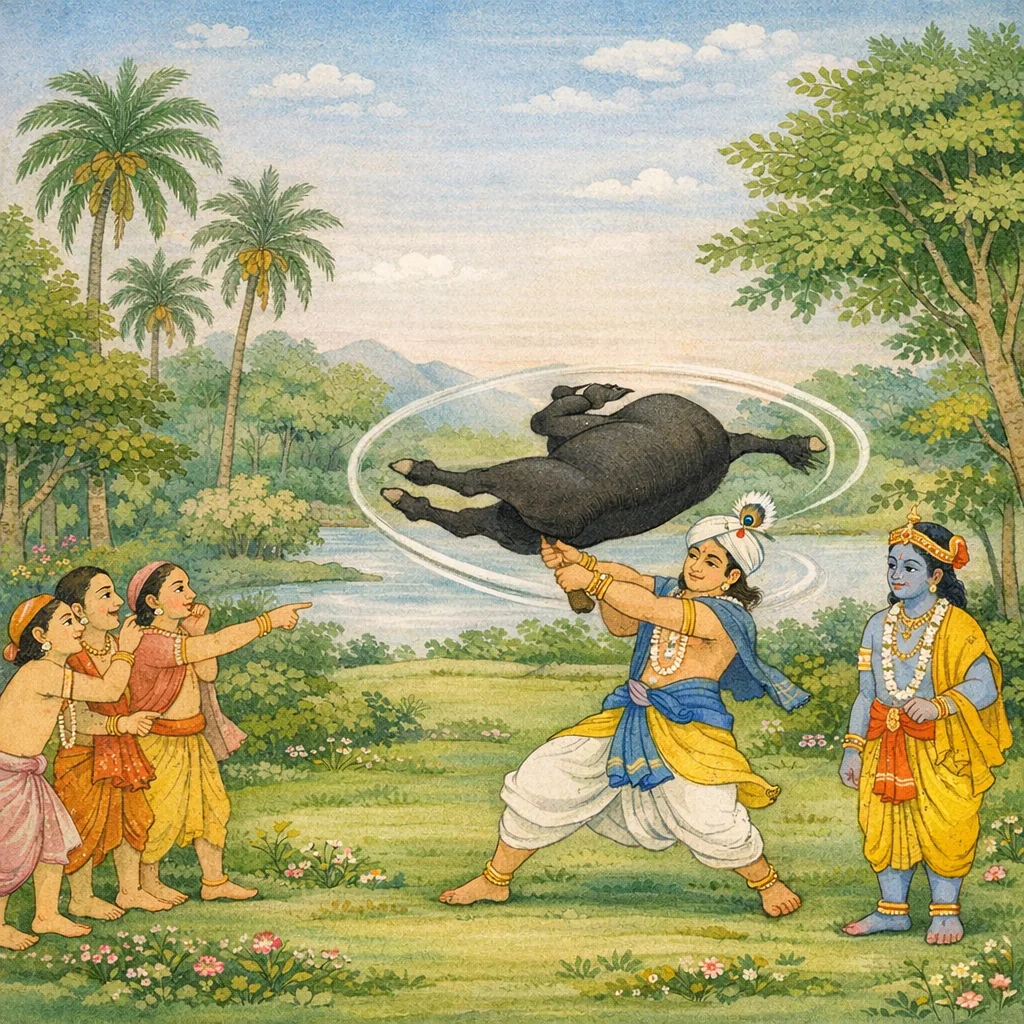
Parāśara tells Maitreya that Balarāma and Keśava, herding cows with the cowherd boys, reach Tālavana, a palm grove guarded by the ass-formed asura Dhenuka who harms men and cattle. Seeing fragrant ripe fruits, the boys ask Rāma and Kṛṣṇa to bring them down. As the fruits fall, Dhenuka rushes in fury and strikes Balarāma; Balarāma seizes him, whirls him, and kills him, casting the body down. Kṛṣṇa and Balabhadra then slay Dhenuka’s demonic kinsmen as well, hurling them onto the palm tops. The ground is strewn with fruits and asura bodies, and the grove becomes safe. Freed from fear, the cows happily graze fresh shoots once unreachable—showing that when adharma is removed, natural prosperity is restored.
Shlokas
Verse 1
गाः पालयन्तौ च पुनः सहितौ बलकेशवौ भ्रममाणौ वने तस्मिन् रम्यं तालवनं गतौ
Once again Balarāma and Keśava, together, tended the cows; and as they wandered through that forest, they came to the delightful Tālavana, the grove of palm trees.
Verse 2
तत् तु तालवनं नित्यं धेनुको नाम दानवः नृगोमांसकृताहारः सदाध्यास्ते खराकृतिः
That palm-grove, Tālavana, was ever occupied by the demon Dhenuka—feeder on the flesh of men and cattle—who dwelt there continually in the form of a wild ass.
Verse 3
तत् तु तालवनं पक्वफलसंपत्समन्वितम् दृष्ट्वा स्पृहान्विता गोपाः फलादाने ऽब्रुवन् वचः
But when the cowherds beheld Tālavana, abounding in ripe fruit, longing arose within them, and they spoke to one another of gathering the fruit.
Verse 4
हे राम हे कृष्ण सदा धेनुकेनैष रक्ष्यते भूप्रदेशो यतस् तस्मात् पक्वानीमानि सन्ति वै
“O Rāma! O Kṛṣṇa! This tract is ever guarded by Dhenuka; therefore the fruits here, though ripe, truly remain unharvested.”
Verse 5
फलानि पश्य तालानां गन्धामोदितदिंशि च वयम् एतान्य् अभीप्सामः पात्यन्तां यदि रोचते
“Behold these palm fruits; their fragrance sweetens every quarter. We desire them—if it pleases you, let them be brought down.”
Verse 6
इति गोपकुमाराणां श्रुत्वा संकर्षणो वचः कृष्णश् च पातयाम् आस भुवि तालफलानि वै
Hearing the words of the cowherd boys, Saṅkarṣaṇa—and Kṛṣṇa as well—made the palm fruits fall upon the earth, as though in effortless divine play.
Verse 7
फलानां पततां शब्दम् आकर्ण्य सुदुरासदः आजगाम स दुष्टात्मा कोपाद् दैतेयगर्दभः
Hearing the sound of fruits dropping, that hard-to-approach one came rushing there—wicked-souled and inflamed with anger—the donkey-like Daitya.
Verse 8
पद्भ्याम् उभाभ्यां स तदा पश्चिमाभ्यां बली बलम् जघानोरसि ताभ्यां च स च तेनाप्य् अगृह्यत
Then the powerful demon struck Bala upon the chest with both his hind feet; yet by those very feet, Bala seized him.
Verse 9
गृहीत्वा भ्रामणेनैव सो ऽम्बरे गतजीवितम् तस्मिन्न् एव स चिक्षेप वेगेन तृणराजनि
Seizing him and whirling him round and round, he rendered him lifeless in mid-air; and with a sudden rush of force, he hurled that very body down upon the king of the Tr̥ṇas.
Verse 10
ततः फलान्य् अनेकानि तालाग्रान् निपतन् खरः पृथिव्यां पातयाम् आस महावातो ऽम्बुदान् इव
Then, that fierce one sent many fruits crashing down from the crowns of the palm-trees, striking them to the earth—like a mighty gale hurling down rain-clouds from the sky.
Verse 11
अन्यान् अप्य् अस्य वै ज्ञातीन् आगतान् दैत्यगर्दभान् कृष्णश् चिक्षेप तालाग्रे बलभद्रश् च लीलया
And the other kinsmen of that one—those demon-asses who had come there as well—Kṛṣṇa hurled up to the tops of the palm trees; and Balabhadra too, in mere sportive ease, did the same.
Verse 12
क्षणेनालंकृता पृथ्वी पक्वैस् तालफलैस् तथा दैत्यगर्दभदेहैश् च मैत्रेय शुशुभे ऽधिकम्
In a single moment, O Maitreya, the earth was adorned—strewn with ripe palm fruits and also with the bodies of the donkey-formed Daityas—so that she shone all the more.
Verse 13
ततो गावो निराबाधास् तस्मिंस् तालवने द्विज नवशष्पं सुखं चेरुर् यन् न भुक्तम् अभूत् पुरा
Then, O twice-born one, the cows—now free from all distress—wandered happily in that palm-grove, grazing on fresh young shoots that had never before been eaten.
Frequently Asked Questions
It becomes sevyam—safe and enjoyable for cows, cowherds, and gopīs; the cows freely graze on fresh shoots never eaten before, indicating restored order and abundance.
Ripe fruit signifies accessible prosperity; the demon’s guardianship blocks rightful enjoyment, and his removal depicts dharma restoring the natural flow of nourishment and well-being.