Adhyaya 16
Maitreya’s Inquiry into Prahlāda: The Logic of Bhakti’s Invincibility
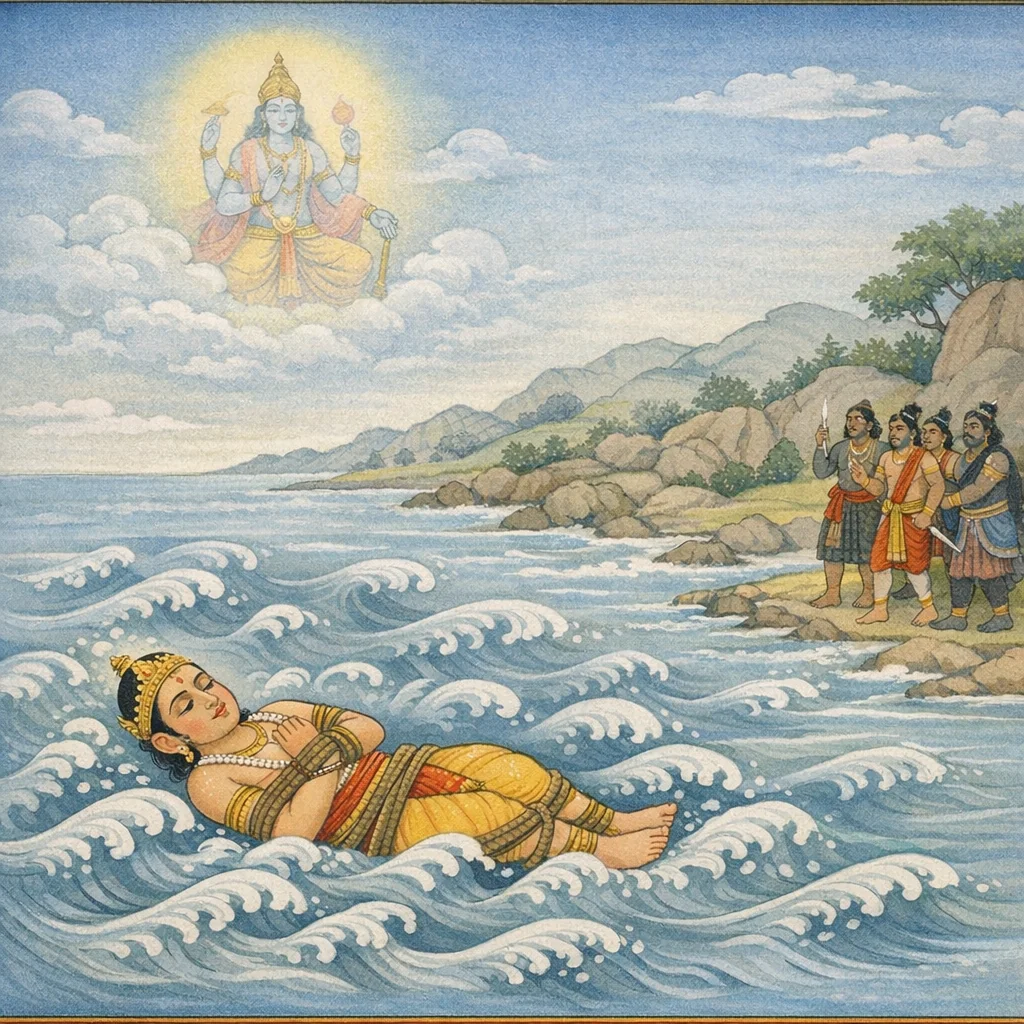
Maitreya, accepting Parāśara’s teaching that Viṣṇu is the eternal cause of the world, turns to the exemplum of Prahlāda. He asks why Prahlāda’s one-pointed devotion to Viṣṇu made him invulnerable to fire, weapons, poison, serpents, mountains, and sorcery, and what caused the Daityas to assault a dhārmika viṣṇu-bhakta again and again. He requests the staging of each attempted execution—casting into the ocean, crushing under rocks, serpent-bites, elephant attack, drying wind, the kṛtyā rite, Śambara’s māyā, and the offering of Hālāhala. Parāśara answers doctrinally that unwavering absorption in Viṣṇu cannot be overthrown, yet the moral tension remains: why would even one’s own kin sustain hatred toward such a sādhū? The chapter ends as a narrative hinge, with Maitreya asking for Prahlāda’s full, uninterrupted carita, preparing the coming account of bhakti, persecution, and divine protection.
Shlokas
Verse 1
कथितो भवता वंशो मानवानां महामुने कारणं चास्य जगतो विष्णुर् एव सनातनः
O great sage, you have recounted to me the lineage of humankind; and you have declared that the eternal Viṣṇu alone is the cause of this entire world.
Verse 2
यत् त्व् एतद् भगवान् आह प्रह्लादं दैत्यसत्तमम् ददाह नाग्निर् नास्त्रैश् च क्षुण्णस् तत्याज जीवितम्
It was exactly as the Blessed Lord had declared: Prahlāda, noblest among the Daityas, could not be burned by fire nor struck down by weapons; and he who sought to destroy him, crushed by frustration, at last abandoned his life.
Verse 3
जगाम वसुधा क्षोभं यत्राब्धिसलिले स्थिते बन्धबद्धो ऽपि चलति विक्षिप्ताङ्गैः समाहता
Then the Earth was thrown into agitation; for in that oceanic expanse, even one held fast by bonds is made to heave and shift, struck and jolted as the limbs are violently tossed about.
Verse 4
शैलैर् आक्रान्तदेहो ऽपि न ममार च यः पुरा त्वयैवातीव माहात्म्यं कथितं यस्य धीमतः
He who, though his body was crushed beneath mountains, did not die—of that wise one, whose extraordinary greatness you yourself had formerly proclaimed.
Verse 5
तस्य प्रभावम् अतुलं विष्णोर् भक्तिमतो मुने श्रोतुम् इच्छामि यस्यैतच् चरितं त्व् अमितौजसः
O sage, I wish to hear of the incomparable spiritual power of that devotee of Lord Viṣṇu—he whose life-story you, of boundless splendor, have begun to relate.
Verse 6
किंनिमित्तम् असौ शस्त्रैर् विक्षतो दितिजैर् मुने किमर्थं चाब्धिसलिले निक्षिप्तो धर्मतत्परः
O sage, for what cause was this righteous one, devoted to dharma, wounded by the Daityas’ weapons? And why was he cast into the waters of the ocean?
Verse 7
आक्रान्तः पर्वतैः कस्मात् कस्माद् दष्टो महोरगैः क्षिप्तः किम् अद्रिशिखरात् किं वा पावकसंचये
By whom were you crushed beneath mountains? By whom were you bitten by mighty serpents? Were you hurled from a mountain peak—or cast into a heap of fire?
Verse 8
दिग्दन्तिनां दन्तभूमिः स च कस्मान् निरूपितः संशोषको ऽनिलश् चास्य प्रयुक्तः किं महासुरैः
Why was the ‘tooth-ground’ allotted to the elephants of the directions, and for what purpose was the drying wind set in motion? By what design did the great Asuras employ this?
Verse 9
कृत्यां च दैत्यगुरवो युयुजुस् ते तु किं मुने शम्बरश् चापि मायानां सहस्रं किं प्रयुक्तवान्
O sage, did the Daityas’ preceptors also unleash a kṛtyā, a destructive fiend born of rite? And tell me—did Śambara, too, employ a thousand stratagems of māyā?
Verse 10
हालाहलं विषं घोरं दैत्यसूदैर् महात्मनः कस्माद् दत्तं विनाशाय यज् जीर्णं तेन धीमता
That dreadful poison, Hālāhala—why did the slayers of the Daityas offer it to the great-souled one as though for his destruction, when that wise Lord swallowed it and digested it?
Verse 11
एतत् सर्वं महाभाग प्रह्लादस्य महात्मनः चरितं श्रोतुम् इच्छामि महामाहात्म्यसूचकम्
O greatly fortunate one, I wish to hear in full the sacred life-story of the great-souled Prahlāda—an account that reveals extraordinary spiritual greatness.
Verse 12
न हि कौतूहलं तत्र यद् दैत्यैर् न हतो हि सः अनन्यमनसो विष्णौ कः समर्थो निपातने
There is nothing surprising in this—that he was not slain by the Daityas. For one whose mind is single-pointedly fixed on Vishnu, who indeed has the power to cast him down?
Verse 13
तस्मिन् धर्मपरे नित्यं केशवाराधनोद्यते स्ववंशप्रभवैर् दैत्यैः कर्तुं द्वेषो ऽतिदुष्करः
Since he was ever established in dharma and constantly intent on the worship of Keśava, even the Daityas born from his own lineage found it exceedingly difficult to sustain hatred against him.
Verse 14
धर्मात्मनि महाभागे विष्णुभक्ते विमत्सरे दैतेयैः प्रहृतं कस्मात् तन् ममाख्यातुम् अर्हसि
Why was that great-souled one—righteous in nature, devoted to Lord Viṣṇu, and free from envy—struck down by the Daityas? You should tell me this in full.
Verse 15
प्रहरन्ति महात्मानो विपक्षे चापि नेदृशे गुणैः समन्विते साधौ किं पुनर् यः स्वपक्षजः
Great-souled men do not strike even an opponent when he is a person of such character—endowed with virtues and truly righteous; how much less, then, would they harm one who belongs to their own side?
Verse 16
तद् एतत् कथ्यतां सर्वं विस्तरान् मुनिसत्तम दैत्येश्वरस्य चरितं श्रोतुम् इच्छाम्य् अशेषतः
Therefore, O best of sages, recount all this to me in full detail. I wish to hear, without remainder, the entire account of the Daitya-lord—his deeds and the course of his life.
Frequently Asked Questions
He asks for a full, detailed narration of Prahlāda’s life—specifically the reasons (nimitta) behind each Daitya attempt on Prahlāda’s life and how devotion to Viṣṇu rendered those methods powerless.
Parāśara states that it is not surprising that Prahlāda could not be slain, because one whose mind is ananya (single-pointed) in Viṣṇu cannot be ‘cast down’ by ordinary or extraordinary means—implying the Lord’s indwelling protection and the supremacy of bhakti.
It frames the Prahlāda narrative as a dharma problem, not merely a miracle story: hatred toward a sādhū violates basic ethical intuition, so the Purāṇa uses the tension to teach how ego, adharma, and opposition to Viṣṇu-bhakti distort judgment even within one’s own lineage.