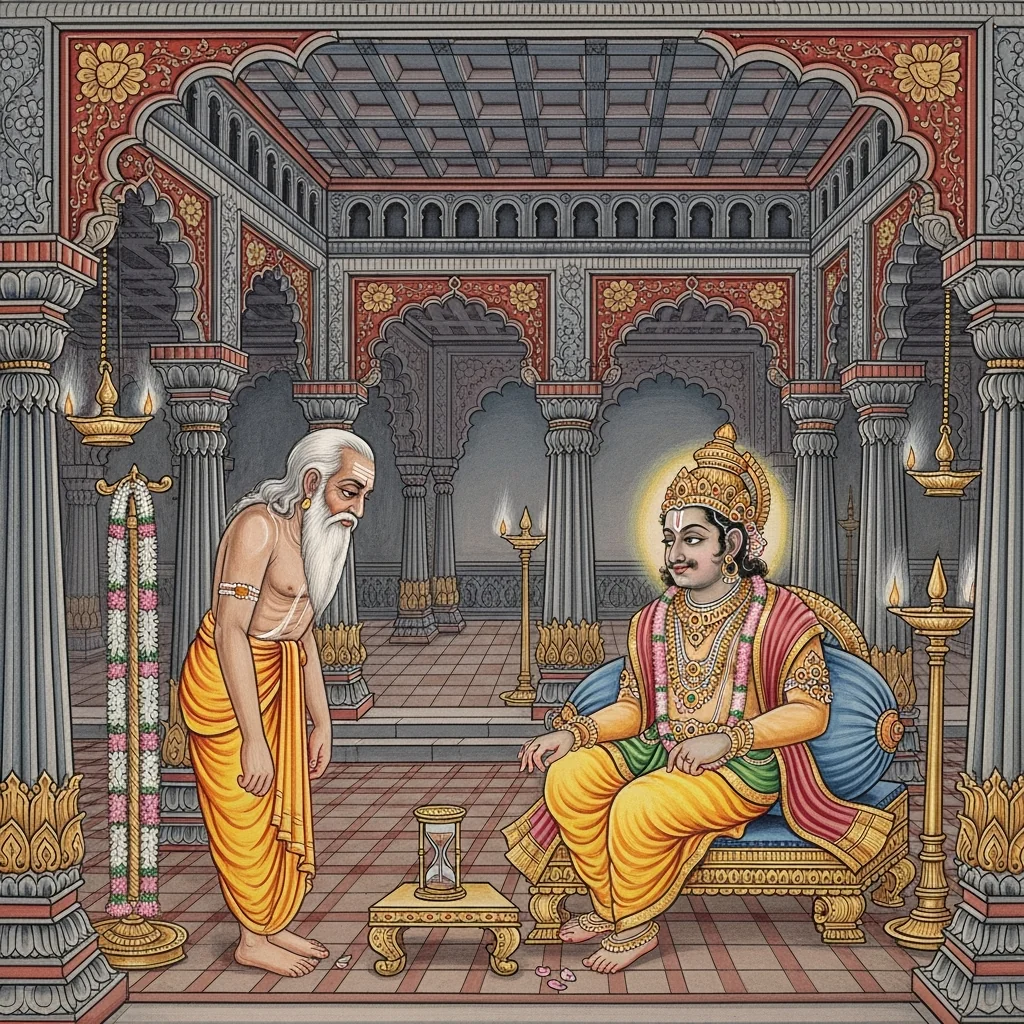
Adhyaya 21
The chapter begins with Nārada noticing Indra’s hesitation as the daityas regroup. Indra seeks Viṣṇu’s aid; Viṣṇu affirms His power to destroy the foes, yet explains the restraints created by earlier boons and conditions, and directs Indra to the proper target—Jambha—and the right means. Viṣṇu then arranges a divine battle-formation, appointing eleven Rudra-emanations as the अग्रसर (vanguard). Their intervention features the slaying of the elephant-formed enemy (Gajāsura) and a skin-transformation motif. The war intensifies into a sustained exchange of astras: deva and asuric weapons—mauśala, śaila, vajra, āgneya, vāruṇa, vāyavya, nārasiṁha, gāruḍa, and finally the alignment with the pāśupata through the aghora-mantra—are deployed and countered, displaying a technical theology of astras and their governance. Jambha is ultimately brought down by a sequence of empowered arrows, and the daityas flee to Tāraka, who overwhelms the devas until Viṣṇu adopts a deceptive “monkey” guise to enter Tāraka’s court. In the courtly dialogue, Viṣṇu delivers an extended upadeśa on kāla (time) and karma—sovereignty’s impermanence, the delusion of personal agency, and the necessity of dharma. Tāraka acknowledges the teaching, grants safety and administrative roles to the devas for a term, and the chapter closes with a redistribution of cosmic offices, a political theology of delegated power under Time.
Shlokas
Verse 1
नारद उवाच । तमालोक्य पलायंतं विध्वस्तध्वजकार्मुकम् । दैत्यांश्च मुदितानिंद्रः कर्तव्यं नाध्यगच्छत
Nārada said: Seeing him flee—his banner and bow shattered—and seeing the Daityas rejoicing, Indra could not determine what ought to be done.
Verse 2
अथायान्निकटं विष्णोः सुरेशस्त्वरयान्वितः । उवाच चैनं मधुरमुत्साहपरिबृंहितम्
Then Indra, lord of the gods, hastened to Viṣṇu, drew near, and spoke to him sweet words, filled with encouragement and resolve.
Verse 3
किमेभिः क्रीडसे देव दानवैर्दुष्टमानसैः । दुर्जनैर्लब्धरंध्रस्य पुरुषस्य कुतः क्रियाः
“O Lord, why do you sport with these Dānavas of wicked intent? When such evil ones find an opening, what good action can a man still accomplish?”
Verse 4
शक्तेनोपेक्षितो नीचो मन्यते बलमात्मनः । तस्मान्न नीचं मतिमानुषेक्षेत कथंचन
“When a base man is ignored by the strong, he imagines strength in himself. Therefore a wise person should never disregard the vile in any way.”
Verse 5
अथाग्रेसरसंपत्त्या रथिनो जयमाययुः । कस्ते सखाभवत्पूर्वं हिरण्याक्षवधे विभो
“Then, by gaining the advantage at the front, the chariot-warriors drew near to victory. O mighty one, who ever before was your equal ally in the slaying of Hiraṇyākṣa?”
Verse 6
हिरण्यकशिपुर्दैत्यो वीर्यशाली मदोद्धतः । प्राप्य त्वां तृमवन्नष्टस्तत्र कोऽग्रेसरस्तव
Hiraṇyakaśipu, that Daitya—mighty and swollen with pride—met you and perished like a blade of grass. Who, then, could ever be your superior?
Verse 7
पूर्वं प्रतिबला दैत्या मधुकैटभसन्निभाः । निविष्टास्त्वां तु संप्राप्य शलभा इव पावकम्
Formerly, Daityas of great might—like Madhu and Kaiṭabha—rushed upon you; but on reaching you, they fell into ruin like moths into a flame.
Verse 8
युगेयुगे च दैत्यानां त्वत्तो नाशोऽभवद्धरे । तथैवाद्येह भीतानां त्वं हि विष्णो सुराश्रयः
In every age, O bearer of the earth, the Daityas have met destruction through you. So too today, here and now, you are the refuge of the frightened gods, O Viṣṇu.
Verse 9
एवं संनोदितो विष्णुर्व्यवर्धत महाभुजः । बलेन तेजसा ऋद्ध्या सर्वभूताश्रयोऽरिहा
Thus urged on, mighty-armed Viṣṇu grew in power, in splendor, and in divine prosperity—he who is the refuge of all beings and the destroyer of foes.
Verse 10
अथोवाच सहस्राक्षं केशवः प्रहसन्निव । एवमेतद्यथा प्राह भवानस्मद्गतं वचः
Then Keśava, smiling as it were, addressed Sahasrākṣa (Indra): “So it is indeed—exactly as you have spoken—this statement that has come to me from you.”
Verse 11
त्रैलोक्यदानवान्सर्वान्दग्धुं शक्तः क्षणादहम् । दुर्जस्तारकः किं तु मुक्त्वा सप्तदिनं शिशुम्
“In an instant I am able to burn all the Dānavas of the three worlds. Yet that hard-to-overcome Tāraka—after releasing the seven-day-old child—remains a special case.”
Verse 12
महिषश्चैव शुंभश्च उभौ वध्यौ च योषिता । जंभो दुर्वाससा शप्तः शक्रवध्यो भवानिति । तस्मात्त्वं दिव्यवीर्येण जहि जंभं मदोत्कटम्
“Mahiṣa and Śuṃbha—both are destined to be slain by a woman. But Jambha was cursed by Durvāsas: ‘You shall be slain by Śakra (Indra).’ Therefore, with your divine valor, kill Jambha, swollen with intoxicated pride.”
Verse 13
अवध्यः सर्वभूतानां त्वामृते स तु दानवः
“That Dānava is invincible to all beings—except you.”
Verse 14
मया गुप्तो रणे जंभो जगत्कंटकमुद्धर । तद्वैकुंठवचः श्रुत्वा सहस्राक्षोमरारिहा
“In battle Jambha is protected by me; remove that thorn of the world.” Hearing these words of Vaikuṇṭha, Sahasrākṣa—the slayer of the enemies of the gods—prepared to act.
Verse 15
समादिशत्सुराध्यक्षान्सैन्यस्य रचनां प्रति । ततश्चाभ्यर्थितो देवैर्विष्णुः सैन्यमकल्पयत्
He commanded the chiefs of the gods concerning the formation of the army. Then, entreated by the deities, Viṣṇu organized the host.
Verse 16
यत्सारं सर्वलोकस्य वीर्यस्य तपसोऽपि च । तदैकादश रुद्रांश्च चकाराग्रेसरान्हरिः
Hari (Viṣṇu) fashioned the eleven portions of Rudra and set them as foremost leaders—drawing forth the very essence of all the worlds, of valor, and even of austerity (tapas).
Verse 17
व्यालीढांगा महादेवा बलिनो नीलकंधराः । चंद्रखंडत्रिपुंड्राश्च पिंगाक्षाः शूलपाणयः
Those Mahādevas stood in a braced, powerful stance—mighty, blue-throated (Nīlakaṇṭha); marked with the crescent moon and the tripuṇḍra, the three sacred stripes; tawny-eyed, bearing tridents in their hands.
Verse 18
पिंगोत्तुंगजटाजूटाः सिंहचर्मावसायिनः । भस्मोद्धूलितगात्राश्च भुजमंडलभैरवाः
With tawny, towering matted locks (jaṭā), clad in lion-skins, their bodies dusted with bhasma, the sacred ash—terrifying in the mighty circles of their arms.
Verse 19
कपालीशादयो रुद्रा विद्रावितमहाऽसुराः । कपाली पिंगलो भीमो विरुपाक्षो विलोहितः
The Rudras—beginning with Kapālīśa—who had routed the great Asuras, stood forth: Kapālī, Piṅgala, Bhīma, Virūpākṣa, and Vilohita.
Verse 20
अजकः शासनः शास्ता शंभुश्चंद्रो भवस्तथा । एत एकादशनंतबला रुद्राः प्रभाविनः
Ajaka, Śāsana, Śāstā, Śambhu, Candra, and Bhava—these are among the eleven Rudras, infinite in might and radiant in power.
Verse 21
अपालयंत त्रिदशान्विगर्जंत इवांबुदाः । हिमाचलाभे महति कांचनांबुरुहस्रहि
They safeguarded the gods, thundering like rain-clouds, upon a vast region like the Himalayas, adorned with thousands of golden lotuses.
Verse 22
प्रचंचलमहाहेमघंटासंहतिमंडिते । ऐरावते चतुर्दंते मत्तमातंग आस्थितः
Mounted upon Airāvata—the four-tusked lord of elephants, maddened by rut—he was adorned with clusters of great golden bells that swayed and rang.
Verse 23
महामदजलस्रावे कामरूपे शतक्रतुः । तस्थौ हिमगिरेः श्रृंगे भानुमानिव दीप्तिमान् । तस्यारक्षत्पदं सव्यं मारुतोऽमितविक्रमः
Śatakratu (Indra), mounted on Kāmarūpa, the elephant streaming mighty rut, stood upon the peak of Himagiri, blazing like the Sun; and at his left stood Maruta, of immeasurable valor, guarding his station.
Verse 24
जुगोपापरमग्निश्च ज्वालापूरितदिङ्मुखः । पृष्ठरक्षोऽभव द्विष्णुः समरेशः शतक्रतोः
And the supreme Agni, whose flames filled the faces of all directions, stood guarding the rear; and Dviṣṇu, lordly in battle, became the back-protector of Śatakratu (Indra).
Verse 25
आदित्या वसवो विश्वे मरुतश्चाश्विनावपि । गंधर्वा राक्षसा यक्षाः सकिंनरमहोरगाः
The Ādityas, the Vasus, the Viśve-devas, the Maruts, and the two Aśvins as well—Gandharvas, Rākṣasas, Yakṣas, together with Kiṃnaras and great serpents (Nāgas)—all assembled.
Verse 26
कोटिशःकोटिशः गृत्वा वृंदं चिह्नोपलक्षितम् । विश्रावयंतः स्वां कीर्तिं बंदिवृन्दैः पुरः सरैः
In crores upon crores, they formed companies marked by distinguishing signs, while herald-bards marching in front proclaimed their fame far and wide.
Verse 27
चेलुर्दैत्यवधे दृप्ता नानावर्णायुधध्वजाः
Exultant in the slaying of the Daityas, they marched on—bearing weapons and banners of many colors.
Verse 28
शतक्रतोरमरनिकायपालिता पताकिनी याननिनादनादिता । सितोन्नतध्वजपटकोटिमंडिता बभूव सा दितिसुतोकवर्धिनी
That bannered host, guarded by the divine companies of Śatakratu (Indra) and resounding with the roar of chariots, shone forth—adorned with crores of lofty white flags and streamers—an army that increased the fear and distress of Diti’s sons (the Daityas).
Verse 29
आयांतीं तां विलोक्याथ सुरसेनां गजासुरः । गजरूपी महांश्चैव संहारांभोधिविक्रमः
Seeing that army of the gods approaching, Gajāsura—vast and elephant-formed, whose valor was like an ocean of destruction—advanced to confront them.
Verse 30
परश्वधायुधो दैत्यो दशनौष्ठकसंपुटः । ममर्द चरणे देवांश्चिक्षेपान्यान्करेण च
The demon, armed with an axe and grimly baring his teeth and lips, crushed some of the gods beneath his feet and hurled others away with his hand.
Verse 31
परान्परशुना जघ्ने दैत्येंद्रो रौद्रविक्रमः । तस्यैवं निघ्नतः क्रुद्धा देवगन्धर्वकिंनराः
With his axe the lord of the demons—terrible in his fierce valor—struck down many; and as he kept killing in this manner, the gods, Gandharvas, and Kiṃnaras grew enraged.
Verse 32
मुमुचुः संहताः सर्वे चित्रशस्त्रास्त्रसंहतिम् । परश्वधांश्च चक्राणि भिण्डिपालान्समुद्गरान्
Gathering together, they all unleashed a varied barrage of weapons—axes, discus-weapons, javelins, and heavy clubs.
Verse 33
कुन्तान्प्रासाञ्छरांस्तीक्ष्णान्मुद्गरांश्चापि दुःसहान् । तान्सर्वान्सोग्रसद्दैत्यो यूथपः कवलानिव
Spears, lances, sharp arrows, and even unbearable maces—those all the demon swallowed up, like a herd-leader gulping down mouthfuls.
Verse 34
कोपस्फुरितदंष्ट्राग्रः करस्फोटेन नादयन् । सुरान्नघ्नंश्चराराजौ दुष्प्रेक्ष्यः सोऽथ दानवः
With fang-tips quivering in rage, roaring with the crack of his hands, that Dānava—hard to behold—moved about on the battlefield, striking down the gods.
Verse 35
यस्मिन्यस्मिन्निपतति सुर वृंदे गजासुरः । तस्मिस्तीस्मिन्महाशब्दो हाहाकारो व्यजायत
Wherever Gajāsura fell upon the host of the gods, there and there arose a great tumult—cries of ‘Alas! Alas!’ resounding.
Verse 36
अथ विद्रवमानं तब्लं प्रेक्ष्व समंततः । रुद्राः परस्परं प्रोचुरहंकारोत्थितार्चिषः
Then, seeing the forces fleeing in every direction, the Rudras—blazing with the fire born of indignant pride—spoke to one another.
Verse 37
भोभो गृह्णत दैत्येंद्रं भिंदतैनं महाबलाः । कर्षतैनं शितैः शूलैर्भञ्जतैनं हि मर्मसु
“Ho! Ho! Seize the lord of the demons! Pierce him, you mighty ones! Drag him with sharp tridents—strike and shatter him at his vital points!”
Verse 38
कपाली वाक्यमाकर्ण्य शूलं सितशितंमुखे । संमार्ज्य वामहस्तेन संरंभाद्विवृतेक्षणः
Hearing those words, Kapālī, his gaze widened with fierce resolve, wiped his bright, sharp-pointed trident with his left hand.
Verse 39
प्रोत्फुल्लारुणनीलाब्जसंहतिः सर्वतो दिशः । अथागाद्भुकुटीवक्रो दैत्येंद्राभिमुखो रणे
In every direction there appeared a mass of fully-bloomed red and blue lotuses; then, with brows knit in a frown, he advanced in battle, facing the lord of the demons.
Verse 40
दृढेन मुष्टिबन्धेन शूलं विषृभ्य निर्मलः । जघान कुम्भदेशे तु कपाली गजदानवम्
With a firm grip of his clenched fist, the stainless Kapālī hurled the trident and struck the elephant-demon upon the temple of his head.
Verse 41
ततो दशापि ते रुद्रा निर्मलायोमयै रणे । जघ्नुः शूलैस्तु दैत्येंद्रं शैलवर्ष्माणमाहवे
Then the ten Rudras, radiant and stainless amid the fray, smote the lord of the Dānavas in battle with their tridents—him whose body was like a mountain.
Verse 42
सुस्राव शोणितं पश्चात्सर्वस्रोतस्सु तस्य वै । शूलरक्तेन रुद्रस्य शुशुभे गजदानवः
Thereafter, blood streamed from all his channels; and the elephant-demon appeared ghastly-bright, stained with Rudra’s blood upon the trident.
Verse 43
प्रोत्फुल्लामलनीलाब्जं शरदीवामलं सरः । भस्मशुभ्रतनुच्छायै रुद्र र्हंसैरिवावृतम्
He seemed like a clear autumn lake where spotless blue lotuses bloom—covered, as it were, with Rudra-swans whose bodies gleam white like sacred ash.
Verse 44
क्रुद्धं कपालिनं दैत्यः प्रचलत्कर्णपल्लवः । भवं च दन्तैर्बिभिदे नाभिदेशे जगासुरः
The enraged demon, flapping his ear-lobes, wounded Kapālī; and that elephant-asura pierced Bhava with his tusks in the region of the navel.
Verse 45
दृष्ट्वानुरक्तं रुद्राभ्यां नवरुद्रास्ततो द्रुतम् । विव्यधुर्विशिखैः शूलैः शरीरममरद्विषः
Seeing him engaged with the two Rudras, the nine Rudras swiftly pierced the body of the foe of the gods with their tridents, sharp as arrows.
Verse 46
ततः कपालिनं त्यक्त्वा भवं चासुरपुंगवः । वेगेन कुपितो दैत्यो नव रुद्रानुपाद्रवत् । ममर्द चरणाघातैर्दन्तैश्चापि करेण च
Then the chief of the Asuras, abandoning Kapālī and Bhava, rushed in wrath and speed upon the nine Rudras, crushing them with the blows of his feet, with his tusks, and with his hand as well.
Verse 47
ततोऽसौ शूलयुद्धेन श्रममासादितो यदा । तदा कपाली जग्राह करमस्यामरद्विषः
When he had been worn down by the trident-combat, then Kapālī seized the hand of that foe of the gods.
Verse 48
भ्रामयामास चातीव वेगेन च गजासुरम् । दृष्ट्वाश्रमातुरं दैत्यं किंचिच्च्यावितजीवितम्
And with great force he whirled Gajāsura around; seeing the demon distressed by exhaustion, his life-force already shaken and slipping away.
Verse 49
निरुत्साहं रणे तस्मिन्गतयुद्धोत्सवोऽभवत् । ततो भ्रमत एवास्य चर्म उत्कृत्त्य भैरवम्
In that battle he became spiritless, his relish for warfare gone. Then, as he still spun about, Bhairava cut off his hide (skin).
Verse 50
स्रवत्सर्वांगर क्तौघं चकारांबरमात्मनः । तुष्टुवुस्तं तदा देवा बहुधा बहुभिः स्तवैः
As torrents of blood flowed from all his limbs, he made it as though a garment upon himself. Then the Devas praised him in many ways, with many hymns.
Verse 51
ऊचुश्चैनं चयो हन्यात्स म्रियेत ततस्त्वसौ । दृष्ट्वा कपालिनो रूपं गजचर्मांबरावृतम्
They said: “Whoever strikes him will die at once.” For, beholding the skull-bearing one’s form—clad in an elephant-hide garment—all were seized by dread.
Verse 52
वित्रेसुर्दुद्रुवुर्जघ्नुर्निपेतुश्च सहस्रशः । एवं विलुलिते तस्मिन्दानवेन्द्रे महाबले
They were terrified—some fled, some struck, and thousands fell. Thus, as that mighty lord of the Dānavas was being thrown into turmoil,
Verse 53
गजं मत्तमथारुह्य शतदुन्दुभिनादितम् । निमिरभ्यपतत्तूर्णं सुरसैन्यानि लोडयन्
Mounting a rut-maddened elephant, amid the thunder of a hundred war-drums, Nimi rushed forward swiftly, trampling and scattering the armies of the gods.
Verse 54
यांयां निमिगजो याति दिशं तांतां सवाहनाः । दुद्रुवुश्चुक्रुशुर्देवा भयेनाकंपिता मुहुः
Whichever direction Nimi’s elephant moved toward, in that very direction the Devas—along with their mounts—ran and cried out, repeatedly trembling with fear.
Verse 55
गन्धेन सुरमातंगा दुद्रुवुस्तस्य हस्तिनः । पलायितेषु सैन्येषु सुराणां पाकशासनः
By the smell alone, the elephants of the gods fled from that elephant. And as the armies of the Devas scattered in flight, Indra—the chastiser of Pāka—stood exposed to the crisis.
Verse 56
तस्थौ दिक्पालकैः सार्धमष्टभिः केशवेन च । संप्राप्तस्तस्य मातंगो यावच्छक्रगजं प्रति
He stood with the eight Guardians of the Directions and with Keśava. That Mātaṅga elephant advanced toward Indra’s elephant.
Verse 57
तावच्छक्रगजो भीतो मुक्त्वा नादं सुभैरवम् । ध्रियमाणोऽपि यत्नेन चकोर इव तिष्ठति
Then Indra’s elephant, terrified, let out a most dreadful roar; and though restrained with effort, it stood still—like a cakora bird.
Verse 58
पलायति गजे तस्मिन्नारूढः पाकशासनः । विपरीतमुखं युद्धं दानवेन्द्रेण सोऽकरोत्
As that elephant fled, Pākaśāsana (Indra), mounted upon it, fought facing backward against the lord of the Dānavas.
Verse 59
शतक्र तुस्तु शूलेन निमिं वक्षस्यताडयत् । गदया दंतिनं तस्य गल्लदेशेहनद्भृशम्
But Śatakratu (Indra) struck Nimi in the chest with a spear; and with a mace he fiercely smote that elephant upon its cheek-region.
Verse 60
तं प्रहारचिंत्यैव निमिर्निर्भयपौरुषः । ऐरावतं कटीदेशे मुद्गरेणाभ्यताडयत्
Thinking only of his strike, Nimi—undaunted in valor—smashed Airāvata on the flank with his mace.
Verse 61
स हतो मुद्गरेणाथ शक्रकुञ्जर आहवे । जगाम पश्चात्पद्भ्यां च पृथिवीं भूधराकृतिः
Struck by the mace upon the battlefield, Indra’s elephant reeled; retreating step by step, that mountain-bodied beast sank down to the earth.
Verse 62
लाघवात्क्षिप्रमुत्थाय ततोऽमरमहागजः । रणादपससर्पाथ भीषितो निमिहस्तिना
Then the great celestial elephant sprang up swiftly with agile speed and withdrew from the battlefield, terrified by Nimi’s elephant-like might.
Verse 63
ततो वायुर्ववौ रूक्षो बहुशर्करपांशुलः । सम्मुखो निमिमातंगोऽकंपनोऽचलकंपनः । स्रुतरक्तो बभौ शैलो घनधातुह्रदो यता
Then a harsh wind blew, thick with gravel and dust. Facing them stood Nimi—an elephant among warriors—unshaken, yet making even mountains tremble; streaming with blood, he looked like a cliff streaked with dense mineral veins and red pools.
Verse 64
धनेशोऽपि गदां गुर्वी तस्य दानवहस्तिनः । मुमोच वेगान्न्यपतत्सा गदा तस्य मूर्धनि
Dhanesha (Kubera) too hurled a heavy mace at that demon-elephant; cast with force, the mace crashed down upon his head.
Verse 65
गजो गदानिपातेन स तेन परिमूर्छितः । दंतैर्भित्वा धरां वेगात्पपाताचलसन्निभः
By the fall of that mace the elephant was stunned into a swoon; gouging the earth with his tusks, he toppled down with force, like a mountain collapsing.
Verse 66
पतिते च गजे तस्मिन्सिंहनादो महानभूत् । सर्वतः सुरसैन्यानां गजबृंहितबृंहितः
When that elephant fell, a mighty lion-roar arose on every side from the armies of the gods, mingled with the trumpeting of elephants.
Verse 67
हेषारवेण चाश्वानां राणास्फोटैश्च धन्विनाम् । गजं तं निहतं दृष्ट्वा निमिं चापि पराङ्मुखम्
Amid the neighing of horses and the sharp snaps of bowmen’s strings, seeing that elephant slain and Nimi turned away,
Verse 68
सुराणां सिंहनादं च सन्नादितदिगंतरम् । जंभो जज्वाल कोपेन संदीप्त इव पावकः
Hearing the gods’ lion-roar resounding through the horizons, Jambha blazed with wrath, like a fire flaring up.
Verse 69
ततः स कोपरक्ताक्षो ध्नुष्यारोप्य सायकम् । तिष्ठेति चाब्रवीत्तारं सारथिं चाप्यनंदयत्
Then, his eyes reddened with fury, he set an arrow upon his bow and said, “Stand!”—and he urged on his charioteer, Tāra.
Verse 70
तमायांतमभिप्रेक्ष्य धनुष्याहितसा यकम् । शतक्रतुरदीनात्मा दृढमादत्त कार्मुकम्
Seeing him advance with an arrow already set upon his bow, Śatakratu (Indra), unshaken in spirit, firmly seized his own bow.
Verse 71
बाणं च तैलधौताग्रमर्धचंद्रमजिह्मगम्
And (he took) an arrow—its tip polished with oil, crescent-shaped, and flying straight without swerving.
Verse 72
तेनास्यट सशरं चापं चिच्छेद बलवृत्रहा । अपास्य तद्धनुश्छिन्नं जंभो दानवनंदनः
With that (arrow) the mighty slayer of Vṛtra cut apart his bow along with the arrow (set upon it). Casting aside that broken bow, Jambha—the delight of the Dānavas—prepared to fight on.
Verse 73
अन्यत्कार्मुकादाय वेगवद्भारसाधनम् । शरांश्चाशीविषाकारांस्तैलधौताजिह्मगान्
Taking up another bow—swift and fit to bear a heavy draw—he also took arrows shaped like venomous serpents, oil-polished and flying straight.
Verse 74
शक्रं विव्याध दशभिर्जत्रुदेशे च पत्रिबिः । हृदये च त्रिभिश्चैव द्वाभ्यां च स्कन्धयोर्द्वयोः
He pierced Śakra with ten feathered arrows in the region of the collarbone, with three in the heart, and with two in both shoulders.
Verse 75
शक्रोपि दानवेन्द्राय बाणजालम भीरयन् । अप्राप्तान्दानवेन्द्रस्तु शराश्छक्रभुजेरितान्
Śakra too, undaunted, unleashed a net of arrows at the lord of the Dānavas. But the Dānava king cut down those arrows, though shot from Śakra’s own arm, before they could reach him.
Verse 76
चिच्छेद शतधाऽकाशे शरैरग्निशिखोपमैः । ततश्च शरजालेन देवेन्द्रो दानवेश्वरम्
Indra split them into a hundred pieces in mid-air with arrows like tongues of fire. Then the Lord of the gods, with a dense net of arrows, covered and assailed the Dānava ruler.
Verse 77
आच्छादयत यत्नेन वर्षास्विव घनैर्नभः । दैत्योऽपि बाणजालेन विव्याध सायकैः शितैः
With effort he covered the sky, as though with clouds of the rainy season. The Daitya too, with a net of arrows, struck back with sharp missiles.
Verse 78
यथा वायुर्घनाटोपं यदवार्यं दिशां मुखे । शक्रोऽथ क्रोधसंरंभान्न विशेषयते यदा
As the wind drives a mass of clouds onward, unstoppable before the quarters, so Śakra too—when seized by the surge of anger—no longer discerns measure or restraint.
Verse 79
दानवेन्द्रं तदा चक्रे गंधर्वास्त्रं महाद्भुतम् । ततोऽस्य तेजसा व्याप्तमभूद्गनगोचरम्
Then he employed the wondrous Gandharva-weapon against the Dānava lord. Thereupon, by its blazing power, the sky and battlefield were pervaded, as though within the range of the gaṇa-hosts.
Verse 80
गन्धर्वनगरैश्चापि नानाप्राकारतोरणैः । मुंचद्भिरद्भुताकारैरस्त्रवृष्टिं समंततः
And along with those “Gandharva-cities,” furnished with many kinds of ramparts and gateways, there arose on every side a shower of weapons of wondrous forms, hurled all around.
Verse 81
तयास्त्रवृष्ट्या दैत्यानां हन्यमाना महाचमूः । जंभं शरणमागच्छत्त्राहित्राहीति भारत
Struck down by that shower of weapons, the great host of the Daityas rushed to Jambha for refuge, crying, “Save us, save us!” O Bhārata.
Verse 82
ततो जंभो महावीर्यो विनद्य प्रहसन्मुहुः । स्मरन्साधुसमाचारं दैत्यानामभयं ददौ
Then Jambha, mighty in valor, roared aloud and laughed again and again; remembering the righteous conduct of the noble, he granted the Daityas assurance of safety and fearlessness.
Verse 83
ततोऽस्त्रं मौशलंनाम मुमोच सुमहाभयम् । अथोग्रमुसलैः सर्वमभवत्पूरितं जगत्
Then he released the weapon called Mauśala, exceedingly terrifying; thereafter the whole world seemed filled with dreadful iron clubs.
Verse 84
तैश्च भग्नानि सर्वाणि गंधर्वनगराणि च । अथोग्रैक प्रहारेण रथमश्वं गजं सुरम्
By those clubs all the Gandharva-cities too were shattered. Then, with a single fierce blow, chariots, horses, elephants, and warriors were struck down.
Verse 85
चूर्णयामास तत्क्षिप्रं शतशोऽथ सहस्रशः । ततः सुराधिपः सक्रस्त्वाष्ट्रमस्त्रमुदैरयत्
He pulverized them swiftly—by the hundreds and by the thousands. Then Śakra, lord of the gods, raised up the Tvaṣṭṛ-made weapon, the Tvāṣṭra-astra.
Verse 86
संध्यमाने ततश्चास्त्रे निश्चेरुः पावकार्चिषः । ततो यंत्रमया विद्याः प्रादुरासन्सहस्रशः
As that weapon was set in motion, sparks of fire burst forth; then, by the thousands, vidyās—sciences and spells wrought of mechanisms—manifested.
Verse 87
तैर्यंत्रैरभवद्युद्धमंतरिक्षं वितारकम् । तैर्यंत्रैर्मौशलं भग्नं हन्यंते चासुरास्तदा
By those machines the battle spread throughout the sky. By those same devices the Mauśala weapon was shattered, and the Asuras were slain at that time.
Verse 88
शैलास्त्रं मुमुचे जंभो यंत्रसंघातचूर्णनम् । व्यामप्रमाणैरुपलैस्ततो वर्षः प्रवर्तत
Jambha then released the Śaila weapon, which pulverizes masses of machines; and at once a rain of stones began, each of the measure of a vyāma.
Verse 89
त्वाष्ट्रोण निर्मितान्याशु यानि यंत्राणि भारत । तेनोपल निपातेन गतानि तिलशस्ततः
O Bhārata, the machines swiftly fashioned by Tvaṣṭṛ—by that fall of stones—were reduced to fragments, scattered like sesame seeds.
Verse 90
ततः शिरस्सु देवानां शिलाः पेतुर्महाजवाः । दारयंत्यश्च वसुधां चतुरंगबलं च तत्
Then, with tremendous speed, boulders fell upon the heads of the gods, splitting the earth as well—and tearing apart that fourfold army (chariots, elephants, horses, and foot-soldiers).
Verse 91
ततो वज्रास्त्रमकरोत्सस्राक्षः पुरंदरः । शिलामहार्षंव्यशीर्यत समंततः
Then Sahasrākṣa Purandara (Indra) employed the Vajra-weapon; and that mighty shower of rocks was shattered on every side.
Verse 92
ततः प्रशांतैः शैलास्त्रैर्जंभो भूधरसन्निभः । ऐषीकमस्त्रमकरोच्चूर्णितान्यपराक्रमः
Then Jambha, mountain-like in form, seeing his rock-weapons neutralized, employed the Aiṣīka weapon—crushing the opposition by his fierce prowess.
Verse 93
ऐषीकेणागमन्नाशं वज्रास्त्रं गिरिदारणम् । विजृंभत्यथ चैषीके परमास्त्रेऽतिदारुणे
By the Aiṣīka, the Vajra-weapon—the mountain-splitting astra—met its destruction. And then that Aiṣīka, a supreme and exceedingly terrible weapon, expanded in force.
Verse 94
जज्वलुर्देवसैन्यानि सस्यंदनगजानि च । दह्यमानेष्व नीकेषु तेजसास्त्रस्य सर्वतः
The armies of the gods—along with their chariots and elephants—blazed, as the divisions of troops were burning everywhere under the radiance-weapon (Tejasāstra).
Verse 95
आग्नेयमस्त्रमकरोद्बलहा पाकशासनः । तेनास्त्रेण च तन्नाशमैषीकमगमत्तदा
Balahā, Pākaśāsana (Indra), then employed the Agneya weapon; and by that astra the Aiṣīka weapon met its destruction.
Verse 96
तस्मिन्प्रतिहते चास्त्रे पावकास्त्रं व्यजृंभत । जज्वाल सेना जंभस्य रथः सारथिरेव च
When that weapon was repelled, the Pāvaka weapon blazed forth; Jambha’s army burned, and his chariot and charioteer as well.
Verse 97
तः प्रतिहतास्त्रोऽसौ दैत्येंद्रः प्रतिभानवान् । वारुणास्त्रं मुमोचाथशमनं पावकार्चिषाम्
His weapon being checked, that brilliant lord of the daityas released the Vāruṇa weapon, which quenches the flames of the fire-weapon.
Verse 98
ततो जलधरैर्व्योम स्फुरद्विद्युल्लताकुलैः । गंभीराक्षसमाधारैश्चाभ्यपूर्यत मोदिनी
Then the sky was filled with rain-clouds, crowded with flashing streaks of lightning; and the earth, Modinī, was inundated by deep, roaring downpours.
Verse 99
करींद्रकरतुल्याभिर्धाराभिः पूरितं जगत् । शांतमाग्नेयमस्त्रं च विलोक्येंद्रश्चकार ह
With streams like the trunks of lordly elephants, the world was flooded. Seeing that the Agneya weapon had been quenched, Indra then acted accordingly.
Verse 100
वायव्यमस्त्रमतुलं तेन मेघा ययुः क्षयम् । वायव्यास्त्रबलेनाथ निर्धूते मेघमंडले
He then unleashed the incomparable Vāyavya missile; by its force the clouds were driven to destruction. When the circle of clouds had been swept away by the power of the Vāyavya weapon, the sky cleared.
Verse 101
बभूवानाविलं व्योम नीलोत्पलदलप्रभम् । वायुना चातिरूपेण कंपिताश्चैव दानवाः
The sky became unclouded, shining like the petals of a blue lotus. And by that wind of extraordinary might, the Dānavas too were shaken.
Verse 102
न शेकुस्तत्र ते स्थातुं रणेऽपि बलिनोऽपि ये । जभस्ततोऽभवच्छौलो दशयोजनविस्तृतः
There they could not hold their ground—though mighty, even in battle. Then there arose a vast, white, blazing mass, spread across ten yojanas.
Verse 103
मारुतप्रतिघातार्थं दानवानां बलाधिपः । नानाश्चर्यसमायुक्तो नानाद्रुमलतावृतः
To counter the wind’s assault, the commander of the Dānavas brought forth a marvel—filled with many wonders, and covered with diverse trees and creepers.
Verse 104
ततः प्रशमिते वायौ दैत्येंद्र पर्वताकृतौ । महाशनिं वज्रमयीं मुमोचाशु शतक्रतुः
Then, when the wind had been stilled and the Daitya-king had assumed a mountain-like form, Śatakratu (Indra) swiftly released a great thunderbolt, made of vajra.
Verse 105
तयाशन्या पतितया दैत्यस्याच लरूपिणः । कंदराणि व्यशीर्यंतं समंतान्निर्झराणि च
When that thunderbolt struck the Daitya who had taken the form of a mountain, his caves were shattered, and all around him the streams and cascades burst forth.
Verse 106
ततः सा दानवेंद्रस्य शैलमाया न्यवर्तत । निवृत्तशैलमायोऽथ दानवेंद्रो मदोत्कटः
Then the Dānava-king’s mountain-illusion was withdrawn. And when that mountain-māyā ceased, the Dānava-lord—fierce with intoxicated pride—took another form.
Verse 107
बभूव कुंजरो भीमो महाशैलमयाकृतिः । ममर्द च सुरानीकं दंतैश्चाभ्यहनत्सुरान्
He became a terrifying elephant, with a body as if made of a great mountain. He crushed the army of the gods and struck the Devas with his tusks.
Verse 108
बभंज पृष्ठतः कांश्चित्करेणाकृष्य दानवः । ततः क्षपयतस्तस्य सुरसैन्यानि वृत्रहा
Dragging some of them with his trunk, the Dānava smashed them from behind. Then Vṛtrahā began to destroy that Dānava’s forces, reducing the armies of the gods’ enemies.
Verse 109
अस्त्रं त्रैलोक्यदुर्धर्षं नारसिंहं मुमोच ह । ततः सिंहसस्राणि निश्चेरुर्मंत्रतेजसा
He released the Nārasiṃha weapon, irresistible in the three worlds. Then, by the blazing power of the mantra, thousands of lions burst forth.
Verse 110
हृष्टदंष्ट्राट्टहासानि क्रकचाभनखानि च । तैर्विपाटितगात्रोऽसौ गजमायां व्यपोहयत्
With bared fangs and roaring laughter, and with claws like saw-blades, they tore his limbs apart; thus he dispelled that illusory form of an elephant.
Verse 111
ततश्चाशीविषो घोरोऽभवत्फणसमाकुलः । विषनिःश्वासनिर्दग्धसुरसैन्यमहारथः
Then he became a dreadful, deadly serpent, his many hoods rising aloft; and with poisonous breaths he scorched the great chariot-warriors of the army of the gods.
Verse 112
ततोऽस्त्रं गारुडं चक्रे शक्रः संप्रहरन्रॅणे । ततस्तस्माद्गरुत्मंतः सहस्राणि विनिर्ययुः
Then Śakra (Indra), striking in the battle, employed the Garuḍa-weapon; and from it, thousands of Garuḍas burst forth.
Verse 113
तैर्गरुत्मद्भिरासाद्य जंभं भुजगरूपिणम् । कृतस्तु संढशो दैत्यः सास्य माया व्यनश्यत
Assailed by those Garuḍas, Jambha in serpent-form was torn to pieces; and with that, his illusion was destroyed.
Verse 114
मायायाम च प्रनष्टायां ततो जंभो महासुरः । चकार रूपमतुलं चंद्रादित्यपदानुगम्
When that illusion had been destroyed, then Jambha, the great Asura, assumed an incomparable form, vast enough to match the course of the Moon and the Sun.
Verse 115
विवृत्तनयनो ग्रस्तुमियेष सुरपुंगवान् । ततोऽस्य प्रविशद्वक्त्र समहारथकुंजरा
With eyes rolling, the foremost of the Asuras sought to swallow the champions of the gods; then the elephants and great chariots of that host rushed into his mouth.
Verse 116
सुरसेनाऽभवद्भीमं पातालोत्तालतालुकम् । सैन्येषु ग्रस्यमानेषु दानवेन बलीयसा
As the mightier Dānava devoured the ranks, terror seized the host of the gods—like Pātāla yawning wide, its palate lifted high, dreadful to behold.
Verse 117
शक्रो दीनत्वमापन्नः श्रांतवाहनवाहनः । कर्तव्यतां नाध्यगच्छत्प्रोवाचेदं जनार्दनम्
Śakra (Indra) sank into dejection, his mount worn out; not knowing what should be done, he spoke these words to Janārdana (Viṣṇu).
Verse 118
किमनंतरमेवास्ति कर्तव्यं नो विशेषतः । तदादिश घटामोऽस्य दानवस्य युयुत्सतः
“What must we do at once—clearly and decisively? Command it; we shall carry it out against this Dānava who longs to fight.”
Verse 119
ततो हरिरुवाचेदं वज्रायुधमुदारधीः । न सांप्रतं रणं त्याज्यं शत्रुकातरभैरवम्
Then Hari, of noble wisdom, said to the wielder of the Vajra: “This is no time to forsake the battle—when the enemy is frightened and shaken.”
Verse 120
मा गच्छ मोहं मा गच्छ क्षिप्रमस्त्रं स्मर प्रभो । नारायणास्त्रं प्रयतः श्रुत्वेति मुमुचे स च
“Do not fall into delusion—do not be bewildered. Quickly remember the weapon, O Lord!” Hearing, “(Use) the Nārāyaṇa-weapon,” he too, with focused resolve, discharged it.
Verse 121
एतस्मिन्नंतरे दैत्यो विवृतास्योऽग्रसत्क्षणात् । त्रीणित्रीणि च लक्षाणि किंनरोरगरक्षसाम्
Meanwhile, the demon, mouth gaping wide, instantly swallowed three hundred thousand each of Kinnaras, Nagas, and Rakshasas.
Verse 122
ततो नारायणास्त्रं च निपपातास्य वक्षसि । महास्त्रभिन्नहृदयः सुस्राव रुधिरं च सः
Then the Narayana-weapon struck his chest. With his heart split by that great missile, he poured forth blood.
Verse 123
ततः स्वतेजसा रूपं तस्य दैत्यस्य नाशितंम् । ततश्चां तर्दधे दैत्यः कृत्वा हासं महोत्कटम्
Then, by his own fiery power, that demon's form was ruined; afterwards he vanished, letting out a terrifying laugh.
Verse 124
गगनस्थः स दैत्येन्द्रः शस्त्राशनिमतींद्रियः । मुमोच सुरसैन्यानां सहारकरणीं पराम्
Stationed in the sky, that lord of demons—his senses like thunderbolts—hurled a supreme force that destroyed the armies of the gods.
Verse 125
तथा परश्वधांश्चक्रवज्रबाणान्समुद्गरान् । कुंतान्खड्गान्भिंडिपालानयोमुखगुडांस्तथा
He also cast forth axes, discus-weapons, thunderbolts, arrows, maces, spears, swords, bhindipalas, and iron-headed clubs.
Verse 126
ववर्ष दानवो रोषादवध्यानक्षयानपि । तैरस्त्रैर्दानवोन्मुक्तैर्देवानीकेषु भीषणैः
In rage the Dānava rained down even unassailable, inexhaustible missiles. By those dreadful weapons released by the demon, the ranks of the gods were assailed in terror.
Verse 127
बाहुभिर्धरणी पूर्णा शिरोभिश्च सकुंडलैः । ऊरुभिर्गजहस्ताभैः करींद्रैश्चाचलोपमैः
The earth became filled with arms and with severed heads still wearing earrings; with thighs like elephants’ trunks, and with elephant-lords lying like mountains.
Verse 128
भग्नेषा दंडचक्राक्षै रथैभिः सह । दुःसंचाराभवत्पृथ्वी मांसशोणितकर्दमा
With chariots shattered—poles, wheels, and axles broken—the earth became hard to traverse, a mire of flesh and blood.
Verse 129
रुधिरौघह्रदावर्ता गजदेहशिलोच्चया । कबंधनृत्यबहुला महा सुरप्रवाहिनी
A great river of warriors surged forth—its pools and whirlpools made of torrents of blood, its rocky mounds the bodies of elephants, and its expanse crowded with headless trunks dancing in frenzy.
Verse 130
श्रृगालगृध्रध्वांक्षाणां परमानंदकारिणी । पिशाचजातिभिः कीर्णं पीत्वाऽमिषं सशोणितम्
It became a source of supreme delight for jackals, vultures, and crows; and, swarming with hosts of piśācas, it drank flesh together with blood.
Verse 131
असंभ्रमाभिर्भार्याभिः सह नृत्यद्भिरुद्धता । काचित्पत्नी प्रकुपिता गजकुंभांतमौक्तिकैः
One wife, aflame with wrath, grew wild—dancing with unrestrained women—adorned with pearls like those found within an elephant’s temple.
Verse 132
पिशाचो यत्र चाश्वानां खुरानेकत्र चाकरोत् । कर्णपूरेषु मोदंते पश्यंत्यन्याः सरोषतः
There, a piśāca gathered the hooves of horses into one place. Some delighted in ear-ornaments, while others looked on in anger.
Verse 133
प्रसादयंति बहुधा महाकर्णार्थकोविदाः । केचिद्वदन्ति भो देवा भो दैत्याः प्रार्थयामहे
Those skilled in grasping the meaning of “great ears” sought to placate him in many ways. Some said, “O Devas! O Daityas! We entreat you!”
Verse 134
आकल्पमेवं योद्धव्यमस्माकं तृप्तिहेतवे । केचिदूचुरयं दैत्यो देवोयमतिमांसलः
“In this manner one must fight without pause, for the sake of our satisfaction.” Some said, “This one is a Daitya; this one is a Deva—this one is exceedingly fleshy.”
Verse 135
म्रियते यदि संग्रामे धातुर्दद्भोऽपयाचितम् । केचिद्युध्यत्सु वीरेषु सृक्किणी संलिहंति च
“If the ‘support’ dies in battle, then the ‘tooth’ is left unasked-for.” And some—while heroes were still fighting—kept licking their lips.
Verse 136
एतेन पयसा विद्मो दुर्जनः सुजनो यथा । केचिद्रक्तनदीनां च तीरेष्वास्तिक्यबुद्धयः
“By this very ‘drink’ we can discern how the wicked differ from the good.” And some, their minds inclined to piety, stood upon the banks of rivers of blood.
Verse 137
पितॄन्देवांस्तर्पयंति शोणितैश्चामिषैः शुभैः । केचिदामिषराशिस्था दृष्ट्वान्यस्य करामिषम्
Some satisfied the Pitṛs and the Devas with blood and with choice flesh. Others, standing upon heaps of meat, looked at the flesh in another’s hand.
Verse 138
देहिदेहीति वाशांतो धनिनः कृपणा यथा । केचित्स्वयं प्रतृप्ताश्च दृष्ट्वा वै खादतः परान्
Crying “Give, give!” like misers before the wealthy, some—even when they themselves were satisfied—looked on at others as they were being eaten.
Verse 139
सरोषमोष्ठौ निर्भुज्य पश्यंत्येवात्यसूयया । केचित्स्वमुदरं क्रुद्धा निंदंति ताडयंति च
Biting their lips in anger, they looked on with intense envy. Some, furious, reviled and even struck their own bellies.
Verse 140
सर्वभक्षमभीप्संतस्तृप्ताः परधनं यथा । केचिदाहुरद्य एव श्लाघ्या सृष्टिस्तु वेधसः
Some said, “Even today the creation of the Creator (Vedhas) is truly praiseworthy”—for beings, though already sated, still hanker after “everything to be consumed,” just as one covets another’s wealth.
Verse 141
सुप्रभातं सुनक्षत्रं पूर्वमासीद्धृथैव तत् । एवं बहुविधालापे पलादानां ततस्ततः
Earlier there had been a radiant dawn and auspicious stars; yet that good omen was borne in vain. Thus, amid many kinds of talk, the hosts called the palādānas moved here and there.
Verse 142
अदृश्यः समरे जंभो देवाञ्ठस्त्रैरचूर्णयत् । ततः शक्रोधनेशश्च वरुणः पवनोऽनलः
Invisible in battle, Jambha pulverized the gods with his weapons. Then Śakra (Indra), Dhan-eśa (Kubera), Varuṇa, Pavana (Vāyu), and Anala (Agni) rose to answer him.
Verse 143
यमोऽथ निरृतिश्चापि दिव्यास्त्राणि महाबलाः । आकाशे मुमुचुः सर्वे दानवायाभिसंध्य तु
Then Yama and Nirṛti too—mighty ones—released their divine missiles into the sky, taking aim at the dānava.
Verse 144
व्यर्थतां जग्मुरस्त्राणि देवानां दानवं प्रति । यथातिक्रूरचित्तानामार्ये कृत्यशतान्यपि
The gods’ missiles became futile against the dānava—just as, with men of exceedingly cruel mind, even hundreds of noble efforts prove fruitless.
Verse 145
गतिं न विविदुश्चापि श्रांता दैत्याश्च देवताः । दैत्यास्त्रभिन्नसर्वांगा गावः शीतार्दिता इव
Neither side could see a way forward; both the daityas and the gods were exhausted. Their bodies, torn all over by daitya-weapons, shivered like cattle afflicted by cold.
Verse 146
परस्परं व्यलीयंत हाहाकिंभाविवादिनः । तामवस्थां हरिर्दृष्ट्वा देवाञ्छक्रमुवाचह
They drew back from one another, crying in bewilderment, “Alas—what will come to pass?” Seeing that plight, Hari addressed the gods and spoke to Śakra (Indra).
Verse 147
अघोरमंत्रं स्मर देवराज अस्त्रं हि यत्पाशुपतप्रभावम् । रुद्रेण तुष्टेन तव प्रदत्तमव्याहतं वीरवराभिघाति
“O king of the gods, remember the Aghora mantra—the weapon charged with the might of the Pāśupata power. Bestowed on you by Rudra when he was pleased, it is irresistible and strikes down even the foremost of heroes.”
Verse 148
एवं स शक्रो हरिबोधितस्तदा प्रणम्य देवं वृषकेतुमीश्वरम् । समाददे बाणममित्रघातनं संपूजितं दैवरणेऽर्द्धचंद्रम्
Thus instructed by Hari, Śakra then bowed to the Lord—Īśvara who bears the bull as his emblem—and took up the enemy-slaying arrow, crescent-marked and revered in the divine battle.
Verse 149
धनुष्यजय्ये विनियोज्य बुद्धिमान्न्ययोजयत्तत्र अघोरमंत्रम्
Fixing his focused intelligence upon the bow and its victorious release, the wise one applied there the Aghora mantra.
Verse 150
ततो वधायाशु मुमोच तस्य वा आकृष्य कर्णांतमकुंठदीधितिम् । अथासुरः प्रेक्ष्य महास्त्रमापतद्विसृज्य मायां सहसा व्यवस्थितः
Then, intent on slaying him, he swiftly released that great weapon, drawing it back to the ear, its radiance unblunted. Seeing the mighty missile rushing upon him, the Asura at once unleashed māyā—illusion—and took his stand.
Verse 151
प्रवेपमानेन मुखेन युज्यताचलेन गात्रेण च संभ्रमाकुलः । ततस्तु तस्यास्त्रवराभिमंत्रितः शरोर्धचंद्रः प्रसभं महारणे
His face trembling and his body unsteady, he was seized by panic. Then, in that great battle, an excellent weapon—an arrow shaped like a half-moon, empowered by mantra—was forcefully loosed against him.
Verse 152
पुरंदरस्येष्वसनप्रमुक्तो मध्यार्कविंवं वपुषा विडंबयन्
Released from Purandara’s bow, it mocked the disc of the midday sun by the brilliance of its own form.
Verse 153
किरीटकूटस्फुरकांतिसंकुलं सुगंधिनानाकुसुमाधिवासितम् । प्रकीर्णधूमज्वलनाभमूर्धजं न्यपातयज्जंभिशिरः सकुंडलम्
Jambha’s head—adorned with earrings—was struck down: crowded with the flashing radiance of a lofty crown, perfumed by many kinds of flowers, and with hair resembling a blaze wreathed in scattered smoke.
Verse 154
तस्मिन्निंद्रहते जंभे प्रशशंसुः सुरा बहु । वासुदेवोऽपि भगवान्साधु साध्विति चाब्रवीत्
When Jambha had been slain by Indra, the gods praised him greatly; and even the Blessed Vāsudeva said, “Well done, well done!”
Verse 155
ततो जंभं हतं दृष्ट्वा दानवेन्द्राः पराङ्मुखाः । सर्वे ते भग्नसंकल्पा दुद्रुवुस्तारकं प्रति
Then, seeing Jambha slain, the lords of the Dānavas turned away; their resolve shattered, they all fled toward Tāraka.
Verse 156
तांश्च त्रस्तान्समालोक्य श्रुत्वा स चतुरो हतान् । सारथिं प्रेरयामास याहींद्रं लघु संगरे
Seeing them terrified and hearing that four had been slain, the demon-king urged his charioteer: “Drive swiftly toward Indra in the battle!”
Verse 157
तथेत्युक्त्वा स च प्रायात्तारके रथमास्थिते । सावलेपं च सक्रोधं सगर्वं सपराक्रमम्
Saying “So be it,” the charioteer set forth as Tāraka mounted his chariot—full of insolence and wrath, swollen with pride, and eager for prowess.
Verse 158
साविष्कारं सधिक्कारं प्रयातो दानवेश्वरः । स युक्तं रथमास्थाय सहस्रेण गरुत्मताम्
The lord of the Dānavas advanced, openly displaying himself and hurling insults. Mounting his yoked chariot, he went forth with a thousand Garuḍa-like steeds.
Verse 159
सर्वायुधपरिष्कारं सर्वास्त्रपरिरक्षितम् । त्रैलोक्यऋद्धिसंपन्नं कल्पांतांतकनादितम्
That chariot was fully furnished with every weapon and guarded by every kind of missile; endowed with the might of the three worlds, it resounded like the roar of the Destroyer at the end of an age.
Verse 160
सैन्येन महता युक्तो नादयन्विदिशो दिशः । सहस्राक्षश्च तं दृष्ट्वा त्यक्त्वा वाहनदंतिनम्
Accompanied by a vast army, making the quarters and the intermediate directions resound, the Thousand-Eyed one (Indra), on seeing him, abandoned his elephant-mount as his vehicle.
Verse 161
रथं मातलिना युक्तं तप्तहेमपरिष्कृतम् । चतुर्योजनविस्तीर्णं सिद्धसंघपरिष्कृतम्
A chariot, harnessed by Mātali, adorned with fire-refined gold—four yojanas in breadth—was splendidly arrayed, attended and graced by hosts of Siddhas.
Verse 162
गंधर्वकिंनरोद्गीतमप्सरोनृत्यसंकुलम्
It resounded with the songs of Gandharvas and Kiṃnaras, and was filled with the dancing of Apsarases.
Verse 163
सर्वायुधमहाबाधं महारत्नसमाचितम् । अध्यतिष्ठत्तं रथं च परिवार्य समंततः
That chariot, formidable with every kind of weapon and studded with great jewels—surrounded on all sides—he mounted and took his stand upon it.
Verse 164
दांशिता लोकपालाश्च तसथुः सगरुडध्वजाः । ततश्चचाल वसुधा ववौ रूक्षो मरुद्गणैः
The world-guardians stood ready, with standards bearing Garuḍa; then the earth began to quake, and a harsh wind blew together with the hosts of the Maruts.
Verse 165
चेलुश्च सागराः सप्त तथाऽनश्यद्रवेः प्रभा । ततो जज्वलुरस्त्राणि ततोऽकंपंत वाहनाः
The seven oceans heaved, and the radiance of the Sun grew dim; then the weapons blazed forth, and then the mounts began to tremble.
Verse 166
ततः समस्तमुद्वृत्तं ततोदृस्यत तारकः । एकतस्तारको दैत्यः सुरसंघास्तथैकतः
Then all was thrown into tumult, and Tāraka came into view—on one side stood Tāraka the Daitya, and on the other the assembled hosts of the gods.
Verse 167
लोकावसाद मेकत्र लोकोद्धरणमेकतः । चराचराणि भूतानि भयविस्मयवंति च
On one side was the ruin of the worlds; on the other, the uplifting and rescue of the worlds. All beings—moving and unmoving—were filled with fear and astonishment.
Verse 168
प्रशशंसुः सुराः पार्थ तदा तस्मिन्समागमे
Thereupon, O Pārtha, at that great assembly, the gods offered praises.
Verse 169
अस्त्राणि तेजांसि धनानि योधा यशो बलं वीरपराक्रमाश्च । सत्त्वौजसान्यंग बभूवुरेषां देवासुराणां तपसः परं तु नः
Their weapons, splendors, riches, warriors, fame, strength, and heroic valor—indeed their courage and vital power—became manifest; yet for gods and asuras alike, tapas, holy austerity, was the highest and surpassing force.
Verse 170
अथाभिमुखमायांतं देवा विनतर्पवभिः । बाणैरनलकल्पाग्रार्विव्यधुस्तारकं प्रति
Then, as Tāraka advanced straight toward them, the Devas struck at him, piercing him with arrows whose tips were like blazing fire—keen and unyielding, like lowered mountain-peaks.
Verse 171
स तानचिंत्य दैत्येंद्रो देवबाणक्षतान्हृदि । बाणैर्व्योम दिशः पृथ्वीं पूरयामास दानवः
Yet the Daitya-lord, undaunted—though his heart was wounded by the gods’ arrows—filled the sky, the quarters, and the earth with volleys of his own shafts.
Verse 172
नारायणं च सप्तत्या नवत्या च हुताशनम् । दशभिर्मारुतं मूर्ध्नि यमं दशभिरेव च
He struck Nārāyaṇa with seventy arrows, Agni with ninety; he pierced Māruta in the head with ten, and Yama likewise with ten.
Verse 173
धनदं चैव सप्त्या वरुणं च तथाष्टभिः । विंशत्या निरृतिं दैत्यः पुनश्चाष्टभिरेव च
The Daitya struck Dhanada (Kubera) with seven arrows and Varuṇa with eight; he smote Nirṛti with twenty, and then again with eight more.
Verse 174
विव्याध पुनरेकैकं दशभिर्मर्मभेदिभिः । तथा च मातलिं दैत्यो विव्याध त्रिभिराशुगैः
Again he pierced each of them with ten arrows that split the vital points; and the Daitya also struck Mātali with three swift shafts.
Verse 175
गरुडं दशभिश्चैव महिषं नवभिस्तथा । पुनर्दैर्त्योऽथ देवानां तिलशो नतपर्वभिः
He struck Garuḍa with ten arrows and Mahīṣa with nine. Then the Daitya once more shattered the gods—as though reducing them to fragments—by volleys of arrows like crashing mountain-peaks.
Verse 176
चकार वर्मजालानि चिच्छेद च धनूंषि च । ततो विकवचा देवा विधनुष्काः प्रपीडिताः
He fashioned nets of armor and shattered their bows as well. Then the gods—stripped of mail and left bowless—were grievously oppressed.
Verse 177
चापान्यन्यानि संगृह्य यावन्मुंचंति सायकान् । तावद्बाणं समाधाय कालानलसमप्रभम्
As they seized other bows and kept releasing their arrows, he, meanwhile, set upon his bow a shaft blazing like the fire of Kāla at the world’s dissolution.
Verse 178
ताडयामास शक्रं स हृदि सोपि मुमोचह । ततोंऽतरिक्षमालोक्य दृष्ट्वा सूर्यशताकृती
He struck Śakra (Indra) in the heart, and Indra too let fly his weapon. Then, gazing into mid-air, he beheld a form shining like a hundred suns.
Verse 179
तार्क्ष्यविष्णू समाजघ्ने शराभ्यां तावमुह्यताम् । प्रेतनाथस्य वह्नेश्च वरुणस्य शितैः शरैः
He struck Tārkṣya (Garuḍa) and Viṣṇu together with two arrows, and the two were thrown into bewilderment. He also assailed Yama, lord of spirits, as well as Agni and Varuṇa, with keen, razor-sharp shafts.
Verse 180
निरृतेश्चाकरोत्कार्यं भीतबीतं विमोहयन् । निरुच्छ्वासं समाहृत्य चक्रे बाणैः समीरणम्
He cast Nirr̥ti into utter confusion, terrifying and deluding him; and, drawing in his breath, he checked even the wind itself with a shower of arrows.
Verse 181
ततः प्राप्य हरिः संज्ञां प्रोत्साह्य च दिशां पतीन् । बाणेन सारथेः कायाच्छिरोऽहार्षीत्सकुण्डलम्
Then Hari regained consciousness; encouraging the guardians of the directions, he severed with an arrow the charioteer’s head—still adorned with earrings—from his body.
Verse 182
धूमकेतोर्ज्वलात्क्रुद्धस्तस्य च्छित्त्वा न्यपातयत् । दैत्यराजकिरीटयं च चिच्छेद वासवस्ततः
Enraged at the blazing Dhūmaketu, Vāsava cut him down and felled him; then he also cleaved the demon-king’s crown.
Verse 183
धनेशश्च धनुः क्रुद्धो बिभेदबहुधा शरैः । वायुश्चक्रे च तिलशो रथं वा क्षोणिकूबरम्
Dhanesha, wrathful, shattered the bow into many pieces with his arrows; and Vāyu reduced the chariot of Kṣoṇikūbara to fragments like scattered sesame.
Verse 184
निरृतिस्तिलशो वर्ण चक्रे बाणैस्ततो रणे । कृत्वैतदतुलं कर्मतिष्ठतिष्ठेति चाब्रुवन्
Then, in battle, Nirr̥ti was shattered into tiny fragments by the arrows. Having performed this incomparable deed, they cried out, “Stand firm! Stand firm!”
Verse 185
लिहंतः सृक्किणीं देवा वासुदेवादयस्तदा । दृष्ट्वा तत्कर्म देवानां तारकोऽतुलविक्रमः
Then the gods—Vāsudeva and the others—licking their lips, beheld that feat of the devas; and Tāraka, of incomparable prowess, saw it as well.
Verse 186
मुमोच मुद्गरं भीमं सहस्राक्षाय संगरे । दृष्ट्वा मुद्गरमायांतमनिवार्यं रणाजिरे
He hurled a dreadful mace at Sahasrākṣa in the midst of battle. Seeing that mace rushing in—irresistible upon the field of war—
Verse 187
रथादाप्लुत्य धरणीमगमत्पाकशासनः । मुद्गरोऽपि रथोपस्थे पपात परुषस्वनः
Pākaśāsana leapt down from the chariot to the ground; and the mace too fell upon the chariot-seat, roaring with a harsh sound.
Verse 188
स रथं चूर्णयामास न ममार च मातलिः । गृहीत्वा पट्टिशं दैत्यो जधानोरसि केशवम्
He smashed the chariot to dust, yet Mātali did not die. Seizing a battle-axe, the demon struck Keśava upon the chest.
Verse 189
स्कन्धे गरुत्मतः सोऽपि निषसाद विचेतनः । खड्गेन राक्षसेन्द्रं च भित्त्वा भूमावपातयत्
He too slumped unconscious upon Garuḍa’s shoulder. Then, splitting the lord of the rākṣasas with a sword, he cast him down to the earth.
Verse 190
यमं च पातयामास भूमौ दैत्यो मुखे हतम् । वह्निं च भिंडिपालेन चक्रे हत्वा विचेतनम्
The Dānava struck Yama in the face and hurled him down upon the ground; and with a bhinḍipāla, a heavy javelin, he smote Agni as well, leaving him senseless.
Verse 191
वायुं पदा तदाक्षिप्य पातयामास भूतले । धनेशं तद्धनुष्कोट्या कुट्टयामास कोपनः
Kicking and casting him aside, he hurled Vāyu down upon the earth; and in wrath he struck Dhaneśa (Kubera) with the tip of his bow.
Verse 192
ततो देवनिकायानामेकैकं क्षणमात्रतः । तेषामेव जघानासौ शस्त्रैर्बालान्यथा गुरुः
Then, in but a moment, he struck down the hosts of the gods one by one—cutting them with weapons as a teacher chastens little boys.
Verse 193
लब्धसंज्ञस्ततो विष्णुश्चक्रं जग्राह दुर्धरम् । रानवेंद्रवसामेदोरुधिरेणाभिरंजितम्
Then Viṣṇu, regaining consciousness, seized his irresistible discus—stained with the fat, marrow, and blood of the lord of the Dānavas.
Verse 194
मुमोच दानवेंद्रस्य दृढं वक्षसि केशवः । पपात चक्रं दैत्यस्य पतितं भास्करद्युति
Keśava hurled the discus hard into the Dānava lord’s firm chest; and the demon’s blazing, sun-bright wheel-weapon fell down as he fell.
Verse 195
व्यशीर्यताथ कायेऽस्य नीलोत्पलमिवाश्मनि । ततो वज्रं महेन्द्रोऽपि प्रमुमोचार्चितं चिरम्
His body was torn apart, like a blue lotus crushed upon stone. Then Mahendra too released his long-honored thunderbolt, the vajra.
Verse 196
तस्मिञ्जयाशा शक्रस्य दानवेन्द्राय संयुगे । तारकस्य च संप्राप्य शरीरं शौर्यशालिनः
In that battle with the lord of the Dānavas, victory seemed within Śakra’s grasp; and the valiant Tāraka’s body was struck amid the fray.
Verse 197
विशीर्यत विकीर्णार्चिः शतधा खण्डशो गतम् । ततो वायुरदीनात्मा वेगेन महता नदन्
It shattered, its flames scattered, breaking into hundreds of fragments. Then Vāyu, undaunted in spirit, roared and surged forward with tremendous speed.
Verse 198
ज्वलितज्वलनाभासमंकुशं प्रमुमोच ह । विशीर्णं तस्य तच्चांगे दृष्ट्वा वायुर्महारुषा
He cast forth a goad (aṅkuśa) blazing like fire. Seeing it shattered upon his body, Vāyu was seized by great fury.
Verse 199
ततः शैलेन्द्रमुत्पाट्य पुष्पितद्रुमकंदरम् । चिक्षेप दानवेन्द्राय दशयोजनविस्तृतम्
Then, tearing up a kingly mountain—its caves filled with flowering trees—he hurled it at the Dānava lord, a mass spread across ten yojanas.
Verse 200
महीधरं तमायांतं सस्मितं दैत्यपुंगवः । जग्राह वामहस्तेन बालः कन्दुकलीलया
As that mountain-mass came rushing in, the foremost of the Daityas—the divine Boy—smiled and caught it with his left hand, as easily as a child at play with a ball.