Sukta 49
Sukta 10.49
Indra (self-proclaiming voice), hymn 10.49 is a prominent Indra-ātmastuti
Indra
Triṣṭubh (probable; requires scan)
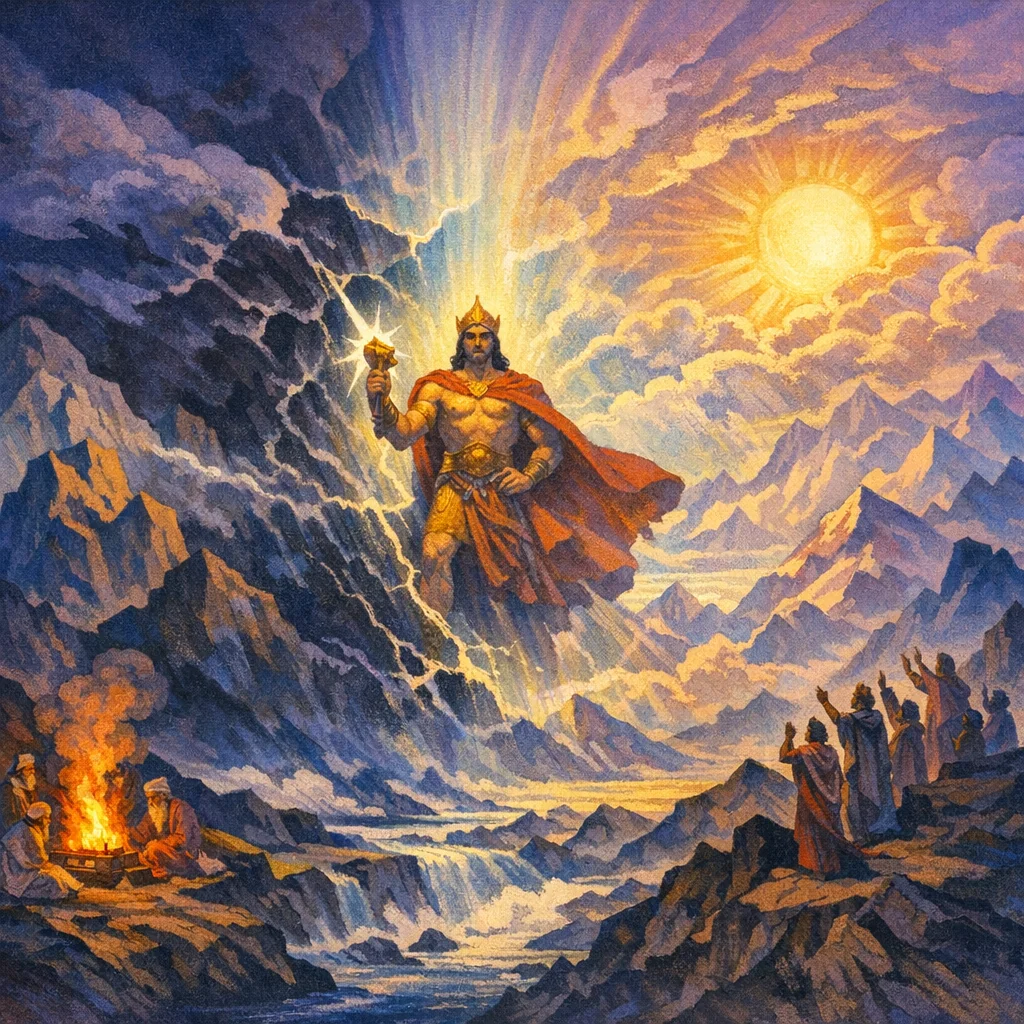
Rigveda 10.49 is an Indra-ātmastuti: Indra speaks in the first person, proclaiming his sovereign agency behind victory, expansion, and the right ordering of sacrifice. The hymn presents Indra as the giver of ancient wealth to the praise-singer, the awakener of the yajamāna, and the decisive breaker of obstruction (Vṛtra-like forces), culminating in his pervasion of gods and men through irresistible impulse (cyautna).
Mantras
Mantra 1
अहं दां गृणते पूर्व्यं वस्वहं ब्रह्म कृणवं मह्यं वर्धनम् । अहं भुवं यजमानस्य चोदितायज्वनः साक्षि विश्वस्मिन्भरे ॥
I give the ancient plenitude to the one who chants; I make for myself the Brahman—an increase. I become the impeller of the sacrificer, and the witness of the one who does not sacrifice, in every bringing of the burden.
Mantra 2
मां धुरिन्द्रं नाम देवता दिवश्च ग्मश्चापां च जन्तवः । अहं हरी वृषणा विव्रता रघू अहं वज्रं शवसे धृष्ण्वा ददे ॥
The gods set me as ‘Indra’ by name—those of heaven, of earth, and of the waters, the beings. I (yoke) the two tawny steeds, two mighty ones of free course and swift movement; I take up the thunderbolt for the force of daring.
Mantra 3
अहमत्कं कवये शिश्नथं हथैरहं कुत्समावमाभिरूतिभिः । अहं शुष्णस्य श्नथिता वधर्यमं न यो रर आर्यं नाम दस्यवे ॥
I shattered Atka for the seer with my blows; I saved Kutsa with my helpings. I was the breaker of Śuṣṇa, a death like Yama for the one who would barter away the Aryan name to the Dasyu.
Mantra 4
अहं पितेव वेतसूँरभिष्टये तुग्रं कुत्साय स्मदिभं च रन्धयम् । अहं भुवं यजमानस्य राजनि प्र यद्भरे तुजये न प्रियाधृषे ॥
Like a father for aid, I won the Vetasus; I subdued Tugra and the Smadibha for Kutsa. I become the kingly power of the sacrificer whenever he bears forward the battle-burden, pressing on without being checked by what is merely pleasing.
Mantra 5
अहं रन्धयं मृगयं श्रुतर्वणे यन्माजिहीत वयुना चनानुषक् । अहं वेशं नम्रमायवेऽकरमहं सव्याय पड्गृभिमरन्धयम् ॥
I subdued Mṛgaya for Śrutarvan when he assailed me with stratagems again and again. I made the clan-settlement bow down to Āyava; I subdued Paṭgṛbhi for Savya.
Mantra 6
अहं स यो नववास्त्वं बृहद्रथं सं वृत्रेव दासं वृत्रहारुजम् । यद्वर्धयन्तं प्रथयन्तमानुषग्दूरे पारे रजसो रोचनाकरम् ॥
I am he who, as the slayer of the Coverer, shattered the hostile obstructer—like Vṛtra—who had seized the new dwelling and the vast chariot. When that force was growing and spreading through human nature, I carried the luminous widenesses far beyond the dim mid-worlds, to the distant shore of the inner heavens.
Mantra 7
अहं सूर्यस्य परि याम्याशुभिः प्रैतशेभिर्वहमान ओजसा । यन्मा सावो मनुष आह निर्णिज ऋधक्कृषे दासं कृत्व्यं हथैः ॥
I move around the Sun, borne by swift powers, drawn by the bright steeds, carried by might. When the human impeller calls me for the revealing splendour, I separate out and crush the hostile dark force, the one fit to be made powerless, by decisive blows.
Mantra 8
अहं सप्तहा नहुषो नहुष्टरः प्राश्रावयं शवसा तुर्वशं यदुम् । अहं न्यन्यं सहसा सहस्करं नव व्राधतो नवतिं च वक्षयम् ॥
I am the slayer of the Seven, stronger than Nahusha; by my force I drove forth Turvaśa and Yadu. I, with might, pressed down the other power that makes force against us; I made nine and ninety of the disturbers fall away.
Mantra 9
अहं सप्त स्रवतो धारयं वृषा द्रवित्न्वः पृथिव्यां सीरा अधि । अहमर्णांसि वि तिरामि सुक्रतुर्युधा विदं मनवे गातुमिष्टये ॥
I, the Bull-force, held the seven streams in their course and set the plough-lines upon the earth for the bringers of abundance. I, of good will and right discernment, cross over the floods of being; by battle I find for the human a path for the fulfilment of the seeking.
Mantra 10
अहं तदासु धारयं यदासु न देवश्चन त्वष्टाधारयद्रुशत् । स्पार्हं गवामूधस्सु वक्षणास्वा मधोर्मधु श्वात्र्यं सोममाशिरम् ॥
I upheld that in them which no god at all—not even Tvaṣṭṛ—could uphold: the shining, desirable sweetness. I brought the honey of honey, the Soma-mixture, into the udders and breasts of the cows—into the radiant sources—so the nourishment of delight might be drawn.
Mantra 11
एवा देवाँ इन्द्रो विव्ये नॄन्प्र च्यौत्नेन मघवा सत्यराधाः । विश्वेत्ता ते हरिवः शचीवोऽभि तुरासः स्वयशो गृणन्ति ॥
Thus Indra has pervaded the gods and the human powers; by his impelling energy the bountiful one fulfils in truth. Therefore all the strong ones, O lord of the tawny steeds, O power of effective intelligence, sing to you—self-luminous in glory.
Frequently Asked Questions
It is an Indra-ātmastuti where Indra speaks in the first person (“I…”), declaring that he gives wealth, empowers sacred speech, drives the sacrificer, and destroys obstruction.
It suggests that divine order observes all human choices: Indra supports the one aligned with yajña (disciplined offering and truth), while the one who refuses it is still seen and measured in the cosmic balance.
Indra represents the force of awakened will and clarity that breaks inner “Vṛtra”—fear, inertia, and blockage—so the mind gains wider light and the person can act with strength and truth.