Sarga 50
ऋक्षबिलप्रवेशः — Entry into the Rikshabilam Cave
किष्किन्धाकाण्ड
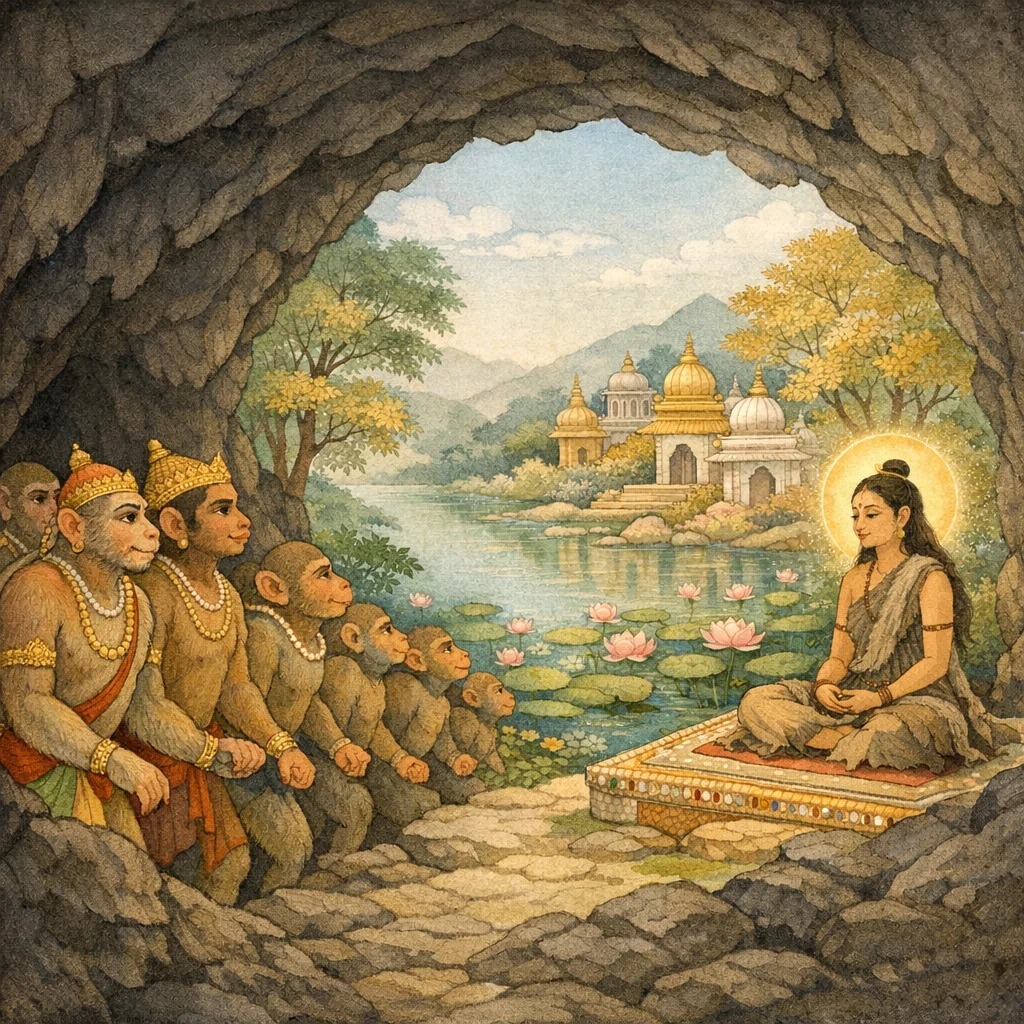
Sarga 50 recounts how the southern search-party meets a daunting cave-system in the Vindhya region. Time has slipped by, the vānaras are worn out, and water is scarce. Hanumān, with Aṅgada and Tārā, searches caves and ravines until they reach the cave called Ṛkṣabilam—fragrant yet hard to enter—where birds emerge drenched, a sign of hidden subterranean waters. With fear and resolve they step into a lightless, moonless interior; the senses falter and progress becomes instinctive. After moving about a yojana while clinging together, they find a radiant inner realm: a forest-like expanse with golden trees, lotus ponds, jeweled altars, and palaces of gold and silver, richly furnished and stocked with perfumes, foods, and valuables. As they explore, they behold a luminous female ascetic clad in bark and deer-skin. Hanumān respectfully asks who she is and to whom the cave and its treasures belong. The chapter sets peril beside providence, highlighting disciplined inquiry (praśna), inference from signs in nature, and collective perseverance under dharmic leadership.
Shlokas
Verse 1
सह ताराङ्गदाभ्यां तु सङ्गम्य हनुमान्कपिः।विचिनोति स्म विन्ध्यस्य गुहाश्च गहनानि च।।।।
Hanumān the monkey—having joined with Tārā and Aṅgada—searched the caves and the dense, hard-to-penetrate tracts of the Vindhya range.
Verse 2
सिंहशार्दूलजुष्टेषु शिलाश्च सरितस्तदा।विषमेषु नगेन्द्रस्य महाप्रस्रवणेषु च।।।।
Then they searched among rocks and rivers, through the perilous tracts of that great mountain, even near its mighty cascades—places frequented by lions and tigers.
Verse 3
आसेदुस्तस्य शैलस्य कोटिं दक्ष्णिपश्चिमाम्।तेषां तत्रैव वसतां स कालो व्यत्यवर्तत।।।।
They reached the south-western extremity of that mountain; and while they remained there, the allotted time slipped away.
Verse 4
स हि देशो दुरन्वेषो गुहागहनवान्महान्।तत्र वायुसुतस्सर्वं विचिनोति स्म पर्वतम्।।।।
That region was vast and hard to investigate, dense with caves and thickets; there Hanumān, the son of the Wind, searched the entire mountain range.
Verse 5
परस्परेण हनुमा नन्योन्यस्याविदूरतः।गजो गवाक्षो गवयश्शरभो गन्धमादनः।।।।मैन्दश्च द्विविदश्चैव सुषेणो जाम्बवान्नल:।अङ्गदो युवराजश्च तारश्च वनगोचरः।।।।गिरिजालावृतान्देशान्मार्गित्वा दक्षिणां दिशम्।विचिन्वन्तस्ततस्तत्र ददृशुर्विवृतं बिलम्।।।।दुर्गमृक्षबिलं नाम दानवेनाभिरक्षितम्।
Keeping close together—Hanumān not far from the others—Gaja, Gavākṣa, Gavaya, Śarabha, Gandhamādana, Mainda, Dvivida, Suṣeṇa, Jāmbavān, Nala, Aṅgada the heir-apparent, and Tārā the forest-roamer searched southward through lands hemmed in by a web of mountains. As they explored, they saw an open cave-mouth: the formidable cavern called Ṛkṣabila, guarded by a dānava.
Verse 6
परस्परेण हनुमा नन्योन्यस्याविदूरतः।गजो गवाक्षो गवयश्शरभो गन्धमादनः।।4.50.5।।मैन्दश्च द्विविदश्चैव सुषेणो जाम्बवान्नल:।अङ्गदो युवराजश्च तारश्च वनगोचरः।।4.50.6।।गिरिजालावृतान्देशान्मार्गित्वा दक्षिणां दिशम्।विचिन्वन्तस्ततस्तत्र ददृशुर्विवृतं बिलम्।।4.50.7।।दुर्गमृक्षबिलं नाम दानवेनाभिरक्षितम्।
Then Hanumān—mountain-like in stature—greeted the aged lady with joined palms and asked: “Who are you? Whose are this dwelling, this cave, and these jewels? Please tell me.”
Verse 7
परस्परेण हनुमा नन्योन्यस्याविदूरतः।गजो गवाक्षो गवयश्शरभो गन्धमादनः।।4.50.5।।मैन्दश्च द्विविदश्चैव सुषेणो जाम्बवान्नल:।अङ्गदो युवराजश्च तारश्च वनगोचरः।।4.50.6।।गिरिजालावृतान्देशान्मार्गित्वा दक्षिणां दिशम्।विचिन्वन्तस्ततस्तत्र ददृशुर्विवृतं बिलम्।।4.50.7।।दुर्गमृक्षबिलं नाम दानवेनाभिरक्षितम्।
Having searched the regions enclosed by a net of mountains and moved southward, they continued their quest; then they beheld an open cave-mouth—the hard-to-enter cave called Ṛkṣabila, guarded by an asura.
Verse 8
क्षुत्पिपासापरीताश्च श्रान्ताश्च सलिलार्थिनः।।।।अवकीर्णं लतावृक्षैर्ददृशुस्ते महाबिलम्।
Worn by hunger and thirst, and exhausted in their search for water, they noticed a vast cave overgrown and strewn with creepers and trees.
Verse 9
तत्र क्रौञ्चाश्च हंसाश्च सारसाश्च विनिष्क्रमन्।।।।जलार्द्राश्चक्रवाकाश्च रक्ताङ्गा: पद्मरेणुभिः।
Just then, krauñcas, swans, sārasas, and cakravākas flew out—drenched with water, their bodies reddened by the pollen of lotuses.
Verse 10
ततस्तद्बिलमासाद्य सुगन्धि दुरतिक्रमम्।।।।विस्मयव्यग्रमनसो बभूवुर्वानरर्षभाः।
Then, upon reaching that fragrant cave—yet difficult to approach—the foremost monkeys became troubled and bewildered with astonishment.
Verse 11
संञ्जातपरिशङ्कास्ते तद्बिलं प्लवगोत्तमाः।।।।अभ्यपद्यन्त संहृष्टास्तेजोवन्तो महाबलाः।
Though seized by misgiving, those best of monkeys—mighty and radiant—advanced toward that cave with a surge of resolve and eager ardor.
Verse 12
नानासत्त्वसमाकीर्णं दैत्येन्द्रनिलयोपमम्।।।।दुर्दर्शमतिघोरं च दुर्विगाहं च सर्वशः।
It swarmed with many kinds of creatures, like the abode of a lord of the Daityas—terrifying to behold, exceedingly dreadful, and impassable on every side.
Verse 13
तत: पर्वतकूटाभो हनूमान्पवनात्मजः।।।।अब्रवीद्वानरान्सर्वान्कान्तारवनकोविदः।
Then Hanumān—son of the Wind, mountain-peak-like in stature, skilled in wild and trackless forests—addressed all the monkeys.
Verse 14
गिरिजालावृतान्देशान्मार्गित्वा दक्षिणां दिशम्।।।।वयं सर्वे परिश्रान्ता न च पश्याम मैथिलीम्।
Having searched the southern quarter through regions hemmed in by chains of mountains, we are all exhausted—yet we still do not see Maithilī.
Verse 15
अस्माच्चापि बिलाद्धंसाः क्रौञ्चाश्च सह सारसैः।।।।जलार्द्राश्चक्रवाकाश्च निष्पतन्ति स्म सर्वशः।नूनं सलिलवानत्र कूपो वा यदि वा ह्रदः।।।।तथा चेमे बिलद्वारि स्निग्धास्तिष्ठन्ति पादपाः।
From this cave, swans, krauñcas, sārasas, and cakravākas—wet with water—keep flying out in every direction. Surely there is abundant water within, whether a well or a pond; and at the cave’s mouth these trees stand glossy and fresh.
Verse 16
अस्माच्चापि बिलाद्धंसाः क्रौञ्चाश्च सह सारसैः।।4.50.15।।जलार्द्राश्चक्रवाकाश्च निष्पतन्ति स्म सर्वशः।नूनं सलिलवानत्र कूपो वा यदि वा ह्रदः।।4.50.16।।तथा चेमे बिलद्वारि स्निग्धास्तिष्ठन्ति पादपाः।
Having spoken thus, they all entered that cave shrouded in darkness; the monkeys beheld a sunless, moonless gloom—an experience that raised their hair in dread.
Verse 17
इत्युक्त्वा तद्बिलं सर्वे विविशुस्तिमिरावृतम्।।।।अचन्द्रसूर्यं हरयो ददृशू रोमहर्षणम्।
Having spoken thus, they all entered that cave shrouded in darkness; the monkeys beheld a sunless, moonless gloom—an experience that raised their hair in dread.
Verse 18
निशाम्य तस्मात् शिंहांश्च तांस्तांश्च मृगपक्ष्णिः।।।।प्रविष्टा हरिशार्दूला बिलं तिमिरसंवृतम्।
Hearing from within the roars of lions and the cries of many beasts and birds, the tiger-like monkeys entered that cave, veiled in darkness.
Verse 19
न तेषां सज्जते चक्षुर्न तेजो न पराक्रमः।।।।वायोरिव गतिस्तेषां दृष्टिस्तमसि वर्तते।
Their eyes could find no steady focus; neither radiance nor valor could aid them. They sped on like the wind, yet their sight moved only within darkness.
Verse 20
ते प्रविष्टास्तु वेगेन तद्बिलं कपिकुञ्जराः।।।।प्रकाशमभिरामं च ददृशुर्देशमुत्तमम्।
But when those elephant-like monkeys entered that cave with speed, they beheld a radiant, delightful, and excellent region.
Verse 21
ततस्तस्मिन्बिले दुर्गे नानापादपसङ्कुले।।।।अन्योन्यं सम्परिष्वज्य जग्मुर्योजनमन्तरम्।
Then, within that difficult cave, crowded with trees of many kinds, they clung to one another and went a yojana farther inside.
Verse 22
ते नष्टसंज्ञास्तृषितास्सम्भ्रान्तास्सलिलार्थिनः।।।।परिपेतुर्बिले तस्मिन्कञ्चित्कालमतन्द्रिताः।
Thirsty, bewildered, and nearly fainting, desperate for water, they wandered about in that cave for some time without slackening.
Verse 23
ते कृशा दीनवदनाः परिश्रान्ताः प्लवङ्गमाः।।।।आलोकं ददृशुर्वीरा निराशा जीविते यदा।
Wasted, weary, and with downcast faces, those heroic monkeys—when they had nearly despaired of life—caught sight of a glimmer of light.
Verse 24
ततस्तं देशमागम्य सौम्या वितिमिरं वनम्।।।।ददृशुः काञ्चनान्वृक्षान्दीप्तवैश्वानरप्रभान्।सालां स्तालांश्च पुन्नागान्ककुभान्वञ्जुलान्धवान्।।।।चम्पकान् नागवृक्षांश्च कर्णिकारांश्च पुष्पितान्।स्तबकैः काञ्चनैश्चित्रै रक्तै: किसलयैस्तथा।।।।आपीडैश्च लताभिश्च हेमाभरणभूषितान्।तरुणादित्यसङ्काशान्वैढूर्यकृतवेदिकान्।।।।विभ्राजमानान्वपुषा पादपांश्च हिरण्मयान्।नीलवैढूर्यवर्णाश्च पद्मिनीः पतगावृताः।।।।महद्भि: काञ्चनैः पद्मैर्वृता बालार्कसन्निभैः।
Reaching that region, the gentle ones beheld a forest free of darkness, blazing as if with firelight. There they saw golden trees—sāla and tāla, punnāga, kakubha, vañjula, dhava, campaka, nāga, and flowering karṇikāra—adorned with wondrous golden clusters and red tender shoots, entwined with creepers, as though ornamented with gold. Some seemed like the rising sun, with platforms inlaid with vaidūrya gems; the golden trees shone with their own splendor. Lotus-ponds, blue like vaidūrya, were covered with birds and filled with great golden lotuses, resembling the newborn sun.
Verse 25
ततस्तं देशमागम्य सौम्या वितिमिरं वनम्।।4.50.24।।ददृशुः काञ्चनान्वृक्षान्दीप्तवैश्वानरप्रभान्।सालां स्तालांश्च पुन्नागान्ककुभान्वञ्जुलान्धवान्।।4.50.25।।चम्पकान् नागवृक्षांश्च कर्णिकारांश्च पुष्पितान्।स्तबकैः काञ्चनैश्चित्रै रक्तै: किसलयैस्तथा।।4.50.26।।आपीडैश्च लताभिश्च हेमाभरणभूषितान्।तरुणादित्यसङ्काशान्वैढूर्यकृतवेदिकान्।।4.50.27।।विभ्राजमानान्वपुषा पादपांश्च हिरण्मयान्।नीलवैढूर्यवर्णाश्च पद्मिनीः पतगावृताः।।4.50.28।।महद्भि: काञ्चनैः पद्मैर्वृता बालार्कसन्निभैः।
They beheld golden trees, radiant like blazing fire, and saw sāla and tāla trees, punnāga, kakubha, vañjula, and dhava as well.
Verse 26
ततस्तं देशमागम्य सौम्या वितिमिरं वनम्।।4.50.24।।ददृशुः काञ्चनान्वृक्षान्दीप्तवैश्वानरप्रभान्।सालां स्तालांश्च पुन्नागान्ककुभान्वञ्जुलान्धवान्।।4.50.25।।चम्पकान् नागवृक्षांश्च कर्णिकारांश्च पुष्पितान्।स्तबकैः काञ्चनैश्चित्रै रक्तै: किसलयैस्तथा।।4.50.26।।आपीडैश्च लताभिश्च हेमाभरणभूषितान्।तरुणादित्यसङ्काशान्वैढूर्यकृतवेदिकान्।।4.50.27।।विभ्राजमानान्वपुषा पादपांश्च हिरण्मयान्।नीलवैढूर्यवर्णाश्च पद्मिनीः पतगावृताः।।4.50.28।।महद्भि: काञ्चनैः पद्मैर्वृता बालार्कसन्निभैः।
They saw champaka trees, nāga-trees, and karṇikāra trees in full bloom—adorned with wondrous golden clusters of flowers and likewise with red, tender shoots.
Verse 27
ततस्तं देशमागम्य सौम्या वितिमिरं वनम्।।4.50.24।।ददृशुः काञ्चनान्वृक्षान्दीप्तवैश्वानरप्रभान्।सालां स्तालांश्च पुन्नागान्ककुभान्वञ्जुलान्धवान्।।4.50.25।।चम्पकान् नागवृक्षांश्च कर्णिकारांश्च पुष्पितान्।स्तबकैः काञ्चनैश्चित्रै रक्तै: किसलयैस्तथा।।4.50.26।।आपीडैश्च लताभिश्च हेमाभरणभूषितान्।तरुणादित्यसङ्काशान्वैढूर्यकृतवेदिकान्।।4.50.27।।विभ्राजमानान्वपुषा पादपांश्च हिरण्मयान्।नीलवैढूर्यवर्णाश्च पद्मिनीः पतगावृताः।।4.50.28।।महद्भि: काञ्चनैः पद्मैर्वृता बालार्कसन्निभैः।
They beheld trees crowned with entwining creepers, adorned as though with golden ornaments—radiant like the young rising sun—and having platforms and altars fashioned with vaidūrya (cat’s-eye gemstone).
Verse 28
ततस्तं देशमागम्य सौम्या वितिमिरं वनम्।।4.50.24।।ददृशुः काञ्चनान्वृक्षान्दीप्तवैश्वानरप्रभान्।सालां स्तालांश्च पुन्नागान्ककुभान्वञ्जुलान्धवान्।।4.50.25।।चम्पकान् नागवृक्षांश्च कर्णिकारांश्च पुष्पितान्।स्तबकैः काञ्चनैश्चित्रै रक्तै: किसलयैस्तथा।।4.50.26।।आपीडैश्च लताभिश्च हेमाभरणभूषितान्।तरुणादित्यसङ्काशान्वैढूर्यकृतवेदिकान्।।4.50.27।।विभ्राजमानान्वपुषा पादपांश्च हिरण्मयान्।नीलवैढूर्यवर्णाश्च पद्मिनीः पतगावृताः।।4.50.28।।महद्भि: काञ्चनैः पद्मैर्वृता बालार्कसन्निभैः।
Then those gentle monkeys, having reached that region, beheld a forest free from darkness. They saw golden trees blazing as if with the radiance of fire—śāla and tāla, punnāga and kakubha, vañjula and dhava; also campaka, nāga-trees, and flowering karṇikāra. The trees were adorned with wondrous clusters of golden blossoms and tender red shoots, with creepers twined upon them like ornaments of gold. Altars and platforms were inlaid with vaidūrya gems; and the golden trees shone brilliantly in form. Lotus-ponds, blue as vaidūrya, were filled with birds and covered with great golden lotuses resembling the glow of the rising sun.
Verse 29
जातरूपमयैर्मत्स्यैर्महद्भिश्च सकच्छपैः।।।।नळिनीस्तत्र ददृशुः प्रसन्नसलिलावृताः।
There they saw lotus-filled waters, clear and tranquil, in which swam great fish as if made of gold, along with great tortoises.
Verse 30
काञ्चनानि विमानानि राजतानि तथैव च।।।।तपनीयगवाक्षाणि मुक्ताजालावृतानि च।हैमराजतभौमानि वैदूर्यमणिमन्ति च।।।।ददृशुस्तत्र हरयो गृहमुख्यानि सर्वशः।
There the monkeys beheld splendid mansions and lofty palaces—some of gold, others of silver—with windows of refined gold and lattices veiled in pearl-netting. Everywhere they saw noble houses of gold and silver, adorned with vaidūrya gems.
Verse 31
काञ्चनानि विमानानि राजतानि तथैव च।।4.50.30।।तपनीयगवाक्षाणि मुक्ताजालावृतानि च।हैमराजतभौमानि वैदूर्यमणिमन्ति च।।4.50.31।।ददृशुस्तत्र हरयो गृहमुख्यानि सर्वशः।
They saw trees in blossom, heavy with fruit, gleaming like coral gems; and all around, golden bees and many kinds of honey.
Verse 32
पुष्पितान्फलिनो वृक्षान्प्रवाळमणिसन्निभान्।।।।काञ्चनभ्रमरांश्चैव मधूनि च समन्ततः।
They saw trees in blossom, heavy with fruit, gleaming like coral gems; and all around, golden bees and many kinds of honey.
Verse 33
मणिकाञ्चनचित्राणि शयनान्यासनानि च।।।।महार्हाणि चयानानि ददृशुस्ते समन्ततः।हैमराजतकांस्यानां भाजनानां च संञ्चयान्।।।।
All around they saw beds and seats adorned with gems and gold, and costly vehicles as well; and heaps of vessels made of gold, silver, and bronze.
Verse 34
मणिकाञ्चनचित्राणि शयनान्यासनानि च।।4.50.33।।महार्हाणि चयानानि ददृशुस्ते समन्ततः।हैमराजतकांस्यानां भाजनानां च संञ्चयान्।।4.50.34।।
They saw excellent drinks and flavorful honey; and stores of divine, precious garments—along with collections of colorful blankets and heaps of skins.
Verse 35
अगरूणां च दिव्यानां चन्दनानां च संञ्चायान्।शुचीन्यभ्यवहार्याणि मूलानि च फलानि च।।।।
They saw stores of divine agaru-wood and sandalwood, along with pure foods fit to be eaten—roots and fruits as well.
Verse 36
महार्हाणि च पानानि मधूनि रसवन्ति च।दिव्यानामम्बराणां च महार्हाणां च सञ्चयान्।।।।कम्बलानां च चित्राणामजिनानां च सञ्चयान्।
They saw excellent drinks and flavorful honey; and stores of divine, precious garments—along with collections of colorful blankets and heaps of skins.
Verse 37
तत्र तत्र च विन्यस्तान्दीप्तान्वैश्वानरप्रभान्।।।।ददृशुर्वानराश्शुभ्राञ्जातरूपस्य सञ्चयान्।
Here and there, the monkeys beheld heaps of pure gold set in place, blazing with a radiance like the fire of Vaiśvānara.
Verse 38
तत्र तत्र विचिन्वन्तो बिले तस्मिन्महाबलाः।।।।ददृशुर्वानराश्शूराः स्त्रियं काञ्चिददूरतः।
As those mighty, valiant monkeys searched within that cave, they saw, not far away, a certain woman.
Verse 39
तां दृष्ट्वा भृशसन्त्रस्ताश्चीरकृष्णाजिनाम्बराम्।।।।तापसीं नियताहारां ज्वलन्तीमिव तेजसा।
Seeing her—an ascetic woman clad in bark-garments and black antelope-skin, restrained in food, and as though blazing with spiritual radiance—the monkeys were greatly frightened.
Verse 40
विस्मिता हरयस्तत्र व्यवतिष्ठन्त सर्वशः।।।।पप्रच्छ हनुमांस्तत्र काऽसि त्वं कस्य वा बिलम्।
Amazed, the monkeys halted all around. There Hanumān asked her: “Who are you, and whose cave is this?”
Verse 41
ततो हनूमान्गिरिसन्निकाशःकृताज्ञलिस्तामभिवाद्य वृद्धाम्।पप्रच्छ का त्वं भवनं बिलं चरत्नानि चेमानि वदस्व कस्य।।।।
Then Hanumān—mountain-like in stature—greeted the aged lady with joined palms and asked: “Who are you? Whose are this dwelling, this cave, and these jewels? Please tell me.”
Frequently Asked Questions
The vānaras must decide whether to enter a dangerous, demon-guarded cave while already late and weakened; they proceed under Hanumān’s guidance using environmental evidence (water-drenched birds, green trees at the entrance) and maintain disciplined group movement to avoid panic and loss.
The chapter models prudent courage: act neither recklessly nor timidly, infer wisely from signs, and when encountering the unknown (a radiant ascetic and hidden wealth), respond with humility, restraint, and respectful questioning rather than appropriation.
The Vindhya mountain region and the south-western extremity of its ranges frame the search geography; Ṛkṣabilam functions as a liminal landmark—an underground passage from darkness to a culturally coded ‘inner world’ of altars, palatial architecture, and ascetic presence.