Sarga 29
हनूमता सुग्रीवस्य कालधर्मोपदेशः — Hanuman’s Counsel on Timely Ally-Duty
किष्किन्धाकाण्ड
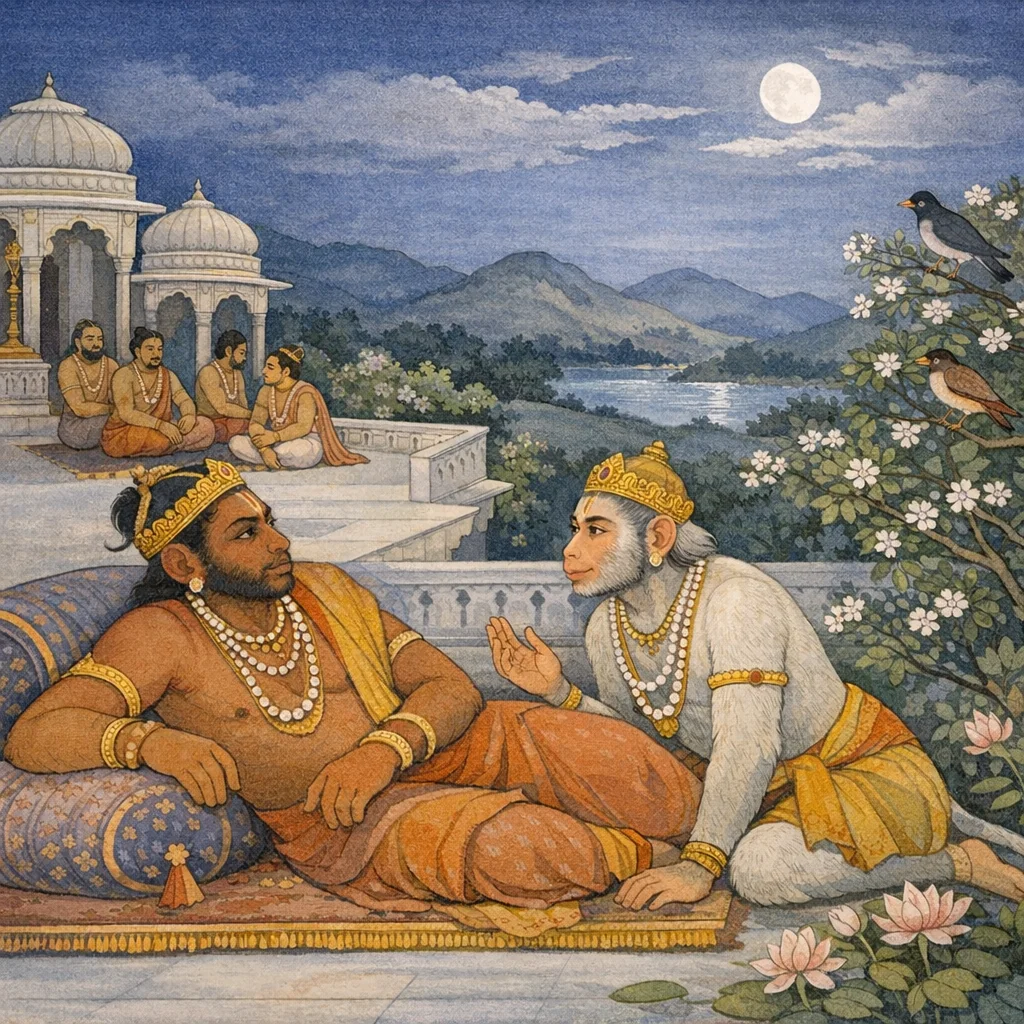
Sarga 29 opens beneath a clear, moonlit sky alive with birdsong, where Hanumān observes Sugrīva’s complacency after gaining kingship and prosperity. Sugrīva is shown absorbed in pleasure, inattentive to royal communications, and leaving affairs to ministers without oversight. Hanumān approaches with measured vākyanīti—sweet, reasoned, and conciliatory speech—preserving trust while correcting negligence. He sets forth principles of rule: a king’s rājya, kīrti, and pratāpa grow when he honors allies and understands the right time; treasury, daṇḍa (coercive authority), allies, and self-discipline must be held in balance. He warns that a friend’s task, once delayed, often fails even with later effort, and urges the urgent duty: begin the search for Vaidehī (Sītā) for Rāma, whose power is immeasurable and whose aid secured Sugrīva’s throne. Moved by timely counsel, Sugrīva resolves to act—sending Nīla to gather forces from all directions, setting a strict deadline for their arrival, and ordering coordination with Aṅgada and the elders—thus turning courtly indulgence into organized mobilization.
Shlokas
Verse 1
समीक्ष्य विमलं व्योम गतविद्युद्वलाहकम्।सारसाकुलसङ्घुष्टं रम्यज्योत्स्नानुलेपनम्।।समृद्धार्थं च सुग्रीवं मन्दधर्मार्थसङ्ग्रहम्।अत्यर्थमसतां मार्गमेकान्तगतमानसम्।।निर्वृत्तकार्यं सिद्धार्थं प्रमदाभिरतं सदा।प्राप्तवन्तमभिप्रेतान्सर्वानेव मनोरथान्।।स्वां च पत्नीमभिप्रेतां तारां चापि समीप्सिताम्।विहरन्तमहोरात्रं कृतार्थं विगतज्वरम्।।क्रीडन्तमिव देवेशं नन्दनेऽप्सरसां गणैः।मन्त्रिषु न्यस्तकार्यं च मन्त्रिणामनवेक्षकम्।।उत्सन्नराज्यसन्देशं कामवृत्तमवस्थितम्।निश्चितार्थोऽर्थतत्त्वज्ञः कालधर्मविशेषवित्।।प्रसाद्य वाक्यैर्मधुरैर्हेतुमद्भिर्मनोरमैः।वाक्यविद्वाक्य तत्त्वज्ञं हरीशं मारुतात्मजः।।हितं तत्त्वं च पथ्यं च सामधर्मार्थनीतिमत्।प्रणयप्रीतिसंयुक्तं विश्वासकृतनिश्चयम्।हरीश्वरमुपागम्य हनूमान्वाक्यमब्रवीत्।।
Seeing the sky spotless—free of lightning and cloud—resounding with flocks of herons and softly anointed with lovely moonlight, Hanuman observed Sugriva: prosperous, yet lax in securing dharma and artha; overly turned to the ways of the unworthy, his mind set on private pleasures. His task accomplished and his aims fulfilled, all his cherished desires attained, he was ever absorbed in women—sporting day and night with his own wives and with Tara whom he longed for—carefree, his fever of anxiety gone. Like Indra at play in Nandana amid hosts of apsarases, he continued in pastime, having entrusted affairs to ministers yet paying them no heed, neglecting royal messages and settled in sensual indulgence. Then Hanuman—firm in resolve, knowing the principles of statecraft and discerning the duties of the time—approached the lord of monkeys. Seeking to win his trust, he pleased him with sweet, reasonable, and charming words, and spoke what was beneficial, true, and wholesome, in harmony with conciliation, righteousness, and sound policy—words filled with affection and goodwill.
Verse 2
समीक्ष्य विमलं व्योम गतविद्युद्वलाहकम्।सारसाकुलसङ्घुष्टं रम्यज्योत्स्नानुलेपनम्4.29.1।।समृद्धार्थं च सुग्रीवं मन्दधर्मार्थसङ्ग्रहम्।अत्यर्थमसतां मार्गमेकान्तगतमानसम्4.29.2।।निर्वृत्तकार्यं सिद्धार्थं प्रमदाभिरतं सदा।प्राप्तवन्तमभिप्रेतान्सर्वानेव मनोरथान्4.29.3।।स्वां च पत्नीमभिप्रेतां तारां चापि समीप्सिताम्।विहरन्तमहोरात्रं कृतार्थं विगतज्वरम्4.29.4।।क्रीडन्तमिव देवेशं नन्दनेऽप्सरसां गणैः।मन्त्रिषु न्यस्तकार्यं च मन्त्रिणामनवेक्षकम्4.29.5।।उत्सन्नराज्यसन्देशं कामवृत्तमवस्थितम्।निश्चितार्थोऽर्थतत्त्वज्ञः कालधर्मविशेषवित्4.29.6।।प्रसाद्य वाक्यैर्मधुरैर्हेतुमद्भिर्मनोरमैः।वाक्यविद्वाक्य तत्त्वज्ञं हरीशं मारुतात्मजः4.29.7।।हितं तत्त्वं च पथ्यं च सामधर्मार्थनीतिमत्।प्रणयप्रीतिसंयुक्तं विश्वासकृतनिश्चयम्।हरीश्वरमुपागम्य हनूमान्वाक्यमब्रवीत्4.29.8।।
He observed Sugrīva—now prosperous—growing slack in the pursuit of dharma and rightful gain, his mind turned one-sidedly toward indulgence, and excessively following the way of the undisciplined.
Verse 3
समीक्ष्य विमलं व्योम गतविद्युद्वलाहकम्।सारसाकुलसङ्घुष्टं रम्यज्योत्स्नानुलेपनम्4.29.1।।समृद्धार्थं च सुग्रीवं मन्दधर्मार्थसङ्ग्रहम्।अत्यर्थमसतां मार्गमेकान्तगतमानसम्4.29.2।।निर्वृत्तकार्यं सिद्धार्थं प्रमदाभिरतं सदा।प्राप्तवन्तमभिप्रेतान्सर्वानेव मनोरथान्4.29.3।।स्वां च पत्नीमभिप्रेतां तारां चापि समीप्सिताम्।विहरन्तमहोरात्रं कृतार्थं विगतज्वरम्4.29.4।।क्रीडन्तमिव देवेशं नन्दनेऽप्सरसां गणैः।मन्त्रिषु न्यस्तकार्यं च मन्त्रिणामनवेक्षकम्4.29.5।।उत्सन्नराज्यसन्देशं कामवृत्तमवस्थितम्।निश्चितार्थोऽर्थतत्त्वज्ञः कालधर्मविशेषवित्4.29.6।।प्रसाद्य वाक्यैर्मधुरैर्हेतुमद्भिर्मनोरमैः।वाक्यविद्वाक्य तत्त्वज्ञं हरीशं मारुतात्मजः4.29.7।।हितं तत्त्वं च पथ्यं च सामधर्मार्थनीतिमत्।प्रणयप्रीतिसंयुक्तं विश्वासकृतनिश्चयम्।हरीश्वरमुपागम्य हनूमान्वाक्यमब्रवीत्4.29.8।।
Seeing the sky clear—free of thunderclouds and lightning—resounding with the calls of herons and anointed with lovely moonlight, Hanumān observed Sugrīva. Though prosperous, Sugrīva had grown slack in the pursuit of dharma and governance, his mind turned inward to pleasure. His tasks completed and his aims fulfilled, he spent day and night in enjoyment with women—his own wives and also Tārā—carefree and without the fever of worry, like Indra sporting in Nandana with hosts of apsarases. He had entrusted affairs to ministers and did not oversee them. Then Hanumān, son of Marut—steadfast in responsibility, knowing the principles of statecraft and the dharma of timely action, skilled in speech—approached the lord of monkeys. Resolving to speak in confidence, he addressed Sugrīva with words sweet yet reasoned, affectionate yet true: beneficial, factual, wholesome, and guided by conciliatory policy aligned with dharma and artha.
Verse 4
समीक्ष्य विमलं व्योम गतविद्युद्वलाहकम्।सारसाकुलसङ्घुष्टं रम्यज्योत्स्नानुलेपनम्4.29.1।।समृद्धार्थं च सुग्रीवं मन्दधर्मार्थसङ्ग्रहम्।अत्यर्थमसतां मार्गमेकान्तगतमानसम्4.29.2।।निर्वृत्तकार्यं सिद्धार्थं प्रमदाभिरतं सदा।प्राप्तवन्तमभिप्रेतान्सर्वानेव मनोरथान्4.29.3।।स्वां च पत्नीमभिप्रेतां तारां चापि समीप्सिताम्।विहरन्तमहोरात्रं कृतार्थं विगतज्वरम्4.29.4।।क्रीडन्तमिव देवेशं नन्दनेऽप्सरसां गणैः।मन्त्रिषु न्यस्तकार्यं च मन्त्रिणामनवेक्षकम्4.29.5।।उत्सन्नराज्यसन्देशं कामवृत्तमवस्थितम्।निश्चितार्थोऽर्थतत्त्वज्ञः कालधर्मविशेषवित्4.29.6।।प्रसाद्य वाक्यैर्मधुरैर्हेतुमद्भिर्मनोरमैः।वाक्यविद्वाक्य तत्त्वज्ञं हरीशं मारुतात्मजः4.29.7।।हितं तत्त्वं च पथ्यं च सामधर्मार्थनीतिमत्।प्रणयप्रीतिसंयुक्तं विश्वासकृतनिश्चयम्।हरीश्वरमुपागम्य हनूमान्वाक्यमब्रवीत्4.29.8।।
He saw Sugrīva roaming about day and night, feeling fulfilled and free from anxiety, enjoying the company of the women he desired—his own wife, and also Tārā whom he longed for.
Verse 5
[Hanuman awakens Sugriva from slumber -- advises to initiate the search Vaidehi.]समीक्ष्य विमलं व्योम गतविद्युद्वलाहकम्।सारसाकुलसङ्घुष्टं रम्यज्योत्स्नानुलेपनम्4.29.1।।समृद्धार्थं च सुग्रीवं मन्दधर्मार्थसङ्ग्रहम्।अत्यर्थमसतां मार्गमेकान्तगतमानसम्4.29.2।।निर्वृत्तकार्यं सिद्धार्थं प्रमदाभिरतं सदा।प्राप्तवन्तमभिप्रेतान्सर्वानेव मनोरथान्4.29.3।।स्वां च पत्नीमभिप्रेतां तारां चापि समीप्सिताम्।विहरन्तमहोरात्रं कृतार्थं विगतज्वरम्4.29.4।।क्रीडन्तमिव देवेशं नन्दनेऽप्सरसां गणैः।मन्त्रिषु न्यस्तकार्यं च मन्त्रिणामनवेक्षकम्4.29.5।।उत्सन्नराज्यसन्देशं कामवृत्तमवस्थितम्।निश्चितार्थोऽर्थतत्त्वज्ञः कालधर्मविशेषवित्4.29.6।।प्रसाद्य वाक्यैर्मधुरैर्हेतुमद्भिर्मनोरमैः।वाक्यविद्वाक्य तत्त्वज्ञं हरीशं मारुतात्मजः4.29.7।।हितं तत्त्वं च पथ्यं च सामधर्मार्थनीतिमत्।प्रणयप्रीतिसंयुक्तं विश्वासकृतनिश्चयम्।हरीश्वरमुपागम्य हनूमान्वाक्यमब्रवीत्4.29.8।।
He saw Sugrīva sporting like the Lord of the gods in Nandana amid troops of Apsarases—having entrusted affairs to his ministers, yet not supervising those ministers at all.
Verse 6
समीक्ष्य विमलं व्योम गतविद्युद्वलाहकम्।सारसाकुलसङ्घुष्टं रम्यज्योत्स्नानुलेपनम्4.29.1।।समृद्धार्थं च सुग्रीवं मन्दधर्मार्थसङ्ग्रहम्।अत्यर्थमसतां मार्गमेकान्तगतमानसम्4.29.2।।निर्वृत्तकार्यं सिद्धार्थं प्रमदाभिरतं सदा।प्राप्तवन्तमभिप्रेतान्सर्वानेव मनोरथान्4.29.3।।स्वां च पत्नीमभिप्रेतां तारां चापि समीप्सिताम्।विहरन्तमहोरात्रं कृतार्थं विगतज्वरम्4.29.4।।क्रीडन्तमिव देवेशं नन्दनेऽप्सरसां गणैः।मन्त्रिषु न्यस्तकार्यं च मन्त्रिणामनवेक्षकम्4.29.5।।उत्सन्नराज्यसन्देशं कामवृत्तमवस्थितम्।निश्चितार्थोऽर्थतत्त्वज्ञः कालधर्मविशेषवित्4.29.6।।प्रसाद्य वाक्यैर्मधुरैर्हेतुमद्भिर्मनोरमैः।वाक्यविद्वाक्य तत्त्वज्ञं हरीशं मारुतात्मजः4.29.7।।हितं तत्त्वं च पथ्यं च सामधर्मार्थनीतिमत्।प्रणयप्रीतिसंयुक्तं विश्वासकृतनिश्चयम्।हरीश्वरमुपागम्य हनूमान्वाक्यमब्रवीत्4.29.8।।
He saw Sugrīva absorbed in sensual pleasure, letting the affairs and communications of the kingdom fall into neglect. Yet Hanūmān—firm in purpose, discerning of true policy, and keenly aware of duties to be done at the proper time—resolved how to act.
Verse 7
समीक्ष्य विमलं व्योम गतविद्युद्वलाहकम्।सारसाकुलसङ्घुष्टं रम्यज्योत्स्नानुलेपनम्4.29.1।।समृद्धार्थं च सुग्रीवं मन्दधर्मार्थसङ्ग्रहम्।अत्यर्थमसतां मार्गमेकान्तगतमानसम्4.29.2।।निर्वृत्तकार्यं सिद्धार्थं प्रमदाभिरतं सदा।प्राप्तवन्तमभिप्रेतान्सर्वानेव मनोरथान्4.29.3।।स्वां च पत्नीमभिप्रेतां तारां चापि समीप्सिताम्।विहरन्तमहोरात्रं कृतार्थं विगतज्वरम्4.29.4।।क्रीडन्तमिव देवेशं नन्दनेऽप्सरसां गणैः।मन्त्रिषु न्यस्तकार्यं च मन्त्रिणामनवेक्षकम्4.29.5।।उत्सन्नराज्यसन्देशं कामवृत्तमवस्थितम्।निश्चितार्थोऽर्थतत्त्वज्ञः कालधर्मविशेषवित्4.29.6।।प्रसाद्य वाक्यैर्मधुरैर्हेतुमद्भिर्मनोरमैः।वाक्यविद्वाक्य तत्त्वज्ञं हरीशं मारुतात्मजः4.29.7।।हितं तत्त्वं च पथ्यं च सामधर्मार्थनीतिमत्।प्रणयप्रीतिसंयुक्तं विश्वासकृतनिश्चयम्।हरीश्वरमुपागम्य हनूमान्वाक्यमब्रवीत्4.29.8।।
The son of the Wind-god, Hanūmān, having first won over the monkey-king with sweet, reasoned, and pleasing words, approached Sugrīva—himself skilled in speech and understanding its true import.
Verse 8
समीक्ष्य विमलं व्योम गतविद्युद्वलाहकम्।सारसाकुलसङ्घुष्टं रम्यज्योत्स्नानुलेपनम्4.29.1।।समृद्धार्थं च सुग्रीवं मन्दधर्मार्थसङ्ग्रहम्।अत्यर्थमसतां मार्गमेकान्तगतमानसम्4.29.2।।निर्वृत्तकार्यं सिद्धार्थं प्रमदाभिरतं सदा।प्राप्तवन्तमभिप्रेतान्सर्वानेव मनोरथान्4.29.3।।स्वां च पत्नीमभिप्रेतां तारां चापि समीप्सिताम्।विहरन्तमहोरात्रं कृतार्थं विगतज्वरम्4.29.4।।क्रीडन्तमिव देवेशं नन्दनेऽप्सरसां गणैः।मन्त्रिषु न्यस्तकार्यं च मन्त्रिणामनवेक्षकम्4.29.5।।उत्सन्नराज्यसन्देशं कामवृत्तमवस्थितम्।निश्चितार्थोऽर्थतत्त्वज्ञः कालधर्मविशेषवित्4.29.6।।प्रसाद्य वाक्यैर्मधुरैर्हेतुमद्भिर्मनोरमैः।वाक्यविद्वाक्य तत्त्वज्ञं हरीशं मारुतात्मजः4.29.7।।हितं तत्त्वं च पथ्यं च सामधर्मार्थनीतिमत्।प्रणयप्रीतिसंयुक्तं विश्वासकृतनिश्चयम्।हरीश्वरमुपागम्य हनूमान्वाक्यमब्रवीत्4.29.8।।
Approaching Sugrīva, lord of the Vānara-s, Hanūmān spoke words that were beneficial, truthful, and wholesome—framed in conciliation and in the principles of dharma and sound policy—spoken with affection and goodwill, having resolved to speak in confidence.
Verse 9
राज्यं प्राप्तं यशश्चैव कौली श्रीरभिवर्धिता।मित्राणां सङ्ग्रहश्शेषस्तं भवान्कर्तुमर्हति।।
“You have gained the kingdom and won renown, and your family’s prosperity has increased. What still remains is to secure and sustain the goodwill of your allies—this you ought now to do.”
Verse 10
यो हि मित्रेषु कालज्ञस्सततं साधु वर्तते।।तस्य राज्यं च कीर्तिश्च प्रतापश्चाभि वर्धते।
For the ruler who knows the proper time and always acts rightly toward his allies, his sovereignty, fame, and splendour steadily increase.
Verse 11
यस्य कोशश्च दण्डश्च मित्राण्यात्मा च भूमिप।।समवेतानि सर्वाणि स राज्यं महदश्नुते।
O king: he in whom treasury, authority, allies, and even his own person are all held in due balance and harmony—he attains a great kingdom.
Verse 12
तद्भवान्वृत्तसम्पन्नः स्थितः पथि निरत्यये।।मित्रार्थमभिनीतार्थं यथावत्कर्तुमर्हति।
Therefore, endowed with proper conduct and firmly established on the faultless path, you ought to carry out—duly and in the right manner—the course of action that serves your ally.
Verse 13
सन्त्यज्य सर्वकर्माणि मित्रार्थे योऽनुवर्तते।।सम्भ्रमाद्धि कृतोत्साहस्सोऽनर्थैर्नावरुध्यते।
Whoever, setting aside all other duties, pursues an ally’s cause with ardent resolve is not held back by misfortunes.
Verse 14
यस्तु कालव्यतीतेषु मित्रकार्येषु वर्तते।।स कृत्वा महतोऽप्यर्थान्न मित्रार्थेन युज्यते।
But he who attends to a friend’s business only after the proper time has passed—even if he later makes great efforts—does not truly accomplish the ally’s purpose.
Verse 15
यदिदं मित्रकार्यं वीर नोमित्रकार्यमरिन्दम ।।क्रियतां राघवस्यैतद्वैदेह्याः परिमार्गणम्।तदिदं वीर कार्यं ते कालातीतमरिन्दम ।।
O hero, subduer of foes: this is our ally’s work. Let Rāghava’s task be done—let Vaidehī be sought. O crusher of enemies, this duty of yours is already overdue.
Verse 16
यदिदं मित्रकार्यं वीर नोमित्रकार्यमरिन्दम 4.29.15।।क्रियतां राघवस्यैतद्वैदेह्याः परिमार्गणम्।तदिदं वीर कार्यं ते कालातीतमरिन्दम 4.29.16।।
O hero, subduer of foes: this is our ally’s work. Let Rāghava’s task be done—let Vaidehī be sought. O crusher of enemies, this duty of yours is already overdue.
Verse 17
न च कालमतीतं ते निवेदयति कालवित्।त्वरमाणोऽपि सन्प्राज्ञस्तव राजन्वशानुगः।।
And a wise man who understands time will not even tell you that the proper moment has been exceeded—though he may be in haste—because, O king, he remains under your authority.
Verse 18
कुलस्य हेतुः स्फीतस्य दीर्घबन्धुश्च राघवः।अप्रमेयप्रभावश्च स्वयं चाप्रतिमो गुणैः।।
Rāghava is the cause of your family’s prosperity and steadfastness, and he will be a lasting ally; his might is immeasurable, and in virtues he is without equal.
Verse 19
तस्य त्वं कुरु वै कार्यं पूर्वं तेन कृतं तव।हरीश्वर कपिश्रेष्ठानाज्ञापयितुमर्हसि।।
Therefore do his work, just as he formerly did yours. O lord of the Vānara hosts, it is right for you to command the best of the monkeys.
Verse 20
न हि तावद्भवेत्कालो व्यतीतश्चोदनादृते।चोदितस्य हि कार्यस्य भवेत्कालव्यतिक्रमः।।
Time is not truly counted as ‘missed’ so long as the work is taken up of one’s own accord; but when a task is done only after being prodded, it becomes a real transgression of time and duty.
Verse 21
अकर्तुरपि कार्यस्य भवान्कर्ता हरीश्वरकिं पुनः प्रतिकर्तुस्ते राज्येन च धनेन च।।
O lord of the monkeys, you would help even one who has not helped you; how much more, then, should you repay—with kingdom and wealth now secured—the one who acted for your sake.
Verse 22
शक्तिमानपिविक्रान्तो वानरर्क्षगणेश्वर।कर्तुं दाशरथेः प्रीतिमाज्ञायां किन्न सज्जसे।।
O lord of the hosts of monkeys and bears, though you are mighty and valiant, why do you not make ready your command, so that Daśaratha’s son may be satisfied?
Verse 23
कामं खलु शरैश्शक्तस्सुरासुरमहोरगान्।वशे दाशरथिः कर्तुं त्वत्प्रतिज्ञां हि काङ्क्षते।।
Indeed, Daśaratha’s son has the power, by his arrows, to subdue gods, asuras, and mighty serpents; yet he seeks your pledged promise—your committed help.
Verse 24
प्राणत्यागाविशङ्केन कृतं तेन तवप्रियम्।तस्य मार्गाम वैदेहीं पृथिव्यामपि चाम्बरे।।
Without hesitation, even at the risk of his life, he did what was dear to you; therefore let us search for his Vaidehī—on earth or even in the sky.
Verse 25
देवदानव गन्धर्वा नसुरास्समरुद्गणाः।न च यक्षा भयं तस्य कुर्युः किमुत राक्षसाः।।
Neither gods, nor dānavas, nor gandharvas, nor asuras with the hosts of the Maruts—nor even yakṣas—could inspire fear in him; how much less, then, the rākṣasas.
Verse 26
तदेवं शक्तियुक्तस्य पूर्वं प्रियकृतस्तव।रामस्यार्हसि पिङ्गेश कर्तुं सर्वात्मना प्रियम्।।
Therefore, O Piṅgeśa, since Rāma earlier did with all his strength what was dear to you, it is right that you now do, with your whole being, what is dear to Rāma.
Verse 27
नाधस्तादवनौ नाप्सु गतिर्नोपरि चाम्बरे।कस्यचित्सज्जतेऽस्माकं कपीश्वर तवाज्ञया।।
O lord of monkeys, by your command no realm is inaccessible to us—neither beneath the earth, nor upon the earth, nor in the waters, nor even above in the sky.
Verse 28
तदाज्ञापय कः किं ते कुतो वापि व्यवस्यतु।हरयोऽह्यप्रधृष्यास्ते सन्ति कोट्यग्रतोऽनघ।।
Therefore, O sinless one, issue your command—who should do what, and from where they should set out. Your monkeys, invincible, stand ready in numbers exceeding a crore.
Verse 29
तस्य तद्वचनं श्रुत्वा काले साधु निवेदनम्।सुग्रीवस्सत्त्वसम्पन्नश्चकार मतिमुत्तमाम्।।
Hearing those words—honest counsel offered at the proper time—Sugrīva, endowed with a strong sense of duty, set his mind upon the best course of action.
Verse 30
स सन्दिदेशाभिमतं नीलं नित्यकृतोद्यमम्।दिक्षु सर्वासु सर्वेषां सैन्यानामुपसङ्ग्रहे।।
Having resolved, he dispatched Nīla—his trusted favourite, ever diligent—to gather the monkey forces from every direction.
Verse 31
यथा सेना समग्रा मे यूथपालाश्च सर्वशः।समागच्छन्त्यसङ्गेन सेनाग्राणि तथा कुरु।।
See that my entire army, together with the leaders of every troop, assembles here without confusion; and arrange the vanguards in proper order, O commander.
Verse 32
ये त्वन्तपालाः प्लवगाश्शीघ्रगा व्यवसायिनः।समानयन्तु ते सैन्यं त्वरिताश्शासनान्मम।।स्वयं चानन्तरं सैन्यं भवानेवानुपश्यतु।
Let the swift and resolute frontier-guardians among the monkeys quickly bring their forces at my command; and you yourself—yes, you alone—must personally oversee the subsequent deployment.
Verse 33
त्रिपञ्चरात्रादूर्ध्वं यः प्राप्नुयान्नेह वानरः।तस्य प्राणान्तिको दण्डो नात्र कार्या विचारणा4.29.33।।
Any monkey who arrives here after three or five nights have passed shall face punishment up to death—there is no room for debate in this matter.
Verse 34
हरींश्च वृद्धानुपयातु साङ्गदोभवान्ममाज्ञामधिकृत्य निश्चिताम्।इति व्यवस्थां हरिपुङ्गवेश्वरोविधाय वेश्म प्रविवेश वीर्यवान्।।
And you, together with Aṅgada, should approach the elder monkeys bearing my firm and settled command. Having thus established the arrangement, the valiant lord of the foremost monkeys entered his residence.
Frequently Asked Questions
The dilemma is royal complacency after success: Sugrīva enjoys sovereignty and pleasure while neglecting the pledged obligation to assist Rāma. The pivotal action is Hanumān’s corrective intervention—urging immediate initiation of the search for Vaidehī as the overdue ally-duty.
Upadeśa centers on kāla and mitradharma: timely fulfillment of a friend’s task is integral to dharma and effective kingship, whereas delay undermines outcomes even when later effort is great; persuasion should be truthful, beneficial, and conciliatory (hita–tattva–pathya).
The sarga uses cultural imagery rather than a travel itinerary: the moonlit sky with bird-calls frames the scene, and Sugrīva’s revelry is likened to Indra sporting with apsaras in Nandana (a celestial garden), underscoring the contrast between pleasure and governance.