Sarga 14
जटायुस्संवादः — Encounter with Jaṭāyu and the Genealogy of Beings (Aranyakanda 14)
अरण्यकाण्ड
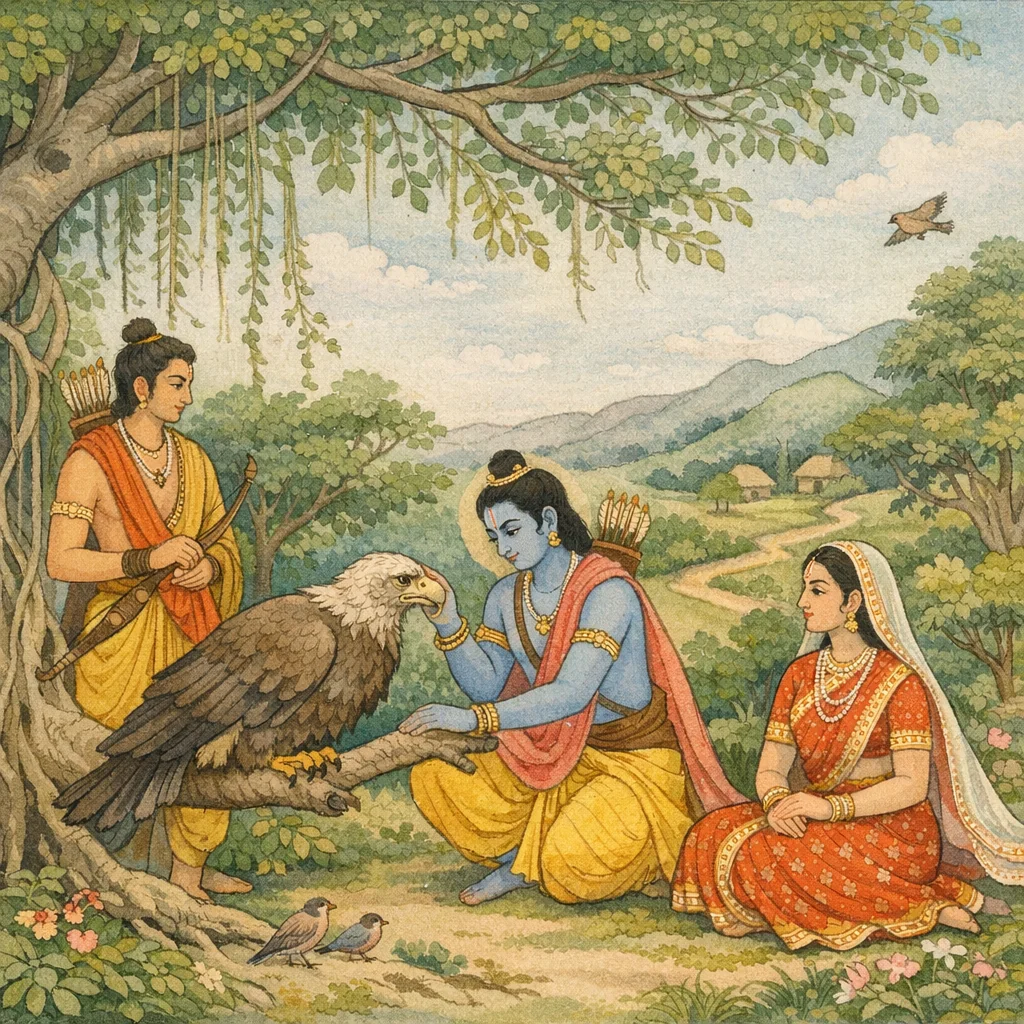
While proceeding toward Pañcavaṭī, Rāma and Lakṣmaṇa behold a formidable vulture perched upon a banyan tree and at first suspect a rākṣasa. The bird speaks gently, declaring himself a friend of Daśaratha; Rāma honors him and asks his name and lineage. Jaṭāyu replies with a cosmological genealogy: he recounts the early Prajāpatis, Dakṣa’s famed sixty daughters, and Kaśyapa’s eight wives—Aditi, Diti, Danu, Kālīkā, Tāmra, Krodhavaśā, Anala, and Manu. He traces the lines of progeny: the thirty-three devas from Aditi, the daityas from Diti, various beings from Danu and Kālīkā, and vast avian and animal lineages from Tāmra and Krodhavaśā—hawks, vultures, swans, and chakravākas—along with Surabhi’s descendants (cows and horses), the serpent races of Surasā and Kadrū, and Vinatā’s sons, Garuḍa and Aruṇa. At last Jaṭāyu identifies himself as Aruṇa’s son and the younger brother of Sampāti, and offers protective service: he will guard Sītā whenever the brothers are away in this perilous forest. Rāma joyfully embraces and reveres him, entrusts Sītā to Jaṭāyu’s protection, and continues with Lakṣmaṇa to Pañcavaṭī, establishing the alliance as a prudent and dharmic safeguard amid a wilderness threatened by rākṣasas.
Shlokas
Verse 1
अथ पञ्चवटीं गच्छन्नन्तरा रघुनन्दनः।आससाद महाकायं गृध्रं भीमपराक्रमम्।।3.14.1।।
Then, while proceeding toward Pañcavaṭī, Rāma—the delight of the Raghu line—met on the way a vulture of massive body and terrifying prowess.
Verse 2
तं दृष्ट्वा तौ महाभागौ वटस्थं रामलक्ष्मणौ।मेनाते राक्षसं पक्षिं ब्रुवाणौ को भवानिति।।3.14.2।।
Seeing that bird perched on a banyan tree, the noble Rāma and Lakṣmaṇa mistook him for a rākṣasa and questioned him: “Who are you?”
Verse 3
स तौ मधुरया वाचा सौम्यया प्रीणयन्निव।उवाच वत्स मां विद्धि वयस्यं पितुरात्मनः।।3.14.3।।
He, as though delighting them, spoke to the two in a sweet and gentle voice: “Dear child, know me as a friend of your father.”
Verse 4
स तं पितृसखं बुद्ध्वा पूजयामास राघवः।स तस्य कुलमव्यग्रमथ पप्रच्छ नाम च।।3.14.4।।
Recognizing him as a friend of his father, Rāma honored him; then, with a calm and composed mind, he asked the bird about his lineage and also his name.
Verse 5
रामस्य वचनं श्रुत्वा सर्वभूतसमुद्भवम्।आचचक्षे द्विजस्तस्मै कुलमात्मानमेव च।।3.14.5।।
Hearing Rāma’s words, spoken for the good of all beings, the bird began to tell him of the origin of creatures and, in particular, of his own lineage and identity.
Verse 6
पूर्वकाले महाबाहो ये प्रजापतयोऽभवन्।तान्मे निगदतस्सर्वानादितश्शृणु राघव।।3.14.6।।
“O mighty-armed Rāghava, listen from the beginning as I recount to you all those ancient Prajāpatis who came to be.”
Verse 7
कर्दमः प्रथमस्तेषां विक्रीतस्तदनन्तरः।शेषश्च संश्रयश्चैव बहुपुत्रश्च वीर्यवान्।।3.14.7।।स्थाणुर्मरीचिरत्रिश्च क्रतुश्चैव महाबलः।पुलस्त्यश्चाङ्गिराश्चैव प्रचेताः पूलहस्तथा।।3.14.8।।दक्षो विवस्वानपरोऽरिष्टनेमिश्च राघव।काश्यपश्च महातेजास्तेषामासीच्च पश्चिमः।।3.14.9।।
“O Rāghava, among them Kardama was the first; after him came Vikrīta; then Śeṣa and Saṃśraya, and the valiant Bahuputra; then Sthāṇu, Marīci, Atri, and the mighty Kratu; Pulastya, Aṅgiras, Pracetas, and likewise Pulaha; then Dakṣa, Vivasvān, and Ariṣṭanemi; and last among them was the greatly radiant Kāśyapa.”
Verse 8
कर्दमः प्रथमस्तेषां विक्रीतस्तदनन्तरः।शेषश्च संश्रयश्चैव बहुपुत्रश्च वीर्यवान्।।3.14.7।।स्थाणुर्मरीचिरत्रिश्च क्रतुश्चैव महाबलः।पुलस्त्यश्चाङ्गिराश्चैव प्रचेताः पूलहस्तथा।।3.14.8।।दक्षो विवस्वानपरोऽरिष्टनेमिश्च राघव।काश्यपश्च महातेजास्तेषामासीच्च पश्चिमः।।3.14.9।।
“O Rāghava, among them Kardama was the first; after him came Vikrīta; then Śeṣa and Saṃśraya, and the valiant Bahuputra; then Sthāṇu, Marīci, Atri, and the mighty Kratu; Pulastya, Aṅgiras, Pracetas, and likewise Pulaha; then Dakṣa, Vivasvān, and Ariṣṭanemi; and last among them was the greatly radiant Kāśyapa.”
Verse 9
कर्दमः प्रथमस्तेषां विक्रीतस्तदनन्तरः।शेषश्च संश्रयश्चैव बहुपुत्रश्च वीर्यवान्।।3.14.7।।स्थाणुर्मरीचिरत्रिश्च क्रतुश्चैव महाबलः।पुलस्त्यश्चाङ्गिराश्चैव प्रचेताः पूलहस्तथा।।3.14.8।।दक्षो विवस्वानपरोऽरिष्टनेमिश्च राघव।काश्यपश्च महातेजास्तेषामासीच्च पश्चिमः।।3.14.9।।
“O Rāghava, among them Kardama was the first; after him came Vikrīta; then Śeṣa and Saṃśraya, and the valiant Bahuputra; then Sthāṇu, Marīci, Atri, and the mighty Kratu; Pulastya, Aṅgiras, Pracetas, and likewise Pulaha; then Dakṣa, Vivasvān, and Ariṣṭanemi; and last among them was the greatly radiant Kāśyapa.”
Verse 10
प्रजापतेस्तु दक्षस्य बभूवुरिति विश्रुतम्।षष्टिर्दुहितरो राम यशस्विन्यो महायशः।।3.14.10।।
O greatly renowned Rāma, it is widely known that Prajāpati Dakṣa had sixty illustrious daughters.
Verse 11
काश्यपः प्रतिजग्राह तासामष्टौ सुमध्यमाः।अदितिं च दितिं चैव दनुमप्यथ कालिकाम्।।3.14.11।।ताम्रां क्रोधवशां चैव मनुं चाप्यनलामपि।
Of those daughters, Kāśyapa took eight slender-waisted wives: Aditi and Diti; Danu; and also Kālikā—along with Tāmra, Krodhavaśā, Manu, and Anala as well.
Verse 12
तास्तु कन्यास्ततः प्रीतः काश्यपः पुनरब्रवीत्।।3.14.12।।पुत्रां स्स्रैलोक्यभर्तृ़न्वै जनयिष्यथ मत्समान्।
Then Kāśyapa, pleased, spoke again to those maidens: “You shall bear sons equal to me—sons fit to rule the three worlds.”
Verse 13
अदितिस्तन्मना राम दितिश्च मनुजर्षभ।।3.14.13।।कालिका च महाबाहो शेषास्त्वमनसोऽभवन्।
O Rāma, bull among men, mighty-armed: Aditi, Diti, and Kālikā took his words to heart; the others, however, were not intent upon it.
Verse 14
अदित्यां जज्ञिरे देवात्रयस्त्रिंशदरिंदम।।3.14.14।।आदित्या वसवो रुद्रा ह्यश्विनौ च परन्तप।
O subduer of enemies, scorcher of foes: from Aditi were born the thirty-three gods—twelve Ādityas, eight Vasus, eleven Rudras, and the two Aśvins.
Verse 15
दितिस्त्वजनयत्पुत्रान् दैत्यांस्तात यशस्विनः।।3.14.15।।तेषामियं वसुमती पुराऽसीत्सवनार्णवा।
But Diti, dear one, bore illustrious sons known as the Daityas; and in ancient times this earth—together with its forests and seas—belonged to them.
Verse 16
दनुस्त्वजनयत्पुत्रमश्वग्रीवमरिन्दम।।3.14.16।।नरकं कालकंचैव कालिकापि व्यजायत।
O subduer of enemies: Danu bore a son, Aśvagrīva (Hayagrīva); and Kālikā too gave birth to Naraka and also Kālaka.
Verse 17
क्रौञ्चीं भासीं तथा श्येनीं धृतराष्ट्रीं तथा शुकीम्।।3.14.17।।ताम्रापि सुषुवे कन्याः पञ्चैता लोकविश्रुताः।
Tāmra, too, gave birth to five daughters—Krauñcī, Bhāsī, Śyenī, Dhṛtarāṣṭrī, and Śukī—maidens renowned in the world.
Verse 18
उलूकाञ्जनयत्क्रौञ्ची भासी भासान्व्यजायत।।3.14.18।।श्येनी श्येनांश्च गृध्रांश्च व्यजायत सुतेजसः।धृतराष्ट्रीतु हंसांश्च कलहंसांश्च सर्वशः।।3.14.19।।
Krauñcī bore owls, and Bhāsī gave birth to the bhāsa-birds.
Verse 19
उलूकाञ्जनयत्क्रौञ्ची भासी भासान्व्यजायत।।3.14.18।।श्येनी श्येनांश्च गृध्रांश्च व्यजायत सुतेजसः।धृतराष्ट्रीतु हंसांश्च कलहंसांश्च सर्वशः।।3.14.19।।
Śyenī gave birth to radiant hawks and vultures; and Dhṛtarāṣṭrī, of every kind, bore swans and sweet-voiced kalahaṃsas.
Verse 20
चक्रवाकांश्च भद्रं ते विजज्ञे सापि भामिनी।शुकी नतां विजज्ञे तु नताया विनता सुता।।3.14.20।।
She (Dhṛtarāṣṭrī), O Rāma—may good be yours—also brought forth cakravāka-birds. Śukī bore Natā; and from Natā was born Vinatā, her daughter.
Verse 21
दश क्रोधवशा राम विजज्ञे ह्यात्मसम्भवाः।मृगीं च मृगमन्दां च हरीं भद्रमदामपि।।3.14.21।।मातङ्गीमपि शार्दूलीं श्वेतां च सुरभिं तथा।सर्वलक्षणसम्पन्नां सुरसां कद्रुकामपि।।3.14.22।।
O Rāma, Krodhavaśā bore ten daughters from her own body—Mṛgī, Mṛgamandā, Harī, and also Bhadrāmadā among them.
Verse 22
दश क्रोधवशा राम विजज्ञे ह्यात्मसम्भवाः।मृगीं च मृगमन्दां च हरीं भद्रमदामपि।।3.14.21।।मातङ्गीमपि शार्दूलीं श्वेतां च सुरभिं तथा।सर्वलक्षणसम्पन्नां सुरसां कद्रुकामपि।।3.14.22।।
Also were born Mātaṅgī, Śārdūlī, Śvetā, and Surabhī; likewise Surasā—endowed with every auspicious mark—and also Kadrukā.
Verse 23
अपत्यं तु मृगास्सर्वे मृग्या नरवरोत्तम।ऋक्षाश्च मृगमन्दायास्सृमराश्चमरा स्तथा।।3.14.23।।
O best of men, from Mṛgī came all kinds of wild animals; and from Mṛgamandā were born bears, sṛmara-deer, and also camara-deer.
Verse 24
हर्याश्च हरयोऽपत्यं वानराश्च तरस्स्विनः।ततस्त्विरावतीं नाम जज्ञे भद्रमदा सुताम्।।3.14.24।।
From Harī were born lions and swift-moving vānaras; then Bhadrāmadā gave birth to a daughter named Irāvatī.
Verse 25
तस्यास्त्वैरावतः पुत्रो लोकनाथो महागजः।मातङ्ग्या स्त्वथ मातङ्गा अपत्यं मनुजर्षभ।।3.14.25।।
From her (Irāvatī) was born Airāvata, the mighty elephant who became lord among creatures; and from Mātaṅgī, O bull among men, were born the elephants as her offspring.
Verse 26
गोलाङ्गूलांश्च शार्दूली व्याघ्रांश्चाजनयत्सुतान्।दिशागजांश्च काकुत्स्थ श्वेताप्यजनयत्सुतान्।।3.14.26।।
Śārdūlī gave birth to sons—tigers and the playful, round-bodied vānaras called Golāṅgūla; and Śvetā too, O Kakutstha, brought forth the elephants of the quarters, guardians of the eight directions.
Verse 27
ततो दुहितरौ राम सुरभिर्द्वेव्यजायत।रोहिणीं नाम भद्रं ते गन्धर्वीं च यशस्स्विनीम्।।3.14.27।।
Then, O Rāma, the divine Surabhi gave birth to two daughters—Rohiṇī by name, and the renowned Gandharvī. Blessings upon you.
Verse 28
रोहिण्यजनयद् गावो गन्धर्वी वाजिनः सुतान्। सुरसाऽजनयन्नागान्राम कद्रूस्तु पन्नगान्।।3.14.28।।
Rohiṇī brought forth cows; Gandharvī bore horses as her offspring. Surasā, O Rāma, produced the nāgas, while Kadrū brought forth the other serpents.
Verse 29
मनुर्मनुष्यान् जनयद्राम पुत्रान् यशस्विनः।ब्राह्मणान् क्षत्रियान् वैश्यान् शूद्रांश्च मनुजर्षभ।।3.14.29।।
Manu, O Rāma—bull among men—brought forth illustrious human offspring: brāhmaṇas, kṣatriyas, vaiśyas, and śūdras.
Verse 30
सर्वान् पुण्यफलान्वृक्षाननलापि व्यजायत।विनता च शुकीपौत्री कद्रूश्च सुरसास्वसा।।3.14.30।।
Anālā too brought forth trees of every kind bearing sacred fruits. And Vinatā was the granddaughter of Śukī; Kadrū and Surasā were her sisters.
Verse 31
कद्रूर्नागं सहस्रास्यं विजज्ञे धरणीधरम्।द्वौ पुत्रौ विनतायास्तु गरुडोऽरुण एव च।।3.14.31।।
Kadrū brought forth the thousand-hooded nāga, the earth-bearer; and Vinatā had two sons—Garuḍa and Aruṇa.
Verse 32
तस्माज्जातोऽहमरुणात्सम्पातिस्तु ममाग्रजः।जटायुरिति मां विद्धि श्येनीपुत्रमरिन्दम।।3.14.32।।
From that Aruṇa I was born; Sampāti is my elder brother. Know me as Jaṭāyu, the son of Śyenī—O subduer of enemies.
Verse 33
सोऽहं वाससहायस्ते भविष्यामि यदीच्छसि।इदं दुर्गं हि कान्तारं मृगराक्षस सेवितम्।।3.14.33।।सीतां च तात रक्षिष्ये त्वयि याते सलक्ष्मणे।
If you wish, I shall be your helper in guarding your dwelling. For this wilderness is perilous, frequented by beasts and rākṣasas. And, dear one, when you go away with Lakṣmaṇa, I will protect Sītā.
Verse 34
जटायुषं तं प्रतिपूज्य राघवो मुदा परिष्वज्य च सन्नतोऽभवत्।पितुर्हि शुश्राव सखित्वमात्मवान् जटायुषा सङ्कथितं पुनः पुनः।।3.14.34।।
Rāghava honored Jaṭāyu in return; and, joyful, he embraced him and bowed with reverence. Self-possessed, he heard again and again from Jaṭāyu the account of his friendship with Rāma’s father.
Verse 35
स तत्र सीतां परिदाय मैथिलीं सहैव तेनातिबलेन पक्षिणा।जगाम तां पञ्चवटीं सलक्ष्मणो रिपून्दिधक्षञ्छलभानि वानलः।।3.14.35।।
There, entrusting Sītā of Mithilā to that exceedingly strong bird (Jatāyu), Rāma—accompanied by Lakṣmaṇa—went to Pañcavaṭī, intent on consuming his foes like a forest-fire that burns moths.
Frequently Asked Questions
The pivotal action is discernment followed by respectful alliance: Rāma and Lakṣmaṇa initially suspect the powerful bird as a threat, but upon hearing his gentle self-identification as Daśaratha’s friend, Rāma honors him and then formally entrusts Sītā’s protection to Jaṭāyu—an ethical act of prudent trust in exile.
The chapter frames protection as a dharmic network rather than solitary heroism: lineage-knowledge situates individuals within cosmic order, and righteous companionship (sakhitva) becomes an instrument of safety and moral continuity in a perilous environment.
Geographically, the movement toward Pañcavaṭī and the encounter at a banyan tree mark the forest setting; culturally, the extensive Prajāpati–Dakṣa–Kaśyapa genealogy functions as a traditional knowledge-map linking devas, animals, birds, and serpents to recognized mythic lineages.